Meat
LA Galbi, or Korean BBQ Short Ribs
Thin-cut Korean BBQ short ribs marinated in a sweet soy sauce and grilled until caramelized. Tender, flavorful, and worth the overnight marinade.
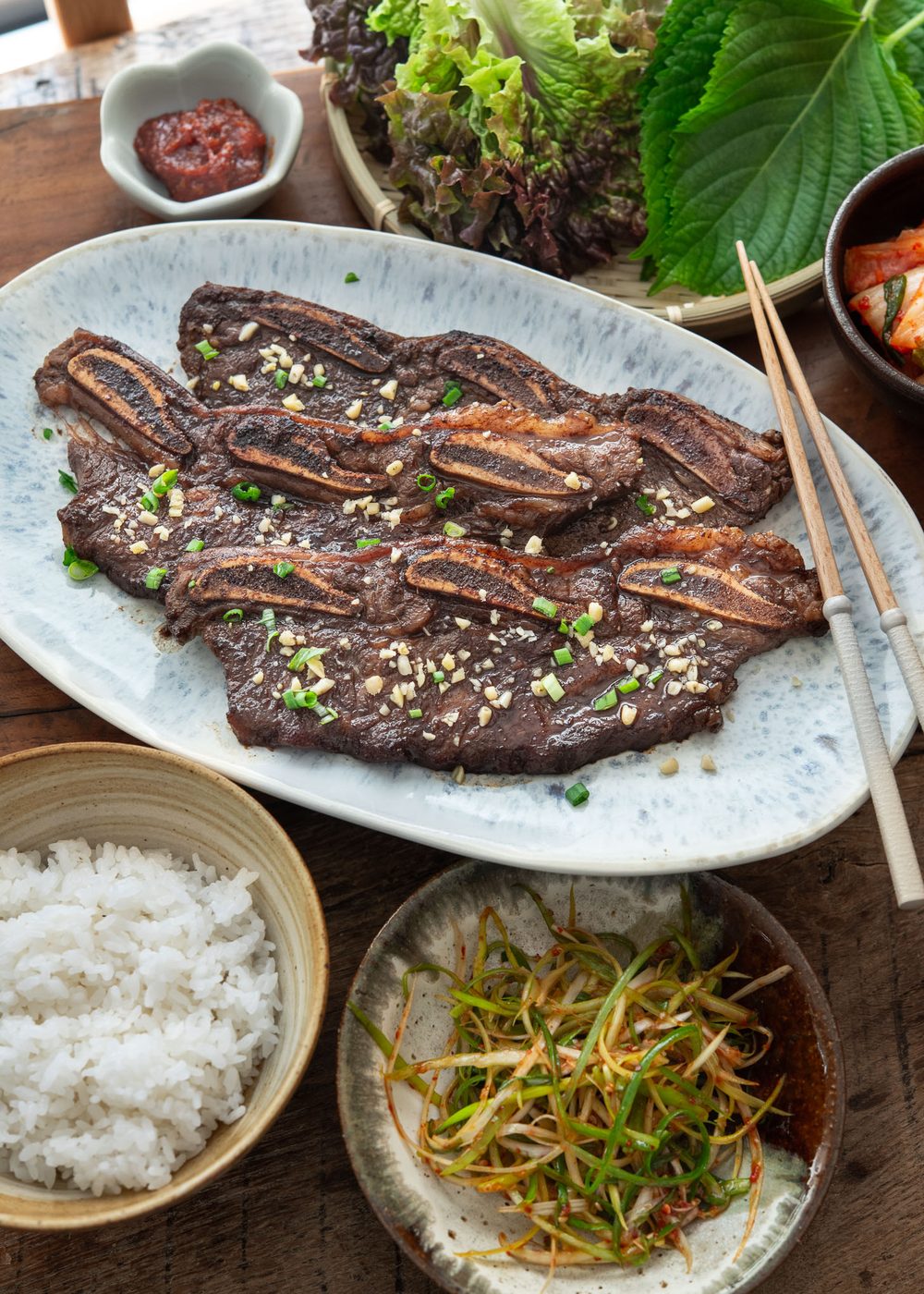
Juicy Korean BBQ short ribs (LA galbi) you can make at home. Thin flanken-cut ribs are marinated in a soy-garlic sauce with fruit, then grilled or broiled until lightly charred. Great for weeknights or backyard BBQs.
We first tried LA-style galbi about three decades ago in San Francisco. A friend took us to a Korean restaurant where the ribs came out sizzling and fragrant. We were immediately intrigued.
The galbi looked completely different from what we'd eaten all our life — thinner, cut straight across the bone instead of the usual long Korean short rib cut. One bite of that sweet, smoky beef and we knew this version had its own charm.
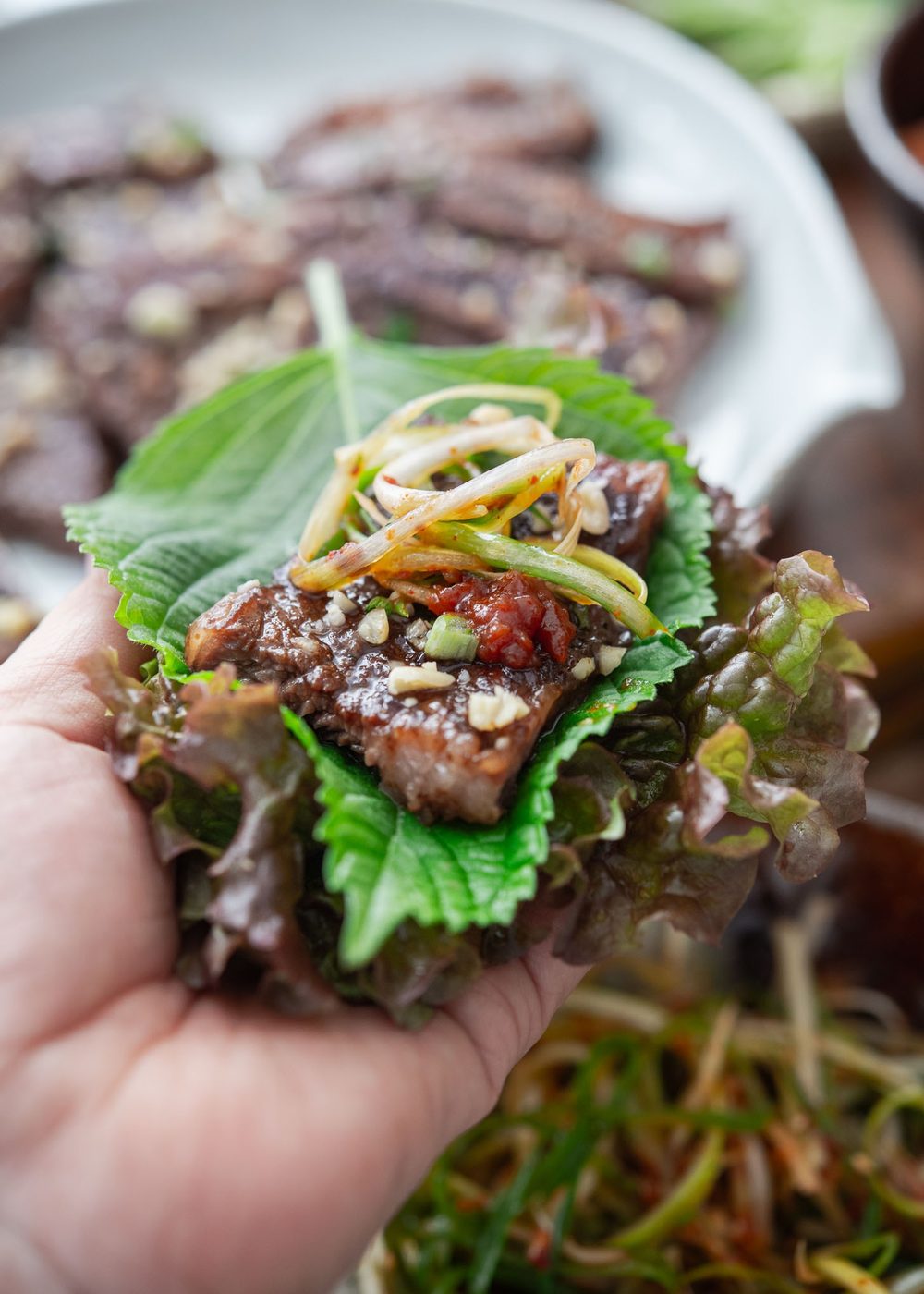 An unfussy ssam with LA galbi, ssamjang, and green onion salad. This is always our go-to bite.
LA galbi was born from Korean immigrants in Los Angeles who adapted to the American flanken-cut style, and honestly, we thank them every grilling season. The thinner cut soaks up marinade beautifully and cooks fast, steady for impatient BBQ lovers like us.
The two-step marination we use here was a tip from a Korean friend who once took cooking classes with a well-known master chef in Seoul. She shared what she learned, and it completely changed how we make galbi. The rest is unfussy — two rounds of marinating that make the ribs extra tender and full of flavor. We'll show you exactly how it works below.
Whether you’re grilling outdoors, broiling in the oven, or cooking indoors on a chilly day, these short ribs turn out succulent, caramelized, and seriously hard to stop eating. Once you try it, we think you’ll see why it’s been our go-to for years.
If you enjoy Korean short rib dishes, try our galbi jjim (Korean braised short ribs) or galbitang (beef short rib soup) for a deeper, more comforting take.
A classic galbi spread with grilled ribs, lettuce wraps, ssamjang, and a few unfussy sides to keep everything balanced.Why we Use a Two-Step Marinade for LA Galbi
The marinade defines LA galbi, but timing matters just as much as the ingredients. Most recipes mix everything at once. We separate the steps to get better texture and a cleaner finish, building flavor in layers.
The first round focuses on tenderizing, helping the meat stay juicy and absorb the base flavor. The second adds the deeper sweet-savory glaze that caramelizes beautifully on the grill.
We've tested this method over many batches, adjusting the timing and balance until it consistently delivered that classic LA galbi flavor — tender inside with a rich, lightly charred finish. It’s the version our family keeps coming back to.
Featured ReviewRead more reviews LA galbi over rice with green onion salad. Unfussy, but we keep coming back to this.“we've been using this receipe for many years now. It is beyond a keeper. The meat is tender and savory. We do recommand a 100%.”
Zainab
Choosing the Right Short Ribs for LA Galbi
The cut makes all the difference for LA galbi. Unlike thick English-cut short ribs, these are sliced thin across the bone (flanken-style), usually with three small bone sections in each piece. This allows the marinade to soak in quickly and helps the ribs caramelize nicely on the grill.
Look for well-marbled ribs with even thickness, about ⅜ inch. Thicker cuts won’t cook as evenly and can turn chewy before the outside gets that caramelized finish. This cut is what gives LA galbi its signature look and fast cooking time.
Korean and Asian markets often carry pre-cut LA galbi, but if you’re buying from a butcher, you can ask for flanken-cut short ribs at this thickness. Once you know what to look for, it’s direct to spot.
How the dish comes together
Tenderize: Blend onion, pear, and kiwi (or use a fine grater) to make a smooth puree. This mixture gently breaks down the beef fibers and adds a natural sweetness.
Marinade: Coat the ribs and let them rest for about 45 minutes at room temperature or 2 hours in the fridge. Scrape off the excess before moving on.
Common Mistake: Over-marinating with fruit puree. It can make the surface mushy — scrape it off before grilling for better browning.
Flavor: Mix soy sauce, soup soy sauce, brown sugar, garlic, sesame oil, ginger, and black pepper. Massage this marinade into the ribs and chill at least 4 hours or overnight. Let them sit at room temperature before cooking. The result? Deep, layered flavor without losing tenderness.
How to Cook LA Galbi: Grill, Broil, or Pan-Sear
LA galbi cooks fast. The thin flanken cut means just a few minutes per side. No matter how you cook it, the key is high heat and a watchful eye.
We prefer to grill outdoors over medium-high charcoal for a keeper flavor, but you can also broil or pan-sear them indoors. Each method gives slightly different results:
- Grilling: brings out that smoky, restaurant-style flavor.
- Broiling: direct and mess-free for apartment cooking.
- Pan-searing: short, great for weeknights, and helps you control caramelization.
Our tip: don’t crowd the pan or grill. Give the ribs a little space so the sugars caramelize instead of steaming. A few seconds too long can burn the marinade — so keep tongs in hand and watch for that deep mahogany color.
You’ll find the step-by-step directions for grilling, broiling, and pan-searing in the recipe card below.
What to Serve With Korean BBQ Short Ribs
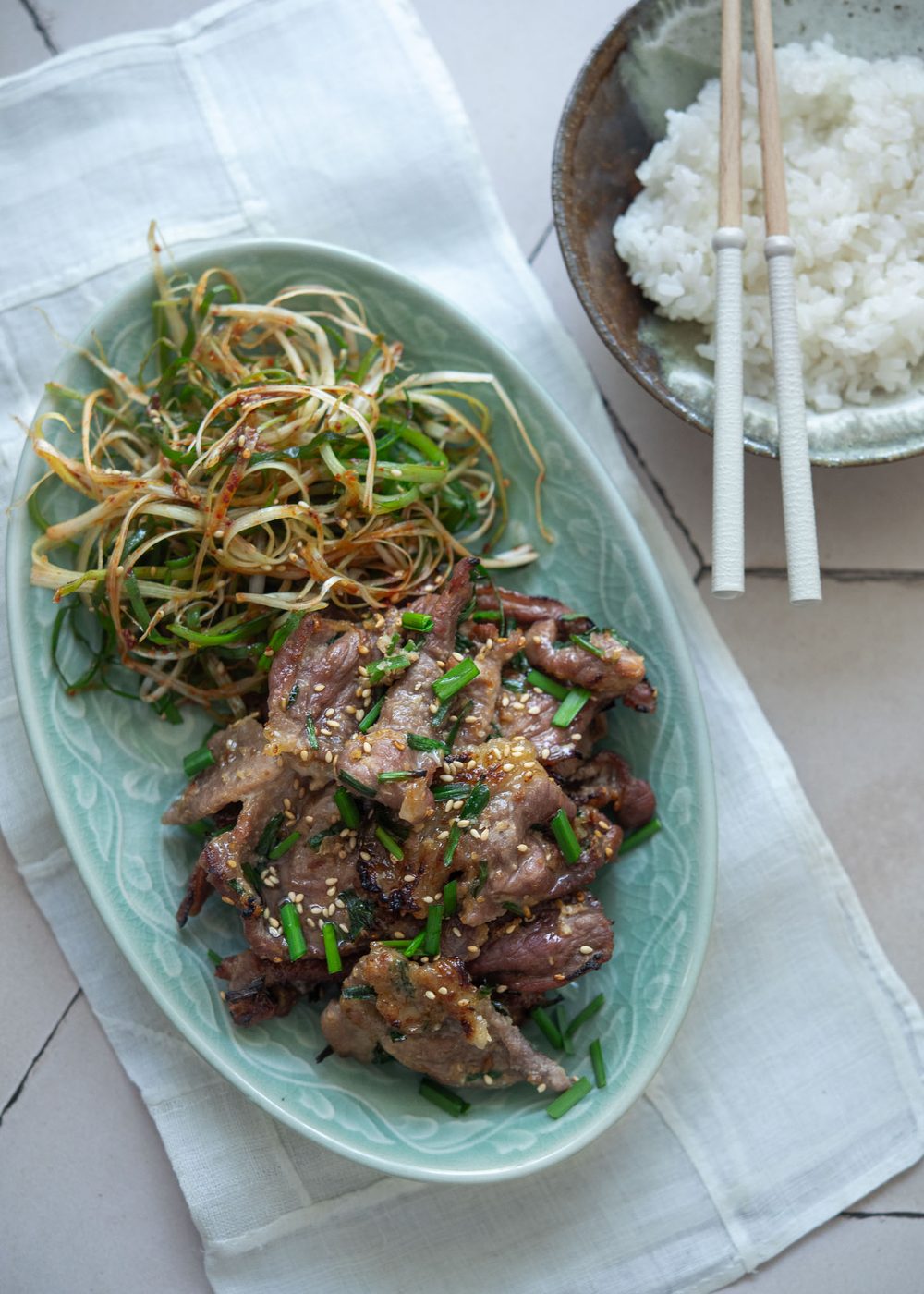
Korean BBQ is all about balance. Rich grilled meat pairs best with crisp, refreshing sides. We always serve LA galbi with a bowl of steamed white rice, plenty of pa muchim (green onion salad).
Wrap the ribs in lettuce or perilla leaves, add a dab of ssamjang (Korean dipping sauce), and you’ve got the steady bite. If you’re hosting a BBQ party, mix in some samgyupsal (pork belly) for variety — the combination always wins over guests.
NOTE: This recipe was originally posted in February 2014. While the recipe itself remains unchanged, we've updated the images and added more information to enhance the content.
- Yield: 4
- Prep: 10 minutes
- Cook: 15 minutes
Ingredients
- 2½ lb (1.1 kg) beef short ribs, flanken cut
- ½ (about 100 g) large onion, diced
- ½ (about 120 g) large Asian pear, peeled and diced
- ½ (about 50 g) kiwi, peeled and diced
- ⅓ cup (80 ml) soy sauce
- 2 tbsp (30 ml) Korean soup soy sauce (gukganjang)
- 2 tbsp (25 g) brown sugar
- 1 tbsp (9 g) freshly grated garlic, or 1 tsp garlic powder
- 1 tsp (5 g) ginger paste, or ¼ teaspoon ginger powder
- 1 tbsp (15 ml) Korean plum extract (maeshil-cheong), or sweet rice wine
- 1 tbsp (15 ml) sesame oil
- ⅕ tsp freshly grated black pepper
Method
- Blend the onion, Asian pear, and kiwi in a blender or food processor until smooth. (Or finely grate them to make a smooth puree.) Pour the puree over the short ribs in a shallow dish (a 9×13-inch / 23×33 cm pan works well). Toss to coat evenly. Marinate at room temperature for 45–60 minutes or refrigerate for 2 hours.
- Remove the ribs and scrape off excess puree before moving to the next step.
- In a clean bowl, combine soy sauce, Korean soup soy sauce, brown sugar, garlic powder, ginger, sesame oil, and black pepper. Add the ribs and coat evenly with the second marinade.
- Cover and refrigerate for at least 4 hours, or overnight for deeper flavor. Before cooking, let the ribs sit at room temperature for 15 minutes.
- Grilling: Preheat a charcoal, gas, or stovetop grill pan to medium-high heat. Grill the ribs for 2–3 minutes per side, until nicely charred. (The thin slices cook quickly — don’t overcook!)
- Broiling: Preheat the oven to broil. Arrange the ribs in a single layer on a broiler pan, about 6 inches (15 cm) from the heat. Broil for 5–6 minutes, flip, and broil another 3–4 minutes, watching closely to prevent burning.
- Pan Searing: Heat a non-stick or cast-iron pan over medium heat. Lay ribs in a single layer and cook 4–5 minutes per side. If the pan dries, add a spoonful of marinade (strain first). Cook until the sauce thickens and ribs are browned and glossy.