Meat
Jjimdak, or Andong Braised Chicken
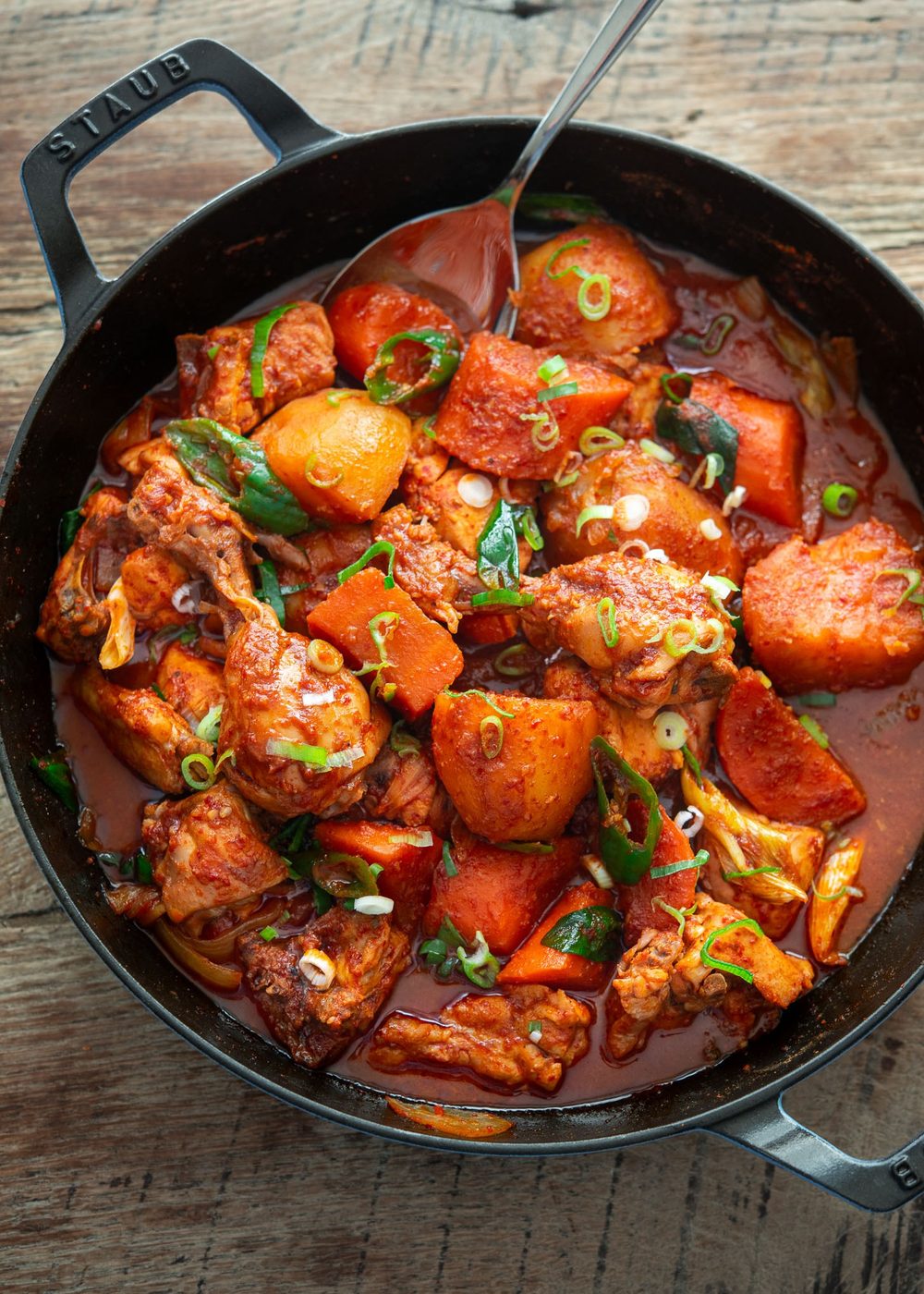
Tender chicken, vegetables, and sweet potato noodles braised in a deep soy-based sauce. This Andong-style jjimdak is a cozy Korean one-pot meal that comes together in about an hour and is steady over warm rice.
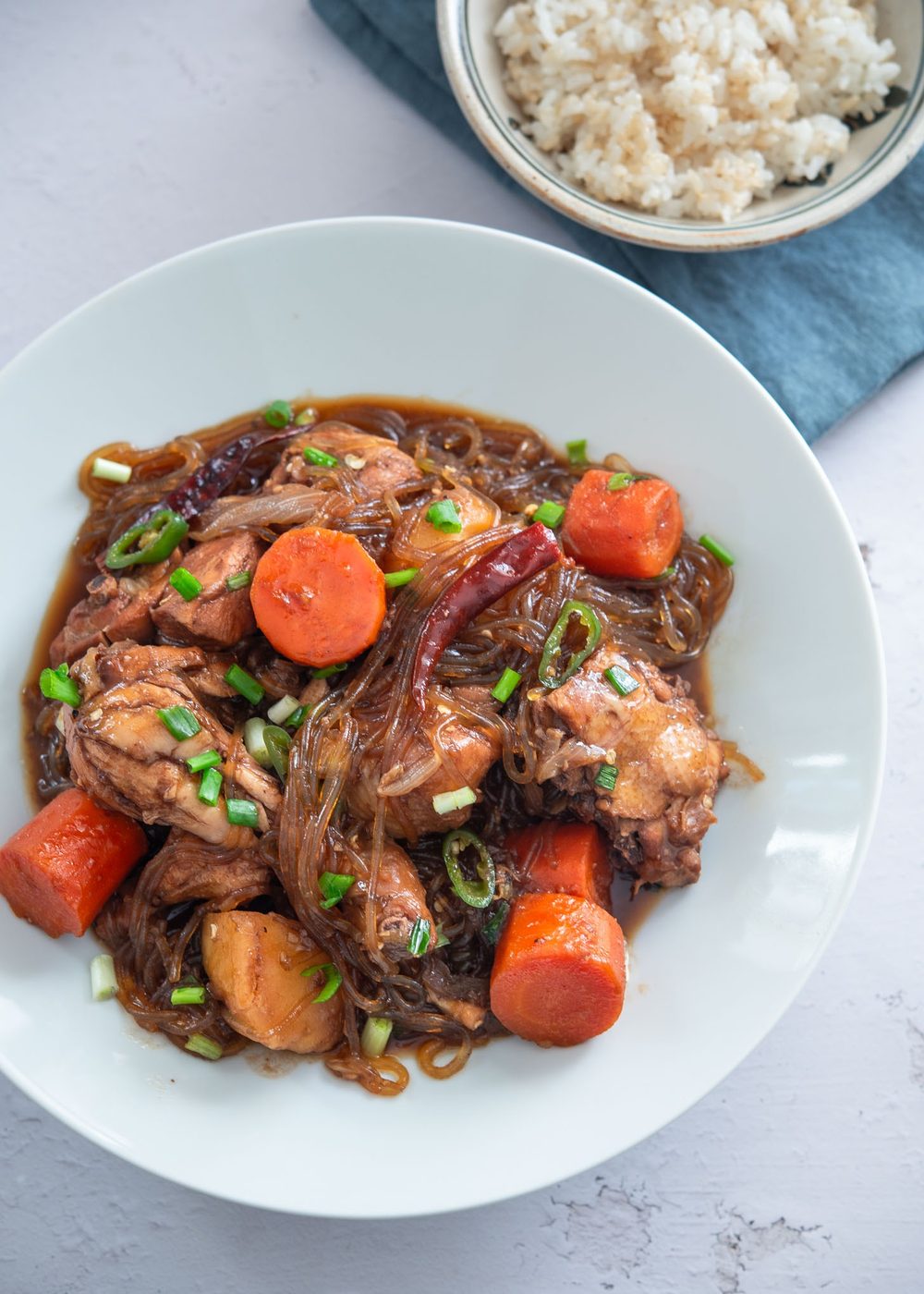
Make Andong jjimdak at home with tender braised chicken, soft vegetables, and glossy sweet potato noodles in a deep soy-based sauce. This comforting Korean one-pot meal takes about an hour and delivers a sweet, savory, and gently spicy flavor that’s steady over a warm bowl of rice.
Andong jjimdak (안동찜닭) has everything we love in a comforting Korean braised chicken—deep soy flavor, tender chicken, soft vegetables, and those glossy sweet potato noodles that somehow disappear first. The sauce is savory with a touch of sweetness and gentle heat, making it a cozy one-pot meal without feeling heavy.
We first tried jjimdak in Andong’s old market street, squeezed between shops with giant pots bubbling away all day. The sauce was darker and shinier than any version we'd seen, and one bite confirmed why—rich broth clinging to every noodle and chicken piece. We've chased that flavor ever since, and this recipe gets wonderfully close.
Why Andong-Style Jjimdak Has Its Own Flavor Identity
Although jjimdak simply means braised chicken in Korea, the Andong version has a personality of its own. It tastes nothing like our dakdoritang (also called dakbokkeumtang), which leans spicy with a gochujang-based broth. Andong jjimdak stays rooted in a deep soy reduction with gentle heat from dried chilies, creating a darker, glossier sauce with no gochujang at all.
Sweet potato noodles (dangmyeon) play a big role too—they soak up the sauce as they cook, turning silky and richly flavored in a way other jjimdak styles don’t quite match. When we had it in Andong, the sauce clung to every strand of noodle, and the chicken tasted like it had simmered all afternoon. That’s the flavor identity we follow here.
What Goes Into This Korean Braised Chicken
Chicken: Bone-in chicken builds a deeper broth and gives the sauce a clean, rich flavor.
Vegetables: Onion, carrot, and potato cook down slightly and bring natural sweetness that balances the soy base.
Dried Red Chilies: They add gentle heat without turning the dish too spicy, keeping the flavor profile clean and savory.
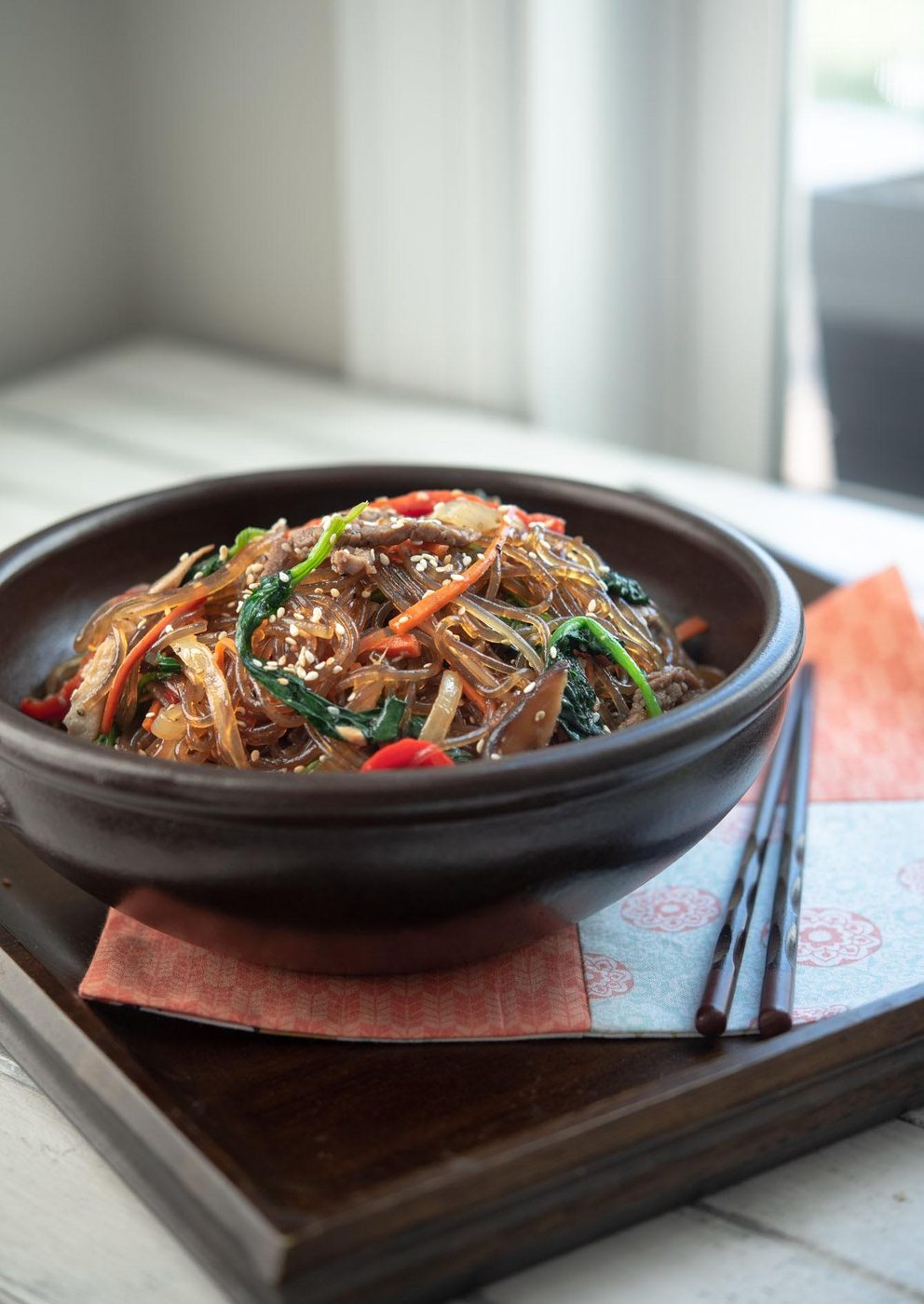
Sweet Potato Noodles (dangmyeon): These noodles soak up the soy broth and turn silky, just like in our japchae recipe, where the noodles are the star of the dish.
Sauce Base: A blend of soy sauce, oyster sauce, garlic, ginger, and dark brown sugar forms the backbone of the dish.
Our small twist (Cocoa Powder): A touch of cocoa deepens the color and gently boosts richness without tasting like chocolate.
How the dish comes together
Soak the Noodles. Soften the sweet potato noodles in hot water while preparing the rest.
Parboil the Chicken. A short parboil removes excess fat and gives the sauce the clean, layered flavor Andong jjimdak is known for.
Mix the Sauce. Combine soy sauce, oyster sauce, water, garlic, ginger, brown sugar, cocoa powder, optional corn syrup, and pepper.
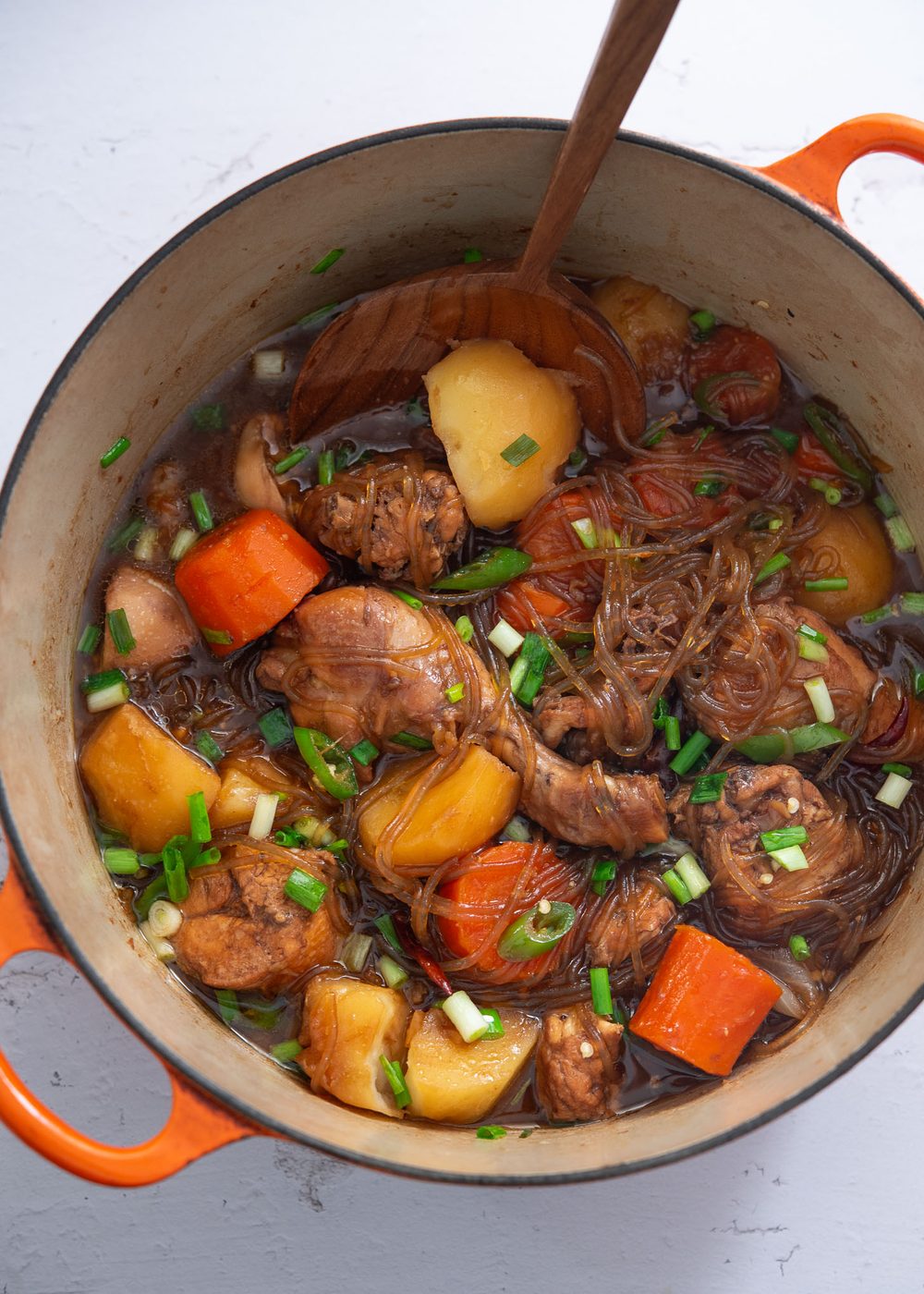
Start the Braise. Place chicken and dried chilies in a pot. Pour in the sauce. Bring to a gentle boil, cover, and simmer for 20 minutes.
Add the Vegetables. Onion, carrot, and potato soften at different rates, so adding them in stages helps the sauce stay clear and prevents the vegetables from turning mushy.
Add the Noodles. Drain the soaked noodles and add them to the pot. Sweet potato noodles absorb liquid quickly, so adding them toward the end keeps them chewy and prevents the sauce from disappearing.
Let the pot rest before serving. A brief rest keeps the chicken juicy, the noodles plump, and the sauce settled.
How to Serve Jjimdak
Jjimdak is typically enjoyed family-style in Korea, with the noodles and chicken served together in one large pot. Serve warm with rice and spoon extra sauce over the top — it’s a keeper part.
If you enjoy soy-braised chicken dishes, try our Korean cola braised chicken next.
- Yield: 6 people
- Prep: 20 minutes
- Cook: 40 minutes
- Total: 1 hour
Ingredients
- 6 oz (170g) Korean glass noodles (dangmyeon)
- 3 lb (1.3 kg) whole chicken, cut up into pieces, or boned chicken thighs and drumsticks
- 5-8 dried red chilies
- 2/3 cup (160 ml) soy sauce
- 2 tbsp (30 ml) oyster sauce
- 1 cup (240 ml) water
- 3 cloves garlic, minced
- 1 tsp (5 ml) minced fresh ginger
- 4-6 tbsp (50–75 g) dark brown sugar
- 2 tsp (6 g) cocoa powder
- 4 tbsp (60 ml) Korean corn syrup, optional
- 1 tsp (2 g) black pepper
- 1 onion, sliced
- 2 carrot, diced into large chunks
- 2 medium (about 300–350 g) potatoes, sliced into 1/2-inch disks
- 1-2 fresh green chili, sliced, optional
Method
- Soak the sweet potato noodles in hot water and set aside until ready to use.
- Bring a large pot of water to boil. Add chicken pieces and boil for 2-3 minutes. Drain the chicken and discard the water. Return the chicken to a braising pot and add the dried chilies.
- In a medium mixing bowl, combine soy sauce, oyster sauce, water, garlic, ginger, dark brown sugar, cocoa powder, corn syrup (if using), and pepper. Pour over on the chicken and chilies.
- Bring the chicken mixture to a gentle boil. Cover and simmer over medium-low heat for 20 minute. Add the onion and carrots to the chicken and continue to simmer for 10 minutes, covered.
- Add the potatoes and fresh chili, and cook until they are tender, about 10 minutes, with a lid half open.
- When the chicken and vegetables are just tender, drain the sweet potato noodles from the soaking water and add to the chicken. Raise the heat to medium-high and continue to cook until the noodles are tender yet chewy, about 3-5 minutes, uncovered.
- Remove the pot from the heat and let the stew sit for 5 minutes before you serve. Serve warm with rice.