Meat
Braised Kimchi and Pork Ribs: Kimchi Jjim
A rich and comforting Korean braise made with aged kimchi and pork ribs simmered until tender. Bold, tangy, and steady for using well-fermented kimchi — and it tastes even better the next day.
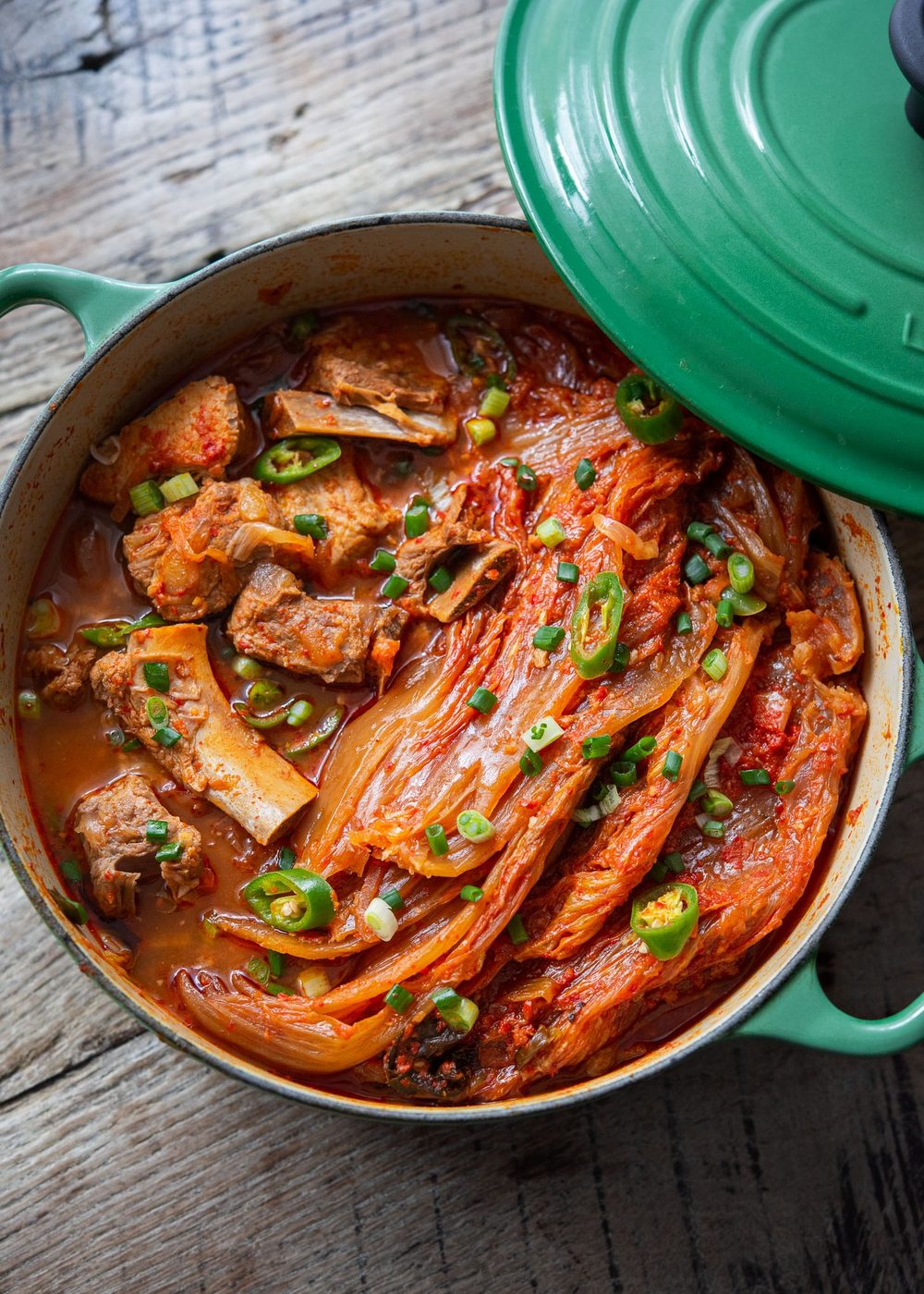
Kimchi Jjim is a deeply flavorful Korean braised dish made with aged kimchi and tender pork ribs simmered until the sauce turns rich, spicy, and tangy. The long, slow braise transforms over-fermented kimchi into a melt-in-your-mouth comfort meal that captures everything you love about hearty Korean home cooking.
When spring comes, we always find myself with jars of old kimchi from the previous winter — evenly sour and ready for cooking. That’s when we think of our mother’s kimchi jjim (김치찜), a deeply flavorful braise of aged kimchi and pork ribs that filled our home with warmth during cold months.
Her version had one small twist: an unfussy, everyday Korean ingredient that rounded the sharp kimchi into a rich, savory sauce. It was a recipe passed down from our grandmother, made without measurements — just instinct and taste. We've recreated those memories here in a way you can easily follow, while keeping the same comforting spirit intact.
The Secret to Deep Flavor in Kimchi Jjim
The heart of kimchi jjim is aged kimchi — the kind that’s fully fermented, tangy, and strong enough to stand up to slow braising. As it cooks, the kimchi softens and its sharp edges mellow into a deep, savory richness.
Our mother’s secret was adding a spoonful of doenjang (Korean soybean paste). It doesn’t make the dish taste like a soybean stew — it simply boosts umami, softens the sourness, and gives the sauce a fuller, rounder body that clings beautifully to the pork ribs.
If you’ve never braised well-aged kimchi with pork, the transformation is standout: the leaves turn silky, the broth becomes concentrated, and every bite tastes like true Korean home cooking.
Key Ingredients and Our Flavor Tips
Aged Kimchi (Mugeunji)
Use kimchi that’s deeply fermented — at least several months old. Well-aged kimchi (like old-style kimjang kimchi) gives the braise a richer, deeper flavor. If your kimchi tastes too strong or sour to enjoy raw, it’s steady for kimchi jjim.
Once braised, that sharp tang melts into a mellow, savory depth that defines good kimchi jjim. Old kimchi also works beautifully in kimchi jjigae, another classic way Koreans enjoy the kimchi-and-pork pairing.
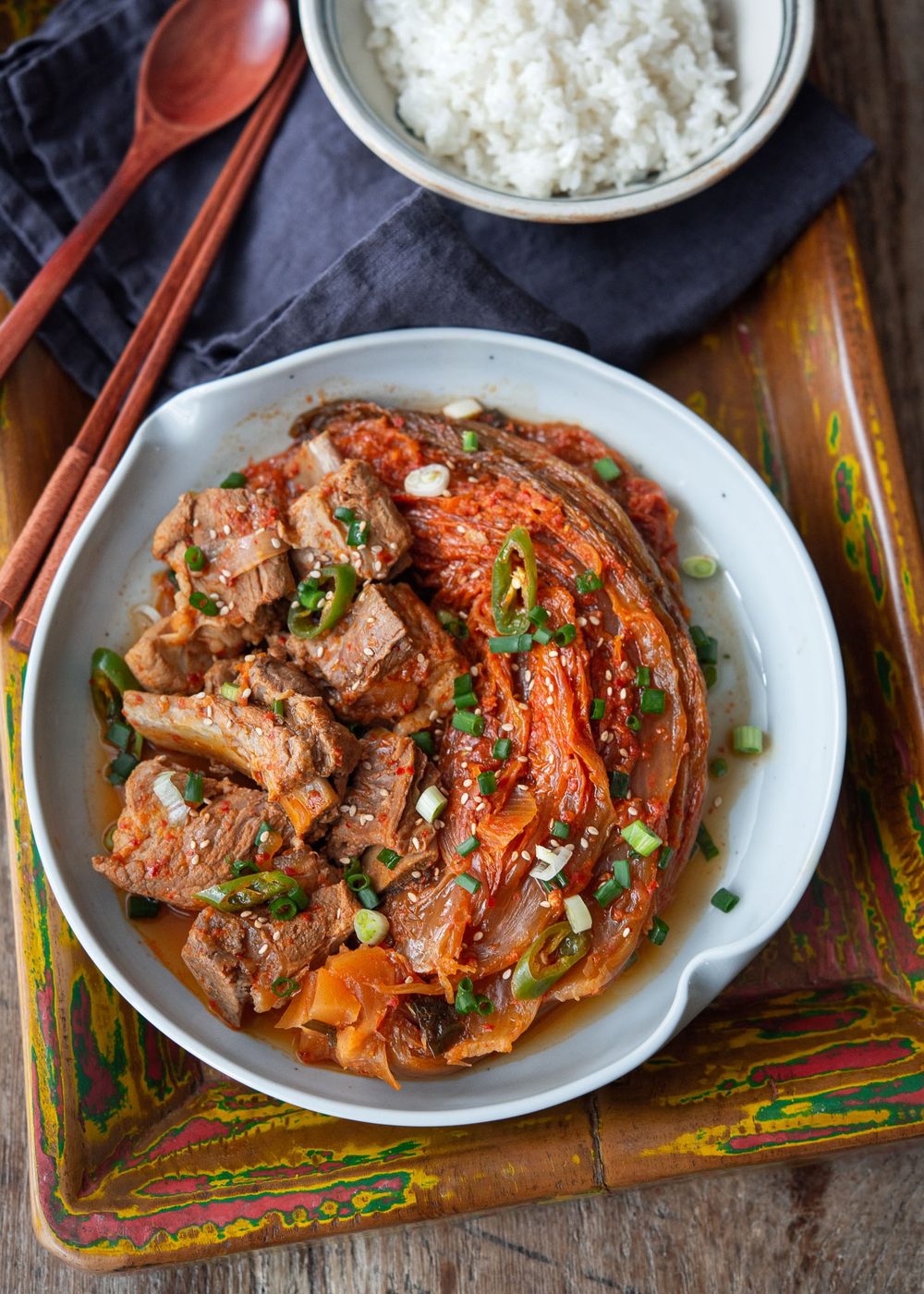
Pro Tip: For a more rustic, restaurant-style presentation, use a whole wedge of aged kimchi instead of chopping it. It helps the flavors stay concentrated and looks incredibly classic when serving. Whole mugeunji is sold at most Korean markets.
Pork Ribs
Short ribs or country-style ribs are best for rich flavor. The bones add body to the sauce, and the fat keeps the kimchi moist while braising. Parboil them briefly if you want a cleaner taste or less grease.
Seasoning Sauce
We mix gochugaru with a touch of soy sauce, sugar, garlic, and mirim for balance. If your kimchi isn’t sour enough, a splash of vinegar or a spoonful of kimchi juice helps bring back that fermented edge.
Step by Step: How to Make Kimchi Jjim
1. Make stock: Add dried anchovies and sea kelp (dashima) to water and simmer briefly to draw out the umami. Strain and set aside — it’s your flavor base.
2. Parboil the pork ribs: Blanching the ribs removes excess fat and impurities for a cleaner, lighter sauce. You’ll know they’re ready when the broth turns cloudy and the surface foam disappears. Drain well before seasoning. Meanwhile, layer the onion on the bottom of the braising pot.
3. Season pork ribs: In a large bowl, combine the pork ribs with the seasonings and mix thoroughly to coat with the sauce. Arrange the seasoned pork ribs over the onion in the braising pot.
4. Add kimchi and kimchi brine: Lay whole kimchi over the pork. Pour a bit of kimchi brine (the juice) around the edges for that signature tang.
5. Pour the stock and braise: Add the stock, cover, and let it simmer until the ribs turn tender and the kimchi softens into silky layers. Flip the cabbage halfway through to coat evenly. Top with green chili slices and chopped green onions toward the end of cooking.
How to Enjoy Kimchi Jjim
Serve this comforting, old-fashioned dish with a bowl of freshly steamed rice — that’s all it needs. The rich sauce from the braised kimchi and pork soaks into the rice beautifully.
You might wonder how to eat a whole cabbage in kimchi jjim? You can use kitchen scissors to cut it into bite-size pieces, but in our home, we always tore it by hand — just like our mother did when we were little.
She’d grab the kimchi with her fingers and rip it apart right in the pot. As a kid, we thought it was a little gross to touch food like that! But years later, we found myself doing the exact same thing when feeding our kids — and they said the same thing about us. Now our grown-up half Korean daughter does it too. Full circle, right?
Old kimchi also shines in dishes like our Bacon Kimchi Fried Rice, another cozy way Koreans enjoy well-fermented kimchi. For more hearty Korean recipes, browse our Korean Main Dishes category.
- Yield: 6 people
- Prep: 15 minutes
- Cook: 1 hour 30 minutes
- Total: 1 hour 45 minutes
Ingredients
- 2-1/2 lb (1.1 kg) pork short ribs
- 2 lb (900 g) aged whole cabbage kimchi (mugeunji), preferably, but any sour cabbage kimchi works fine
- 1/4 cup (60 ml) kimchi brine (kimchi juice)
- 1 (about 150 g) medium onion, sliced
- 1 tbsp (8 g) Korean chili flakes (gochugaru)
- 1 tbsp (20 g) Korean soy bean paste, doenjang
- 1 tbsp (15 ml) Korean soup soy sauce (gukganjang), gook-ganjang
- 2 garlic cloves, finely chopped
- 2 tsp (8 g) sugar
- 1 tbsp (15 ml) sweet rice wine (mirim), optional
- 2 tsp (10 ml) sesame oil
- 1 fresh green chili or jalapeño, sliced, optional
- 2 green onions, chopped
For the stock
- 6-7 large dried anchovies
- 1 dried sea kelp (dashima)
- 4 cups (960 ml) water
Method
- Combine dried anchovies and sea kelp with water in a pot, bring to a boil, and simmer for 5 minutes. Reserve 2 cups of stock.
- If using pork ribs, blanch them in boiling water for 10 minutes, then drain and rinse well. If using other pork with bones, skip this step.
- In a large mixing bowl, mix chili flakes, soybean paste, soup soy sauce, garlic, sugar, rice wine, and sesame oil. Add the pork and toss well to coat with the sauce.
- In a pot, spread onion on the bottom and place the seasoned pork ribs on top. Cover with whole kimchi and drizzle kimchi juice around. Pour the reserved stock over everything, cover with a lid, and bring to a gentle boil over medium heat.
- Once boiling, reduce the heat to low and simmer for 45 minutes. Turn the cabbage to the other side and continue to simmer for another 30 minutes. If desired, add green chili and green onion and cook for another 10 minutes. Serve warm with a bowl of rice.
Notes
Note 1. If your pot doesn’t have a heavy lid, you may need to add an extra 1/2 to 1 cup of stock to make up for the steam that will escape during cooking.
Note 2. For vegetarians, substitute the meat with your favorite protein alternative and a flavorful sea kelp stock.