Soups and stews
Korean Short Rib Soup: Galbitang
Galbitang (Korean short rib soup) is a comforting Korean beef soup with tender short ribs, Korean radish, and glass noodles (dangmyeon) in a clear, savory broth. Make it the old-style way on the stovetop or a quicker…
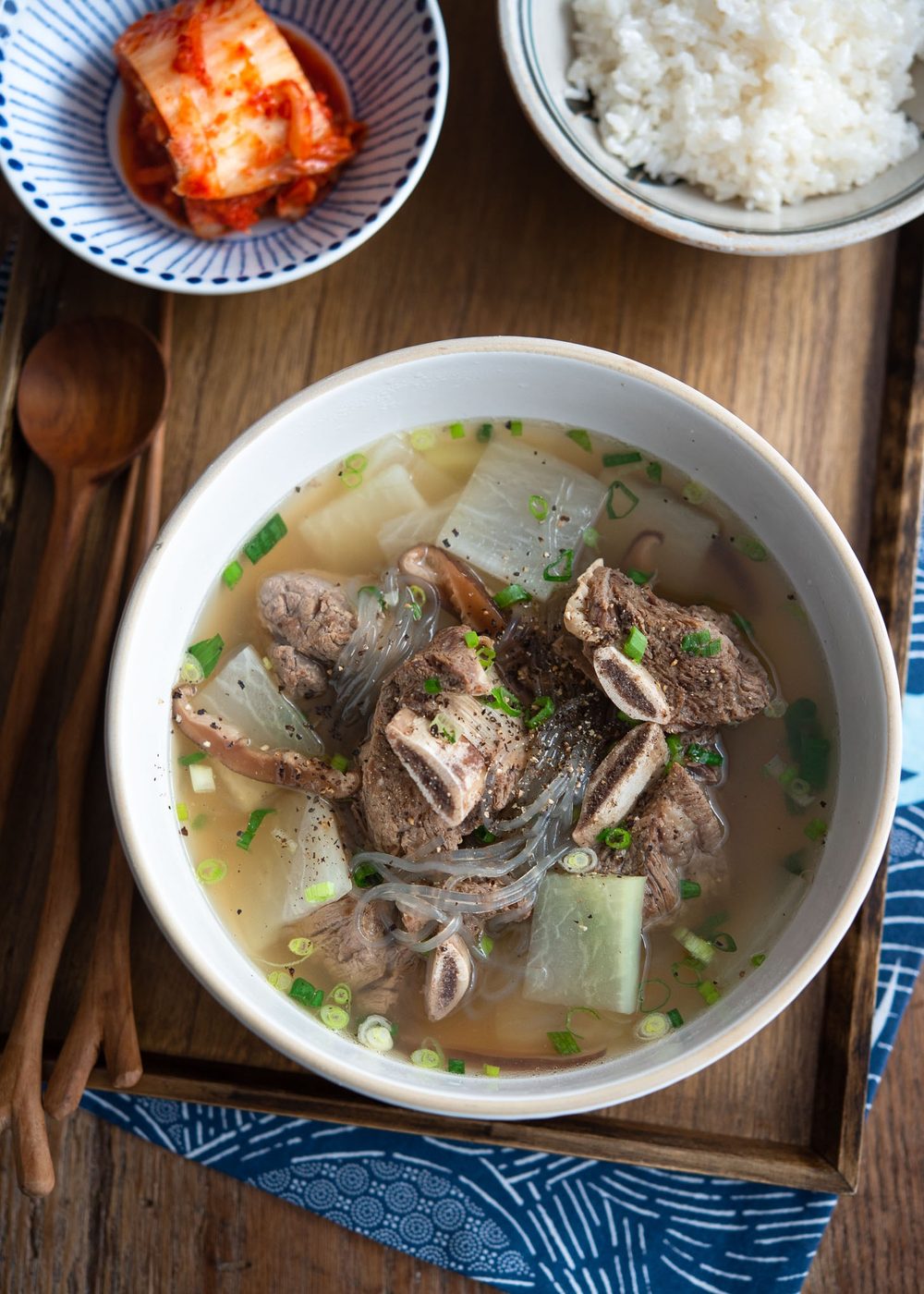
Galbitang (Korean short rib soup) is a soothing, clear broth made with beef short ribs, Korean radish, garlic, and onion until tender and flavorful, served with glass noodles (dangmyeon). This comforting Korean soup can be made traditionally on the stovetop or quickly in the Instant Pot.
Growing up in Korea, our mother occasionally made galbitang (갈비탕, Korean short rib soup) when she received short ribs as a New Year’s gift. Back then (and even today) gifting high-quality beef was considered a thoughtful gesture, and a big pot of galbitang on the stove always meant something special was being prepared.
We still remember how the short rib soup warmed us on cold winter days — rich but not heavy, unfussy but deeply satisfying.
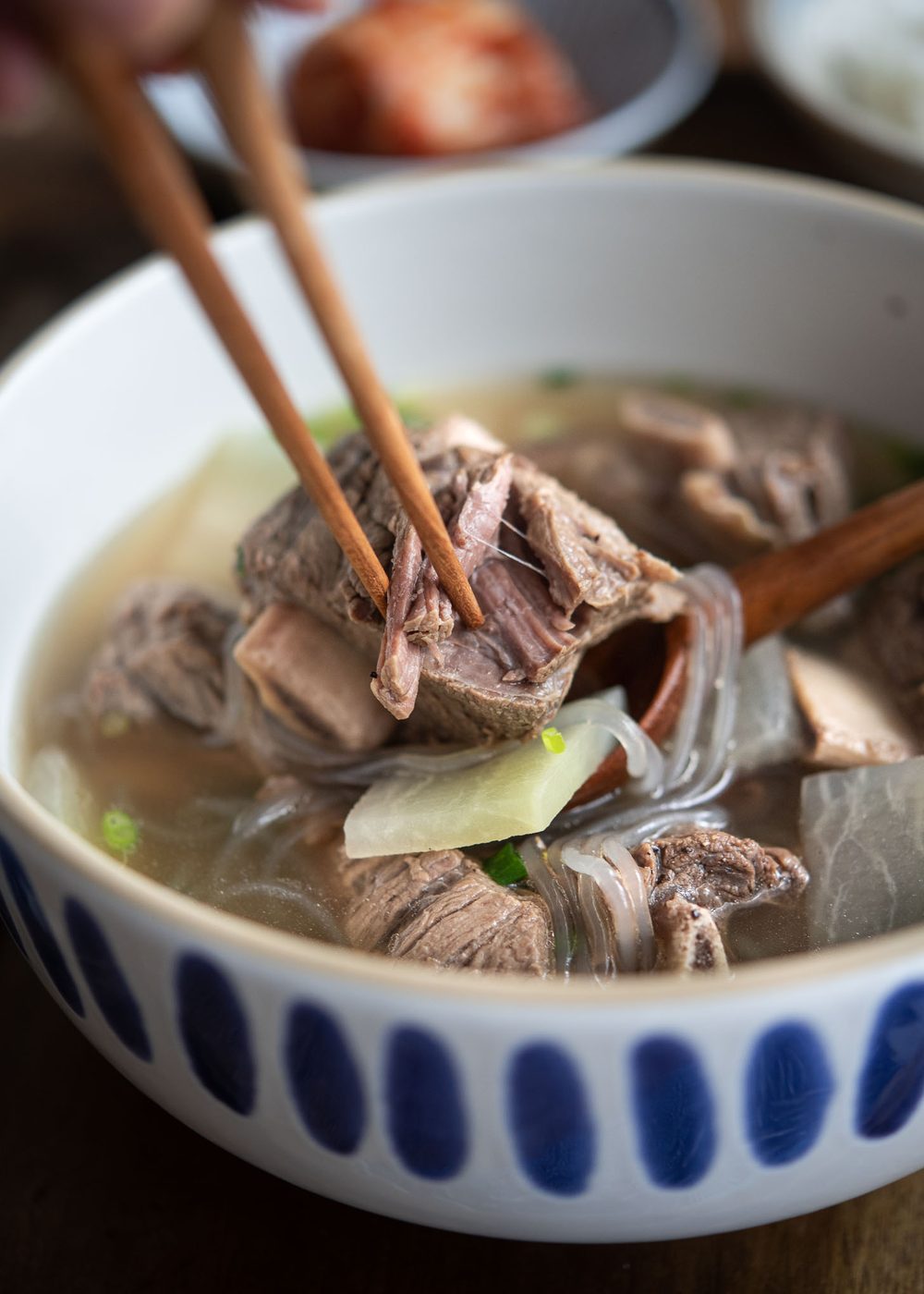
We also recall attending many family wedding banquets as a child, where galbitang was always served to guests. The tender short ribs and soft strips of Korean radish and glass noodles (dangmyeon) in the clear broth were something everyone, even young children, could enjoy.
It’s a dish that feels both elegant and comforting, a steady reflection of Korean hospitality and home cooking. We're happy to share our galbitang recipe — classic in flavor yet direct to cook at home, whether you use the Instant Pot or the stovetop.
Why we Don’t Soak Short Ribs Anymore
In the past, Korean cooks often soaked short ribs in cold water to remove blood and eliminate gamey odors. But modern butchering practices make this step unnecessary. The red liquid you see in packaged meat isn’t blood — it’s mostly water mixed with myoglobin, a natural muscle protein.
After years of making galbitang both in Korea and abroad, we've found that a short parboil and rinse produce the same clean-tasting broth without the extra soaking step. It keeps the process unfussy while preserving the beef’s deep flavor and clarity of the soup.
If you’re curious about how this method compares to other beef soups, you can also check our Beef Bone Soup (Seolleongtang) recipe, where we explain how bones are prepared in a similar way.
Ingredients for Classic Galbitang (Korean Short Rib Soup)
Beef Short Ribs (Galbi): Use Korean-style short ribs or English-cut ribs with plenty of meat attached to the bone. The bone marrow adds depth, while the fat gives body to the broth. We always look for ribs with even marbling — they turn meltingly tender after long simmering.
- Tip: If you can, buy ribs cut across the bone (flanken-style) from a Korean market for a old-style presentation. This is the same cut used in galbijjim (Korean braised short ribs), another popular Korean dish made with a rich soy-based sauce.
Korean Radish (Mu): This is one of the defining flavors of galbitang. It adds natural sweetness and clarity to the broth. Our mother never skipped it, and neither do I. If you can’t find Korean radish, daikon makes a decent substitute, but the flavor will be slightly milder.
Aromatics: Onion, garlic, and green leek bring balance to the beef’s richness. We sometimes add a few dried shiitake mushrooms for subtle umami and color. Slice large pieces so they can be removed easily after simmering for a clear broth.
Dried Sea Kelp (Dashima): A small piece of dried kelp steeped at the end gives the broth its signature savory depth. Don’t pressure-cook it — add it after simmering to avoid a slimy texture.
Hwanggi (Optional): This Korean herb, often used in samgyetang (ginseng chicken soup), adds a gentle earthy aroma. It’s optional but enhances authenticity if you can find it in an Asian market.
Korean Glass Noodles (Dangmyeon): Made from sweet potato starch, these noodles add chewiness and make the soup more satisfying. Soak them briefly before adding near the end to keep the broth clear.
Seasonings: Use Korean soup soy sauce (guk-ganjang) to season the broth — it’s saltier and lighter in color than regular soy sauce. We sometimes add a spoonful of Korean tuna sauce for extra umami. Finish with salt to taste, black pepper, and chopped green onions.
How the dish comes together
Instant Pot Method
Parboil and Prep the Ribs. Start by briefly boiling the ribs to remove impurities. You’ll notice the foam and cloudy water — that’s what you don’t want in your soup. Rinse the ribs under warm water, scraping off any bone residue. This step ensures a clear, clean broth later.
Build the Broth Base. In your Instant Pot, combine the clean ribs with big chunks of Korean radish slices, onion, garlic, and leek. We like to tuck them into a large dashi bag so the broth stays clear while the flavor fully infuses. Add water and set it to the Soup function.
Visual cue: The broth should turn a light golden tone, and the fat will begin to pool on top. That’s when you know the beef flavor has fully developed.
Add Depth and Seasoning. Remove the aromatics and steep a piece of dried sea kelp for a few minutes to boost umami. Don’t overdo it! Kelp that stays too long can make the broth slightly slimy.
Refine the Broth (optional). If you plan to serve right away and don’t mind a little richness, switch your Instant Pot to Sauté mode, add the thin radish slices, and simmer until they turn soft and translucent.
For a lighter, cleaner taste, cool the broth and refrigerate it overnight. The fat will rise and solidify, making it direct to skim off before reheating. This unfussy step gives galbitang its signature clear broth and deep, refined flavor.
Season and Finish. Once the broth is clear and ready, season it gently with Korean soup soy sauce, a little salt, and, if you like, a splash of Korean tuna sauce for extra umami depth. Galbitang should taste clean and balanced, not overly salty, so adjust slowly and taste as you go.
Add Dangmyeon Noodles. Meanwhile, soak Korean glass noodles (dangmyeon) in hot water until soft, then drain and add them to the soup. Let them simmer for a minute or two, just enough to absorb the savory broth without turning mushy. Garnish with green onion and serve hot!
Stovetop Method
If you prefer the old-style way, you can cook galbitang on the stovetop instead of the Instant Pot.
Simply simmer the parboiled short ribs and aromatics in a pot for about 1–1.5 hours until the beef becomes tender and the broth is clear.
You can also find the full stovetop instructions in the Recipe Notes section below.
- Yield: 4 people
- Prep: 15 minutes
- Cook: 40 minutes
Ingredients
- 2 1/2 lb (1.1 kg) beef short ribs
- 2 cups (200 g) thinly sliced Korean radish, about 1-inch wide, 1/8-inch thick
- 3 oz (85 g) Korean glass noodles (dangmyeon)
- 1 tbsp (15 g) minced garlic
- 1 tbsp (15 ml) Korean soup soy sauce (gukganjang)
- 1 tbsp (15 ml) Korean tuna sauce, optional
- salt, to season
- freshly cracked black pepper, to taste
- green onion, finely chopped
Soup base aromatics
- 2 large slices (200 g) Korean radish (or daikon), 2-inch thickness
- 1 large onion, cut in half
- 10 cloves garlic
- 2 Asian leek, or regular leek
- 2 dried shiitake mushroom, optional
- 2 sticks Korean herb (hwanggi), optional
- 1 large piece (8–10 cm dried sea kelp
- 8 cups (2 L) water
Method
- To parboil and clean the ribs : bring a large pot of water to a boil. Add the short ribs and boil for 10 minutes over medium-high heat to remove impurities. Drain and rinse under hot water, scraping off any residue from the bone cuts.
- To cook the broth:
- To refine the broth: for a cleaner broth, cool and refrigerate overnight. Skim off the hardened fat before reheating.
- Radish and seasoning: Add thin radish slices and minced garlic; simmer 3 minutes until soft. Season lightly with Korean soup soy sauce, salt, and (optional) Korean tuna sauce for extra depth. Taste and adjust — galbitang should be clear and balanced.
- For dangmyeon noodles: soak the glass noodles in hot water 10 minutes; drain. Add to the soup and simmer 1–2 minutes until tender.
- To serve, ladle the soup into bowls with short ribs, radish, and noodles. Top with green onion, black pepper, and sliced shiitake mushrooms (if used). Serve hot with steamed rice and kimchi or simple banchan.