Soups and stews
Korean Spicy Beef Soup: Yukgaejang
Classic Yukgaejang, a hearty Korean spicy beef soup made with tender brisket, leeks, and chili oil. Bold, comforting, and ready in about 2 hours.
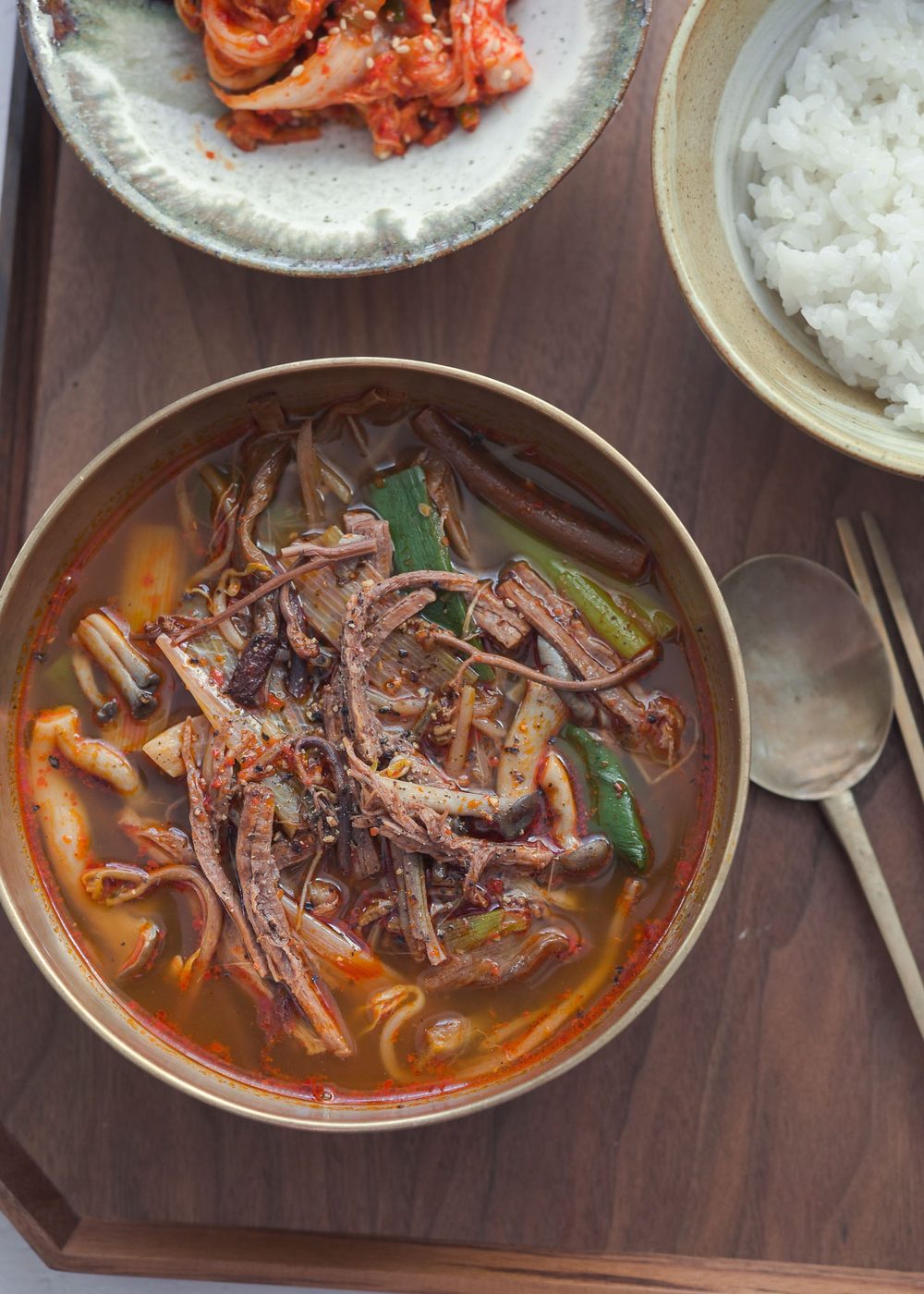
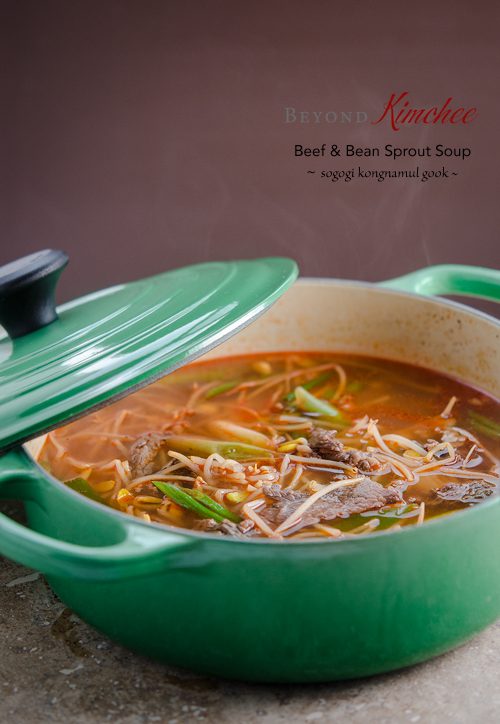
Yukgaejang is a classic Korean beef soup simmered with shredded brisket, leeks, mushrooms, and chili oil for a deeply satisfying, comforting flavor. It’s hearty enough for a full meal and takes about 2 hours from start to finish, most of it hands-off simmering. Steady for cozy weekends or whenever you crave a bowl of real Korean comfort.
There’s something deeply comforting about a steaming bowl of yukgaejang (육개장), the kind of spicy beef soup that warms you from the inside out. Whenever our mother found a good deal on brisket in winter, she made this spicy beef soup, letting it simmer for hours until the kitchen filled with garlic and chili aroma.
We were lucky to handle the spice even as a kid, so we've loved this fiery soup since childhood.
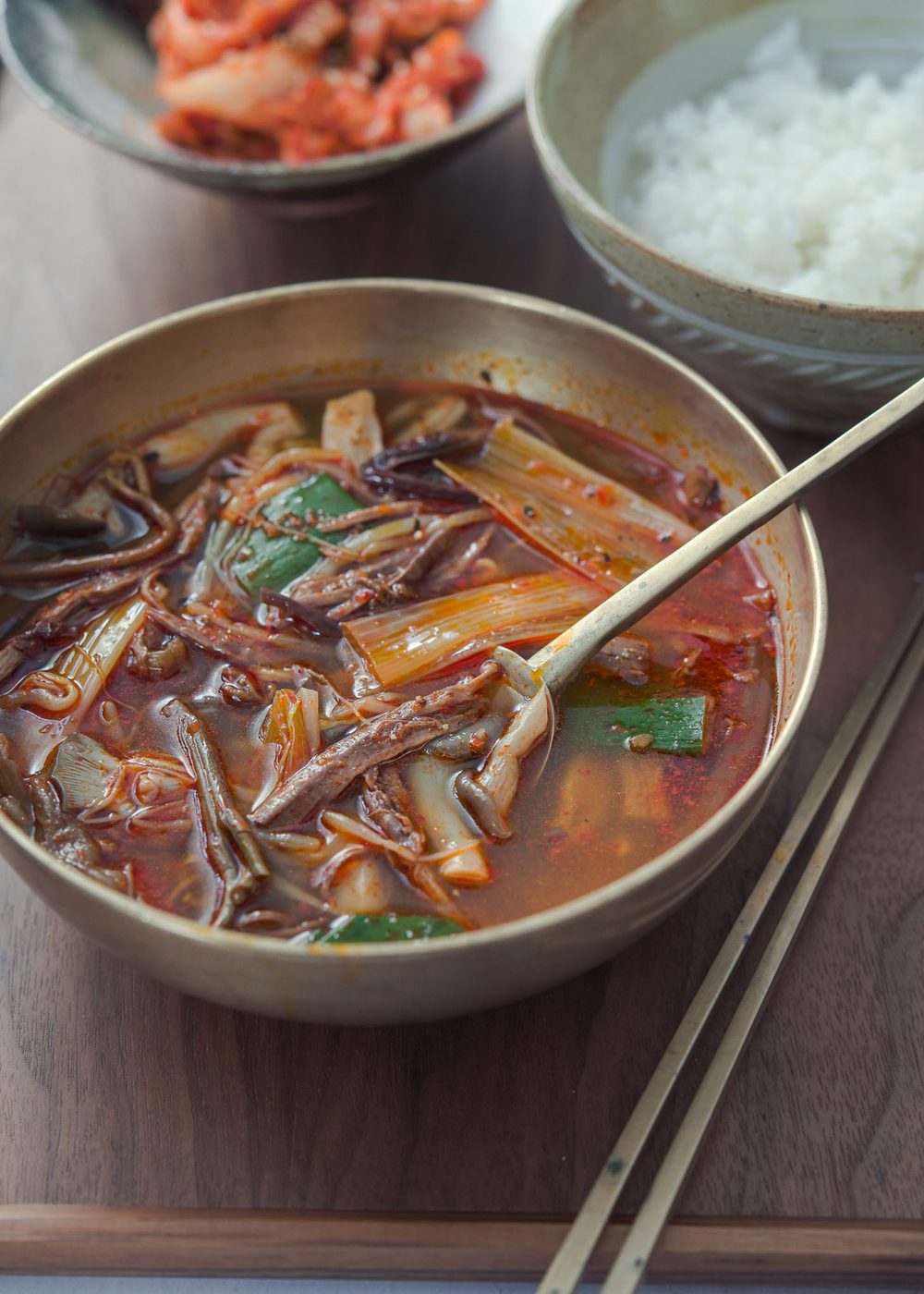
Our version stays true to the old-style method — shredded brisket simmered in a deep red broth with gosari (fernbrake), taro stems, and plenty of leeks. The only twist is our secret trick: a tiny spoonful of gochujang stirred into the broth. It deepens the color and gives the soup just a bit more body without overpowering the classic flavor. Trust us, that small addition makes a big difference.
This isn’t a short soup, nor is it a beginner’s recipe. It takes time, and a little love — but that’s exactly what makes it special. Each spoonful carries a slow-cooked depth that no shortcut can replicate.
Make a big batch while you’re at it; it tastes even better the next day, and you’ll thank yourself when you reheat a bowl for comfort all over again.
For a chicken version, try our Dakgaejang, the spicy chicken soup. If you need a quicker method with simpler prep, try our Instant Pot yukgagejang version with leek and egg.
Key Ingredients That Define Yukgaejang
Every Korean home cook has their own way of making yukgaejang, but a few core ingredients always define this classic soup.
Beef (Brisket or Shank): Brisket is the old-style choice because it turns tender and direct to shred after a long simmer. The slow cooking releases rich, beefy depth into the broth — the foundation of yukgaejang’s flavor. Some Korean cooks also use beef shank for a slightly leaner but equally flavorful base.
Gochugaru (Korean Chili Flakes) and Gochujang: Gochugaru gives the soup its vivid red color and smoky, gentle heat. For a keeper result, we bloom it in oil over low heat to make chili oil — the secret step that infuses every spoonful with warmth and aroma. We also recommend a tiny bit of gochujang to add in the broth to keep the redness throughout.
Dried Fernbrake (Gosari, 고사리): Gosari adds a unique earthy flavor and pleasantly chewy texture you won’t find in other soups. It’s a mountain vegetable used in many Korean dishes (like bibimbap), and here it soaks up the spicy broth beautifully. Make sure to rehydrate and simmer it properly for a keeper texture.
- Whenever we have extra gosari on hand, we also like making gosari namul, the classic Korean fernbrake side dish. It uses the same earthy fernbrake in a much simpler way, seasoned with garlic, soy sauce, and perilla oil.
Taro Stem (Toran, 토란대): Toran brings a subtle nuttiness and sponge-like texture that absorbs the broth’s flavor. It’s one of those old-fashioned ingredients that gives yukgaejang its old-style depth. If you can’t find it, you can skip it or substitute extra leeks and sprouts.
Korean Leek, Mung Bean Sprouts, and Mushrooms: These vegetables bring balance and texture to the spicy broth. Korean leeks (daepa) add gentle sweetness and aroma that soften the chili heat, while mung bean sprouts lend a fresh crunch. Mushrooms — especially oyster or shiitake — add savory depth and soak up the rich chili oil beautifully.
Before You Start: Key Prep Steps
Making yukgaejang the classic way takes patience. Korean home cooks prepare each ingredient separately — simmering the beef, rehydrating the dried vegetables, blanching the fresh ones, and blooming the chili oil. It takes effort, but that’s what gives the soup its deep, layered flavor. Once prepped, the rest comes together quickly
Rehydrating Gosari and Taro Stem
Yukgaejang gets its signature earthy flavor and chewy texture from dried vegetables like gosari (fernbrake) and taro stem (toran). They need a little extra love before cooking.
Bring a pot of water to a gentle boil, add the dried gosari and simmer for about 20 minutes. Remove from heat, cover, and let it soak for another hour until tender. Do the same with the taro stem. Rinse both in cold water several times, then squeeze out excess moisture and cut into bite-size pieces.
These vegetables will expand several times their size, becoming soft yet pleasantly fibrous — the steady base for soaking up that spicy, beefy broth.
Making the Beef Stock
The deep flavor starts with an unfussy beef stock — the quiet backbone of every good Korean soup.
In a large pot, combine beef brisket, Korean radish (mu), onion, and whole garlic. Add water and bring it to a gentle boil, then reduce the heat and let it simmer for about 45 minutes.
The brisket turns tender and direct to shred, while the radish and aromatics create a clean, savory broth. Discard the vegetables, strain the stock, and set the beef aside to cool before shredding.
Blanching the Vegetables
This short step keeps the vegetables crisp and clean-tasting so they don’t cloud the broth later.
We like to remove the pale green cores from the white parts of the Korean leeks, they tend to be a bit tough once cooked.
The goal isn’t to cook them through but to remove any raw edge or bitterness, adding the steady contrast to the tender beef and rich chili oil.
Step-by-Step: How to Make Yukgaejang
Once all your ingredients are prepped, it comes together quickly. To see exact measurements and detailed cooking instructions, check the recipe card below.
Start by blooming gochugaru (Korean chili flakes) in oil and sesame oil. Use low heat when blooming gochugaru so it turns fragrant, not bitter. This brings out its rich red color and aroma. Yukgaejang should feel warming, not harshly spicy, so you can reduce the gochugaru a bit if you prefer a milder bowl.
Next, add the shredded beef and blanched vegetables, stirring until they’re evenly coated in the chili oil.
When you pour in the rich beef stock, the soup instantly takes on that signature deep red hue.
A small spoonful of gochujang (chili paste) adds body and keeps the color vibrant without overpowering the broth. Simmer gently until everything comes together.
To finish, season with soy sauce, Korean soup soy sauce, and anchovy sauce. Each one adds a different layer of saltiness and umami.
Don’t forget plenty of black pepper. Yukgaejang should have that subtle peppery heat that lingers at the end.
Serving and Storage Tip
Yukgaejang is best served piping hot with a bowl of steamed rice and a few side dishes like kimchi or kkakdugi (radish kimchi). Some people mix the rice right into the soup, while others take spoonfuls of rice between bites — both are completely old-style.
Like many Korean soups, yukgaejang tastes even better the next day. As it rests, the flavors deepen, the heat softens, and the beef becomes wonderfully tender. Store leftovers in the refrigerator for up to a week, or freeze portions for up to 3 months. Reheat gently over medium heat so the broth stays rich and clear.
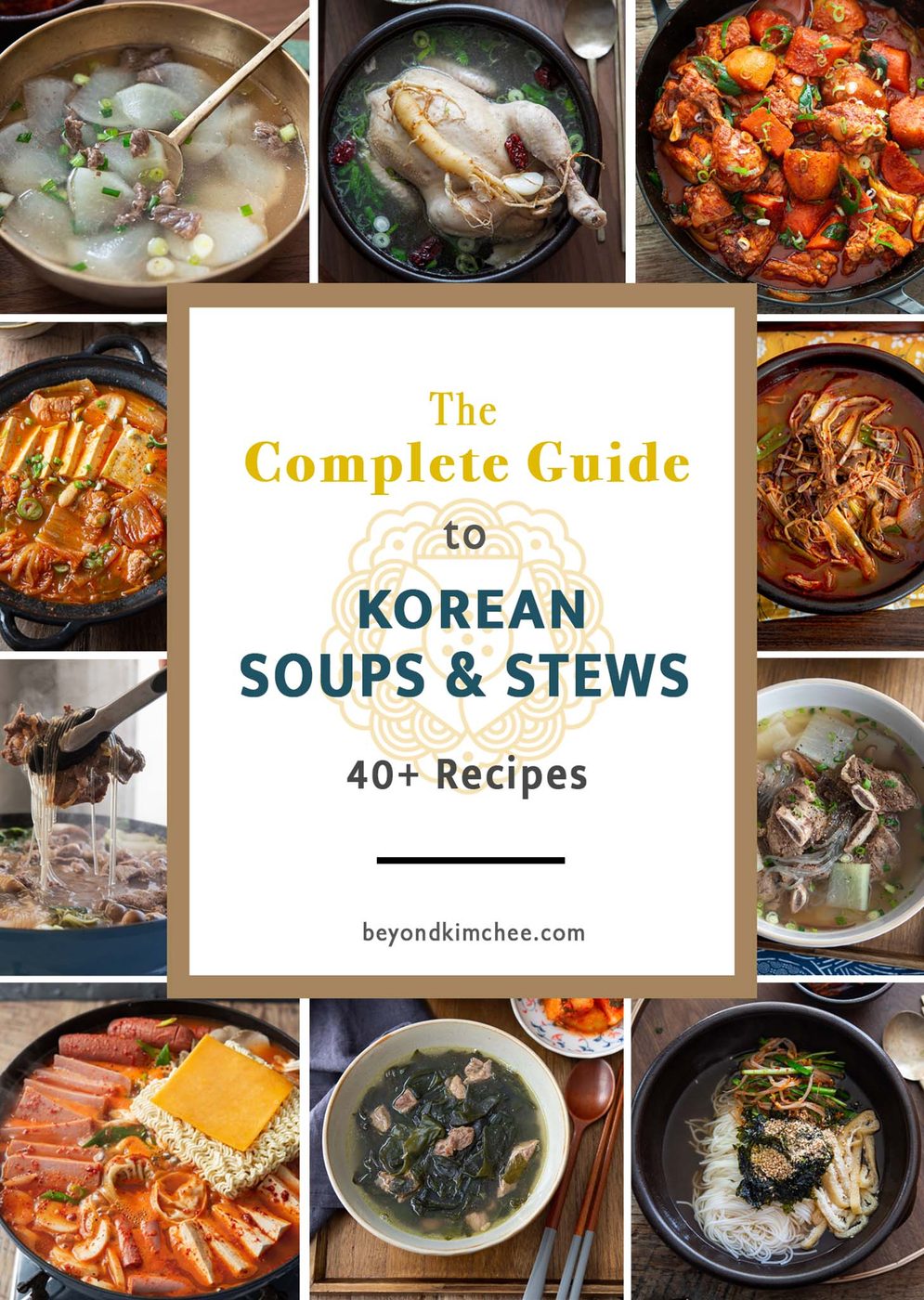
If you’d like a milder beef option, our galbitang (Korean short rib soup) is another classic Korean comfort soup. And whenever you’re in the mood for more cozy Korean soups, you can explore our Korean Soups & Stews category.
This recipe was originally posted in December 2012. We've updated the recipe with a few changes, new photos, and more information.
- Yield: 8 people
- Prep: 10 minutes
- Cook: 1 hour
- Total: 2 hours 10 minutes
Ingredients
For beef soup
- 0.8 oz (22g) dried fernbrake
- 1 oz (28g) dried taro stem, optional
- 8 oz (225g) mungbean sprouts
- 5 oz (140g) oyster mushroom, or shiitake mushroom, torn into bite size pieces
- 2 Asian leek
- 3 cloves garlic, minced
- 1 tsp (5 ml) Korean chili paste (gochujang)
- 1 tbsp (15 ml) soy sauce
- 3 tbsp (45 ml) Korean soup soy sauce (gukganjang)
- 1 1/2 tbsp (22 ml) Korean anchovy sauce
- salt and pepper, to taste
For beef stock
- 1 1/4 lb (560 g) beef brisket
- 1 large onion, cut in half
- 1 whole garlic, cut in half
- 1/2 lb (225g) Korean radish, cut into large chunks
- 14 cups (about 3 liter) water
For chili oil
- 2 tbsp (30 ml) oil
- 2 tbsp (30 ml) sesame oil
- 3-4 tbsp (30–40 g) Korean chili flakes (gochugaru)
Method
- To rehydrate the dried vegetables:
- To make the beef stock:
- To blanch the fresh vegetables:
- To make the soup: