Soups and stews
Tomato Kimchi Stew, for the banchan spread
Tomato gives a flavor twist to the old-style Korean kimchi stew (kimchi jjigae). The tomato sauce in the kimchi stew will brighten up the flavor without tasting it.
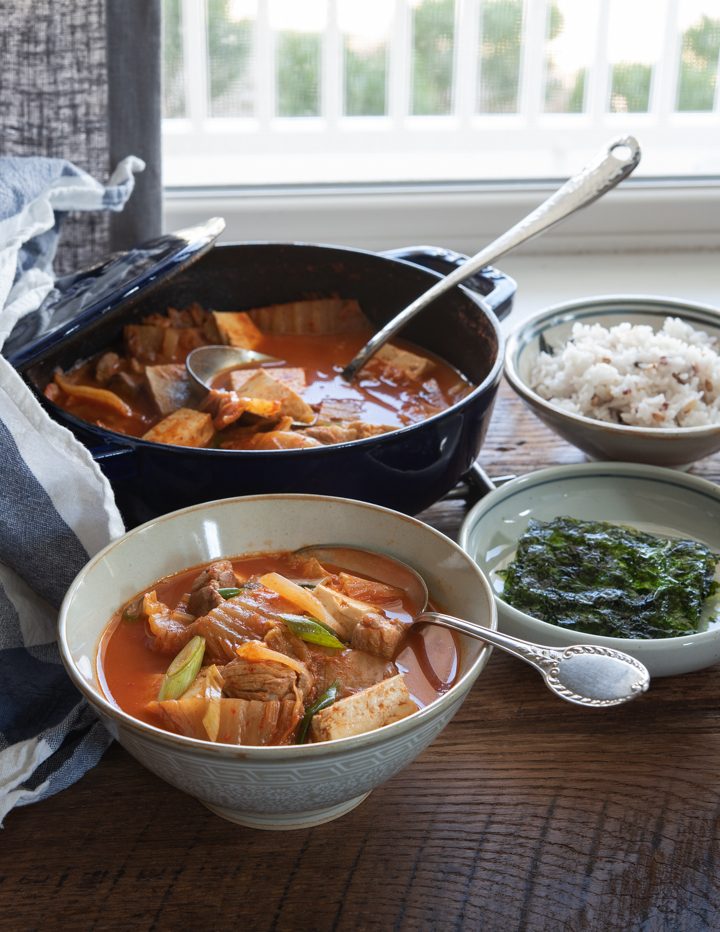
Tomato adds a little flavor twist to the old-style Korean kimchi stew (kimchi jjigae). The tomato sauce in the kimchi stew will brighten up the flavor without tasting it. This gluten-free tomato kimchi stew is direct and unfussy enough that anyone can make and enjoy.
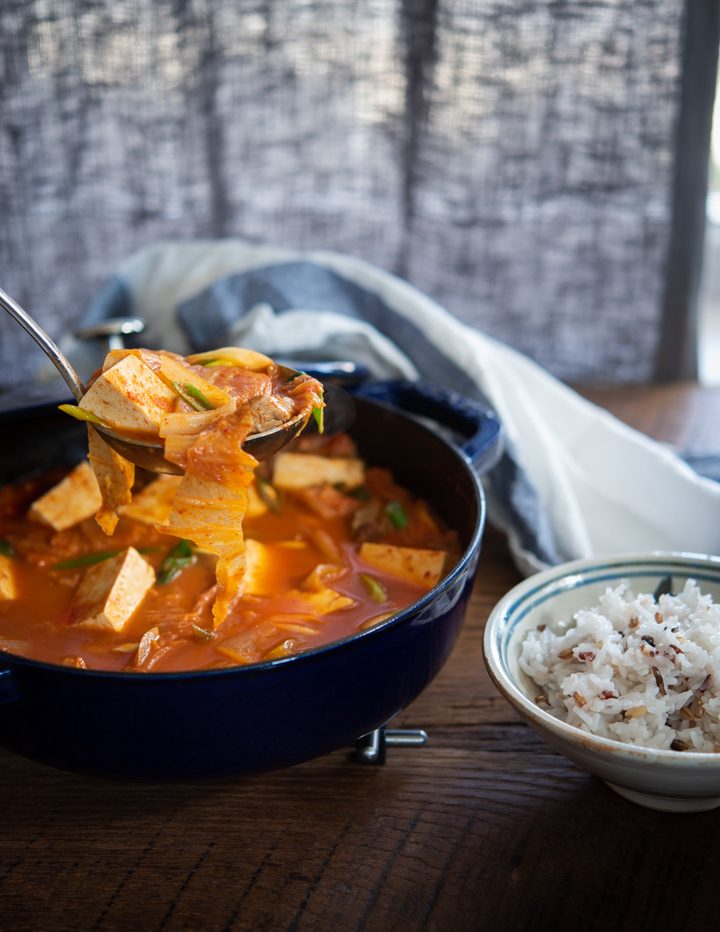
Kimchi stew (kimchi jjigae) is beloved Korean stew dish. Combination with pork is the most common version that people enjoy. Have you tasted kimchi stew made with tomatoes? It sounds weird but it is tasty.
You don’t taste the prominent tomato flavor in the stew but the tomatoes make the flavor of broth so intriguingly tasty and lovely.
Here we turned the tradition Korean pork kimchi stew with tomatoes, and it’s gluten-free! If you try it, you will see what we mean.

Fermented Kimchi and Tomatoes for Kimchi Stew
The vibrant flavor of tomatoes pairs fermented kimchi to another level. We love the refreshing taste the tomato brings to the broth that balances the meaty flavor from the pork.
You can use fresh tomatoes but we like to use canned tomato sauce. Mainly because it is convenient. You can even try with tomato juice or crushed tomatoes with the equal amount.
Cook’s Tip
- Use pork shoulder or pork butt instead of lean pork loin. You will need a little bit of fat content in the pork to bring the maximum taste.
- Freshly made kimchi doesn’t bring the deep robust flavor of kimchi stew. Use sour cabbage kimchi for a keeper result. The sourer, the better. You will need to add a tiny amount of sugar to balance out the acidity.
- Use soft tofu in the stew. They tend to soak up the flavor of stew better than the from kind.
- We like to use rice starch water to naturally thicken the broth. You will find how direct it is to get the rice starch water from just washing the rice in the link. You can use plain water if rice starch water is not available.
How the dish comes together
Heat oil in a pot over medium-high heat, saute onion and pork for 2-3 minutes. Add the diced kimchi and sugar.
Continue to saute for another 2 minutes
Pour the rice starch water into the pot.
And add the tomato sauce.
Add the kimchi liquid and stir well and bring to gentle boil. Reduce the heat to low and cover; simmer for 15-20 minutes.
Add the sliced tofu and green onion; heat through for 3-4 minutes. Season with Korean soy sauce for soup according to your taste.
Serving and Storage Suggestion
Serve this stew hot with a bowl of rice. Try with the roasted seaweed sheets when you serve kimchi stew. Your Korean friend will be impressed.
Store the leftover stew in the refrigerator up to 1 week. To reheat, warm it up in a pot on the stove or microwave until hot.
Other Kimchi Stews You might like
- Yield: 4 people
- Prep: 5 minutes
- Cook: 25 minutes
- Total: 30 minutes
Ingredients
- 1 tbsp cooking oil
- 1/2 lb pork shoulder or pork butt
- 1/2 onion, sliced
- 2 cup diced sour cabbage kimchi
- 1 tsp sugar
- 2 1/2 – 3 cup rice starch water or plain water
- 1 can, 8 oz tomato sauce
- 3 tbsp kimchi liquid
- 1 pkg (8 oz) soft tofu
- 1 green onion, sliced
- 1 tbsp Korean soup soy sauce (gukganjang)
Method
- Heat oil in a soup pot over medium hight heat. Add the pork and onion and cook for 2-3 minute until pork is no longer in pink.
- Add the kimchi and sugar; continue to cook for 2 minutes. Add the rice starch water, tomato sauce, kimchi liquid; stir well and bring to a gentle boil. Over with a lid and reduce the heat to low. Simmer the stew for 15-20 minutes.
- Add the tofu and green onion; heat through for 3-4 minutes. Season the stew with Korean soy sauce for soup according to your taste. Serve hot with rice