Kimchi
Vegan Kimchi Without Fish Sauce, for a home table
Make classic vegan kimchi at home with fruit-vegetable stock and Korean soup soy sauce. Packed with bold flavor but completely plant-based—this kimchi ferments beautifully without fish sauce.
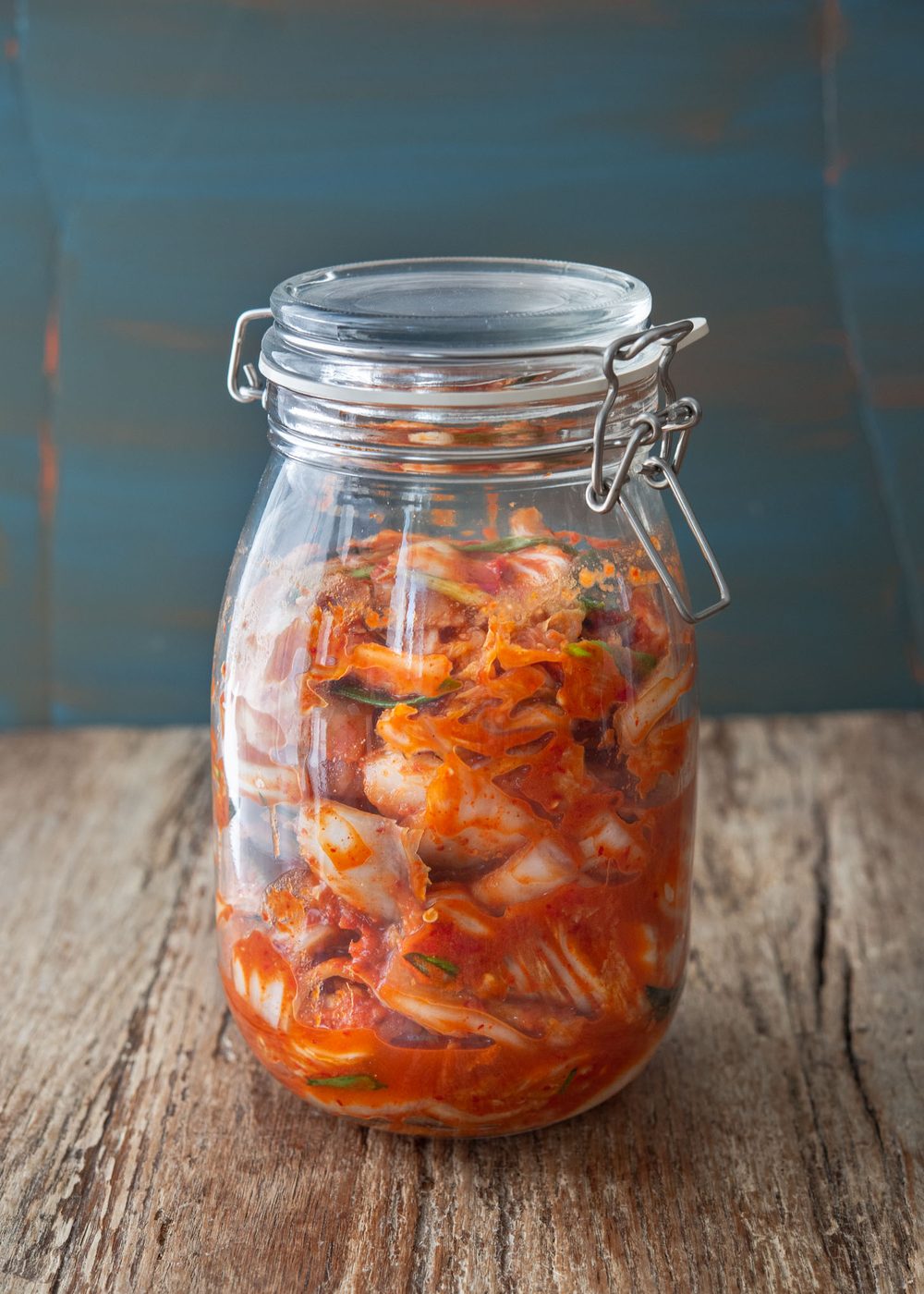
Kimchi doesn’t need fish sauce to taste classic. This vegan kimchi recipe uses Korean soup soy sauce (guk-ganjang) and fruit-vegetable stock for deep umami flavor. Inspired by Buddhist temple cuisine, it’s light, refreshing, and completely plant-based.
We still remember visiting a few Korean Buddhist temples and being struck by how flavorful their cooking was, even without a trace of meat or seafood. Their kimchi in particular amazed us. It had the same tangy, spicy depth we grew up with, yet it was completely plant-based.
That memory inspired us to create our own vegan kimchi recipe. By using a pear-apple stock and Korean soup soy sauce (guk-ganjang), we've found a way to capture classic umami without fish sauce.
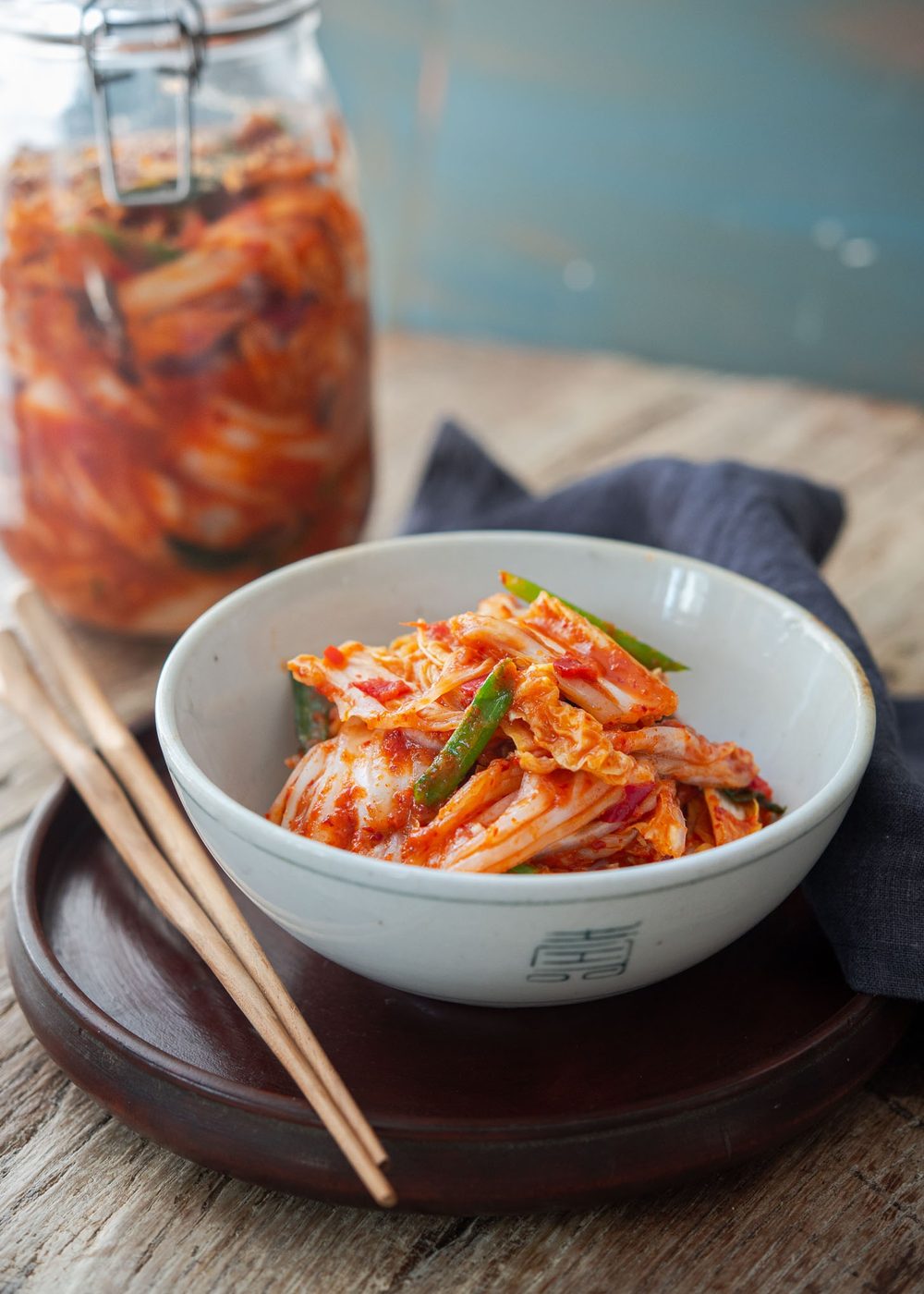
The result is light, crisp, and deeply satisfying—steady for anyone craving classic Korean flavor in a vegan-friendly way, or for those who can’t eat seafood but still want the deep, robust taste of old-style kimchi.
What Makes This Vegan Kimchi Classic
When we first started experimenting with vegan kimchi, we noticed that many versions lacked depth. Old-style kimchi relies on fish sauce or salted shrimp for umami, and simply replacing it with soy sauce or skipping it altogether left the flavor a little flat.
Over the years, we've found that the key to a more classic taste is Korean soup soy sauce (guk-ganjang) combined with a light pear-apple stock. The soy sauce adds clean, savory depth while the fruit stock brings natural sweetness and balance. Together, they create the same layered flavor of old-style kimchi, without muting the kimchi’s vibrant red color.
This method is deeply rooted in Korean Buddhist temple cuisine. In fact, many temple kimchi recipes traditionally use guk-ganjang as their seasoning base. It’s how monks and temple cooks developed rich flavors without seafood for centuries, and that tradition directly inspired the approach we use here.
Key Ingredients for Flavor (and Substitutions)
- Napa Cabbage: The classic choice for kimchi, giving crisp texture and natural sweetness. If Napa isn’t available, green cabbage works too. We share a full method in our green cabbage kimchi recipe.
- Korean Soup Soy Sauce (Guk-ganjang): The backbone of classic vegan kimchi. Unlike regular soy sauce, it’s lighter in color and deeply savory, so it seasons without darkening the chili paste. Many temple-style kimchi recipes rely on it as their main umami source.
- Fruit & Vegetable Stock: Made with pear, apple, radish, onion, and sea kelp. This is our key to balancing saltiness with natural sweetness—no sugar needed.
- Starch Base (Potato or Rice): A small amount of starch feeds the beneficial bacteria that drive fermentation, ensuring the kimchi develops properly.
- Korean Red Chili Flakes (Gochugaru): Essential for flavor and aroma. The coarse texture and fruity heat can’t be replaced with generic chili powder.
How the dish comes together
Slicing the cabbage: Cut the cabbage into even bite-sized pieces, keeping the leafy parts slightly larger and the thick ribs a bit smaller. This balance helps everything brine and ferment at the same pace, so you don’t end up with leaves that go limp while the stems stay tough.
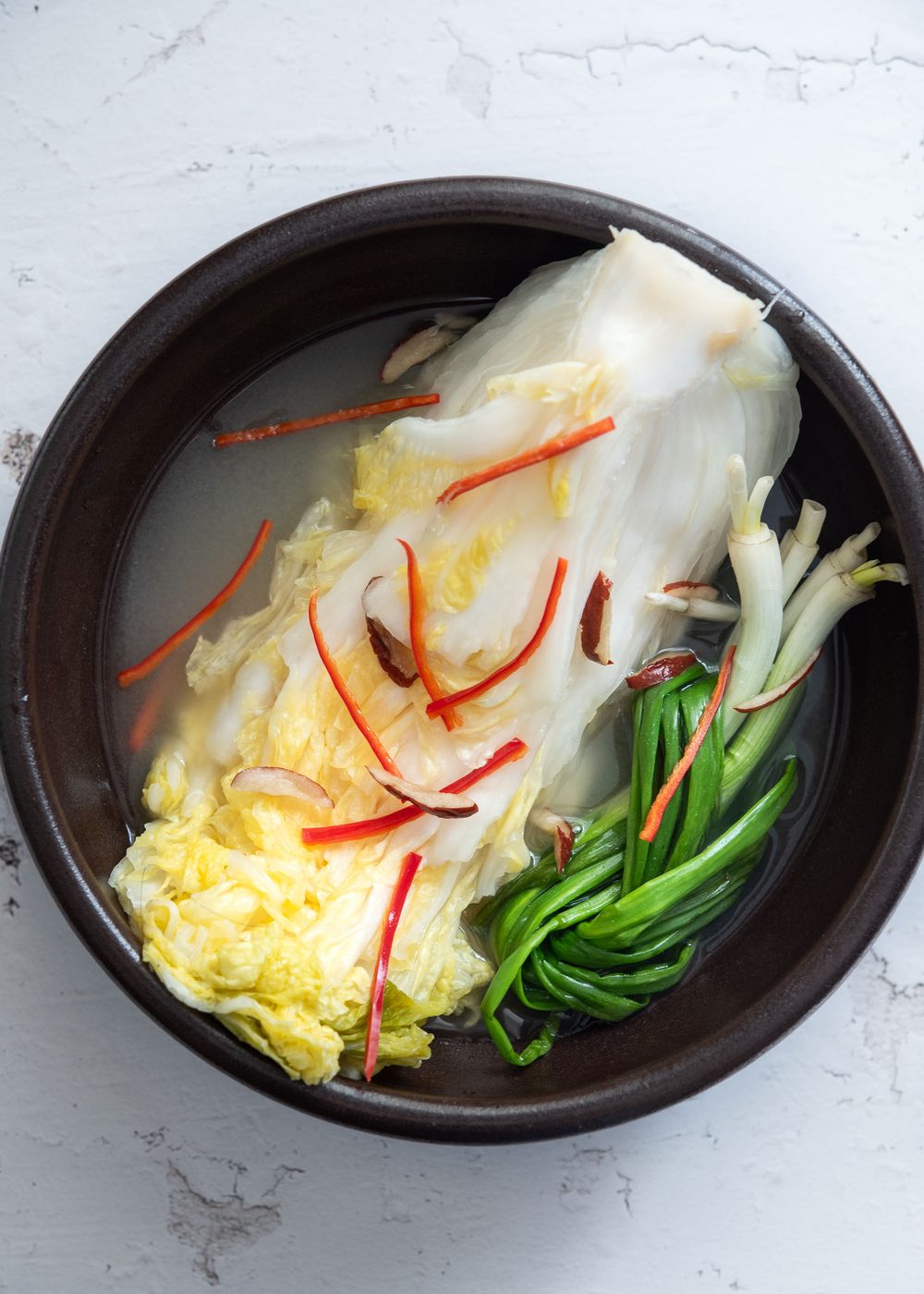
Salting the cabbage: Sprinkle coarse salt between the layers as you go, letting the cabbage rest so it can draw out moisture. You’ll notice the leaves begin to soften and release water—this is the sign the salt is pulling moisture for fermentation.
Rinse the cabbage: Once the stems bend without snapping, rinse the cabbage thoroughly in cold water three times. This not only removes excess salt but also washes away any grit hidden between the leaves. Let it drain well in a colander—too much leftover water can dilute the kimchi paste and weaken the flavor.
Preparing the base stock: A light pear-apple stock balances out the chili paste. This method is common in temple cooking and removes the need for added sugar.
Blending the paste: We puree the aromatics with potato or rice starch. It feeds the lactic acid bacteria that drive fermentation.
Mixing in the chili flakes: Letting the gochugaru hydrate in the paste for a few minutes deepens both the color and flavor.
Coating the cabbage: Use kitchen rubber gloves and toss gently so each piece gets evenly coated. If you like a juicier kimchi, swirl leftover stock in the mixing bowl and add it to your jar.
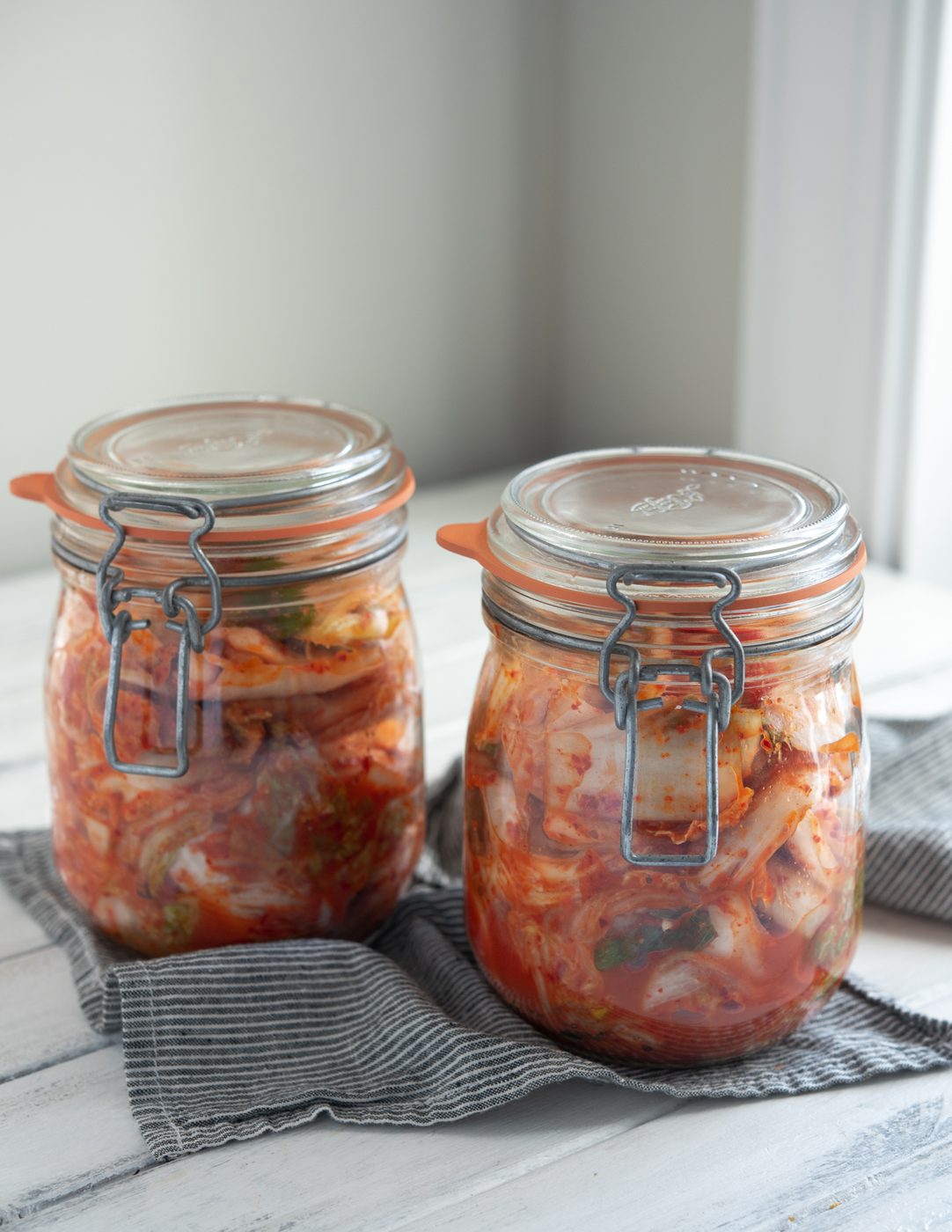
Fermentation: Leave the jar loosely covered at room temp for a day or two. You’ll see small bubbles rising—this is the natural fermentation at work.
Serving Ideas for Vegan Kimchi
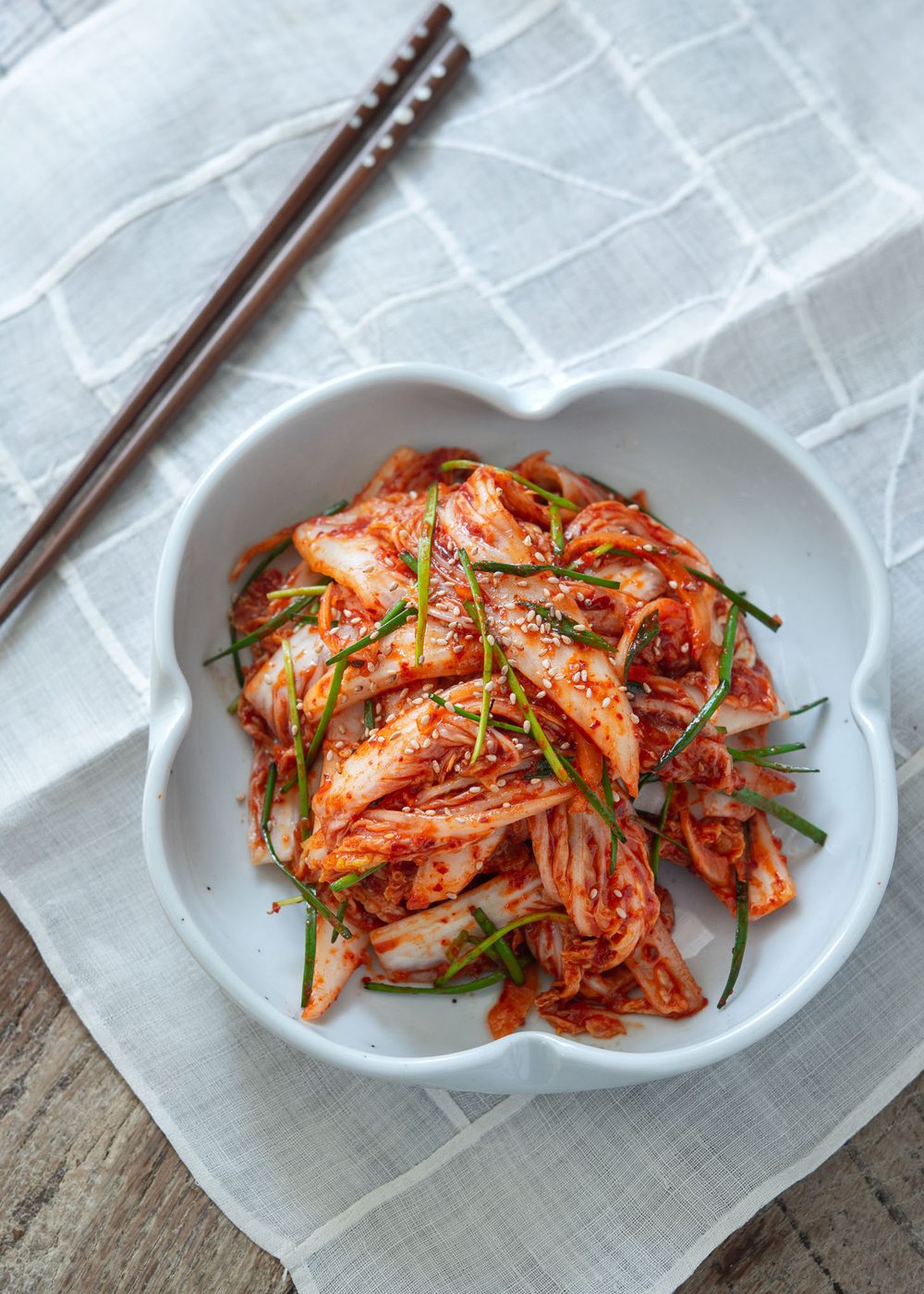
We love freshly made kimchi with an unfussy bowl of rice, but it also brings flavor to so many other dishes. Toss it into a short kimchi fried rice, layer it in vegan kimbap, or stir it into a warming kimchi jjigae.
Slightly older kimchi is our favorite for savory kimchi pancake. It gives them the tang and depth you can’t get any other way.
- Yield: 24 people
- Prep: 20 minutes
- Cook: 20 minutes
- Total: 2 hours 40 minutes
Ingredients
- 4 1/2 lb (2 kg) napa cabbage
- 1 1/2 cup (360 ml) Korean coarse sea salt, or 1/3 cup kosher salt
For vegetable-fruit stock
- 1/2 large onion, or leek, sliced
- 1/4 lb (113 g) Korean radish, or daikon radish, diced
- 2 large pieces dried sea kelp (dashima)
- 1/2 Asian pear or Bosc pear
- 1/2 sweet red apple
- 6 cups (1.4 liter) water
For kimchi paste
- 1/2 large onion, diced
- 10 cloves garlic
- 1-2 inch (2.5–5 cm) ginger, peeled and diced
- 1/2 (150 g) Asian pear or Bosc pear, peeled, cored, and diced
- 1/2 (100 g) sweet red apple, cored, and diced
- 4 tbsp (60 g) cooked plain potato, or white rice
- 4-5 fresh red fingerlong chilies, diced, optional
- 2/3 cup (160 ml) Korean chili flakes (gochugaru)
- 4 tbsp (60 ml) Korean soup soy sauce (gukganjang)
- 1 bunch (100 g) green onion, sliced
Method
- Cut the cabbage in half lengthwise, and separate the halves by hand and then repeat the process to make quarters. Rinse the cabbage and chop it into 2-inch pieces.
- Spread a small portion of cabbage in a large bowl, sprinkle 3-4 tablespoons of coarse salt (1 tablespoon for kosher salt) evenly, and repeat until all the cabbage is used. Sprinkle with water occasionally if the cabbage seems dry and push it down with your hands. Let it soak for 1 1/2 to 2 hours, turning it around halfway through. Rinse the cabbage thoroughly 3 times and drain well in a colander.
- While the cabbage is brining, make the vegetable-fruit stock by combining pear, apple, radish, onion, dried sea kelp, and water in a pot. Boil and then simmer over medium heat for 20 minutes, removing the sea kelp after 5 minutes. Discard the ingredients and reserve 1-1/2 cups of stock. Let it cool.
- Process onion, garlic, ginger, pear, apple, cooked potato (or white rice), and 1/2 cup of stock in a blender until smooth. If using fresh red chili, add the slices at the end and pulse a few times.
- Pour the puree into a mixing bowl and add Korean chili flakes, Korean soup soy sauce, and mix well. Let it sit for 5 minutes so that the chili flakes can absorb the seasoning and rehydrate.
- In a large mixing bowl, combine the cabbage and sliced green onion, add the kimchi paste, and toss well to coat all the cabbage pieces.
- Transfer the kimchi into a storage container. If you want extra kimchi brine, add the remaining 1 cup of stock to the mixing bowl you assembled the kimchi in. Rinse the bowl to collect all the residue of kimchi paste and pour it over the kimchi.
- After preparing the kimchi, let it sit at room temperature for 1-2 days to allow the fermentation process to start. Then, transfer the kimchi to the refrigerator to let the flavors develop fully. See the recipe notes below for more information.
Notes
Tips for Fermenting and Storing Kimchi:
To preserve the flavor of your kimchi, use an airtight container.
Do not fill the container to the top, but leave at least 1/5 of the container empty to allow the kimchi to expand during fermentation.
Allow the kimchi to sit at room temperature for 1-2 days, depending on the temperature, and then store it in the refrigerator for an additional 2-4 days for ideal fermentation.
As kimchi ferments, it creates an odor. To prevent the spread of the odor, keep 1-2 boxes of fridge baking soda in your refrigerator.