Soups and stews
Korean Army Stew: Budae Jjigae
Budae Jjigae, Korean Army Stew, is a spicy, hearty fusion of Korean and American flavors. Loaded with Spam, sausage, kimchi, and ramen, it’s the ultimate hot pot to share with family and friends.
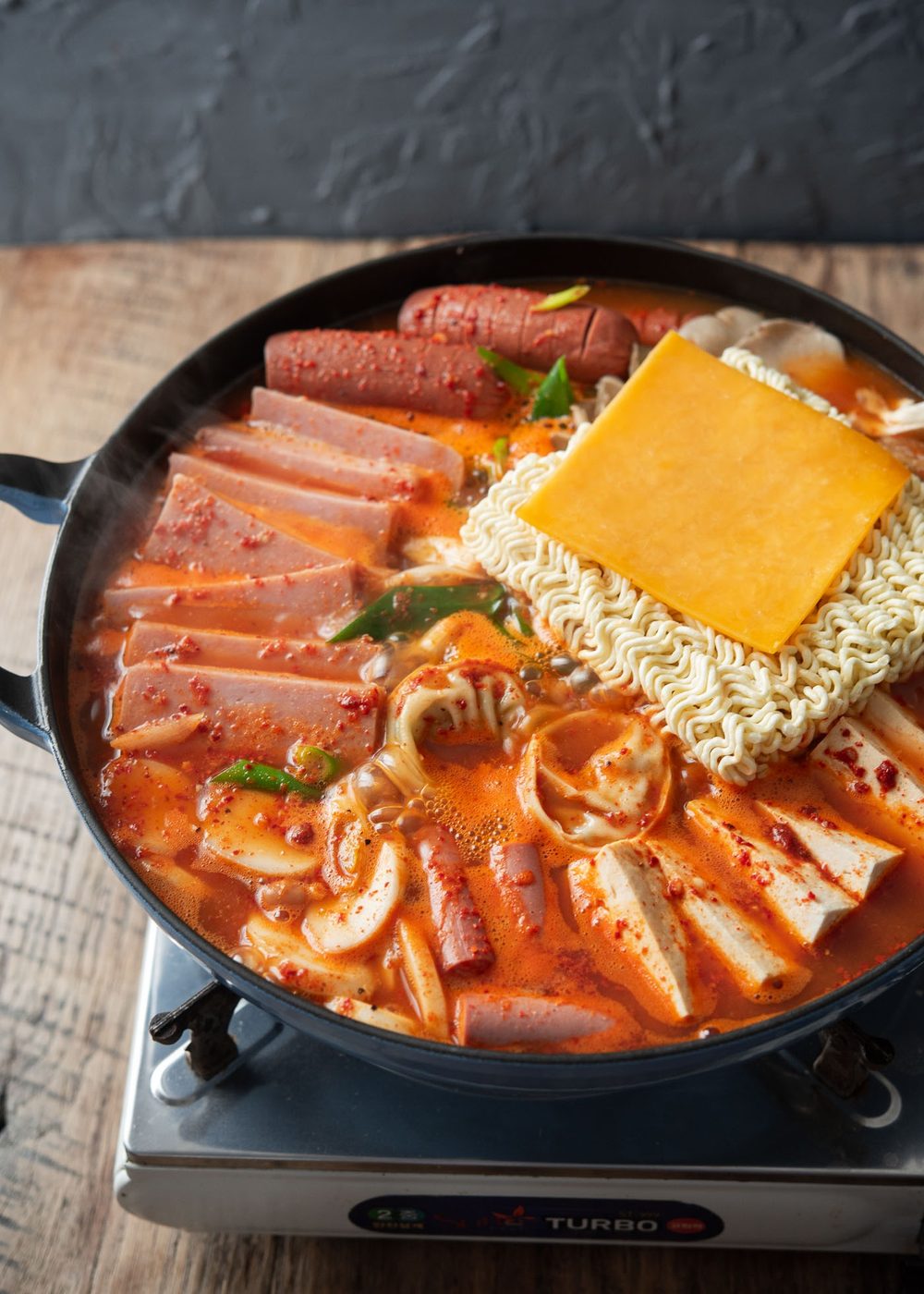
Budae Jjigae (Korean Army Stew) is a bold, spicy hot pot packed with Spam, sausage, kimchi, and ramen noodles. This comforting one-pot meal blends Korean flavors with American influence — hearty, savory, and steady for sharing.
Korean Army Stew (Budae Jjigae) was first created near Uijeongbu, a northern city just outside Seoul where a U.S. military base was located. After the Korean War, local cooks began making hearty stews from surplus canned meats supplied by the base.
Over time, it evolved into a beloved comfort food across Korea, cherished for its rich, spicy, and umami-packed flavor. We still remember our first taste of classic budae jjigae as a college student visiting Uijeongbu.
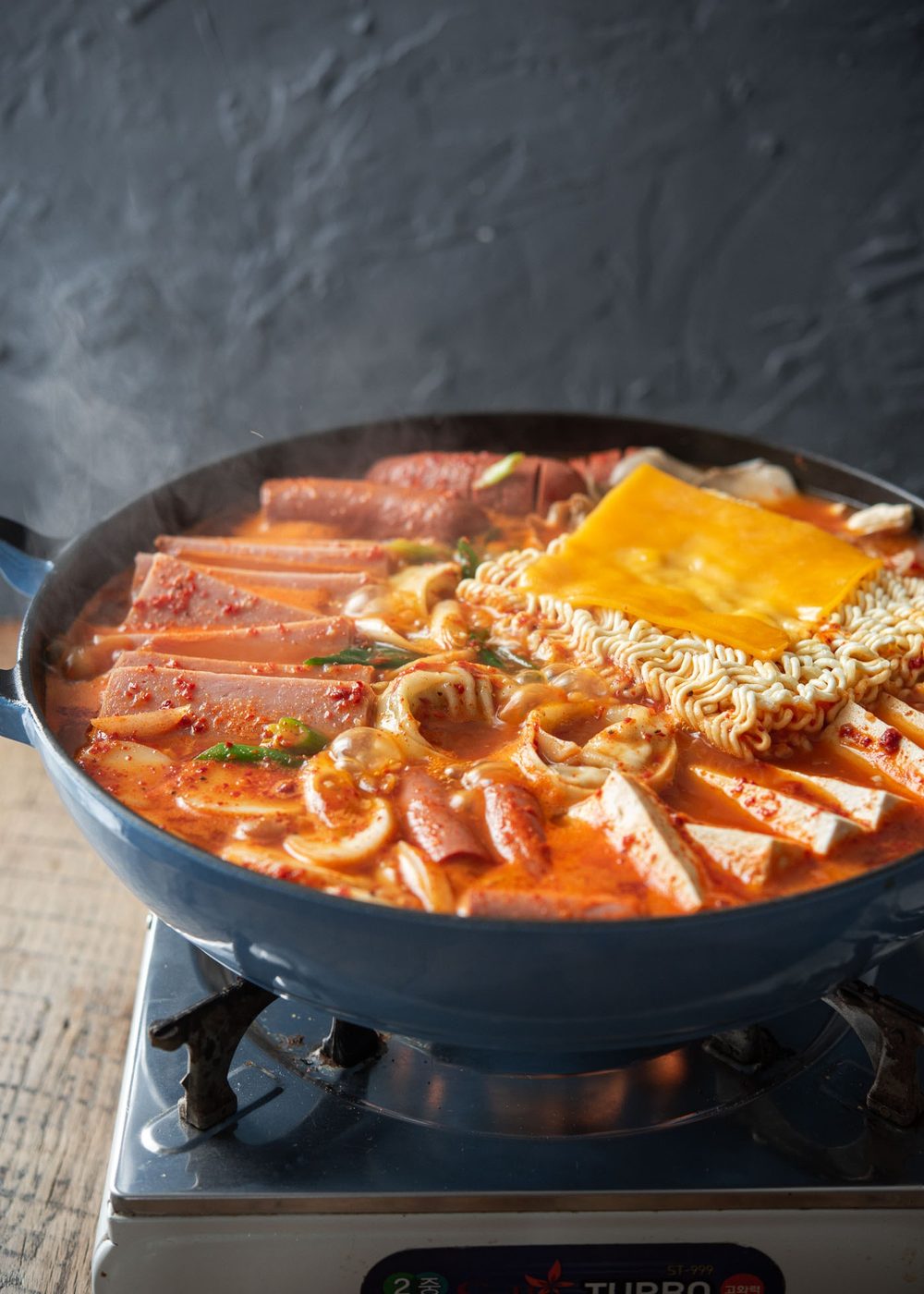
That unforgettable flavor inspired the version we're sharing today — an unfussy way to make this iconic Korean army stew at home. Whether you’re cooking it for the first time or craving a nostalgic taste of Seoul, this recipe captures the bold, spicy essence of Korea’s popular fusion stew.
Featured ReviewRead more reviews“Made the stew a few days ago. It was a total hit. Pan was licked clean in no time. We will definitely be having this again. Extremely convenient. Perfectly spiced, the umami was oooooo mama”
SuZQ
Ingredients & Substitution Tips for Korean Army Stew
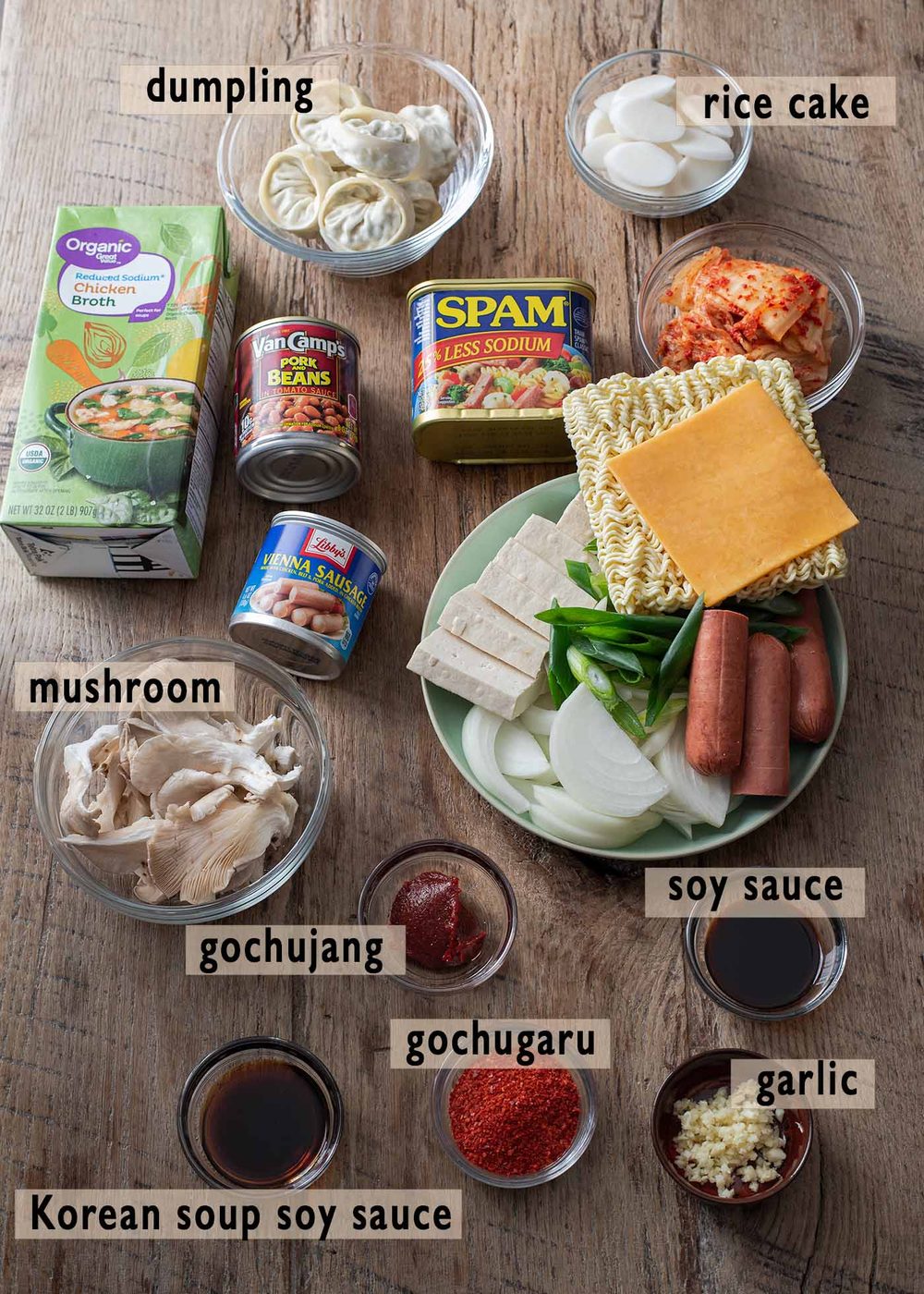
To make Budae Jjigae (Korean Army Stew), you’ll need a few staple Korean condiments like gochujang (Korean chili paste), gochugaru (chili flakes), soy sauce, and garlic—plus the signature canned meats that give this stew its bold, savory flavor.
The ingredient list might look long, but it’s flexible. Feel free to adapt it with what you have on hand or your own favorites. After all, a keeper budae jjigae recipes are the ones you make your own.
Notes on Canned and Processed Meats
- Spam: We use the Spam brand low-sodium version because it’s the classic choice for Budae Jjigae. We've tested other brands, but none match Spam’s flavor and texture—it defines the taste of this stew. Try our Spam kimchi jjigae for another savory way to use Spam.
- Pork & Beans: A must for that original “army base” flavor. Its sweetness balances the spicy broth beautifully. We've tried making the stew without it before, but it always feels like something’s missing.
- Vienna Sausage: Another nostalgic staple. For a heartier variation, replace it with minced pork or sliced pork belly.
Optional Add-Ins
To make your Korean army stew more satisfying, we like adding kimchi, frozen dumplings, and mushrooms. They add texture and depth while soaking up the spicy broth. These ingredients are direct to find at most Korean or Asian markets, so mix and match to suit your taste.
How the dish comes together
Here’s a step-by-step visual guide with tips from our kitchen. You’ll find exact measurements and timing in the recipe card below.
Make the seasoning sauce. In a small bowl, mix together the chili flakes, gochujang, soy sauces, garlic, and black pepper until smooth. The sauce should look thick and deep red — that’s the base of the stew’s spicy flavor.
Arrange the ingredients in layers. Line the bottom of your shallow pot with onion slices. Then neatly arrange Spam, sausages, tofu, kimchi, and other ingredients in clusters. This helps them cook evenly and gives the stew its signature “hot pot” look when served at the table.
Add noodles, cheese, and broth. Top with instant ramen noodles and a slice of cheese, then pour in enough chicken stock to just cover everything.
Tip: We prefer using low-sodium chicken stock or Korean oxbone broth (sagol gukmul). It gives the soup a deeper, restaurant-style richness. Through testing, we've found that using plain water makes the flavor noticeably flat and less satisfying.
Bring to a boil, then simmer. Once the broth starts bubbling, reduce the heat and let the ingredients simmer gently. Stir the seasoning paste into the broth so the spicy base blends evenly. You’ll notice the broth turning rich red as the flavors meld together.
Cook the noodles. Add the ramen noodles just before serving and cook until chewy. They’ll continue softening in the hot broth, so timing is key for the steady texture.
How to Serve and Enjoy
In Korea, Budae Jjigae is meant to be shared right from the bubbling pot. We like to cook it on a portable burner at the table so everyone can enjoy it hot and fresh.
Start enjoying with the noodles while they’re still chewy—they soften quickly in the spicy broth. As the level drops, pour in a little extra stock to keep the stew simmering. That continuous cooking makes the flavors deepen with each bite.
Serve it with a bowl of steamed rice to soak up the rich broth, and maybe one light side like Korean soybean sprout salad (Kongnamul Muchim) for contrast. The simplicity of this setup is what makes budae jjigae such a comforting, social meal.
Save
Save
Save
- Yield: 4 people
- Prep: 15 minutes
- Cook: 15 minutes
- Total: 30 minutes
Ingredients
Budae jjigae sauce
- 3 tbsp (24 g) Korean chili flakes (gochugaru)
- 1 tbsp (20 g) Korean chili paste (gochujang)
- 2 tbsp (30 ml Korean soup soy sauce (gukganjang)
- 1 tbsp (15 ml) soy sauce
- 1 tbsp (15 g) minced garlic
- 1/2 tsp (1 g) black pepper
Budae jjigae hot pot
- 12 oz (340 g) can Spam, sliced
- 8 oz (227 g) can pork and beans
- 4.6 oz (130 g) can Vienna sausage, drained
- 3 hot dogs, sliced in half
- 1 lb (450 g) firm tofu, sliced
- 2/3 cup (160 ml) sour kimchi, sliced
- 1/2 onion, sliced
- 3 oz (85 g) mushroom (any choice), sliced
- 4 cup (960 ml) chicken stock, low sodium
- 1 package instant ramen noodles, noodles only
Optional ingredients
- 1 slice cheddar cheese
- 1/3 lb (150 g) minced pork
- 6 frozen dumplings
- 3 oz (85 g) rice cake rounds
- 1/2 Asian leek, sliced
Method
- To prepare Budae jigae sauce, mix together Korean chili flakes (gochugaru), gochujang, soy sauces, garlic, and pepper in a small mixing bowl; set aside.
- Assemble the stew: Place the sliced onions at the bottom of a large, shallow pot. Layer the Spam, hot dogs, Vienna sausage, tofu slices, pork and dumpling pieces, rice cakes, kimchi, mushrooms, and green onions on top of the onions in an even, visually appealing arrangement.
- Place the instant ramen noodles and the cheese slice over the layered ingredients. Spoon the prepared seasoning sauce on top of the noodles and other ingredients.
- Carefully pour in enough chicken stock to just barely cover all the ingredients. This will ensure the stew has enough liquid to cook and develop deep flavors without becoming too watery.
- Place the pot on the stove (or on a portable burner at the table for an authentic dining experience). Bring the stew to a boil over medium-high heat. Once it starts boiling, reduce the heat to low and let it simmer.
- Stir the seasoning paste into the broth to evenly distribute it throughout the stew. Gently stir the ramen noodles as they cook to ensure they soften evenly in the simmering stock.
- Serving Tip: For the best texture, enjoy the noodles first while they’re still chewy, and refill the broth as needed.