Seafood
Red Snapper and Korean Chili Sauce, broiled
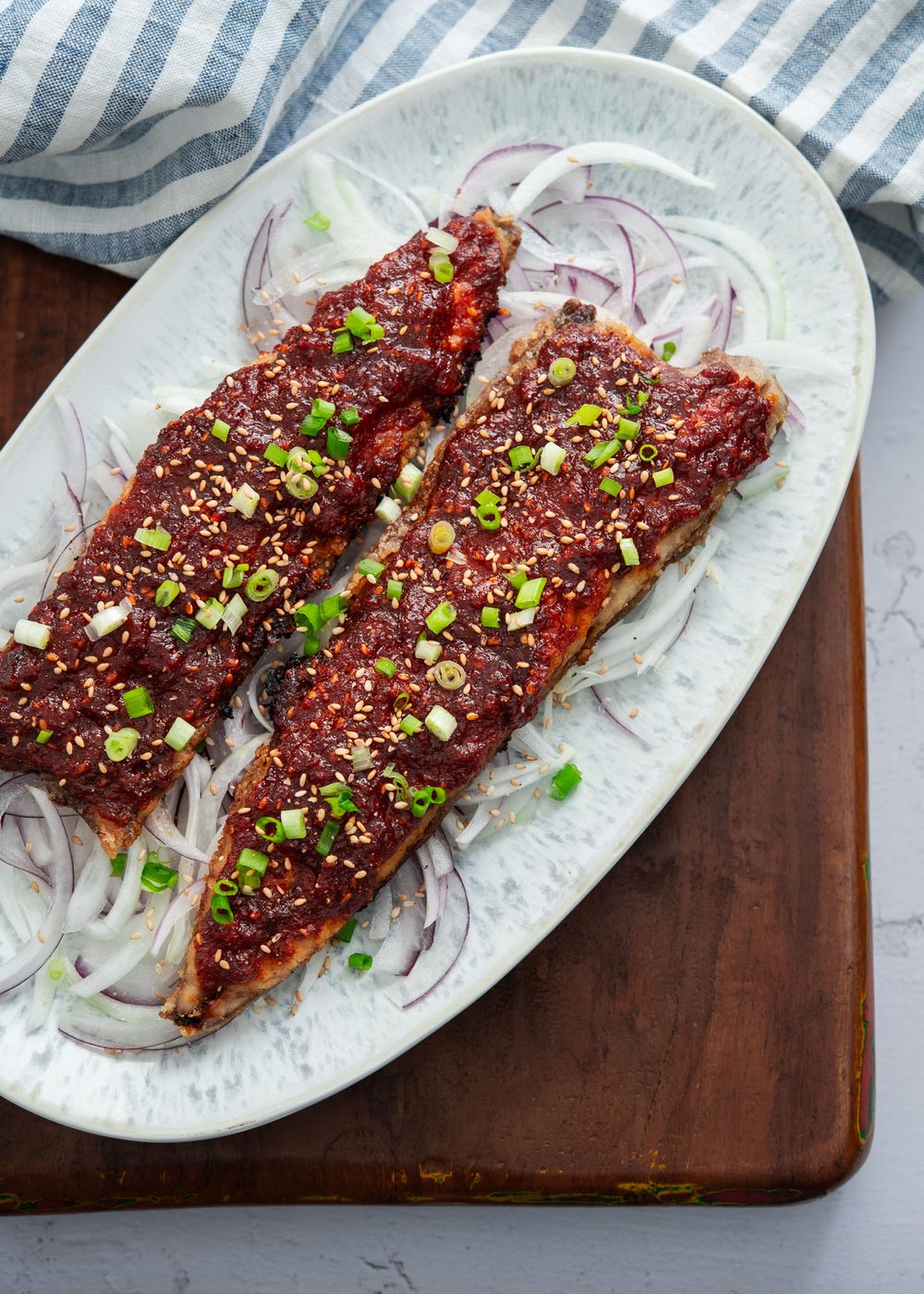
Broiled red snapper is a popular Korean fish recipe. It's topped with Korean chili sauce made with gochujang. So savory!
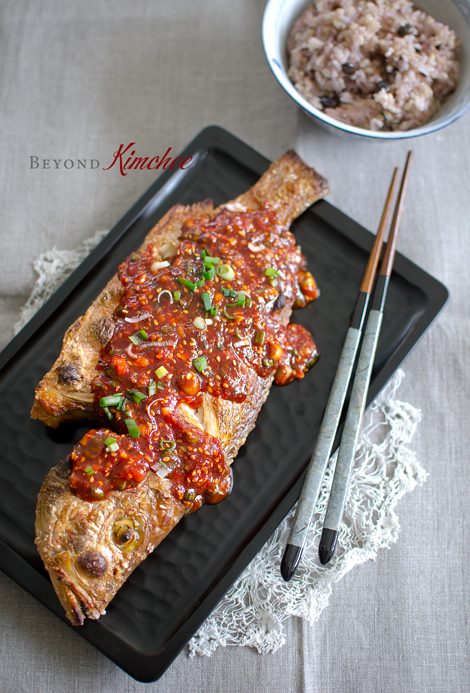
Broiled red snapper is a popular Korean fish recipe. This recipe uses a whole red snapper and topped with Korean chili sauce made with gochujang. Learn what to look for fresh fish and how to clean it.
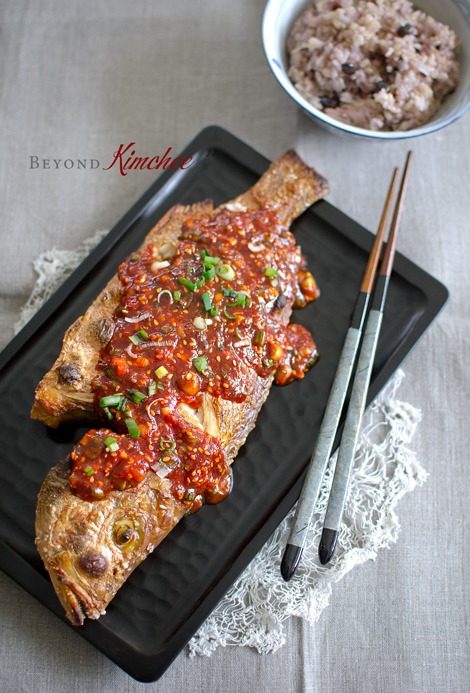
Looking at broiled red snapper with Korean chili sauce (domi gui, 도미구이) reminds us of our childhood. We literally grew up with abundant fishes and always enjoyed fish dishes that our mother made.
However, we married to a guy who grew up in the valley of Rocky mountain, and whose memory of good seafood as child was one of those frozen fish sticks which he seldom got.
We think he freaked out when he saw us eating the tiny whole anchovies (including head and tail) when we were dating. No wonder he hesitated kissing us at the beginning of our relationship…, LOL!!!
Well, seafood is not his thing. Therefore we don’t get to cook that often, especially the whole fish.
But we saw some whole fresh red snappers at the store and we knew we had to make something with it. We are making Broiled Red Snapper with Korean Chili Sauce (Domi Goowi, 양념 도미구이).
It doesn’t visually bother us to see the whole grilled fish but we believe it does to some people. You can ask your fish man to chop off the head for you but we'll tell you this.
There are lots of flesh around the head and you will loose some if you chop it off. And the taste of the part is excellent.
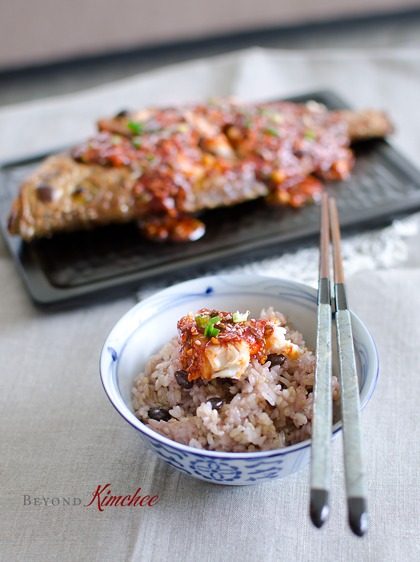
Grilling is a keeper method to bring the full flavor of this firm white meaty fish but broiling does a nice job as well.
Other fish options
If the red snapper is not available, you can use:
- flounder
- grouper
- or any white flaky meaty fish
And if the whole fish is not there for you, use fillet with skin attached.
Look for a Fresh Fish
Here is a fresh red snapper.
A few ways to check if your fish is fresh are:
- Check the eyes. If they are translucent and clear, that a good sign. Dull eyed fish? Pass on. Dull eyed man? Think twice.
- Check gill behind the flap of its head. It should be rich in red.
- Smell it. Fresh fish shouldn’t smell stinky.
How to Clean Fish
Our fish guy at the market was always kind to us. He did an excellent job removing scales from our snapper but we still find a few places that he missed. Chances are you might have to scrape off some scales with your hands as well. It is fun, though.
We like to cut off fins. Why? Because they will burn and turn into ash.
Cut off all the fins here, there, and everywhere.
And don’t forget the tail…
Give it a good rinse inside out. Now your fish is clean and ready to be cooked.
Salting Red Snapper
Give about 2-3 deep slits on each side.
Sprinkle a little coarse sea salt all over.
Let him rest while you are preparing the sauce to go with. (You can prepare up to this point in advance and keep the fish in the fridge until ready to cook)
Make Korean Chili Sauce for Broiled Fish
For the sauce, you will need: Korean chili paste, sugar, soy sauce, sesame oil, sesame seeds, green onion, garlic, and Korean plum extract which is an optional. If you don’t have it, add 1 teaspoon of lemon juice instead.
Put everything in a small mixing bowl…, then as always, we remembered that we left out someone important.
Miss ginger! You will need her in the sauce. Add in the grated ginger to the bowl and mix everything together.
Here is the tasty-tasty sauce.
Broiling Red Snapper
This is an optional step.
We often keep our fruit rinds(apple, lemon, lime, orange, etc) in the freezer for this purpose. They can cut the fish odor while it is baking in the oven. They also help the fish meat to stay moist.
Anyway, line your pan with foil for direct clean up and place rack over it. You will need to spray the rack with oil so that your fish won’t stick. Pour about 1/4 cup of water to the pan as well.
Put this guy in the broiler about 4 inch below the heat source, and cook about 8 minutes on each side, or until you see it turning brown.
Our evenly broiled red snapper is ready to take the sauce.
Drizzle the gorgeous sauce and your are ready to dine.
This was our lunch. And we did enjoy it. 1000 times better than frozen fish sticks. Although we do sometimes crave those.
Are you a fish lover as well? How do you like to cook? Kinda curios.
- Yield: 2
- Prep: 15 minutes
- Cook: 15 minutes
- Total: 30 minutes
Ingredients
- 1 whole red snapper, well cleaned
- pinches Korean coarse sea salt
- 3 tbsp Korean chili paste (gochujang)
- 1 tbsp soy sauce
- 2 tsp sugar
- 1 garlic clove, finely minced
- 1/2 tsp grated fresh ginger
- 2 tsp Korean plum extract (maeshil cheong), or 1 teaspoon lemon juice
- 1 tsp sesame oil
- 2 tsp toasted sesame seeds
- 1 green onion, finely chopped
Method
- Cut off the fins and tail from the snapper, and give 2-3 deep slits on each side. Sprinkle with coarse sea salt and set aside. (You can keep the fish in the fridge if not cooking within 30 minutes)
- Preheat the oven to broiler setting.
- Line a broiler-safe pan with foil and place a rack on top. Spray the rack with oil. Place the red snapper on top and pour 1/4-1/2 cup of water in the pan. Place the pan in the oven so that the fish will sit about 4″ below the heat source. Broil 8-10 minutes on one side. Flip the fish to the other side and continue to broil until it gets deep brown and the meat looks flaky, about 7-8 more minutes.
- Meanwhile, in a small mixing bowl combine chili paste, soy sauce, sugar, garlic, ginger, plum extract (or lemon juice), sesame oil, sesame seeds, and green onion. Mix well.
- When fish is done, spread the chili mixture sauce over the fish and serve warm with rice.