
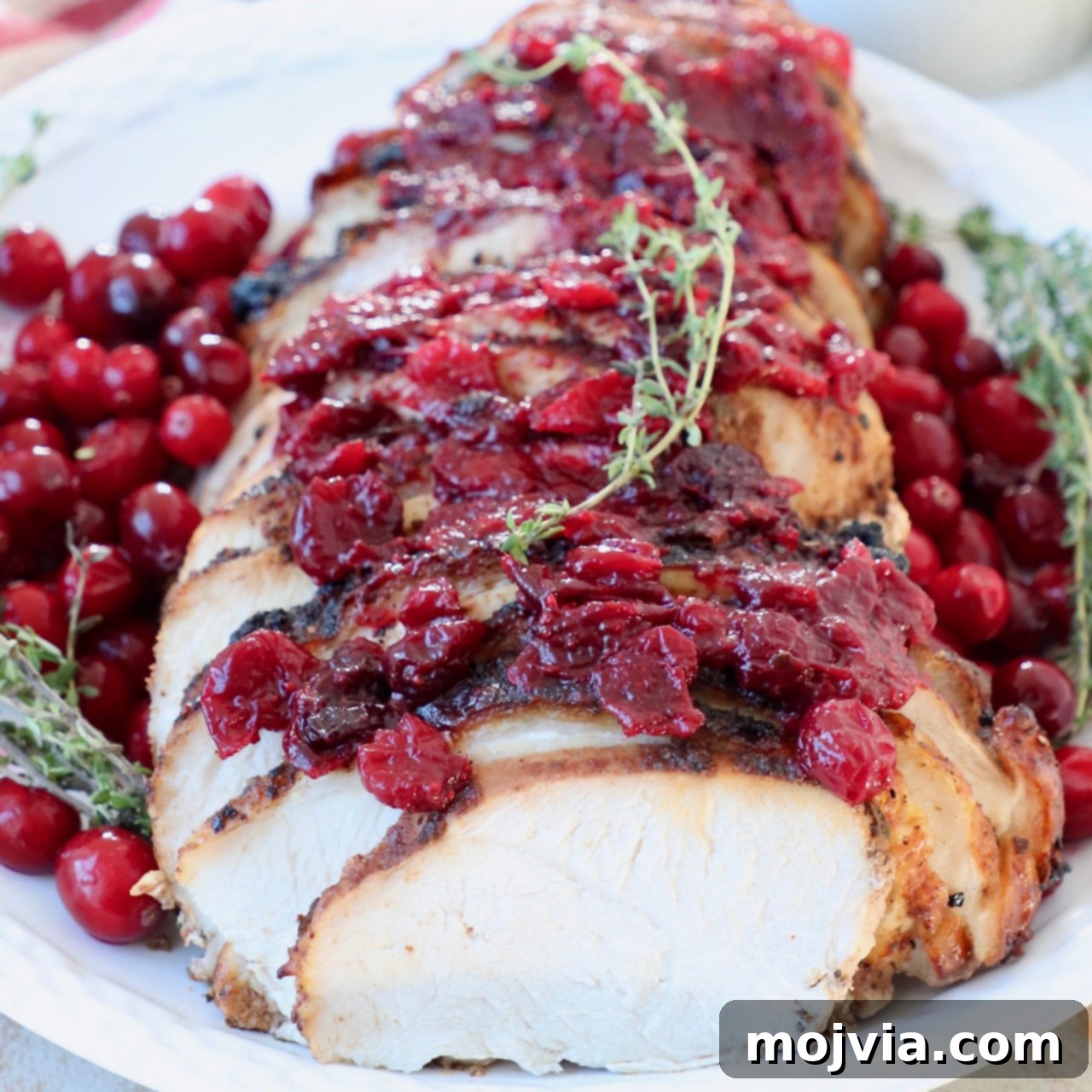
Welcome to a culinary masterpiece that seamlessly blends two beloved holiday traditions: succulent turkey and vibrant cranberry sauce. This Cranberry Glazed Turkey Breast recipe elevates your festive table, offering a dazzling centerpiece that’s as impressive in flavor as it is in presentation. Forget serving cranberry sauce on the side; here, it becomes an integral, luscious glaze, coating every tender slice of turkey with a sweet and tangy finish. From the initial aromatic white wine brine that infuses the meat with moisture and subtle complexity, through a robust savory spice rub, to the final shimmering cranberry glaze, every step of this recipe is designed to deliver an unforgettable taste experience.
Crafted to simplify your holiday cooking without sacrificing gourmet taste, this recipe promises a meal bursting with rich, layered flavors. It’s perfect for Thanksgiving, Christmas, or any special occasion where a truly spectacular roast is desired. Get ready to impress your guests with a dish that combines tradition with an irresistible twist, making your holiday feast truly exceptional.
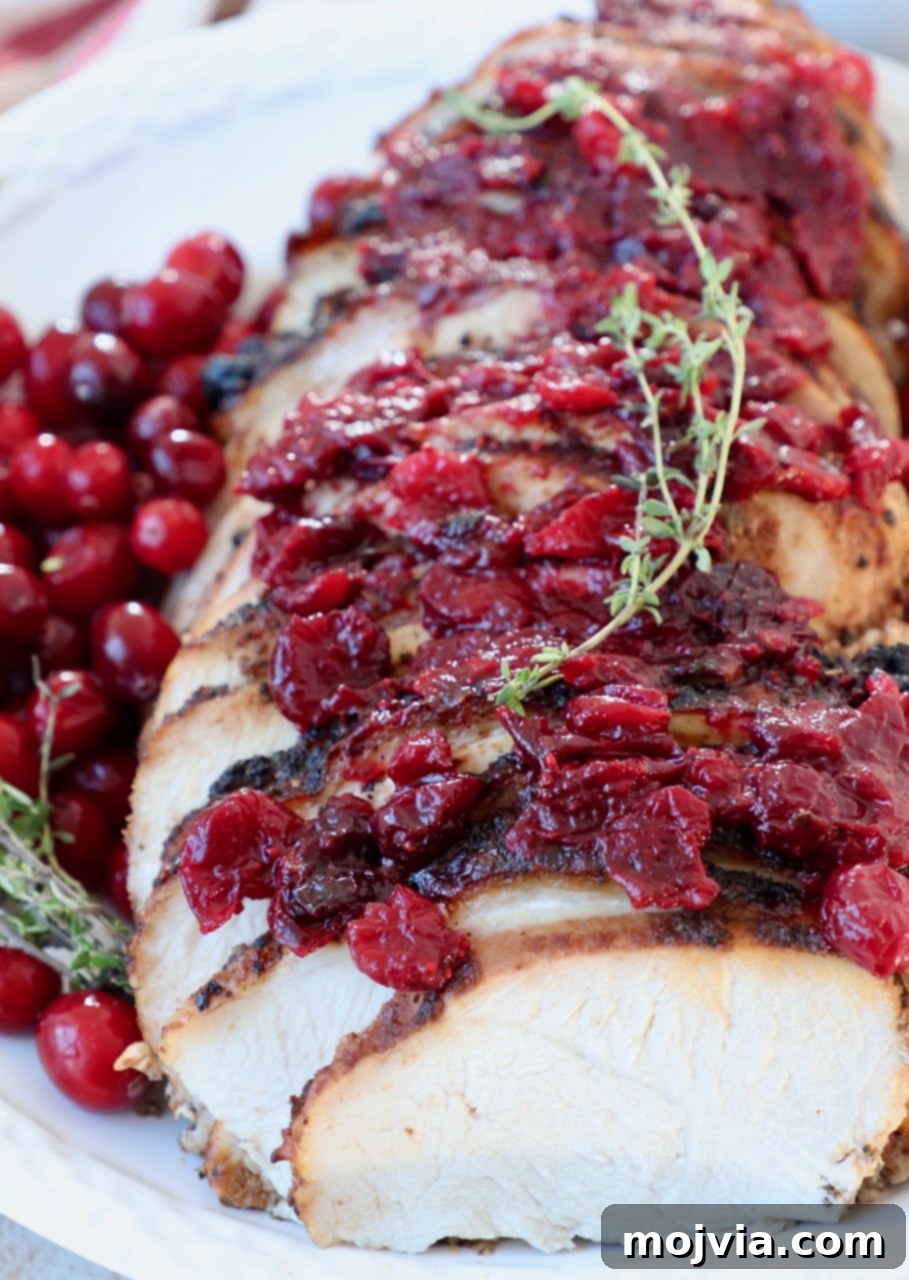
Table of Contents
- Why This Cranberry Glazed Turkey Breast is a Must-Make
- Essential Brine Ingredients
- How to Make the Perfect Turkey Brine
- Delicious Cranberry Glaze Ingredients
- Crafting Your Cranberry Glaze
- Savory Spice Rub Ingredients
- How to Season and Roast Your Turkey Breast to Perfection
- Presenting Your Cranberry Glazed Turkey
- Frequently Asked Questions
- Choosing the Right Turkey Breast: A Detailed Guide
- Creative Uses for Leftover Turkey
- Perfect Pairings: What to Serve with Cranberry Turkey Breast
Why This Cranberry Glazed Turkey Breast is a Must-Make
Since its debut at my Thanksgiving table in 2012, this Cranberry Glazed Turkey Breast has transcended being merely a dish; it’s become an cherished tradition. My family adored it so much they requested it again for Christmas that very same year, and for nearly a decade, it has been a beloved fixture at both our Thanksgiving and Christmas celebrations. Its popularity stems from its incredible flavor and surprisingly straightforward preparation.
While the recipe does involve an overnight brining step, which is crucial for achieving an exceptionally moist and tender turkey, the active preparation time is remarkably short. You’ll spend only about 30 minutes of hands-on work preparing the brine, applying the aromatic spice rub, and crafting the vibrant cranberry glaze. This efficiency makes it an ideal choice for busy holiday cooks who desire a show-stopping meal without spending all day in the kitchen.
I’ve personally experimented with both boneless and bone-in turkey breasts for this recipe, and both yield fantastic results. Below, you’ll find a dedicated section delving into the nuances of each option, helping you decide which is best suited for your preferences and cooking style. One of the unique aspects of this recipe is the versatility of the cranberry element. After the glaze is created, the separated solid cranberries can be served alongside the turkey as a traditional sauce or generously spread directly over the roasted turkey slices. I’ve enjoyed it both ways, and truly, there’s no wrong choice—it simply depends on how enthusiastic your family is about cranberries!
While it has certainly earned its place as a holiday staple, we often find ourselves making this flavorful turkey breast a few extra times throughout the colder winter months for a special weekend dinner. Its seriously delicious profile makes it a welcome addition to any meal, any time of the year. This isn’t just a holiday recipe; it’s a versatile, crowd-pleasing dish you’ll want to revisit again and again.
Essential Brine Ingredients
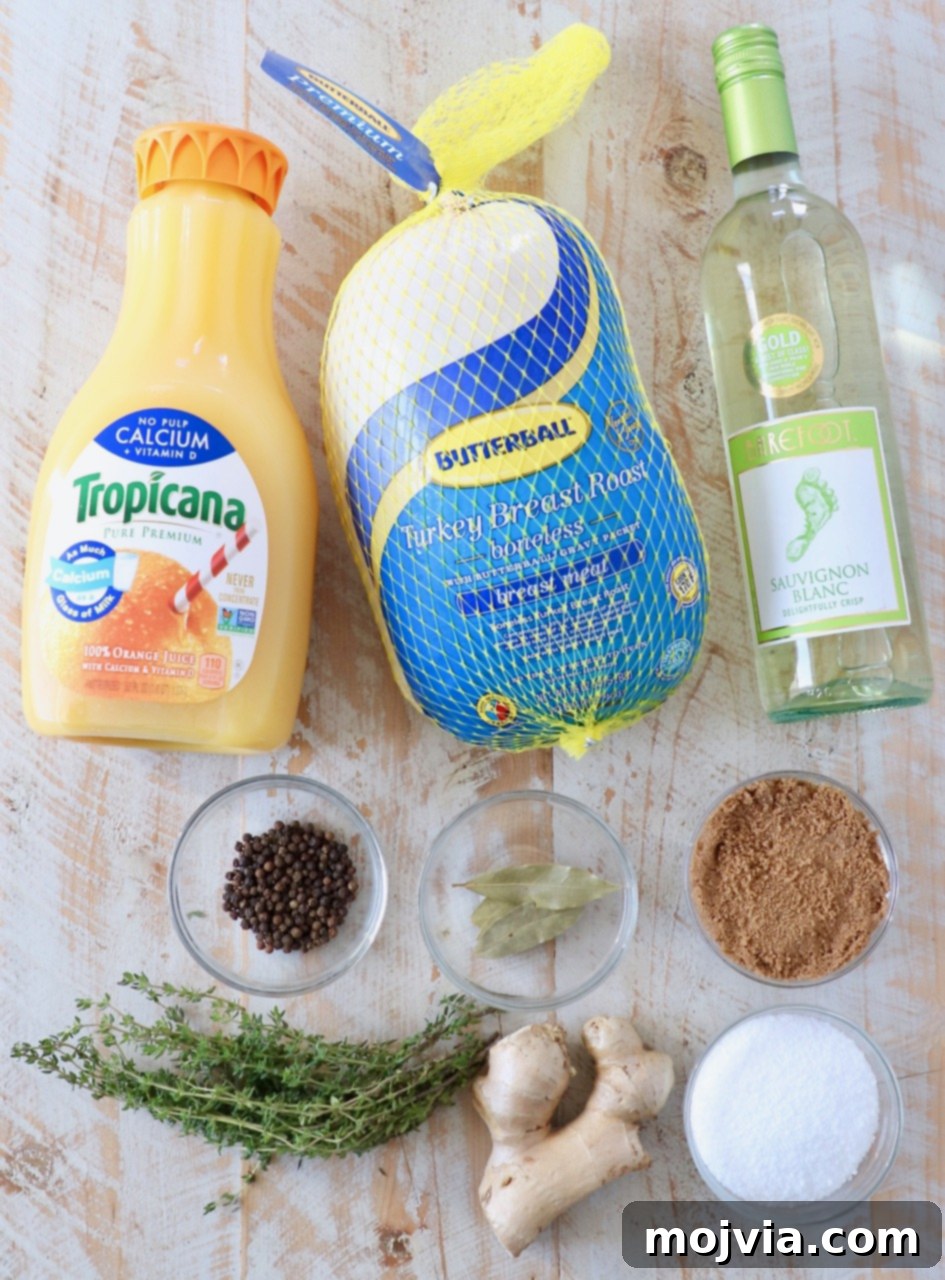
The brine is the secret weapon behind an incredibly moist and flavorful turkey breast. It not only tenderizes the meat but also infuses it with a complex blend of aromatic spices and bright, zesty notes. Here’s a closer look at the key components:
- White Wine: Opt for a dry white wine such as a Sauvignon Blanc or Pinot Grigio. The wine, along with the orange juice, contributes essential acidity, which helps break down the turkey’s muscle fibers, resulting in a noticeably more tender texture. This also adds a sophisticated depth of flavor that complements the other brine ingredients.
- Orange Juice: Freshly squeezed orange juice offers a sweet, tangy counterpoint to the savory elements. Its acidity works alongside the wine to tenderize the meat, while its citrus notes impart a bright, refreshing flavor profile that marries beautifully with cranberry.
- Coarse Salt: I highly recommend using a coarse kosher salt for this recipe, though any coarse salt will suffice. The key to successful brining lies in the proper salt concentration, which is why I specify the measurement in ounces rather than tablespoons. Different types of salt vary significantly in density, so measuring by weight ensures consistency and optimal results, preventing an overly salty or under-brined turkey.
- Brown Sugar: This adds a subtle sweetness to the brine, balancing the salt and acidity. It also aids in achieving a beautiful, caramelized crust on the turkey during roasting, enhancing both flavor and appearance.
- Fresh Ginger: Beyond its role in the brine, ginger is a star player throughout this recipe. In the brine, it imparts a warm, slightly spicy, and aromatic note that deeply penetrates the turkey breast, building a foundational layer of flavor.
- Peppercorns: Whole black peppercorns release their pungent, woody notes slowly into the brine, adding a classic savory warmth that is essential for a well-rounded turkey flavor.
- Bay Leaves: These fragrant leaves contribute a subtle, almost minty and herbaceous aroma to the brine, enhancing the overall complexity without overpowering the turkey’s natural taste.
- Fresh Thyme Sprigs: Fresh thyme is a classic pairing with poultry. Its earthy, slightly floral notes are crucial for the savory depth of the brine, ensuring the turkey breast emerges from the roast infused with fragrant herb essence.
- Turkey Breast: For this particular recipe, I typically use a boneless turkey breast. However, a bone-in turkey breast works equally well. For a comprehensive guide on selecting between fresh vs. frozen and boneless vs. bone-in options, please refer to the “What Type of Turkey Breast to Use” section below.
The complete list of ingredients, including precise measurements, can be found in the printable recipe card at the very end of this article.
How to Make the Perfect Turkey Brine
Brining is a simple yet transformative step that guarantees a juicy and flavorful turkey breast. Follow these easy instructions to create your aromatic white wine brine:
- Prepare the Salt and Sugar Base: In a medium-sized saucepan, bring 4 cups of water to a rolling boil over high heat on your stovetop. Once boiling, add the measured coarse salt and brown sugar. Whisk continuously until both the salt and sugar are completely dissolved into the water, creating a concentrated flavorful base.
- Cool the Brine Safely: Remove the saucepan from the heat. Immediately add the remaining 4 cups of cold water to the hot brine mixture. This rapid cooling is essential. Transfer the brine to the refrigerator and allow it to cool for at least 30 minutes, or until it reaches room temperature. Pro Tip: Never pour hot liquid over raw meat, as this can create an environment conducive to bacteria growth. Ensuring the brine is completely cool is a critical food safety step. For faster cooling, you can substitute the 4 cups of cold water with 4 cups of ice cubes, stirring until they melt and cool the mixture.
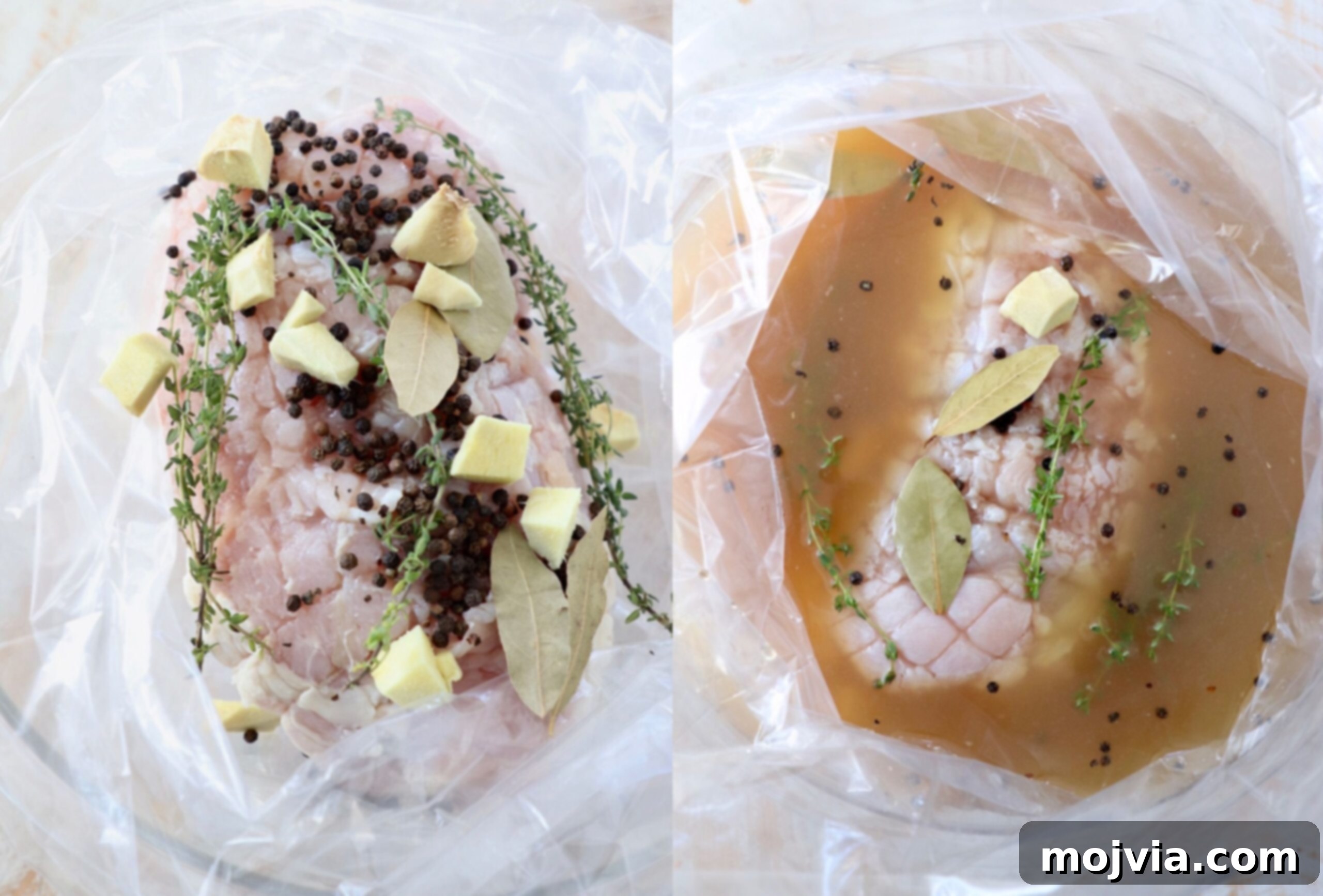
- Prepare the Turkey: While the brine is cooling, unwrap your turkey breast. Remove it from any original packaging or netting. If your turkey breast comes in a brining bag, place the bag inside a large bowl or roasting pan to support it and catch any potential leaks. Carefully place the turkey breast into the brining bag.
- Add Aromatics: Into the bag with the turkey, add the fresh ginger, whole peppercorns, bay leaves, and fresh thyme sprigs. These aromatics will infuse the turkey with their wonderful flavors during the brining process.
- Combine Liquids: Pour the white wine and orange juice into the brining bag with the turkey and aromatics.
- Complete the Brine: Once your salt and sugar water has completely cooled to room temperature, pour this mixture over the turkey breast in the brining bag.
- Seal and Submerge: Pull the brining bag up and over the turkey breast, ensuring the turkey is fully submerged in the liquid. Tie the bag securely closed, expelling as much air as possible to ensure maximum contact between the brine and the turkey.
- Refrigerate for Brining: Place the brining turkey breast (still in its supporting bowl or roasting pan) into the refrigerator. Allow it to brine overnight, or for a minimum of 8 hours and up to a maximum of 12 hours. This duration is ideal for a turkey breast of this size.
- Rinse and Dry: After the brining period is complete, remove the turkey breast from the brining liquid. Discard the brine. Rinse the turkey breast thoroughly under cold running water to remove any excess salt from the surface. Pat the turkey breast completely dry with paper towels. A dry surface is essential for achieving that desirable crispy skin and for the spice rub to adhere properly.
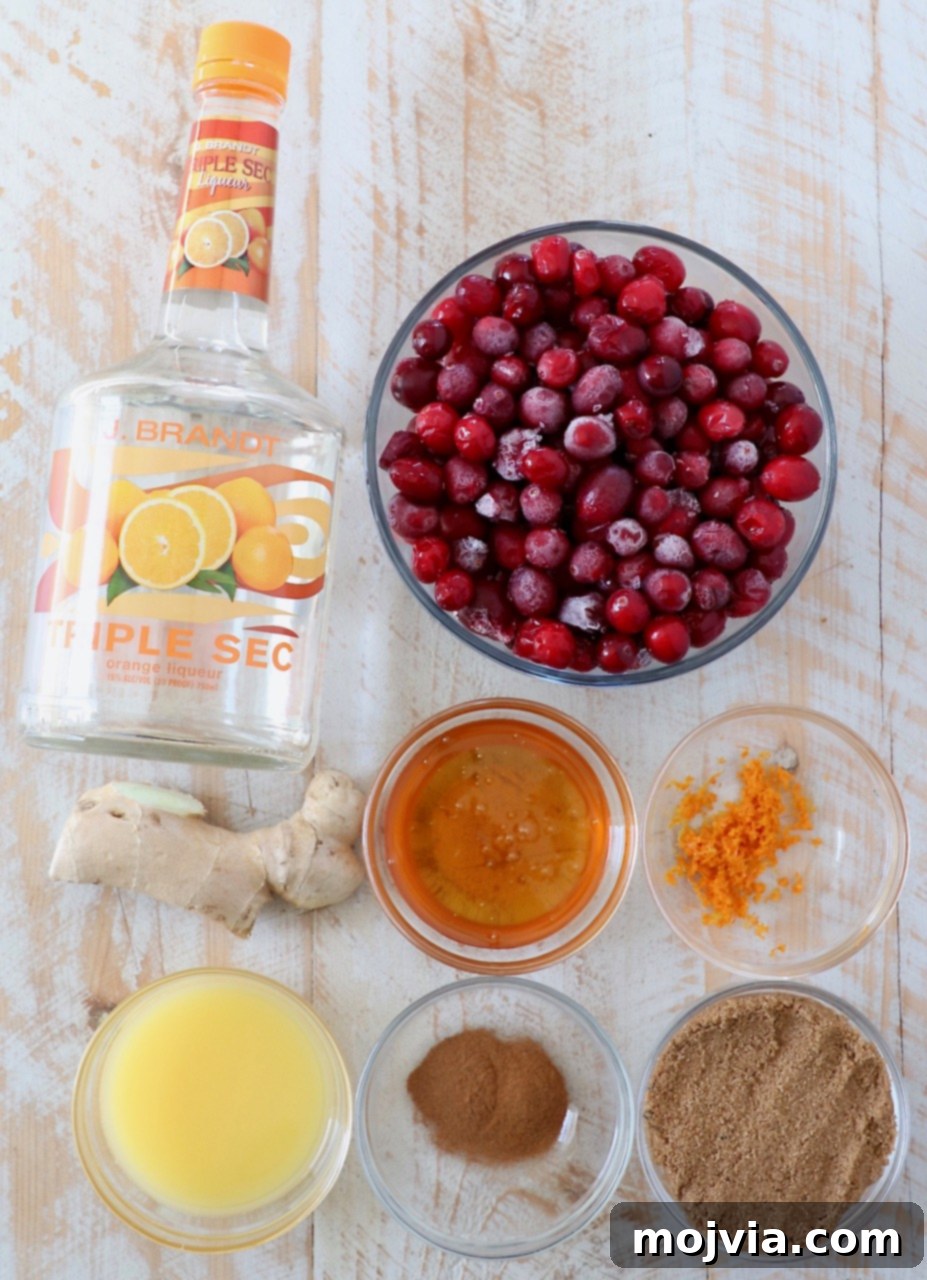
Delicious Cranberry Glaze Ingredients
This sweet and tangy cranberry glaze is the crowning jewel of our turkey breast, offering a vibrant burst of flavor that perfectly complements the savory meat. Here’s what you’ll need to create this irresistible topping:
- Fresh Cranberries: The star of the show! Fresh cranberries provide the characteristic tartness and beautiful color for the glaze. If fresh cranberries are out of season or unavailable, frozen cranberries work perfectly as a substitute – no need to thaw them beforehand.
- Fresh Ginger: For the glaze, you’ll want to use freshly grated ginger. Its pungent, warm, and slightly spicy notes add a wonderful complexity and depth, cutting through the sweetness and tartness of the cranberries. Use a microplane zester or a fine grater to achieve a delicate texture.
- Orange: We’ll be utilizing the zest of an orange for this recipe. Choose a clean, firm, brightly colored orange without any visible blemishes on its skin. Thoroughly wash the orange before using a zester, fine grater, or even a vegetable peeler (being careful to avoid the bitter white pith) to remove the fragrant outer layer. The zest provides an intense, aromatic citrus burst that enhances the cranberry flavor.
- Honey: This natural sweetener contributes a floral and rich sweetness that rounds out the tartness of the cranberries, creating a beautifully balanced flavor profile.
- Brown Sugar: In addition to honey, brown sugar adds a deep, caramel-like sweetness and helps to thicken the glaze slightly, giving it a more luxurious texture.
- Ground Cinnamon: A touch of ground cinnamon introduces a warm, comforting spice note that is synonymous with holiday flavors and perfectly marries with both cranberry and turkey.
- Orange Juice: A splash of orange juice reinforces the citrus notes from the zest and helps to thin the glaze to the desired consistency while adding another layer of bright flavor.
- Orange Flavor Liqueur (Triple Sec): This optional but highly recommended ingredient adds a sophisticated layer of orange flavor and a hint of warmth to the glaze. Also known as Triple Sec, it elevates the overall taste. If you prefer to omit alcohol, an equal amount of additional orange juice can be used as a non-alcoholic substitute.
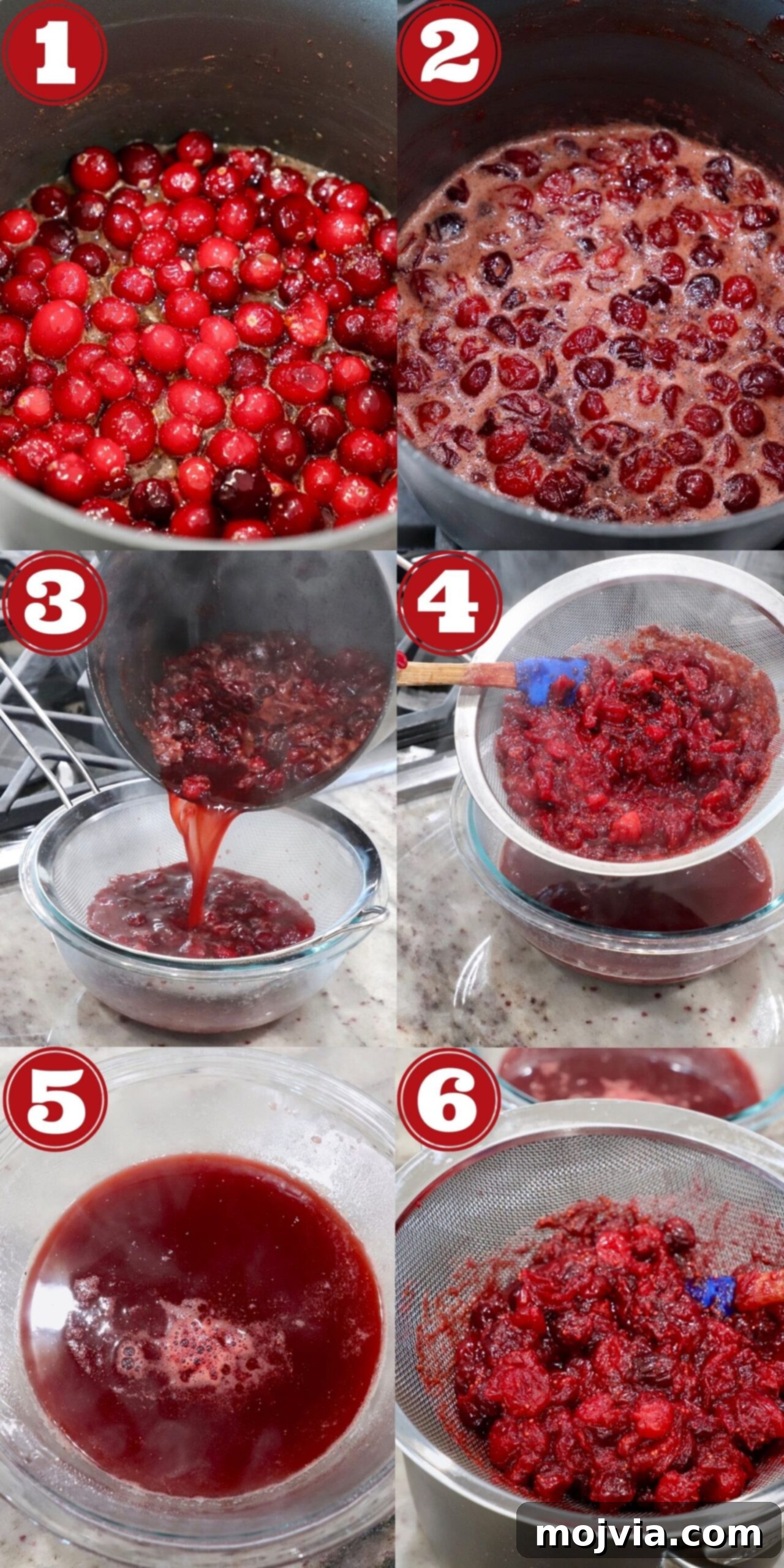
Crafting Your Cranberry Glaze
The cranberry glaze is a vibrant, flavorful addition that brings a sweet and tangy finish to your roasted turkey breast. It’s also incredibly versatile – you can prepare it up to two days in advance, allowing you to manage your holiday cooking timeline with ease. You can make it while the turkey is brining, or even while it’s roasting in the oven. The solid cranberries left after separating the glaze can be served as a delightful cranberry sauce on the side or spread directly onto the finished turkey.
- Combine Ingredients: Begin by adding all the ingredients for the cranberry glaze—fresh or frozen cranberries, grated fresh ginger, orange zest, honey, brown sugar, ground cinnamon, orange juice, water, and orange liqueur (if using)—to a medium saucepan. Place the saucepan over medium heat on your stovetop. Stir everything together well to combine the ingredients evenly.
- Simmer and Burst: Bring the mixture to a gentle simmer. Continue cooking, stirring occasionally, and watch for the cranberries to begin bursting. This process typically takes about 10 to 15 minutes. The bursting indicates that the cranberries are softening and releasing their juices and pectin, which will help thicken the glaze.
- Finish Cooking: Once the cranberries have started to burst, reduce the heat to low. Continue to cook the mixture for an additional 5 minutes, allowing the flavors to meld and the glaze to thicken slightly.
- Strain the Glaze: Set a fine-mesh strainer over a large, heatproof bowl. Carefully pour the cooked cranberry mixture through the strainer. The strainer will separate the smooth glaze from the cranberry solids.
- Extract Maximum Glaze: Using a spatula or the back of a spoon, gently press the solid cranberries against the mesh of the strainer. This action helps to extract as much liquid and flavor as possible from the cranberries, ensuring your glaze is rich and abundant.
- Collect and Store the Glaze: Remove the strainer containing the cranberry solids from over the bowl. What remains in your bowl is the beautiful, smooth, and concentrated cranberry glaze for your turkey breast. If you’ve made the glaze while the turkey is still roasting, set it aside at room temperature. If preparing in advance, cover the glaze tightly and store it in the refrigerator for up to 2 days until you’re ready to use it.
- Utilize Cranberry Sauce Solids: Do not discard the solid cranberry mixture left in the strainer! This flavorful byproduct can be used as a delicious cranberry sauce. Serve it warm or chilled on the side of your roasted turkey, or spread it generously over individual slices of turkey for an extra burst of cranberry goodness.
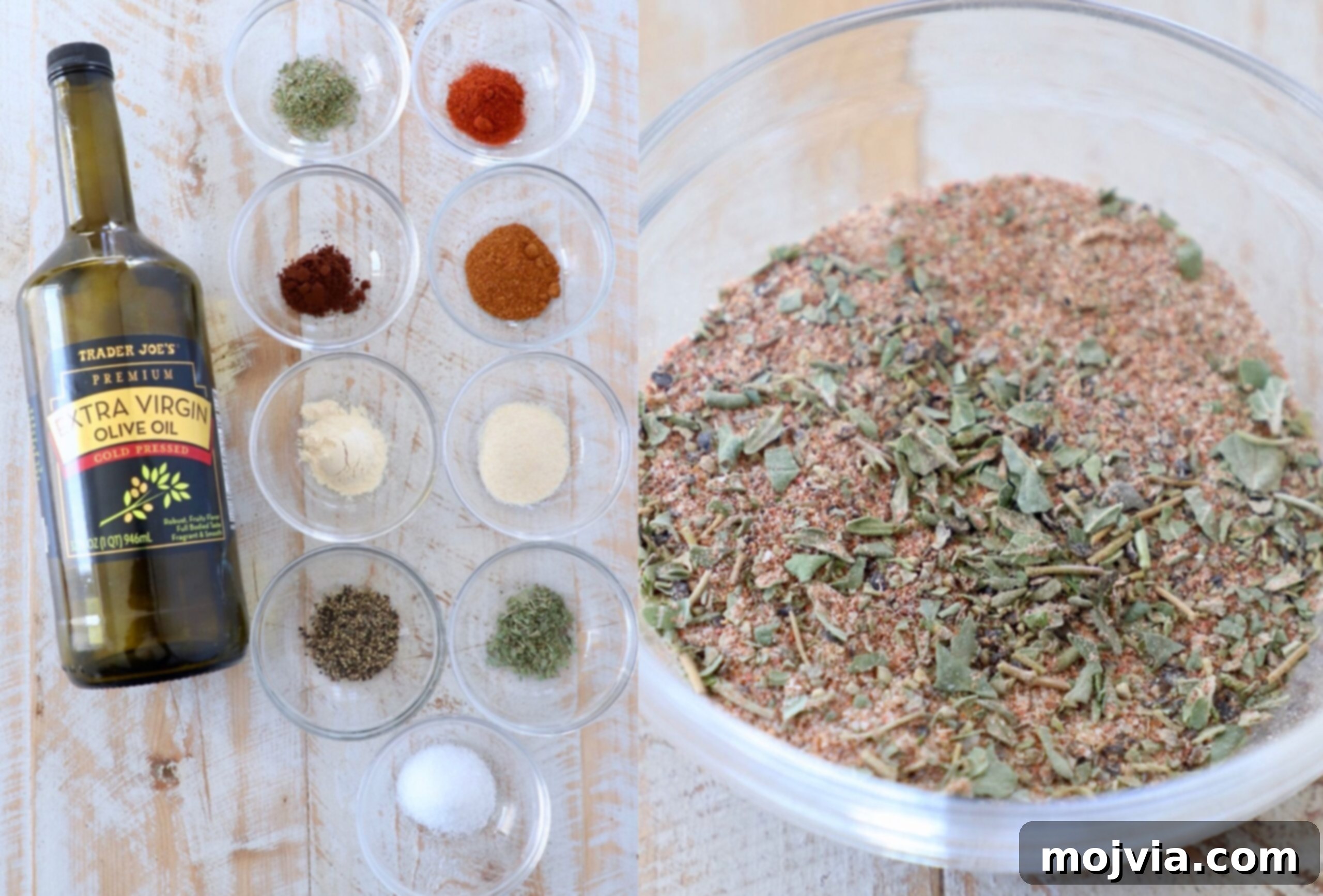
Savory Spice Rub Ingredients
This robust spice rub is designed to create a flavorful crust on your turkey breast, complementing the sweet and tangy cranberry glaze. Each spice plays a role in building a complex and aromatic profile:
- Paprika: Provides a mild, sweet pepper flavor and contributes to the beautiful reddish-brown color of the turkey’s skin when roasted.
- Salt: Essential for seasoning the turkey’s exterior and enhancing all the other flavors in the rub.
- Garlic Powder: Offers a foundational savory and aromatic note that pairs wonderfully with poultry.
- Black Pepper: Adds a classic pungent and slightly spicy kick, providing depth to the rub.
- Onion Powder: Delivers a sweet, savory, and aromatic flavor, complementing the garlic and other spices.
- Cayenne Pepper: A small amount adds a subtle warmth and hint of heat, elevating the overall flavor without making the dish overtly spicy. Adjust to your preference.
- Ground Cloves: This often-underestimated spice brings a warm, sweet, and highly aromatic note that beautifully ties together the savory rub with the festive cranberry glaze.
- Dried Oregano: Offers an earthy, slightly bitter, and herbaceous flavor that is a natural match for roasted turkey.
- Dried Thyme: Provides a delicate, earthy, and floral aroma, enhancing the overall herb blend in the rub.
- Olive Oil: Used to create a cohesive paste with the spices, allowing them to adhere evenly to the turkey breast and promoting a wonderfully crispy skin during roasting.
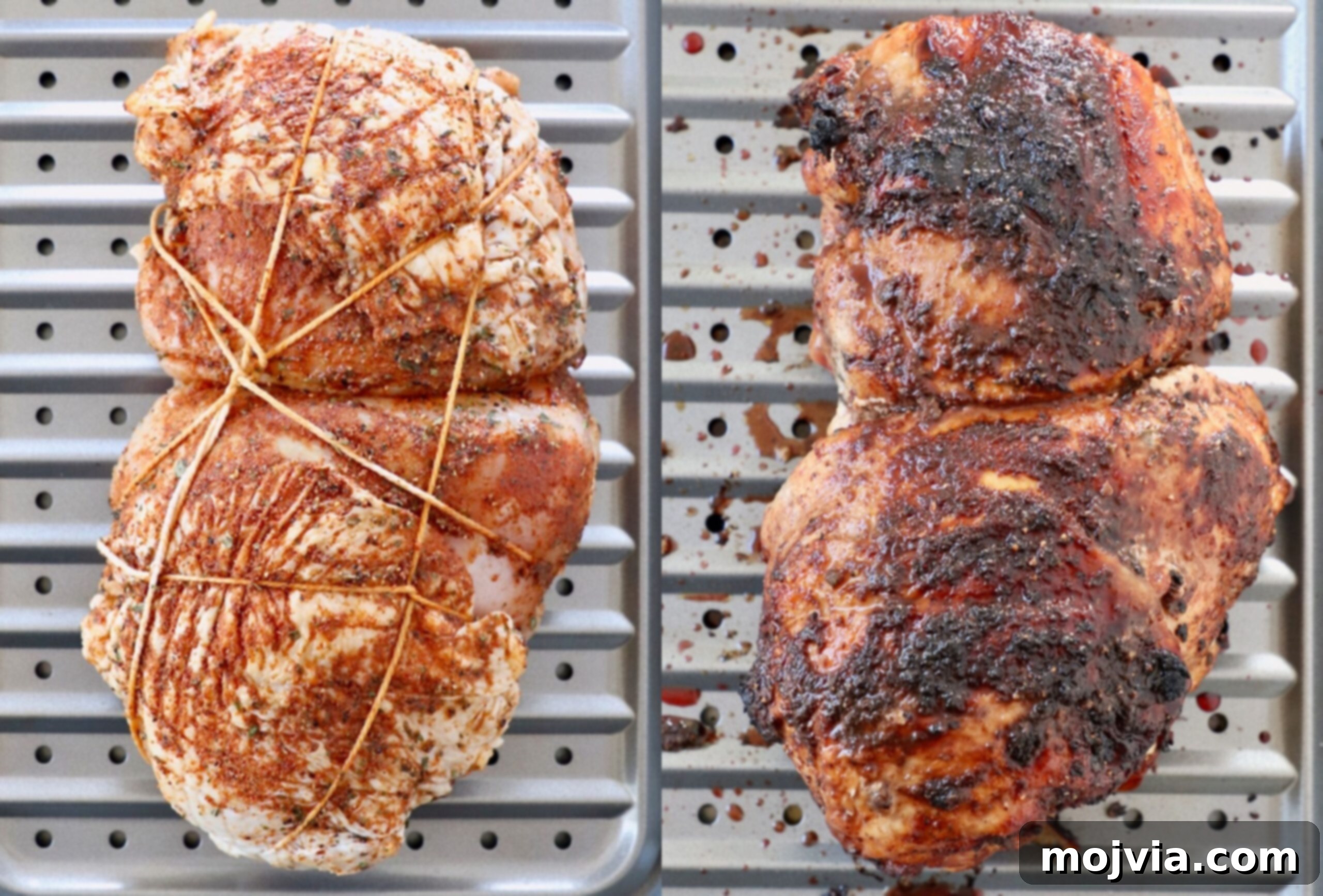
How to Season and Roast Your Turkey Breast to Perfection
Achieving a perfectly roasted turkey breast with a crispy, flavorful skin and juicy, tender meat is simpler than you might think. Follow these steps for an impressive holiday centerpiece:
- Prepare the Spice Rub: In a small bowl, combine all the dry spice rub ingredients: paprika, salt, garlic powder, black pepper, onion powder, cayenne pepper, ground cloves, dried oregano, and dried thyme. Stir them together thoroughly to ensure an even distribution of flavors.
- Preheat Oven and Prepare Turkey: Preheat your oven to a consistent 375°F (190°C). Meanwhile, retrieve your brined turkey breast. After it has been thoroughly rinsed and patted completely dry (as instructed in the brining section), place it on a clean cutting board.
- Apply Olive Oil: Drizzle the turkey breast generously with olive oil. Use your hands to rub the olive oil all over the entire surface of the turkey, ensuring it’s evenly coated. This step helps the spice rub adhere and contributes to a beautifully crispy skin.
- Apply the Spice Rub: Evenly sprinkle the prepared spice rub all over the olive oil-coated turkey breast. Again, use your hands to gently rub the spices into the meat, ensuring every crevice is covered. This creates a flavorful crust that will enhance the turkey’s taste and appearance.
- Secure and Place for Roasting: If your turkey breast separated into two pieces (which is common for boneless breasts), don’t worry! You can either roast them side-by-side on the baking sheet, or you can tie them back together with kitchen twine after applying the rub. This helps them cook more evenly and maintain a cohesive shape. Place the spice-rubbed turkey, skin-side up, on a rimmed baking sheet or in a roasting pan.
- Roast the Turkey: Transfer the turkey breast to your preheated 375°F (190°C) oven. Roast for approximately one hour. The most accurate way to determine doneness is by internal temperature: insert an instant-read thermometer into the thickest part of the breast, making sure it doesn’t touch any bone. The turkey is fully cooked and safe to eat when it reaches an internal temperature of 165°F (74°C). Cooking times may vary depending on the size and shape of your turkey breast, so trust your thermometer!
- Glaze and Rest: Once the turkey reaches the target internal temperature, carefully remove it from the oven. If you used kitchen twine, cut it off. Immediately use a pastry brush to generously apply the prepared cranberry glaze all over the warm, roasted turkey. The heat of the turkey will allow the glaze to melt slightly and coat the skin beautifully.
- Allow to Rest: This step is crucial for a juicy turkey! Let the cranberry-glazed turkey breast rest on the cutting board for 10-15 minutes before slicing. During this resting period, the juices, which have migrated to the center during cooking, redistribute evenly throughout the meat, resulting in a more tender and moist final product.
- Slice and Serve: After resting, slice the turkey using a sharp carving knife or an electric knife (a personal favorite for effortless carving!). Serve immediately with extra cranberry glaze or sauce on the side.
Presenting Your Cranberry Glazed Turkey
The visual appeal of your dish is almost as important as its taste, especially when entertaining for the holidays. Here’s how to beautifully present your Cranberry Glazed Turkey Breast:
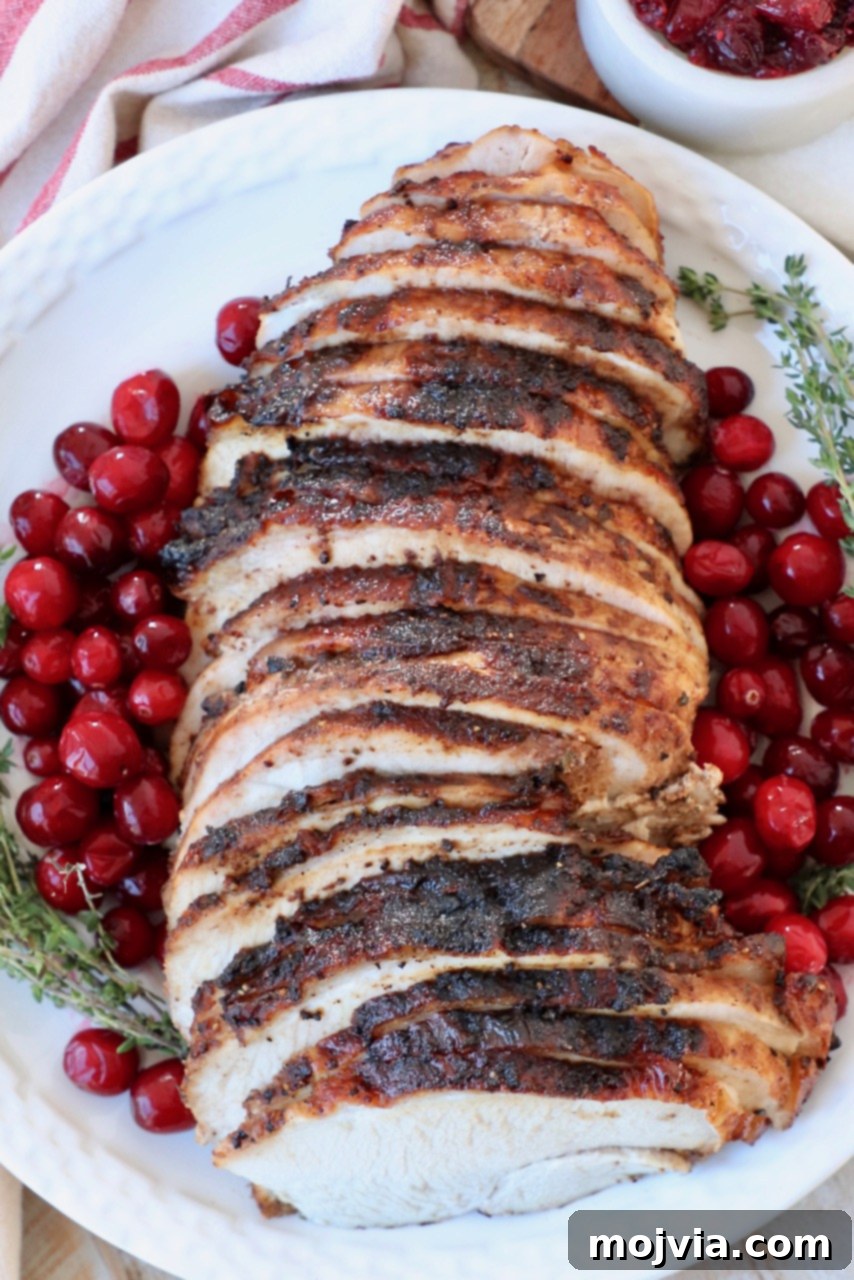
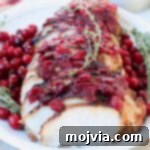
Once your turkey breast is sliced, arrange the succulent slices elegantly on a large serving platter. For a touch of rustic charm and vibrant color, scatter a few sprigs of fresh thyme and a handful of fresh whole cranberries around the turkey. This simple garnish elevates the presentation, making it truly picture-perfect for any holiday table.
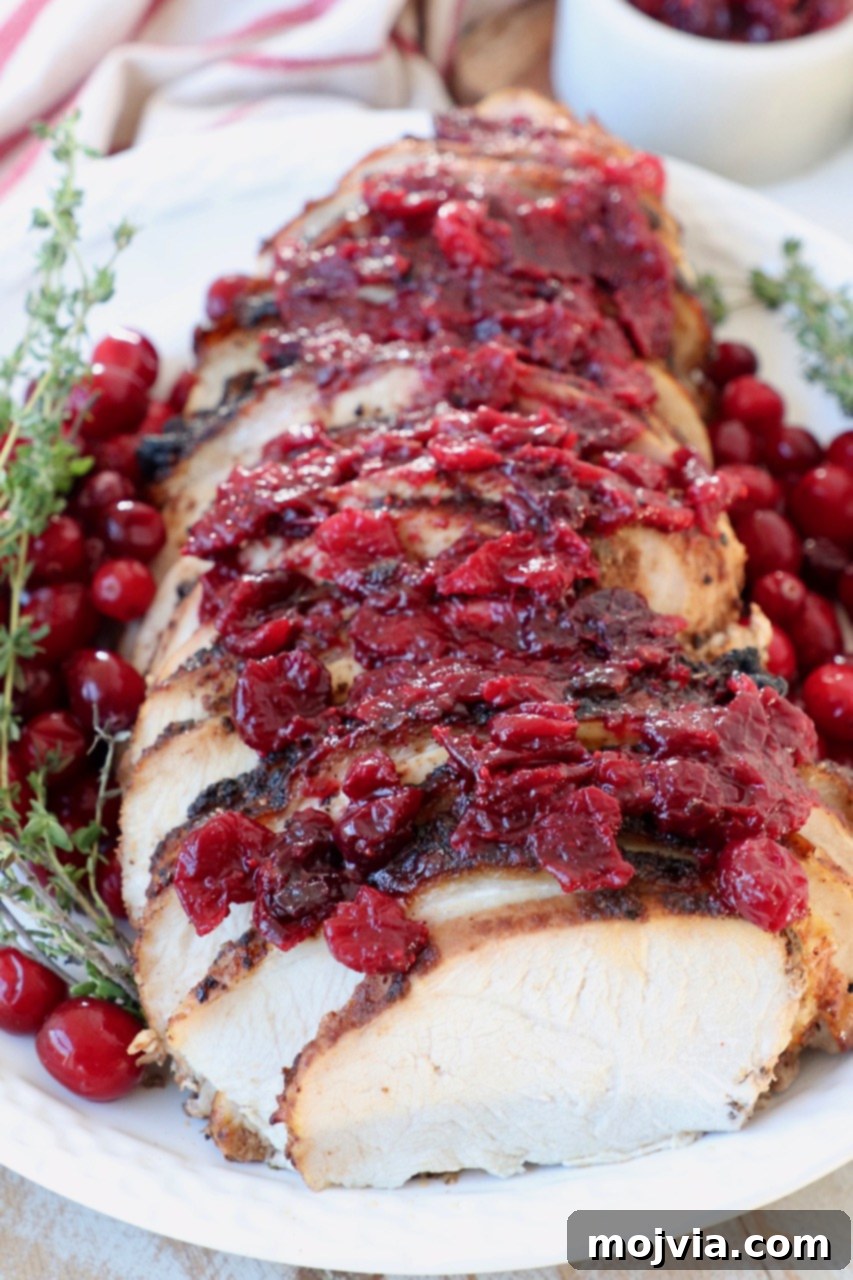
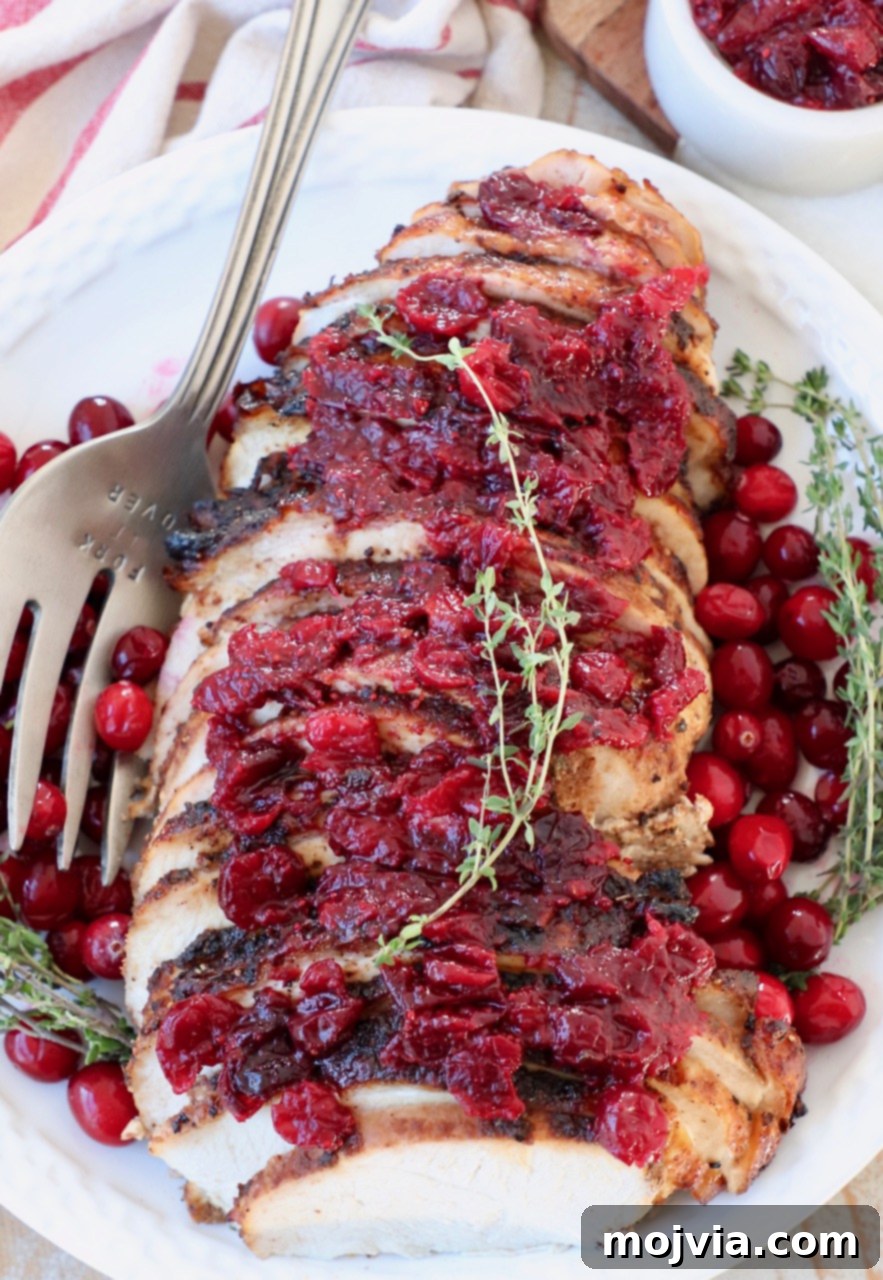
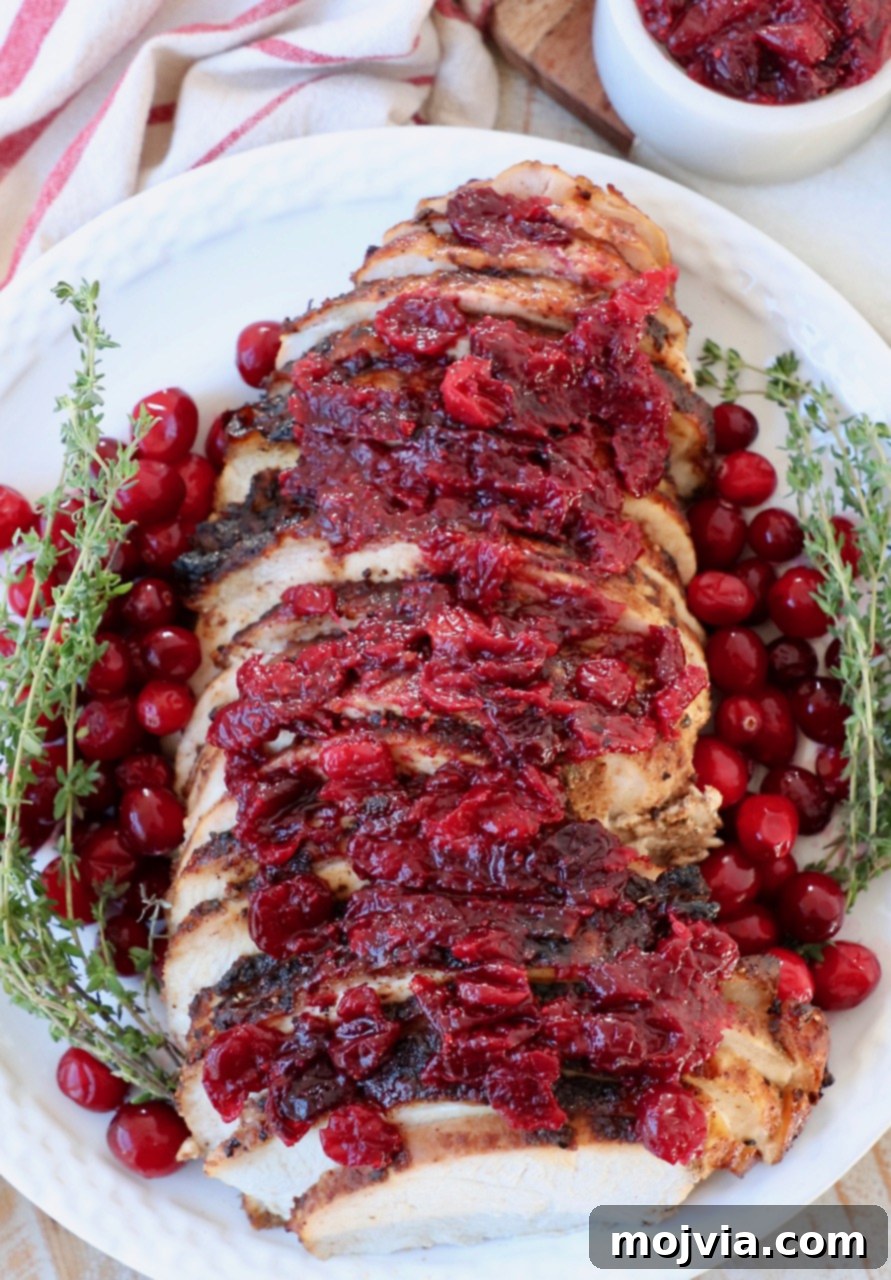
Remember, the cranberry sauce (the solid remnants from making the glaze) can be served either on the side in a small bowl, allowing guests to add it as they wish, or you can artfully spread it directly on top of the sliced turkey before bringing it to the table. Both methods are delicious and add that extra burst of festive flavor and color.
Frequently Asked Questions
- Can the turkey skin be removed after roasting? Yes, you can certainly remove the skin from the turkey after it has roasted, prior to applying the cranberry glaze. However, if you are not a fan of crispy baked turkey skin, I actually recommend removing it *before* you even begin the recipe. This way, you avoid losing any of that delicious spice rub and flavor that adheres to the skin during roasting when you eventually discard it.
- Is it possible to make this recipe without the skin? Absolutely! If turkey skin isn’t to your liking, simply use a sharp knife to carefully remove the skin from the turkey breast before you start the brining process. The brining and spice rub will still infuse the meat with incredible flavor and moisture.
- Can this recipe be adapted for a bone-in turkey breast? Yes, this recipe works beautifully with a bone-in turkey breast, and you can follow the instructions as written. Keep in mind that meat cooked on the bone tends to cook a bit slower than boneless cuts. Therefore, you might need to extend the roasting time by an additional 10-15 minutes, or potentially longer, depending on the size of your bone-in breast. I cannot stress enough the importance of using an instant-read thermometer to accurately check the internal temperature. Ensure the thickest part of the breast reaches 165°F (74°C) before removing it from the oven.
- How long will leftover turkey stay fresh? Properly stored, leftover cranberry glazed turkey will remain delicious and safe to eat for up to 7 days in the refrigerator. To maintain the best flavor and prevent it from drying out, always store your leftovers in an airtight container.
- Should I roast the turkey breast covered or uncovered? For this particular recipe, the turkey breast is designed to be cooked uncovered. Roasting it uncovered allows the heat to circulate around the turkey, helping to develop that wonderful, flavorful spice rub crust on the exterior and ensuring the skin (if left on) gets deliciously crispy.
- What is the recommended internal cooking temperature for turkey breast? The USDA recommends that turkey breast, like all poultry, should be cooked to an internal temperature of 165°F (74°C). Always check the temperature in the thickest part of the breast, avoiding any bones, using a reliable instant-read thermometer.
- Can this recipe be used for a whole turkey? While this recipe is specifically scaled for a turkey breast, it can certainly be adapted for a whole turkey. However, you will need to significantly increase the quantities of the brine and spice rub. Depending on the size of your whole turkey, the brine ingredients and rub ingredients will likely need to be tripled to ensure complete coverage and effective brining. The cranberry glaze recipe, as written, makes a generous amount, but you may wish to double it if you plan to glaze an entire large turkey. A general guideline for roasting a whole turkey is approximately 13 minutes per pound in a 350°F (175°C) oven, but always rely on an instant-read thermometer for accurate doneness.
Choosing the Right Turkey Breast: A Detailed Guide
When you head to the grocery store, the array of turkey breast options can be a bit overwhelming. You’ll typically encounter fresh or frozen varieties, boneless turkey breasts, bone-in turkey breasts, and pre-packaged turkey breast roasts. Understanding the differences is key to selecting the perfect one for this Cranberry Glazed Turkey Breast recipe.
- Boneless Turkey Breast: As the name suggests, this is simply the breast meat of the turkey with all bones removed. If you’re purchasing a frozen, pre-packaged boneless turkey breast, you’ll often find two individual turkey breast halves held together by netting. These typically range in size from 3 to 5 pounds. Boneless breasts cook faster and are easier to carve, making them a convenient choice for smaller gatherings or when oven space is limited.
- Bone-in Turkey Breast: This option consists of the entire breast portion from a whole turkey, with both breast halves still attached to the bone. Because it’s a single, larger piece, it will not be bound by netting. Bone-in turkey breasts can vary significantly in weight, usually from 5 to 12 pounds. Remember that a portion of this weight accounts for the bones, which are typically removed after cooking. Many cooks prefer bone-in breasts for their enhanced flavor, as the bone contributes more depth during roasting.
- Turkey Breast Roasts: These are often found in the deli or meat section, sometimes pre-seasoned or even incorporating a mix of white and dark meat. For this recipe, if you opt for a turkey breast roast, ensure the label specifically states “breast meat” for the best results. These roasts are usually boneless and can be a convenient option.
Fresh vs. Frozen:
- Fresh Turkey Breasts are generally preferred because they usually don’t have added or injected solutions, allowing for better absorption of your homemade brine. However, fresh turkey breasts can be challenging to locate outside of the peak holiday season (typically November in the US).
- Frozen Turkey Breasts are readily available year-round at most grocery stores, offering flexibility for cooking at any time. They come in both bone-in and boneless varieties. If using a frozen turkey breast, remember to thaw it completely in the refrigerator before brining. This can take 1-3 days depending on size (allow approximately 24 hours for every 5 pounds).
Which is Best for This Recipe?
The “best” choice truly depends on your preference and logistical considerations:
- Bone-in turkey breasts will generally yield a more profoundly flavored and moist result due to the presence of the bone during roasting. However, they are larger, take longer to cook, and are slightly more challenging to carve.
- Boneless turkey breasts are smaller, cook more quickly, and are incredibly easy to carve, making them ideal if you’re short on oven space (especially during a busy holiday meal) or prefer a hassle-free carving experience.
You can successfully use any of the boneless or bone-in options described above for this Cranberry Glazed Turkey Breast recipe. However, there’s a crucial preparation step to remember: If you are using a boneless turkey breast or a turkey breast roast that is bound together by netting, it is imperative to remove that netting before you begin the brining process. Removing the netting post-roasting can strip away a significant amount of your delicious herb rub, leaving you with less flavor on the finished product.
If your boneless turkey breast separates into two distinct pieces after removing the netting, don’t fret! This is perfectly normal. You have two options: you can roast them side-by-side on your baking sheet (as demonstrated in some of the accompanying photos), or for a more unified presentation and even cooking, you can tie them back together with kitchen twine after applying the spice rub.
The only type of turkey breast you should definitively avoid for this recipe is one labeled “oven ready” or “ready to roast.” These products are typically pre-seasoned and often designed to be cooked directly in their packaging, which means they won’t absorb your custom brine and rub flavors properly and won’t be compatible with the steps of this recipe.
Creative Uses for Leftover Turkey
A classic turkey sandwich piled high with slices of this cranberry glazed turkey is undoubtedly a delicious way to enjoy your leftovers. However, this flavorful turkey breast opens up a world of culinary possibilities beyond the sandwich! Don’t let a single bite go to waste—transform your leftover turkey into exciting appetizers, quick lunches, or hearty dinners throughout the week.
- Turkey Tostadas: Light and crispy tostadas topped with seasoned turkey and a refreshing pomegranate guacamole for a vibrant meal.
- Cranberry Turkey Pull Apart Bread: A warm, cheesy, and savory bread with chunks of turkey and cranberry sauce baked in, perfect for sharing.
- Turkey Pot Pie: Comfort food at its best, featuring tender turkey in a creamy sauce, all topped with a golden, flaky puff pastry crust.
- Cranberry Turkey Puff Pastry: Elegant and easy, these savory pastries combine the rich flavor of turkey with sweet cranberry in a light, buttery crust.
Perfect Pairings: What to Serve with Cranberry Turkey Breast
While a cranberry glazed turkey breast makes an exquisite choice for a more intimate Thanksgiving gathering, its deliciousness isn’t limited to the holidays. It’s a fantastic meal option any time of the year! To complete your feast, consider pairing it with any of these delightful side dishes that perfectly complement its rich, sweet, and savory flavors:
Print Recipe
Pin Recipe
Cranberry Glazed Turkey Breast
This Cranberry Glazed Turkey Breast recipe is bursting with flavor from the white wine brine, to the savory spice rub, to the cranberry glaze!
Ingredients
1x
2x
Brine
- 8 cups cold water, divided
- 4 ounces kosher salt
- ½ cup brown sugar
- 4 pound boneless turkey breast, *see notes below
- 2 tbsp ginger
- 1 tbsp peppercorns
- 4 bay leaves
- 4 sprigs fresh thyme
- 1 cup white wine
- 1 cup orange juice
Rub
- 2 tbsp olive oil
- 1 tsp paprika
- 1 tsp salt
- 1 tsp garlic powder
- 1 tsp black pepper
- 1 tsp onion powder
- ½ tsp cayenne pepper
- ½ tsp ground cloves
- ½ tsp oregano
- ½ tsp thyme
Cranberry Glaze
- 12 oz cranberries
- 1 tablespoon ginger, fresh grated
- 2 tsp orange zest
- ¼ cup honey
- ½ cup brown sugar
- 1 tsp ground cinnamon
- ¼ cup orange juice
- 1 cup water
- ¼ cup orange liqueur
Instructions
Brine
-
Bring 4 cups of water to a boil in a medium saucepan on the stove.
-
Once the water is boiling, add the kosher salt and brown sugar. Whisk until the salt and sugar are completely dissolved into the water.
-
Add 4 cups of cold water to the brine, then place it in the refrigerator to cool for at least 30 minutes, or until it comes to room temperature.
-
Remove the turkey breast from any packaging and/or netting. Arrange a brining bag inside a large bowl or roasting pan, then place the turkey breast in the bag.
-
Add the ginger, peppercorns, bay leaves and thyme.
-
Add the white wine and orange juice.
-
Once the sugar salt water has cooled to room temperature, pour it over the turkey breast.
-
Pull the brining bag up and over the turkey breast and tie it closed, making sure the brine covers the whole turkey breast.
-
Place the brining turkey breast in the refrigerator overnight, or for up to 12 hours.
-
After the turkey breast has brined, remove it from the brining liquid, rinse it under cold water, then pat it dry.
Rub and Roast
-
Preheat the oven to 375°F (190°C).
-
Place the dried, brined turkey on a cutting board and rub all over with olive oil.
-
Combine all of the spices for the rub in a small bowl, then rub it all over the turkey breast.
-
If the turkey breast comes apart into two pieces, that’s no problem. You can tie them back together with kitchen twine after you rub them with the spice rub. Place the spice rubbed turkey, skin side up, on a rimmed baking sheet, or in a roasting pan.
-
Roast the turkey breast for one hour, or until an instant-read thermometer, inserted into the thickest part of the breast, reaches 165°F (74°C).
-
Cut the cooking twine off of the turkey breast and use a pastry brush to brush the cranberry glaze on the turkey.
-
Let rest for 10-15 minutes before slicing.
Cranberry Glaze
-
While the turkey breast is in the oven, prepare the cranberry glaze.
-
Add all of the ingredients to a large saucepan on the stove over medium heat.
-
Wait for the cranberries to burst, stirring occasionally. This will take 10-15 minutes.
-
Once the cranberries begin to burst, lower the heat on the stove to low and continue cooking for an additional 5 minutes.
-
Set a large mesh strainer on top of a large bowl and pour the cranberries through the strainer.
-
Use a spatula to press the liquid out of the solid cranberries, through the strainer.
-
Remove the strainer of cranberries and what you have left in your bowl is the glaze for the turkey breast. Set it aside until the turkey comes out of the oven.
-
Set the solid cranberry mixture aside and either serve it on the side of the turkey, or spread on top.
Notes
- Turkey breast – For this recipe, I typically use a boneless turkey breast, but a bone-in turkey breast also works wonderfully. For a detailed discussion on the merits of fresh vs. frozen and bone-in vs. boneless turkey breasts, please refer to the “What Type of Turkey Breast to Use” section in the blog post above.
- If you opt for a bone-in turkey breast, be aware that meat cooked on the bone generally requires a longer cooking time. You will likely need to add an additional 10-15 minutes (or more) to the roasting time. Always use an instant-read thermometer to ensure the thickest part of the breast reaches 165°F (74°C).
- You can prepare this recipe without the skin. If you prefer to remove the turkey skin, use a sharp knife to do so before beginning the brining process. This prevents the loss of spice rub if the skin is removed after roasting.
- I do not recommend removing the skin after roasting the turkey, as much of the delicious spice rub will adhere to the skin and be removed along with it.
- Leftover turkey will stay fresh in the refrigerator for up to 7 days. To maintain its optimal flavor and texture, always store your leftover turkey in an airtight container.
- Using a 4-pound boneless turkey breast, this recipe will comfortably serve 8 people, assuming a generous ½ pound of turkey per person.
Nutrition Facts
Serving: 6 servings | Calories: 354kcal (18%) | Carbohydrates: 68g (23%) | Protein: 1g (2%) | Fat: 5g (8%) | Sodium: 9855mg (411%) | Potassium: 299mg (9%) | Fiber: 4g (16%) | Sugar: 57g (63%) | Vitamin A: 430mg (9%) | Vitamin C: 35.6mg (43%) | Calcium: 73mg (7%) | Iron: 1.2mg (7%)
Special thanks to Emeril Lagasse for the original inspiration that sparked this delicious recipe!