
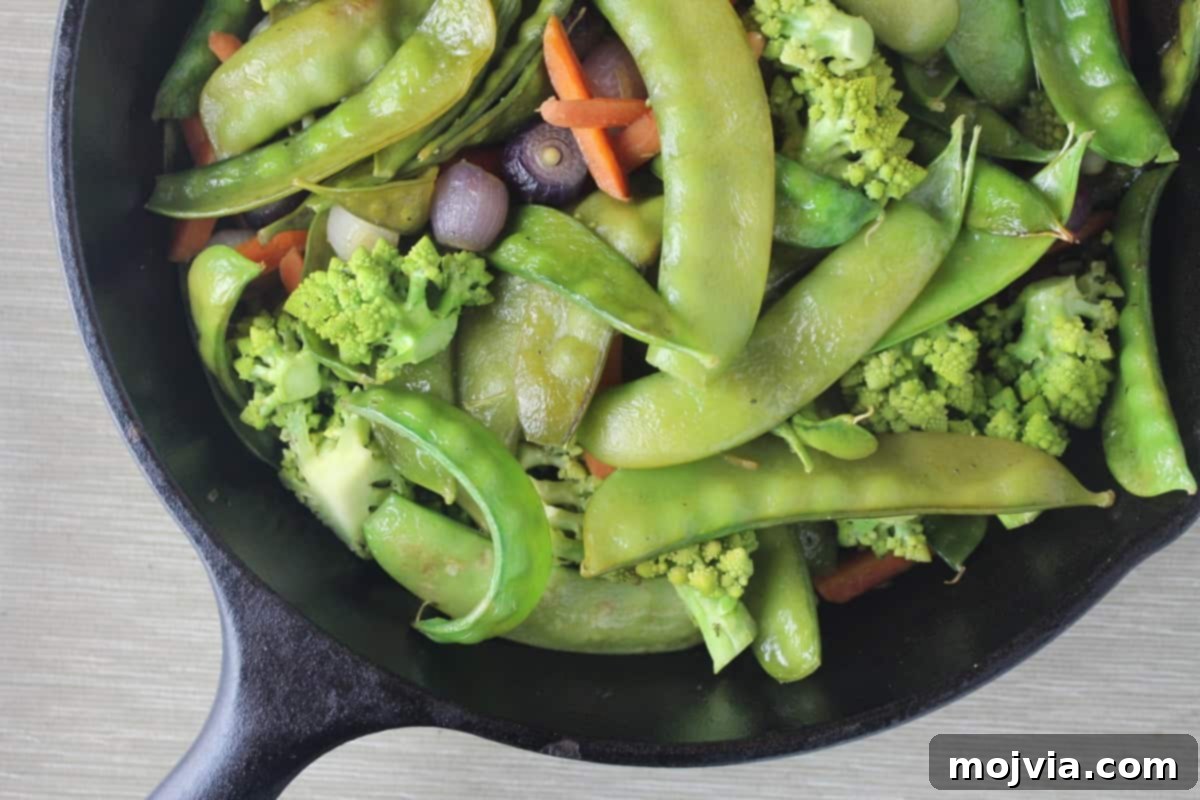
Savor the Season: Easy Cast Iron Skillet Winter Vegetables Recipe
Transform your winter table with this incredibly simple yet flavorful side dish! Vibrant snow peas, the fascinating broccoflower, sweet pearl onions, and tender carrots come together in a trusty cast iron skillet for a truly delightful culinary experience that’s as nutritious as it is delicious.
Embracing the Flavors of Winter: A Garden-Inspired Dish
There’s nothing quite like fresh, seasonal produce to inspire truly memorable home cooking. The crisp air of winter often calls for comforting, wholesome dishes, and this recipe perfectly fits the bill. It all began with a wonderful encounter when I had the distinct pleasure of meeting a fellow San Diego food blogger, The Seaside Baker. Her kindness and passion for gardening shone through when she generously presented me with an amazing bag of freshly harvested vegetables and aromatic herbs, straight from her thriving garden!
Among the many treasures in that thoughtful gift, one vegetable immediately captured my attention: the “Spiky Broccoli.” This captivating produce is more formally known as Romanesco broccoli or often simply referred to as Broccoflower – a unique and visually stunning hybrid of broccoli and cauliflower. Its intricate, fractal-like florets are a sight to behold, and its delicate, slightly nutty flavor offers a delightful culinary surprise. I couldn’t wait to get home and create a dish that would celebrate its distinct qualities.
I envisioned a harmonious blend that would highlight the freshness of her garden’s bounty. Combining the tender snow peas she brought me with the intriguing broccoflower, I crafted a delicious winter vegetable side dish. This vibrant medley proved to be the perfect accompaniment to my Coffee Crusted Tri Tip with Balsamic Stout Reduction on a recent Saturday evening, showcasing how effortlessly these flavorful vegetables can elevate any main course.
Why Cook Winter Vegetables in a Cast Iron Skillet?
When it comes to preparing vegetables, especially heartier winter varieties, the choice of cookware can significantly impact the outcome. For this delightful winter vegetable medley, a cast iron skillet is truly the ultimate tool. Cast iron is celebrated by chefs and home cooks alike for its exceptional ability to retain and distribute heat evenly, which is paramount for achieving perfectly cooked vegetables with beautiful texture and enhanced flavor.
Key Benefits of Cast Iron for Vegetables:
- Superior Heat Retention: Once heated, cast iron holds its temperature remarkably well. This consistent heat is ideal for sautéing and simmering, ensuring that vegetables cook thoroughly and retain their moisture and natural sweetness. It also means your food stays warmer longer when serving directly from the skillet.
- Even Heat Distribution: Unlike many other pans that can develop hot spots, cast iron heats uniformly across its entire surface. This prevents some vegetables from burning while others remain undercooked, resulting in a consistent and delicious outcome for every bite.
- Enhanced Flavor Profile: Many experienced cooks believe that cast iron imparts a subtle, unique richness to food. As vegetables caramelize slightly on the seasoned surface, a depth of flavor develops that is difficult to achieve with other materials.
- Natural Non-Stick Properties: A well-seasoned cast iron skillet develops a natural, chemical-free non-stick surface. This allows you to cook with less oil, contributing to a healthier dish, and makes cleanup surprisingly straightforward.
- Durability and Longevity: Cast iron cookware is incredibly robust and built to last. With proper care, a quality cast iron skillet can be a cherished kitchen companion for decades, passed down through generations.
- Nutritional Boost: Cooking in cast iron can even subtly increase the iron content of your food, offering a small but beneficial nutritional bonus.
Beyond these practical advantages, there’s an undeniable rustic charm and sense of tradition that comes with cooking in cast iron. It transforms the act of preparing a simple side dish into a more gratifying and authentic culinary experience, making it an excellent choice for this Cast Iron Skillet Winter Vegetables recipe.
Spotlight on Broccoflower: A Unique Winter Gem
While traditional broccoli and cauliflower are always excellent and reliable choices, the inclusion of broccoflower, or Romanesco broccoli, truly elevates this side dish from good to extraordinary. This magnificent vegetable, with its mesmerizing fractal patterns and vibrant chartreuse hue, is a natural work of art that also delights the palate. It offers a milder, slightly sweeter, and distinctly nuttier flavor profile compared to its individual parent vegetables, making it less pungent and more universally appealing.
When cooked, broccoflower maintains a delightful al dente texture, firm yet tender, and holds its beautiful shape wonderfully in the skillet. Beyond its captivating appearance and delicate taste, broccoflower is a nutritional powerhouse. It’s an excellent source of Vitamin C, which is vital for immune health, and Vitamin K, crucial for bone health and blood clotting. It also provides a good amount of dietary fiber, supporting healthy digestion. Incorporating such a unique and nutrient-dense vegetable adds both visual appeal and robust health benefits to your meal.
If Romanesco broccoli or broccoflower isn’t readily available in your local grocery store or farmer’s market, there’s no need to worry! This recipe is adaptable. You can easily substitute it with an equal amount of traditional broccoli florets or cauliflower florets. Both options will still yield a wonderfully delicious and wholesome winter vegetable side dish, maintaining the essence of fresh, hearty flavors.
Cast Iron Skillet Winter Vegetables Recipe
This recipe is designed for maximum flavor with minimal effort, making it ideal for busy weeknights or a simple, healthy addition to any meal. It highlights the natural goodness of winter vegetables, cooked to perfection in your cast iron skillet.
Servings: 4 people
Prep Time: 5 mins
Cook Time: 25 mins
Total Time: 30 mins
Author: Whitney Bond
Course: Side Dish
Cuisine: American
Ingredients:
- 1 tbsp olive oil
- 2 cups snow peas
- 1 cup sliced carrots
- 1 cup pearl onions
- 1 cup broccoflower (or traditional broccoli/cauliflower florets)
- 3 cloves garlic, minced
- 1 cup chicken broth (or vegetable broth for a vegetarian option)
Instructions:
- Heat Oil: Heat the olive oil in a cast iron skillet over medium heat. Allow the skillet to get uniformly hot to ensure an even sauté. This initial heating is key for preventing sticking and promoting good caramelization.
- Sauté Vegetables: Add the snow peas, sliced carrots, pearl onions, and broccoflower (or your chosen substitute) to the hot skillet. Sauté these vegetables for 3-5 minutes, stirring occasionally. You want them to start softening slightly and develop a vibrant color.
- Add Garlic: Stir in the minced garlic and continue to sauté for an additional 2-3 minutes. Be mindful not to burn the garlic; it should become fragrant and infuse its flavor into the vegetables without turning brown.
- Simmer in Broth: Pour in the chicken broth (or vegetable broth). Reduce the heat to low, cover the skillet, and let the vegetables simmer gently for 15-20 minutes. This step allows the vegetables to become tender as they absorb the flavorful broth, creating a deeper, more cohesive taste.
- Reduce Liquid: Continue simmering until most of the chicken broth has been absorbed, leaving the vegetables perfectly cooked, tender, and glistening with a light, savory coating.
- Serve: Serve immediately as a wholesome and incredibly delicious side dish.
This simple cooking method truly enhances the natural sweetness of the vegetables and creates a harmonious blend of textures and flavors. The chicken broth is a fantastic secret ingredient here, infusing the vegetables with rich savory notes without the need for additional fats like butter, keeping the dish wonderfully healthy and light.
Variations and Serving Suggestions for Your Winter Vegetables
While this Cast Iron Skillet Winter Vegetables recipe is undoubtedly perfect as it is, its simplicity also makes it incredibly versatile and open to your creative touches. Feel free to experiment with other seasonal winter vegetables that you love or have on hand. Brussels sprouts, parsnips, turnips, or even small cubes of sweet potato would make excellent additions or substitutions (just ensure they are cut to a similar size for even cooking).
To further enhance the aromatic depth, consider adding a sprig of fresh thyme or rosemary during the simmering stage. For those who appreciate a touch of heat, a tiny pinch of red pepper flakes can be stirred in with the garlic. A squeeze of fresh lemon juice or a sprinkle of fresh parsley or chives just before serving can also brighten the flavors beautifully.
What to Serve with This Delicious Side:
This vibrant and wholesome side dish pairs beautifully with an extensive array of main courses, making it a versatile staple for any meal:
- Roasted Meats: It’s an ideal partner for roasted chicken, succulent pork loin, or a tender beef roast. The savory broth-infused vegetables complement rich meats perfectly.
- Seafood: Pan-seared salmon, baked cod, or grilled shrimp find a fantastic match in these lightly cooked vegetables.
- Steaks: Whether it’s a grilled steak, a pan-fried sirloin, or a more elaborate cut, these vegetables provide a fresh, healthy contrast.
- Vegetarian Mains: For a complete plant-based meal, serve this medley alongside a hearty lentil loaf, black bean burgers, or a flavorful mushroom Wellington.
- Pasta and Grains: Stir the finished vegetables into a bowl of pasta with a light sauce, or combine them with quinoa, farro, or brown rice for a satisfying and complete grain bowl.
- Eggs: Don’t limit it to dinner! These vegetables can be a fantastic addition to a hearty breakfast or brunch alongside scrambled eggs or an omelet.
The subtle sweetness from the carrots and pearl onions, combined with the fresh crunch of the snow peas and the earthy, slightly nutty flavor of broccoflower, creates a universally appealing accompaniment that will elevate any dish.
Nutritional Benefits of This Winter Vegetable Medley
Beyond its incredible ease of preparation and delicious taste, one of the most compelling reasons to make this Cast Iron Skillet Winter Vegetables recipe a regular in your rotation is its exceptional healthfulness. Each ingredient contributes a powerhouse of nutrients, making this dish a truly wholesome addition to any diet:
- Snow Peas: These delicate pods are an excellent source of Vitamin C, bolstering your immune system, and Vitamin K, essential for bone health. They also provide a good amount of dietary fiber, which aids in digestion and helps maintain a healthy gut.
- Carrots: Famous for their vibrant orange hue, carrots are packed with Beta-carotene, a powerful antioxidant that the body converts into Vitamin A. Vitamin A is crucial for good vision, healthy skin, and immune function. Carrots also supply valuable fiber and other antioxidants.
- Pearl Onions: Offering a milder, sweeter flavor than larger onions, pearl onions are a good source of Vitamin C and various B vitamins, along with beneficial antioxidants that contribute to overall well-being.
- Broccoflower (Romanesco Broccoli): This impressive cruciferous vegetable is a nutritional champion. It’s rich in Vitamin C, Vitamin K, and folate, which supports cell growth and function. Its high fiber content also promotes digestive health and satiety.
- Garlic: More than just a flavor enhancer, garlic is renowned for its immune-boosting properties and beneficial sulfur compounds. It adds both pungent depth to the dish and a dose of health-promoting benefits.
- Chicken Broth (or Vegetable Broth): By using broth as the simmering liquid, we infuse the vegetables with savory flavor without the need for additional fats like butter or heavy cream. This keeps the calorie count low while still delivering a satisfying and robust taste. For a vegetarian or vegan version, quality vegetable broth is an equally delicious and healthy alternative.
By relying on the natural flavors and nutrients of fresh produce and the savory depth of broth, this dish avoids excessive fats and calories, making it a perfect choice for those seeking delicious and health-conscious meals. It truly embodies the ideal combination: simple to make, incredibly scrumptious, and packed with vital nutrients. That’s a winning trio we absolutely adore and strive for in our home!
Nutrition Facts (per serving)
- Serving Size: 4 servings
- Calories: 88 kcal (4% Daily Value)
- Carbohydrates: 11g (4% Daily Value)
- Protein: 3g (6% Daily Value)
- Fat: 3g (5% Daily Value)
- Sodium: 251mg (10% Daily Value)
- Potassium: 412mg (12% Daily Value)
- Fiber: 3g (12% Daily Value)
- Sugar: 5g (6% Daily Value)
- Vitamin A: 5880mg (118% Daily Value)
- Vitamin C: 107.7mg (131% Daily Value)
- Calcium: 39mg (4% Daily Value)
- Iron: 3mg (17% Daily Value)
Did you make this recipe?
We’d love to see your culinary creations! Tag @WhitneyBond on Instagram and use the hashtag #WBRecipes! Your delicious photos inspire us all.