
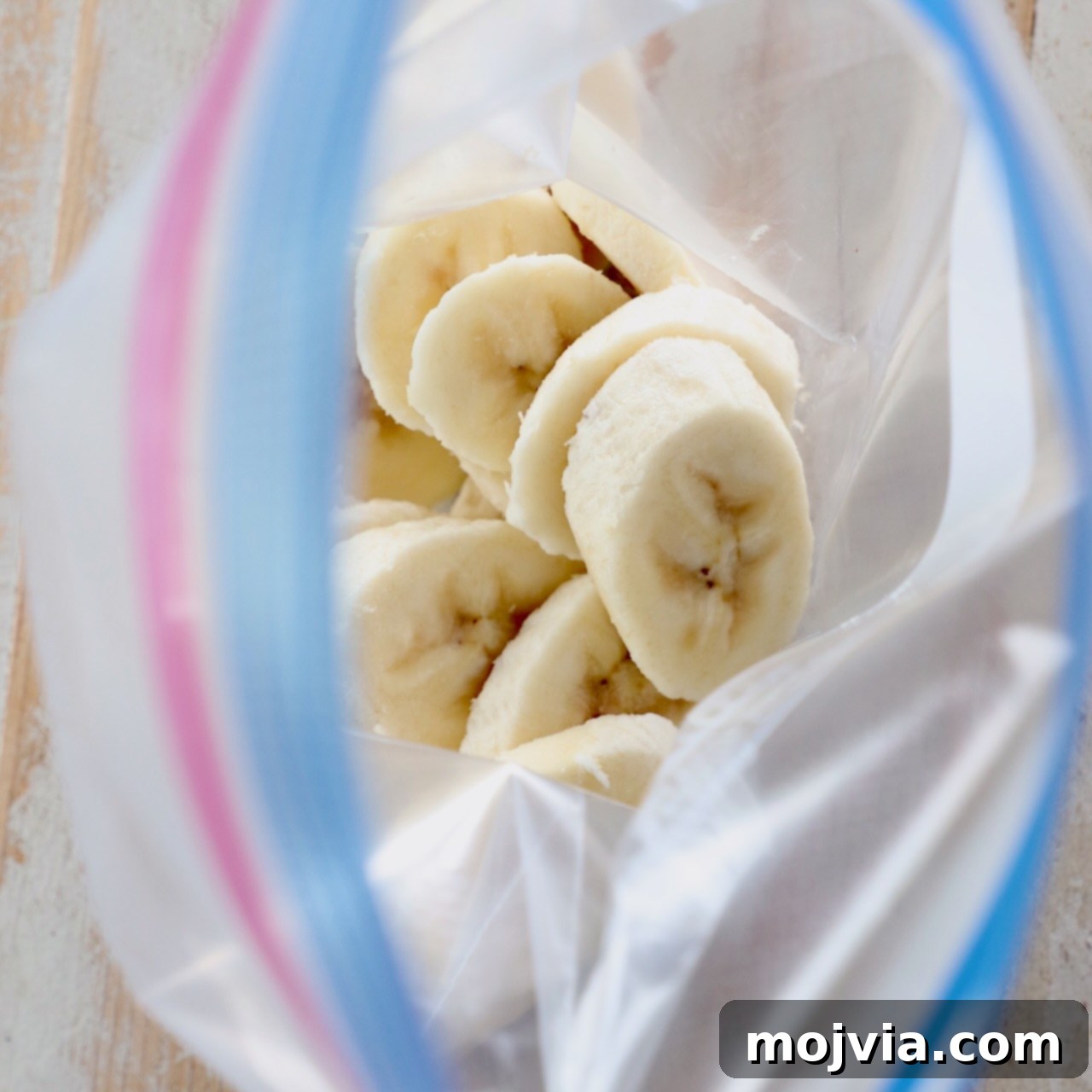
Never let those perfectly ripe (or even slightly overripe!) bananas go to waste again! This comprehensive guide will teach you everything you need to know about how to freeze bananas, ensuring you always have a stash of this versatile fruit ready for your culinary creations. Whether you prefer them whole or conveniently sliced, mastering this simple method will open up a world of delicious possibilities, from creamy smoothies and homemade “nice” cream to moist banana bread and healthy baked goods.
We’ve all been there: you glance at your kitchen counter and spot a bunch of bananas rapidly transitioning from perfectly yellow to speckled brown. Before panic sets in, prompting a frantic rush to bake every banana bread recipe imaginable, consider a much simpler, more effective solution: freezing them! Freezing bananas is an incredibly smart way to preserve their natural sweetness and nutritional value, transforming them into a convenient ingredient you can use anytime, without the pressure of a ticking clock.
By storing sliced or whole bananas in your freezer, you unlock a treasure trove of culinary potential. Imagine effortlessly creating luscious banana “nice” cream with the most perfect creamy texture and natural sweetness simply by blending a few frozen banana slices. Beyond this delightful treat, frozen bananas are essential for thickening and sweetening your favorite smoothies, adding moisture and flavor to baked goods, and even enhancing other desserts. It’s a game-changer for reducing food waste and making healthy eating more accessible.


Why Freeze Bananas? The Ultimate Food Saver Hack
Freezing bananas is not just about extending their shelf life; it’s about harnessing their peak flavor and making your kitchen more efficient. Here are some compelling reasons to start freezing your bananas today:
- Reduce Food Waste: Overripe bananas are often discarded, but freezing them prevents this waste, saving you money and contributing to a more sustainable kitchen.
- Natural Sweetness for Recipes: As bananas ripen, their starches convert to sugars, making them incredibly sweet. Freezing them at this stage locks in that intense natural sweetness, perfect for recipes where you want a concentrated banana flavor without added sugar.
- Perfect for Smoothies: Frozen bananas add a thick, creamy texture to smoothies, eliminating the need for ice and creating a colder, more substantial drink.
- Ready-to-Use Baking Ingredient: Many baking recipes, especially banana bread, specifically call for overripe bananas. Having them pre-frozen and ready means you can bake on a whim, without waiting for fresh bananas to ripen.
- Cost-Effective: You can often find overripe bananas on sale at grocery stores. Stocking up and freezing them is a smart way to save money.
Choosing the Best Bananas for Freezing
For optimal results, always freeze bananas that are fully ripe, or even slightly overripe. You’ll know they’re ready when their peels have numerous brown spots and the fruit inside is soft and fragrant. Bananas will not ripen further once frozen, so freezing them at their peak sweetness ensures a delicious outcome in your recipes. Avoid freezing green or underripe bananas, as they lack the desired sweetness and soft texture needed for most frozen banana applications.
Step-by-Step Guide: How to Freeze Bananas Effectively
Freezing bananas is a straightforward process, but a few key steps will ensure they freeze perfectly and are easy to use later. Follow these simple instructions for the best results:
Step 1: Peel Your Bananas – Don’t Skip This!
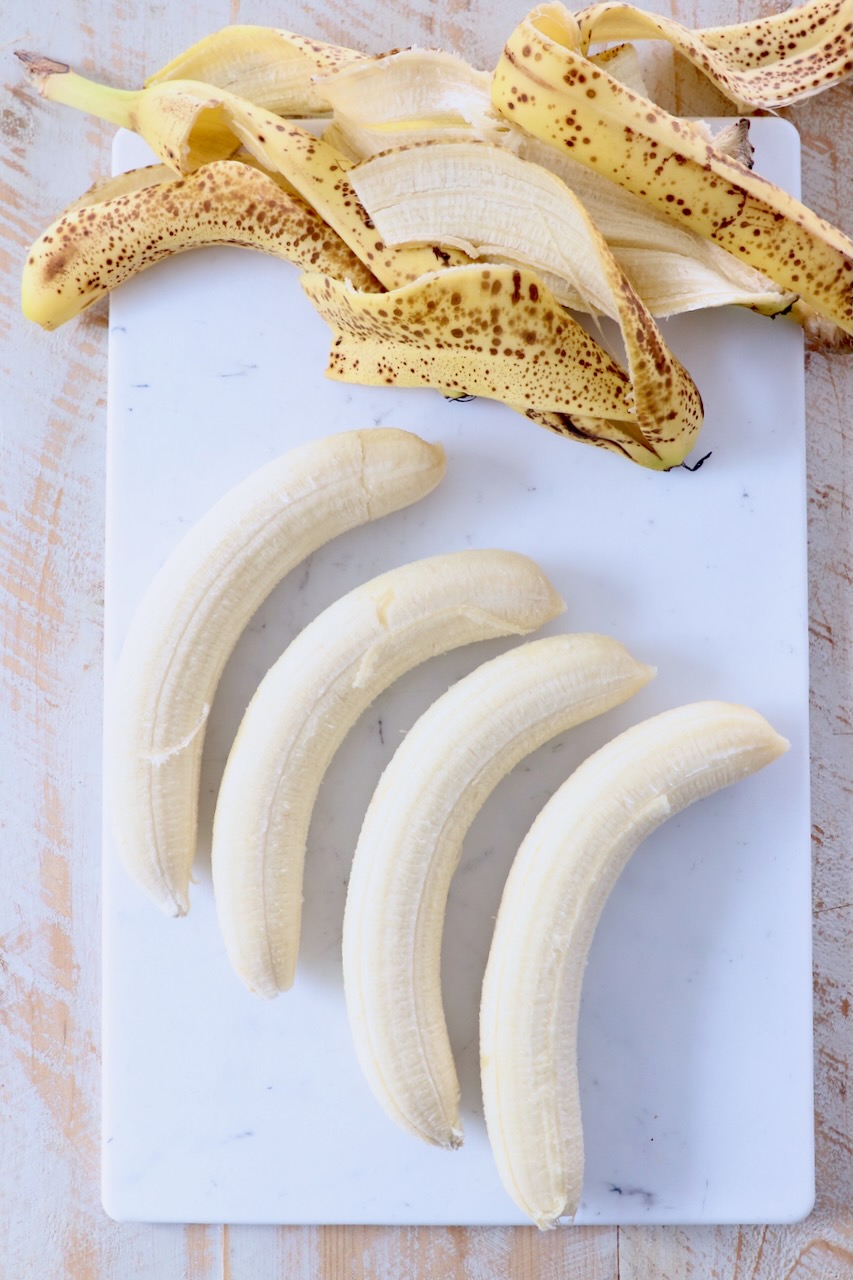
- Peel the bananas: This is arguably the most crucial step. Always, always, always peel your bananas before freezing them. Attempting to peel a frozen banana is a frustrating and messy endeavor. The peel becomes incredibly difficult to remove once frozen solid, often sticking stubbornly to the fruit and resulting in wasted banana and sticky fingers. While technically you *can* freeze unpeeled bananas, you’ll then need to partially defrost them before peeling, which defeats the purpose of convenience. Save yourself the hassle and peel them from the start!
Step 2: Decide on Your Desired Format – Whole or Sliced?
- Slice or keep whole: The way you prepare your bananas for freezing depends entirely on their intended use.
- For Smoothies & “Nice” Cream: If you plan to primarily use your frozen bananas in smoothies, protein shakes, or to make homemade banana “nice” cream, slicing them into halves, quarters, or uniform rounds (about ½-inch thick) is highly recommended. Smaller pieces blend much more easily and create a smoother consistency, preventing strain on your blender.
- For Baking (like Banana Bread): For recipes like banana bread, muffins, or pancakes where you’ll be mashing the bananas anyway, you can keep them whole (after peeling, of course). The thawing process will soften them enough to mash effortlessly. Alternatively, you can even mash very ripe bananas before freezing them in measured portions – a fantastic time-saver for future baking projects!
Step 3: Flash Freeze for Optimal Separation (Especially for Slices)
- Flash freeze for individual pieces: If you’ve opted to slice your bananas and anticipate using only a few pieces at a time, flash freezing is your secret weapon against clumping.
- Arrange the banana slices in a single layer on a parchment paper-lined baking sheet. Ensure the slices aren’t touching to prevent them from freezing into a solid block.
- Place the baking sheet in the freezer for about 1 to 2 hours, or until the banana pieces are firm but not completely solid.
- This quick pre-freeze allows the individual slices to firm up, making them easy to transfer and store without sticking together.
- Direct freeze for whole or mashed bananas: Whole peeled bananas or pre-mashed bananas can typically go straight into their freezer-safe container or bag without flash freezing.
Step 4: Proper Storage for Long-Lasting Freshness
- Store the bananas: Once your bananas are pre-frozen (if sliced) or prepared, it’s time for long-term storage.
- For flash-frozen slices: Transfer the firm, individual slices from the baking sheet into a freezer-safe, airtight container or a heavy-duty freezer bag.
- For whole or mashed bananas: Place the whole peeled bananas or pre-mashed portions directly into an airtight container or freezer bag.
- Remove excess air: When using freezer bags, try to remove as much air as possible before sealing. This helps prevent freezer burn and maintains the quality of the bananas.
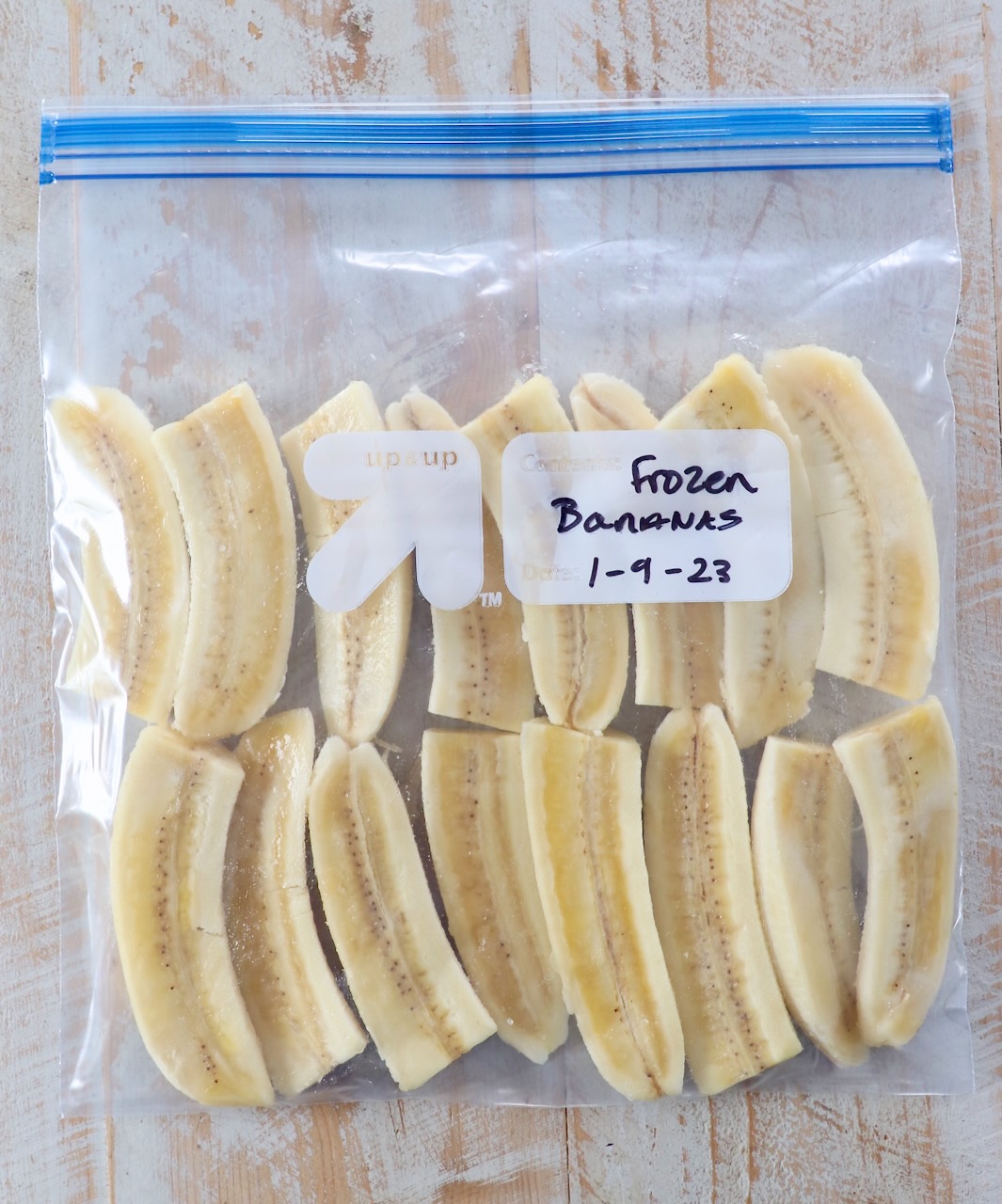
- Label and date: Always label your container or bag with the contents (e.g., “Sliced Bananas”) and the date they were frozen. This simple step ensures you use them within their optimal timeframe.
- Storage Duration: Properly stored bananas can be kept in the freezer for up to 3 months while maintaining their best quality. They will remain safe to eat beyond this period, but their texture and flavor might start to degrade.
Tips and Tricks for Freezing Bananas Like a Pro
- Ripeness is Key: Always freeze bananas that are fully ripe or even slightly overripe. As bananas do not ripen further in the freezer, their natural sweetness is locked in at the point of freezing. This ensures the best flavor for your smoothies and baked goods.
- Prevent Browning: To minimize browning in the freezer, ensure you use truly airtight containers or freezer-safe plastic bags. Exposure to air is the primary cause of oxidation and browning. A tight seal will keep your bananas looking better for longer. For extra protection, you can even toss banana slices with a tiny bit of lemon juice or pineapple juice before freezing, though this can subtly alter the flavor.
- Thawing Frozen Bananas: The thawing method depends on your recipe.
- For Baking: If you need thawed bananas for recipes like banana bread, transfer them to a bowl and thaw them overnight in the refrigerator. Alternatively, leave them at room temperature for about 1-2 hours. Expect them to release some liquid, which you can either drain or incorporate into your recipe for added moisture (depending on the recipe). If you’re in a hurry, you can use the defrost setting on your microwave.
- For Smoothies/Nice Cream: No thawing needed! Simply add them directly to your blender.
- Pre-Mash for Baking Convenience: If you know you’ll be using a batch of bananas specifically for banana bread or muffins, consider mashing them directly into a freezer-safe container or bag before freezing. You can even measure out precise amounts (e.g., 1 cup per bag) to make future baking sessions incredibly quick. Defrost mashed bananas overnight in the refrigerator before using.
- Size Matters: Tailor your banana slice size to your intended use. Smaller chunks or slices are ideal for smoothies and blending, as they process more easily. Larger chunks or whole bananas are fine for mashing into baked goods after thawing.
Creative Ways to Use Your Frozen Bananas
Once you have a steady supply of frozen bananas, you’ll find countless ways to incorporate them into your diet. Their creamy texture and concentrated sweetness make them incredibly versatile.
Smoothies & Shakes:
Frozen bananas are the ultimate smoothie secret ingredient. They add body, natural sweetness, and a delightful chill without diluting the flavor like ice cubes. Blend them with your favorite fruits, greens, protein powder, and liquid for a nutritious meal or snack.
- Superfood Green Smoothie
- Banana Date Shake
- Superfood Pumpkin Smoothie
- Almond Milk Smoothie
- Vegan Avocado Smoothie Bowls
“Nice” Cream (Homemade Banana Ice Cream):
The simplest, healthiest ice cream you’ll ever make! Blend frozen banana slices in a high-speed blender or food processor until completely smooth and creamy. It mimics the texture of soft-serve ice cream. Customize it with cocoa powder, peanut butter, vanilla extract, or other fruits for endless flavor combinations.
- Salted Caramel Nice Cream – from Eat Fresh Glow
Baked Goods:
Overripe frozen bananas are excellent for adding moisture and sweetness to a variety of baked goods. Thaw them before using, and remember that the liquid they release is often desirable in these recipes.
- Gluten Free Strawberry Banana Bread
- Classic banana bread
- Muffins
- Pancakes or waffles
Other Creative Uses:
- Healthy Snacks: Dip frozen banana slices in melted chocolate and sprinkle with nuts for a quick, wholesome dessert.
- Dessert Toppings: Add thawed and mashed frozen bananas to oatmeal, yogurt, or ice cream for an extra boost of flavor and nutrition.
Frequently Asked Questions About Freezing Bananas
Got more questions about freezing bananas? Here are answers to some common queries:
Q: Can I freeze bananas with the peel on?
A: While technically possible, it’s highly recommended to peel bananas before freezing. The peel becomes very difficult to remove when frozen, often sticking to the fruit and creating a mess. Peeling them beforehand makes them much more convenient to use straight from the freezer.
Q: Do frozen bananas taste different?
A: Frozen bananas retain their sweetness and flavor, but their texture changes significantly. They become much softer and mushier once thawed, which is why they are ideal for blending into smoothies or mashing into baked goods, rather than eating raw.
Q: How do I measure frozen bananas for recipes?
A: If you froze your bananas whole, you can typically use them as a 1:1 replacement for fresh bananas in baking recipes once thawed. If you froze slices, you can measure them by volume (e.g., 1 cup of frozen slices) or by weight. For precision in baking, it’s best to thaw and mash them, then measure the mashed banana according to the recipe.
Q: Can I refreeze thawed bananas?
A: It is generally not recommended to refreeze bananas once they have thawed. Refreezing can further degrade their texture, making them even mushier and potentially affecting their flavor. It’s best to freeze bananas in portions that you intend to use at one time.
Q: What if my frozen bananas turn brown? Are they still safe to eat?
A: Yes, if your frozen bananas turn brown, they are still safe to eat, assuming they were stored properly in an airtight container and used within a reasonable timeframe (up to 3 months). The browning is due to oxidation from air exposure, which primarily affects appearance and not safety. They will still taste great in smoothies and baked goods.
More Kitchen Tutorials to Enhance Your Skills
Expand your culinary knowledge with these other quick and easy how-to posts designed to make your time in the kitchen more enjoyable and efficient!
- How To Cut A Pomegranate
- How To Peel Garlic
- 3 Ways – How To Cook Sweet Potatoes
- How to Hard Boil Eggs
- How To Make Sautéed Mushrooms
How To Freeze Bananas
Never throw out overripe bananas again! Learn how to freeze bananas, whole or sliced, with this simple method. Use frozen bananas in smoothies or for baking recipes, like banana bread!
Servings: 1 banana
Prep Time: 5 mins
Freezing Time: 4 hrs
Total Time: 4 hrs 5 mins
Author: Whitney Bond
Course: Breakfast, Dessert, Snack
Cuisine: American
Ingredients
- 1 banana (ripe or overripe)
Instructions
- Peel the bananas. It is highly recommended to peel the bananas before freezing them. Peeling a frozen banana is difficult and messy.
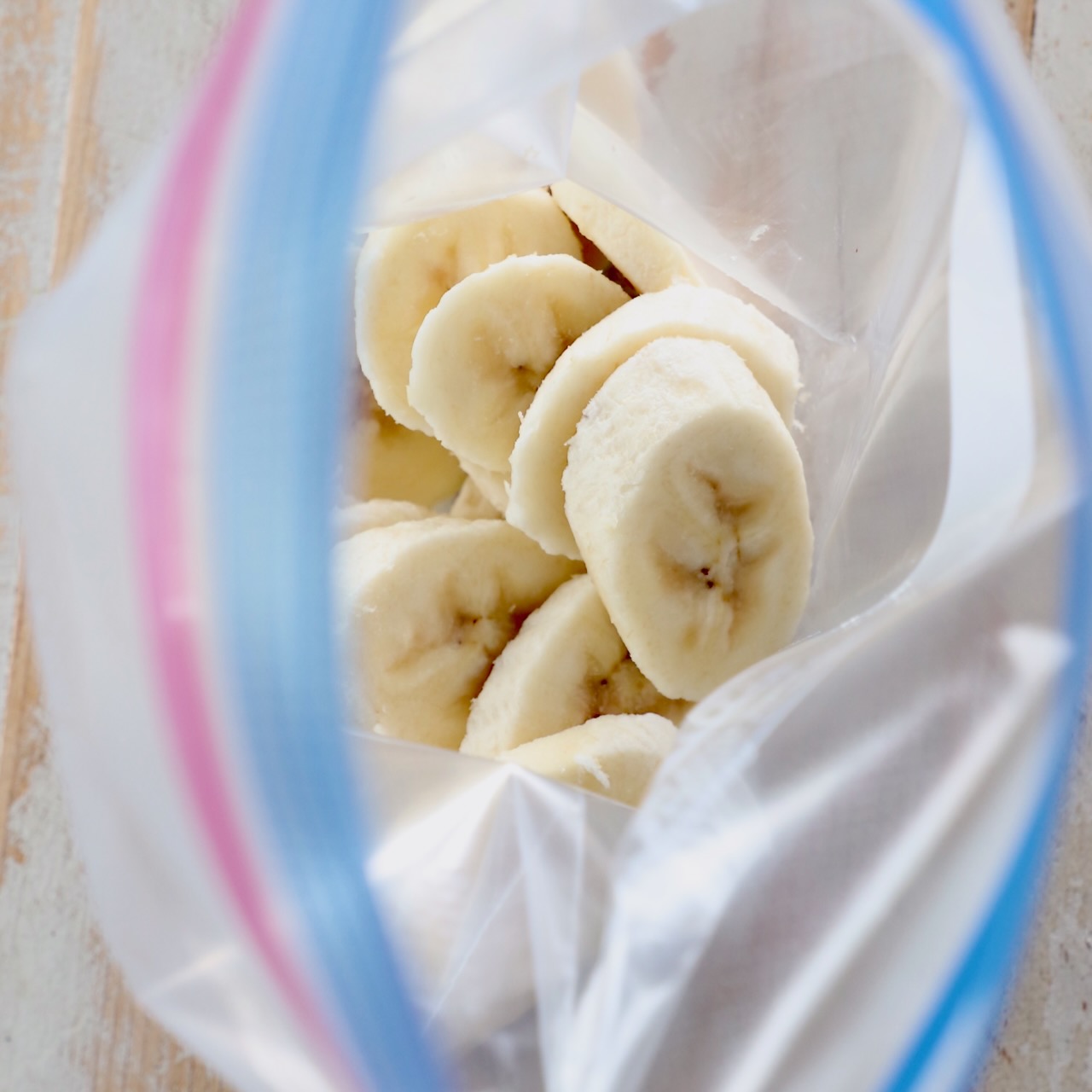
- Slice the bananas. You can either slice the banana into halves, quarters, or rounds, or you can keep it whole. This decision depends on how you plan to use the frozen bananas. For smoothies, smaller slices blend more easily. For banana bread, whole peeled bananas are fine.
- Store the bananas. If using the entire banana in a recipe (whole or sliced), you can place it directly into a freezer-safe container or bag. For individual slices for smoothies, flash freeze them in a single layer on a parchment paper-lined baking sheet for one hour first to prevent clumping. Then, transfer them to a freezer-safe bag. Bananas can be stored in the freezer for up to 3 months.
Notes
- Always freeze fully ripe bananas. Bananas do not ripen further in the freezer, so choose those with brown spots for natural sweetness.
- Label with the freeze date. Use within 3 months for best quality.
- Prevent browning with airtight storage. Air exposure causes browning, so seal tightly in freezer-safe bags or containers.
- Thaw as needed. For baking, thaw overnight in the refrigerator or 1-2 hours at room temperature. For smoothies, use directly from the freezer.
Nutrition Facts
Calories: 105 kcal (5%)
Carbohydrates: 27g (9%)
Protein: 1g (2%)
Fat: 0.4g (1%)
Sodium: 1mg
Potassium: 422mg (12%)
Fiber: 3g (12%)
Sugar: 14g (16%)
Vitamin A: 76mg (2%)
Vitamin C: 10mg (12%)
Calcium: 6mg (1%)
Iron: 0.3mg (2%)
Did you make this recipe?
Tag @WhitneyBond on Instagram and hashtag it #WBRecipes!