
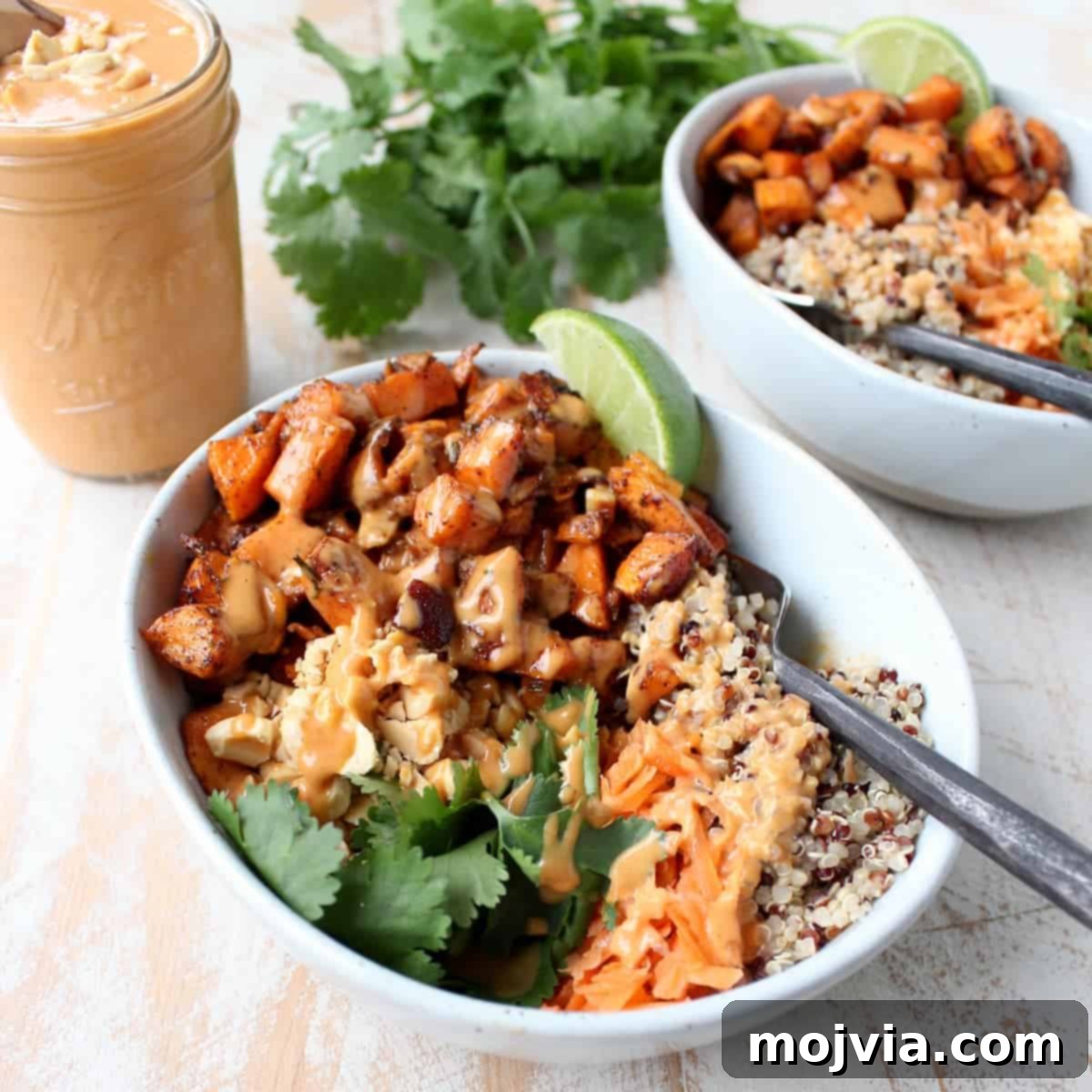
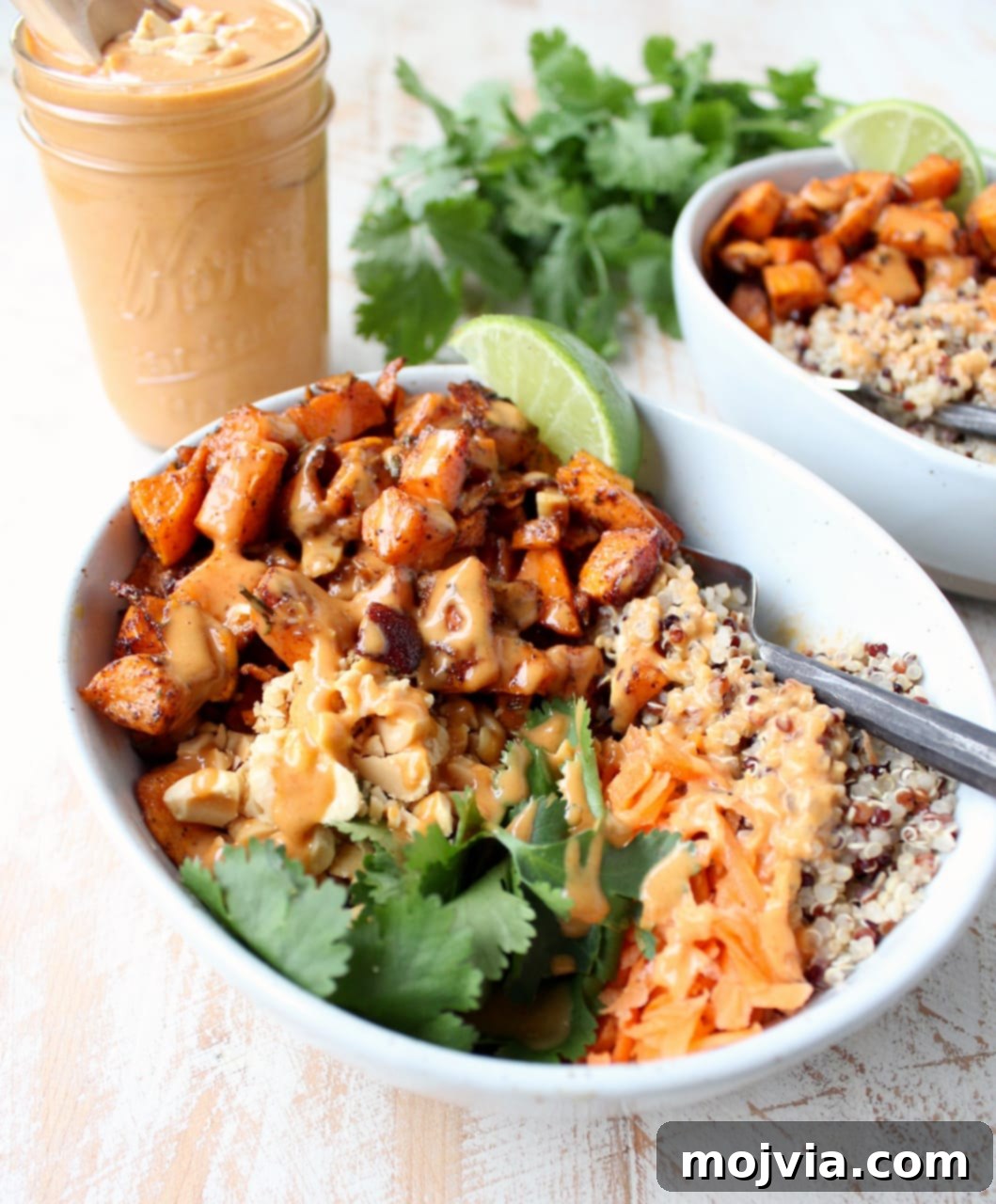
Experience a vibrant and wholesome meal with this Thai Peanut Sweet Potato Buddha Bowl recipe! It’s an effortless, healthy, gluten-free, and vegan dish that perfectly balances sweet, savory, and spicy flavors.
This beloved Buddha bowl has garnered immense popularity, having been shared over 100,000 times on Pinterest! Home cooks consistently praise its incredible taste and remarkable simplicity. If you’re captivated by the deliciousness of this bowl, you’ll also adore our other plant-based creations like the Veggie Fajita Rice Bowls and the spirited Buffalo Chickpea Buddha Bowls!
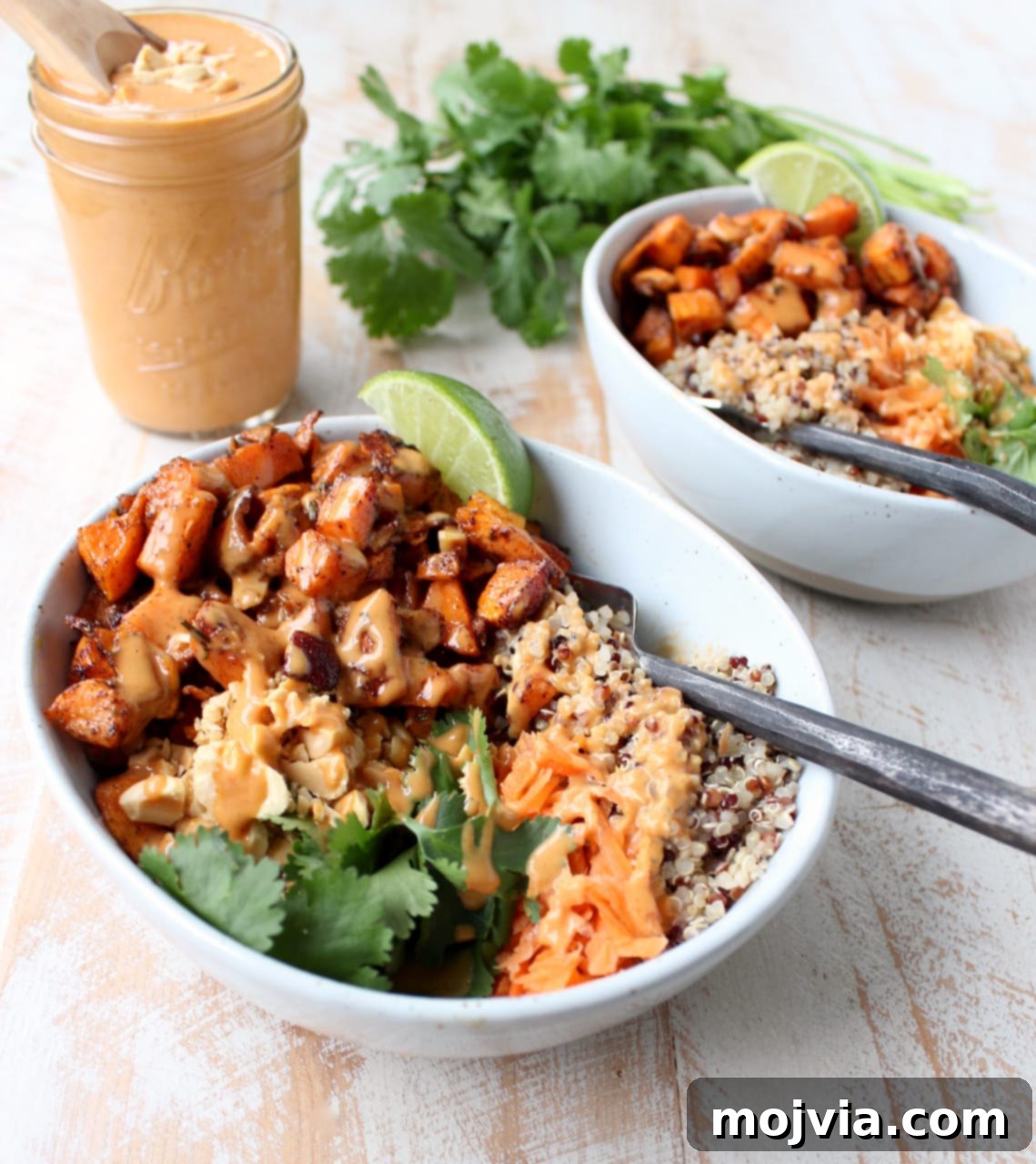
Unlocking the Delights of the Thai Peanut Sweet Potato Buddha Bowl
The culinary landscape has seen a delightful shift towards wholesome, all-in-one meals, and the “bowl” trend stands at its forefront. What began with the Wall Street Journal declaring “Bowls Are The New Plates” in 2016 has only intensified, with Buddha Bowls being identified as a top food trend for years to come. These aesthetically pleasing and nutritionally balanced meals are not just a passing fad; they represent a conscious choice for healthier, more convenient eating.
What Exactly is a Buddha Bowl? Your Guide to Balanced Bowls
A Buddha Bowl is more than just a meal in a bowl; it’s a philosophy of balanced eating, inspired by the perfectly rounded belly of Buddha. Typically, it comprises a foundation of whole grains, such as fluffy brown rice or protein-packed quinoa. This base is then generously topped with an array of raw or cooked vegetables – think vibrant sweet potatoes, crisp broccoli, or tender cauliflower. The final, essential element that ties all these components together is a healthy, flavorful sauce or dressing, like creamy hummus, spicy peanut sauce, or zesty pesto. The beauty of the Buddha bowl lies in its endless customization, allowing you to create unique flavor and texture combinations tailored to your preferences.
This culinary trend resonates deeply with me because it offers an incredibly fun and creative avenue for healthy eating. Say goodbye to monotonous meals! With Buddha bowls, you can experiment with diverse ingredients and flavor profiles, ensuring every meal feels fresh and exciting. Beyond its versatility, the Buddha bowl is an absolute game-changer for meal prepping. Imagine having several delicious, nutrient-dense bowls ready in your fridge, providing quick and satisfying lunches or dinners throughout a busy week.
Crafting the Perfect Thai Peanut Sweet Potato Buddha Bowl
Our Thai Peanut Sweet Potato Buddha Bowl is a testament to flavor and simplicity. The star of this dish, the sweet potato, undergoes a magical transformation when roasted. We elevate its natural sweetness with a carefully selected blend of savory rosemary and garlic, a hint of warm cinnamon, and a touch of salt and pepper. This combination creates a deeply flavorful and aromatic element that forms the heart of the bowl.
Once roasted to perfection, these sweet potatoes are tossed atop a bed of perfectly cooked quinoa. While quinoa provides an excellent, protein-rich base, feel free to substitute it with your favorite whole grain. Brown rice, farro, couscous, or even barley would work wonderfully, adapting to your taste and dietary needs. The goal is a satisfying foundation that complements the vibrant toppings.
To complete the bowl, we add a colorful medley of shredded carrots, fresh cilantro, and crunchy peanuts, providing essential textures and bursts of freshness. But the true star, the ingredient that brings everything together in a symphony of flavors, is our famous Thai Peanut Sauce! This sauce is so good, you’ll want to make extra. The recipe provided yields more than you’ll need for two bowls, but don’t fret! Store the remaining sauce in a sealed mason jar in the fridge for up to two weeks. I guarantee you won’t be disappointed to have a generous supply of this liquid gold on hand.
Its versatility knows no bounds. This delectable Thai Peanut Sauce transforms everything it touches, from savory Thai Peanut Chicken Naan Pizzas to comforting Slow Cooker Thai Peanut Turkey Meatballs. For those seeking more vegan applications, consider drizzling it over these refreshing Thai Peanut Pineapple Veggie Rice Bowls or using it to coat delicious Thai Peanut Noodles with Vegetables. The possibilities are truly endless!
Simple Steps to Your Perfect Buddha Bowl
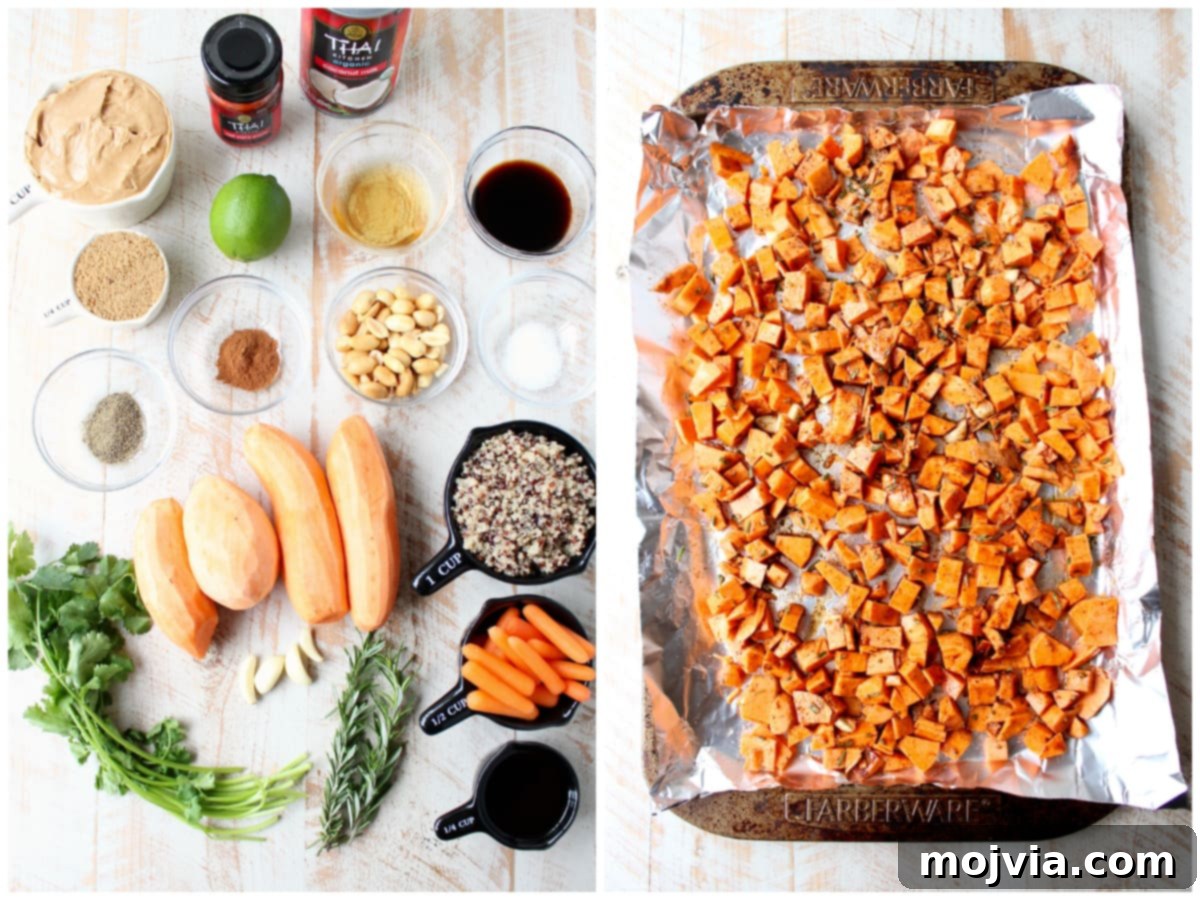
- Roast the Sweet Potatoes for Maximum Flavor: Begin by dicing your peeled sweet potatoes into small, uniform cubes. This ensures even cooking and promotes a consistent texture. Toss these cubes with high-quality olive oil, fragrant minced garlic, fresh rosemary, warm cinnamon, a pinch of salt, and a dash of black pepper. Spread them in a single, even layer on a baking sheet – crowding the pan will steam rather than roast, preventing that desirable caramelization. Place them in a preheated oven at 425°F (220°C) and roast for 15 to 20 minutes, or until tender and slightly caramelized.
- Pro Tip for Easy Cleanup: Line your baking sheet with a sheet of foil or parchment paper. This simple step makes post-meal cleanup a breeze!
- Prepare Your Quinoa Base: While the sweet potatoes are roasting, focus on preparing the foundation of your bowl. For two servings, combine 1/2 cup of uncooked quinoa with 1 cup of water in a medium pot. Bring the mixture to a rolling boil over high heat. Once boiling, cover the pot tightly, reduce the heat to medium-low, and let it simmer gently for 15 minutes. After simmering, remove the pot from the heat and allow it to sit, covered, for another 5 minutes. This steaming period ensures the quinoa fully absorbs any remaining liquid and becomes perfectly fluffy. Finally, remove the lid and fluff the quinoa with a fork. Set it aside until you’re ready to assemble your bowls. If you prefer alternative cooking methods, this article on how to cook quinoa 3 ways offers instructions for Instant Pot or rice cooker preparation.
- Whip Up the Irresistible Thai Peanut Sauce: As your sweet potatoes roast and quinoa cooks, turn your attention to the crowning glory of this dish: the Thai peanut sauce. In a blender or food processor, combine rich coconut milk, creamy peanut butter, aromatic Thai red curry paste, and tangy apple cider vinegar. Add a splash of soy sauce (or Tamari for a gluten-free option), a touch of brown sugar for sweetness, and the bright zest of freshly squeezed lime juice. Blend all ingredients until the sauce is luxuriously smooth and creamy. If you’re seeking a lighter alternative for your bowl, consider trying our Healthy Thai Peanut Sauce.
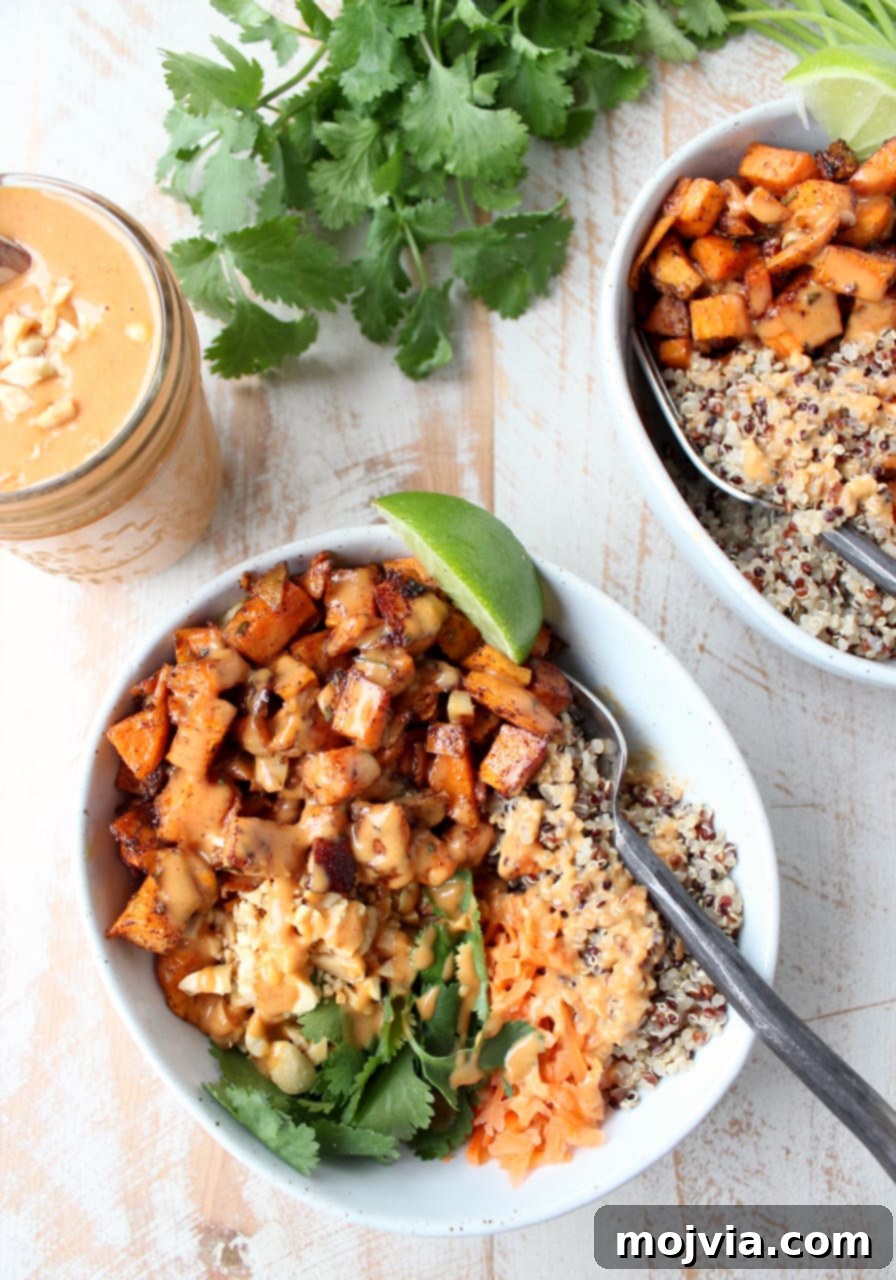
- Assemble Your Vibrant Buddha Bowls: With all your components ready, it’s time to bring your Buddha bowls to life! Divide the cooked quinoa evenly between two serving bowls, creating a sturdy base. Next, artfully arrange half of the flavorful roasted sweet potatoes on top of the quinoa in each bowl. Garnish with a generous handful of shredded carrots, a sprinkle of fresh cilantro, and a scattering of chopped peanuts for added crunch. The grand finale: drizzle a liberal amount of your homemade Thai peanut sauce over each bowl. Serve immediately and savor the harmonious blend of textures and tastes.
Enjoying Your Buddha Bowl: Hot or Cold?
One of the fantastic attributes of this Thai Peanut Sweet Potato Buddha Bowl recipe is its versatility when it comes to serving temperature. You can relish it warm, fresh from preparation, or enjoy it chilled, making it an excellent choice for convenient meal prep. It’s particularly ideal for packing as a healthy and satisfying lunch for work or school. When preparing for later consumption, remember a crucial tip: always store the rich Thai peanut sauce in a separate, airtight container. Drizzle it over your Buddha bowl just before you’re ready to eat to maintain the optimal texture of all ingredients and prevent the sauce from making everything soggy. This ensures every bite is as fresh and flavorful as possible.
Elevate Your Bowl: Delicious Optional Additions
While this Thai Peanut Sweet Potato Buddha Bowl is incredibly satisfying on its own, it also serves as a fantastic canvas for additional vegetables or a boost of plant-based protein. Customizing your bowl allows you to tailor it to your dietary needs and taste preferences. Here are some of my favorite optional add-ons to enhance your culinary creation:
- Chickpeas: For an extra dose of plant-based protein and fiber, consider adding chickpeas. Simply drain and rinse a can of chickpeas, then toss them with the sweet potatoes before roasting. They’ll absorb the delicious seasonings and crisp up beautifully in the oven.
- Broccoli: Broccoli florets are a wonderful addition, offering a vibrant green color and a slight peppery crunch. You can roast them alongside the sweet potatoes for a tender-crisp texture, quickly steam them, or even add raw florets for maximum freshness and a hearty bite.
- Cucumber: A quarter cup of finely chopped cucumber added to each bowl provides a delightful burst of crispy, fresh flavor. Its cool, watery crunch contrasts beautifully with the richer components of the bowl, offering a refreshing element.
- Edamame: Edamame is another excellent source of plant-based protein and offers a subtle, sweet flavor. You can add fresh, shelled edamame directly to your bowls, or for a warmer option, roast frozen shelled edamame alongside the sweet potatoes.
- Cabbage: Introduce even more crunch and a boost of vegetable goodness with shredded green or purple cabbage. Its crisp texture adds another layer of interest to the bowl. If you prefer a more tender, cooked cabbage, our recipe for steamed cabbage is a perfect complement.
Discover More Delicious Vegan Recipes
If this Thai Peanut Sweet Potato Buddha Bowl has sparked your interest in wholesome, plant-based eating, you’re in for a treat! Explore more of our easy-to-make and incredibly flavorful vegan dishes:
- Vegan Pad Thai with Zoodles: Enjoy all the beloved flavors of traditional Pad Thai, reinvented with nutrient-rich zucchini noodles for a lighter, veggie-packed meal that’s bursting with taste.
- Vegan Burrito Bowls with Cauliflower Rice: Dive into a fiesta of flavors with these vibrant burrito bowls. Packed with an abundance of fresh vegetables and hearty plant-based goodness, all served over fluffy cauliflower rice for a guilt-free indulgence.
- Mexican Vegan Sweet Potato Quinoa Bowl: If you’re a fan of our Thai Peanut Sweet Potato Bowl, you absolutely must try its equally delicious Mexican-inspired counterpart. It offers a completely different, yet equally satisfying, flavor adventure.
- Sheet Pan Gnocchi with Butternut Squash & Crispy Kale: Originally conceived as a comforting autumn dish, this recipe has become a year-round favorite! It’s an incredibly easy vegan meal that comes together on a single sheet pan, simplifying both cooking and cleanup. Frozen butternut squash is readily available in most grocery stores, making this a convenient option anytime.
- Vegan Tacos with Grilled Veggies & Chimichurri: Make every Taco Tuesday a culinary celebration with these amazing vegan tacos. They feature perfectly grilled vegetables and a zesty homemade chimichurri sauce, elevating the humble taco to an extraordinary, flavor-packed experience.
What’s your ultimate favorite vegan recipe from WhitneyBond.com? Share your top picks in the comments below!
Enjoyed making this recipe? Don’t forget to rate it 5 stars in the recipe card!
Print Recipe
Pin Recipe
Rate this Recipe
Thai Peanut Sweet Potato Buddha Bowl
2
bowls
14
mins
15
mins
29
mins
Whitney Bond
Main Course
Thai
Video

Ingredients
- 4 cups sweet potato, peeled and diced into small cubes
- 4 cloves garlic, minced
- ¼ cup olive oil
- 2 teaspoons fresh rosemary, chopped
- 1 teaspoon ground cinnamon
- 1 teaspoon kosher salt
- 1 teaspoon black pepper
- 1 cup quinoa, cooked
- ½ cup carrots, shredded
- ¼ cup fresh cilantro
- ¼ cup peanuts, chopped
- ½ cup Thai Peanut Sauce, recipe below
Thai Peanut Sauce
- 1 ½ cups coconut milk
- 1 cup creamy peanut butter
- ¼ cup Thai red curry paste
- 2 tablespoons apple cider vinegar
- 2 tablespoons soy sauce, Tamari for gluten free
- ¼ cup brown sugar
- 1 tablespoon fresh lime juice
Instructions
-
Preheat your oven to 425°F (220°C).
-
In a large bowl, combine the diced sweet potatoes and minced garlic. Drizzle with olive oil, then toss with fresh rosemary, ground cinnamon, kosher salt, and black pepper until evenly coated. Spread the seasoned sweet potatoes in a single layer on a baking sheet.
-
Place the baking sheet in the preheated oven and bake for 15-20 minutes, or until the sweet potatoes are tender and lightly caramelized.
-
While the sweet potatoes are roasting and quinoa is cooking, prepare the Thai peanut sauce. In a large blender or food processor, combine the coconut milk, creamy peanut butter, Thai red curry paste, apple cider vinegar, soy sauce (or Tamari), brown sugar, and fresh lime juice. Blend until the sauce is completely smooth and creamy.
-
To assemble, divide the cooked quinoa evenly between two bowls. Top each bowl with half of the roasted sweet potatoes. Add shredded carrots, fresh cilantro, and chopped peanuts. Finish by drizzling a generous amount of the Thai peanut sauce over the bowls before serving.
Notes
- Nutritional Information: The provided nutritional information is calculated for one complete bowl, including 1/4 cup of the homemade Thai peanut sauce.
- Thai Peanut Sauce Yield: The Thai peanut sauce recipe outlined here will yield approximately 3 cups of sauce. You have the option to either scale down the ingredients if you desire less sauce or refer to the original post for the sauce to discover additional recipes where you can utilize any delicious leftovers.
- Lighter Sauce Option: For those who prefer a less rich sauce to drizzle over their bowl, we recommend trying our Healthy Thai Peanut Sauce recipe.
- Adding Protein: To boost the protein content of this Buddha bowl, consider roasting 1 cup of canned chickpeas (drained and thoroughly rinsed) or 1 cup of frozen shelled edamame alongside your sweet potatoes.
- Adding More Vegetables: Enhance the nutritional value and texture of your Buddha bowl by incorporating additional vegetables. Try adding fresh broccoli florets, finely diced cucumber, or shredded green or purple cabbage along with the carrots and cilantro.
Nutrition Facts
Serving
2
serving
Calories
868
kcal
Carbohydrates
93
g
Protein
20
g
Fat
47
g
Saturated Fat
5
g
Sodium
1616
mg
Potassium
1318
mg
Fiber
14
g
Sugar
20
g
Vitamin A
43994
IU
Vitamin C
12
mg
Calcium
174
mg
Iron
6
mg
Did you make this recipe?
Tag @WhitneyBond on Instagram and hashtag it #WBRecipes!