
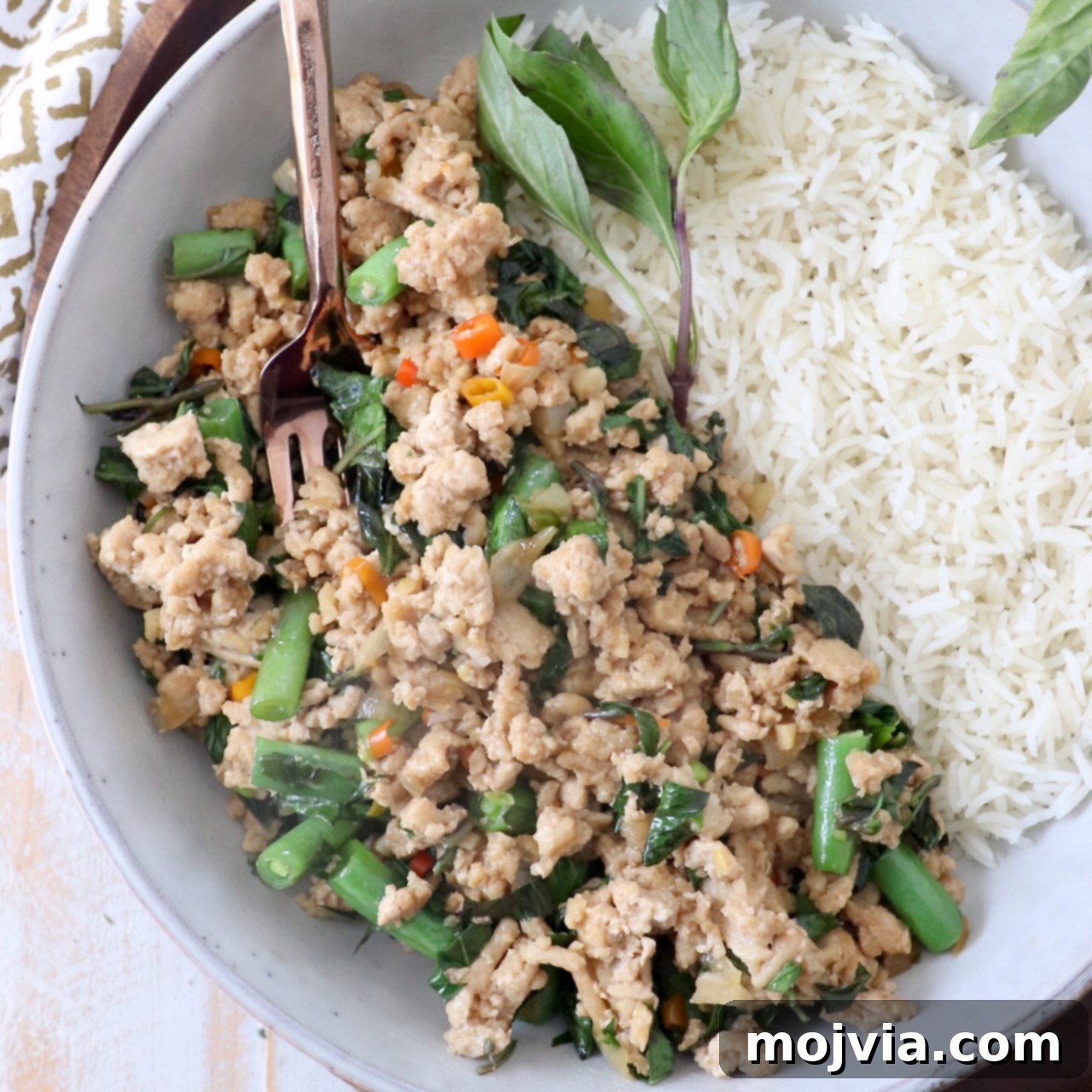
Looking for an incredibly flavorful and lightning-fast meal? This authentic Thai Basil Chicken recipe, known as Pad Krapow Gai, is your answer! In under 25 minutes, you can whip up this sensational Thai street food classic right in your own kitchen. Featuring aromatic ground chicken, fiery Thai chilies, pungent garlic, and a savory-sweet sauce, all crowned with fragrant Thai basil, this dish promises an explosion of bold flavors. It’s perfect for a quick weeknight dinner, tasting even better than your favorite takeout, and is surprisingly simple to master at home. Serve it over steaming jasmine rice for a truly satisfying and memorable meal that will transport your taste buds straight to the bustling streets of Thailand.
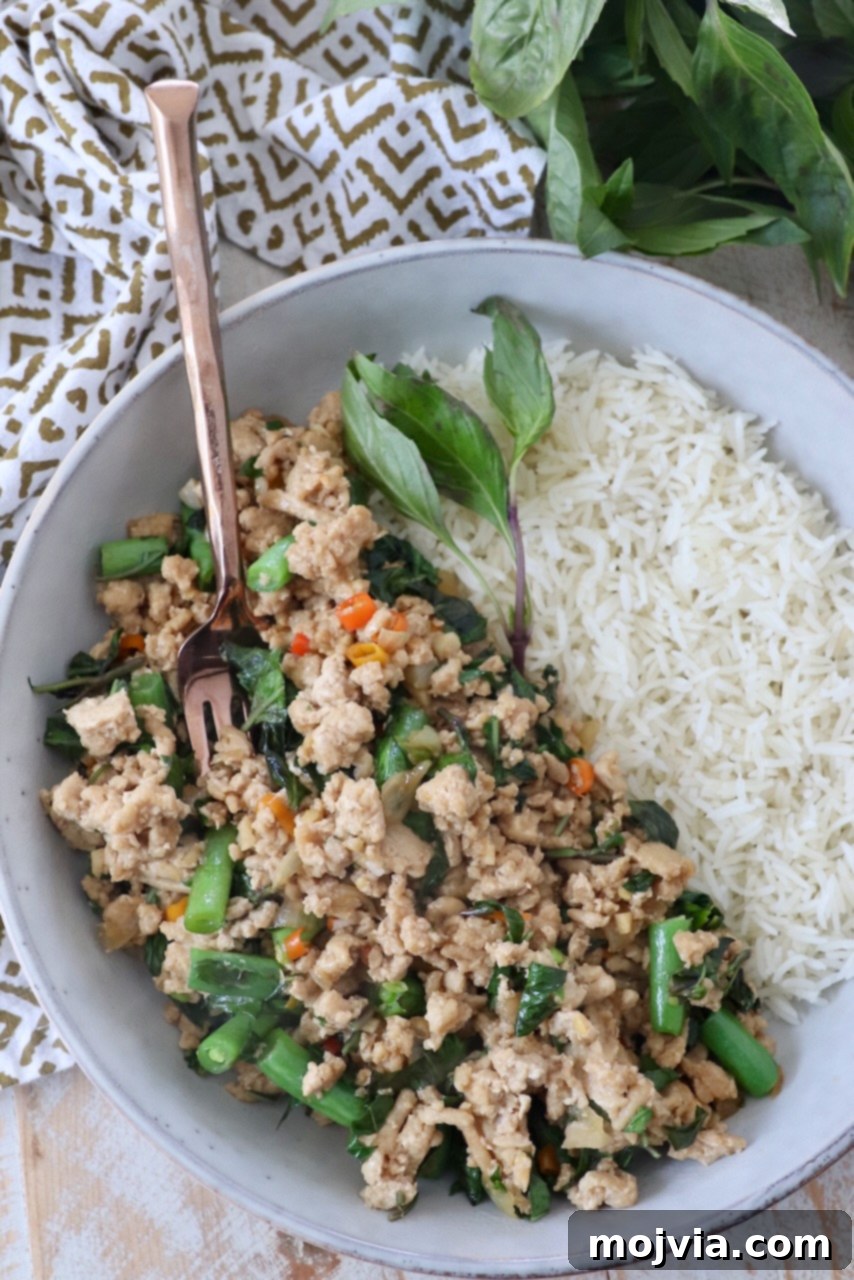
Why You’ll Adore This Authentic Thai Basil Chicken
Pad Krapow Gai isn’t just a meal; it’s an experience, beloved by millions for good reason. Here’s why this particular recipe will quickly become a cherished favorite in your culinary repertoire:
- A Symphony of Flavors: Every bite delivers a harmonious blend of salty, sweet, spicy, and umami notes, balanced perfectly with the fresh, peppery aroma of Thai basil. It’s a complex flavor profile that tantalizes the palate without being overwhelming.
- Genuine Thai Taste at Home: Crafted with authentic ingredients and traditional techniques, this recipe captures the true essence of Pad Krapow Gai, allowing you to recreate your favorite Thai restaurant experience right in your own kitchen. Forget bland imitations – this is the real deal!
- Effortless & Speedy Preparation: With a prep time of mere minutes and a total cooking time of just 25 minutes, this dish is a lifesaver for busy weeknights. It’s a delicious, wholesome meal that doesn’t compromise on flavor or authenticity, proving that fast food can also be fantastic food.
- Irresistible Aromas: From the moment the garlic and chilies hit the hot wok, your kitchen will fill with intoxicating aromas. The fragrant Thai basil added at the end elevates the scent profile, making the anticipation almost as delightful as the meal itself.
- Versatile and Customizable: Whether you prefer it extra spicy, milder, or with different vegetables, this recipe is incredibly adaptable. It’s a forgiving dish that welcomes your personal touch, ensuring everyone at your table finds something to love.
The year 2020 presented an opportunity for many of us to rediscover the joys of home cooking and shared meals. For me, it was a time when my pasta-making skills reached new heights. I found myself trading homemade pasta for everything from fresh lemons to fine wines and canned cocktails with friends. Yet, the most memorable exchange was with my dear friend Victoria. In return for my fresh pasta, she introduced us to the unparalleled delights of authentic Thai cuisine.
One warm summer day, Victoria arrived with a steaming bowl of what would soon become a household staple: Thai Basil Chicken, affectionately known as Pad Krapow Gai. From the very first bite, I was captivated. The vibrant flavors, the perfect kick of spice, and the irresistible fragrance left an indelible impression. I knew immediately I had to have the recipe. Graciously, she shared her culinary secret, and ever since that day, this incredible Thai dish has been a regular feature on our dinner table.
It has quickly cemented its place as a weekly favorite, not only for its astonishing depth of flavor but also for its remarkable ease of preparation. In less than 30 minutes, using just one pan, you can conjure up this delightful meal for dinner tonight. It’s a testament to the fact that extraordinary taste doesn’t require hours in the kitchen, making it the ultimate solution for anyone craving authentic Thai flavors without the fuss.
What Exactly is Pad Krapow Gai?
Before diving into the ingredients, let’s understand the star of our show. “Pad Krapow Gai” directly translates to “stir-fried holy basil chicken.” It’s one of Thailand’s most iconic and beloved street food dishes, a staple found in virtually every restaurant and hawker stall across the country. The dish is characterized by its bold, savory, and spicy flavor profile, achieved through a quick stir-fry method.
Its widespread popularity stems from its incredible balance of flavors and textures, as well as its lightning-fast cooking time. The key elements that define an authentic Pad Krapow Gai are the aromatic Holy Basil (or Thai Basil as a common substitute), fiery chilies, pungent garlic, and a rich, savory sauce. It’s typically served over fluffy jasmine rice, often topped with a crispy fried egg (kai dao) to complete the experience. Understanding its roots helps appreciate the subtle nuances and the vibrant essence this recipe aims to capture.
Essential Ingredients for Authentic Thai Basil Chicken
Crafting the perfect Pad Krapow Gai begins with selecting the right ingredients. Each component plays a vital role in building the dish’s signature bold and authentic flavor. Below, I’ll detail the best ingredients, their function, and offer convenient substitution options for your home kitchen. For precise measurements, please refer to the complete recipe card at the conclusion of this post.
- Soy Sauce: This provides the foundational salty and umami base for our sauce. You can opt for traditional regular soy sauce for a richer flavor or low-sodium soy sauce if you’re mindful of salt intake. For a gluten-free version, seamlessly substitute with tamari, which offers a similar depth of flavor without the wheat.
- Oyster Sauce: A cornerstone of Thai stir-fries, oyster sauce brings a unique thick, sweet, and savory umami richness. Despite its name, it doesn’t taste overtly fishy but rather adds a beautiful depth and gloss to the sauce. You’ll typically find it in the Asian food aisle of most major grocery stores.
- Fish Sauce: Indispensable in Thai cuisine, fish sauce contributes a profound salty, savory, and fermented umami flavor that cannot be replicated. A small amount goes a long way in adding complexity and authentic character to the dish. Like oyster sauce, it’s readily available in the international section of most supermarkets.
- Granulated Sugar: A touch of granulated sugar is crucial for balancing the intense salty and spicy elements in the sauce. It adds a subtle sweetness that rounds out the flavors, preventing them from becoming too sharp or one-dimensional.
- Canola Oil: For stir-frying, a neutral oil with a high smoke point is essential. Canola oil fits the bill perfectly. Other excellent alternatives include avocado oil or sunflower oil, which can withstand the high heat required for a proper stir-fry without burning.
- Onion: Diced yellow onions are my preference for this recipe, offering a mild sweetness and aromatic base when sautéed. However, red onions or finely chopped shallots can also be used, each imparting a slightly different nuance to the dish.
- Green Beans: Fresh green beans, trimmed and cut into 1-inch pieces, add a pleasant crunch and vibrant green color. If fresh aren’t available, thawed cut frozen green beans are a good substitute. Alternatively, diced green or red bell peppers can provide a similar texture and a touch of sweetness.
- Thai Chilies: These small, potent chili peppers are the backbone of Pad Krapow Gai’s characteristic heat. I typically use 5-10 chilies, adjusting for personal preference. 4-6 chilies will yield a medium spice level, while 8-10 will make it intensely spicy. If you prefer a milder dish, use just 1-2 for flavor or omit them entirely. If fresh Thai chilies are hard to find, substitute 1 serrano chili pepper for every 2 Thai chilies for comparable heat.
- Garlic Cloves: Freshly minced garlic is non-negotiable for the best flavor. Its pungent aroma and taste are fundamental to the authentic profile of this Thai stir-fry. Avoid pre-minced garlic in jars if possible, as it often lacks the vibrant punch of fresh cloves.
- Ground Chicken: This dish traditionally features ground or minced chicken, reflecting its street food origins where quick cooking is paramount. Using ground meat ensures it cooks rapidly and evenly, absorbing the flavors of the sauce beautifully. While ground chicken (often a mix of white and dark meat for optimal flavor and moisture) is traditional, ground turkey or ground pork make excellent substitutes.
- Thai Basil Leaves: This herb is the undisputed star and the namesake of the dish, providing its distinctive authentic flavor and aroma. Thai basil has a unique peppery, anise-like, and slightly minty profile that differs significantly from common sweet basil. I highly recommend seeking it out at Asian markets or specialty grocery stores. For detailed information on finding and storing Thai basil, check out my dedicated article on Thai Basil. If truly unavailable, a blend of 1¼ cups traditional sweet basil leaves with ¼ cup fresh mint leaves can offer a passable, though not identical, approximation of its complex flavor.
Mastering Thai Basil Chicken: Step-by-Step Guide
Follow these detailed, step-by-step instructions to create a restaurant-quality Thai Basil Chicken right at home. The process is straightforward and quick, designed for culinary success. For a comprehensive list of ingredient quantities and a video demonstration, please scroll down to the recipe card at the bottom of this post.
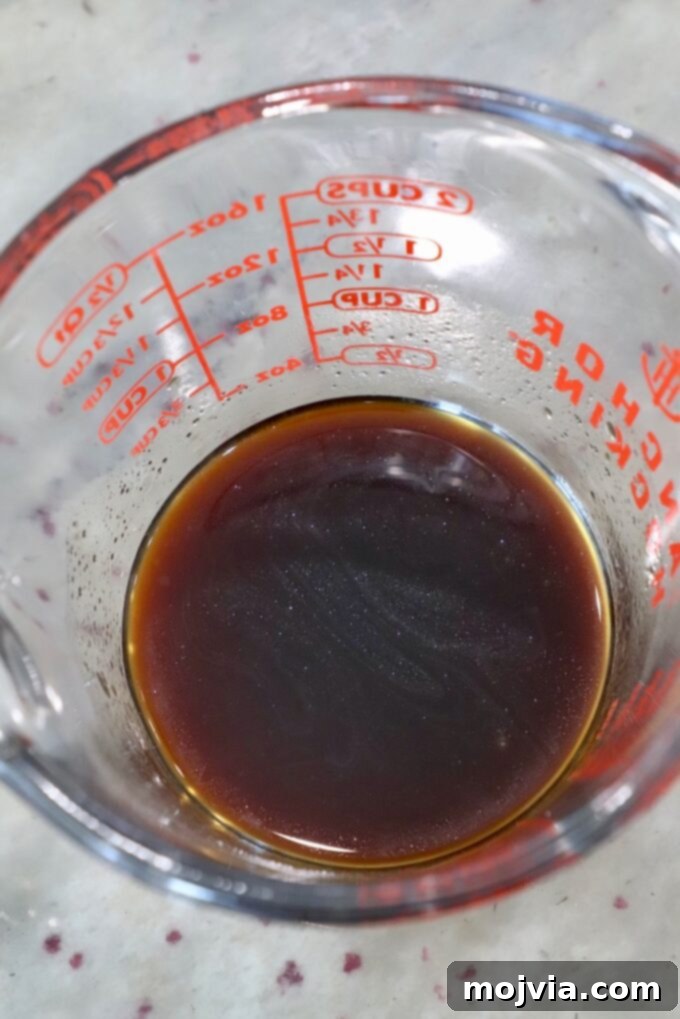
- Craft the Flavorful Sauce: Begin by preparing the heart of the dish – its rich sauce. In a small mixing bowl, whisk together the soy sauce, oyster sauce, fish sauce, water, and granulated sugar until well combined and the sugar has dissolved. Set this prepared sauce aside; it will be added later to infuse the chicken and vegetables with its exquisite taste.
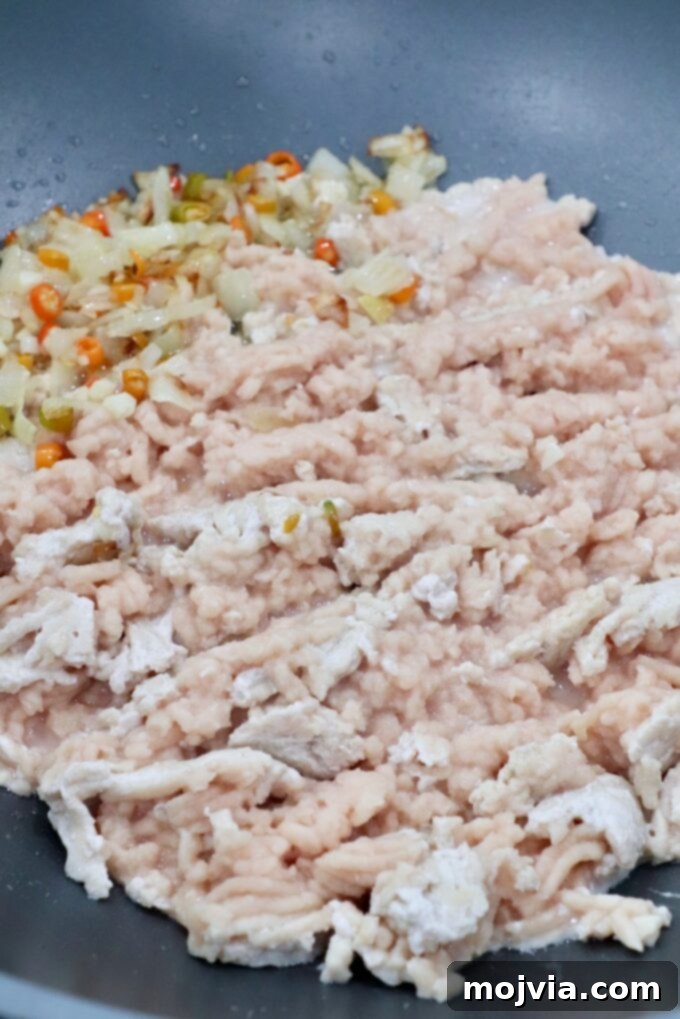
- Sauté Vegetables and Brown Chicken: Heat the canola oil in a large skillet or a traditional wok over medium-high heat on your stovetop. Once the oil is shimmering hot, add the diced onions and the 1-inch pieces of green beans. Stir-fry these for approximately 4 minutes, allowing them to soften slightly and develop a subtle sweetness. Next, introduce the minced garlic and Thai chilies to the pan. Continue to cook for just 1 additional minute, until the garlic becomes fragrant and the chilies release their spicy essence. Finally, add the ground chicken to the skillet. Break it apart with your spoon or spatula and cook for 4-5 minutes, regularly flipping and crumbling the meat until it is thoroughly browned and no longer pink.
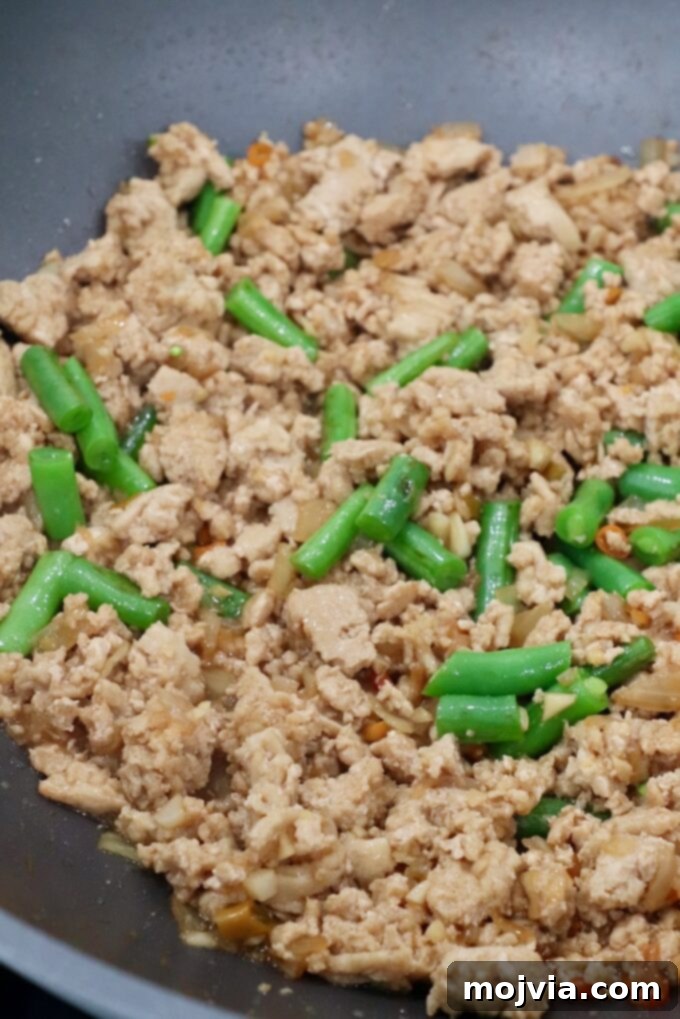
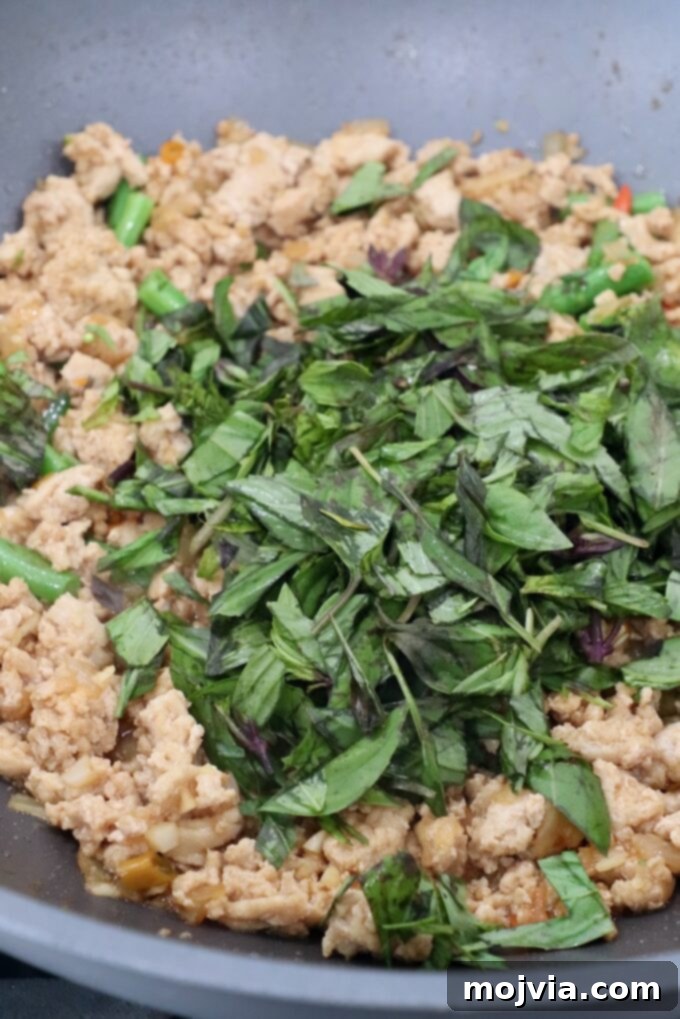
- Integrate the Sauce: Once the ground chicken is beautifully browned and cooked through, pour the previously prepared sauce directly into the pan. Toss everything together vigorously, ensuring the chicken and vegetables are thoroughly coated in the savory mixture. Allow the sauce to simmer and reduce for about 8 minutes. This crucial step allows the flavors to meld and deepen, transforming the individual ingredients into a cohesive, tantalizing dish. The sauce will thicken slightly, clinging to the chicken and vegetables.
- Finish with Fragrant Thai Basil: After the 8 minutes of simmering, and just before serving, add the fresh Thai basil leaves to the pan. Give it a quick stir to combine the basil with the chicken and sauce. Immediately remove the pan from the heat. It’s important not to overcook the basil, as its delicate fragrance and flavor are best preserved when added at the very end. Serve your sensational Thai Basil Chicken hot and enjoy!
Expert Tips for Perfect Pad Krapow Gai Every Time
While this recipe is straightforward, a few expert tips can elevate your Thai Basil Chicken from good to extraordinary:
- Mise en Place is Key: “Mise en place” (everything in its place) is crucial for stir-fries due to their rapid cooking time. Have all your ingredients chopped, measured, and ready before you start cooking, as the process moves very quickly once the heat is on.
- High Heat is Your Friend: A wok or large skillet over medium-high to high heat is essential for achieving that authentic stir-fry texture. It ensures the chicken browns nicely and the vegetables retain a slight crispness, rather than steaming.
- Don’t Overcrowd the Pan: Cook the chicken in a single layer to ensure it browns effectively. If your pan is too full, the chicken will steam instead of sear, leading to a less desirable texture. Cook in batches if necessary, though a large skillet usually suffices.
- Adjust Spice to Your Liking: The beauty of homemade Pad Krapow Gai is the ability to control the heat. Start with fewer Thai chilies if you’re sensitive to spice, and remember you can always add a pinch of dried chili flakes at the table.
- Fresh Basil Makes a Difference: While substitutions exist, fresh Thai basil truly makes this dish sing. Its unique flavor profile is distinct, so make an effort to source it from Asian markets. Add it at the very last minute to preserve its vibrant aroma and slightly peppery taste.
Serving Suggestions for Thai Basil Chicken
Thai Basil Chicken is a complete meal in itself, but the right accompaniments can truly enhance the dining experience. Here are some of my favorite ways to serve this delicious stir-fry:
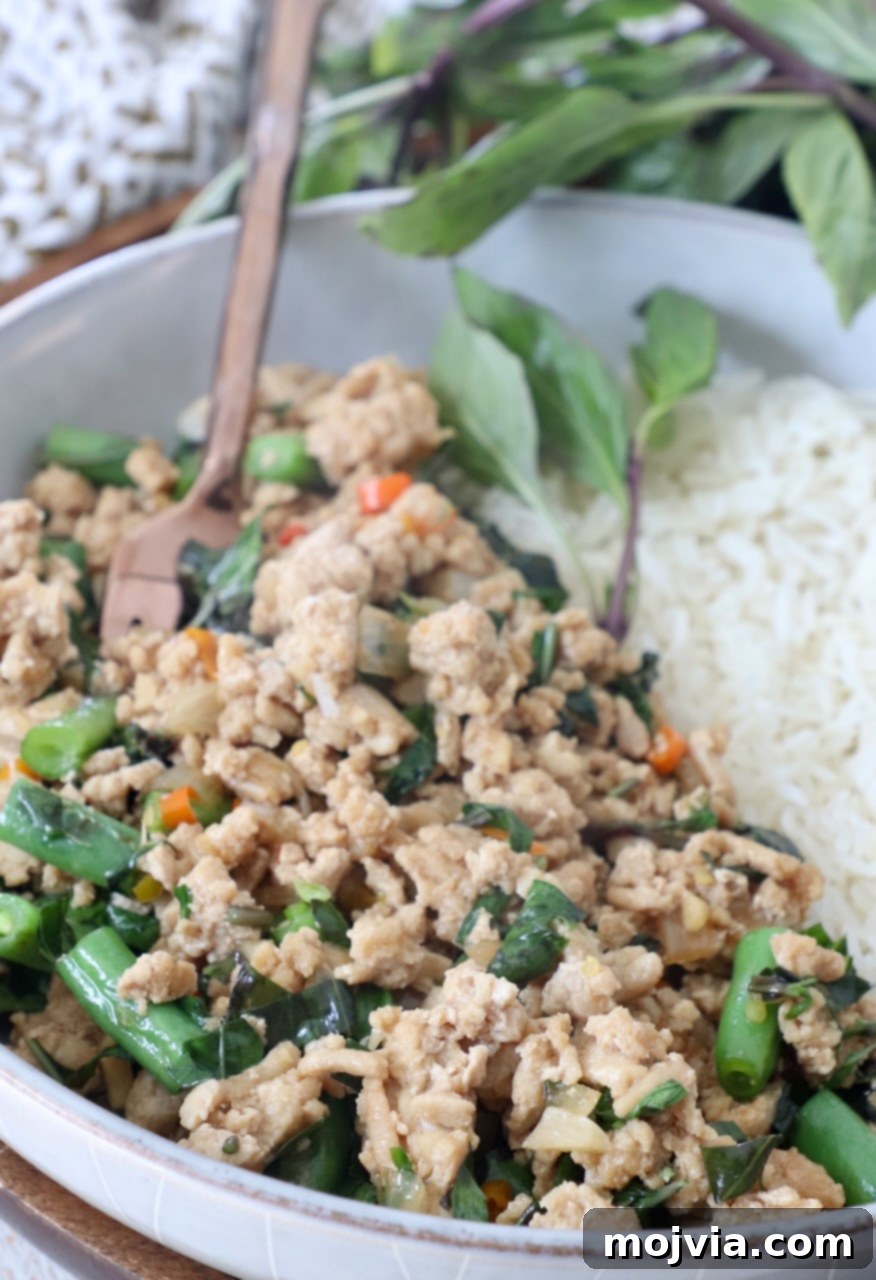
The most classic and highly recommended pairing for this Thai Basil Chicken stir-fry is fluffy, perfectly cooked jasmine rice. Its fragrant aroma and soft texture provide the ideal canvas for the bold flavors of the chicken. If you start cooking your rice just before you begin preparing the chicken, both components should be ready to serve simultaneously. Beyond jasmine rice, this dish is also delicious with white rice, wholesome brown rice, or for a low-carb alternative, light and airy cauliflower rice. For an extra layer of exotic flavor, consider pairing it with fragrant coconut rice.
A truly authentic and popular way to enjoy Pad Krapow Gai in Thailand is to serve it over rice and top it with a perfectly crispy fried egg (known as kai dao). The runny yolk mingles with the spicy, savory chicken, creating an incredibly rich and satisfying combination. If you choose to add a fried egg, I suggest cooking it in a separate pan while the sauce is simmering with the chicken, ensuring it’s fresh and hot when served.
For a lighter, low-carb meal or a delightful appetizer, you can also wrap the flavorful Thai Basil Chicken in crisp iceberg or butter lettuce leaves, creating fresh and vibrant lettuce wraps. This offers a refreshing contrast to the richness of the chicken and is a fantastic way to enjoy the dish without rice.
Explore More Authentic Thai Delights
If you’ve fallen in love with the vibrant flavors of this Thai Basil Chicken, you’ll be thrilled to discover more of my authentic Thai recipes. Each one has been meticulously tested and perfected in my kitchen to ensure you achieve delicious, genuine results every time!
If you’ve made this incredibly delicious Thai Basil Chicken recipe and found it bursting with flavor, please take a moment to rate it 5 stars in the recipe card below! Your feedback helps others discover and enjoy this fantastic dish.
Print Recipe
Pin Recipe
Rate this Recipe
Authentic Thai Basil Chicken (Pad Krapow Gai)
Recipe Video
Ingredients
For the Sauce:
- 2 tablespoons soy sauce (or tamari for gluten-free)
- 2 tablespoons oyster sauce
- 2 teaspoons fish sauce
- 1 tablespoon water
- 2 teaspoons granulated sugar
For the Stir-fry:
- 2 tablespoons canola oil (or other high smoke point oil like avocado or sunflower)
- ½ cup yellow onion, diced
- ½ cup fresh green beans, trimmed and cut into 1-inch pieces
- 5-10 Thai chilies, minced (adjust to taste, 5 for medium heat, 10 for very spicy)
- 5 cloves fresh garlic, minced
- 1 pound ground chicken
- 1 ½ cups fresh Thai basil leaves
Instructions
-
In a small bowl, whisk together the soy sauce, oyster sauce, fish sauce, water, and sugar until well combined. Set this flavorful sauce aside.
-
Heat the canola oil in a large skillet or a wok over medium-high heat on your stove.
-
Once the oil is hot and shimmering, add the diced onions and cut green beans. Stir-fry for 4 minutes until they begin to soften.
-
Add the minced Thai chilies and garlic to the pan. Cook for an additional 1 minute, stirring constantly, until the garlic is fragrant.
-
Add the ground chicken to the skillet. Break it apart with a spatula and cook for 4-5 minutes, or until thoroughly browned.
-
Pour the prepared sauce into the pan with the chicken and vegetables. Toss everything together to coat evenly and continue cooking for 8 minutes, allowing the sauce to thicken and absorb into the chicken.
-
After 8 minutes, stir in the fresh Thai basil leaves. Cook for only about 30 seconds, then immediately remove the pan from the heat to preserve the basil’s delicate flavor and aroma. Serve your Thai Basil Chicken piping hot with cooked jasmine rice, or in fresh lettuce wraps.
Recipe Notes & Variations
- Adjusting Spice Levels: The amount of Thai chilies is key to the heat. With 4-6 chilies, your dish will have a pleasant medium spice. Using 8-10 chilies will result in a very spicy, authentic kick. If you prefer minimal heat, use just 1-2 chilies for flavor or omit them entirely. As a substitute, 1 serrano chili pepper can replace 2 Thai chilies.
- Thai Basil vs. Sweet Basil: Thai basil is crucial for the authentic flavor, with its distinctive peppery, anise-like, and slightly minty notes. Look for it in local Asian markets or larger grocery stores. If it’s absolutely unavailable, a substitution of 1¼ cups traditional fresh sweet basil leaves combined with ¼ cup fresh mint leaves can approximate its unique profile.
- Making it Gluten-Free: To ensure this recipe is gluten-free, substitute standard soy sauce with tamari. Additionally, use gluten-free oyster sauce and gluten-free fish sauce, both of which are readily available in specialty food aisles.
- Vegan & Vegetarian Adaptations: For a plant-based version, replace the fish sauce with an additional 2 teaspoons of soy sauce or tamari. Substitute the oyster sauce with a vegetarian mushroom oyster sauce. For the protein, finely diced mushrooms or meatless tofu crumbles work wonderfully in place of ground chicken.
- Storage & Reheating: Leftover Thai Basil Chicken can be stored in an airtight container in the refrigerator for up to 5 days. To reheat, simply microwave for 2-3 minutes, or gently warm in a skillet over medium-high heat for 4-6 minutes, stirring occasionally, until heated through.
- Prepare Ahead: The savory sauce can be prepared up to one week in advance and stored in the refrigerator, making weeknight cooking even faster.
- Protein Variations: While ground chicken is traditional, this recipe is also delicious with ground pork, thinly sliced beef, or even shrimp. Adjust cooking times slightly for different proteins to ensure they are cooked through.