
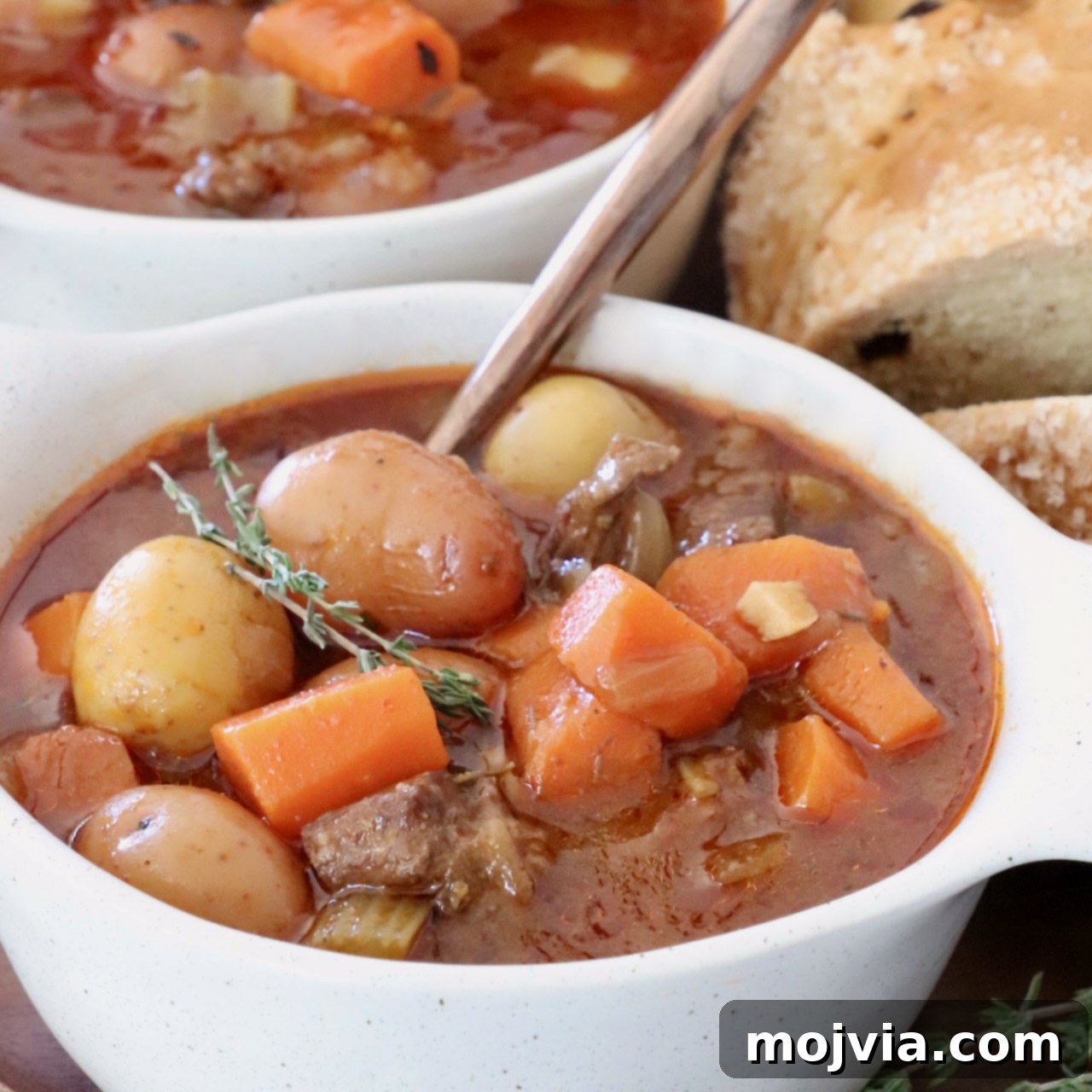
Experience the ultimate comfort with this truly traditional Irish Stew recipe. Featuring succulent chunks of tender beef slow-cooked to perfection in a rich, savory broth infused with the distinctive flavor of Guinness stout, this dish promises a heartwarming and deeply satisfying meal. With just 20 minutes of active prep time, you can create this culinary masterpiece in your oven or a slow cooker, making it incredibly flavorful and surprisingly easy to achieve.
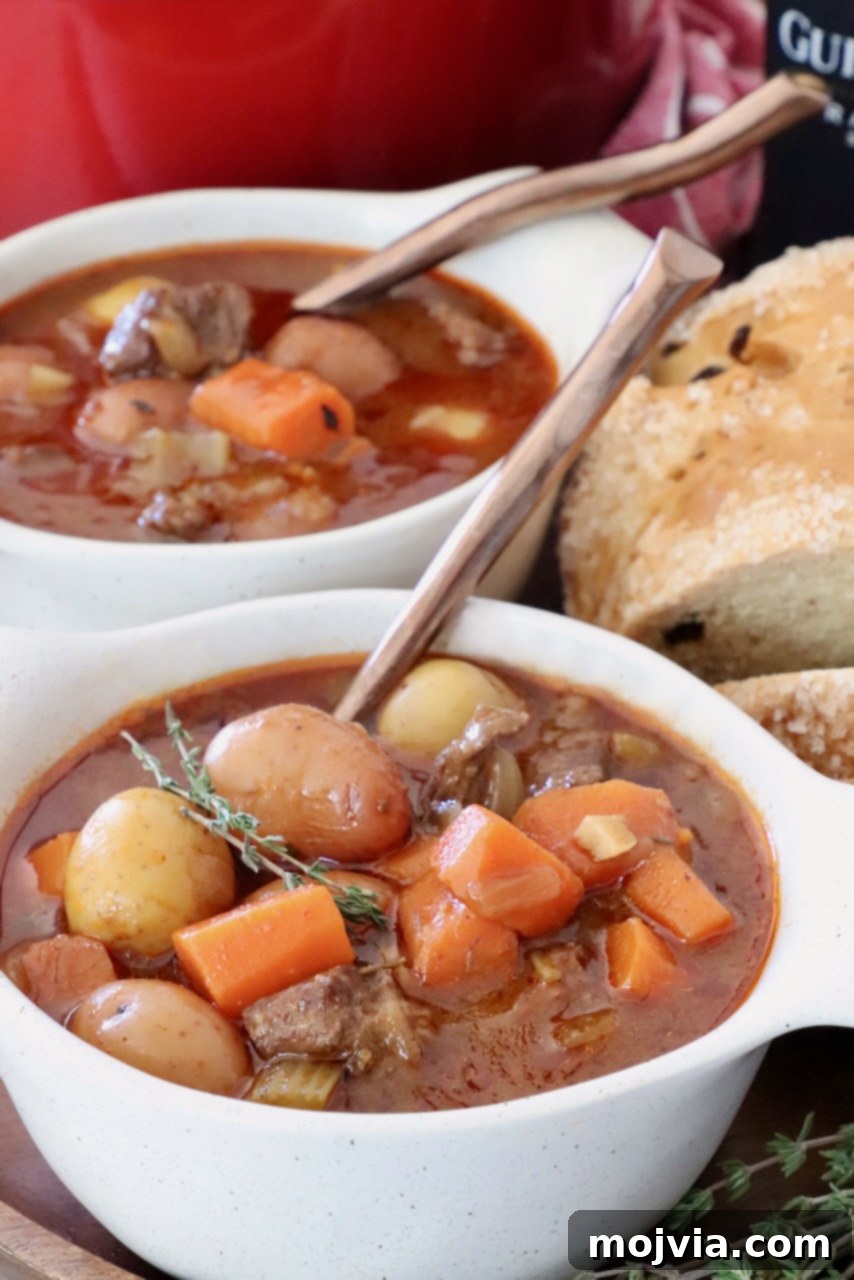
Table of Contents
- Introduction to Irish Stew
- Why This Irish Stew Recipe is a Must-Try
- Essential Ingredients for the Perfect Irish Stew
- Step-by-Step Oven Instructions
- How to Make Irish Stew in a Slow Cooker
- Recipe Notes and Tips for Success
- How to Store and Reheat Irish Stew
- Serving Suggestions for Your Irish Stew
- Variations and Customizations
- Frequently Asked Questions about Irish Stew
- More Comfort Food Recipes
Introduction to Irish Stew: A Timeless Classic
There are few dishes that evoke the feeling of warmth, hearth, and home quite like a classic Irish Stew. On chilly winter days, or any time you crave a meal that truly nourishes the soul, a generous bowl of this robust beef and Guinness stew hits all the right notes. It’s a culinary tradition, cherished for its simplicity, depth of flavor, and ability to bring people together.
Our traditional Irish stew recipe is packed with tender, melt-in-your-mouth beef, an abundance of hearty root vegetables, and a rich, deeply savory broth. The secret to its incredible flavor lies in the harmonious blend of aromatic spices, high-quality beef broth, and the unmistakable, malty notes of Guinness stout. This combination creates a stew that is complex and satisfying, yet incredibly approachable for home cooks.
What makes this particular recipe so exceptional is its versatility and ease. With just about 20 minutes of hands-on preparation, you can set it to cook low and slow in the oven, transforming humble ingredients into a magnificent feast. Alternatively, for ultimate convenience, it adapts beautifully to a slow cooker, allowing you to “set it and forget it” for an all-day simmer that results in unparalleled tenderness and flavor. Whether you choose the oven or the slow cooker, you’re guaranteed a comforting meal that will warm you from the inside out.
Why This Irish Stew Recipe is a Must-Try
This isn’t just any beef stew; it’s a recipe meticulously crafted to deliver an authentic taste of Ireland with modern-day ease. Here’s why it deserves a spot in your rotation:
- Unrivaled Flavor Depth: The combination of searing the beef, building a flavorful mirepoix, and then slow-braising with Guinness and quality beef broth creates layers of umami and richness that are simply unparalleled. Every spoonful is a journey through savory, earthy, and slightly sweet notes.
- Effortlessly Tender Beef: By utilizing cuts like chuck roast and cooking them low and slow, the beef transforms into incredibly tender, succulent pieces that practically fall apart, absorbing all the wonderful flavors of the stew.
- Hearty & Wholesome: Loaded with essential root vegetables like potatoes and carrots, along with onions and celery, this stew is a complete meal in one pot. It’s nourishing, filling, and perfect for warding off the cold.
- Flexible Cooking Methods: Whether you prefer the controlled heat of your oven for optimal browning and consistent cooking or the hands-off convenience of a slow cooker, this recipe offers clear instructions for both.
- Perfect for Meal Prep & Freezing: This Irish stew is excellent for making ahead. It tastes even better the next day, and a double batch can easily be frozen for future quick and easy dinners, making weeknight meals a breeze.
- Simple Ingredients, Impressive Results: Despite its gourmet taste, this recipe relies on readily available ingredients. Our special beef stew seasoning blend elevates the dish without requiring a trip to a specialty store.
Essential Ingredients for the Perfect Irish Stew
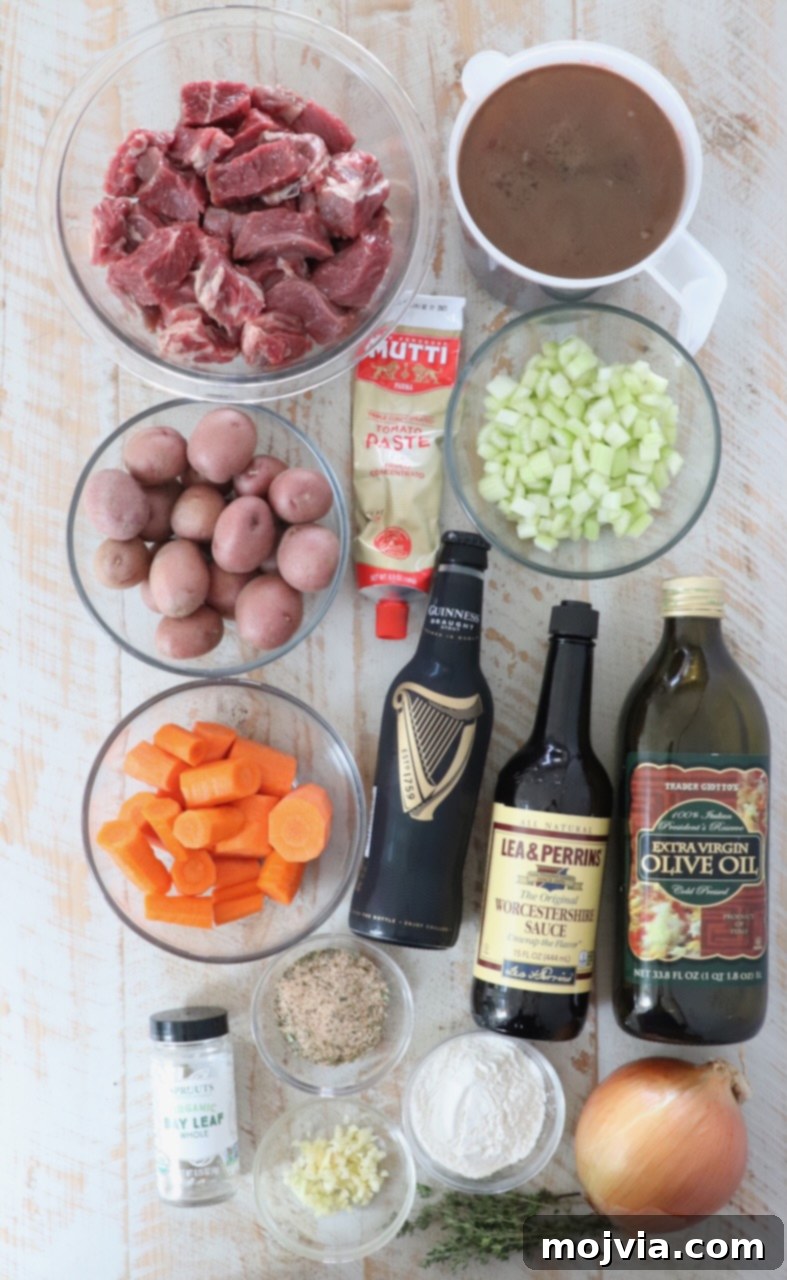
The beauty of a classic Irish stew lies in its simple, wholesome ingredients coming together to create something truly magical. Here’s a closer look at what you’ll need and why each component is crucial:
- Beef Chuck Roast: This is our top recommendation for the ultimate beef stew. Chuck roast is known for its rich, beefy flavor and excellent marbling, which contributes to incredible tenderness when slow-braised. The connective tissues break down over long cooking, resulting in succulent, fall-apart pieces. While chuck is ideal, you can also use other cuts like flat cut beef brisket, pre-cut beef stew meat, or a bottom round roast. For a truly authentic Irish stew, some traditional recipes call for lamb shoulder instead of beef, offering a distinctively rich and earthy flavor profile.
- Our Signature Beef Stew Seasoning: This is the “secret ingredient” that truly makes this Irish stew unforgettable. Our proprietary blend combines nine essential herbs and spices, including pantry staples such as garlic powder, onion powder, salt, black pepper, dried rosemary, and dried oregano. This carefully balanced mix provides a complex flavor base that perfectly complements the beef and vegetables. It’s incredibly easy to prepare in just 5 minutes and can be stored in your pantry for up to 6 months, making it a convenient go-to for future stews.
- Olive Oil: Used for searing the beef and sautéing the vegetables, a good quality olive oil (or another neutral-flavored oil like canola or vegetable oil) is essential for building the initial layers of flavor.
- Onions: One cup of diced yellow onion (approximately half a large onion) provides a fundamental aromatic base, adding a sweet and pungent depth to the stew.
- Celery: About half a pound of celery stalks, diced to yield one cup, contributes to the classic mirepoix, offering a subtle savory note and refreshing texture.
- Garlic: Freshly minced garlic cloves are non-negotiable for the best flavor. Their aromatic qualities infuse the stew with a warm, piquant essence.
- All-Purpose Flour: A small amount of flour is used to thicken the broth, creating that luxurious, clingy consistency that defines a hearty stew. It also helps create a roux with the oil and beef drippings, further enhancing flavor.
- Beef Broth: As the primary liquid base, the quality of your beef broth or stock significantly impacts the final taste. We highly recommend using a high-quality beef stock for a richer, deeper flavor compared to standard beef broth. If you can find a beef base, such as Custom Culinary Beef Base, it offers an exceptionally robust foundation.
- Guinness Stout: The quintessential Irish ingredient! Guinness (or another dark stout beer) is crucial for adding a distinctive malty, slightly bitter, and deeply complex flavor that is characteristic of traditional Irish beef stew. Don’t worry, the alcohol cooks off, leaving only its rich essence behind. For an alcohol-free alternative, you can substitute with additional beef broth and a splash of balsamic vinegar.
- Tomato Paste: This concentrated paste delivers a wonderful sweet, acidic, and umami punch to the stew. Cooking it down slightly before adding liquids deepens its flavor even further.
- Worcestershire Sauce: A true flavor enhancer, Worcestershire sauce adds layers of savory, tangy, sweet, and umami notes that round out the stew beautifully. If you don’t have it on hand, a good quality soy sauce can be used as a substitute in a pinch.
- Potatoes: You have options here! For a firmer texture that holds its shape, use whole baby potatoes. If you prefer a softer, melt-in-your-mouth potato that might slightly break down and thicken the stew, dice larger potatoes like russets or gold potatoes into 1-inch cubes. Both methods yield delicious results; it’s purely a matter of personal preference.
- Carrots: Peel and cut about half a pound of whole carrots into 1-inch pieces. This size ensures they cook through without becoming mushy, adding natural sweetness and vibrant color to the stew.
- Fresh Thyme Sprigs: Fresh herbs are essential for bright, earthy notes. Thyme pairs perfectly with beef and stout. Fresh rosemary sprigs are also an excellent alternative if you prefer.
- Bay Leaves: Adding a couple of bay leaves during the braising process imparts a subtle yet complex aromatic background, elevating the overall flavor profile of the Irish stew. Remember to remove them before serving!
Step-by-Step Oven Instructions for Your Perfect Irish Stew
Follow these detailed steps to create a hearty and flavorful Irish beef stew in your oven. We’ve included photos below to guide you visually. For precise ingredient quantities, refer to the full recipe card at the end of this post.
- Prepare for Braising: Begin by preheating your oven to 350°F (175°C). Position an oven rack in the lower third of the oven, preparing it for the slow braising process that will tenderize your beef to perfection.
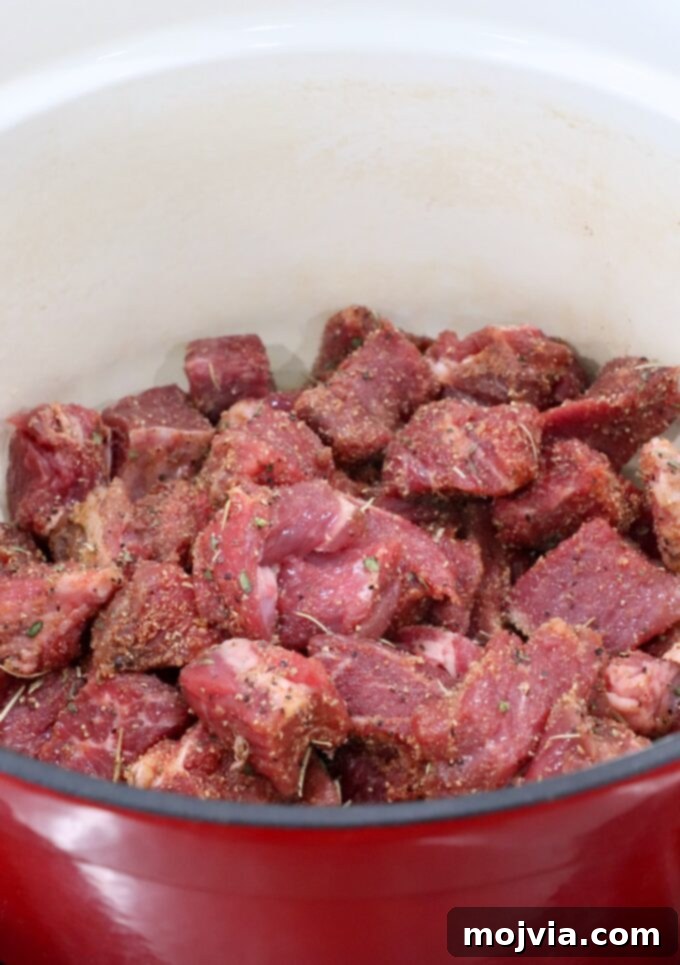
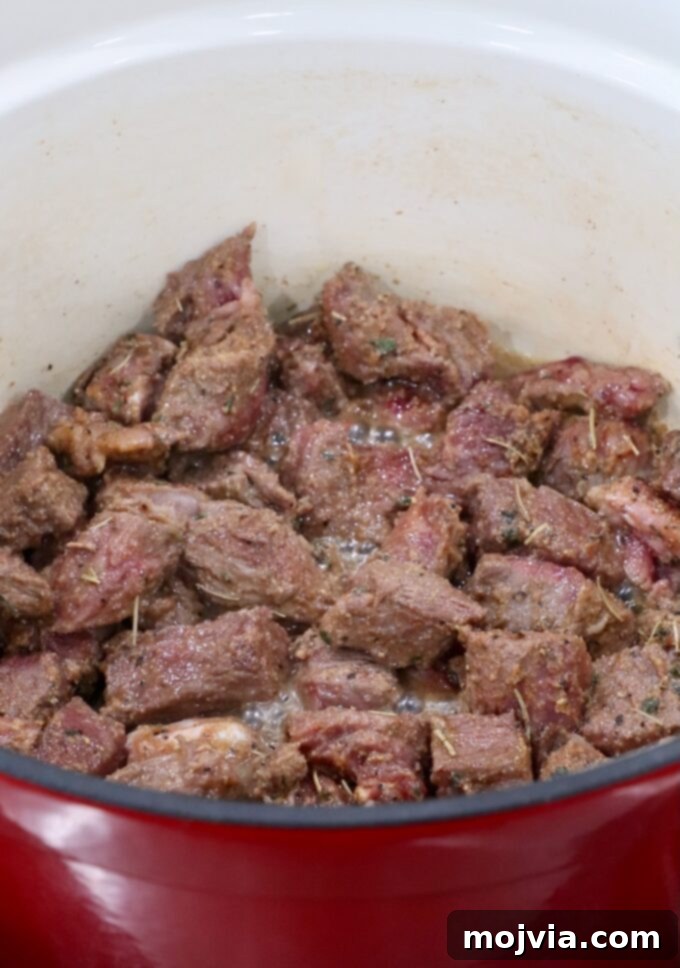
- Brown the Beef: Dice your beef chuck roast into uniform 1-inch cubes. This ensures even cooking. In a large oven-safe pot or Dutch oven (a 7-quart Dutch oven works perfectly for this recipe), heat 2 tablespoons of olive oil over medium-high heat on your stovetop. Once the oil shimmers and is hot, add the seasoned beef cubes. Sear the beef in batches if necessary to avoid overcrowding the pot, which can steam rather than brown the meat. Cook for about 4-6 minutes, turning occasionally, until each piece is beautifully browned on all sides. This crucial step, known as the Maillard reaction, creates deep, savory flavors that form the foundation of your stew. Once browned, use a slotted spoon to remove the beef from the pot and set it aside.
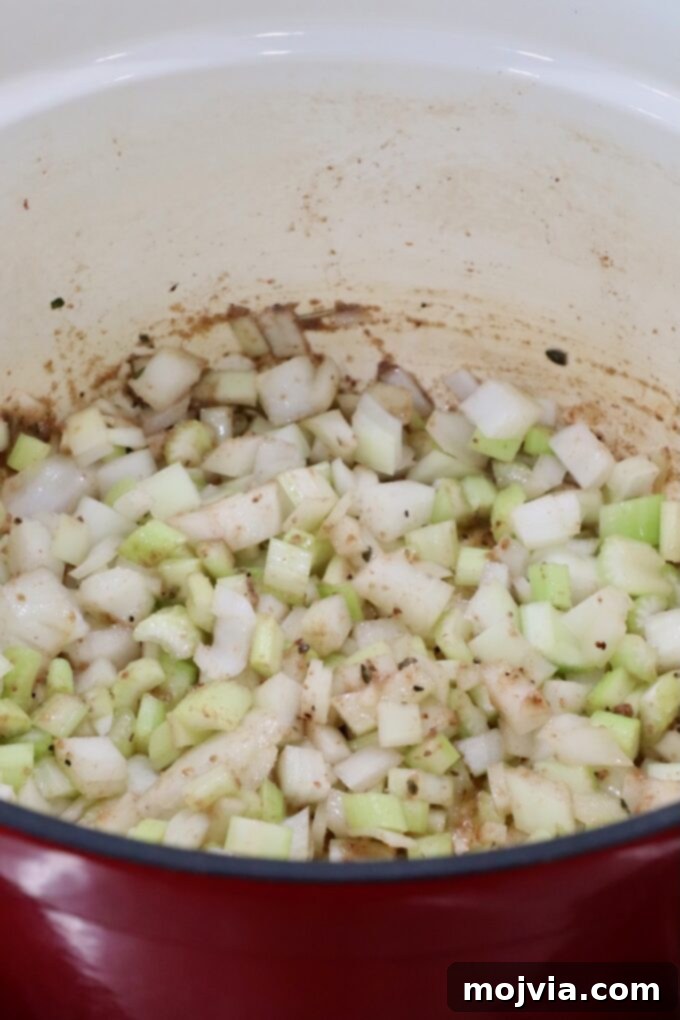
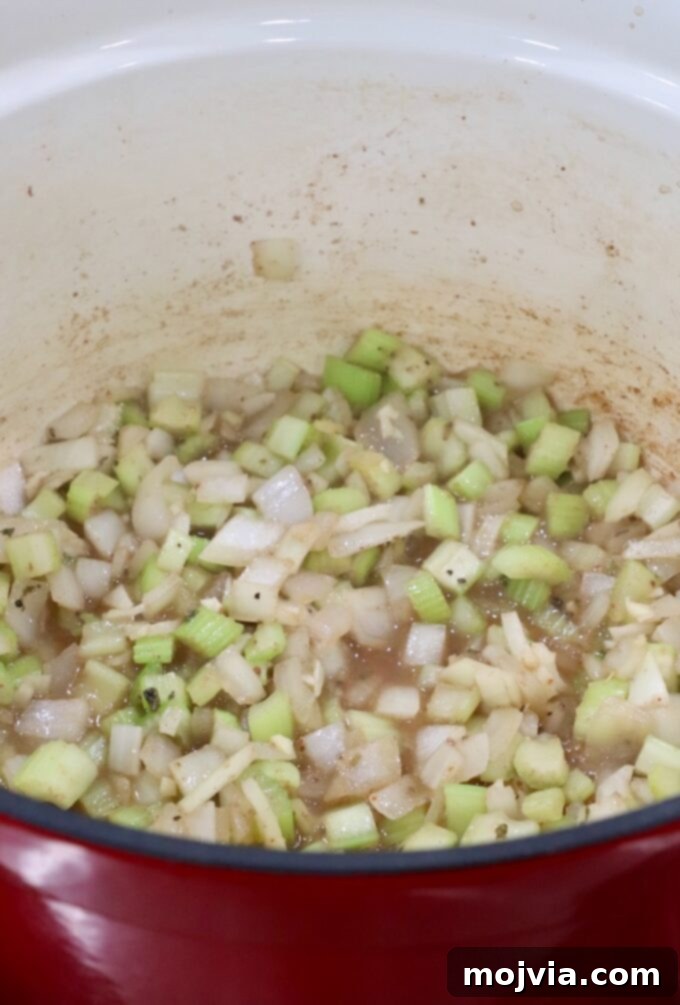
- Sauté Aromatics & Build Flavor: Add the remaining 1 tablespoon of olive oil to the same pot. Introduce the diced onions and celery, cooking them for approximately 5 minutes until they soften and become fragrant. Next, add the minced garlic and cook for an additional minute, being careful not to burn it. Pour ¼ cup of beef broth into the pot to deglaze it. Stir vigorously, scraping up all those delicious browned bits from the bottom of the pan – these are packed with flavor! Evenly sprinkle the all-purpose flour over the softened vegetables and stir well to combine. Cook for 1 minute, or until the flour begins to brown slightly, creating a roux that will thicken your stew.
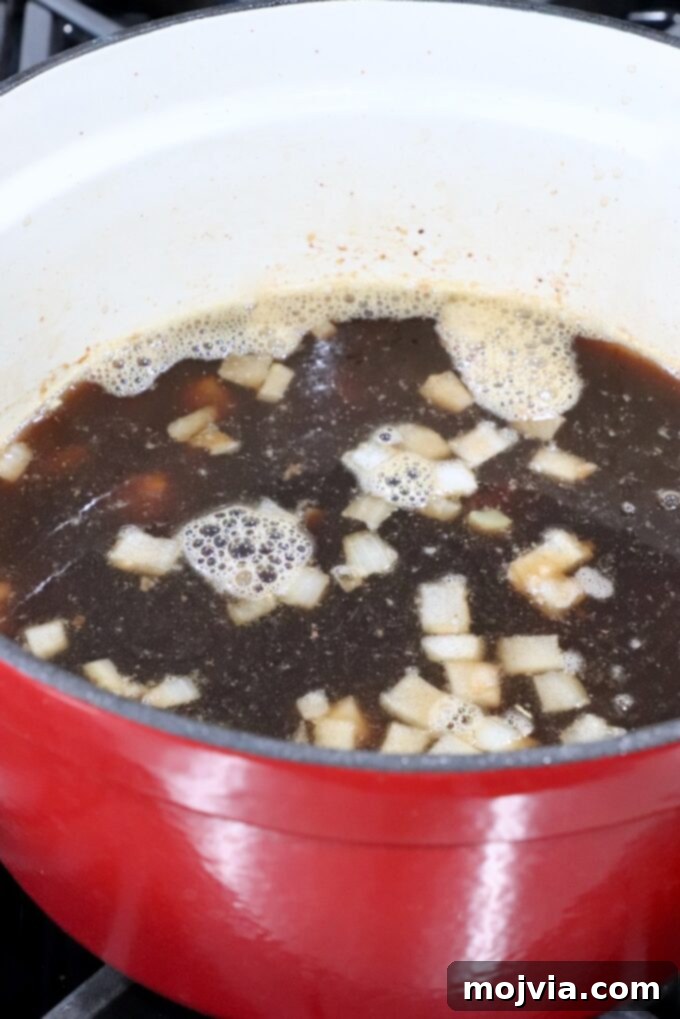
- Introduce Liquids and Seasonings: Pour in the remaining beef broth along with the entire bottle of Guinness stout. Add the tomato paste and Worcestershire sauce. Stir everything thoroughly until well combined. Increase the heat to high and bring the broth mixture to a gentle boil, allowing the flavors to meld and the Guinness to start releasing its aromatic qualities.
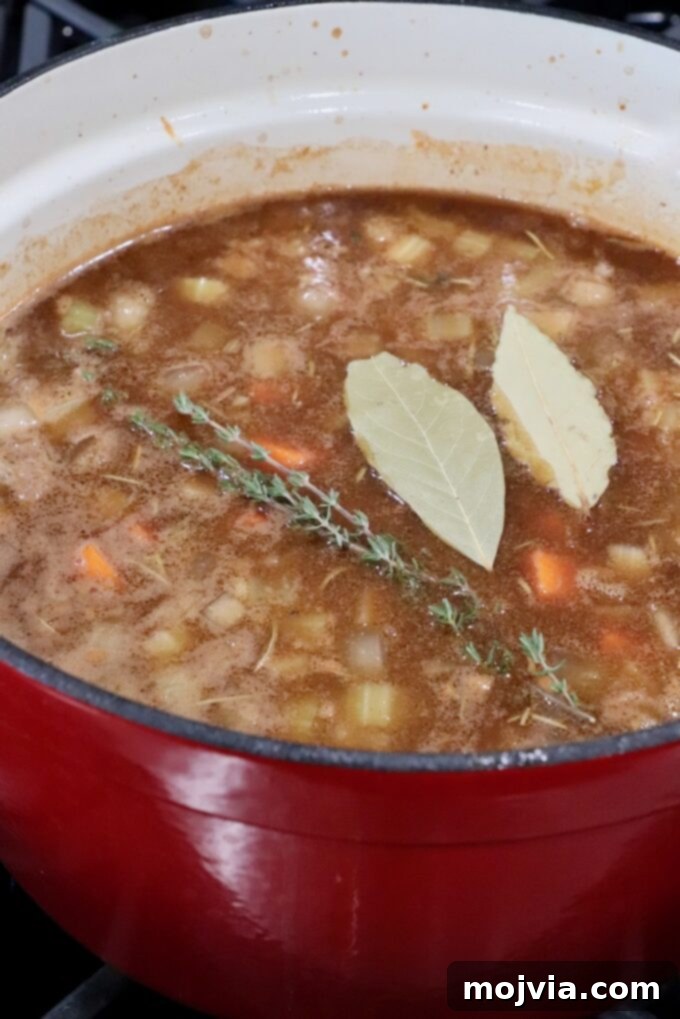
- Combine and Braise: Return the seared beef pieces to the pot. Add the potatoes, carrots, fresh thyme sprigs, and bay leaves. Stir gently to ensure all ingredients are submerged in the flavorful liquid. Cover the pot tightly with a lid, or if your pot doesn’t have a snug lid, wrap it securely with a piece of aluminum foil. Transfer the covered pot to your preheated 350°F oven. Allow the stew to slow braise for 2 glorious hours. This extended cooking time at a lower temperature is key to achieving incredibly tender beef and infusing all the vegetables with the rich broth.
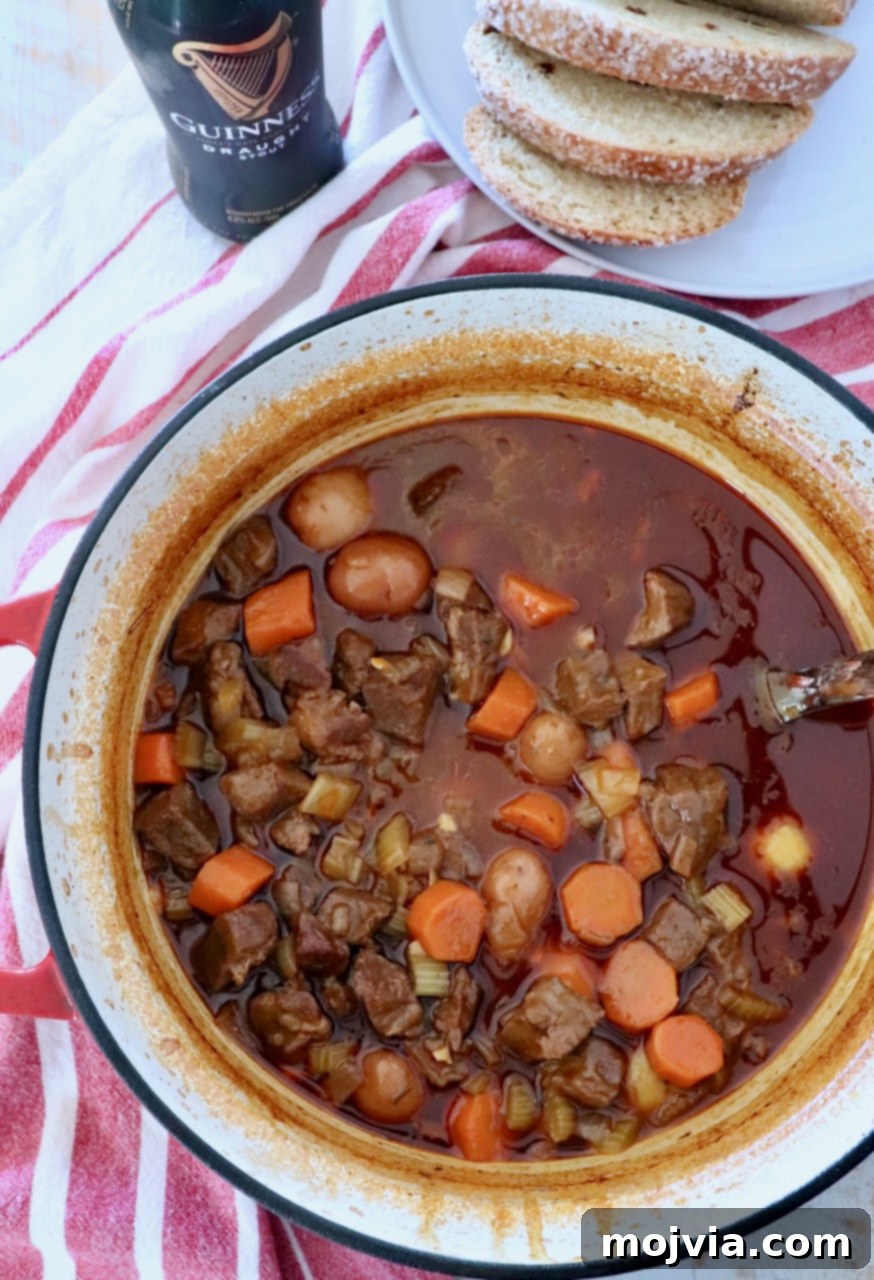
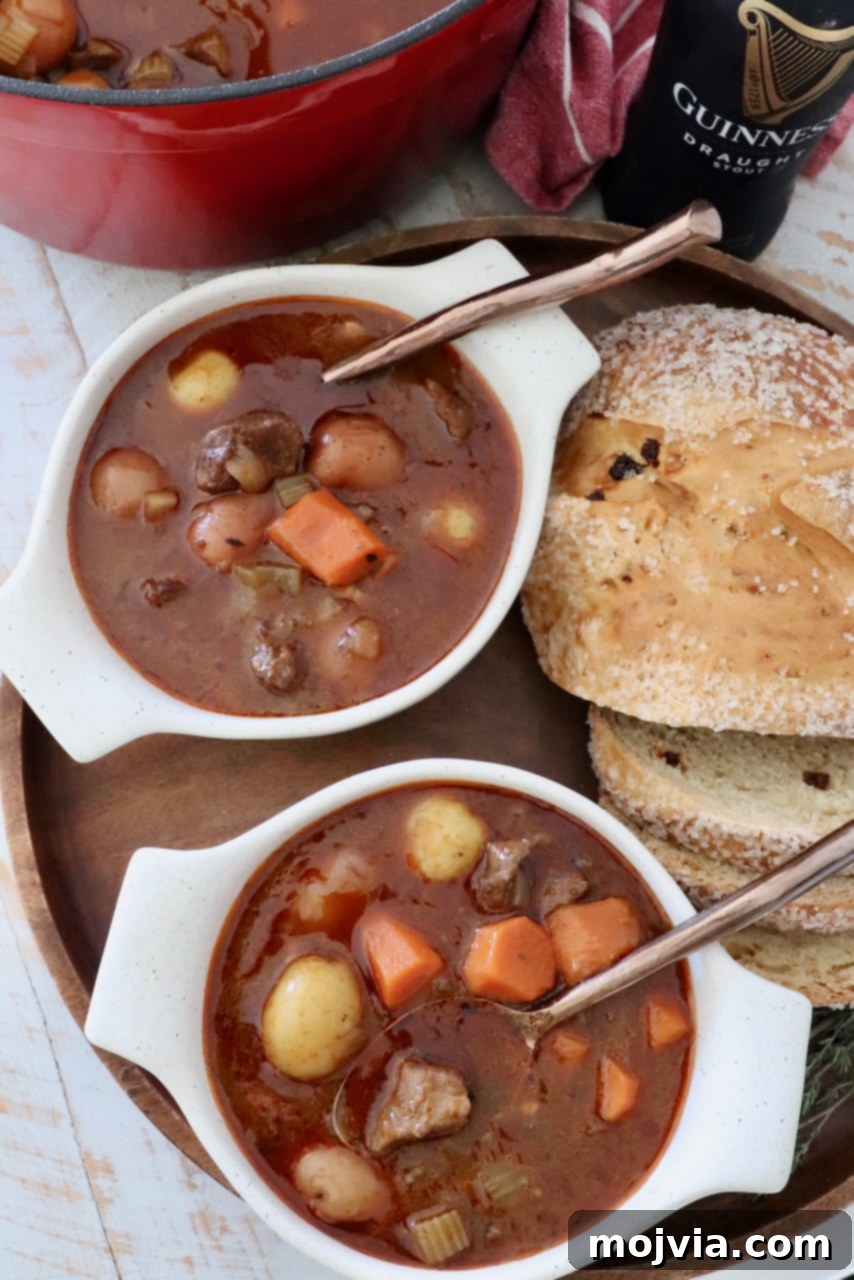
- Final Touches and Serve: After 2 hours, carefully remove the Irish stew from the oven and take off the lid. Using tongs, retrieve and discard the bay leaves and thyme sprigs – their work is done! Give the stew a gentle stir, check for seasoning, and serve immediately in warm bowls. This hearty, flavorful Irish stew is perfect with a side of warm Irish soda bread or a crusty baguette for dipping into that sensational broth.
How to Make Irish Stew in a Slow Cooker: Effortless Perfection
For those days when you need a delicious meal with minimal fuss, transforming this traditional Irish stew into a slow cooker recipe is an excellent choice. It allows you to “set it and forget it,” letting the slow cooker work its magic to create incredibly tender beef and a deeply flavored stew with practically no effort. Here’s how to adapt our recipe for your Crock-Pot:
- Sear the Beef: Begin by dicing a 2-pound beef chuck roast into 1-inch cubes. Toss the beef generously with 2 tablespoons of our beef stew seasoning. Heat 2 tablespoons of olive oil in a large pot or Dutch oven over medium-high heat on your stovetop. Once the oil is hot, add the seasoned beef pieces and sear them on all sides for about 4-6 minutes until nicely browned. This crucial step develops rich, savory flavors that are essential for the stew’s depth. Using a slotted spoon, transfer the browned beef directly into your slow cooker.
- Sauté Vegetables and Deglaze: Add an additional tablespoon of olive oil to the same pot on the stovetop. Add the 1 cup of diced onions and 1 cup of diced celery, cooking for about 5 minutes until softened. Stir in 3 cloves of minced garlic and cook for another minute until fragrant. Pour in ¼ cup of beef stock to deglaze the pan, scraping up any flavorful browned bits from the bottom – these are pure gold for your stew! Evenly sprinkle ¼ cup of all-purpose flour over the vegetables, stir to combine, and cook for 1 minute to create a light roux.
- Combine Liquids and Slow Cook: To the pot on the stovetop, add the remaining 3¾ cups of beef broth, a 14.9-ounce bottle of Guinness stout, 2 tablespoons of tomato paste, and 1 tablespoon of Worcestershire sauce. Stir everything thoroughly to combine. Carefully transfer the entire contents of the pot (vegetables and liquid) into the slow cooker with the seared beef.
- Add Remaining Ingredients and Cook: Add the potatoes, carrots, fresh thyme sprigs, and bay leaves to the slow cooker. Stir gently to ensure everything is well distributed. Cover the slow cooker with its lid and cook on high heat for 4-6 hours, or on low heat for 8-10 hours. The longer, slower cooking time on the low setting often yields even more tender beef and a richer flavor. Once cooked, remove and discard the thyme sprigs and bay leaves before serving.
Recipe Notes and Tips for Success
Achieving the perfect Irish stew is simple with a few helpful tips:
- The Right Pot Matters: For oven preparation, a high-quality cast iron Dutch oven is highly recommended. Its exceptional heat retention and even temperature distribution are ideal for slow braising, ensuring your stew cooks perfectly. Look for a pot that’s at least 12 inches wide with 6-inch tall sides to comfortably fit all the ingredients. If a Dutch oven isn’t available, any other oven-safe pot of similar size with a tight-fitting lid will work.
- Lid Alternatives: If your chosen pot lacks a lid or has one that doesn’t seal tightly, simply cover the pot securely with a double layer of aluminum foil before placing it in the oven. This creates a moist cooking environment essential for tender meat and prevents the liquid from evaporating too quickly.
- Make Ahead for Enhanced Flavor: This Irish stew is one of those magical dishes that tastes even better the next day! You can prepare the entire recipe ahead of time. After the initial 2 hours of cooking at 350°F, you can either let it cool and refrigerate it, or if serving within a couple of hours, simply turn your oven to a “warm” setting (or its lowest temperature) and leave the covered stew in the oven for up to 2 hours. The flavors will continue to deepen and meld.
- Stovetop Cooking Option: Prefer to keep your stew on the stovetop? No problem! After adding all the ingredients and bringing the liquid to a boil as per the oven instructions, simply reduce the stovetop temperature to medium-low heat. Cover the pot tightly and allow the stew to simmer gently for approximately 2 hours, stirring occasionally to prevent sticking. Ensure it maintains a consistent, low simmer.
- Choosing Your Potatoes: The choice between whole baby potatoes or diced larger potatoes like Russets or Yukon Golds is a matter of texture preference. Whole baby potatoes will retain their shape and offer a firmer bite. Diced larger potatoes will become softer and may partially break down, contributing to a slightly thicker, creamier stew. Both are delicious, so choose what you enjoy most!
How to Store and Reheat Irish Stew for Future Enjoyment
Irish stew is a fantastic dish for meal prepping, as it stores and reheats beautifully, often tasting even better on subsequent days. Proper storage ensures its delicious flavor and quality are maintained.
Refrigeration: To store leftover Irish stew, allow it to cool completely to room temperature first. Then, transfer it to an airtight container and refrigerate for up to 5 days. For reheating, simply spoon the desired portion into a pot or saucepan on the stovetop. Heat over medium-high heat, stirring occasionally, until it reaches a gentle simmer and is heated through, which usually takes about 5-7 minutes. If reheating a single portion, you can also use a microwave-safe bowl, covered, and microwave for 2-3 minutes, stirring halfway through.
Freezing for Long-Term Storage: This beef and Guinness stew freezes exceptionally well, making it perfect for preparing larger batches. Once the stew has cooled completely to room temperature, transfer it to a freezer-safe storage container or heavy-duty freezer bags. Remove as much air as possible to prevent freezer burn. You can freeze the stew for up to 6 months. To defrost, it’s best to transfer the frozen stew from the freezer to the refrigerator and allow it to thaw slowly over 24 hours. Once thawed, reheat it in a large pot on the stove over medium-high heat for 15-20 minutes, stirring occasionally, until it’s piping hot throughout. You may need to add a splash of beef broth or water if it appears too thick after thawing and reheating.
Serving Suggestions for Your Irish Stew
A hearty Irish stew is a meal in itself, but the right accompaniments can elevate the experience even further. Here are some of our favorite ways to serve this comforting dish:
- Traditional Irish Soda Bread: This is arguably the most classic pairing. Its dense, slightly crusty texture and mild flavor make it perfect for soaking up every last drop of the rich Guinness-infused broth.
- Crusty Baguette or Artisan Rolls: A good quality crusty bread, whether a baguette or homemade pull-apart rolls, is always a welcome addition for dipping.
- Mashed Potatoes: For an extra layer of comfort, a dollop of creamy mashed potatoes on the side, or even directly in the bowl, is simply divine.
- Simple Green Salad: To balance the richness of the stew, a light, crisp green salad with a tangy vinaigrette can provide a refreshing counterpoint.
- A Pint of Stout: For adults, enjoying your Irish stew with a fresh pint of Guinness or another dark stout can enhance the flavors of the meal.
- Fresh Herbs: A sprinkle of fresh parsley or chives just before serving adds a touch of color and a burst of fresh flavor.
Variations and Customizations for Your Irish Stew
While this recipe provides a truly traditional and delicious Irish stew, don’t hesitate to personalize it to your taste or dietary needs:
- Meat Options: For a more classic “Irish” stew, swap the beef chuck roast for lamb shoulder. The lamb lends a distinct, gamey flavor that many connoisseurs appreciate. You could also experiment with venison for an even richer, bolder taste.
- Vegetable Boost: Feel free to add other root vegetables like parsnips or turnips, cut into similar 1-inch pieces, for extra flavor and nutrition. Leeks can also be added with the onions and celery for a subtle, sweet oniony note. Green peas or chopped kale can be stirred in during the last 15-20 minutes of cooking for added color and freshness.
- Herb & Spice Adjustments: If you enjoy a hint of spice, a pinch of red pepper flakes can be added with the garlic. For a different aromatic profile, try fresh rosemary instead of thyme, or a blend of both. A touch of caraway seeds can also add a unique, earthy undertone.
- Gluten-Free Option: To make this stew gluten-free, substitute the all-purpose flour with a gluten-free all-purpose flour blend or use cornstarch (slurry) to thicken the stew at the very end of cooking. Ensure your beef broth and Guinness are also gluten-free if strict adherence is required.
- Alcohol-Free Version: If you prefer to avoid alcohol, simply replace the Guinness stout with an equal amount of additional beef broth. To mimic the depth and slight tang of the beer, you can add a tablespoon of balsamic vinegar or a dash of dark mushroom broth.
Frequently Asked Questions About Irish Stew
Here are answers to some common questions you might have about making this comforting Irish stew:
- Can I use a different beer instead of Guinness? Yes, you can. While Guinness is traditional and offers a specific flavor profile, any dry stout or dark porter will work as a substitute. Aim for a beer that is not too sweet or overly hoppy.
- Why is my stew broth too thin? If your stew is too thin, it might be due to insufficient flour, or perhaps too much liquid. To thicken it, you can make a slurry by mixing 1-2 tablespoons of cornstarch with an equal amount of cold water. Stir this mixture into the simmering stew and cook for a few more minutes until it thickens to your desired consistency. Alternatively, if you used diced potatoes, letting them break down more can also help thicken the broth.
- Why is my beef not tender enough? The key to tender beef is sufficient cooking time. If your beef isn’t falling apart, it simply needs more time to braise. Continue cooking, either in the oven or slow cooker, until it reaches the desired tenderness. Toughness usually means it hasn’t cooked long enough for the connective tissues to break down.
- Can I add other vegetables? Absolutely! Irish stew is very forgiving. Consider adding parsnips, turnips, leeks, or even some frozen peas (add them during the last 15 minutes of cooking) to enhance the vegetable content and flavor.
- Is it better to cook Irish stew in the oven or slow cooker? Both methods yield excellent results. The oven often allows for slightly better caramelization and browning, contributing to a deeper flavor, while the slow cooker offers unmatched convenience for a hands-off approach. Choose the method that best fits your schedule and preference.
More Comfort Food Recipes
If you love hearty, comforting meals, you’ll definitely want to explore these other family-favorite recipes:

Print Recipe
Pin Recipe
Irish Stew
Make a warm and cozy meal with this traditional Irish Stew recipe. Made with chunks of beef and Guinness beer, it’s incredibly flavorful and easy to make in the oven, or a slow cooker, with only 20 minutes of prep time!
Ingredients
- 2 pounds beef chuck roast, cut into 1 inch cubes
- 2 tablespoons beef stew seasoning (click link for the recipe)
- 3 tablespoons olive oil, divided
- 1 cup onions, diced
- 1 cup celery, diced
- 3 cloves garlic, minced
- ¼ cup all-purpose flour
- 14.9 ounces Guinness stout
- 4 cups beef broth
- 2 tablespoons tomato paste
- 1 tablespoon worcestershire sauce
- 1 pound potatoes, baby potatoes or peel and cube larger potatoes
- 1 cup carrots, peeled and cut into 1 inch pieces
- 2 sprigs fresh thyme
- 2 bay leaves
Instructions
- Preheat the oven to 350°F (175°C) and arrange a rack in the lower third of the oven.
- Slice the beef chuck roast into 1-inch cubes, then toss with the beef stew seasoning to coat evenly.
- Heat 2 tablespoons of olive oil in a large oven-safe pot, or Dutch oven, on the stove over medium-high heat.
- Once the oil is hot, add the seasoned chuck roast (in batches if necessary) and sear the pieces for about 4-6 minutes, or until browned on all sides. Use a slotted spoon to remove the beef from the pot and set it aside.
- Add the remaining 1 tablespoon of olive oil to the pot. Add the diced onions and celery, and cook for 5 minutes until softened. Add the minced garlic and cook for an additional minute. Pour ¼ cup of beef broth into the pot and stir to deglaze the bottom of the pan, scraping up any browned bits.
- Sprinkle the flour evenly over everything in the pot, stir to combine, and cook for 1 minute until the flour starts to brown slightly.
- Add the remaining 3¾ cups of beef broth, 14.9 ounces of Guinness, 2 tablespoons of tomato paste, and 1 tablespoon of Worcestershire sauce to the pot. Stir to combine everything, turn the heat on the stove up to high, and bring the broth to a boil.
- Add the seared pieces of beef back to the pot, along with the potatoes, carrots, fresh thyme sprigs, and bay leaves.
- Cover the pot with a lid, or tightly with a piece of aluminum foil, and transfer it to the oven for 2 hours to slow braise.
- Remove from the oven and remove the lid. Use tongs to remove and discard the bay leaves and thyme sprigs. Serve the flavorful Irish stew in bowls with Irish soda bread or a crusty baguette on the side.
Notes
- Refer to the blog post above for detailed step-by-step instructions on how to make the Irish stew in a slow cooker.
- You can cook the Irish beef stew on the stove, instead of the oven, if you prefer. Simply cover the pot, set the stovetop temperature to medium-low heat, and allow the stew to simmer for 2 hours on the stove, stirring occasionally.
- You can use another cut of beef besides chuck roast to make this recipe. A flat cut beef brisket, pre-cut beef stew meat, or a bottom round roast will also work well. For a truly traditional approach, lamb shoulder is an excellent alternative.
- Store leftover Irish stew in an airtight container in the fridge for up to 5 days. To reheat the stew, add it to a pot on the stove over medium-high heat. Bring it to a simmer, then stir the stew occasionally for 5-7 minutes on the stovetop. You can also reheat one portion in a microwave-safe bowl, covered, for 2-3 minutes.
- To freeze prepared Irish beef stew, allow it to cool completely before transferring to a freezer-safe container for up to 6 months. Defrost in the refrigerator for 24 hours before reheating on the stovetop.
Nutrition Facts
Per serving (based on 6 servings):
- Calories: 433 kcal (22% DV)
- Carbohydrates: 17g (6% DV)
- Protein: 33g (66% DV)
- Fat: 25g (38% DV)
- Saturated Fat: 9g (45% DV)
- Polyunsaturated Fat: 2g
- Monounsaturated Fat: 14g
- Trans Fat: 1g
- Cholesterol: 104mg (35% DV)
- Sodium: 828mg (35% DV)
- Potassium: 892mg (25% DV)
- Fiber: 4g (16% DV)
- Sugar: 4g (4% DV)
- Vitamin A: 3845mg (77% DV)
- Vitamin C: 6mg (7% DV)
- Calcium: 144mg (14% DV)
- Iron: 6mg (33% DV)
Did you make this recipe?
Tag @WhitneyBond on Instagram and hashtag it #WBRecipes!