
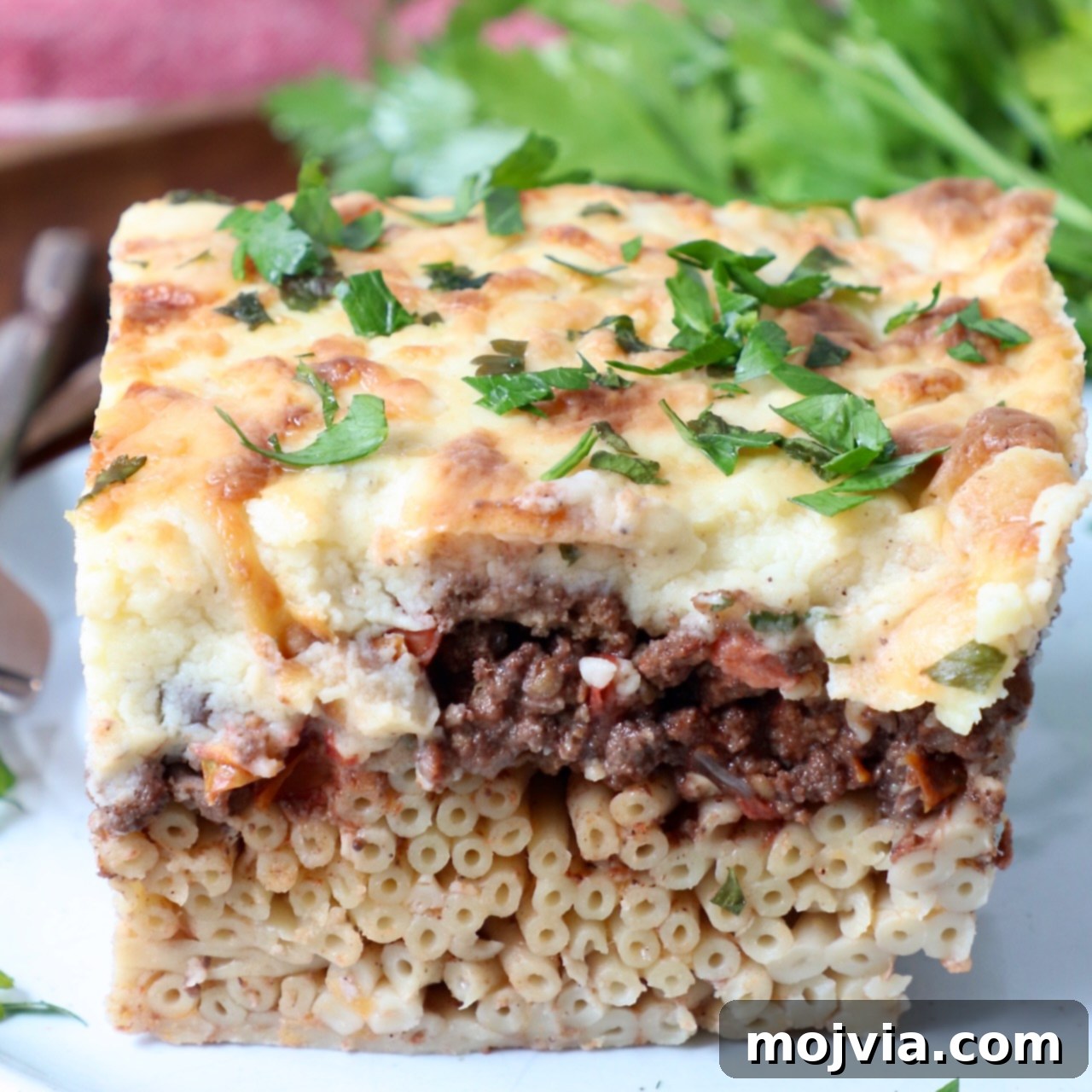
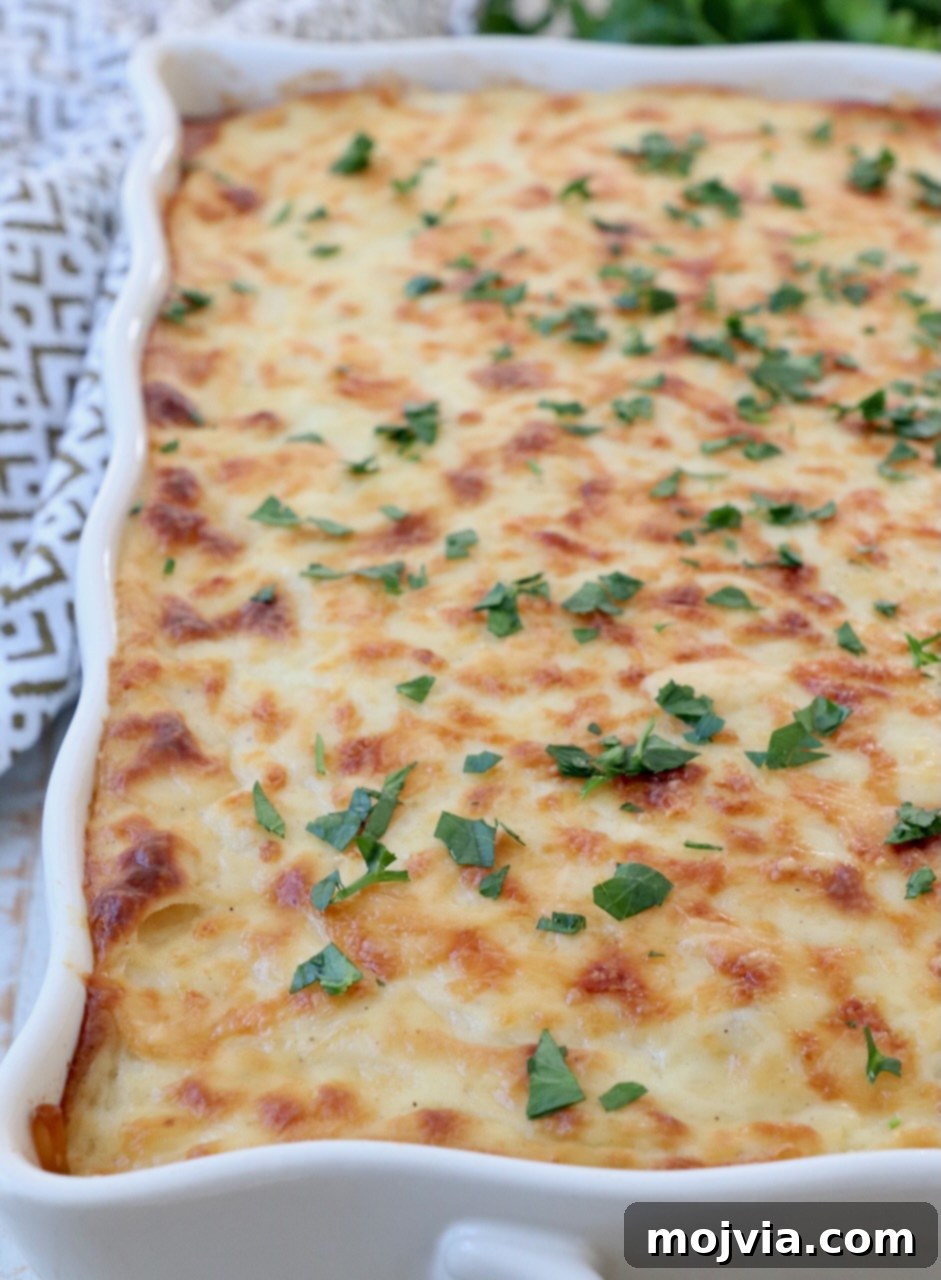
Pastitsio, often lovingly dubbed “Greek Lasagna,” is a beloved classic in Greek cuisine that truly captivates the senses. This incredibly rich and hearty dish features beautifully layered components: perfectly cooked pasta, a savory ground meat sauce infused with unique Greek spices, and a luxurious, creamy béchamel topping. While it shares a layered structure with its Italian cousin, lasagna, Pastitsio distinguishes itself with a distinctive blend of spices, particularly cinnamon and cloves, which impart an aromatic depth to the meat sauce, creating an unparalleled flavor profile.
This authentic recipe is more than just a meal; it’s an experience. The combination of textures—tender pasta, robust meat, and silky béchamel—melds into a symphony of flavors that will undoubtedly become a treasured staple in your culinary repertoire for years to come. Whether you’re familiar with Greek cuisine or discovering it for the first time, Pastitsio offers a comforting, deeply satisfying taste of Greece right in your own home.
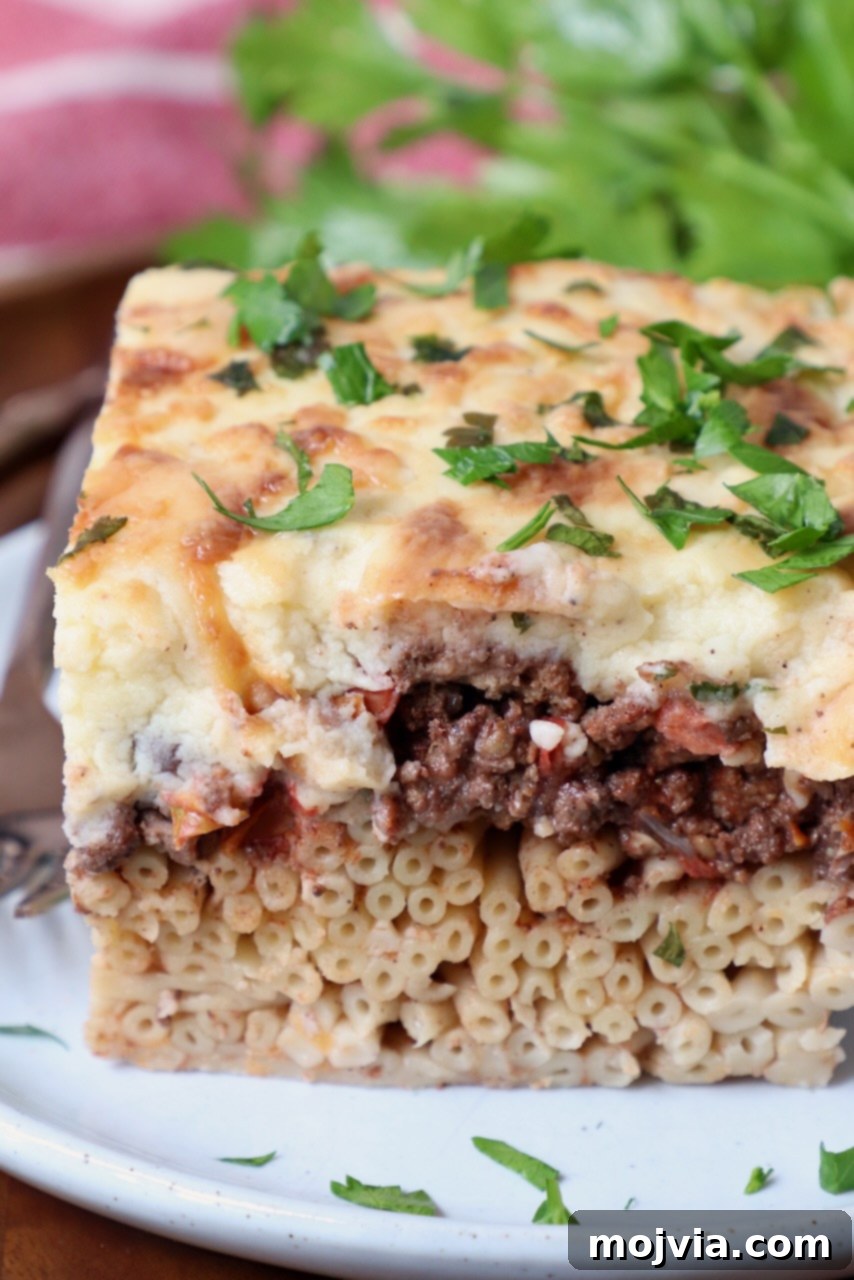
Table of contents
- The Essence of Pastitsio
- A Culinary Journey to Greece
- Unveiling the Ingredients
- Step-by-Step Guide to Pastitsio Perfection
- Prepare the Pasta Base
- Craft the Aromatic Meat Sauce
- Mastering the Creamy Bechamel
- Assemble Your Masterpiece
- Bake to Golden Perfection
- Expert Recipe Tips for Success
- Storage, Reheating, and Make-Ahead Options
- Perfect Pairings: What to Serve With Pastitsio
- Explore More Greek Delights
The Essence of Pastitsio: A Greek Culinary Icon
Pastitsio stands as a true pillar of Greek gastronomy, a hearty baked pasta dish that embodies the warmth and hospitality of Mediterranean culture. Its structure, featuring distinct layers, often draws comparisons to Italian lasagna, earning it the affectionate nickname “Greek lasagna.” However, Pastitsio carves out its own unique identity through its specific pasta type, the generous use of aromatic spices in its rich meat sauce, and the signature velvety béchamel crown.
Originating from the Venetian influence on Greek cuisine, Pastitsio has evolved over centuries to become the comforting staple we know today. It’s traditionally prepared for family gatherings, Sunday dinners, and festive occasions, symbolizing a labor of love in the kitchen. The painstaking process of layering each component is a testament to the dedication poured into creating this magnificent dish, culminating in a culinary masterpiece that is both visually stunning and profoundly satisfying.
A Culinary Journey to Greece: My Inspiration for the Perfect Pastitsio
My passion for Greek cuisine truly deepened during a magical honeymoon trip to Greece, specifically exploring the breathtaking islands of Santorini and Crete. The vibrant culture, the incredible hospitality of the people, and of course, the unparalleled food left an indelible mark on my heart. Even before that unforgettable journey, I was already deeply enamored with Greek flavors – the tangy feta, the fresh herbs, the delicate crispness of phyllo pastry, I adored it all.
One dish, in particular, has always held a special place in my husband’s heart: Pastitsio. For years, long before our Greek adventure, he would eagerly request his mom make it every time we visited his parents in Arizona. I always enjoyed savoring her homemade version, and the incredible Pastitsio served at the annual Greek Festival in San Diego. Despite my love for the dish, I hadn’t dared to attempt making it myself.
That all changed after tasting authentic Pastitsio in Greece. The experience ignited a desire to recreate and perfect my own recipe, capturing those incredible flavors and bringing them home. After numerous trials and thoughtful adjustments, I am absolutely thrilled to share what I consider the ultimate Pastitsio recipe. I’ve incorporated cherished tips from my mother-in-law’s recipe and blended them with the authentic tastes we discovered across Greece, resulting in a dish that is truly a show-stopper!
Like its Italian counterpart, lasagna, Pastitsio requires a bit of time and patience to assemble its distinct layers. But the effort is undeniably worthwhile. Each layer, from the specially prepared pasta and the deeply spiced meat sauce to the luscious béchamel, contributes to a harmonious blend of textures and tastes. This isn’t just dinner; it’s the ultimate Greek comfort food, guaranteed to make you fall head over heels for the rich, heartwarming flavors of Greek cooking.
Unveiling the Ingredients: Crafting Your Authentic Pastitsio
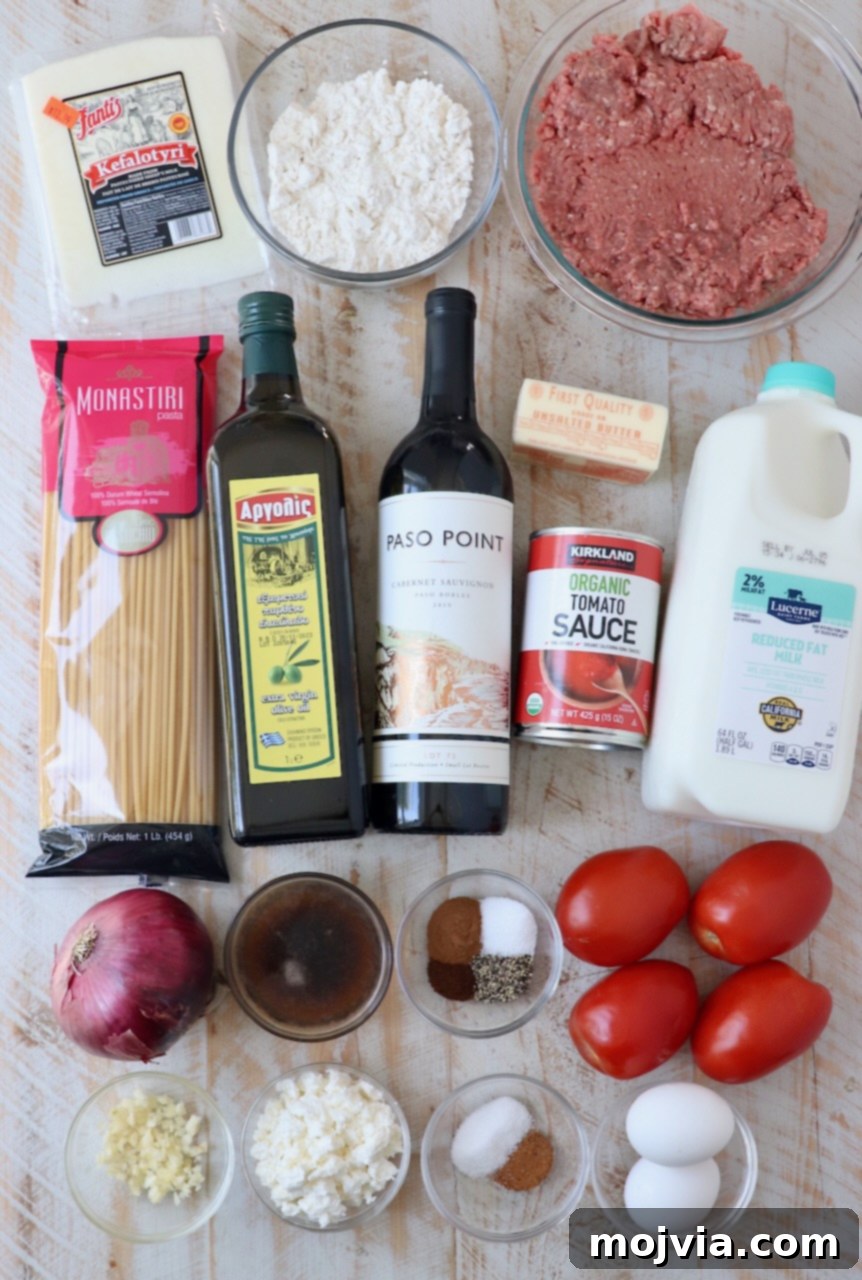
The secret to an unforgettable Pastitsio lies in selecting the right ingredients. Here, I’ll guide you through the essential components for this recipe, highlighting their specific roles and offering thoughtful substitution options where available. For precise measurements, please refer to the comprehensive recipe card located at the bottom of this post.
- Pastitsio Pasta: This is arguably the most distinguishing feature of traditional Pastitsio. True Greek Pastitsio pasta is a thick, hollow spaghetti-like noodle, often labeled “pastitsio” or “pastichio” pasta. Its hollow center allows it to absorb the delicious flavors of the meat sauce. I was fortunate to find some at a local Mediterranean market in San Diego, but you can also order Pastitsio pasta online. A close Italian alternative is bucatini pasta, which is similar in shape but typically not as thick. Bucatini is usually available in most major grocery stores. If neither is accessible, ziti, spaghetti, or even penne pasta can be used; while the flavor will remain excellent, the final presentation might differ slightly.
- Eggs: Eggs play a crucial dual role in this recipe. The egg whites are lightly beaten and tossed with the cooked pasta, acting as a binder that helps the pasta maintain its shape and form neat layers when sliced. The egg yolks, on the other hand, are reserved for enriching the béchamel sauce, contributing to its luxurious creaminess and golden hue.
- Feta Cheese: No Greek dish feels complete without the tangy, salty kick of feta! Crumbled feta cheese is generously mixed with the pasta layer, adding an incredible depth of flavor and a quintessential Greek character that elevates the entire dish.
- Olive Oil: Essential for sautéing and building the base of your meat sauce. If you can find a high-quality Greek olive oil, it will undoubtedly enhance the authenticity of your Pastitsio, infusing it with that distinct Mediterranean essence. The olive oil shown in the image above was sourced from the same Mediterranean market where I found the specialized pasta.
- Red Onion: While red onions are most commonly featured in Greek cooking for their vibrant color and slightly milder, sweeter flavor when cooked, a yellow onion can also be used as a suitable substitute without compromising the taste significantly.
- Garlic: Freshly minced garlic cloves are highly recommended. Their pungent aroma and robust flavor are fundamental to the savory depth of the meat sauce, providing an authentic taste that pre-minced garlic often lacks.
- Ground Beef: The foundation of our rich meat sauce. For an even more traditional Greek flavor, consider using ground lamb, or a combination of half ground beef and half ground lamb. Lamb offers a distinct richness that is highly prized in Mediterranean cuisine.
- Cinnamon + Ground Cloves: These are the signature spices that truly define Greek meat sauces, especially in dishes like Pastitsio and Moussaka. They lend a warm, earthy, and subtly sweet aroma that transforms ordinary ground meat into something extraordinary and deeply authentic.
- Salt + Black Pepper: Basic yet vital seasonings to balance and enhance all the flavors in your meat and tomato sauce. Adjust to your personal preference.
- Red Wine: A dry red wine like a Cabernet Sauvignon or Pinot Noir is recommended. The wine adds a complex layer of acidity and fruitiness to the meat sauce, deglazing the pan and deepening the overall savory notes. It pairs wonderfully with both beef and lamb.
- Beef Broth: Provides liquid for simmering the meat sauce, ensuring it remains moist and flavorful while concentrating its rich taste.
- Roma Tomatoes: These firm, low-moisture tomatoes are ideal for the meat sauce. They break down beautifully during cooking without making the sauce overly watery, contributing a concentrated tomato flavor.
- Tomato Sauce: Adds additional body and a rich, foundational tomato flavor to the meat sauce, ensuring it’s robust and full-bodied.
- Butter: Forms the base of our béchamel roux. Using unsalted butter allows you to control the seasoning precisely. If opting for salted butter, remember to reduce the amount of salt added to the béchamel accordingly.
- All-Purpose Flour: The thickening agent for the béchamel sauce, combining with butter to create a roux that provides the sauce with its classic, creamy consistency.
- Milk: For the silkiest, creamiest béchamel, I recommend using 2% or whole milk. The higher fat content contributes to a richer mouthfeel and a more luxurious sauce.
- Ground Nutmeg: A classic spice pairing for béchamel sauce. Nutmeg adds a subtle warmth and fragrant earthiness that perfectly complements the creamy, savory notes of the white sauce.
- Kefalotyri Cheese: A hard, salty Greek cheese made from sheep’s milk, Kefalotyri is traditional for Pastitsio. I sourced mine from a local Mediterranean market, similar to the pasta. If you can’t find it, excellent substitutes include freshly grated Pecorino Romano or Parmesan cheese, both of which offer a similar salty, sharp flavor profile. This cheese is used both within the béchamel and as a generous topping.
Step-by-Step Guide to Pastitsio Perfection
Crafting Pastitsio is an enjoyable process broken down into five manageable stages: preparing the pasta, simmering the flavorful meat sauce, mastering the creamy béchamel, assembling the layers, and finally, baking it to golden perfection. Follow these instructions carefully, and you’ll create a dish that tastes truly authentic.
To ensure a smooth cooking experience, I’ve included step-by-step photos below for each major stage, making this Pastitsio recipe incredibly easy to follow at home. For the complete, detailed recipe with precise ingredient quantities, please refer to the full recipe card located at the end of this article.
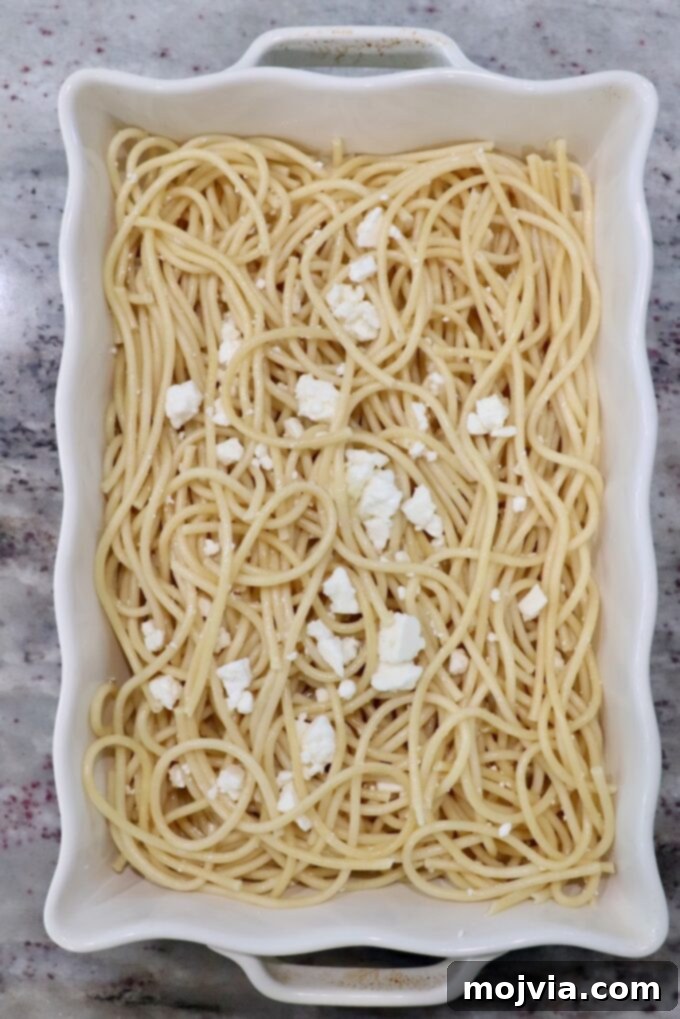
Prepare the Pasta Base
The pasta layer is the foundation of our Pastitsio. Proper preparation ensures it holds together beautifully and provides the perfect texture for the final dish.
- Bring a large pot of generously salted water to a rolling boil on your stove.
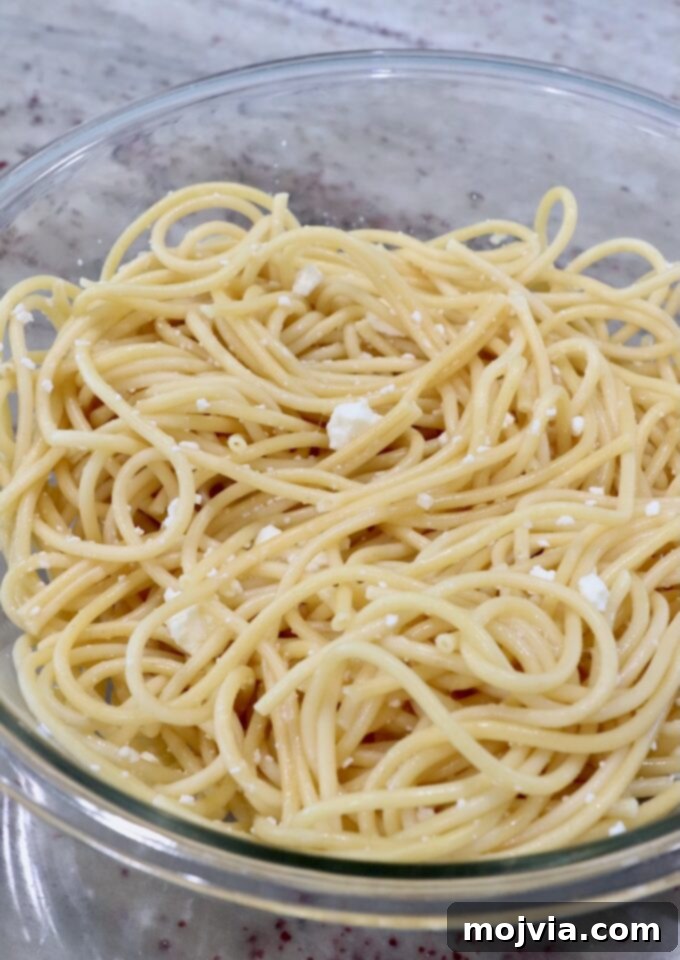
- Once the water is vigorously boiling, add the Pastitsio pasta (or your chosen substitute) and cook according to the package directions until it reaches an al dente consistency. This means it should be firm to the bite, not mushy.
- Drain the cooked pasta thoroughly and transfer it into a spacious bowl. To help it firm up and bind better, place the bowl of pasta in the refrigerator to chill for about 15-20 minutes.
- Once the pasta is adequately chilled, add the separated egg whites and the crumbled feta cheese to the bowl. Toss gently but thoroughly to ensure the pasta is evenly coated, creating a subtle binding and infusing every strand with savory feta flavor.
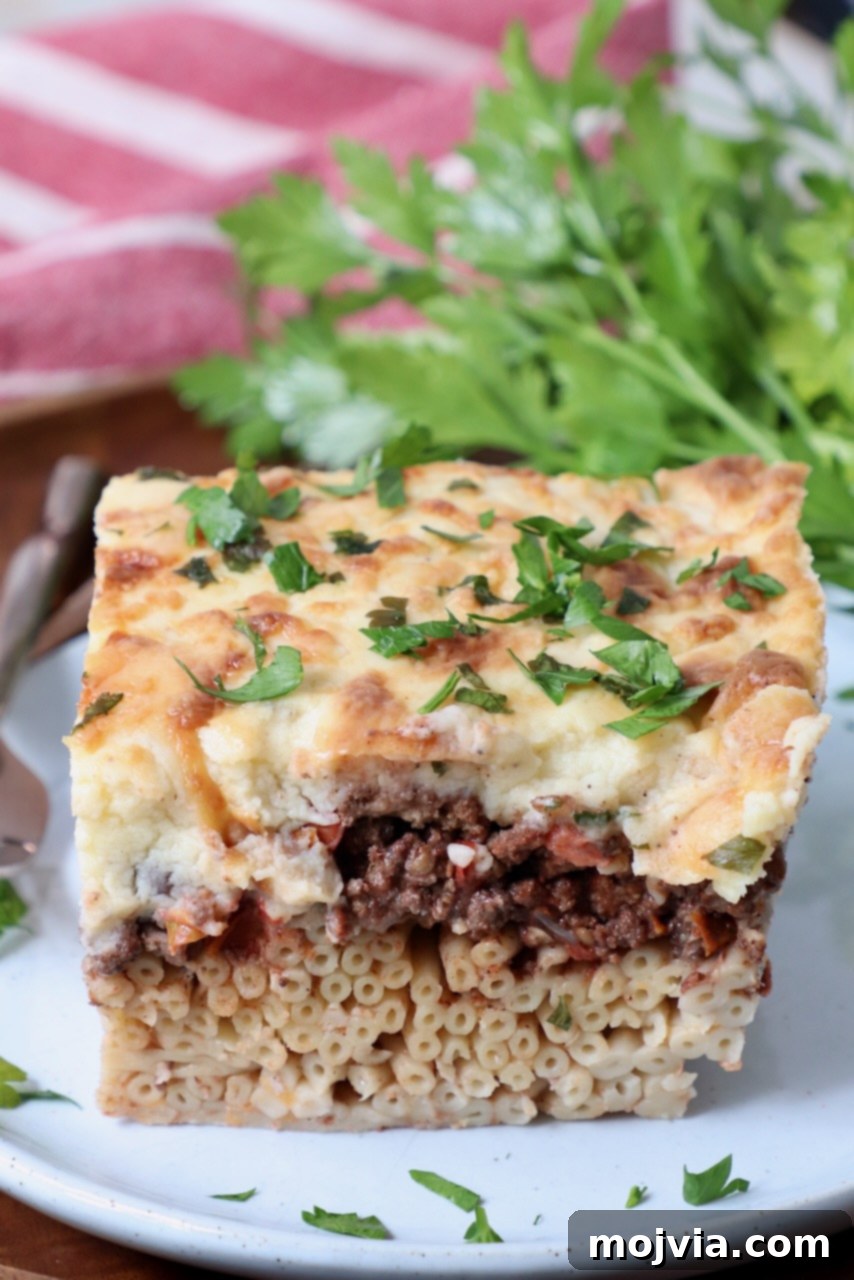
- Carefully transfer the pasta mixture into a large casserole dish. For best results and aesthetically pleasing slices, use a dish that is at least 3 inches deep. Arrange the noodles lengthwise as much as possible; this simple trick ensures that when you cut into the baked Pastitsio, you’ll achieve beautifully uniformed slices with all the pasta aligned in one direction.
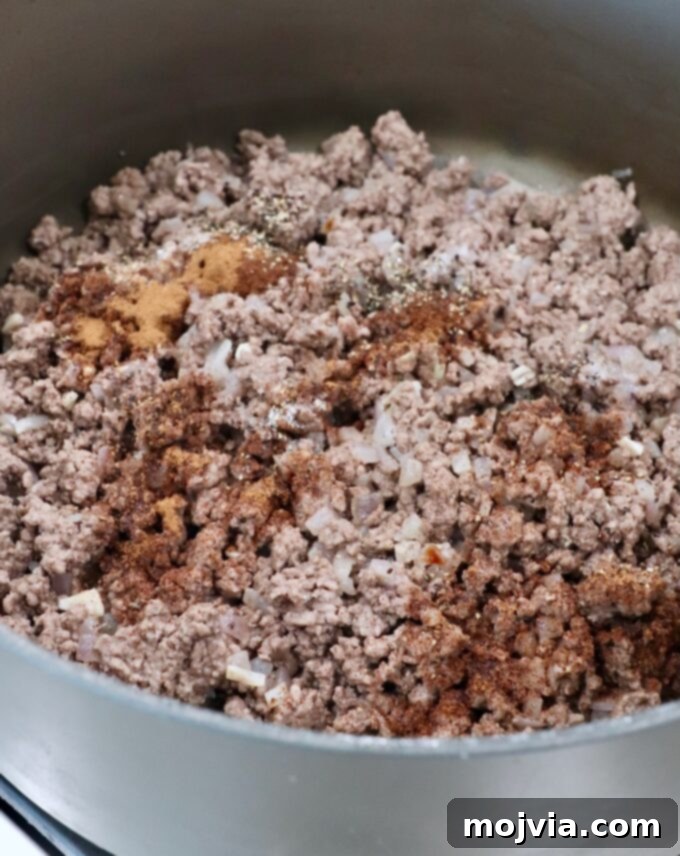
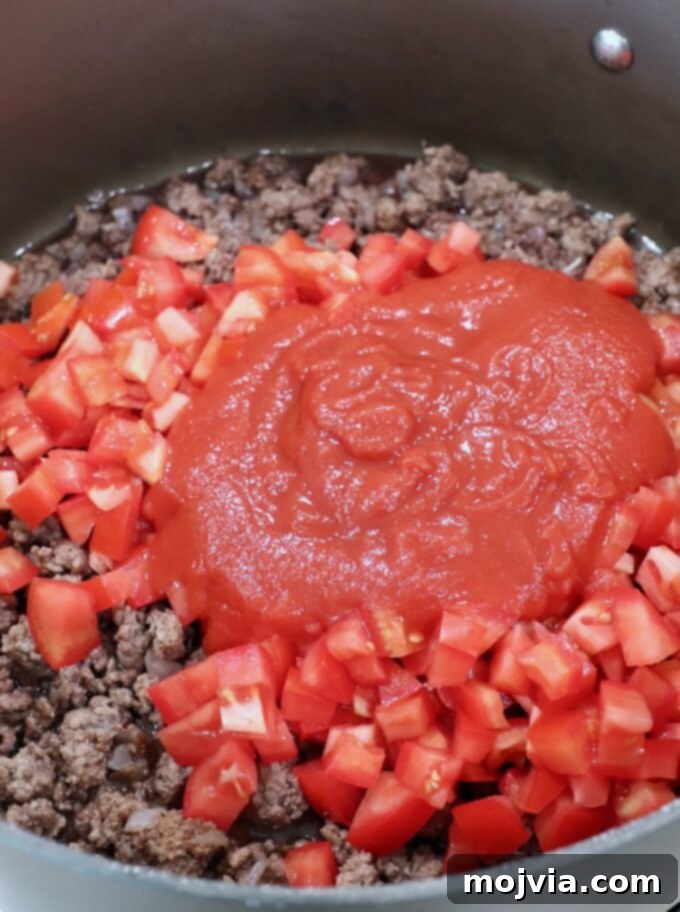
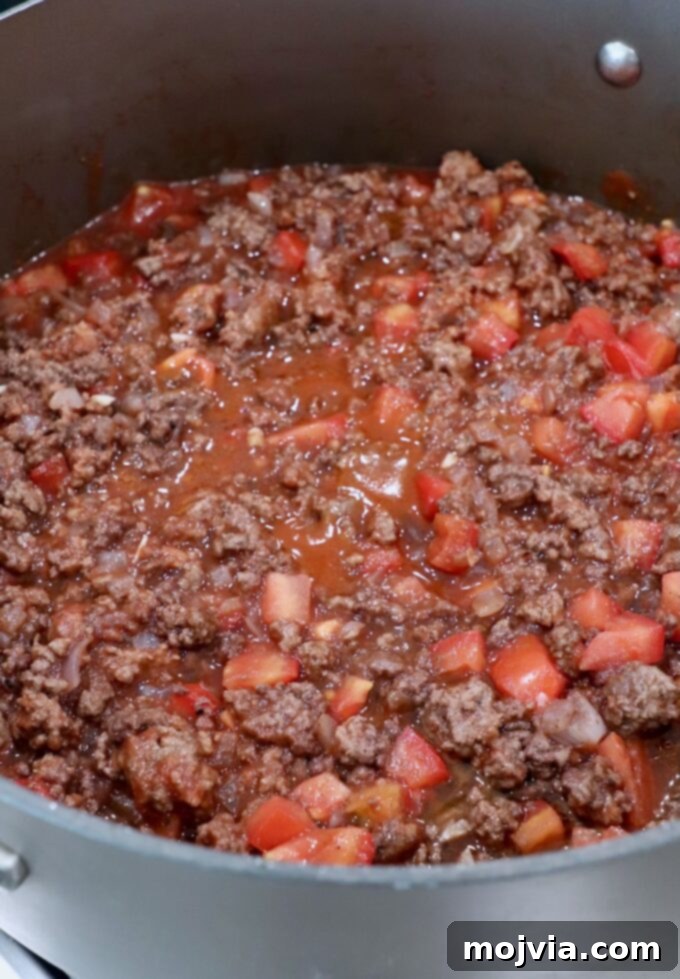
Craft the Aromatic Meat Sauce
The meat sauce is the heart of Pastitsio, offering rich, savory, and aromatic flavors that are distinctly Greek. This careful preparation ensures a deeply satisfying layer.
- In a large skillet or a Dutch oven, heat the olive oil over medium-high heat on your stove. Add the diced red onions and sauté them for 4-5 minutes until they begin to soften and become translucent. Introduce the minced garlic and cook for an additional minute until fragrant, being careful not to burn it.
- Add the ground beef (or lamb/mix) to the skillet. Cook, breaking it apart with a spoon, for 7-8 minutes, or until the meat is thoroughly browned. Once cooked, drain any excess grease from the skillet to prevent the sauce from becoming oily. Return the skillet to medium-high heat. Season the browned meat generously with ground cinnamon, ground cloves, salt, and black pepper. Stir well and cook for 3-4 minutes, allowing the spices to toast and release their full aroma into the meat.
- Pour in the red wine, beef broth, diced Roma tomatoes, and the can of tomato sauce into the skillet with the seasoned meat.
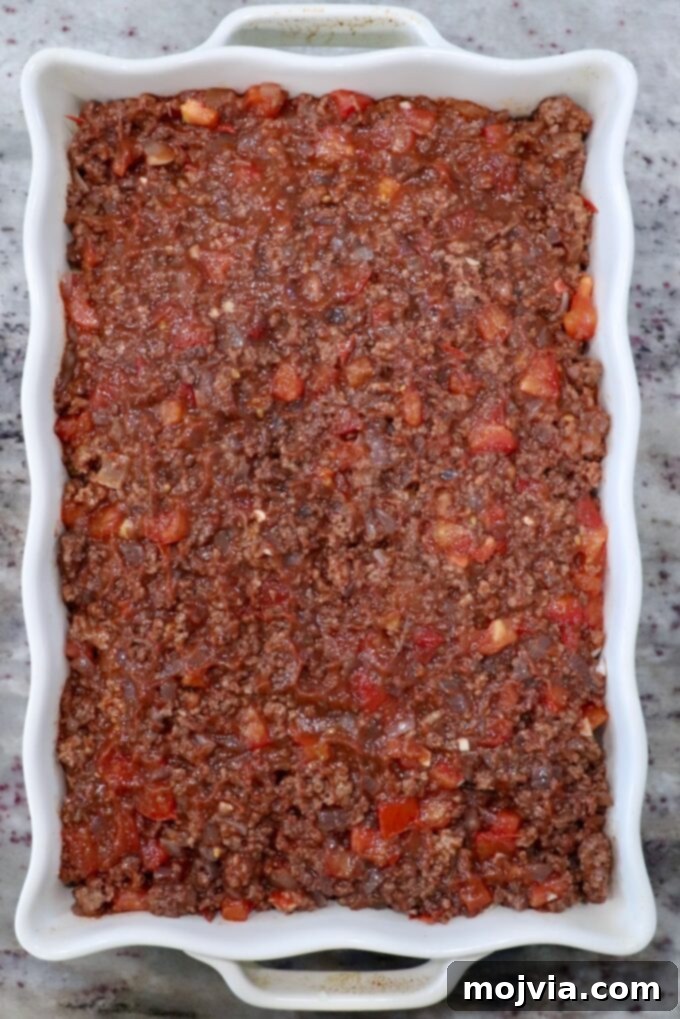
- Bring the sauce to a gentle simmer and let it cook for about 5 minutes, allowing the flavors to meld beautifully. After simmering, remove the meat sauce from the heat and set it aside to cool completely. Cooling the sauce is a critical step for achieving neat, distinct layers in your final Pastitsio.
Mastering the Creamy Bechamel Sauce
The béchamel sauce is the luxurious crown of Pastitsio, providing a rich, creamy topping that bakes to a beautiful golden hue. A thick, smooth béchamel is key for perfect layers.
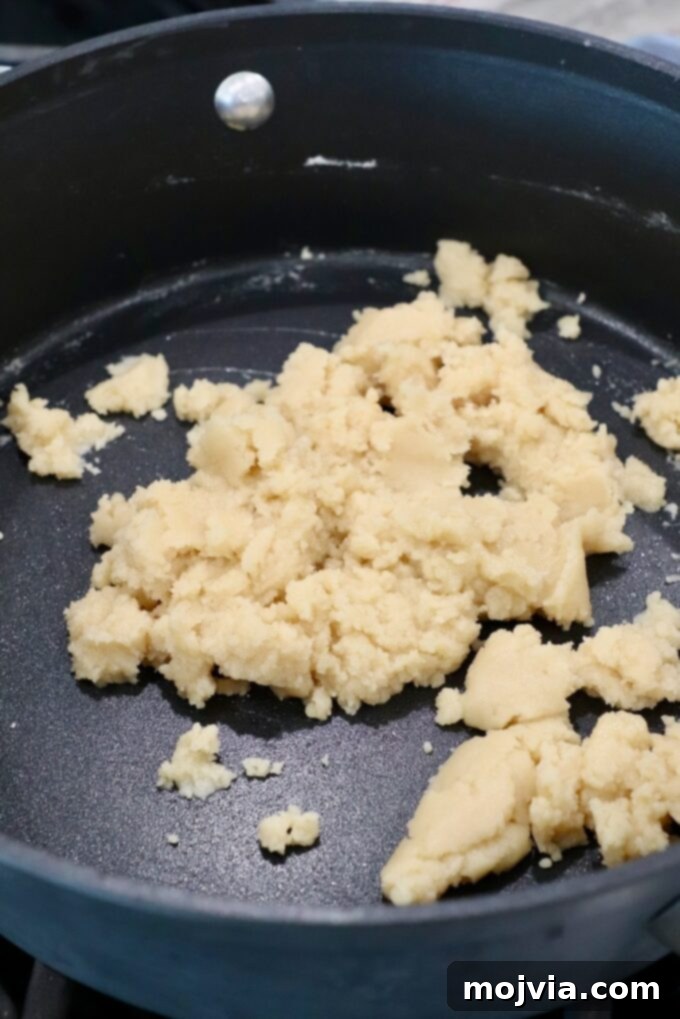
- Begin by creating a roux, which forms the base of your béchamel. Melt the butter in a medium saucepan over medium heat on the stove. Once the butter is completely melted, whisk in the all-purpose flour. Continue whisking and cooking for 1 minute until the mixture forms a smooth paste; this cooks out the raw flour taste.
- Gradually and slowly pour the milk into the saucepan, whisking continuously as you add it. If the sauce appears to form any lumps, persist with whisking vigorously until it becomes completely smooth. Patience here is key for a silky sauce.
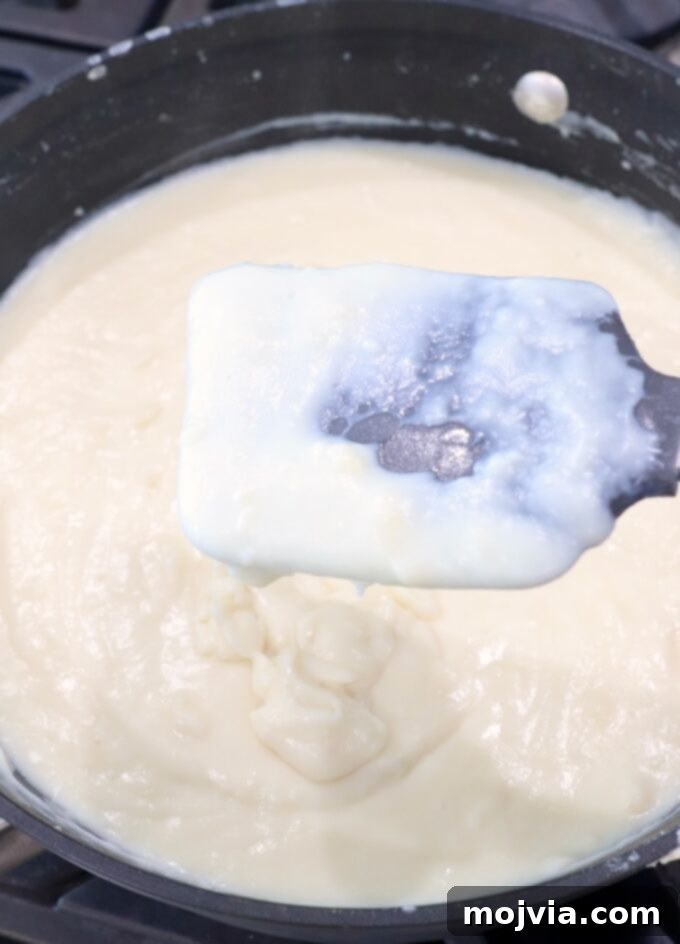
- Maintain continuous stirring over medium heat. The sauce will gradually thicken and should eventually be able to coat the back of a spatula without running off easily. This process can take anywhere from 10-15 minutes. It’s important to aim for a thick béchamel, even slightly thicker than a traditional white sauce, so that it sits beautifully atop the Pastitsio layers rather than seeping through.
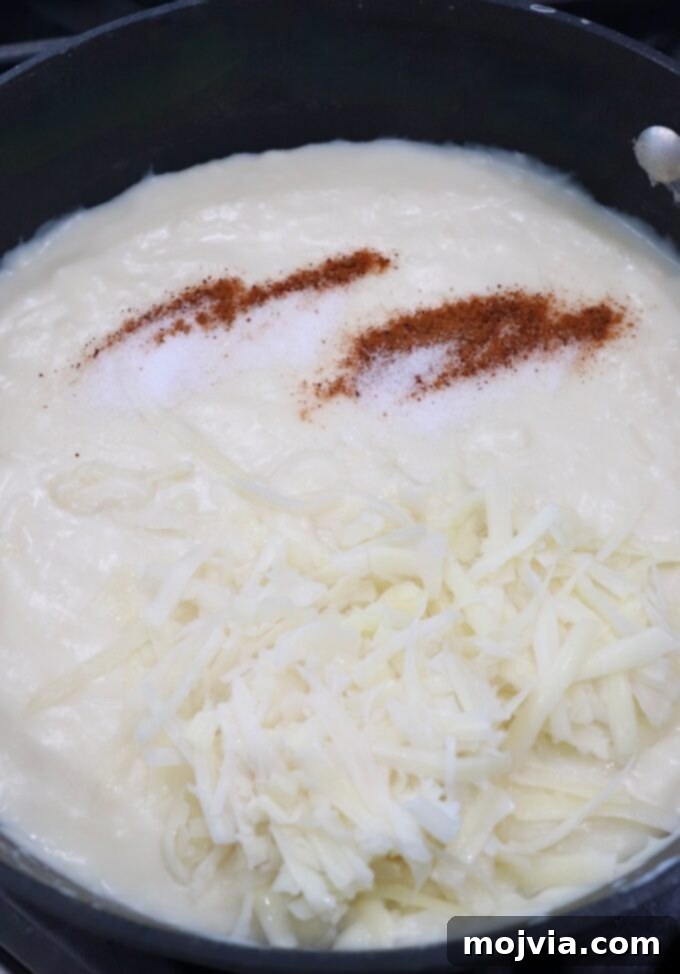
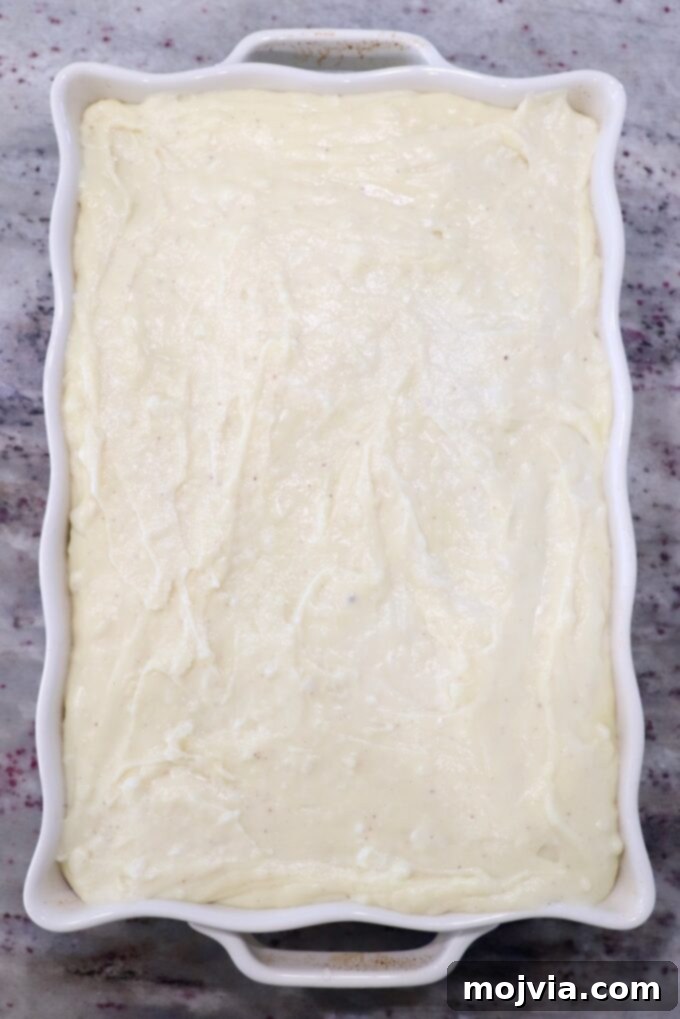
- Once your béchamel has achieved a thick and creamy consistency, stir in the ground nutmeg, salt, and the finely shredded Kefalotyri (or Pecorino Romano) cheese. Mix until the cheese is fully melted and incorporated, adding a delightful savory depth.
- Remove the béchamel sauce from the heat and allow it to cool for about 5 minutes. This slight cooling prevents the egg yolks from scrambling. Then, whisk the two large egg yolks into the béchamel sauce until fully combined. The egg yolks contribute to the sauce’s richness, color, and helps it set beautifully when baked.
Assemble Your Masterpiece
With all components ready, the assembly is where your Pastitsio truly comes to life, creating those inviting, distinct layers.
- Ensure the prepared pasta is spread evenly in your large casserole dish, ideally with the noodles aligned lengthwise for those classic, clean slices. This forms your solid base layer.
- Carefully pour the completely cooled meat sauce evenly over the pasta layer in the casserole dish. Distribute it gently so as not to disturb the pasta arrangement.
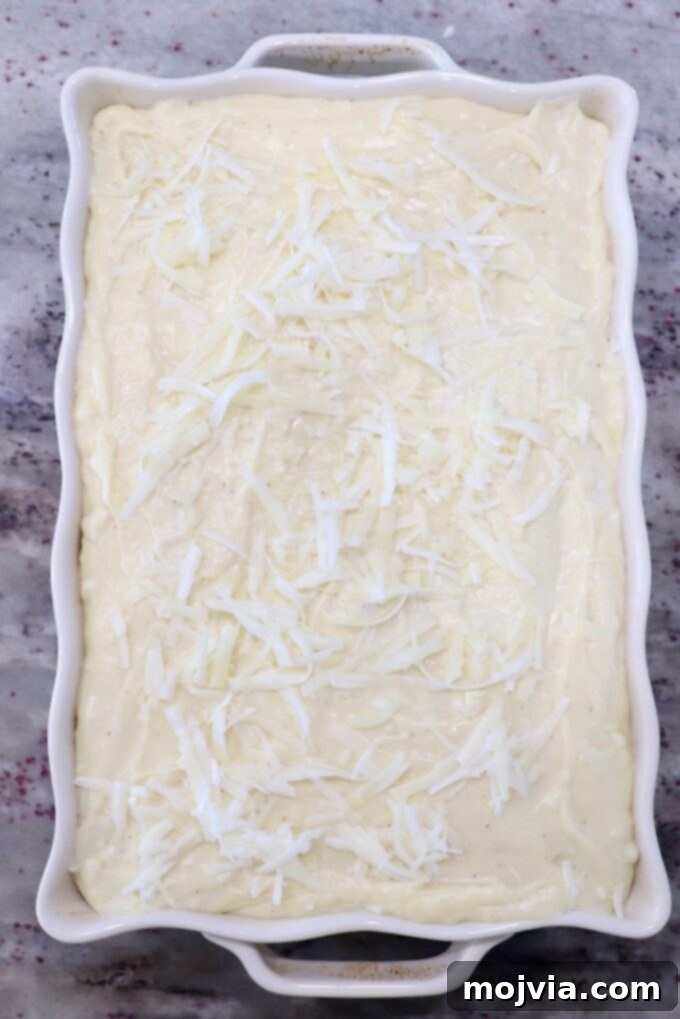
- Now, pour the creamy béchamel sauce smoothly and evenly over the meat sauce layer. Take your time to spread it right to the edges, creating a luxurious, unbroken white topping.
- For the final touch before baking, sprinkle an additional ½ cup of shredded Kefalotyri (or Pecorino Romano) cheese generously over the béchamel. This will create a beautiful golden crust when baked.
Bake to Golden Perfection
The baking process brings all the flavors together, creating a bubbling, golden-brown top and a wonderfully aromatic kitchen.
- Preheat your oven to 350°F (175°C). Ensure it’s fully preheated before placing the Pastitsio inside.
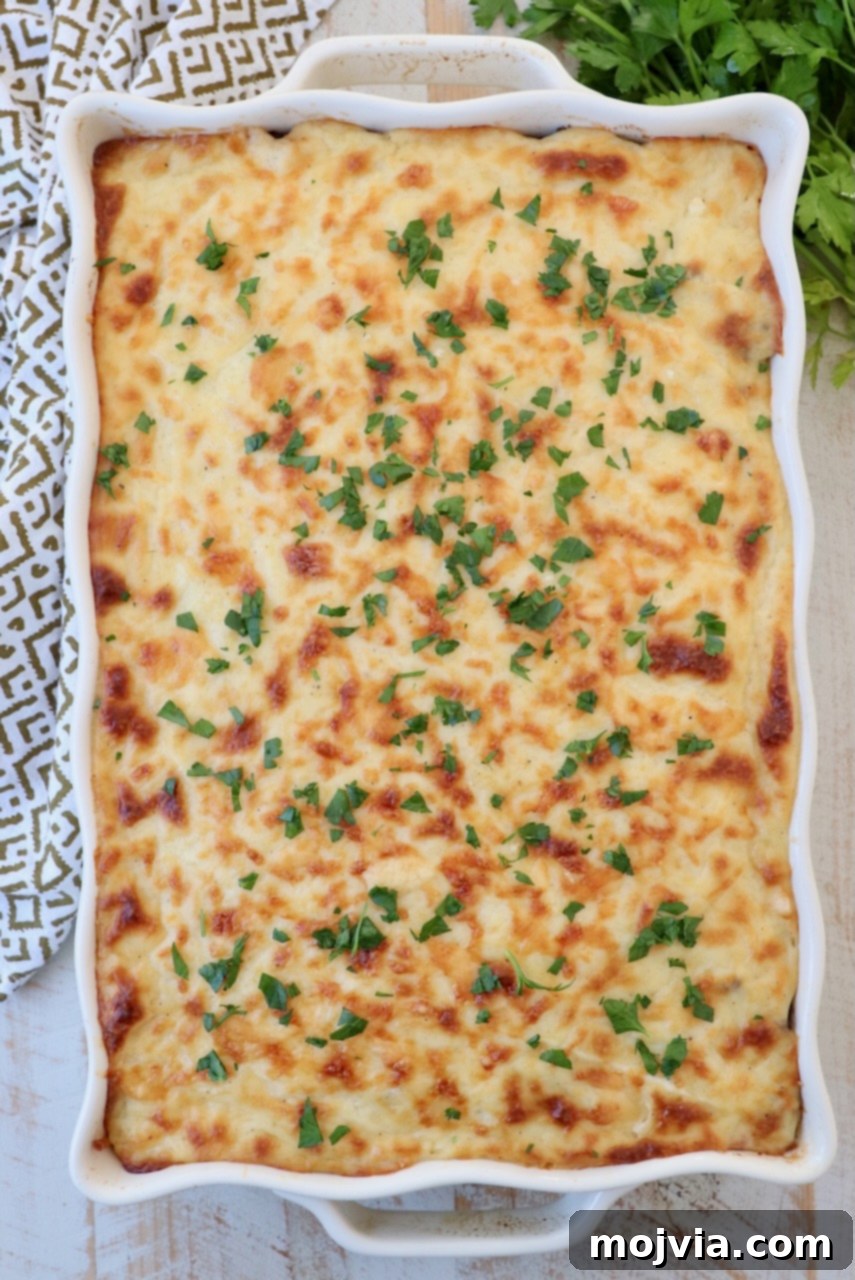
- Carefully place the assembled Pastitsio casserole dish into the preheated oven. Bake for 40-50 minutes, or until the béchamel topping is beautifully golden brown and visibly bubbling around the edges. This indicates it’s heated through and perfectly cooked.
- Once baked, remove the Pastitsio from the oven and allow it to cool and rest for at least 15 minutes before attempting to slice it. This crucial resting period allows the layers to set properly, ensuring you can cut neat, beautiful slices without the hot ingredients falling apart. Optionally, garnish with fresh chopped parsley just before serving for a touch of color and freshness.
Expert Recipe Tips for Success
Achieving a picture-perfect Pastitsio with distinct, beautiful layers is easier with these insider tips:
- Embrace the Chill for Perfect Layers: This is a game-changer! The more you allow the meat sauce to cool—ideally completely—the more uniform and aesthetically pleasing your Pastitsio slices will be. A cold meat sauce will “sit” neatly atop the pasta layer rather than soaking into it, guaranteeing those coveted, distinct layers when you slice into your masterpiece.
- Prepare the Meat Sauce Ahead: To significantly streamline your Pastitsio assembly time and deepen the flavors, consider making the meat sauce up to 24 hours in advance. Store it securely in an airtight container in the refrigerator. This not only saves time on the day of assembly but also allows the aromatic spices and tomato flavors to meld and intensify overnight, resulting in an even more flavorful sauce.
- Simmer for Enhanced Flavor: Just like any great stew or ragu, the longer your meat sauce simmers, the richer and more profound its flavor becomes. If your schedule permits, extend the simmering time for the meat sauce to up to an hour on the stove. This slow cooking will develop an incredible depth of taste.
- Make the Entire Casserole in Advance: For ultimate convenience, you can assemble and even partially cook the entire Pastitsio casserole up to 2 days before serving. Store it covered in the refrigerator. Before serving, simply cover the casserole with foil and reheat it in a 350°F (175°C) oven for about 30 minutes, or until heated through. It will taste just as delightful as if it were freshly baked!
- Reviving a Thick Bechamel: If your béchamel sauce cools too much and becomes too thick to pour smoothly over the Pastitsio, don’t fret! Simply return it to a skillet over medium heat on the stove. Stir continuously, adding a splash of milk if needed, until it regains its pourable consistency.
- Pastitsio vs. Moussaka: Understanding the Difference: These two iconic Greek casseroles are often confused due to their layered structure. The key distinction lies in their base: Pastitsio features a substantial layer of pasta, while Moussaka is traditionally made with layers of thinly sliced eggplant and sometimes potatoes, but never pasta. Both are equally delicious but offer different culinary experiences.
Storage, Reheating, and Make-Ahead Options
Pastitsio is fantastic as leftovers, often tasting even better the next day as the flavors continue to meld. Knowing how to properly store and reheat it ensures you can enjoy this Greek comfort food for days.
- Storing Leftovers: Any leftover Pastitsio should be stored in an airtight container in the refrigerator for up to 5 days. This keeps it fresh and prevents it from drying out.
- Reheating in the Oven: For the best texture, especially for the béchamel, reheating Pastitsio in the oven is highly recommended. Slice the Pastitsio into individual portions and arrange them on a foil-lined baking sheet. Cover the pieces with another sheet of foil to prevent the top from browning further or drying out. Reheat in a preheated oven at 350°F (175°C) for 10-15 minutes, or until each piece is thoroughly heated through to the center.
- Reheating in the Microwave: While the oven is preferred, the microwave offers a quicker option. Place a sliced piece of Pastitsio on a microwave-safe plate. Heat for 2-3 minutes, or until fully heated through. Be aware that the béchamel texture might be slightly softer when microwaved.
- Freezing Prepared Pastitsio: I generally do not recommend freezing fully assembled and baked Pastitsio. The delicate texture of the béchamel sauce can change significantly after freezing and thawing, often becoming grainy or separating.
- Freezing the Meat Sauce: However, you can absolutely make a double batch of the flavorful meat sauce and freeze half of it for future Pastitsio preparations! Store the cooled meat sauce in a freezer-safe container for up to 6 months. When you’re ready to make Pastitsio again, simply thaw the frozen meat sauce in the refrigerator for 24 hours before proceeding with the rest of the recipe. This is a fantastic meal prep hack!
Perfect Pairings: What to Serve With Pastitsio
Pastitsio is a hearty and complete meal on its own, but pairing it with complementary Greek-inspired sides can elevate your dining experience, adding freshness and balance. Here are some delightful suggestions:
- Eggplant Salad: A refreshing and flavorful salad that offers a lighter contrast to the rich Pastitsio.
- Authentic Greek Salad: A classic choice! Made with crisp cucumbers, juicy tomatoes, red onion, Kalamata olives, and generous crumbles of feta cheese, dressed simply with olive oil and oregano. It provides a fresh, vibrant, and tangy counterpoint.
- Cucumber Arugula Prosciutto Salad: A unique twist that offers a peppery bite from the arugula and a salty savory note from prosciutto, balanced by refreshing cucumber.
- Creamy Whipped Feta Dip: Serve this luscious dip with fresh veggies or warm pita bread as a delightful appetizer. Its salty, creamy texture perfectly complements the main course.
- Greek Bruschetta: Toasted bread topped with a fresh, vibrant mixture of diced tomatoes, feta, olives, and herbs, making for an excellent starter.
- Savory Greek Zucchini Pie: A delicious and savory pie, perfect as an appetizer for a full Greek feast. Inspired by my travels in Greece, this recipe is a must-make! It’s light yet flavorful.
- Spicy Feta Dip: For those who enjoy a little heat, this dip pairs wonderfully with crunchy vegetables or pita bread, adding a zesty kick to your meal.
Explore More Greek Delights: Expand Your Mediterranean Menu
Feeling inspired to embark on a full “Greek Week” in your kitchen? Dive into these other flavorful and authentic Greek recipes that perfectly capture the essence of Mediterranean cooking. From succulent marinades to fresh salads and savory meatballs, there’s something to tantalize every palate.
And don’t miss this One Pot Mediterranean Pasta recipe! It’s essentially a shortcut Pastitsio, delivering similar comforting flavors without the creamy béchamel sauce. This easy-to-make dish has been a cherished family favorite for decades, perfect for a weeknight meal when you crave Greek flavors with less fuss.
Print
Pin
Rate this Recipe
Pastitsio (Authentic Greek Lasagna)
8
people
1 hour
40 minutes
1 hour
40 minutes
Whitney Bond
Main Course
Greek
Ingredients
Pasta Layer
-
1
pound
pastitsio pasta
,
or bucatini, ziti, penne or spaghetti -
2
large egg whites
,
save the yolks for the bechamel sauce -
½
cup
feta cheese
,
crumbled
Meat Filling
-
2
tablespoons
olive oil
-
2
cups
red onion
,
diced -
3
cloves
garlic
,
minced -
2
pounds
ground beef
,
or ground lamb -
1 ½
teaspoons
ground cinnamon
-
½
teaspoon
ground cloves
-
1
teaspoon
salt
-
1
teaspoon
black pepper
-
½
cup
red wine,
recommended: cabernet or pinot noir -
½
cup
beef broth
-
3
cups
diced roma tomatoes -
8
ounce
can tomato sauce
Bechamel Sauce
-
7
tablespoons
butter
-
¾
cup
all-purpose flour
-
4
cups
milk
,
2% or whole -
¼
teaspoon
ground nutmeg
-
1
teaspoon
salt
-
½
cup
Kefalotyri cheese,
or pecorino romano cheese – finely shredded -
2
large egg yolks
Topping
-
½
cup
Kefalotyri cheese,
or pecorino romano cheese – finely shredded
Instructions
Prepare the pasta.
-
Bring a large pot of salted water to a boil on the stove.
-
Once boiling, add the pasta and cook according to package directions, until al dente.
-
Drain the pasta, transfer it to a large bowl and place it in the refrigerator to chill.
-
Once the pasta is chilled, toss it with the egg whites and feta cheese. Set aside.
Make the meat sauce.
-
Heat the olive oil in a large pot, or dutch oven, on the stove over medium-high heat.
-
Add the onions and cook for 4-5 minutes. Add the garlic and cook for an additional minute.
-
Add the ground beef and cook for 7-8 minutes, or until browned, then drain any grease from the skillet.
-
Place the ground beef back on the stove and add the cinnamon, ground cloves, salt and pepper. Cook for 3-4 minutes.
-
Add the red wine, beef broth, diced tomatoes and tomato sauce. Simmer for 5 minutes.
-
Remove the meat sauce from the heat and set it aside to cool.
Make the bechamel sauce.
-
Start making a roux by melting the butter in a medium saucepan on the stove over medium heat.
-
Once the butter melts, whisk in the flour and cook for 1 minute while continuously stirring, until it turns into a paste.
-
Slowly pour the milk into the skillet, and stir while adding the milk. If the sauce starts to get lumpy, use a whisk to stir out any lumps.
-
Continue to stir the sauce over medium heat until it’s thickened, and coats the back of a spatula. This might take 10-15 minutes. You want the sauce thick, even thicker than a traditional bechamel sauce, so that it “sits” on top of the pastitsio, instead of dripping through into the other layers.
-
Once the sauce is thick and creamy, add the ground nutmeg, salt and shredded Kefalotyri (or pecorino) cheese. Stir the cheese and spices into the sauce.
-
Remove the bechamel from the heat on the stove and let it cool for 5 minutes.
-
Whisk the egg yolks into the bechamel sauce, then set it aside.
Assemble the pastitsio.
-
Add the prepared pasta to a large casserole dish, that’s at least 3 inches deep. Try to arrange the noodles lengthwise in the casserole dish, so when you cut the pastitsio, you have beautifully uniformed slices, with the pasta all going in one direction.
-
Pour the cooled meat sauce over the pasta in the casserole dish.
-
Pour the bechamel sauce over the meat sauce.
-
Top the pastitsio with ½ cup shredded Kefalotyri (or pecorino) cheese.
Bake the pastitsio.
-
Preheat the oven to 350°F.
-
Place the assembled pastitsio in the oven and bake for 40-50 minutes, or until the cheese on top is brown and bubbling.
-
Let the pastitsio cool for at least 15 minutes before slicing. This will allow you to cut nice looking slices without all of the hot ingredients falling apart as you slice into it.
Notes
- The more you let the meat sauce cool, the more uniform (and pretty!) the slices will be. Allowing the meat sauce to cool completely before assembling the pastitsio means that the sauce will “sit” on top of the pasta, rather than soaking into it. This will give you perfect layers, as you slice into the pastitsio.
- You can make the meat sauce up to 24 hours in advance. Store it in the refrigerator until you’re ready to assemble the pastitsio. Making the meat sauce ahead of time will save you time when assembling the pastitsio, and it will allow the flavors in the sauce to soak in overnight, making the meat sauce even more flavorful!
- You can simmer the meat sauce longer, if you have time. Just like any good meat sauce, the longer it simmers, the deeper the flavor of the sauce. If you have more time, you can simmer the sauce for up to an hour on the stove.
- You can also make the entire casserole ahead of time. The casserole can be assembled and cooked up to 2 days in advance. Before serving the casserole, cover it with foil and place it back in a 350°F oven for 30 minutes. This will reheat the casserole throughout, and it will be just as delicious as when it was freshly baked!
- If the bechamel sauce becomes too thick to pour over the pastitsio, place it back in a skillet on the stove over medium heat and stir the sauce continuously until it becomes pourable again.
- Store pastitsio leftovers in an airtight container in the fridge for up to 5 days. Reheat the pastitsio in the microwave or oven.
- If reheating it in the oven, I recommend slicing the pastitsio into pieces, then placing the pieces on a foil-lined baking sheet. Cover the pastitsio with another piece of foil and reheat it in the oven at 350°F for 10-15 minutes, or until each piece is heated through.
- If reheating it in the microwave, place a sliced piece of pastitsio on a microwave-safe plate and into the microwave for 2-3 minutes, or until heated through.
Nutrition Facts
Calories
881
kcal
(44%)
Carbohydrates
68
g
(23%)
Protein
41
g
(82%)
Fat
48
g
(74%)
Saturated Fat
22
g
(110%)
Polyunsaturated Fat
2
g
Monounsaturated Fat
18
g
Trans Fat
2
g
Cholesterol
191
mg
(64%)
Sodium
1255
mg
(52%)
Potassium
1056
mg
(30%)
Fiber
5
g
(20%)
Sugar
13
g
(14%)
Vitamin A
1526
mg
(31%)
Vitamin C
17
mg
(21%)
Calcium
405
mg
(41%)
Iron
5
mg
(28%)
Did you make this recipe?
Tag
@WhitneyBond on Instagram and hashtag it
#WBRecipes!