
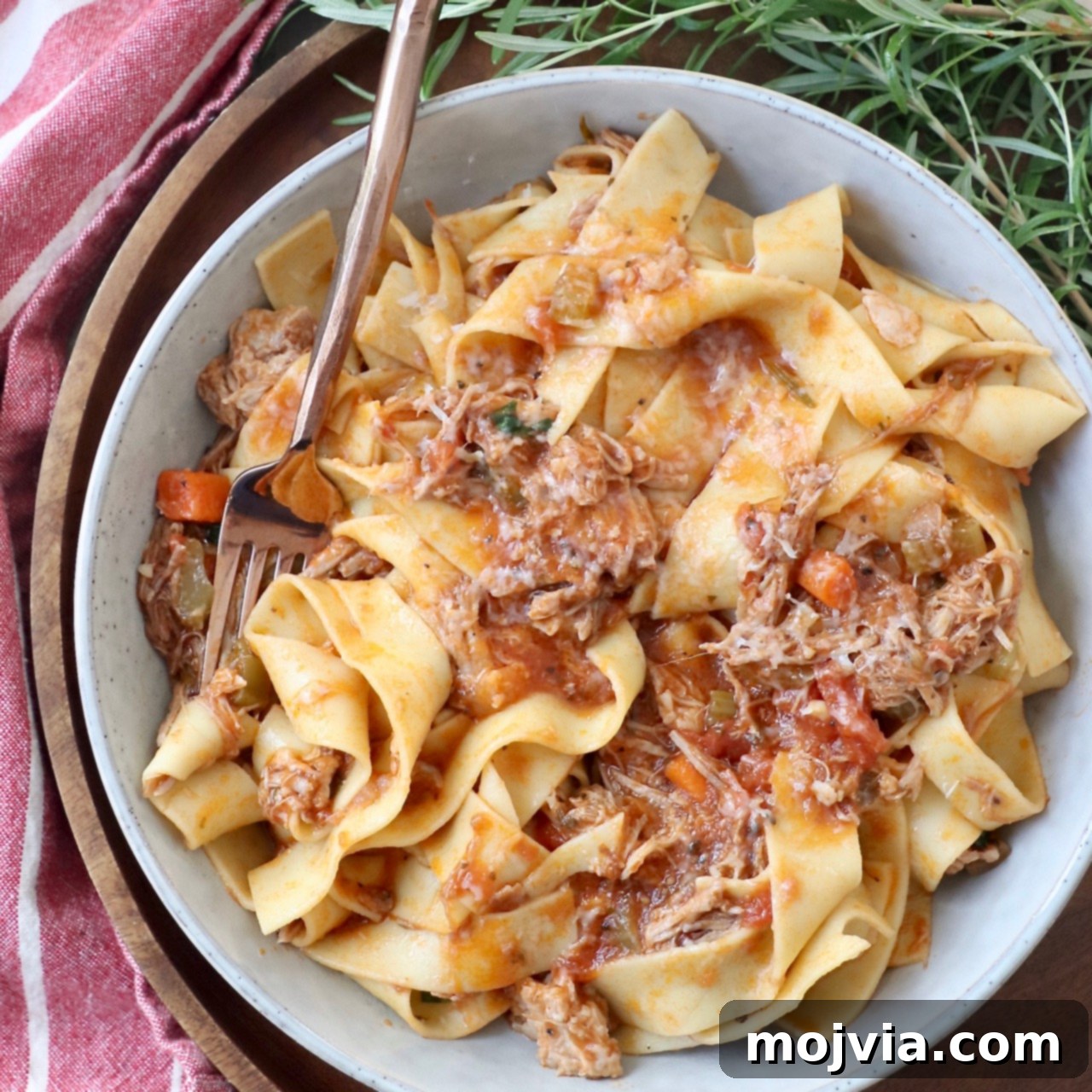
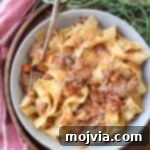
Pork Ragu is an iconic Italian meat sauce, a culinary masterpiece achieved by patiently slow-cooking a succulent pork shoulder in a rich, deeply flavored red wine and tomato base. Infused with aromatic Italian herbs, wholesome vegetables, and fragrant garlic, this dish embodies comfort and tradition. Remarkably easy to prepare in either a slow cooker or a conventional oven, it offers unparalleled versatility, making it a perfect companion for a variety of pastas or a luxurious topping for creamy, cheesy polenta. This Slow Cooker Pork Ragu recipe promises a deeply satisfying meal with minimal effort, allowing you to savor authentic Italian flavors in your own kitchen.
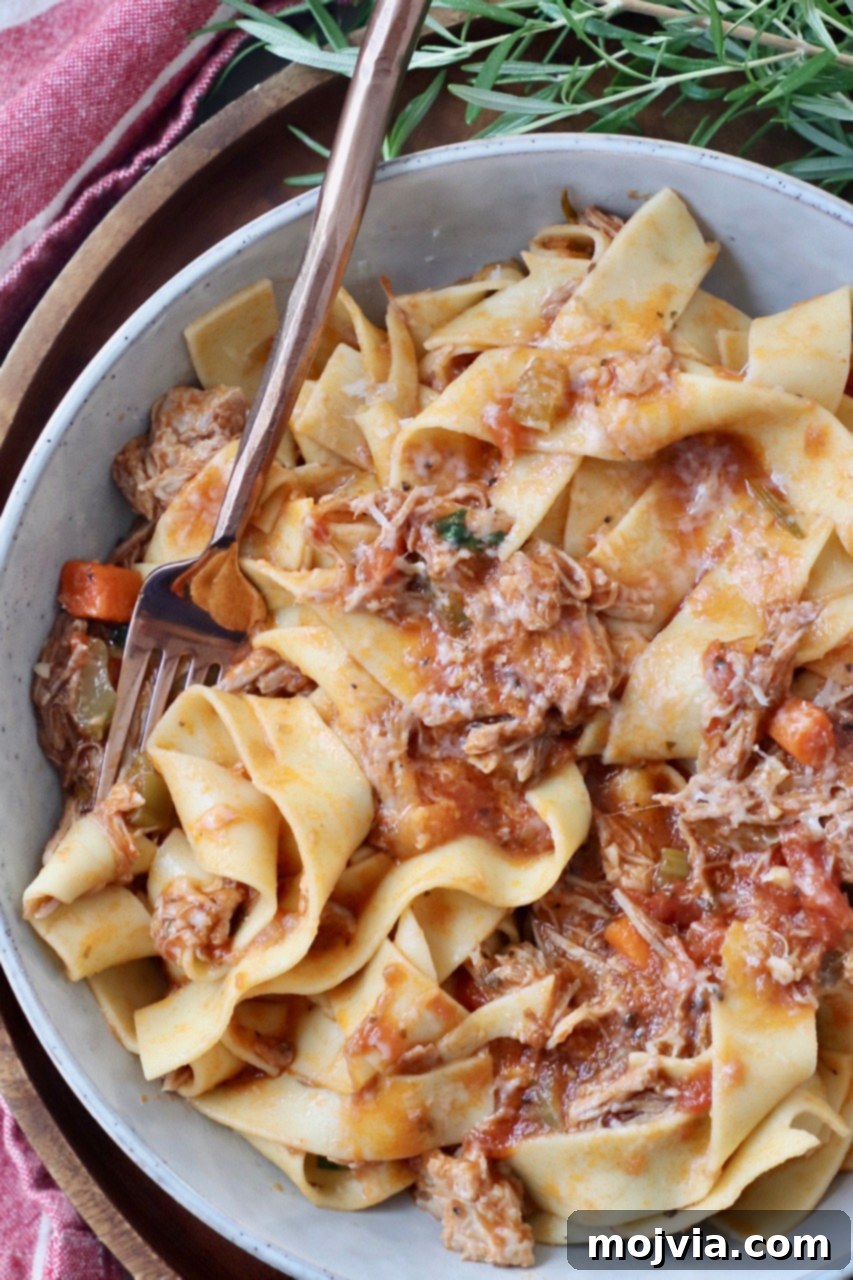
Table of contents
- Introduction to Pork Ragu
- Essential Ingredients for Pork Ragu
- Step-by-Step Slow Cooker Instructions
- How to Serve This Versatile Pork Ragu
- Perfect Side Dishes for Pork Ragu
- Storage and Reheating Tips for Pork Ragu
- Making Your Pork Ragu Gluten-Free
- Oven-Braised Pork Ragu Method
- Expert Recipe Tips for the Best Pork Ragu
- Explore More Ragu Recipes
- More Irresistible Italian Sauces
Introduction to Pork Ragu
The journey to creating the perfect rich and comforting meat sauce has always been a passion. Back in 2014, my Slow Cooked Beef Ragu recipe made its debut on the blog and quickly became an internet sensation. Its appearance multiple times on The Huffington Post, along with being pinned over 40,000 times and widely shared across numerous platforms, cemented its place as one of my most beloved and popular recipes to this day. The secret lay in the slow cooking method, transforming simple ingredients into a dish of profound depth and flavor.
Building on that success, I’m thrilled to share this equally exceptional Slow Cooker Pork Ragu recipe. While similar in its comforting essence to the beef version, this pork ragu offers its own distinct, melt-in-your-mouth experience, centered around the incredible flavor of a pork shoulder. The process begins with a crucial step: searing the pork shoulder on the stovetop. This vital technique caramelizes the exterior, creating a rich crust that locks in juices and develops an initial layer of deep flavor – a cornerstone of any great ragu. The seared pork is then gently transferred to a slow cooker, where it braises slowly throughout the day, allowing the connective tissues to break down gradually.
After several hours of gentle simmering, you’ll be rewarded with a sauce featuring incredibly flavorful, tender, and truly fall-apart pork. This culinary magic makes it an ideal pairing for hearty pappardelle pasta, allowing the wide noodles to generously scoop up every drop of the luxurious sauce, or served over creamy polenta for an indulgent, gluten-free alternative. The beauty of this pork ragu is not just in its exquisite taste, but also in its convenience.
Requiring only about 30 minutes of active prep time, which can even be completed the night before, this recipe is designed for busy schedules. The slow cooker takes over the heavy lifting, steadily transforming the ingredients into a masterpiece while you go about your day. Imagine returning home to the enticing aroma of a slow-cooked Italian feast, ready to be enjoyed. This slow-cooked pork ragu is more than just a meal; it’s a mouth-watering, soul-warming comfort food experience that will become a staple in your home.
Essential Ingredients for Pork Ragu
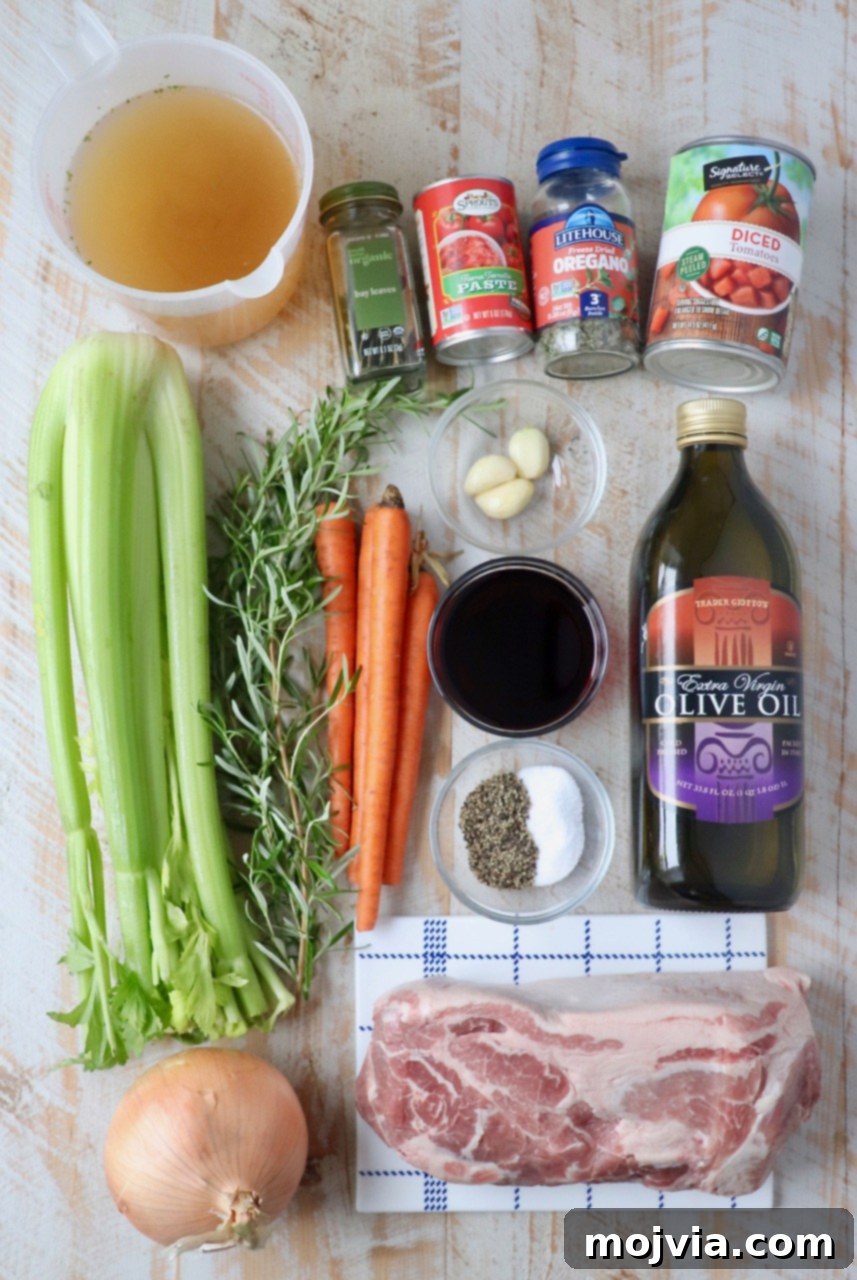
Crafting a truly exceptional Pork Ragu begins with selecting the right ingredients. Each component plays a vital role in building the layers of flavor that make this dish so irresistible. Here’s a closer look at what you’ll need:
- Boneless Pork Shoulder: This is the star of our slow-cooked ragu. You might find it labeled as a “pork butt” or “Boston butt” at your local grocery store. Pork shoulder is highly recommended for its ideal fat content and connective tissue, which breaks down beautifully during long, slow cooking, resulting in incredibly tender, succulent, and flavorful meat. While a pork tenderloin can be used as a leaner alternative, offering fewer calories and less fat, it will yield a slightly different texture and less depth of flavor compared to the robust pork shoulder. Both options, however, will result in a delicious ragu.
- Salt + Black Pepper: Essential for seasoning the pork shoulder, these basic spices are crucial for drawing out and enhancing the meat’s natural flavors. I highly recommend using a coarse kosher salt, as its larger crystals adhere better to the surface of the pork, creating a more even and effective seasoning. Freshly ground black pepper adds a delightful aromatic kick.
- Olive Oil: A good quality extra virgin olive oil is indispensable for searing the pork and sautéing the vegetables. It provides a foundational layer of richness and helps build the flavorful fond at the bottom of the pot.
- Onion: A staple in Italian cooking, yellow onions are perfect for this recipe. When slowly sautéed, they contribute a subtle sweetness and aromatic depth, forming the essential base of the sauce.
- Carrots: Sweet and earthy, carrots are another key component of the classic soffritto. They add natural sweetness and a vibrant color, balancing the acidity of the tomatoes.
- Celery: Completing the holy trinity of soffritto, celery provides a subtle savory note and refreshing bitterness, adding complexity to the overall flavor profile of the ragu.
- Garlic: Minced fresh garlic cloves are absolutely preferred for the best and most pungent flavor. Avoid pre-minced garlic if possible, as the fresh variety provides a superior aroma and taste that truly shines in slow-cooked dishes.
- Oregano: This quintessential Italian herb brings warm, aromatic notes to the ragu. You can use either fresh or dried oregano. For convenience with maximum flavor retention, I personally love using freeze-dried oregano, as it offers a flavor profile remarkably close to fresh herbs.
- Tomato Paste: A small but mighty ingredient, tomato paste is concentrated tomato flavor. Sautéing it with the vegetables deepens its sweetness and richness, adding an intense umami boost to the sauce.
- Red Wine: A dry red wine, such as a Cabernet Sauvignon, Pinot Noir, or Syrah, is recommended for its ability to deglaze the pot and add significant depth and complexity to the sauce. The alcohol cooks out during the long simmer, leaving behind only its rich, fruity, and slightly tannic notes.
- Beef Broth: While chicken broth can be substituted, beef broth is highly recommended as it contributes a more profound, rich, and savory flavor to the ragu, complementing the pork beautifully. Always ensure it’s gluten-free if catering to dietary needs.
- Diced Tomatoes: For this particular slow cooker pork ragu recipe, a can of diced tomatoes works wonderfully. They provide chunks of tomato that break down into a rustic, hearty sauce, adding texture and bright tomato flavor without being too smooth.
- Bay Leaves and Fresh Rosemary Sprigs: These aromatics are essential for infusing the sauce with a wonderful, fragrant depth. Bay leaves impart a subtle, almost woodsy aroma, while fresh rosemary sprigs release their piney, herbaceous notes, contributing significantly to the overall Italian character of the dish. Remember to remove them before serving.
Step-by-Step Slow Cooker Instructions
Follow these detailed step-by-step instructions, complete with illustrative photos, to create a perfect slow-cooked pork ragu in your home. For precise ingredient quantities and a printable version, please refer to the comprehensive recipe card at the very bottom of this post.
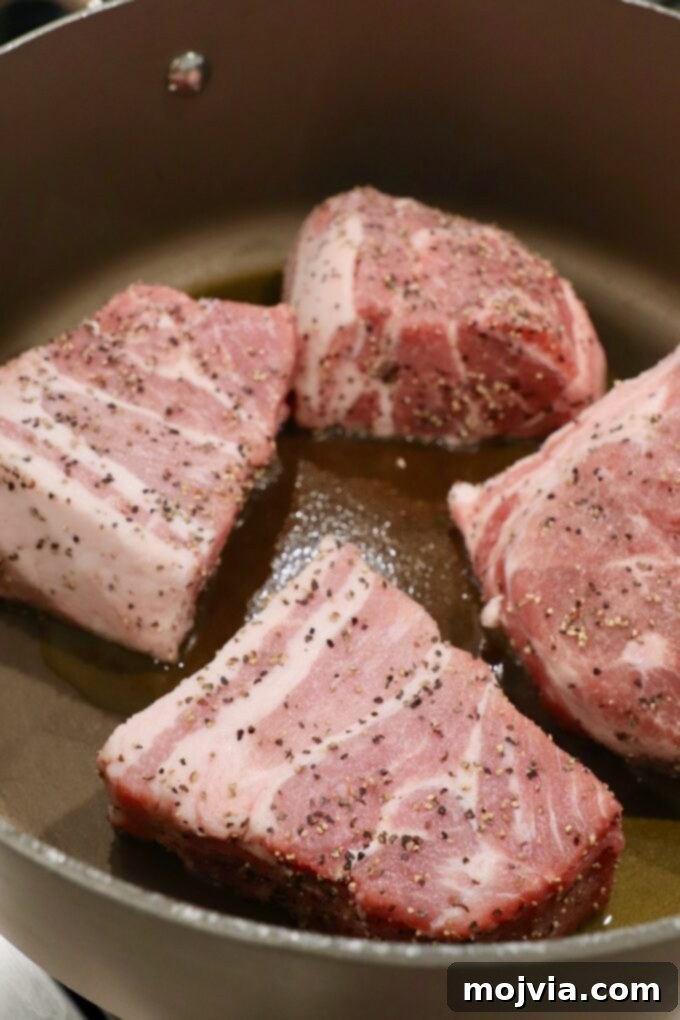
Step 1: Sear the Pork. Begin by preparing your pork shoulder. Cut it into four large, manageable pieces to ensure even searing. Generously season all sides of the pork with salt and freshly ground black pepper. This initial seasoning is crucial for building flavor. Heat two tablespoons of olive oil in a large, heavy-bottomed pot or Dutch oven on the stove over medium-high heat. Once the oil shimmers, carefully add the seasoned pork pieces. Sear them vigorously on all sides until a deep golden-brown crust forms, about 3-4 minutes per side. This browning, known as the Maillard reaction, is key to developing complex, savory flavors in your ragu.
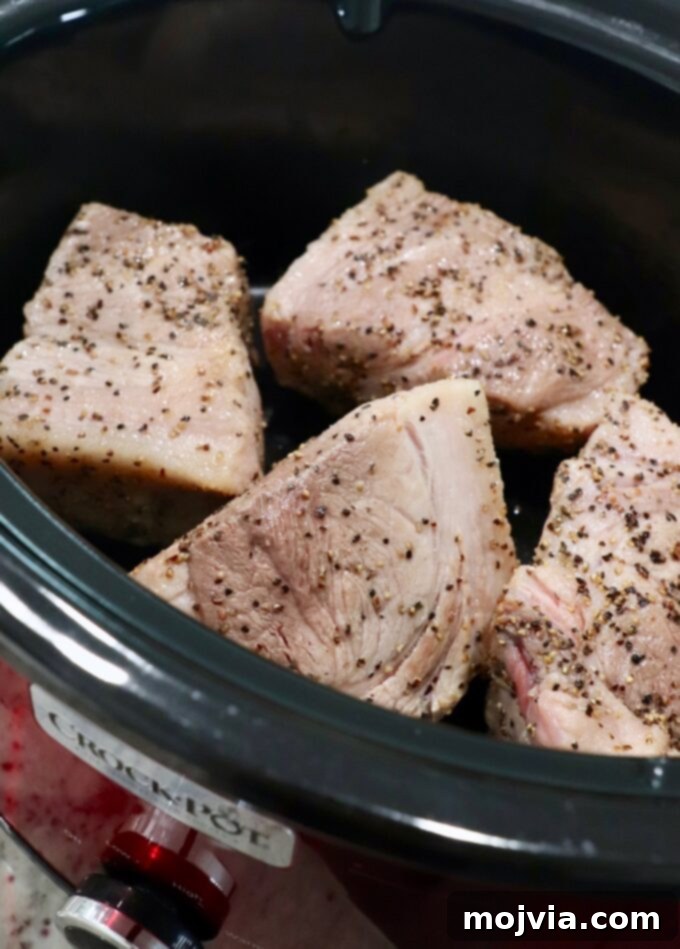
Step 2: Transfer to Slow Cooker. Once the pork pieces are beautifully seared on all sides, carefully remove them from the pot using tongs and transfer them directly to your slow cooker insert. This prepares the base for the long, slow braising process that will tenderize the meat to perfection.
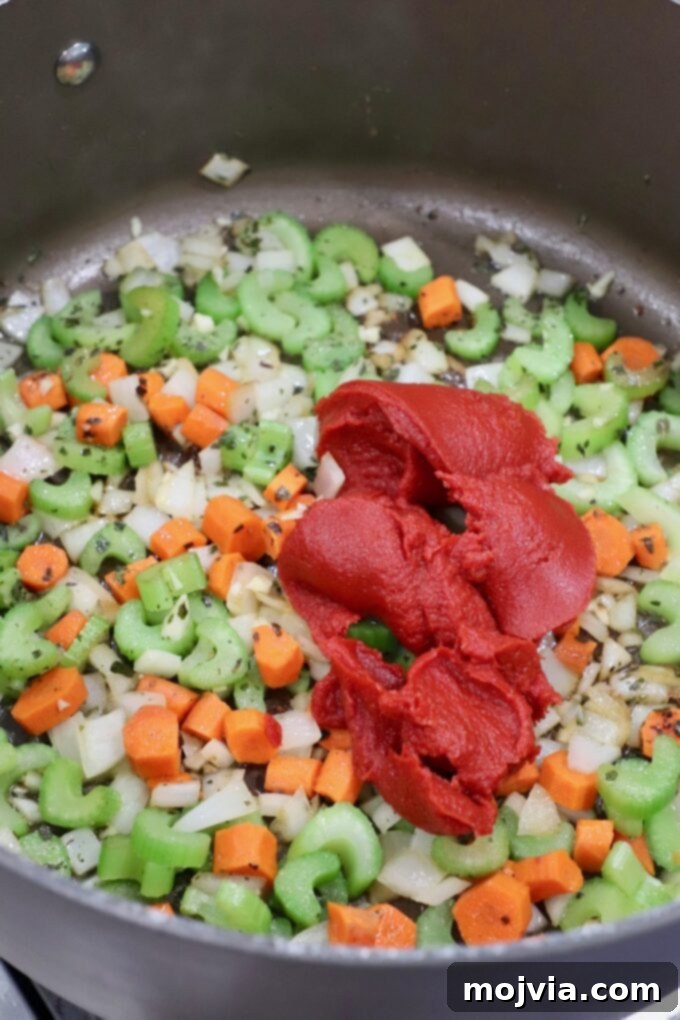
Step 3: Sauté the Aromatics. Using the same pot where you seared the pork (those browned bits are full of flavor!), add the remaining tablespoon of olive oil. Add the diced onions, celery, and carrots – the classic Italian soffritto base. Cook these vegetables over medium heat, stirring occasionally, for 4-5 minutes until they begin to soften and become translucent. Next, add the minced garlic and dried (or fresh) oregano. Continue to cook for another minute until the garlic becomes fragrant, being careful not to burn it. Once the vegetables are tender and aromatic, stir in the tomato paste. Cook the tomato paste for 1-2 minutes, stirring constantly, to deepen its flavor and color, a process known as “caramelizing” the paste.
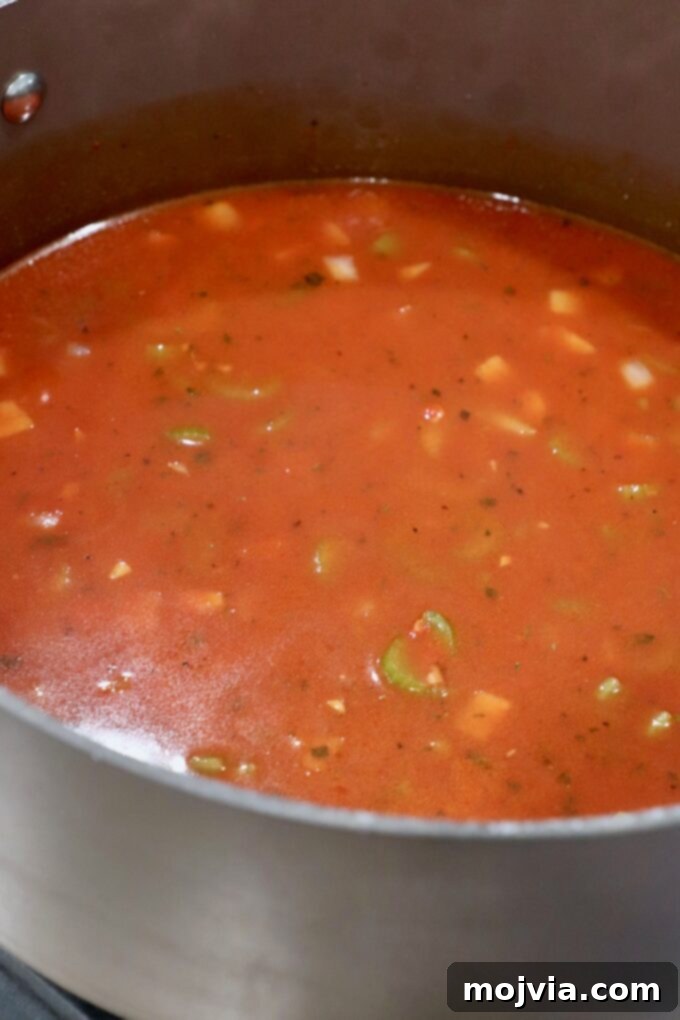
Step 4: Deglaze and Combine. Pour the red wine and beef broth into the pot with the sautéed vegetables and tomato paste. Immediately scrape up any browned bits (fond) from the bottom of the pot with a wooden spoon. This deglazing step is crucial as it incorporates all the concentrated flavors from the searing process into your sauce. Bring the mixture to a gentle simmer, then pour the entire contents of the pot – the flavorful liquid and tender vegetables – over the seared pork in the slow cooker. This forms the rich, aromatic base for your ragu.
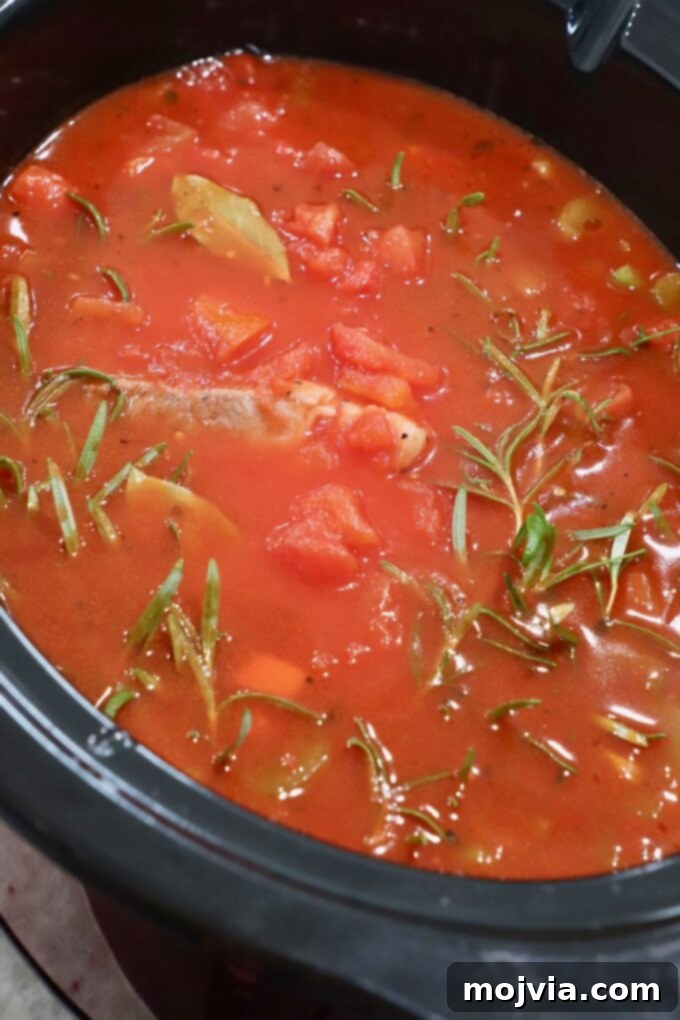
Step 5: Slow Cook to Perfection. To the slow cooker, add the can of diced tomatoes, along with the fresh rosemary sprigs and bay leaves. Stir gently to ensure all ingredients are well combined and submerged in the liquid. Cover the slow cooker with its lid and set it to cook. For a faster cook, set it on high for 3-4 hours. For a deeper, more developed flavor and truly fall-apart tenderness, cook on low for 6-8 hours. The prolonged cooking time at a gentle temperature allows the pork to slowly braise, absorbing all the wonderful flavors of the sauce and becoming incredibly succulent.
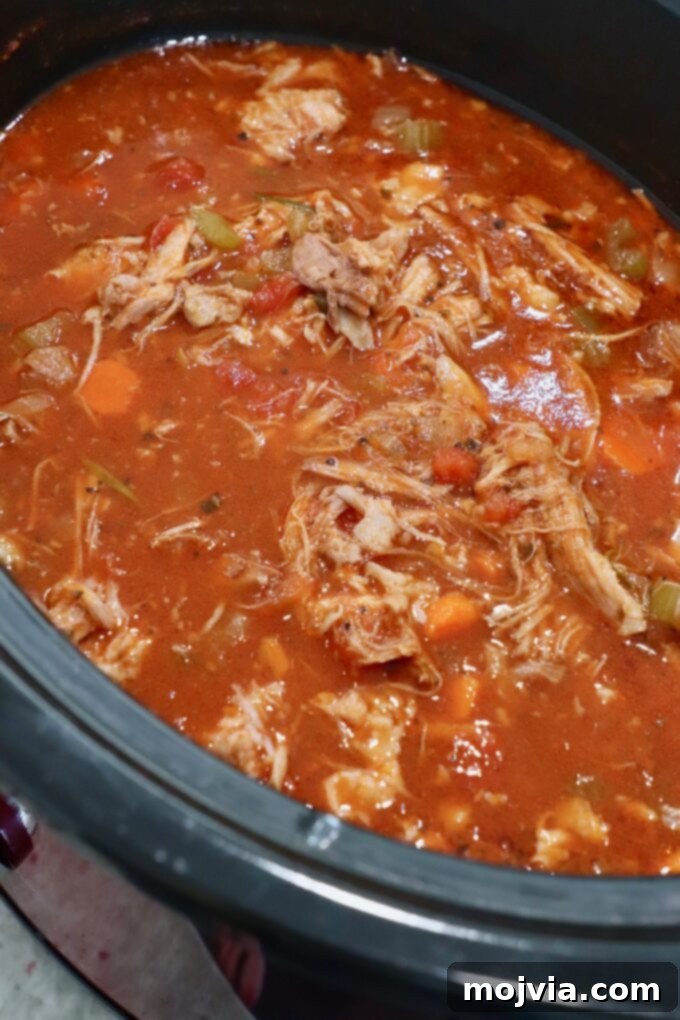
Step 6: Shred and Serve. Once the cooking time is complete, the pork should be incredibly tender. Use tongs to carefully remove and discard the bay leaves and rosemary sprigs, as their purpose is fulfilled. Now, it’s time to shred the pork. You can do this directly in the slow cooker with two forks, gently pulling the meat apart until it’s beautifully shredded and incorporated into the sauce. Alternatively, remove the larger pieces of pork from the slow cooker, use specialized meat claws for quick and efficient shredding, then return the shredded pork to the slow cooker, stirring it into the rich ragu. Your luscious, slow-cooked pork ragu is now ready to be enjoyed!
How to Serve This Versatile Pork Ragu
The beauty of this Slow Cooker Pork Ragu lies in its incredible versatility. Its rich, hearty flavor and tender, shredded pork make it a fantastic foundation for a myriad of delicious meals. Here are some of my favorite ways to serve this comforting Italian sauce:
- Over Creamy Cheesy Polenta: For an ultimate comfort food experience that is naturally gluten-free, spoon generous amounts of warm pork ragu over a bed of creamy, cheesy polenta. The soft, buttery polenta acts as a perfect canvas, soaking up all the flavorful sauce. Finish with a generous sprinkle of freshly grated Parmesan cheese for an extra layer of savory goodness. Learn how to make the perfect creamy cheesy polenta here.
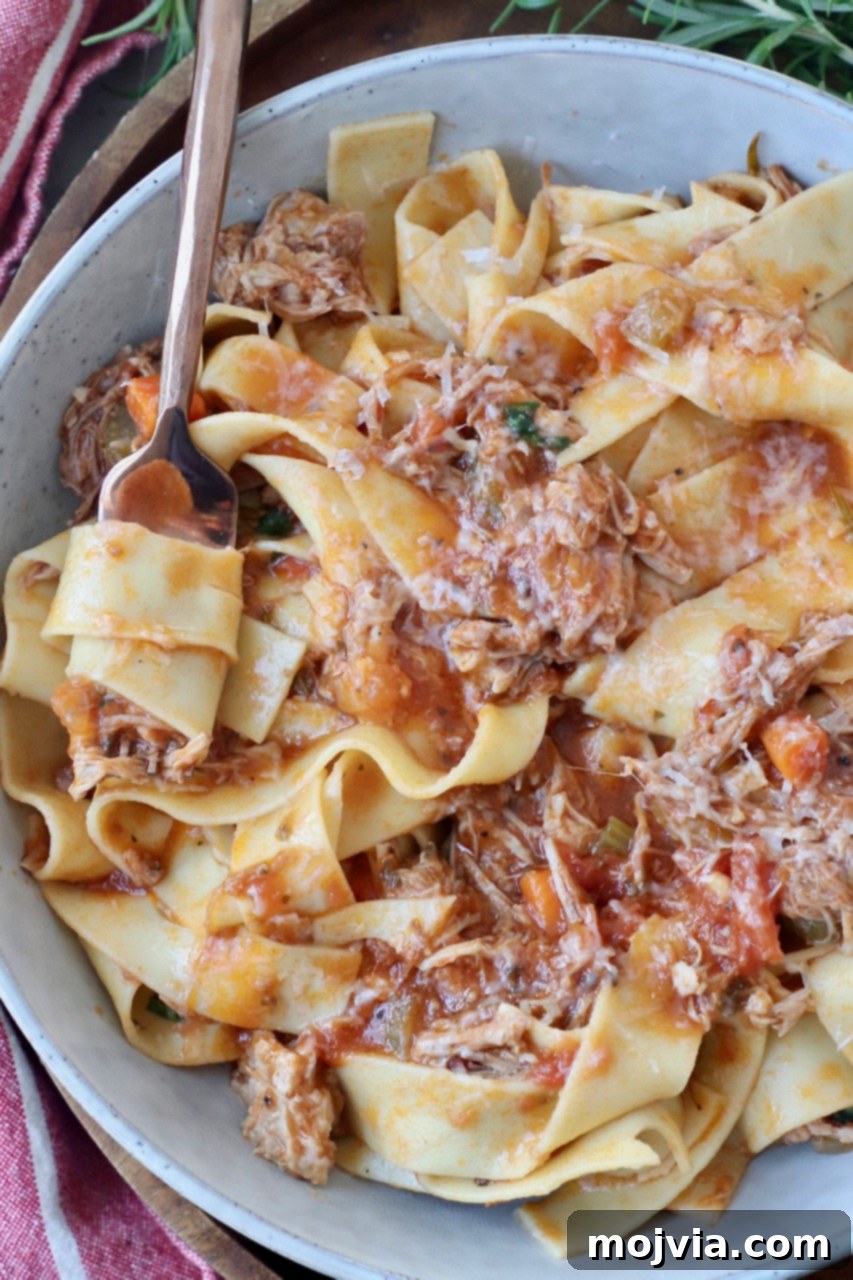
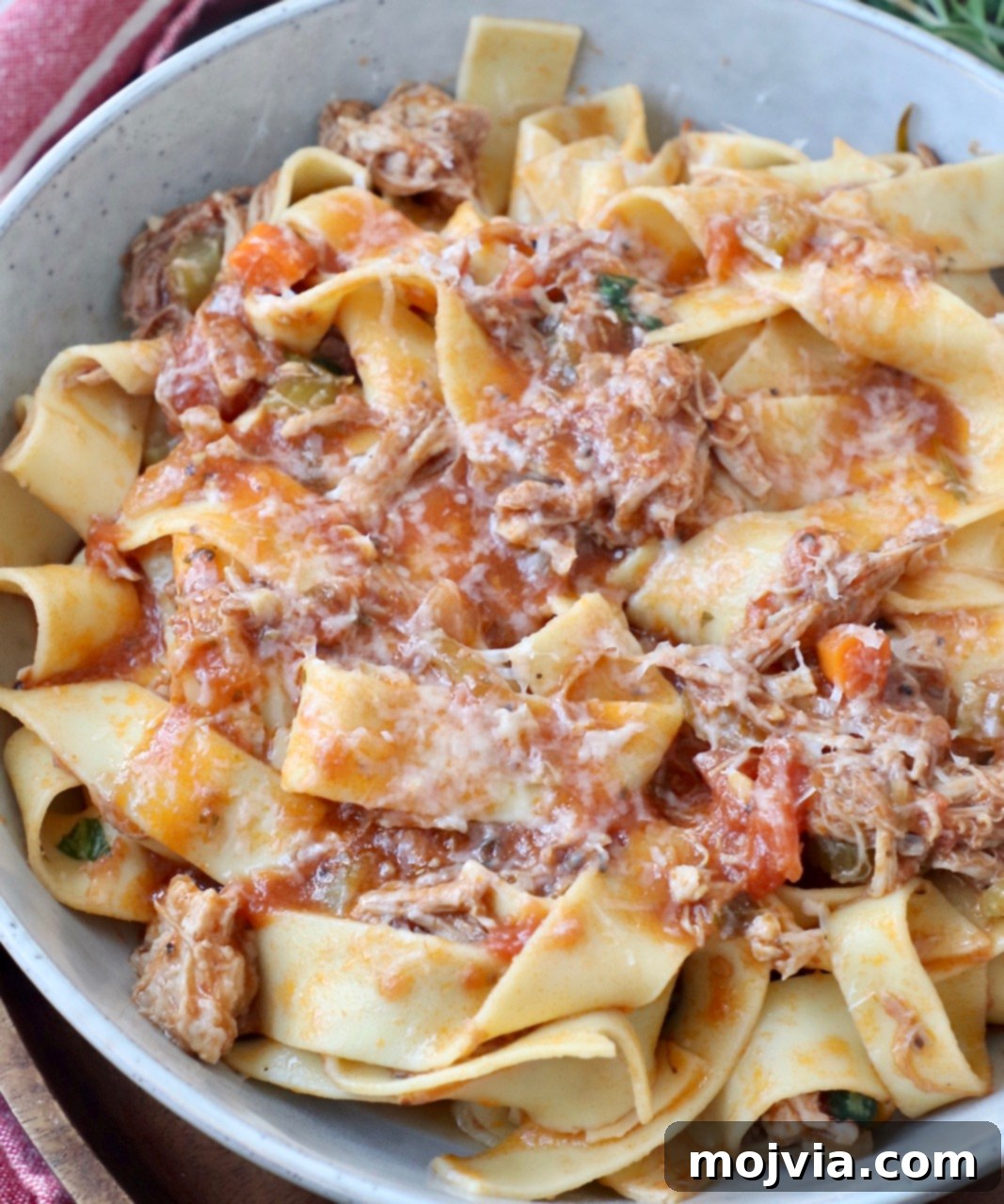
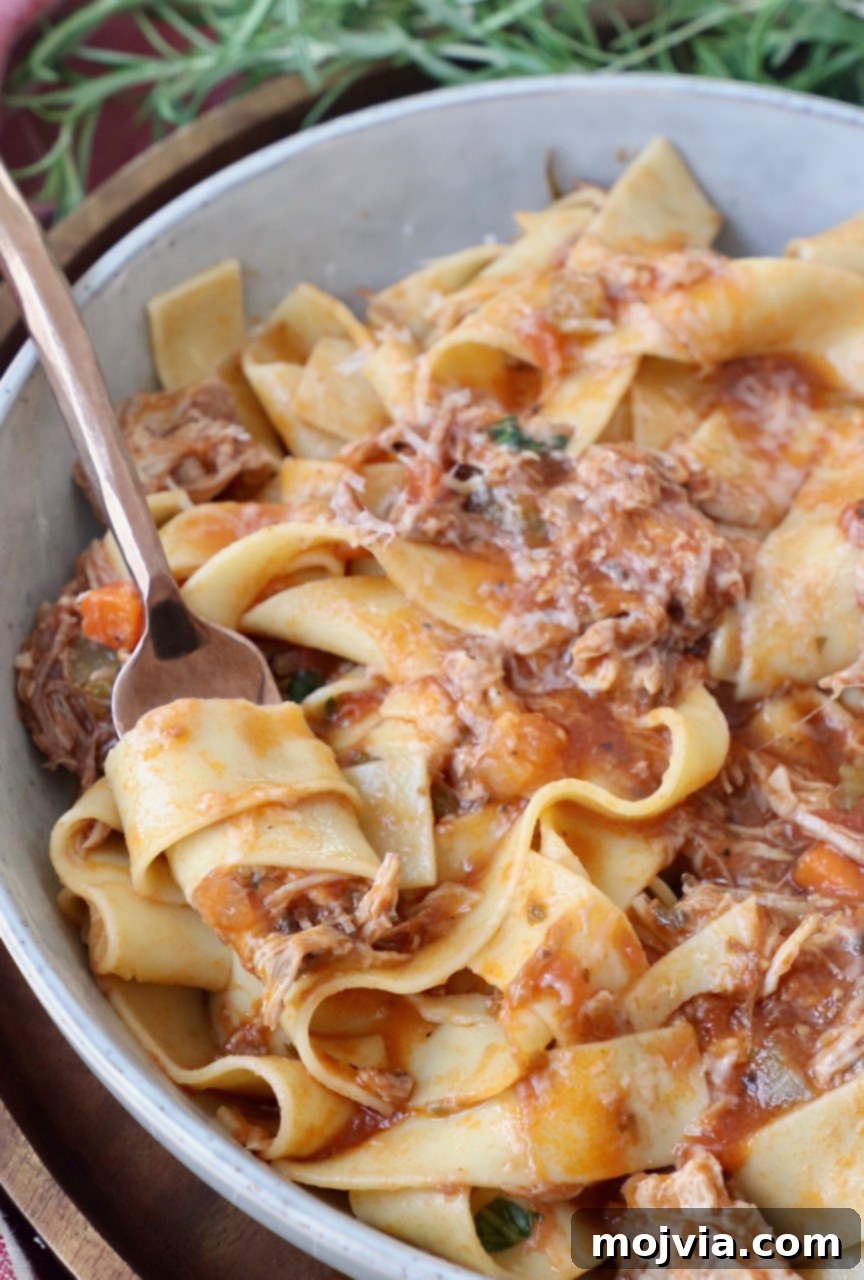
- With Pasta: Ragu and pasta are a match made in heaven. The best pasta pairings for this thick, rich sauce are wide, flat noodles that can elegantly capture the shredded pork and cling to the flavorful sauce. Think pappardelle, tagliatelle, or fettuccine. Toss the freshly cooked pasta directly with the ragu in a large bowl, ensuring every strand is coated, then serve immediately with more Parmesan.
- In Lasagna: Elevate your lasagna game to an entirely new level by using this pork ragu as your primary sauce. Its depth of flavor and tender meat pieces will create a lasagna that is truly unforgettable and arguably the best you’ll ever make. Layer it with béchamel, fresh pasta sheets, and plenty of cheese for a truly indulgent dish.
- Over Raviolis: For a quick yet gourmet meal, serve the pork ragu over store-bought fresh cheese raviolis. These cook up in just 2-3 minutes, offering a convenient and delightful pairing. You might want to cook the ragu down to a slightly thicker consistency if you prefer a less saucy topping for raviolis, allowing the cheesy filling to shine through.
- Over Spaghetti Squash: If you’re looking for a healthier, low-carb alternative without sacrificing flavor, roasted spaghetti squash is an excellent choice. Its stringy texture mimics pasta, and its mild flavor provides a wonderful contrast to the robust ragu. Follow this guide to learn how to perfectly cook spaghetti squash in the oven, air fryer, or microwave.
- As a Sandwich Filling: For a simple yet incredibly flavorful lunch or dinner, pile warm pork ragu into toasted crusty bread or soft rolls. Add a slice of provolone cheese and melt for an amazing, hearty sandwich.
No matter how you choose to serve it, a final sprinkle of fresh Parmesan cheese and a few basil leaves or parsley sprigs will always enhance the experience.
Perfect Side Dishes for Pork Ragu
To complete your comforting Italian meal, pair this rich pork ragu with any of these scrumptious and complementary side dishes. They offer a delightful contrast in texture and flavor, enhancing the overall dining experience.
- Garlic Bread: A classic choice, perfect for soaking up every last drop of the delicious ragu.
- Rosemary Focaccia Bread: Its herbaceous aroma and soft, airy texture make it an elegant accompaniment.
- Garlic Parmesan Roasted Broccolini: A healthy and flavorful green vegetable side that adds a touch of freshness.
- Tomato Basil Bruschetta: A light and fresh appetizer that brightens the palate before the rich main course.
- Crispy Eggplant Caprese Salad: A creative twist on a classic, offering a textural crunch and fresh flavors.
- Garlic Knots: Soft, savory, and infused with garlic, these are another excellent bread option.
- Italian Salad: A crisp, fresh salad with a tangy vinaigrette provides a refreshing counterpoint to the rich ragu.
Storage and Reheating Tips for Pork Ragu
One of the many benefits of making a hearty pork ragu is its excellent potential for meal prepping and enjoying leftovers. Here’s how to properly store and reheat your delicious creation, ensuring maximum flavor and freshness:
- Refrigerator Storage: Any leftover pork ragu can be stored in an airtight container in the refrigerator for up to 6 days. Ensure it cools completely before transferring to the container to prevent condensation and maintain quality.
- Reheating from Refrigerator:
- Stovetop: For best results, transfer the desired amount of ragu to a pot on the stove. Heat over medium-high heat, stirring occasionally, until it reaches a gentle simmer and is heated through, typically 8-10 minutes. If the sauce seems too thick, you can add a splash of beef broth or water to reach your desired consistency.
- Microwave: For a quicker option, place the ragu in a microwave-safe bowl and heat for 2-3 minutes, stirring halfway through, until thoroughly warmed.
- Freezer Storage: This pork ragu freezes exceptionally well, making it perfect for batch cooking and future meals. It will stay best in the freezer for up to 3 months. To freeze, allow the ragu to cool completely to room temperature. Then, transfer it to freezer-safe containers or heavy-duty freezer bags, removing as much air as possible to prevent freezer burn. Label with the date.
- Defrosting from Freezer: The most recommended method for defrosting is to transfer the frozen ragu from the freezer to the refrigerator overnight. This allows for a gradual and safe thawing process, preserving the texture and flavor.
- Reheating from Frozen:
- Stovetop (Dutch Oven): Place the frozen block of ragu in a Dutch oven or heavy-bottomed pot. Cover and set on the stove over low heat for approximately one hour, stirring occasionally, until it has thawed and is gently simmering.
- Slow Cooker: For larger batches, you can reheat the frozen ragu in a slow cooker set to low for 1-2 hours, or until fully thawed and heated through.
Proper storage and reheating ensure that every serving of your pork ragu is as delicious as the first, making it an incredibly convenient and satisfying dish.
Making Your Pork Ragu Gluten-Free
For those following a gluten-free diet, you’ll be delighted to know that this flavorful pork ragu recipe is inherently gluten-free! The base sauce, made with pork, vegetables, broth, and tomatoes, contains no gluten-containing ingredients. However, it’s always important to be mindful of a few key details to ensure your entire meal remains gluten-free.
- Check Your Broth: Always double-check the label of your beef broth (or chicken broth, if substituting) to ensure it is certified gluten-free. Some brands may contain hidden gluten thickeners or additives.
- Serve with Polenta: For a completely delicious and naturally gluten-free meal, serve your rich pork ragu over creamy, cheesy polenta. Polenta, made from ground cornmeal, is a fantastic alternative to pasta and pairs beautifully with the hearty sauce. Find our recipe for creamy cheesy polenta here.
- Gluten-Free Pasta Options: If you prefer to enjoy your ragu with pasta, there are many excellent gluten-free pasta options available today. You can find Gluten-Free Tagliatelle Pasta online, which provides the perfect wide noodle shape to cradle the rich sauce. Additionally, many major grocery stores now carry a variety of gluten-free fettuccine and pappardelle options, often made from corn, rice, or lentil flour. Just be sure to read the labels carefully to confirm they are indeed gluten-free.
With these considerations in mind, everyone can enjoy a truly authentic and satisfying Italian pork ragu, regardless of dietary restrictions.
Oven-Braised Pork Ragu Method
No slow cooker? No problem! This delicious pork ragu can also be perfectly prepared in your oven, yielding equally tender meat and a rich, deeply flavored sauce. The oven-braised method utilizes consistent, low heat to slowly cook the pork, just like a slow cooker. You’ll need a good quality Dutch oven or an oven-safe pot with a tight-fitting lid for this technique. Follow these steps to create an incredible oven-braised pork ragu:
- Preheat the Oven: Begin by preheating your oven to 350°F (175°C). This ensures your oven is at the correct temperature when you’re ready to transfer the pot.
- Sear the Pork: Cut your pork shoulder into four large pieces and generously season them on all sides with salt and pepper. Heat 2 tablespoons of olive oil in a large, heavy-bottomed Dutch oven or oven-safe pot on the stove over medium-high heat. Add the seasoned pork pieces and sear them vigorously on all sides until a beautiful golden-brown crust develops. This step is crucial for building flavor, so don’t rush it. Once seared, remove the pork from the pot and set it aside on a plate.
- Sauté the Aromatics: In the same pot, add the remaining 1 tablespoon of olive oil. Add the diced onions, celery, and carrots. Cook over medium heat, stirring frequently, until the vegetables soften and become translucent, about 4-5 minutes. Next, stir in the minced garlic and oregano, cooking for another minute until fragrant. Finally, add the tomato paste and cook, stirring constantly, for 1-2 minutes to deepen its flavor.
- Deglaze and Assemble: Pour the red wine and beef broth into the pot, scraping up any delicious browned bits from the bottom of the pot with a wooden spoon. This deglazing incorporates all the concentrated flavors. Bring the liquid to a gentle simmer. Add the can of diced tomatoes, then carefully return the seared pork shoulder pieces to the pot, nestling them into the sauce. Finally, add the fresh rosemary sprigs and bay leaves.
- Cover and Braise: Place a tight-fitting lid on your Dutch oven. If your pot doesn’t have a lid, cover it tightly with heavy-duty aluminum foil, crimping the edges to create a secure seal. This ensures the moisture stays trapped, allowing the pork to braise properly.
- Oven Cooking: Remove the covered Dutch oven from the stove and place it directly into your preheated 350°F (175°C) oven. Allow it to cook undisturbed for 2 hours. During this time, the gentle heat of the oven will slowly tenderize the pork and meld all the flavors together.
- Shred and Serve: After 2 hours, carefully remove the Dutch oven from the oven. Use tongs to take out and discard the rosemary sprigs and bay leaves. The pork should now be incredibly tender and easily shredded. Use two forks to shred the pork directly in the pot, stirring it into the rich ragu. Alternatively, you can remove the pieces of pork, use meat claws to shred them efficiently, and then return the shredded meat to the pot. Stir thoroughly and serve your magnificent oven-braised pork ragu immediately over your favorite pasta or creamy polenta.
This oven method provides a hands-off cooking experience similar to a slow cooker, resulting in a rich, deeply flavored pork ragu that is perfect for any occasion.
Expert Recipe Tips for the Best Pork Ragu
Achieving a truly outstanding pork ragu is about understanding the nuances of flavor and texture. Here are some expert tips to help you elevate your dish and customize it to your preference:
- Adjusting Sauce Thickness:
- To Thicken on the Stovetop: If your ragu seems too thin after slow cooking, simply transfer it from the slow cooker to a Dutch oven or a large pot on the stove. Place it over medium-high heat and allow the ragu to simmer and reduce, uncovered, stirring occasionally for about 15 minutes, or until it reaches your desired consistency. The evaporation of liquid will concentrate the flavors and thicken the sauce.
- For a Thicker Slow Cooker Sauce: If you prefer a thicker sauce directly from the slow cooker, you can reduce the amount of beef broth by 1 cup at the beginning of the recipe. This will result in less liquid to begin with, yielding a naturally denser ragu.
- Adding a Spicy Kick: For those who enjoy a bit of heat, consider adding 1 teaspoon of red pepper flakes along with the oregano when sautéing the vegetables. This will infuse the entire sauce with a pleasant warmth and subtle spice that complements the rich pork. Adjust the amount to your desired spice level.
- Herb Variations: While rosemary is fantastic, feel free to experiment with other fresh herbs. Sprigs of fresh thyme can be used in place of, or in addition to, the rosemary. Thyme offers a more delicate, earthy aroma that pairs beautifully with pork and tomato. If you’re a fan of fresh herbs, doubling up and using both thyme and rosemary will create an even more complex and aromatic ragu. Just remember to remove the woody sprigs before serving.
- Red Wine Substitution: If you prefer to cook without alcohol, the red wine can be easily omitted from this recipe without sacrificing too much flavor. Alternatively, you can replace the red wine with an equal amount of white grape juice or additional beef broth. I’ve personally made this ragu without any wine, and it was still wonderfully delicious and flavorful, so don’t hesitate to adapt it to your needs.
- Batch Cooking and Freezing: This recipe is perfect for batch cooking. Consider doubling the ingredients and preparing a larger quantity. After cooling, divide the ragu into individual or family-sized portions and freeze them. This way, you’ll have a ready-made, homemade meal for busy weeknights, saving you time and effort.
- The Power of Fresh Parmesan: Always finish your pork ragu with a generous grating of fresh Parmesan cheese. The sharp, salty, umami notes of Parmesan truly elevate the dish, adding a final touch of Italian authenticity and richness.
By incorporating these tips, you can ensure your slow-cooked pork ragu is always spectacular, tailored to your taste, and a true crowd-pleaser.
Explore More Ragu Recipes
If you’ve fallen in love with the comforting flavors and ease of this pork ragu, you’ll be excited to discover other delightful variations of this popular Italian dish. Each offers a unique take on the slow-cooked meat sauce, perfect for expanding your culinary repertoire:
- Slow Cooker Chicken Ragu: A lighter alternative that’s equally tender and flavorful, using chicken for a different profile.
- Crock Pot Mushroom Ragu: A fantastic vegetarian option, rich in umami and perfect for mushroom lovers.
- Instant Pot Beef Ragu: For those days when you need that slow-cooked taste in a fraction of the time, this pressure cooker version delivers.
More Irresistible Italian Sauces
Beyond ragu, the world of Italian pasta sauces is vast and incredibly delicious. Don’t miss these other popular recipes for authentic and easy-to-make Italian pasta sauces that will bring the flavors of Italy to your table:
Print Recipe
Pin Recipe
Rate this Recipe
Pork Ragu
Ingredients
- 2 pounds pork shoulder, cut into 4 large pieces
- 2 teaspoons kosher salt
- 2 teaspoons black pepper
- 3 tablespoons olive oil, divided
- 1 cup onion, diced
- 1 cup carrots, diced
- 1 cup celery, diced
- 2 tablespoons garlic, minced
- 1 tablespoon dried oregano, or 2 tablespoons fresh oregano
- 6 ounces tomato paste
- ½ cup red wine
- 3 cups beef broth
- 15 ounce can diced tomatoes
- 3 bay leaves
- 3 sprigs fresh rosemary
- 12 ounces pappardelle pasta, or polenta, for serving
- ½ cup parmesan cheese, grated – optional topping
Instructions
-
Season the pork: Cut the pork shoulder into four large pieces. Generously season all sides of the pork with the kosher salt and black pepper.
-
Sear the pork: Heat 2 tablespoons of olive oil in a large pot or Dutch oven on the stove over medium-high heat. Add the seasoned pork pieces and sear them on each side for 3-4 minutes until golden brown.
-
Transfer to slow cooker: Remove the seared pork from the pot and place it directly into your slow cooker.
-
Sauté vegetables: Add the remaining 1 tablespoon of olive oil to the same pot. Add the diced onion, carrots, and celery. Cook for 4-5 minutes until softened.
-
Add aromatics: Stir in the minced garlic and dried oregano (or fresh oregano). Cook for an additional minute until fragrant.
-
Cook tomato paste: Once the vegetables are tender, add the tomato paste to the pot. Cook for 1-2 minutes, stirring constantly, to deepen its flavor.
-
Deglaze and transfer sauce: Pour in the red wine and beef broth. Stir well, scraping up any browned bits (fond) from the bottom of the pot. Bring to a gentle simmer, then transfer the entire contents of the pot (liquid and vegetables) into the slow cooker with the pork.
-
Add remaining ingredients: Add the can of diced tomatoes to the slow cooker and stir to combine. Add the bay leaves and fresh rosemary sprigs, ensuring they are submerged.
-
Slow cook: Cover the slow cooker with its lid. Cook on low for 6-8 hours, or on high for 3-4 hours, until the pork is fall-apart tender.
-
Shred and serve: After cooking, use tongs to remove and discard the bay leaves and rosemary sprigs. Use two forks to shred the tender pork directly in the slow cooker, stirring it into the rich ragu. Serve the warm pork ragu over cooked pasta (like pappardelle) or creamy polenta, and grate fresh parmesan cheese on top as an optional topping.
Notes
- Oven Method for Pork Ragu: If you don’t have a slow cooker, this recipe can be made in the oven using a Dutch oven or oven-safe pot.
- Preheat your oven to 350°F (175°C).
- Follow steps 1-6 of the slow cooker instructions, searing the pork and preparing the vegetable and tomato paste mixture in the Dutch oven.
- After you’ve added the red wine and beef broth to the pot, add the can of diced tomatoes, then return the seared pork pieces to the pot. Add the rosemary sprigs and bay leaves.
- Place a tight-fitting lid on the Dutch oven, or cover tightly with foil if you don’t have a lid.
- Remove the pot from the stove and place it in the preheated 350°F oven for 2 hours.
- After 2 hours, carefully remove from the oven. Use tongs to remove the rosemary sprigs and bay leaves. Shred the pork directly in the pot with two forks, or remove the pork pieces to shred with meat claws, then return to the pot and serve.
- Choosing Your Pork: A pork shoulder may also be labeled as a pork butt or Boston butt at the grocery store. While a pork tenderloin can be used for a leaner option with fewer calories, it will result in less fat and slightly less flavor than a pork shoulder. Both cuts are delicious, so choose based on your preference for richness and fat content.
- Storage: Store any leftover pork ragu in an airtight container in the refrigerator for up to 6 days.
- Reheating: To reheat, transfer the ragu to a pot on the stove over medium-high heat and simmer for 8-10 minutes, or until heated through. Alternatively, reheat in the microwave for 2-3 minutes, stirring halfway.
- Freezing: This pork ragu freezes beautifully for up to 3 months. Let it cool completely before transferring to a freezer-safe container. To defrost, move the ragu from the freezer to the refrigerator overnight.
- Reheating from Frozen: Place the frozen ragu in a Dutch oven on the stove, covered, and set to low for one hour, stirring occasionally. You can also reheat it in a slow cooker set to low for 1-2 hours.
- Thickening the Sauce: If you desire a thicker sauce, you can transfer the ragu from the slow cooker to a large pot on the stove over medium-high heat and simmer, stirring occasionally, for about 15 minutes to reduce. Another option is to omit 1 cup of the beef broth when initially adding liquids to the slow cooker for a naturally thicker ragu.
- Wine Alternatives: The red wine in this recipe can be omitted entirely or replaced with white grape juice for a non-alcoholic version. The ragu will still be incredibly flavorful.