
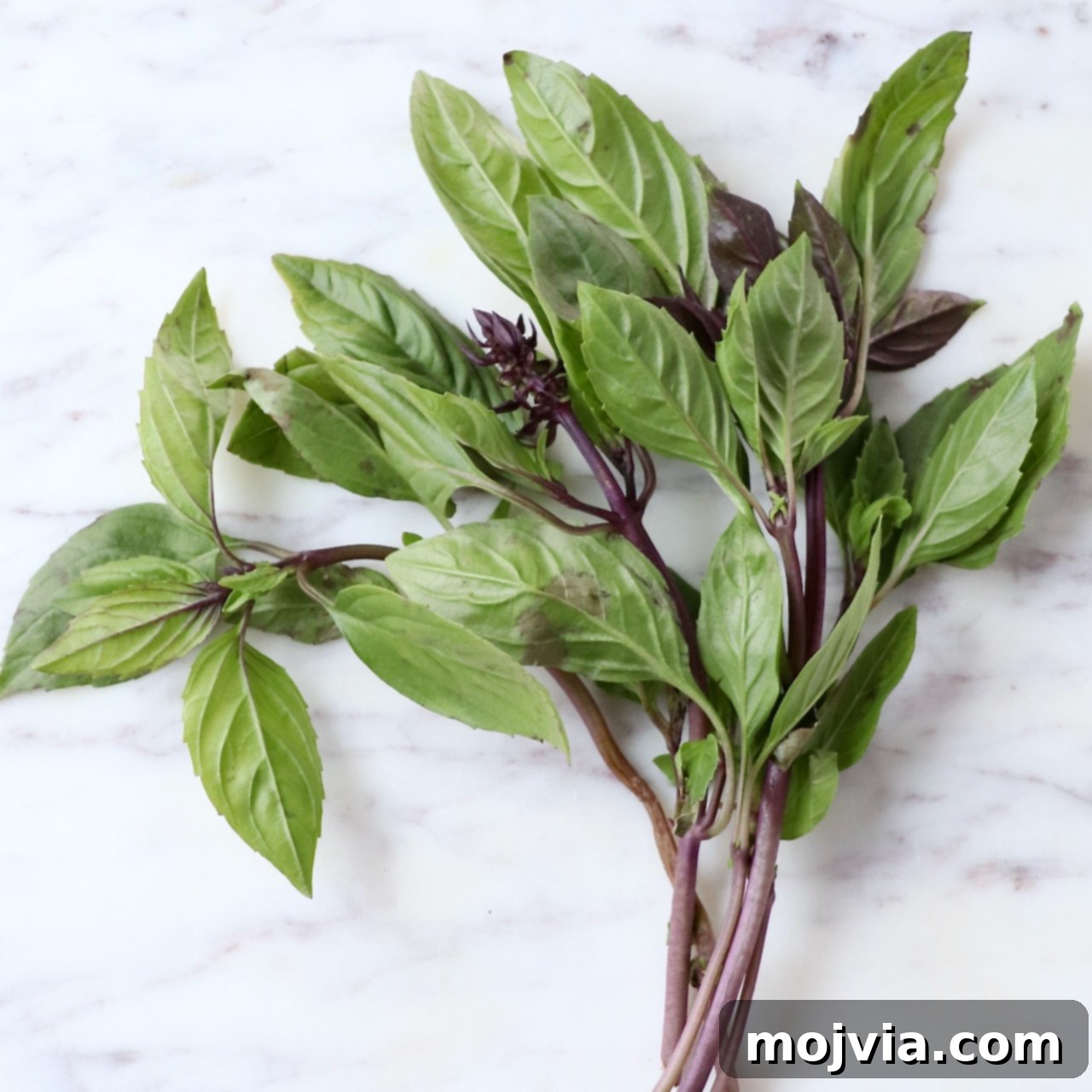
Step into the vibrant world of Southeast Asian cuisine, and you’ll quickly encounter an herb that stands out with its distinctive charm: Thai basil. More than just a garnish, this aromatic powerhouse is an indispensable ingredient that elevates ordinary dishes into extraordinary culinary experiences. With a flavor profile that dances between sweet and subtly spicy, underpinned by intriguing notes of anise and licorice, Thai basil offers a unique complexity that regular basil simply can’t match. Its glossy, dark green leaves are not only visually appealing but also possess a slightly tougher texture, making them ideal for holding up in hearty stir-fries, simmering curries, and comforting soups.
Widely celebrated in Thai cooking, this versatile herb forms perfect partnerships with a variety of meats, including tender chicken, succulent pork, and rich beef. Beyond the hot wok and bubbling pot, Thai basil also lends its refreshing and fragrant touch to cooler preparations like vibrant salads and delicate spring rolls, proving its adaptability across a spectrum of dishes. If you’re eager to unlock the authentic flavors of Thai cuisine in your own kitchen, incorporating Thai basil is not just an option—it’s an absolute must.
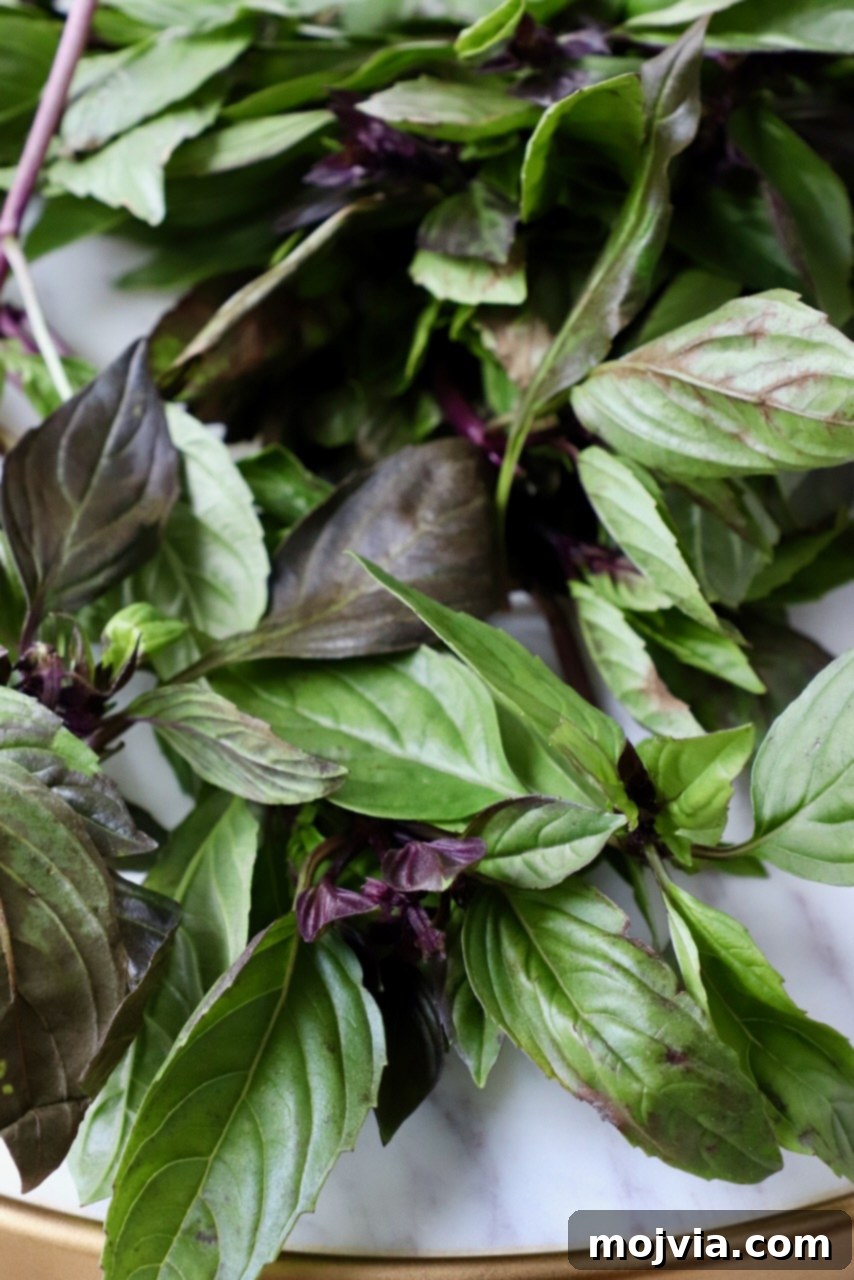
Table of contents
- The Allure of Thai Basil: A Culinary Essential
- Mastering Thai Basil: Flavor Profile and Characteristics
- Creative Culinary Uses for Thai Basil
- Where to Find and Select the Best Thai Basil
- Growing Your Own Thai Basil: From Garden to Table
- Beyond the Basics: Freezing Thai Basil for Future Delights
- Thai Basil vs. Sweet Basil vs. Holy Basil: A Comparative Guide
- Exploring Other Exotic Ingredients
The Allure of Thai Basil: A Culinary Essential
Today, we’re diving deep into the captivating world of one of my absolute favorite herbs: Thai basil. If this incredible ingredient isn’t already a star in your culinary repertoire, it’s time to discover its magic! What exactly makes Thai basil so special, and how does it truly taste?
Thai basil boasts a distinct and utterly delicious taste profile that is subtly sweet, delightfully spicy, and infused with enchanting hints of anise and licorice. This complex flavor is what sets it apart, offering a harmonious blend that tantalizes the palate. Its aroma alone is a sensory journey, capable of instantly transporting you to the bustling, vibrant street food markets of Bangkok, Thailand, where the air is thick with the scent of spices and fresh herbs.
When you introduce Thai basil into your cooking, you’ll notice how its unique flavor and captivating aroma gracefully infuse into your dish, weaving a more complex, nuanced, and truly authentic taste. For anyone aspiring to create genuine Thai cuisine at home, Thai basil is far more than just an option; it is an indispensable ingredient that holds the key to unlocking those authentic, restaurant-quality flavors.
Mastering Thai Basil: Flavor Profile and Characteristics
Understanding the full spectrum of Thai basil’s characteristics is key to appreciating its role in the kitchen. It’s not merely its taste but also its appearance and texture that contribute to its versatility and appeal:
- Bold and Aromatic Flavor: Thai basil is a true flavor bomb. Its robust profile, with prominent notes of licorice-like anise and a peppery kick, adds an unforgettable depth to any dish. It’s a flavor enhancer that ensures your cooking never tastes bland or one-dimensional. This distinct taste profile makes it crucial for achieving the characteristic balance found in many Thai dishes.
- Remarkable Versatility: One of Thai basil’s greatest strengths is its incredible adaptability. It pairs harmoniously with a vast array of ingredients, from various meats and seafood to an abundance of vegetables. Whether you’re whipping up a quick stir-fry or a slow-simmered curry, Thai basil finds its place with ease, adding consistent vibrancy and fragrance.
- Authenticity at Your Fingertips: For those who cherish authentic Thai recipes, Thai basil is non-negotiable. Its presence ensures that your homemade meals capture the true essence and traditional flavors that define this beloved cuisine. Without it, many classic Thai dishes would simply lack their signature zest and aromatic charm.
Creative Culinary Uses for Thai Basil
The culinary world is your oyster when it comes to Thai basil, thanks to its exceptional versatility. It’s an invaluable asset in a wide spectrum of dishes, seamlessly integrating into everything from sizzling stir-fries and rich curries to light soups and crisp salads. This dynamic herb forms an exquisite partnership with a diverse range of proteins, including chicken, pork, beef, and various types of seafood. Furthermore, its vibrant flavor profile makes it an excellent addition to vegetarian and vegan dishes, or simply as a fresh, fragrant garnish that brightens any plate.
Here are just a few inventive ideas to help you incorporate Thai basil into your home cooking:
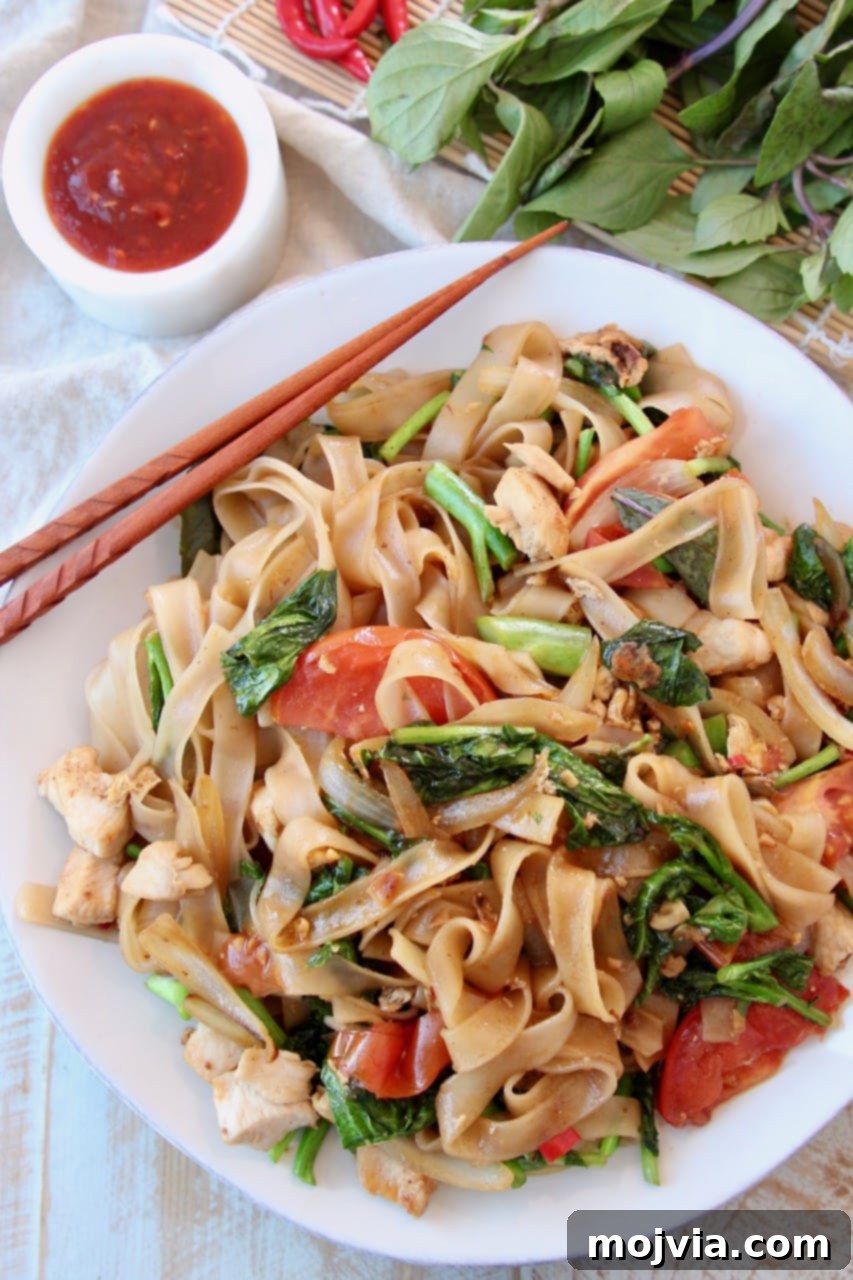
- Stir-fries, Curries, Noodle Dishes, and Soups: Infuse these core Asian dishes with an unparalleled burst of flavor and aroma. Thai basil truly shines when stirred into a vibrant pad see ew, a spicy green curry, or a comforting tom yum soup, adding a layer of depth that is both peppery and sweet.
- Salads and Spring Rolls: For a refreshing and aromatic twist, finely chop Thai basil and mix it into your favorite green salads or add whole leaves to fresh spring rolls. Its crisp texture and sweet anise notes provide a delightful contrast to other ingredients, creating a more sophisticated flavor profile.
- Thai Basil Pesto or Chimichurri: Step outside the box and create a unique Thai basil pesto, blending it with toasted cashews, garlic, chili, and a touch of lime juice for an Asian-inspired condiment. Alternatively, a Thai basil chimichurri can serve as a zesty marinade or vibrant sauce for grilled meats and roasted vegetables, offering a fresh, herbaceous kick.
For more specific inspiration, consider trying these delicious recipes that highlight the incredible versatility of Thai basil:
- Thai Basil Chicken
- Drunken Noodles (pictured above)
- Thai Basil Beef – from A Saucy Kitchen
- Thai Coconut Shrimp Curry – from Peas and Crayons
- Vegan Thai Basil Stir Fry – from Cooking with Camilla
- Thai Chicken Spring Rolls – from Sumptuous Living
- Thai Red Curry Noodle Soup – from My Formosa Food
- Thai Vegetable Crunch Salad – from Feasting At Home
It’s also an indispensable and delicious addition to classics like Pad Thai, aromatic Thai Yellow Curry, or the comforting warmth of Thai Coconut Soup, where its distinct notes truly elevate the traditional flavors.
When incorporating Thai basil into your cooking, a crucial tip is to add it towards the very end of the cooking process. The reason for this timing is simple: Thai basil’s delicate flavor and vibrant aroma are quite sensitive to prolonged heat and can easily be diminished or even become slightly bitter if overcooked. By adding it right before serving, you ensure that its fresh, peppery, and anise-like notes remain bright and prominent, contributing maximally to the dish’s overall profile. Beyond its flavor, fresh Thai basil also serves as a beautiful and vibrant garnish, adding a pop of color and an enticing visual appeal to your finished meal.
The entire Thai basil plant offers culinary potential; both the leaves, stems, and even the flowers are edible. However, for most recipes, I strongly recommend removing any particularly tough or thick stems. These can sometimes be fibrous and detract from the tender texture of the dish. The more tender parts of the stem and the leaves are where the magic truly happens, delivering that signature Thai basil experience.
Where to Find and Select the Best Thai Basil
Locating fresh Thai basil might require a bit of searching depending on your local grocery landscape, but its distinctive flavor makes the effort truly worthwhile. You’ll typically find it available in some traditional American grocery stores, and almost invariably in well-stocked Asian markets.
Many larger supermarkets, particularly those boasting an extensive international foods section, often carry Thai basil in their produce aisle. When you’re browsing, look for it nestled amongst other fresh herbs such as vibrant cilantro, refreshing mint, and crisp parsley. The selection might be smaller than what you’d find in an Asian market, but it’s always worth checking if you’re in a hurry.
However, because Thai basil is such a fundamental ingredient in a myriad of Southeast Asian cuisines, you can almost always count on finding it readily available in Asian markets. These specialized stores are a treasure trove for fresh herbs and unique produce, often offering a wider variety of Thai basil types. You might even discover different cultivars with subtle variations in flavor and appearance, expanding your culinary horizons.
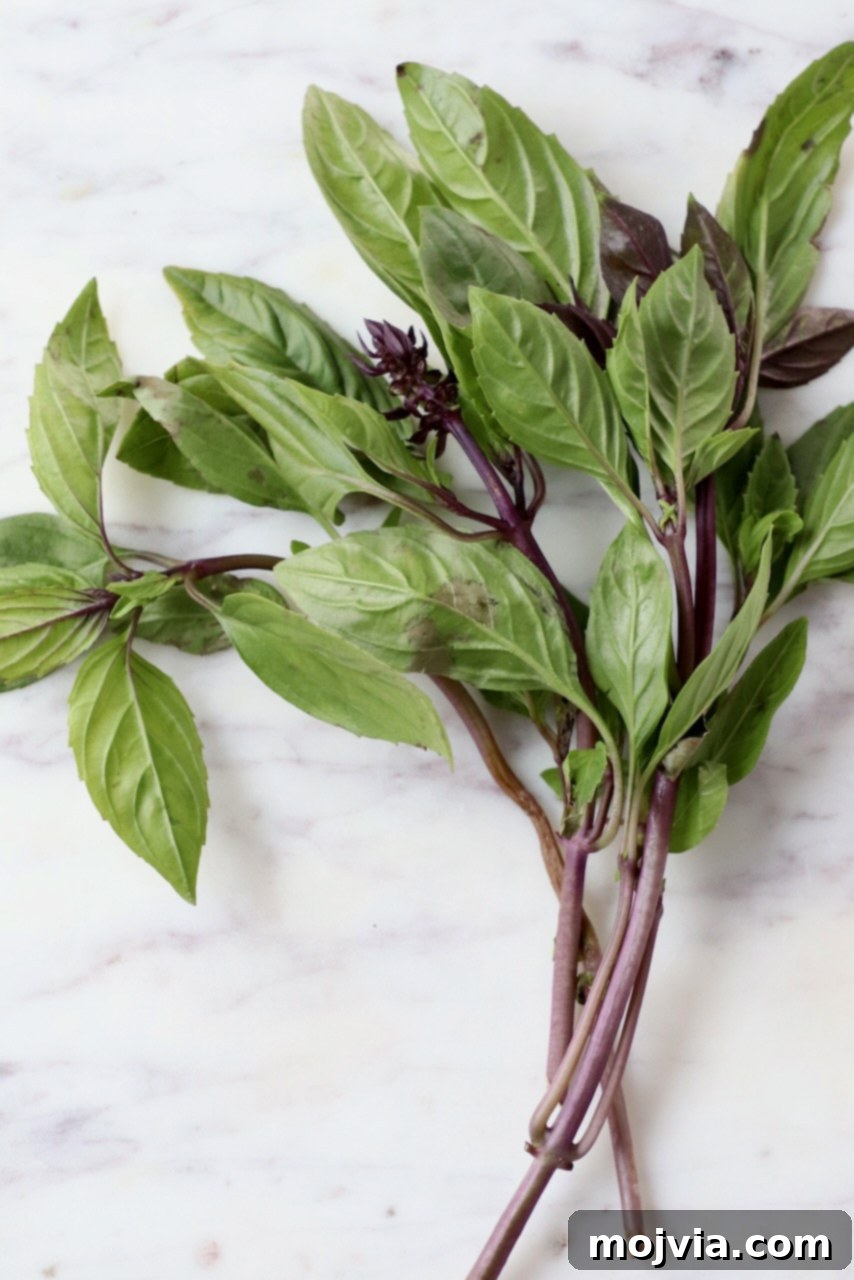
When you’re shopping for Thai basil, knowing what to look for will ensure you bring home the freshest, most flavorful bunches. Seek out leaves that are shiny, vibrant, and a deep dark green color. Avoid any bunches with yellowing, browning, or wilting spots, as these are indicators of age or poor handling. The leaves should feel slightly tough and resilient to the touch, not limp or overly soft. Most importantly, give it a gentle sniff – fresh Thai basil should emit a wonderfully fragrant aroma that is unmistakably sweet, spicy, and anise-like. Once you’ve made your selection, you can use it immediately to capture its peak freshness, or store it in the refrigerator. To keep it fresh for up to a week, gently wrap the bunch in a damp paper towel and place it inside a sealed plastic bag or airtight container.
Growing Your Own Thai Basil: From Garden to Table
If you find that fresh Thai basil is consistently elusive at your local stores, or if you simply enjoy the rewarding experience of gardening, cultivating your own Thai basil plant is an excellent solution. Most local nurseries, especially during spring and summer, will carry Thai basil plants, allowing you to establish a continuous supply of this beloved herb right in your backyard or on a sunny windowsill.
Thai basil thrives in warm climates and prefers full sun, meaning at least 6-8 hours of direct sunlight per day. It also requires well-draining soil and consistent moisture, so be sure to water regularly, especially during dry spells. Pinching off the top leaves and any developing flower buds will encourage bushier growth and prevent the plant from going to seed too quickly, thus extending your harvest. Growing your own not only guarantees freshness but also allows you to harvest leaves whenever inspiration strikes, offering an unparalleled farm-to-table experience.
Beyond the Basics: Freezing Thai Basil for Future Delights
Given that fresh Thai basil can sometimes be a challenge to source consistently at all major grocery stores, a savvy solution is to purchase it in larger quantities and then portion it out for freezing. This method ensures you always have this delicious herb on hand, ready to infuse your dishes with its signature flavor and aroma. When properly frozen, Thai basil will gracefully maintain its delightful taste and potent fragrance for up to six months, making it a fantastic ingredient for meal prep and spontaneous culinary adventures. Follow these four straightforward steps to freeze Thai basil at home and extend its vibrant life:
- Wash the Thai Basil Thoroughly: Begin by carefully plucking the basil leaves from their stems. Discard any tough or damaged portions. Rinse the intact leaves gently under cold running water to remove any lingering dirt, dust, or debris. A gentle wash ensures you’re starting with clean, pure basil, free from any grit that could affect its flavor or texture.
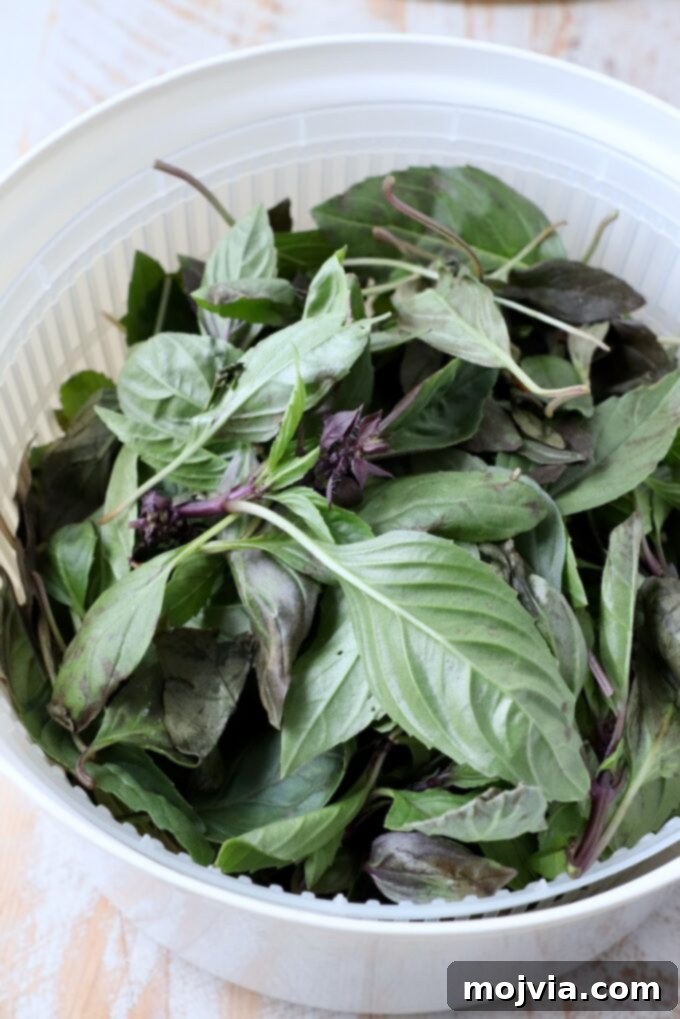
- Dry the Thai Basil Completely: This is a critical step to prevent freezer burn and preserve the basil’s quality. After washing, thoroughly pat the leaves dry with a clean paper towel or a soft kitchen towel. For even better results, consider using a salad spinner, which is highly efficient at removing excess moisture. The goal is to eliminate as much water as possible from the leaves, as residual moisture can crystalize during freezing, leading to undesirable freezer burn and a loss of flavor and texture.
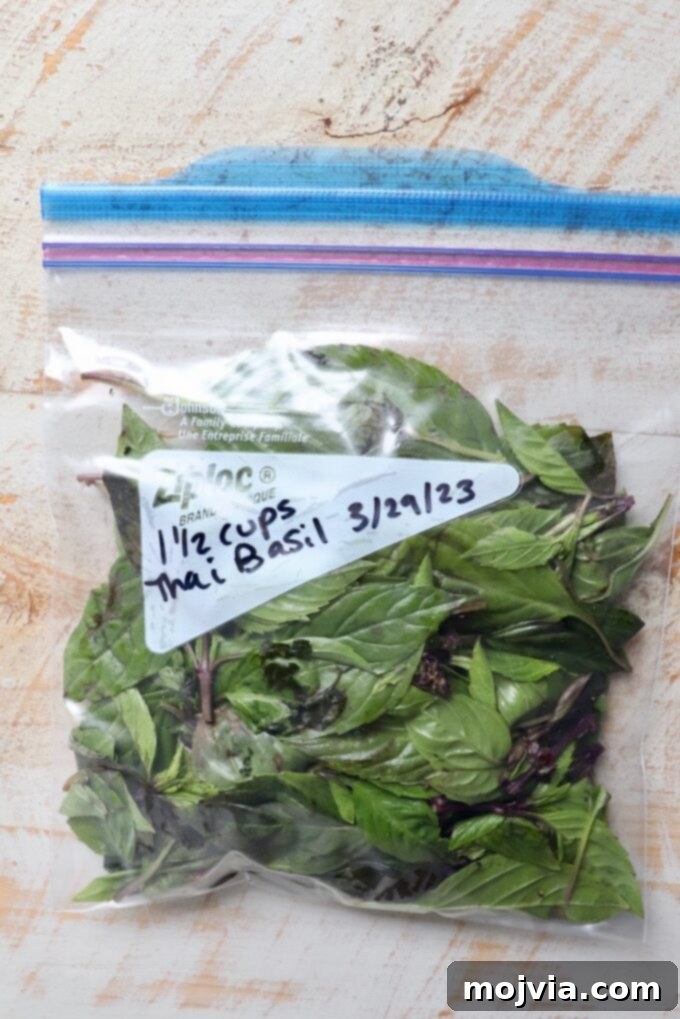
- Portion and Prepare for Freezing: Once the leaves are completely dry, divide them into small, manageable portions that align with your typical recipe needs. This could be anything from a tablespoon for a small sauce to a half-cup for a larger curry. Place these portions into freezer-safe containers or resealable freezer bags. Before sealing, try to press out as much air as possible from the bags to minimize oxidation, which can degrade the basil’s quality. Remember to clearly label each container or bag with the date and contents. For instance, I often freeze 1½ cups per bag, as this is the exact amount required for my beloved Thai Basil Chicken recipe, which is a regular feature in our home kitchen.
- Freeze and Store: Carefully transfer the prepared containers or bags of Thai basil to your freezer. Arrange them so they freeze quickly and evenly. They will remain fresh and flavorful for up to six months. When you’re ready to cook, simply retrieve a bag of frozen leaves directly from the freezer. You can then stir them into your favorite stir-fry, noodle dish, or soup without the need for thawing. The frozen basil will defrost and incorporate into your hot dish almost instantly, releasing its vibrant flavors and aromas just as fresh basil would.
Thai Basil vs. Sweet Basil vs. Holy Basil: A Comparative Guide
While Thai basil, holy basil, and common sweet basil (often called Italian basil) all belong to the versatile mint family, they each possess distinct characteristics that set them apart in flavor, appearance, and culinary application. Understanding these differences is crucial for achieving authentic results in various global cuisines. Here’s a detailed breakdown:
- Flavor Profile:
- Thai Basil: This variety boasts a significantly stronger and more complex flavor than sweet basil. Its profile is marked by prominent notes of licorice, mint, and a hint of clove, culminating in a taste that is both subtly spicy and uniquely sweet. This robust flavor stands up well to powerful spices and bold ingredients typical in Southeast Asian cooking.
- Sweet Basil (Italian Basil): In contrast, sweet basil offers a more subtle, delicate, and distinctly sweeter flavor. Its taste often includes hints of pepper and a fresh, herbaceous quality that is less anise-driven than Thai basil. It’s the quintessential basil for Mediterranean and Italian dishes.
- Holy Basil (Tulsi): Holy basil presents a flavor profile that is sweet, mildly spicy, and notably minty, but with a pronounced, almost peppery clove-like intensity. It has a slightly more pungent and robust character compared to both Thai and sweet basil, often described as having a medicinal undertone.
- Appearance:
- Thai Basil: Easily recognizable by its narrower, slightly pointed leaves, which are typically a darker green and possess a distinct glossy sheen. One of its most striking features is its beautiful purple stems and sometimes purple flowers, which add a vibrant splash of color.
- Sweet Basil: Characterized by its broader, more rounded, and often slightly cupped leaves. These leaves are generally a lighter, brighter green, and the stems are consistently green throughout.
- Holy Basil: Features broader, often slightly fuzzy leaves that can range in color from green to purplish-green, depending on the cultivar. Its stems are typically green, sometimes with a reddish tint, and its flowers are usually purple.
- Culinary Uses:
- Thai Basil: This is a cornerstone ingredient in many Southeast Asian cuisines, including Thai, Vietnamese, and Cambodian. It’s famously used in vibrant stir-fries (like Pad Kra Pao), aromatic curries, hearty soups, fresh salads, and even refreshing drinks. Its sturdy leaves hold up well to cooking heat, especially when added towards the end.
- Sweet Basil: Dominant in Italian and Mediterranean cuisines, sweet basil is the star of classic pesto. It’s also widely used as a fresh garnish, and to impart its fresh, peppery flavor to pasta sauces, pizzas, salads (like Caprese), soups, and stews. It’s typically added at the end of cooking or served fresh to preserve its delicate notes.
- Holy Basil: Most commonly found in Indian cuisine and traditional Ayurvedic practices. It’s a key ingredient in many Indian curries, herbal teas (often called ‘Tulsi tea’ for its medicinal properties), and chutneys, where its strong, peppery-clove flavor provides a unique depth. It can also be found in some stir-fries from Southeast Asia.
In summary, while these three basils share a botanical family, their distinct flavors and culinary applications mean they are not truly interchangeable in recipes. Each brings its own unique character to a dish. If you absolutely must substitute traditional sweet basil for Thai basil, I highly recommend adding a small amount of fresh mint to your recipe. This can help to somewhat mimic the missing anise-like and fresh notes that are so characteristic of Thai basil, though it won’t fully replicate its complex profile.
Exploring Other Exotic Ingredients
Curious to expand your culinary horizons even further? Delve into the world of diverse and intriguing ingredients that can transform your kitchen pantry into a global larder. Discover new flavors, textures, and aromas that will inspire your next great meal by checking out these other comprehensive ingredient guides!
- Harissa
- Turmeric
- Teff
- Shirataki noodles
- Coconut aminos