
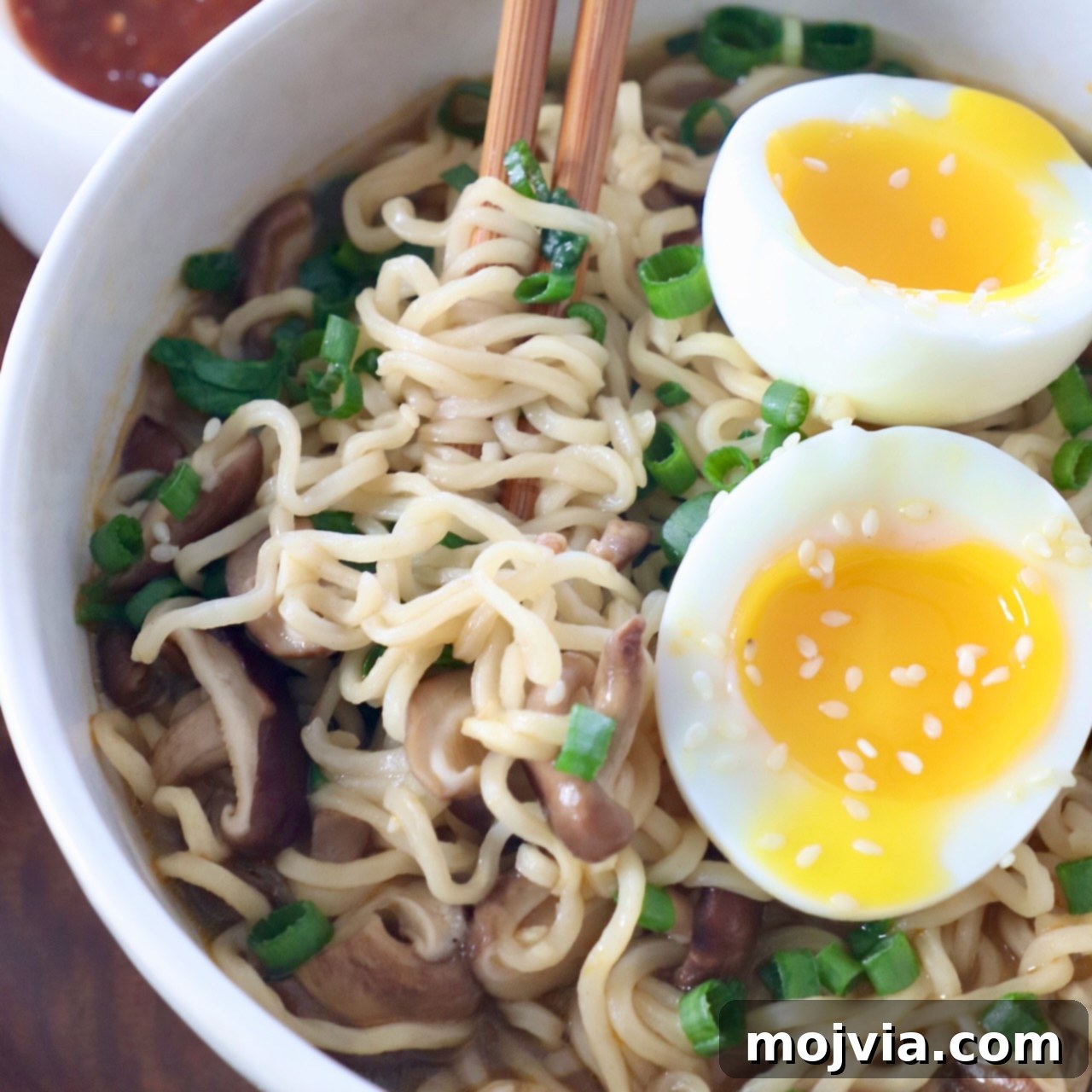
Craving a warm, comforting bowl of ramen but looking for a plant-based option? This incredible Vegetarian Ramen recipe delivers immense flavor in just 15 minutes! Packed with earthy mushrooms, fresh spinach, and slurpable noodles, all bathed in a rich, savory broth, this is your new go-to for a quick and satisfying meal. Easily adaptable for a full vegan experience by simply omitting the optional soft-boiled eggs, this one-pot wonder lets you ditch the takeout and enjoy restaurant-quality ramen right at home tonight.
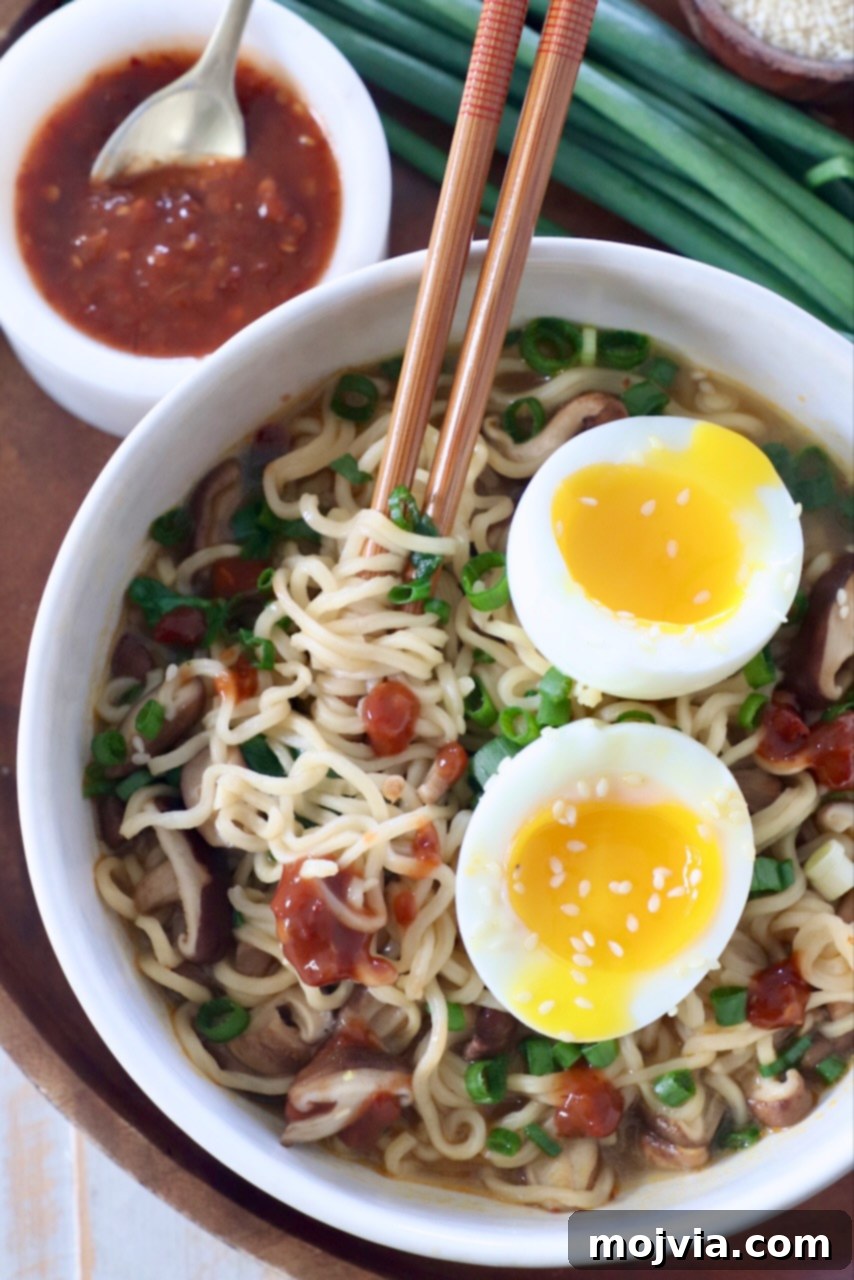
Table of Contents
- Why You Will Love This Vegetarian Ramen
- The Secret to an Incredible Vegetarian Broth
- Key Ingredients for Flavorful Ramen
- Step-by-Step Instructions for Quick Ramen
- Delicious Optional Toppings
- Exciting Additions and Flavor Variations
- Dietary Adaptations: Vegan & Gluten-Free
- Storage and Reheating Tips
- Frequently Asked Questions (FAQ)
- More Noodle Recipes to Explore
Why You Will Love This Vegetarian Ramen
There’s something incredibly satisfying about a steaming bowl of ramen, and this vegetarian version proves you don’t need meat to achieve profound depth of flavor. This recipe isn’t just about cutting down on cooking time; it’s about elevating your weeknight meals with a symphony of tastes and textures. You’ll adore this recipe because it’s:
- Unbelievably Fast: From prep to bowl in just 15 minutes! Perfect for busy weeknights when you crave something homemade without the fuss.
- One-Pot Wonder: Minimal cleanup means more time to savor your delicious creation. Everything comes together in a single pot or wok.
- Bursting with Flavor: We’ve honed the broth to perfection, creating a savory, umami-rich base that rivals your favorite ramen spot.
- Highly Customizable: Whether you like it spicy, creamy, or loaded with extra veggies, this recipe serves as a versatile canvas for your culinary imagination.
- Health-Conscious & Diet-Friendly: Naturally vegetarian and easily made vegan or gluten-free, it caters to various dietary needs without compromising on taste.
- More Affordable Than Takeout: Enjoy gourmet ramen at a fraction of the cost of ordering in, all from the comfort of your kitchen.
Forget the bland instant noodles or expensive restaurant visits. This homemade Vegetarian Ramen recipe is a game-changer, promising a comforting, flavorful, and incredibly easy meal every time.
The Secret to an Incredible Vegetarian Broth
The soul of any great ramen lies in its broth, and crafting a deeply flavorful vegetarian broth is paramount to this recipe’s success. While many traditional ramen broths rely on meat or fish, we’ve developed a method that coaxes out incredible umami and richness from plant-based ingredients, ensuring your bowl is anything but lacking. The key elements that make this broth shine include:
- Sautéed Shiitake Mushrooms: These provide a robust, earthy base. Sautéing them first in sesame oil helps develop a nutty depth, and leaving them undisturbed for a few minutes allows them to caramelize beautifully, unlocking even more concentrated flavor.
- Toasted Sesame Oil: Not just for cooking, toasted sesame oil infuses the entire broth with its distinctive, aromatic essence. It’s crucial to use toasted for that authentic Asian flavor.
- Umami-Rich Soy Sauce: Whether you choose a regular soy sauce, a low-sodium option, or even a specialty truffle soy sauce, this ingredient brings essential saltiness and a foundational umami kick.
- Aromatic Garlic: Freshly minced garlic is non-negotiable here. It infuses the broth with its pungent, warm aroma, building layers of savory goodness.
- Chili Garlic Sauce: This ingredient is a double threat, adding both a gentle heat and another layer of garlicky complexity. It’s what gives the broth its subtle, inviting warmth.
- Quality Vegetable Broth: The foundation of our liquid, a good quality vegetable broth (homemade or store-bought) is essential. It provides the necessary volume and a clean, vegetable-forward base for the other flavors to meld into.
This careful combination creates a broth that is both light and robust, with a perfect balance of savory, slightly spicy, and deeply comforting notes. It’s the kind of broth that makes you want to sip directly from the bowl!
Key Ingredients for Flavorful Ramen
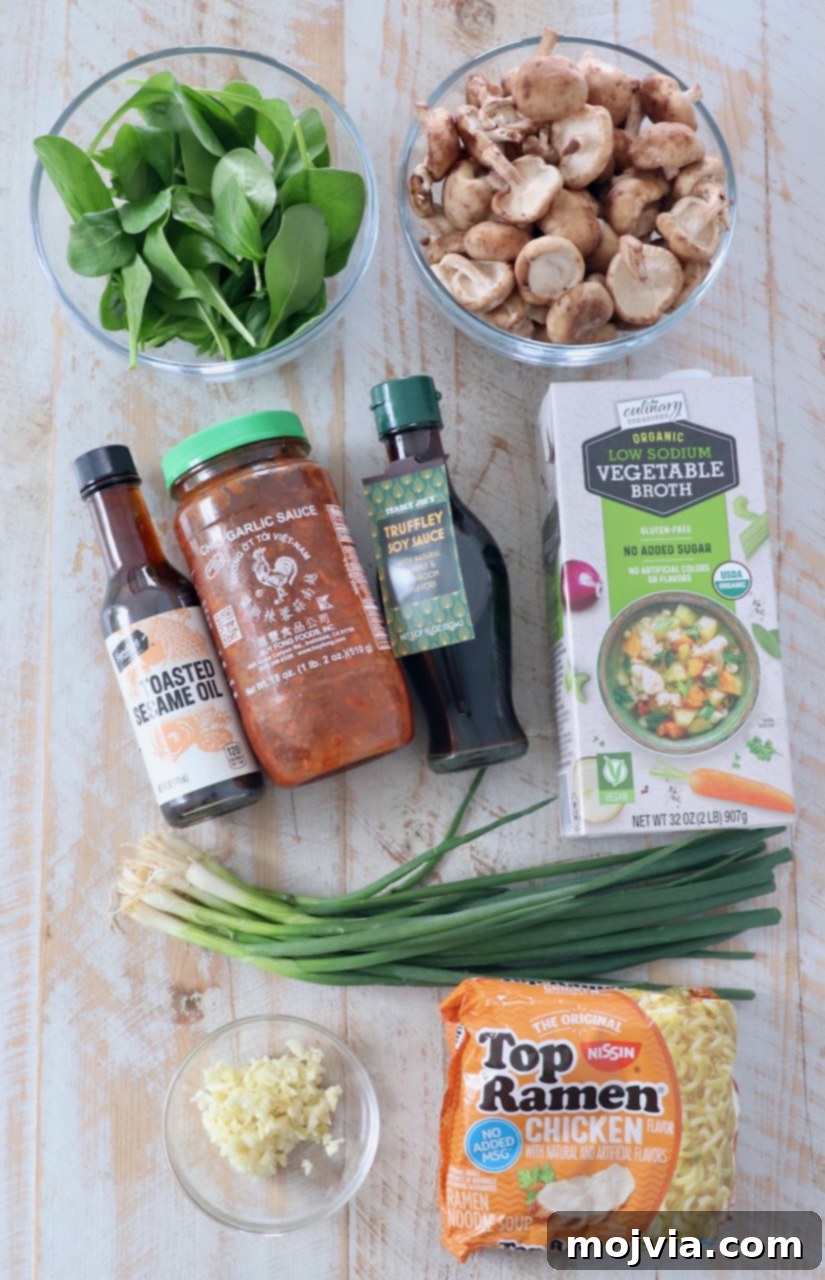
Making a truly exceptional vegetarian ramen starts with selecting fresh, high-quality ingredients. Each component plays a vital role in building the layered flavors of this delightful soup. Here’s a closer look at what you’ll need and why:
- Shiitake Mushrooms: These deeply flavorful mushrooms are a cornerstone of Asian cuisine and a natural fit for ramen. Their robust, earthy, and umami-rich profile adds significant depth to the broth. Look for them in the produce section of most major grocery stores or Asian markets. If fresh shiitakes are unavailable, sliced baby bella mushrooms make an excellent alternative, offering a similar meaty texture.
- Toasted Sesame Oil: This isn’t just for sautéing; it’s a critical flavor enhancer. Toasted sesame oil boasts a distinct, nutty aroma that is quintessential to East Asian dishes. Ensure you use the toasted variety for its rich flavor profile, as untoasted sesame oil has a much milder taste and won’t impart the same depth.
- Soy Sauce: The backbone of our savory broth. While traditional soy sauce or a low-sodium option works perfectly, don’t hesitate to experiment. I’ve found that a truffle soy sauce, if you can find it, adds an extraordinary layer of umami complexity. Tamari is a great gluten-free alternative that performs similarly.
- Fresh Garlic Cloves: For the most vibrant and aromatic flavor, fresh minced garlic is essential. Avoid pre-minced garlic in a jar if possible, as it often lacks the pungency and brightness of fresh cloves, which are crucial for this broth.
- Chili Garlic Sauce: Found in the Asian section of most grocery stores, this fiery condiment combines dried chilis, garlic, salt, and vinegar. It provides a balanced heat and a lovely garlic punch. If you desire a stronger, more direct chili spice with less garlic emphasis, chili paste can be used as a substitute.
- Vegetable Broth: The liquid base for our ramen. A good quality vegetable broth is key. You can opt for a store-bought 32-ounce carton (which perfectly measures 4 cups) or prepare your own using vegetable bouillon and water for a fresh, customized base.
- Ramen Noodles: For this recipe, we use two 3-ounce packages of dried ramen noodles. The seasoning packets will be discarded, so the flavor of the packet (e.g., chicken, beef) doesn’t matter. The noodles themselves are vegetarian and cook quickly, providing that quintessential ramen texture. For gluten-free ramen, be sure to find dedicated gluten-free ramen noodles.
- Fresh Spinach Leaves: A generous handful of fresh spinach adds a vibrant green color, a touch of healthy goodness, and a subtle, mild flavor that wilts beautifully into the hot broth. Baby bok choy leaves, briefly blanched or added at the very end, also make a fantastic substitute.
Step-by-Step Instructions for Quick Ramen
This recipe is designed for maximum flavor with minimal effort, coming together in a single pot. Follow these straightforward steps to create a delicious bowl of vegetarian ramen in just 15 minutes. Visual guides are available in the attached gallery to make the process even smoother.
- Prepare the Mushrooms: Begin by gently cleaning your shiitake mushrooms. A damp paper towel is usually sufficient; avoid rinsing them under water, as they can absorb too much moisture. Once clean, slice the mushrooms into thick, uniform pieces. This ensures they cook evenly and retain a pleasant texture.
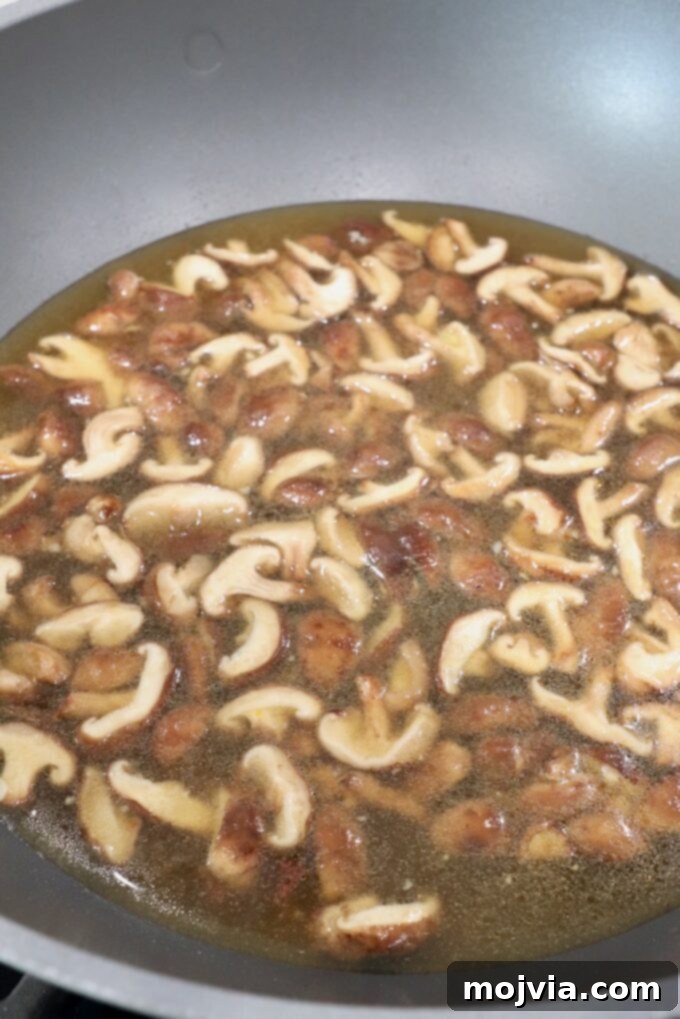
- Cook the Mushrooms to Perfection: Heat the toasted sesame oil in a large pot or wok over medium-high heat until it shimmers. Add the sliced mushrooms and soy sauce to the hot oil. Stir them briefly to coat, then resist the urge to stir for the next 5 minutes. This crucial step allows the mushrooms to develop a beautiful golden-brown sear and a deep, savory flavor, enhancing their texture significantly.
- Build the Aromatic Broth: After the mushrooms have caramelized, add the minced fresh garlic to the pot. Stir continuously for just 1 minute until the garlic becomes fragrant. Be careful not to burn it! Next, pour in the chili garlic sauce and vegetable broth. Increase the stove heat to high and bring the broth to a rolling boil.
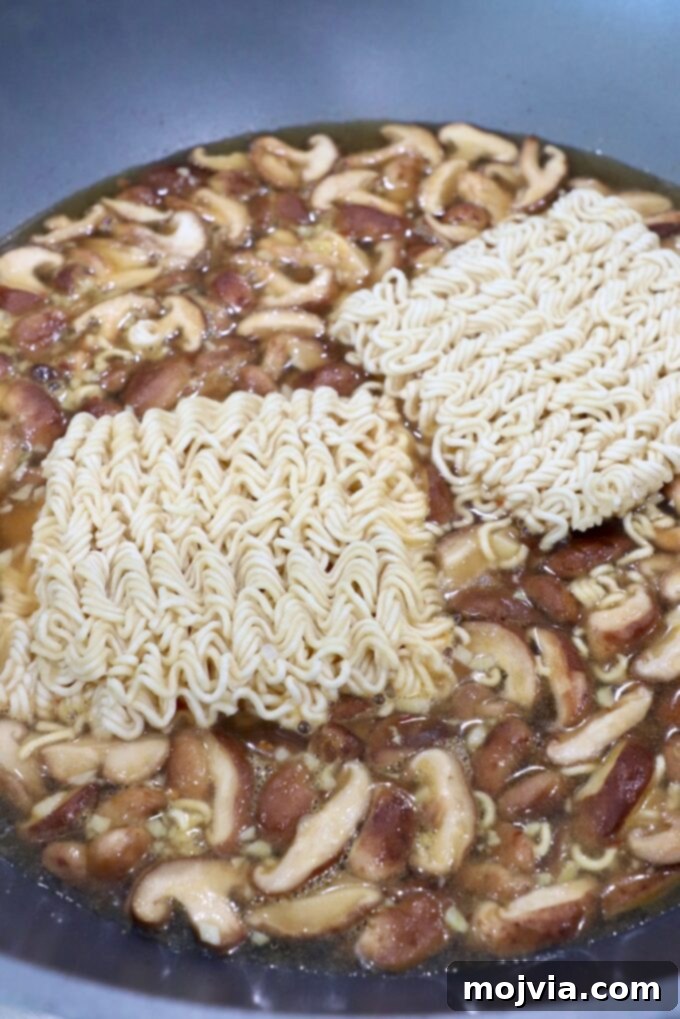
- Add Noodles and Greens: Once the broth is vigorously boiling, carefully add the dried ramen noodles. Ensure they are fully submerged in the hot liquid. Allow the noodles to cook for precisely 3 minutes, or according to package directions for al dente. Finally, add the fresh spinach leaves and stir gently until they wilt into the broth. Turn off the heat immediately.
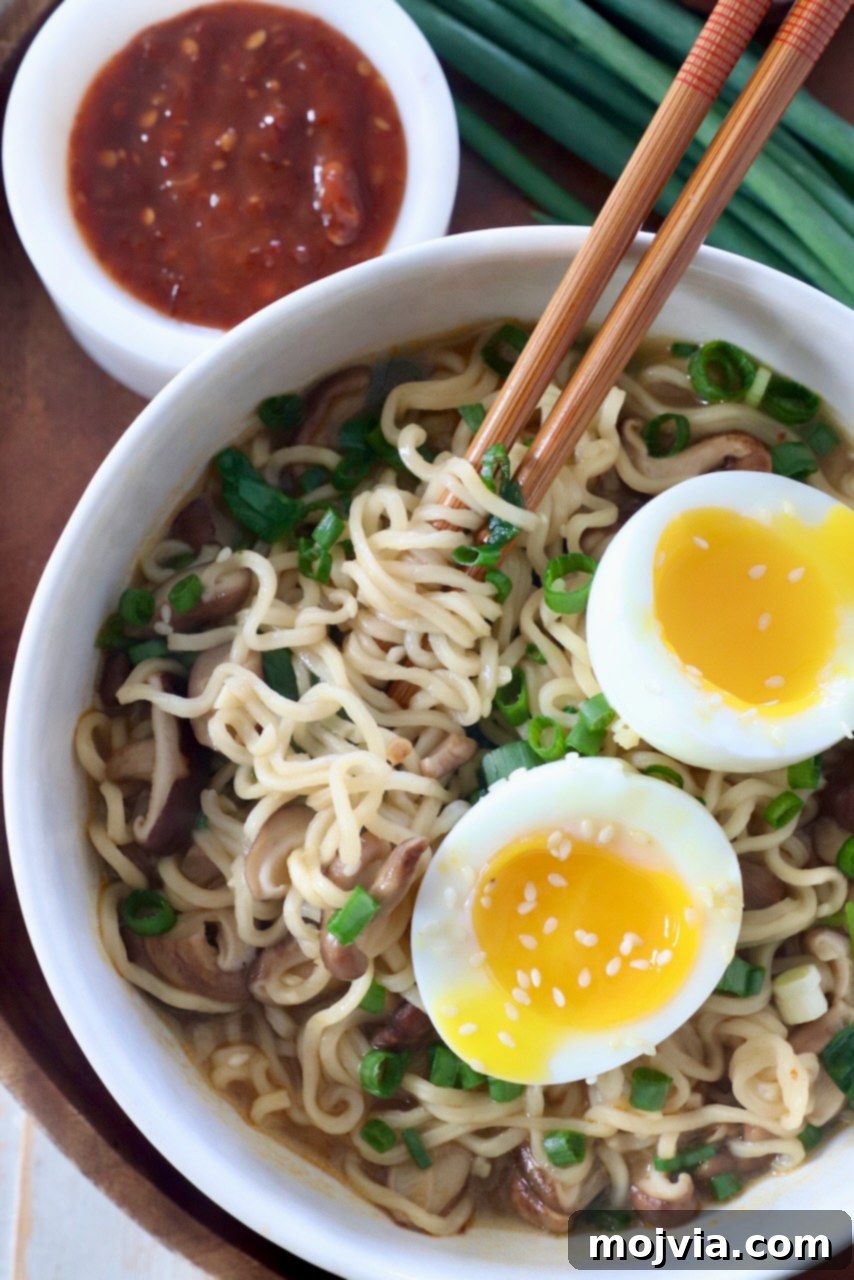
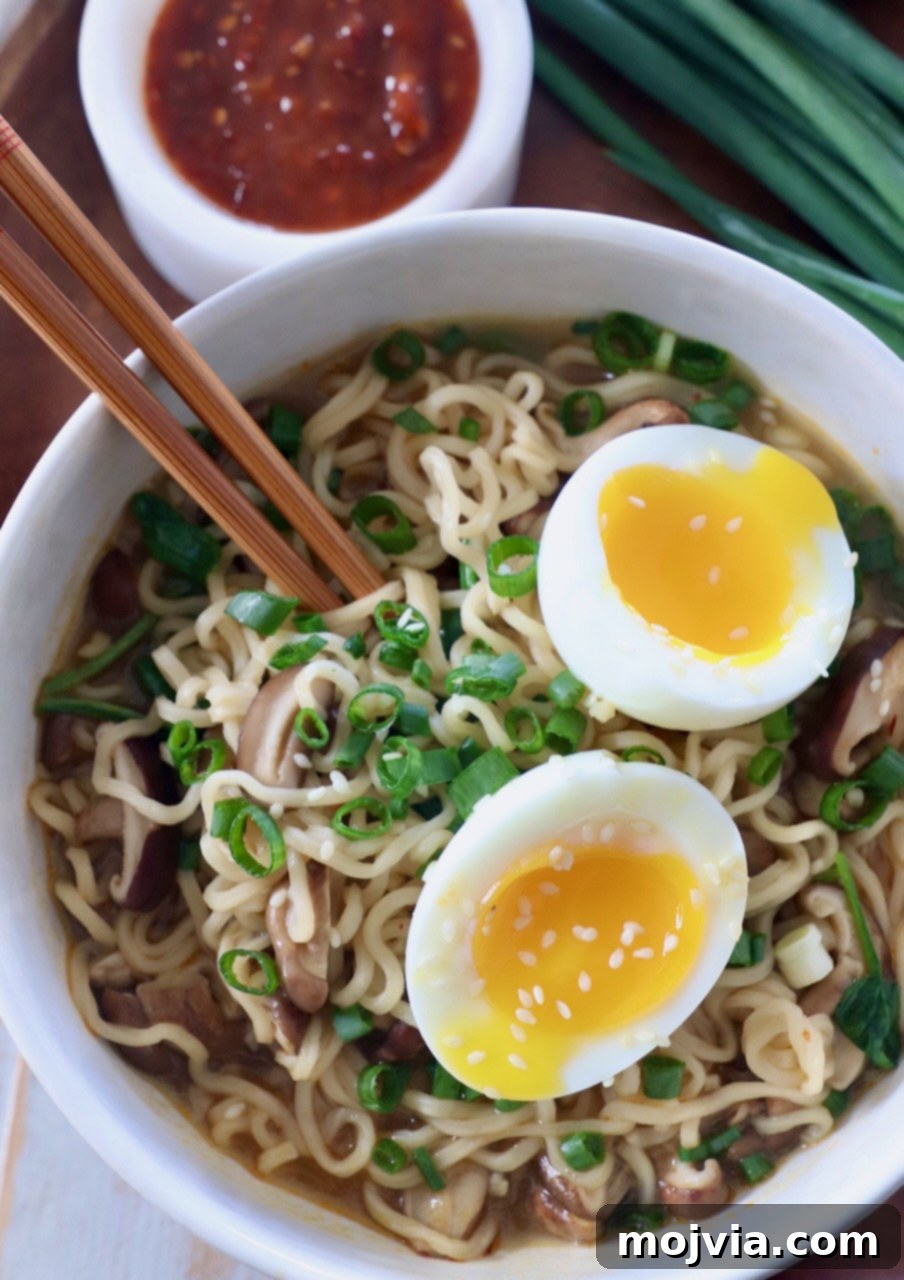
- Serve and Garnish: Ladle the steaming ramen soup into individual bowls. Now comes the fun part – customize each bowl with your favorite optional toppings! Enjoy your homemade, flavorful vegetarian ramen immediately.
Delicious Optional Toppings
One of the true joys of ramen is the endless possibilities for customization through toppings. These additions not only elevate the visual appeal of your bowl but also introduce exciting new layers of flavor and texture. Here are some fantastic ideas to make your homemade vegetarian ramen truly your own:
- Soft-Boiled or Medium-Boiled Egg: A classic ramen topping, adding a creamy yolk and rich protein. For perfect soft-boiled eggs, cook for 6 minutes; for medium-boiled with a jammy yolk, cook for 8 minutes, then immediately transfer to an ice bath to stop cooking. Slice them lengthwise before placing them on top.
- Green Onions (Scallions): Finely sliced green onions provide a fresh, pungent crunch and a pop of vibrant color, cutting through the richness of the broth.
- Fresh Cilantro Leaves: For those who love its bright, herbaceous flavor, a sprinkle of fresh cilantro adds an aromatic lift.
- Sriracha: If you crave extra heat, a drizzle of sriracha will turn up the spice factor, offering a tangy, garlicky chili kick.
- Chili Onion Crunch: A beloved condiment, especially the one from Trader Joe’s, this offers incredible textural contrast and a burst of savory, spicy, crispy goodness. It’s a flavor bomb!
- Sesame Seeds: A sprinkle of black or white sesame seeds (or both!) adds a subtle nutty flavor and an elegant finish.
- Chili Oil: For a deeper, more infused chili flavor and a beautiful reddish sheen to your broth, a swirl of homemade or store-bought chili oil is perfect.
- Bean Sprouts: These delicate, crunchy sprouts add a refreshing textural element and a mild, slightly sweet taste.
- Seaweed Strips (Nori): Crispy, salty nori strips provide a delightful oceanic umami and visual appeal, melting slightly into the hot soup.
- Corn Kernels: Sweet and slightly chewy, corn adds a pleasant sweetness and another layer of texture, balancing out the savory elements.
- Gochujang: This Korean fermented chili paste offers a unique spicy, savory, and slightly sweet flavor, adding a wonderfully complex kick.
- Extra Toasted Sesame Oil: A final dash just before serving can intensify the aromatic, nutty notes.
Exciting Additions and Flavor Variations
This vegetarian ramen recipe is wonderfully versatile, allowing you to easily adapt it to suit your taste preferences or whatever ingredients you have on hand. Don’t be afraid to get creative and experiment with these fantastic additions and variations:
- Craft a Miso Broth: For a delightful umami boost and a slightly fermented flavor, whisk 1 1/2 tablespoons of white miso paste into the broth along with the chili garlic sauce. Miso adds a complex, savory depth that is truly irresistible and transforms the flavor profile of the ramen significantly.
- Turn Up the Heat for Spicy Ramen: If you like a fiery kick, finely mince 4-5 Thai chilies and add them to the pot at the same time as the minced garlic. For an extra layer of spice, you can also stir in an additional teaspoon of chili garlic sauce or a teaspoon of sriracha just before serving.
- Utilize Dried Shiitake Mushrooms: No fresh shiitakes? No problem! Dried shiitake mushrooms offer an even more concentrated umami flavor. Before starting the recipe, simply soak the dried mushrooms in hot water for at least 10-15 minutes until softened. Drain them, rinse thoroughly, pat dry, and then use them in the recipe exactly as you would fresh mushrooms. The soaking liquid can also be strained and added to your vegetable broth for an even deeper flavor.
- Create a Creamy Broth: For a lusciously creamy ramen, substitute one cup of the vegetable broth with an equal amount of unsweetened soy milk. This adds a velvety texture and a subtle richness that is incredibly comforting. Other plant-based milks like oat milk or cashew milk (unsweetened) can also work, but soy milk is traditionally preferred in Asian-inspired dishes for its neutral flavor profile.
- Boost Protein with Tofu: Sautéed or fried cubes of firm or extra-firm tofu can be added as a hearty protein element. Marinating the tofu in a little soy sauce and sesame oil before cooking will enhance its flavor.
- Add More Greens: Experiment with other leafy greens like baby bok choy, napa cabbage, or even kale, adding them to the pot in the last few minutes of cooking until just tender-crisp.
- Incorporate Root Vegetables: Thinly sliced carrots or daikon radish can add a delightful crunch and subtle sweetness. Add them with the mushrooms for a softer texture or closer to the end for more crispness.
Dietary Adaptations: Vegan & Gluten-Free
This vegetarian ramen recipe is inherently flexible and can be easily adjusted to fit specific dietary requirements without compromising on its delicious flavor. Here’s how to make it suitable for vegan or gluten-free diets:
Vegan Adaptation: The base recipe is already largely plant-based. To make this ramen completely vegan, simply omit the optional soft-boiled egg topping. If you still desire a “creamy yolk” texture or an egg-like component, consider adding tofu scrambled eggs (made with silken tofu for creaminess) or a drizzle of tahini to the broth for a richer mouthfeel. Nutritional yeast can also be added to the broth for an extra cheesy, umami depth.
Gluten-Free Adaptation: Transforming this recipe into a gluten-free delight is straightforward. The primary components to modify are the noodles and soy sauce.
- Gluten-Free Ramen Noodles: Replace traditional ramen noodles with gluten-free ramen noodles. These are readily available in most health food sections of grocery stores or Asian markets and are often made from rice or millet. Always check the packaging to ensure they are certified gluten-free.
- Gluten-Free Soy Sauce (Tamari): Substitute regular soy sauce with tamari. Tamari is a gluten-free alternative to soy sauce that offers a similar savory, umami flavor. Ensure any other sauces or broths you use (like vegetable broth or chili garlic sauce) are verified gluten-free by checking their labels, as hidden gluten can sometimes be present in processed ingredients. Most fresh ingredients like mushrooms, spinach, and garlic are naturally gluten-free.
Always double-check the labels on all packaged ingredients, especially sauces and broths, to confirm they meet your specific dietary needs.
Storage and Reheating Tips
While this ramen is best enjoyed fresh, you can certainly prepare it ahead of time or save leftovers for another delicious meal. Proper storage ensures the best quality and flavor:
- To Store: If you have leftover ramen soup, transfer it to an airtight container. It will keep well in the refrigerator for up to 7 days. For optimal texture, it’s often best to store the noodles and broth separately if possible, especially if you anticipate leftovers, as noodles can become soggy when sitting in broth for too long. However, storing them together is also fine for a few days.
- To Reheat:
- Stovetop Method (Recommended): For the best results, reheat the ramen in a pot on the stove over medium-high heat. Stir occasionally until it reaches your desired temperature, typically 5-8 minutes. This method helps maintain the integrity of the noodles and broth.
- Microwave Method: For a quicker option, place the ramen in a microwave-safe bowl. Reheat in the microwave for approximately 2 minutes, stirring halfway through, or until thoroughly heated.
- To Freeze: I generally do not recommend freezing the complete ramen soup with the noodles. Ramen noodles, especially instant varieties, tend to lose their desirable chewy texture and become mushy or brittle once frozen, defrosted, and reheated. However, if you want to get a head start on meal prep, you can absolutely make and freeze the broth on its own! Simply thaw the frozen broth, reheat it, and then cook fresh noodles to add at the last minute for a quick meal. The broth can be frozen for up to 3 months in an airtight container.
Frequently Asked Questions (FAQ)
Here are some common questions about making vegetarian ramen at home:
- Can I use any type of ramen noodles? You can use standard instant ramen noodles (discarding the seasoning packets) or fresh ramen noodles. For gluten-free options, look for rice or millet-based ramen noodles.
- What if I can’t find shiitake mushrooms? Sliced baby bella (cremini) mushrooms are an excellent substitute. They offer a similar meaty texture and earthy flavor.
- Is this recipe genuinely spicy? The recipe as written has a mild spice from the chili garlic sauce. You can easily adjust the heat by adding more chili garlic sauce, fresh minced chilies, sriracha, or chili oil for a spicier kick.
- Can I add other vegetables? Absolutely! Feel free to add thinly sliced carrots, bell peppers, broccoli florets, or even corn kernels. Add firmer vegetables with the mushrooms to allow them to soften, and tender greens like bok choy with the spinach.
- How do I make the soft-boiled eggs? For perfectly jammy soft-boiled eggs, bring a pot of water to a rolling boil. Gently lower cold eggs into the boiling water and cook for 6-8 minutes, depending on your desired level of runniness. Immediately transfer them to an ice bath to stop the cooking process, then peel and slice.
- Can I meal prep this ramen? While the broth can be made ahead and frozen, it’s best to cook the noodles fresh just before serving to prevent them from becoming mushy. You can also prep all your vegetables and toppings in advance.
More Noodle Recipes to Explore
If you’ve enjoyed this delightful vegetarian ramen, you’ll surely love exploring more of our favorite Asian-inspired noodle dishes. These recipes are perfect for expanding your culinary horizons and finding new weeknight staples!
Made this Vegetarian Ramen recipe and loved it? Be sure to rate it 5 stars below!
Vegetarian Ramen
It’s easy to make delicious Vegetarian Ramen with this 15 minute recipe, featuring mushrooms, spinach, noodles and a flavorful broth! This recipe can easily be made vegan by omitting the optional soft boiled eggs on top. Ditch the take-out and make this one pot soup recipe at home for dinner tonight!

Pin Recipe
Servings: 2 people
Prep Time: 5 mins
Cook Time: 10 mins
Total Time: 15 mins
Author: Whitney Bond
Course: Main Course, Soup
Cuisine: Japanese
Ingredients
Main Ingredients
- ½ pound shiitake mushrooms
- 1 tablespoon toasted sesame oil
- 2 tablespoons soy sauce
- 1 tablespoon minced garlic cloves
- 2 teaspoons chili garlic sauce
- 4 cups vegetable broth
- 6 ounces ramen noodles (2 three-ounce packages – discard seasoning packets)
- 1 cup fresh spinach leaves
Optional Toppings
- 2 tablespoons green onions, diced
- 2 soft-boiled eggs, sliced in half lengthwise
- ½ teaspoon sesame seeds
- Additional toppings: Sriracha, Chili Onion Crunch, Chili Oil, Bean Sprouts, Seaweed Strips, Corn Kernels, Gochujang, extra Sesame Oil.
Instructions
- Wash the mushrooms by wiping them down with a damp paper towel. Slice the mushrooms into thick slices.
- Add the sesame oil to a large pot or wok on the stove over medium-high heat.
- Once the oil is hot, add the mushrooms and soy sauce to the skillet, stir to combine, then cook for 5 minutes without stirring. This allows them to develop a golden color and delicious taste.
- Add the minced garlic to the skillet and cook for 1 minute, stirring with the mushrooms until fragrant.
- Add the chili garlic sauce and vegetable broth to the pot, and bring to a boil by turning the heat on the stove up to high.
- Once the broth is boiling, add the ramen noodles and make sure they’re completely submerged in the broth. Cook for 3 minutes.
- Add the spinach and stir to combine all ingredients until the spinach wilts.
- Remove from the heat and serve in bowls. Top with green onions, soft-boiled eggs, sesame seeds, and any other desired optional toppings.
Notes
- The nutritional information provided below does not include the optional toppings.
- To make this ramen spicy, add 4-5 minced Thai chilies in at the same time with the minced garlic. You can also add an additional teaspoon of chili garlic sauce or a teaspoon of sriracha.
- To make it vegan, omit the optional egg on top.
- To make it gluten-free, use gluten-free ramen noodles and gluten-free soy sauce (also known as tamari). Always make sure to check the labels on sauces and broths to verify that they’re gluten-free.
- Store leftover ramen soup in the refrigerator for up to 7 days in an airtight container.
- Reheat the ramen in a pot on the stove over medium-high heat for 5-8 minutes, or in a microwave-safe bowl in the microwave for 2 minutes.
- Do not freeze the noodles. Freezing is only recommended for the broth, to be combined with freshly cooked noodles later.
Nutrition Facts
Calories: 603 kcal (30%)
Carbohydrates: 73g (24%)
Protein: 21g (42%)
Fat: 27g (42%)
Saturated Fat: 9g (45%)
Polyunsaturated Fat: 5g
Monounsaturated Fat: 10g
Cholesterol: 187mg (62%)
Sodium: 4948mg (206%)
Potassium: 717mg (20%)
Fiber: 6g (24%)
Sugar: 10g (11%)
Vitamin A: 2738mg (55%)
Vitamin C: 7mg (8%)
Calcium: 87mg (9%)
Iron: 6mg (33%)
Did you make this recipe?
Tag @WhitneyBond on Instagram and hashtag it #WBRecipes!