
Welcome to the ultimate guide on how to effortlessly cut a mango! This tropical delight, often referred to as the “king of fruits,” is a sweet, succulent stone fruit that brings a burst of sunshine to any dish. Whether you enjoy it fresh, straight from the skin, or diced into vibrant salsas, refreshing salads, and countless recipes, mastering the art of cutting a mango is a valuable kitchen skill. This comprehensive guide will walk you through everything, from selecting a perfectly ripe mango to executing clean cuts, removing the large central seed, and preparing it for your culinary creations. Prepare to unlock the full potential of this delicious and nutritious fruit!
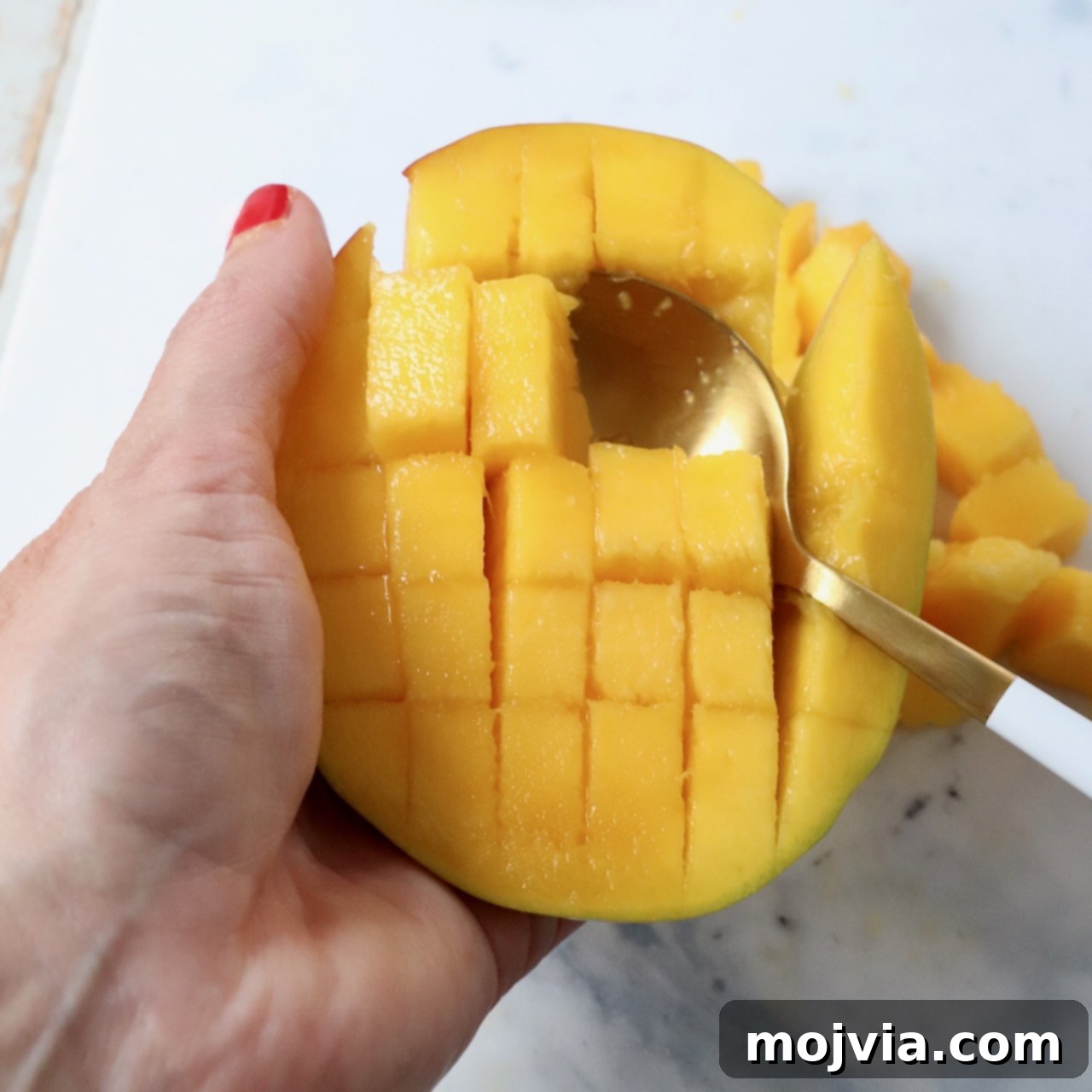
Table of Contents
- Introduction to Mangoes
- Health Benefits of Mangoes
- How to Select a Ripe Mango
- Essential Tools for Cutting a Mango
- Step-by-Step Guide to Cut a Mango
- Alternative Methods for Cutting Mangoes
- Storing and Freezing Mangoes
- Creative Ways to Enjoy Mangoes
- Frequently Asked Questions
- More Kitchen Tutorials
Introduction to Mangoes
During the warm summer months, when mangoes are in peak season, there’s nothing quite like the experience of dicing up this sweet, fragrant fruit. From topping creamy yogurts and vibrant acai bowls to adding a tropical twist to savory salads and tacos, the versatility of mangoes is truly remarkable. Originating from South Asia, mangoes have been cultivated for thousands of years and are beloved worldwide for their juicy flesh and distinct aroma. While they might seem intimidating to cut at first glance due to their large central pit, with a few simple tips and tricks, you’ll become a mango-cutting pro in no time. Get ready to embrace the deliciousness of this tropical gem!
Health Benefits of Mangoes
Beyond their irresistible taste, mangoes are a powerhouse of nutrition, offering a wealth of health benefits that make them an excellent addition to any diet. This vibrant fruit is packed with essential vitamins and minerals, contributing to overall well-being. Here’s a closer look at what makes mangoes so good for you:
- Rich in Vitamin C: A single mango can provide a significant portion of your daily Vitamin C needs, a crucial antioxidant that supports immune function, promotes healthy skin, and aids in iron absorption.
- High in Vitamin A: Mangoes are an excellent source of Vitamin A, which is vital for vision health, particularly in maintaining good eyesight and preventing night blindness.
- Dietary Fiber: The fiber content in mangoes aids in digestion, helps prevent constipation, and promotes a healthy digestive tract. It also contributes to a feeling of fullness, which can be beneficial for weight management.
- Antioxidants: Mangoes contain various antioxidants, including mangiferin, catechins, anthocyanins, and gallotannins, which help protect your cells from damage caused by free radicals, potentially reducing the risk of chronic diseases.
- Potassium: This important mineral found in mangoes helps regulate blood pressure and supports heart health.
- Folate and Vitamin B6: These B vitamins play a role in energy production and brain function, supporting cognitive health and overall vitality.
Incorporating mangoes into your diet is a delicious way to boost your nutrient intake and enjoy a naturally sweet treat with significant health advantages.
How to Select a Ripe Mango
Choosing the perfect mango is the first crucial step to enjoying its sweet, juicy flavor. A truly ripe mango will offer the best texture and taste, making your culinary experience much more rewarding. Here’s how to ensure you pick a winner at the grocery store:
The Gentle Squeeze Test
Much like selecting a ripe avocado, the most reliable indicator of a mango’s ripeness is its firmness. Gently squeeze the mango. You’re looking for a fruit that has a slight “give” when pressed. If it’s incredibly firm and unyielding, it’s not ripe yet and will need a few more days on the counter to soften. Conversely, if your fingers indent easily and the mango feels mushy, it’s likely overripe. An overripe mango will be difficult to cut cleanly and may have an unpleasant, fibrous texture. The ideal mango will feel soft but firm, indicating a perfect balance of sweetness and readiness for consumption.
Don’t Judge a Mango by Its Cover (Color)
A common misconception is that a ripe mango must be brightly colored with vibrant reds or yellows. However, relying solely on color can be misleading because different mango varieties display different colors when ripe. For example, some varieties, like the Ataulfo mango, turn a deep golden yellow, while others, like the Tommy Atkins, can remain predominantly green with hints of red even when perfectly ripe. A completely green mango, regardless of variety, is almost certainly unripe and will be hard and tart. As mangoes ripen, their skin typically develops shades of yellow, orange, or red, but the squeeze test remains paramount.
The Sweet Smell Test
Another excellent way to identify a ripe mango is by its aroma. Lift the mango and sniff near the stem end. A ripe mango will emit a distinctly sweet, fruity, and fragrant scent. If there’s no scent, it’s likely not ripe. If it smells sour or alcoholic, it’s past its prime. A good, sweet aroma is a strong indication that the mango is ready to eat.
Ripening an Unripe Mango
If you bring home a mango that’s a bit too firm, don’t worry! You can ripen it at home by leaving it on your kitchen counter at room temperature. To speed up the process, place it in a paper bag with a banana or apple; these fruits release ethylene gas, a natural ripening agent. Check it daily using the squeeze test and smell test until it reaches your desired ripeness. Once ripe, move it to the refrigerator to slow down further ripening.
Essential Tools for Cutting a Mango
Before you begin, gather these simple tools to ensure a smooth and safe mango-cutting experience:
- Sharp Chef’s Knife: A sharp knife is crucial for clean cuts and safety. A dull knife is more likely to slip.
- Cutting Board: A stable, non-slip cutting board will prevent the mango from moving while you cut.
- Spoon or Paring Knife: Useful for scooping out the flesh or removing any remaining bits around the pit.
Step-by-Step Guide to Cut a Mango
Cutting a mango is surprisingly simple once you understand the location of its flat, oval-shaped seed. Follow these steps for perfectly diced mango every time:
- Wash the Mango: Before cutting, always wash the mango thoroughly under cool running water to remove any dirt or residues from the skin.
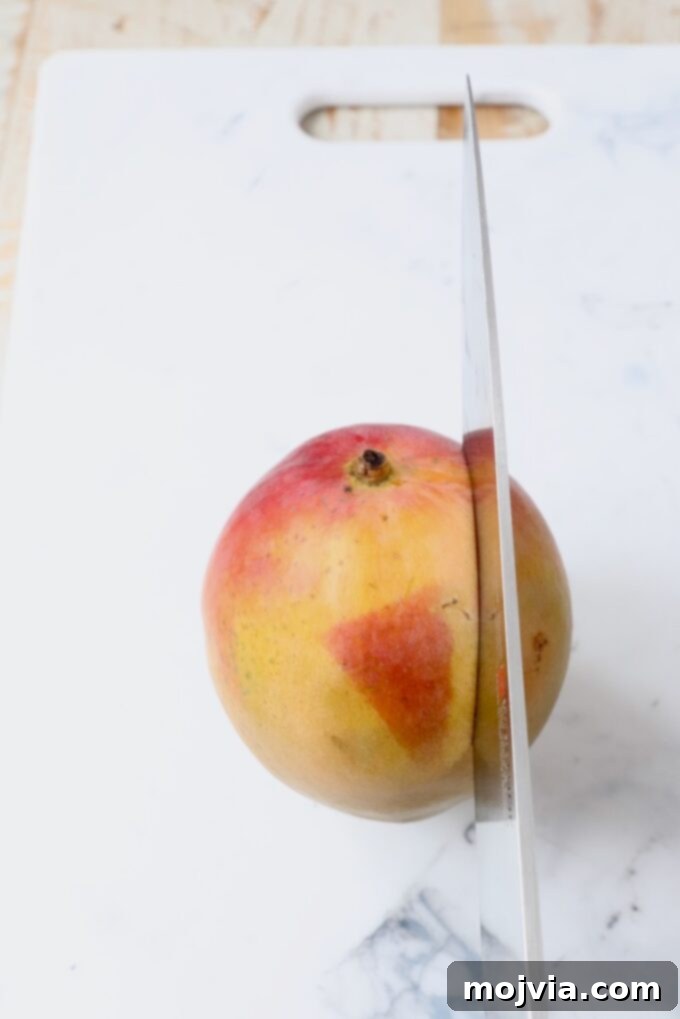
- Position the Mango: Place the mango upright on your cutting board with the stem end facing up. Visualize the large, flat pit running through the center of the mango. You want to make your cuts on either side of this pit.
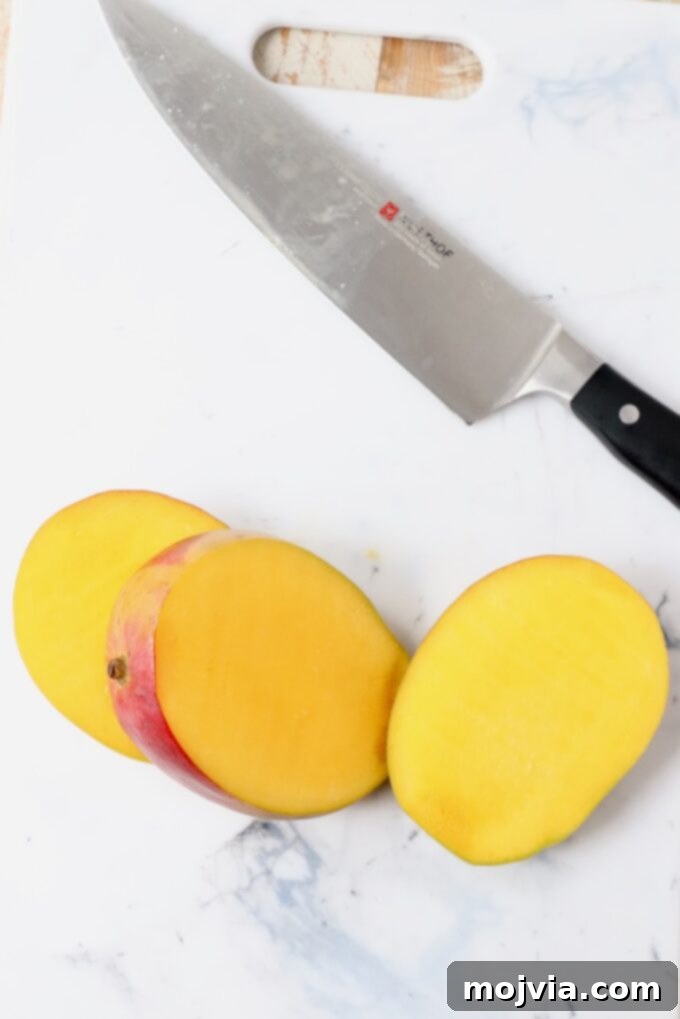
- Slice the “Cheeks”: Using your sharp knife, make the first cut about 1/2 to 3/4 inches (approximately 1 to 2 cm) in from the widest side of the mango, slicing straight down. You should feel the knife go through the flesh without hitting the hard pit. Repeat this process on the other side of the mango, creating two large “cheeks” of mango flesh. These are the main parts you’ll be dicing.
- Deal with the Middle Section: The remaining middle section contains the pit. You can either discard it or, for maximum yield, carefully trim off any remaining flesh around the edges of the pit. Be cautious, as the pit is slippery. You can also carefully peel the skin from this section and gnaw the sweet flesh directly from the pit, if desired.
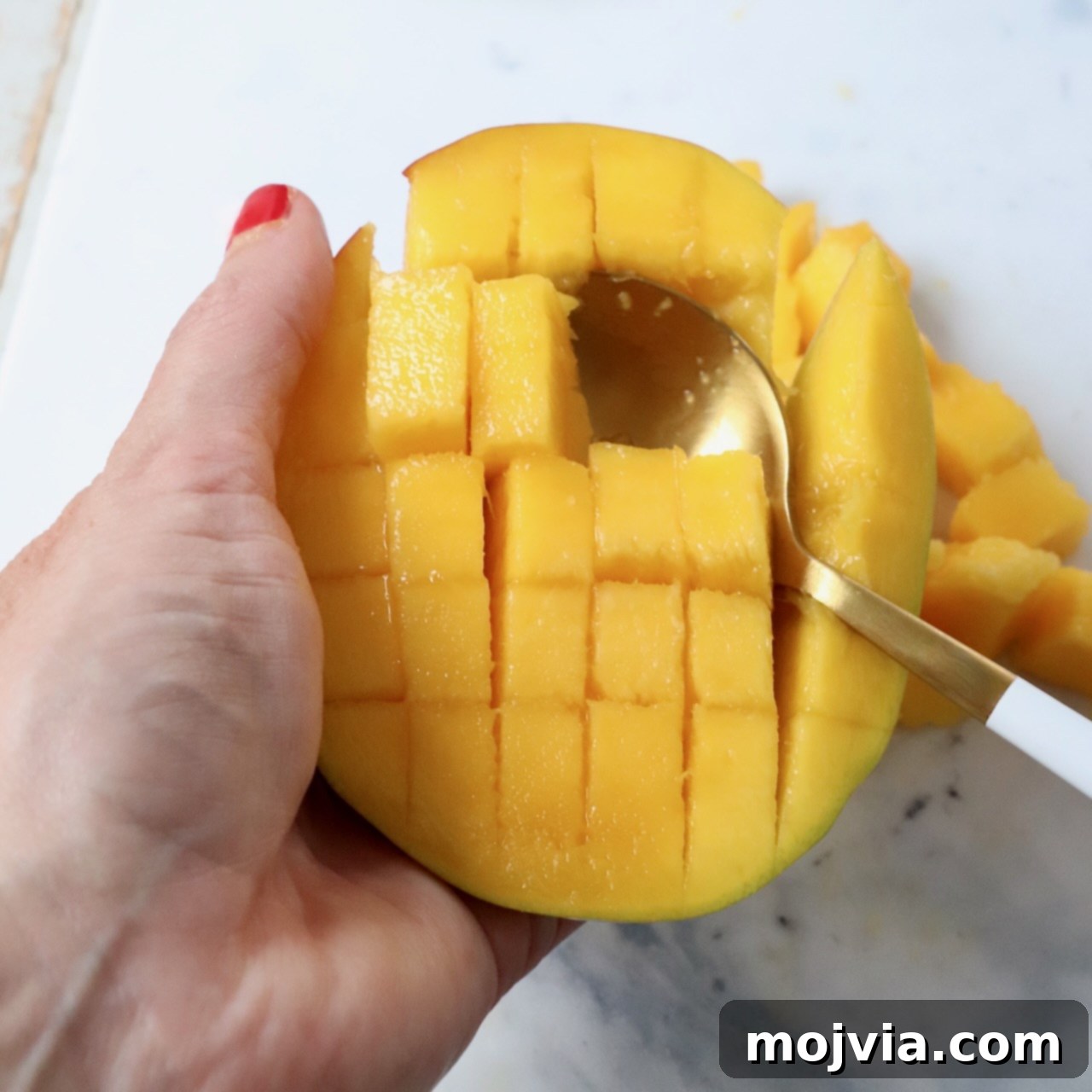
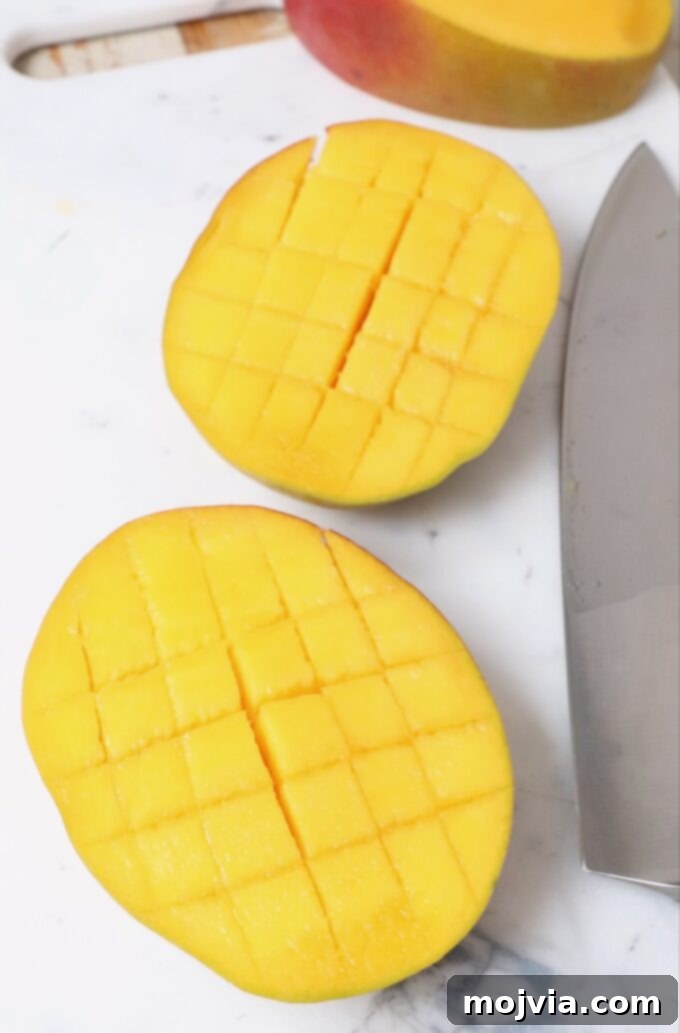
- Score the Mango Cheeks: Take one of the mango cheeks. With the skin side down, use your sharp knife to carefully score the mango flesh into a grid pattern. Make vertical cuts, then horizontal cuts, approximately 1/2-inch to 1-inch apart, depending on your desired cube size. Make sure to cut all the way through the flesh, but be careful not to cut through the skin. The goal is to create a pattern of cubes while keeping the skin intact as a natural “bowl.”
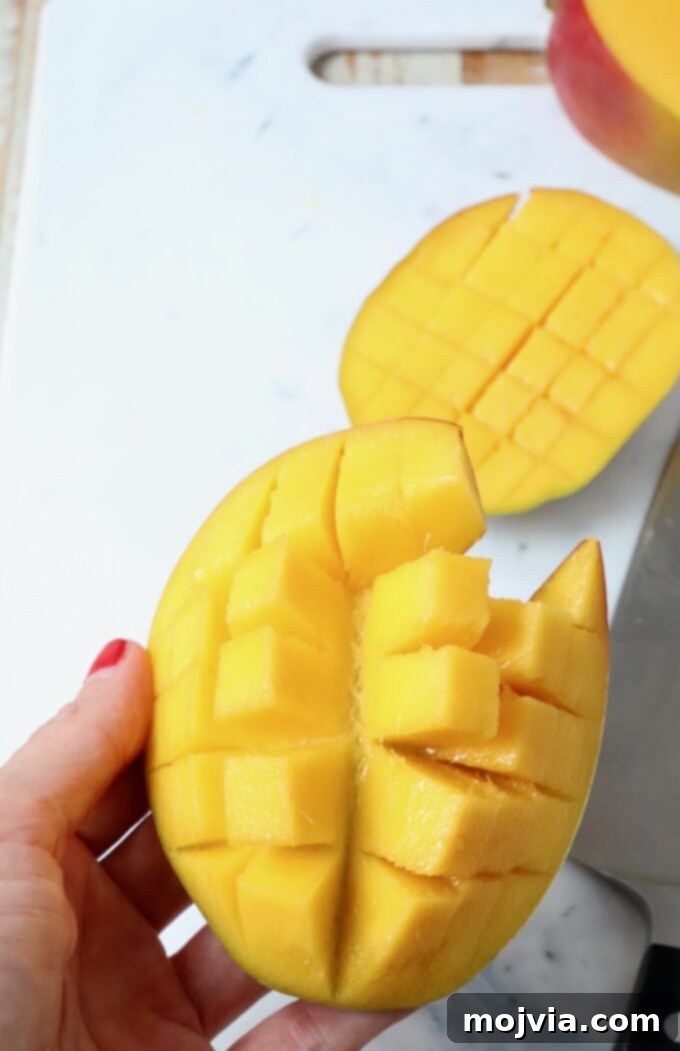
- “Invert” and Scoop: Gently push up on the skin side of the scored mango cheek. The flesh will naturally invert, causing the diced cubes to fan out and separate from each other, making them easy to remove.
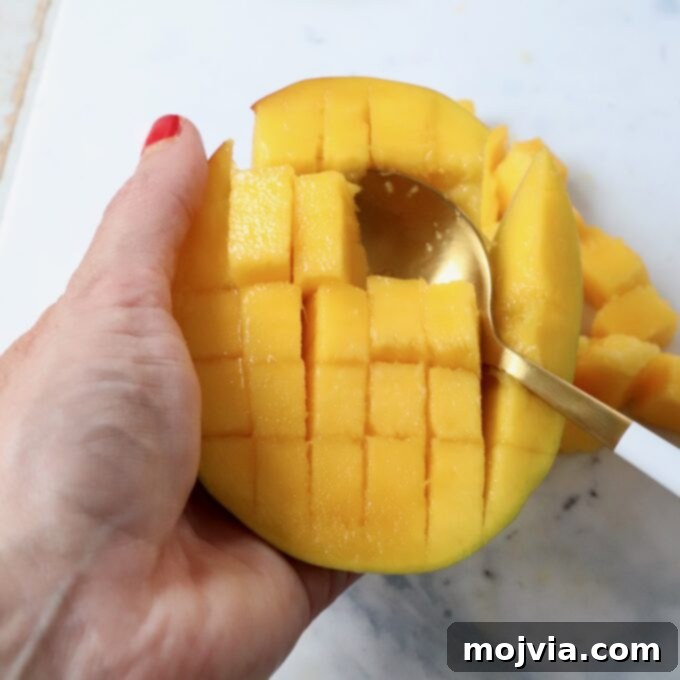
- Remove the Cubes: Using a spoon, scoop the mango cubes directly from the inverted skin into a bowl. Alternatively, if the cubes are fanned out, you can simply slice them off the skin with your knife.
- Repeat for the Second Cheek: Follow steps 5-7 for the other mango cheek.
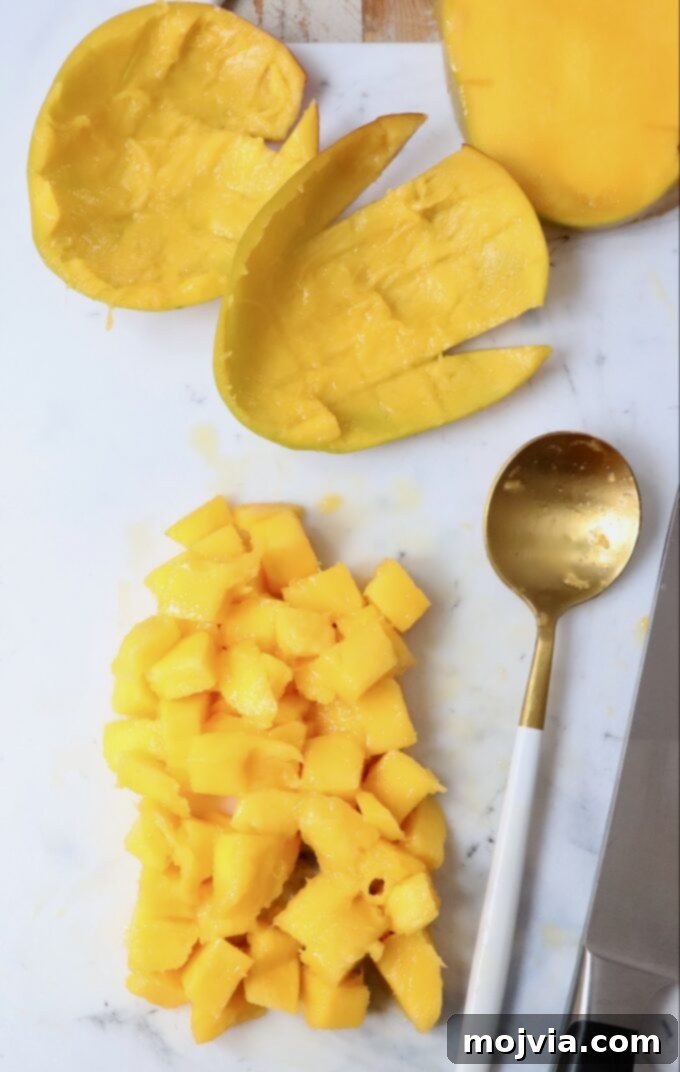
- Discard Skin and Pit: Once you’ve removed all the delicious flesh, discard the mango skin and the central pit.
Congratulations, you now have perfectly diced mango ready to be enjoyed! Remember to always exercise caution when working with sharp knives.
Alternative Methods for Cutting Mangoes
While the scoring and scooping method is popular and efficient, there are a couple of other techniques you might consider:
- How to Cut a Mango into Strips: If you prefer mango strips for salads or wraps, simply slice the mango cheeks as described above. Instead of creating a grid pattern, just make parallel vertical cuts through the flesh, again careful not to cut through the skin. Once you have your strips, use a spoon or a small paring knife to slide underneath the slices and separate them from the skin.
- How to Cut a Mango with a Glass: This is a trendy kitchen hack that works particularly well with very ripe, soft mangoes. After you’ve sliced off the two cheeks from the central pit, take one cheek and hold it with the skin facing outwards. Position the thin edge of a sturdy glass (a pint glass or similar works well) at the junction between the mango flesh and the skin, near the narrower end. Apply gentle pressure and slide the glass downwards, along the curve of the skin. The glass will separate the flesh from the skin in one smooth motion. This method is incredibly fast and effective for removing the skin from soft mangoes, but it requires practice and a perfectly ripe fruit. If the mango isn’t ripe enough, the flesh will stick stubbornly to the skin.
Frequently Asked Questions
- Can you eat mango skin? While mango skin is technically edible and contains some nutrients, it also contains compounds that can cause an allergic reaction in some people (similar to poison ivy, as mangoes are in the same plant family). More commonly, the skin has a bitter, unpleasant taste and a tough texture that most people find unappealing. For these reasons, it is generally recommended to remove and discard the skin before eating the mango flesh.
- Should mangoes be refrigerated? Unripe mangoes should be stored at room temperature on your kitchen counter to allow them to ripen naturally. Once a mango is ripe (it passes the gentle squeeze and sweet smell test), it should be transferred to the refrigerator. Refrigeration slows down the ripening process significantly and can keep the ripe mango fresh for up to 5 days. For peeled, sliced, or diced mango, always store it in an airtight container in the refrigerator to maintain freshness and consume it within 3-5 days.
- Can you freeze mangoes? Absolutely! Freezing mangoes is an excellent way to preserve their deliciousness and enjoy them year-round. For best results, peel and dice the mangoes first. Spread the diced mango pieces in a single layer on a baking sheet and freeze for 1-2 hours until solid. This prevents them from clumping together. Once frozen, transfer the mango pieces to a freezer-safe bag or airtight container, removing as much air as possible to prevent freezer burn. Frozen mangoes can be stored for up to 6 months and are perfect for smoothies, frozen drinks, or quick desserts.
- How do I ripen an unripe mango quickly? As mentioned earlier, placing an unripe mango in a paper bag with other ethylene-producing fruits like apples or bananas can significantly speed up the ripening process. The paper bag traps the ethylene gas, helping the mango ripen faster, usually within 1-3 days.
- What if I accidentally cut into the pit? Don’t worry, it happens! If your knife hits the pit, simply adjust your cut slightly. The pit is very flat, so moving your knife just a fraction of an inch to the side should allow you to slice around it.
Creative Ways to Enjoy Mangoes in Recipes
Once you’ve mastered the art of picking and cutting the perfect mango, a world of culinary possibilities opens up! This versatile fruit can elevate both sweet and savory dishes with its unique tropical sweetness and vibrant color. Here are some of our favorite ways to incorporate fresh mango into your cooking:
Savory Applications:
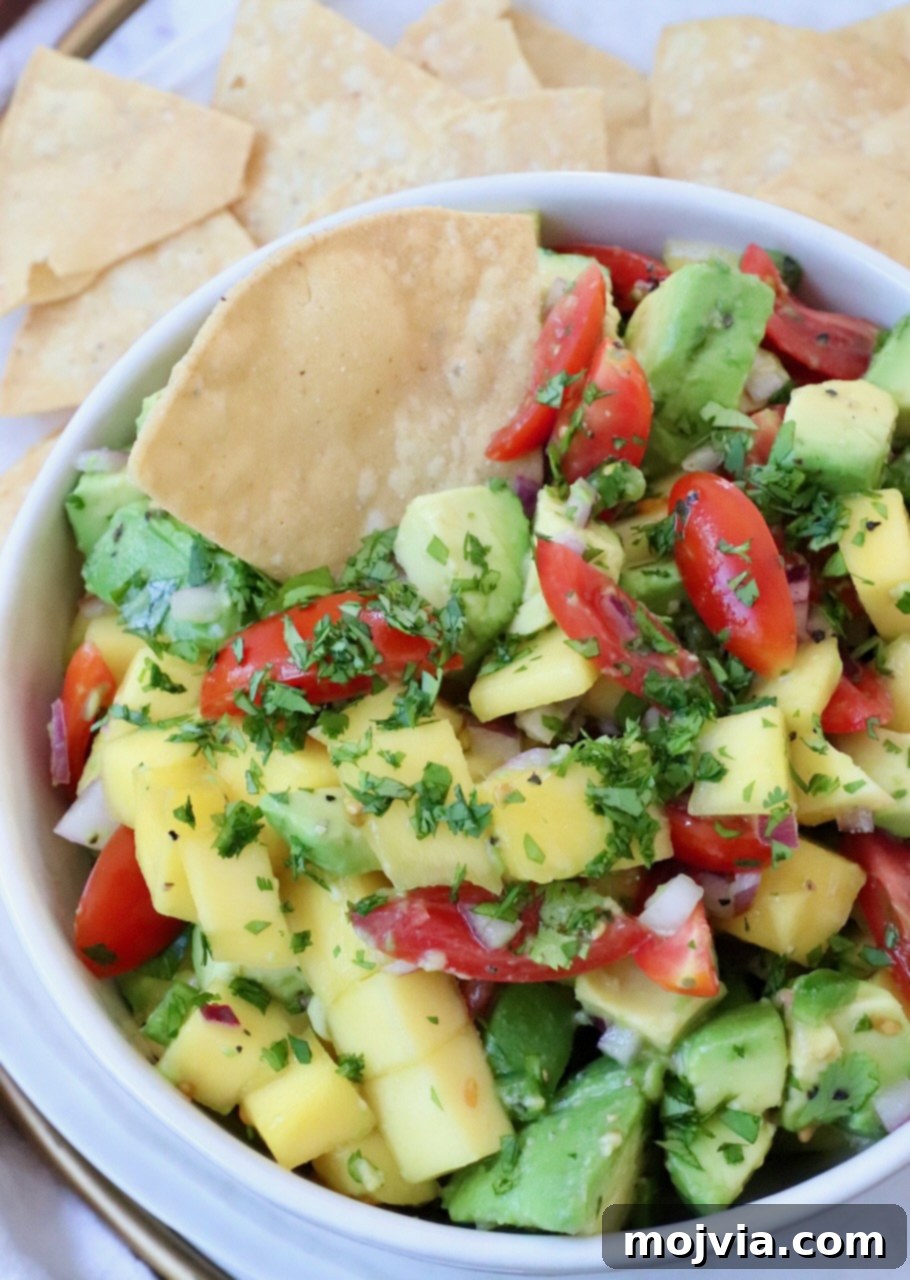
- Salsas: Without a doubt, mango salsa is a game-changer! Combining sweet mango with spicy jalapeños, crisp red onion, cilantro, and a squeeze of lime creates an explosive flavor profile. It’s truly our favorite way to enjoy mango and is perfect for topping grilled fish (like salmon or mahi-mahi), chicken, pork, or tacos. It also makes an incredible dip with tortilla chips, as showcased by our Mango Avocado Salsa.
- Salads: Diced mango adds a fantastic texture and sweetness to green salads. Pair it with arugula, spinach, grilled shrimp, or chicken for a refreshing and hearty meal. The sweetness of the mango beautifully complements peppery greens and savory proteins. Don’t miss the Shrimp Mango Arugula Salad or the Pineapple Mango Kale Salad.
- Tacos and Wraps: Mango salsa is a natural fit for fish tacos or chicken tacos, adding a much-needed juicy contrast to the savory fillings. Consider the Chipotle Honey Glazed Salmon Tacos with Mango Salsa for a truly memorable meal. For lighter options, try Caribbean Mango Avocado Ahi Lettuce Wraps.
- Stir-Fries: Add mango towards the end of cooking a chicken or shrimp stir-fry for a sweet and tangy finish. Its vibrant flavor can balance rich sauces. The Mango Chicken Stir Fry is a great example.
- Grain Bowls: Toss diced mango into quinoa or rice bowls with other vegetables and proteins for a balanced, flavorful lunch or dinner. Check out the Mango Quinoa Salad.
Sweet Applications:
- Smoothies and Frozen Drinks: Frozen mango chunks are essential for creating thick, creamy, and naturally sweet smoothies. Combine with yogurt, banana, and other fruits for a nutritious breakfast or snack. They also make incredible frozen cocktails, like a Frozen Mango Margarita or a Spicy Serrano Mango Margarita.
- Desserts: From mango sorbet and ice cream to mango sticky rice and simple fruit tarts, mangoes lend their exotic flavor beautifully to a variety of sweet treats.
- Breakfast Toppings: Brighten up your morning yogurt, oatmeal, or acai bowls with fresh, diced mango for a healthy and delicious start to your day.
Now that you’re an expert in preparing this magnificent fruit, don’t hesitate to experiment with these and other delicious mango recipes. Your taste buds will thank you!
More Kitchen Tutorials to Master
Become a true kitchen virtuoso! Don’t miss these other quick and easy how-to posts designed to boost your culinary confidence and skill.

Pin Recipe
How To Cut A Mango
Learn how to cut a mango with this easy step-by-step guide! Mango is a delicious stone fruit that’s perfect for eating right out of the skin, or dicing up and adding to salsas, salads and other recipes. Use my tips and tricks to pick a perfectly ripe mango, then cut it open with a knife, remove the seed, and dice it up!
Servings: 1 mango
Prep Time: 5 mins
Total Time: 5 mins
Author: Whitney Bond
Course: Breakfast, Brunch, Dessert
Cuisine: American
Ingredients
- 1 ripe mango
Instructions
- Start by selecting a ripe mango at the grocery store. Give the mango a gentle squeeze; it should have a little give but not indent when gently squeezed.
- Once you have a ripe mango at home, position it upright on a cutting board with the stem facing up.
- The middle of the mango holds the seed, so you want to slice on each side of the seed, about 1 inch in from the edge of the mango.
- Once you slice both sides off the seed, you can set the middle seed aside. For the two slices of mango, use a sharp knife to slice the mango into a grid pattern, most of the way down through the mango flesh, but not through the skin.
- Pick up the sliced mango, then run a spoon between the mango flesh and the skin to remove the cubes of mango.
- Discard the skin of the mango. If you’d like, you can use a knife to try to remove any flesh left on the seed of the mango from the middle. But most of the middle is seed, so you will get very little flesh between the skin and the seed.
Notes
- To cut the mango into strips, instead of cubes, simply slice the mango vertically. Use a spoon or small paring knife to go under the mango slices and remove them from the skin.
- While the skin of a mango is edible, it has an unpleasant taste, so we do not recommend eating it. Once you’ve removed the mango flesh, simply discard the skin.
- Once mangoes are ripe, they should be moved from room temperature to the fridge. This will slow down the ripening process and will keep the mangoes good for up to 5 days. Peeled, sliced, or diced mango should also be stored in an airtight container in the refrigerator and eaten within 3-5 days.
- To freeze peeled and diced mango, place the mango in a freezer-safe bag, remove as much air as possible, and freeze for up to 6 months.
Nutrition Facts
Carbohydrates 31 g (10%)
Protein 2 g (4%)
Fat 1 g (2%)
Sodium 2 mg
Potassium 348 mg (10%)
Fiber 3 g (12%)
Sugar 28 g (31%)
Vitamin A 2240 mg (45%)
Vitamin C 75 mg (91%)
Calcium 23 mg (2%)
Iron 0.3 mg (2%)
Did you make this recipe?
Tag @WhitneyBond on Instagram and hashtag it #WBRecipes!