
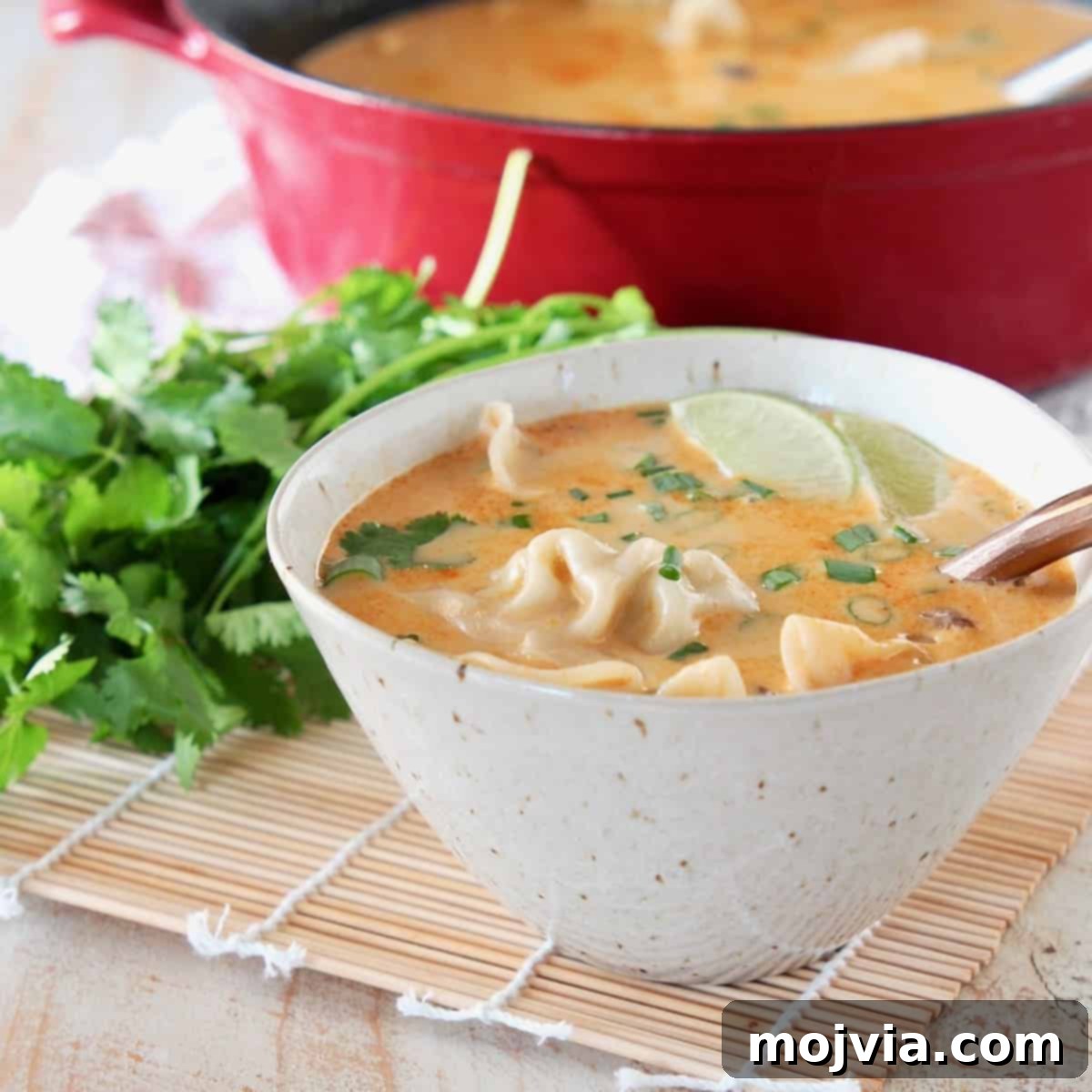
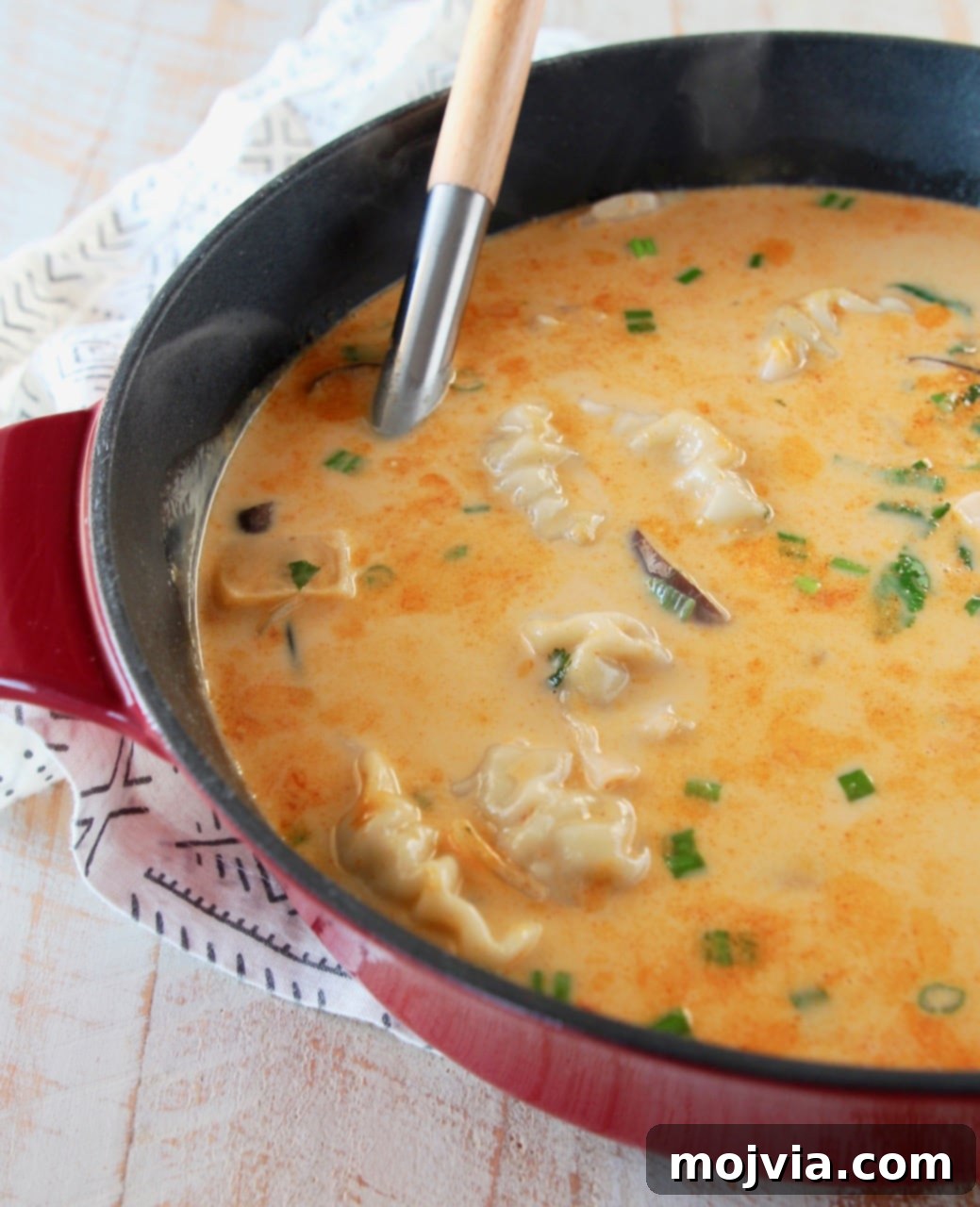
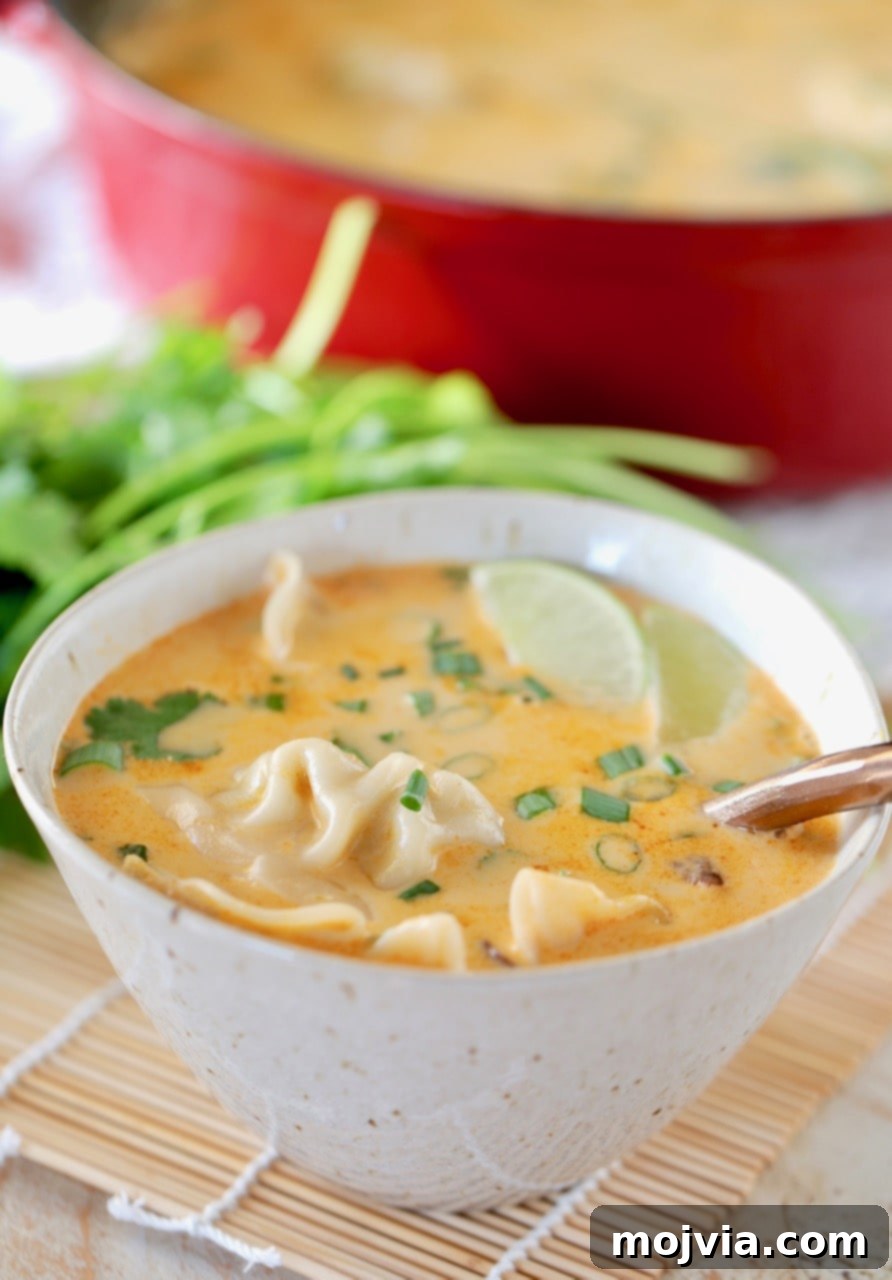
Thai coconut potsticker soup offers a delightful fusion of creamy Thai flavors with the comforting bite of potstickers, ready to enjoy in just 29 minutes! This recipe provides a modern, fun twist on the beloved traditional Tom Kha soup.
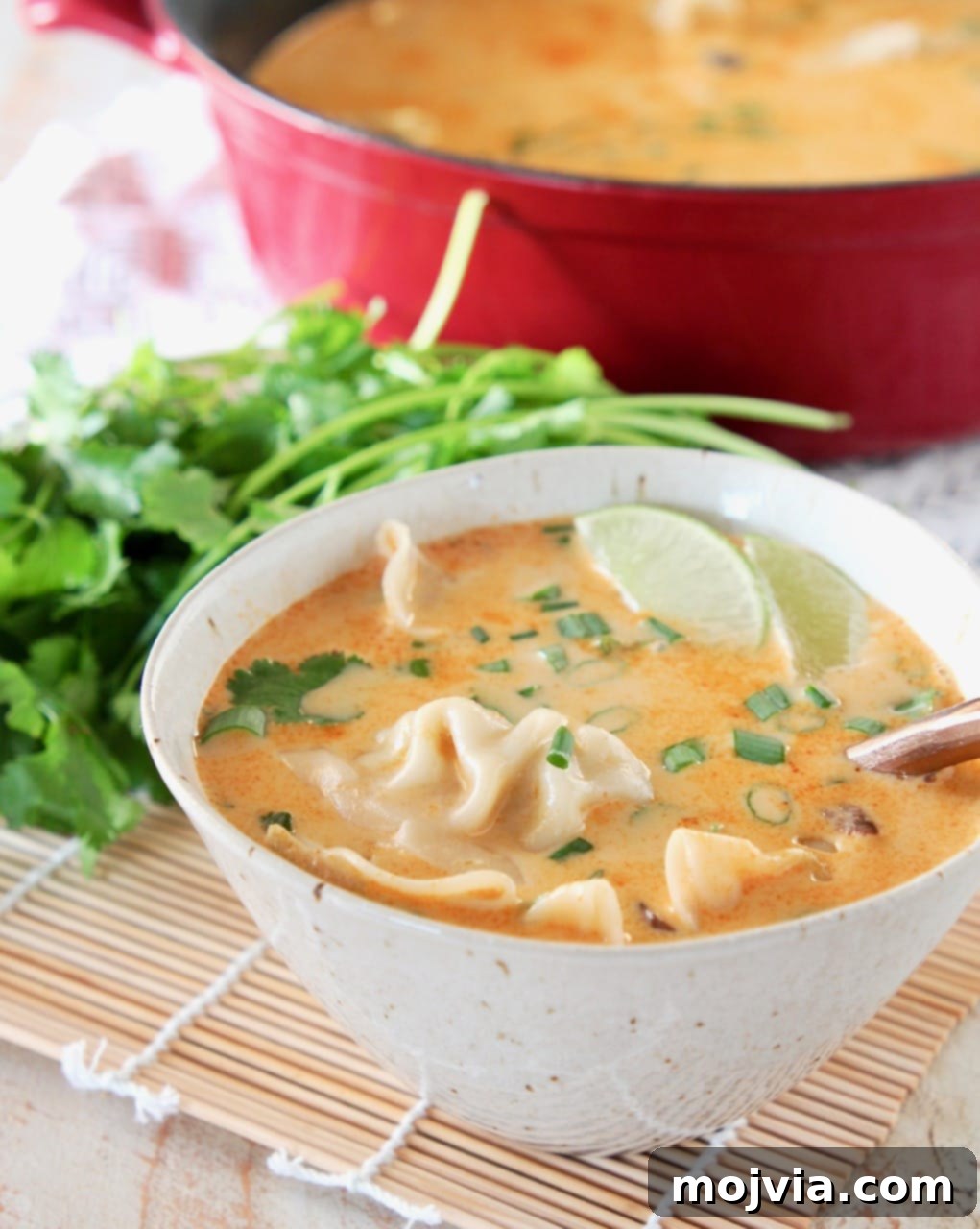
There’s something uniquely comforting about a warm bowl of Thai soup, especially one as aromatic and rich as Tom Kha. Whenever I crave authentic Thai cuisine, my thoughts often drift to my favorite local Thai restaurant, Koon Thai, a true gem in San Diego. Their culinary creations, from their flaky pan-fried roti bread to their exquisite curries and flavorful noodle dishes, are simply unparalleled. But it’s their Tom Kha soup that truly captures my heart every time. After countless delightful experiences there, I was inspired to recreate that magic in my own kitchen, adding a personal, convenient twist.
This quest led to the creation of this incredibly satisfying Thai Coconut Potsticker Soup, a recipe that brings the authentic flavors of Thailand to your table with minimal effort. It’s perfect for busy weeknights when you desire something both exotic and comforting, without spending hours in the kitchen.
What is Tom Kha Soup? A Glimpse into Thai Comfort Food
At its heart, Tom Kha soup is a classic Thai coconut soup, celebrated for its luxurious creamy texture and vibrant balance of sweet, sour, and mildly spicy flavors. The foundation of this beloved dish typically includes rich coconut milk, fragrant lemongrass, spicy Thai chili peppers, fresh cilantro, earthy mushrooms, savory fish sauce, and a bright squeeze of lime juice. While traditional versions often feature tender slices of chicken (Tom Kha Gai), it’s also common to find variations with shrimp, pork, or tofu, each offering a unique protein complement to the harmonious broth. This soup is more than just a meal; it’s an experience, a journey through the complex and delicate flavors that define Thai culinary artistry.
Tom Kha vs. Tom Yum Soup: Understanding the Differences
While both Tom Kha and Tom Yum are iconic Thai soups, they possess distinct characteristics that set them apart. Understanding these differences can enhance your appreciation for each. Tom Yum Soup is renowned for its bold, hot, and intensely sour profile. Its base is typically a clear broth made from boiled meat (often shrimp or chicken) infused with a powerful blend of herbs like lemongrass, galangal, kaffir lime leaves, and plenty of chili. It prioritizes a sharp, spicy kick and a tangy finish.
In contrast, Tom Kha Soup is built upon a creamy, rich coconut milk base, which mellows the spices and introduces a delightful sweetness. While still featuring the essential aromatic herbs like lemongrass and galangal, the coconut milk provides a luxurious mouthfeel and a more balanced flavor, leaning sweeter and spicier with a subtle sour undertone, rather than the sharp sourness of Tom Yum. It’s a gentler, yet equally complex, culinary embrace.
The Potsticker Twist: Convenience Meets Flavor
For this rendition of Tom Kha, I’ve incorporated frozen chicken potstickers instead of traditional chicken or other proteins. This simple swap transforms the soup into an incredibly easy and substantial meal, perfect for a busy weeknight. The potstickers absorb the rich, flavorful broth, adding a delightful texture and heartiness that makes this a truly filling soup. It’s an ingenious way to enjoy the complexity of Tom Kha soup in under 30 minutes!
We loved this soup!!! So fast and easy to make. I added chili paste to mine for a little kick! Much enjoyed! Thank you!
CHRISTINA
Essential Ingredients for Your Potsticker Soup
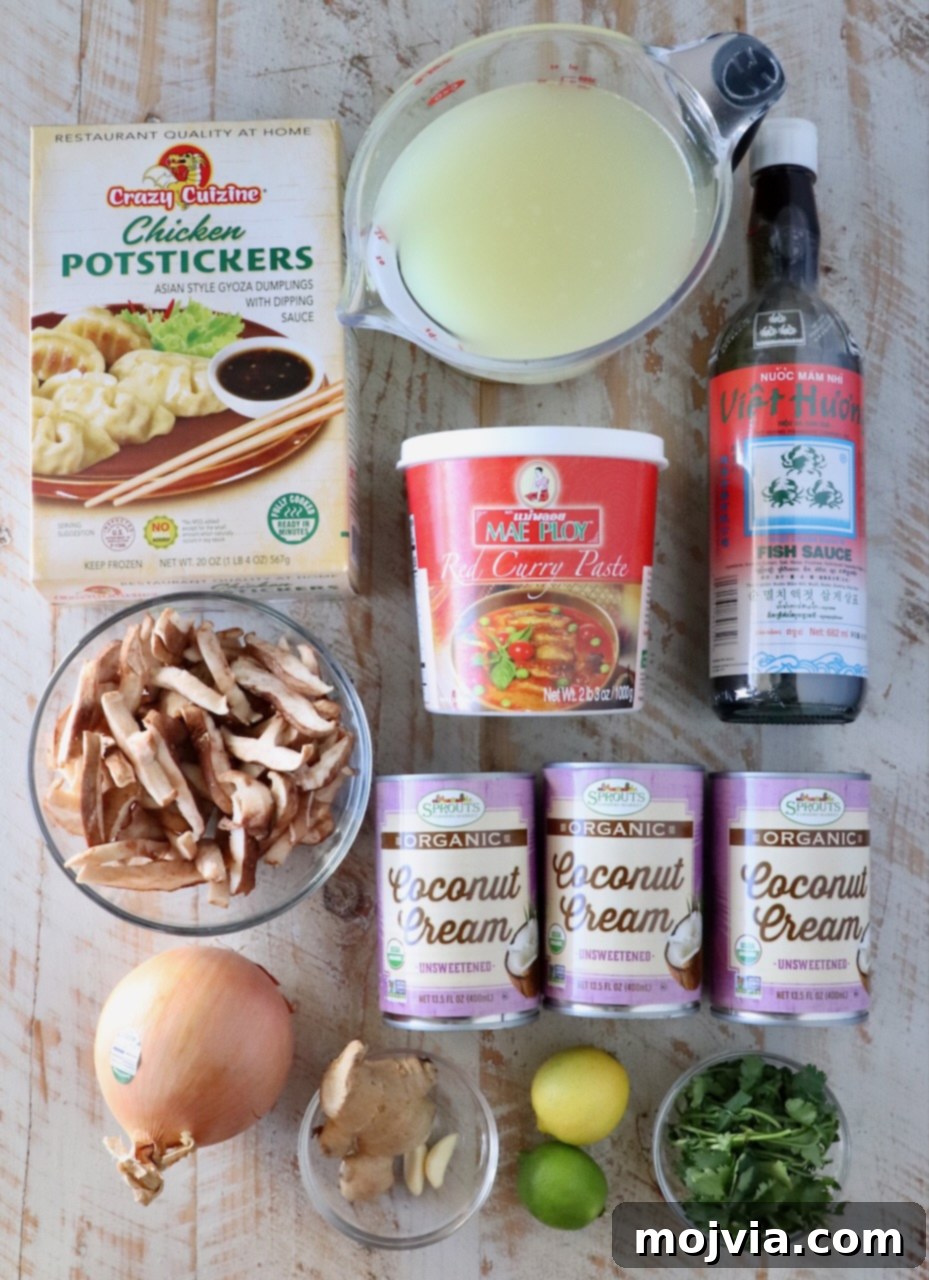
Crafting a truly authentic and delicious Thai coconut potsticker soup starts with selecting the right ingredients. Here, I’ll guide you through the key components, explaining their role in the flavor profile and offering helpful substitution options. For precise measurements, please refer to the detailed recipe card at the bottom of this post.
- Fresh Garlic: Whole cloves of garlic are crucial for infusing the broth with a foundational aromatic depth. We’ll gently simmer them to extract maximum flavor, then remove them for a clear, pure broth.
- Fresh Ginger: A knob of fresh ginger, peeled and lightly crushed, adds a warm, spicy, and slightly sweet undertone that is characteristic of Thai cuisine. Freezing ginger is a fantastic trick for longer storage and easy grating; simply peel and add a 1-inch piece directly from the freezer to the simmering broth. Like the garlic, it will be removed before serving.
- Lemongrass: This distinctive herb provides a bright, citrusy, and slightly minty aroma that is essential to Tom Kha. If fresh lemongrass is hard to find, you can substitute it with an additional teaspoon of lime zest or 1 teaspoon of lemongrass paste, which is often available in the produce section of major grocery stores. I’ve personally tested all three options, and each yields a delicious result.
- Fresh Limes: We’ll use both the zest and the juice to impart a crucial bright acidity and a fragrant citrus aroma. You’ll need two small limes or one large one to ensure you have enough for both.
- Thai Red Curry Paste: This paste is a powerhouse of flavor, contributing a balanced spiciness that harmonizes beautifully with the sweetness of the coconut milk, the tartness of the lime, and the umami of the fish sauce. Look for it in the Asian aisle of your local supermarket. I highly recommend the Mae Ploy brand for its authentic flavor. Please note, this soup is designed to be mildly spicy; for extra heat, add a drizzle of sriracha or chili crisp when serving.
- High-Quality Chicken Broth: As one of the main liquid components, the quality of your chicken broth significantly impacts the overall flavor. Opt for a good quality store-bought broth or homemade stock. For an exceptionally rich flavor, I swear by Custom Culinary Chicken Base, although it’s a bit of an investment for bouillon.
- Fish Sauce: An indispensable ingredient in Thai cooking, fish sauce (Nam Pla) adds a deep umami, salty, and savory complexity that rounds out the soup’s flavor profile. You can typically find it in the Asian food section.
- Coconut Milk: This provides the signature creaminess and subtle sweetness of Tom Kha. You can use full-fat canned coconut milk for a richer, thicker soup, or coconut cream for an even more decadent texture. Coconut milk is derived from simmering shredded coconut in water, while coconut cream uses a higher ratio of coconut, resulting in a thicker consistency.
- Onion: A medium-diced yellow onion contributes a mild, sweet base flavor that beautifully melds with the other aromatics.
- Shiitake Mushrooms: These mushrooms add an earthy, savory, and slightly chewy texture. Fresh shiitake mushrooms are often available at Asian markets, specialty stores, and larger supermarkets. If unavailable, sliced baby bella (cremini) mushrooms make a good substitute.
- Frozen Chicken Potstickers: The star of our unique twist! These provide a convenient, hearty, and utterly delicious protein element. For a vegetarian version, simply use vegetable potstickers, swap chicken broth for vegetable broth, and replace fish sauce with soy sauce.
- Fresh Cilantro: Stirred in just before serving, fresh chopped cilantro adds a burst of vibrant, herbaceous freshness that brightens the entire dish. If you’re not a fan of cilantro, feel free to omit it.
Step-by-Step Guide to Crafting Your Soup
Follow these simple steps, accompanied by visual aids, to create your perfect bowl of Thai Coconut Potsticker Soup. For a complete, detailed recipe, please refer to the recipe card at the very end of this article.
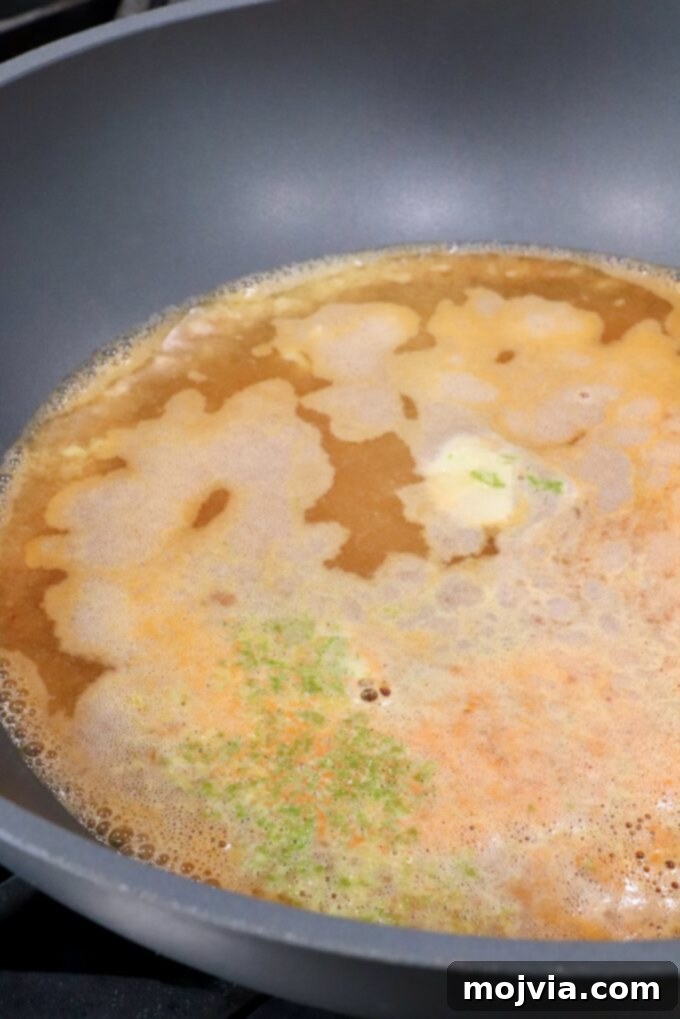
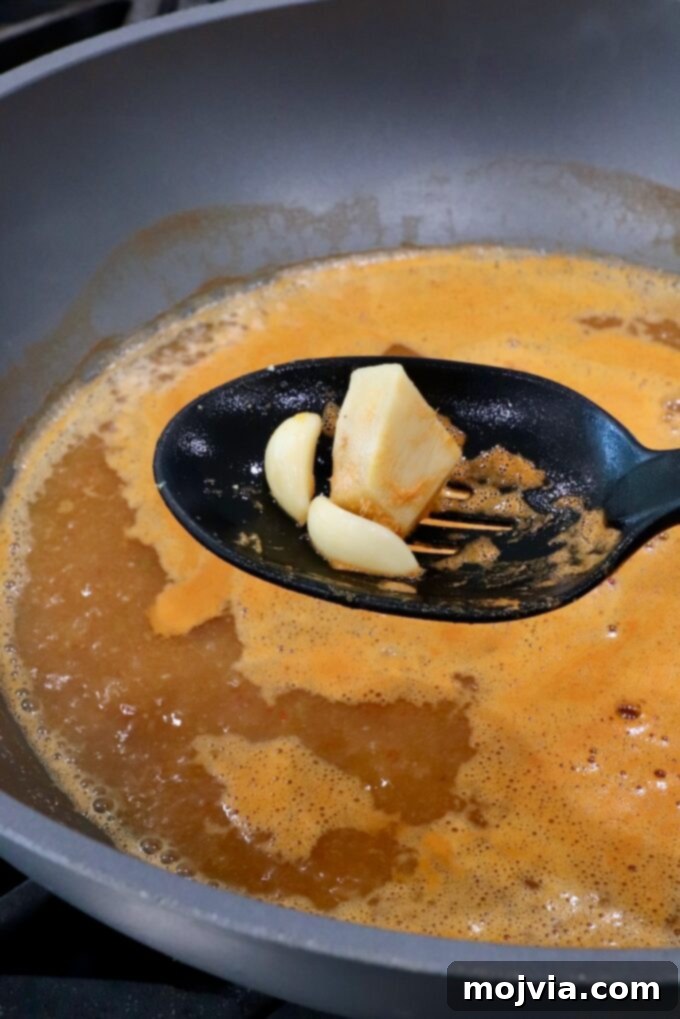
- Infuse the Broth with Aromatics: In a large pot or a spacious wok, combine the whole garlic cloves, a 1-inch piece of ginger, and three 3-inch sections of lemongrass. Add the chicken broth, red curry paste, and lime zest. Bring this mixture to a rolling boil over high heat, allowing the aromas to fully develop.
- Simmer and Remove Flavorings: Once boiling, reduce the stove heat to a steady medium simmer. Let the broth infuse for 5-7 minutes. Afterward, use a slotted spoon to carefully remove and discard the garlic, ginger, and lemongrass pieces. Their flavors have now fully permeated the broth, leaving a clean, fragrant liquid.
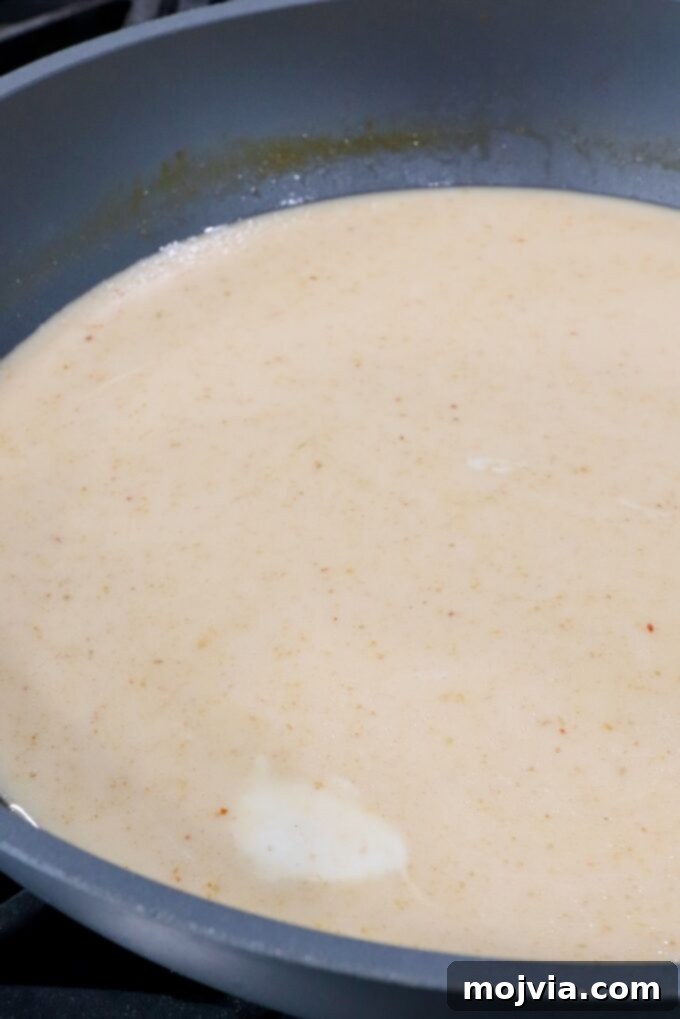
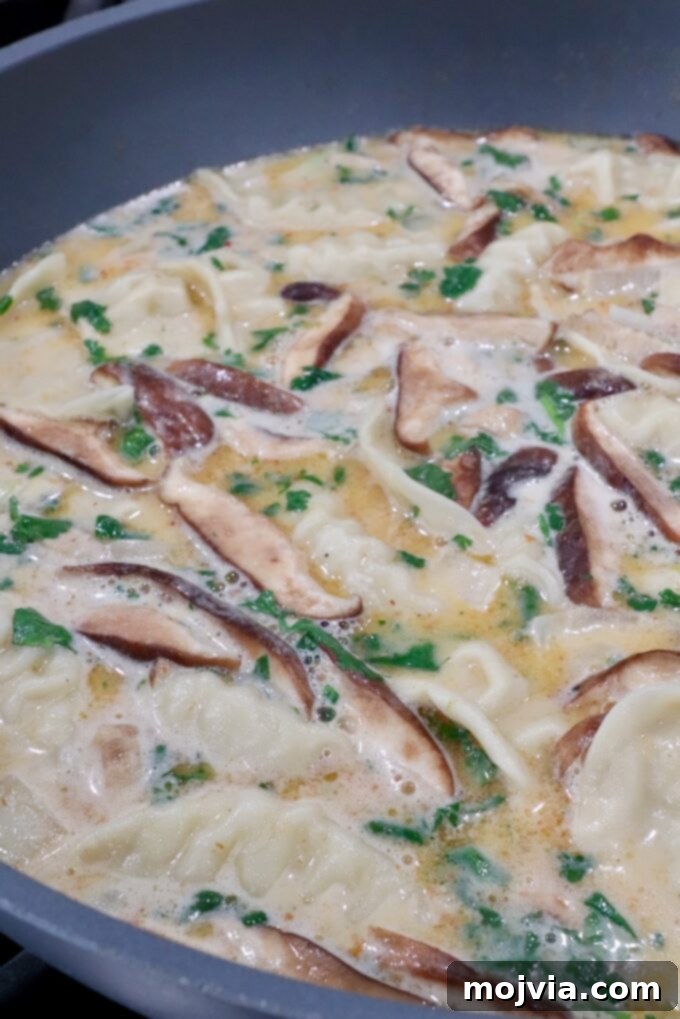
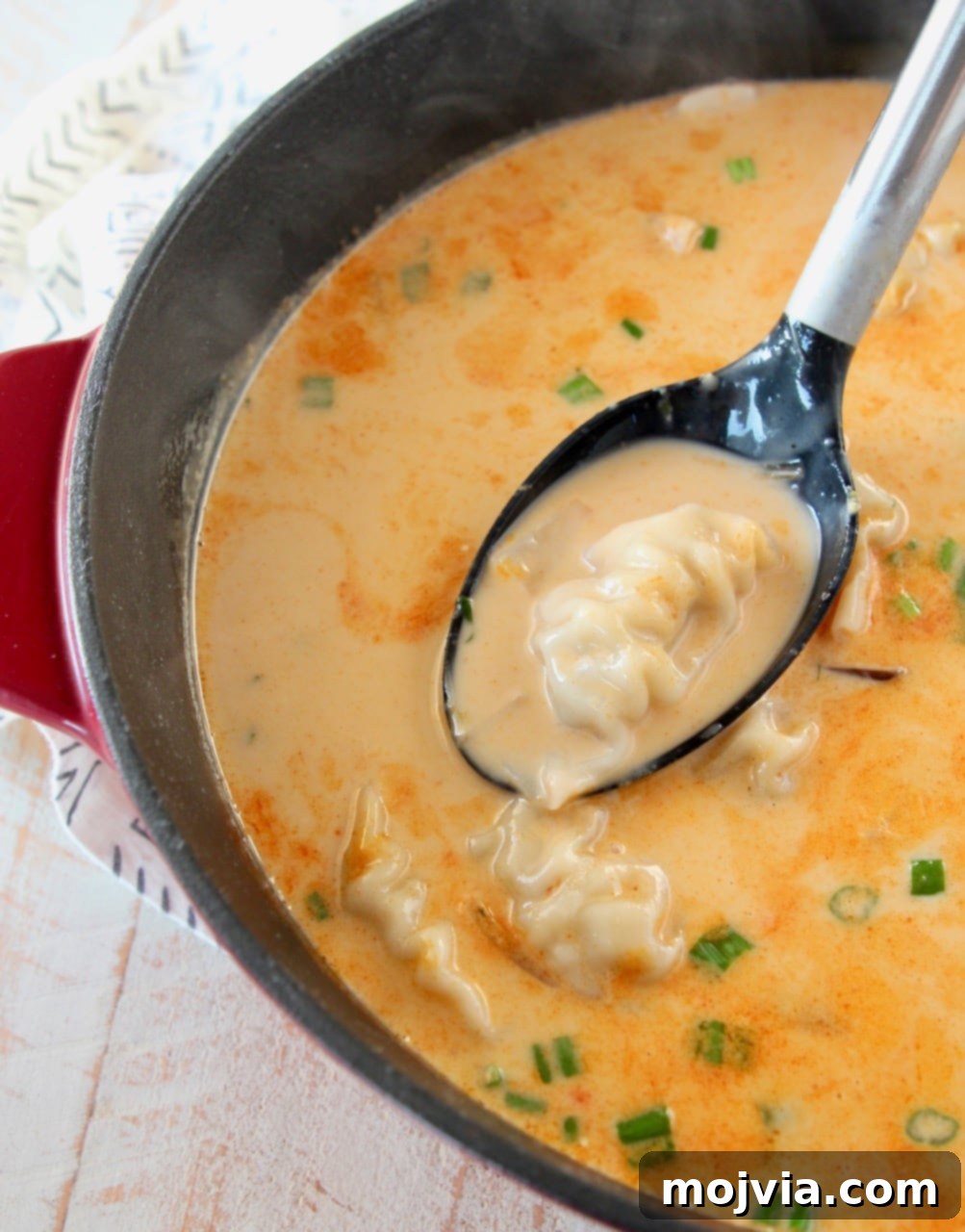
- Build the Soup’s Body: Pour in the creamy coconut milk and savory fish sauce. Add the diced onions, sliced shiitake mushrooms, and the frozen potstickers to the pot. Stir gently to combine all ingredients. Continue to simmer over medium heat for 8-10 minutes, or until the potstickers are thoroughly cooked through and tender, and the onions and mushrooms have softened.
- Final Touches and Serve: Just before serving, stir in the fresh lime juice for a final burst of brightness and the chopped cilantro for a refreshing, aromatic finish. Ladle the hot soup into bowls and serve immediately.
Tips for Reheating Your Thai Coconut Potsticker Soup
This soup is wonderfully convenient for meal prep, as it reheats quite easily. However, a crucial tip for maintaining the best texture involves the potstickers. When refrigerated and reheated within the soup, potstickers tend to lose their desirable texture, becoming soft or mushy.
To avoid this and ensure maximum enjoyment of leftovers:
- Planned Leftovers: If you anticipate having leftovers, only add half of the potstickers to the soup during its initial preparation. Serve and enjoy the portion with freshly cooked potstickers. Store the remaining soup (without potstickers) in an airtight container in the refrigerator.
- Stovetop Reheating: To reheat the stored soup, transfer it to a pot on the stove and warm over medium-high heat until it begins to simmer gently. Once simmering, add the reserved frozen potstickers directly to the hot soup and cook for 8-10 minutes, or until they are fully cooked and tender.
- Microwave Reheating (Potstickers Separate): For individual servings in the microwave, first cook the frozen potstickers separately. Place 6-8 potstickers with 1/4 to 1/3 cup of water in a microwave-safe dish, cover, and microwave on high for 2 minutes. Meanwhile, heat your portion of soup in a separate microwave-safe bowl for 2 minutes. Once both are heated, combine the cooked potstickers with your hot soup.
By following these methods, you can enjoy delicious, fresh-tasting meals without any compromise on the delightful texture of the potstickers!
Gluten-Free and Vegetarian Variations
This versatile soup can easily be adapted to suit various dietary needs:
- Gluten-Free Adaptation: The base of traditional Thai coconut soup is naturally gluten-free. To make this potsticker soup gluten-free, the primary step is to omit the potstickers, as they typically contain wheat. Always double-check the labels of your fish sauce and red curry paste to ensure they are certified gluten-free, as formulations can vary. Fortunately, all coconut milk is inherently gluten-free and dairy-free, so you won’t need to worry about that ingredient.
- Gluten-Free Protein Alternatives: Instead of potstickers, you can add thinly sliced chicken breast or gluten-free rice noodles. If using chicken, add it to the simmering broth at the same stage you would add the potstickers; the hot soup will cook the chicken quickly and thoroughly. If incorporating rice noodles, add them approximately 4 minutes after the shiitake mushrooms have been introduced, allowing them to cook directly in the flavorful soup for 4-6 minutes, or until tender.
- Vegetarian Adaptation: To make this recipe completely vegetarian, make the following simple adjustments:
- Replace chicken potstickers with vegetable potstickers.
- Substitute chicken broth with a good quality vegetable broth.
- Omit the fish sauce and replace it with an equal amount of soy sauce (or tamari for a gluten-free vegetarian option) for that essential umami depth.
- Ensure that your chosen red curry paste is vegetarian, as some brands may contain shrimp paste.
These simple modifications allow everyone to enjoy the rich, vibrant flavors of this Thai-inspired soup!
Explore More Thai-Inspired Culinary Delights
If you’ve fallen in love with the vibrant flavors of this Thai Coconut Potsticker Soup, you’re in for a treat! Discover more of your favorite Thai restaurant dishes and learn how to recreate them at home with these popular recipes:
And for another take on comforting dumpling soups, you’ll also adore this flavorful Gyoza Soup recipe!
We hope you enjoy making this flavorful Thai Coconut Potsticker Soup as much as we do! Don’t forget to pin this recipe for later so you can easily find it when a craving strikes. If you make it, we’d love to see your culinary creations! Share a picture on Instagram and tag me @WhitneyBond or use the hashtag #WBRecipes. Your feedback truly brightens our day!
Made it and loved it? Please take a moment to rate the recipe 5 stars below! Your ratings help others discover delicious meals. ↓
Print Recipe
Pin Recipe
Thai Coconut Potsticker Soup
Thai coconut soup is deliciously flavorful and easy to make in just 29 minutes! In this recipe, I added chicken potstickers for a fun twist on classic Tom Kha soup!
6 servings
9 mins
20 mins
29 mins
Whitney Bond
Main Course, Soup
Thai
Ingredients
- 2 cloves garlic
- 1 inch piece fresh ginger, peeled
- 2 stalks lemongrass, cut into 3 inch sections
- 1 teaspoon lime zest
- 2 tablespoons red curry paste
- 4 cups chicken broth
- 3 tablespoons fish sauce
- 3 (13.5 ounce) cans coconut milk
- 1 cup onion, medium dice
- ½ pound fresh shiitake mushrooms, sliced
- 1 pound frozen chicken potstickers
- 2 tablespoons fresh lime juice
- ¼ cup fresh chopped cilantro
Optional Garnishes
- thai chili peppers, thinly sliced
- fresh cilantro leaves
- green onions, sliced
- lime wedges
- chili crisp
Instructions
- Add the garlic, ginger, lemongrass, lime zest, red curry paste, and chicken broth to a large pot on the stove over high heat. Bring the liquid to a full boil.
- Reduce the heat on the stove to medium and let the mixture simmer for 5-7 minutes, allowing the flavors to infuse.
- Using a slotted spoon, carefully remove and discard the ginger, garlic cloves, and lemongrass from the soup.
- Add the fish sauce, coconut milk, onions, sliced shiitake mushrooms, and frozen potstickers to the pot. Stir to combine. Cook for 8-10 minutes, or until the potstickers are cooked through and tender.
- Stir in the fresh lime juice and chopped cilantro just before serving. Serve immediately and enjoy your delicious Thai Coconut Potsticker Soup!
Notes
- To make this recipe gluten-free: Omit the potstickers. You can add sliced chicken breast or gluten-free rice noodles instead. If adding chicken, include it at the same time as the potstickers. If adding rice noodles, add them 4 minutes after the shiitake mushrooms and cook for 4-6 minutes. Ensure fish sauce and red curry paste are gluten-free.
- To make this recipe vegetarian: Replace chicken potstickers with vegetarian potstickers, omit the fish sauce (substitute with soy sauce or tamari), and replace chicken broth with vegetable broth. Verify that your red curry paste is vegetarian.
Nutrition Facts
Carbohydrates 44g (15%)
Protein 11g (22%)
Fat 47g (72%)
Saturated Fat 37g (185%)
Polyunsaturated Fat 1g
Monounsaturated Fat 2g
Cholesterol 7mg (2%)
Sodium 1669mg (70%)
Potassium 678mg (19%)
Fiber 4g (16%)
Sugar 7g (8%)
Vitamin A 840mg (17%)
Vitamin C 15mg (18%)
Calcium 92mg (9%)
Iron 8mg (44%)