
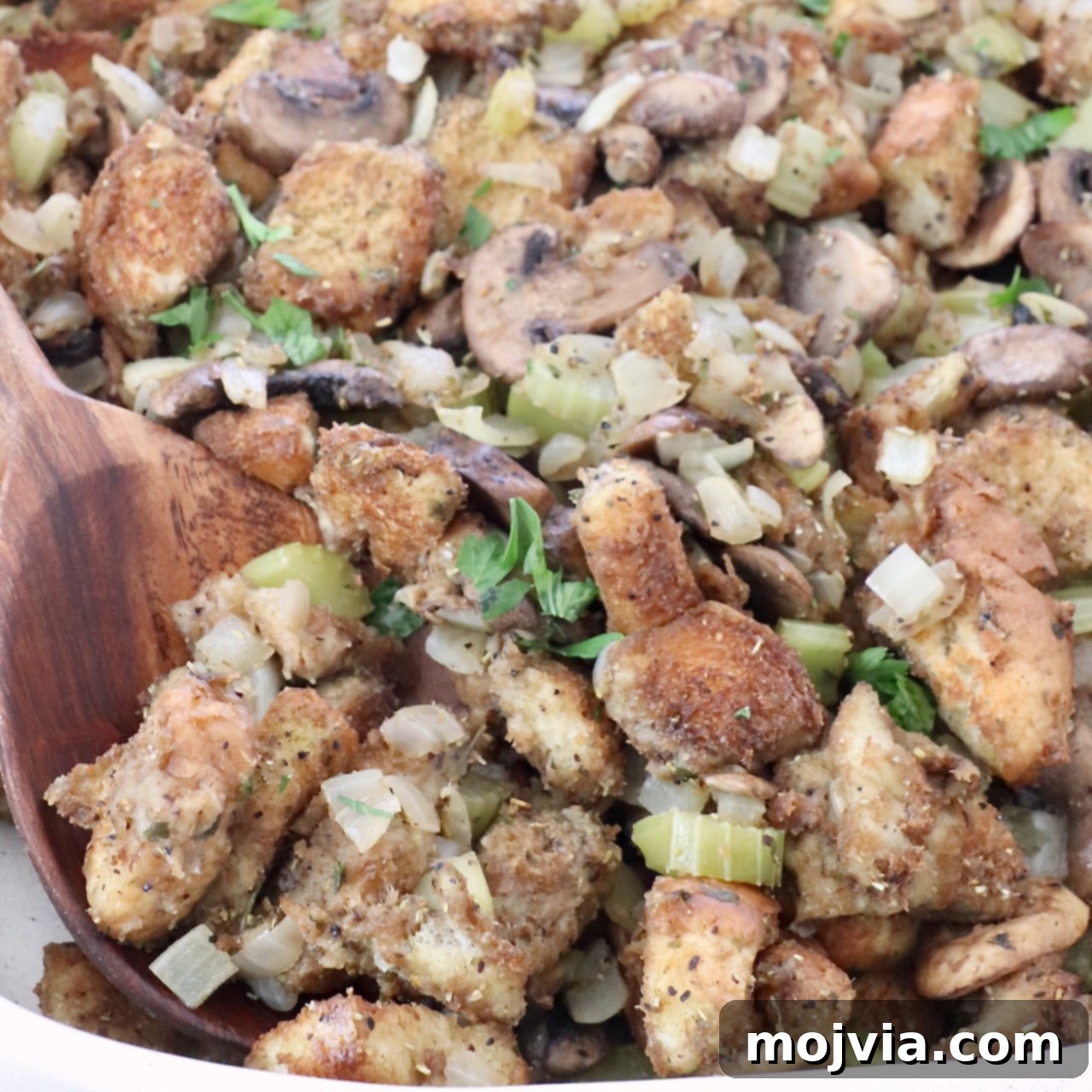
This exceptional Mushroom Stuffing recipe is a treasured family heirloom, carefully passed down through generations. It’s a guaranteed crowd-pleaser at festive gatherings like Thanksgiving and Christmas, yet its straightforward preparation makes it an ideal, flavorful side dish for any occasion throughout the year.
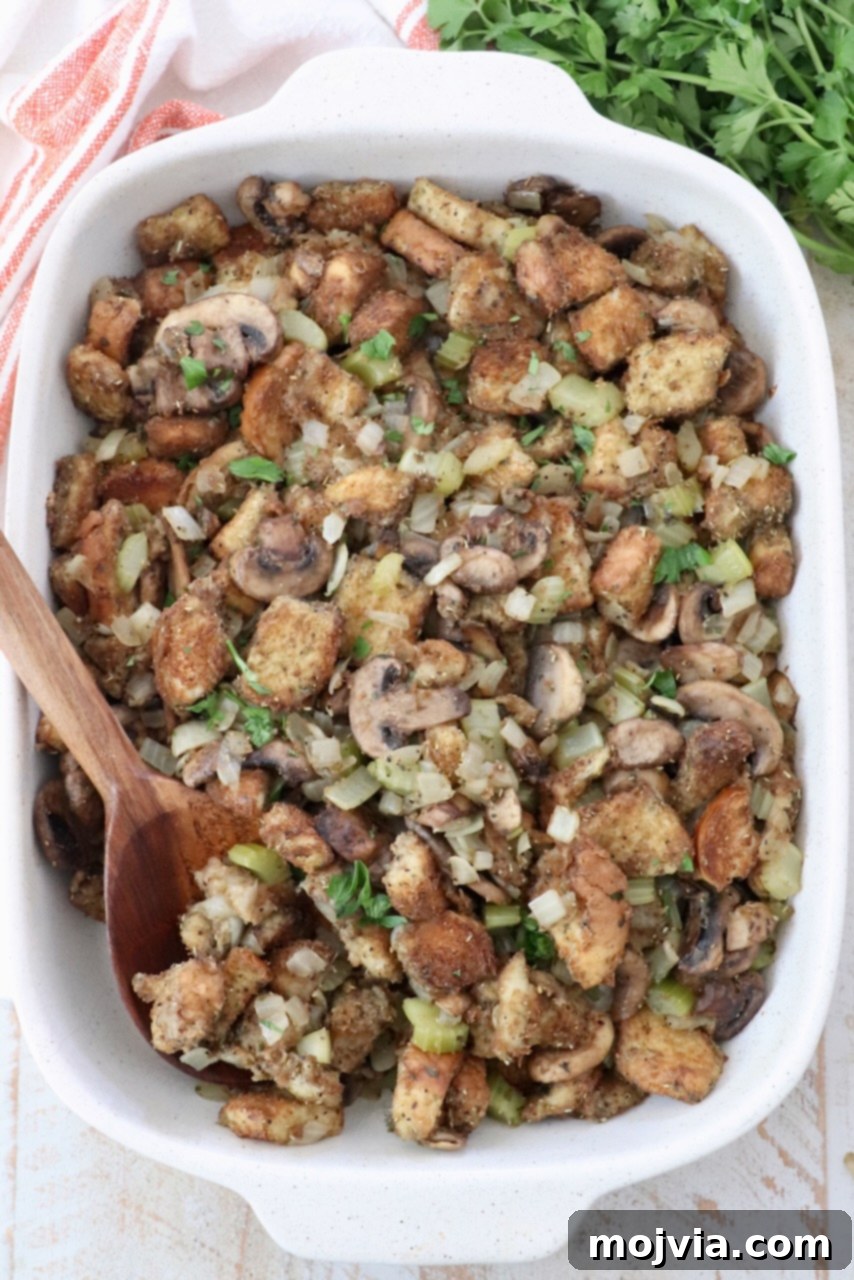
The Ultimate Herb-Infused Mushroom Stuffing Recipe
Table of Contents
- The Story Behind the Stuffing
- Why This Mushroom Stuffing Is a Must-Try
- Ingredients for the Perfect Mushroom Stuffing
- Step-by-Step Instructions
- Expert Tips and Recipe Notes
- Variations and Customizations
- What to Serve Your Mushroom Stuffing With
- Make-Ahead, Storage, and Reheating
- Frequently Asked Questions About Stuffing
- More Delightful Side Dish Recipes
The very first Thanksgiving my husband and I celebrated together was an epic culinary adventure. Neither of us could bear to forgo any of our cherished family recipes, which led to us preparing a staggering ten different side dishes! While our holiday menu has since been streamlined to a more manageable scale, one tradition remains steadfast: we still enjoy two distinct types of stuffing every year.
I grew up in Oklahoma, where cornbread stuffing was the undisputed star of the Thanksgiving table. My husband, hailing from Pennsylvania, was raised on the rich, savory flavors of this mushroom stuffing. Both are undeniably delicious, yet so wonderfully unique that we simply can’t choose one over the other. This ensures that our holiday feast always features Thanksgiving stuffing served two delightful ways!
The Story Behind the Stuffing: A Blended Tradition
Before meeting my husband, the idea of deviating from my family’s traditional cornbread stuffing was unthinkable. However, my deep love for mushrooms meant I was quickly enchanted by this particular recipe. It’s generously packed with robust, earthy mushrooms and boasts a profoundly herb-forward flavor profile. Seasoned with the classic quartet of parsley, sage, rosemary, and thyme, it encapsulates all the quintessential aromas and tastes synonymous with a heartwarming holiday dinner.
Stuffing, without a doubt, is my favorite component of the entire Thanksgiving meal. This personal preference led me to conclude that such a magnificent dish should not be confined to a single day in November! This mushroom stuffing is remarkably simple to prepare, making it a fantastic and versatile side dish that can grace your table any time of the year. It pairs beautifully with everything from roasted turkey and chicken to succulent pork chops and hearty pot roasts.
If you’ve been on a quest for the ultimate mushroom stuffing recipe, your search ends here. This recipe promises not only a journey through culinary tradition but also an explosion of flavors that will delight your senses and impress your guests, whether it’s a grand holiday feast or a simple weeknight meal.
Why This Mushroom Stuffing Is a Must-Try
This isn’t just any stuffing; it’s a culinary experience that elevates any meal. The combination of earthy mushrooms and fragrant herbs creates a depth of flavor that is both comforting and sophisticated. Unlike many stuffings that can sometimes be bland or overly bready, this recipe strikes the perfect balance, ensuring every bite is moist, savory, and bursting with character. It’s a testament to simple ingredients coming together to create something truly extraordinary.
Beyond its incredible taste, this mushroom stuffing is also incredibly adaptable. Whether you’re aiming for a vegetarian option or looking to experiment with different mushroom varieties, this recipe provides a flexible foundation. Its ease of preparation means you can achieve gourmet results without spending hours in the kitchen, making it perfect for busy weeknights and grand holiday preparations alike. Get ready to discover your new favorite side dish!
Ingredients for the Perfect Mushroom Stuffing
Crafting the perfect mushroom stuffing begins with selecting quality ingredients. Here’s a detailed look at what you’ll need and why each component is vital to the dish:
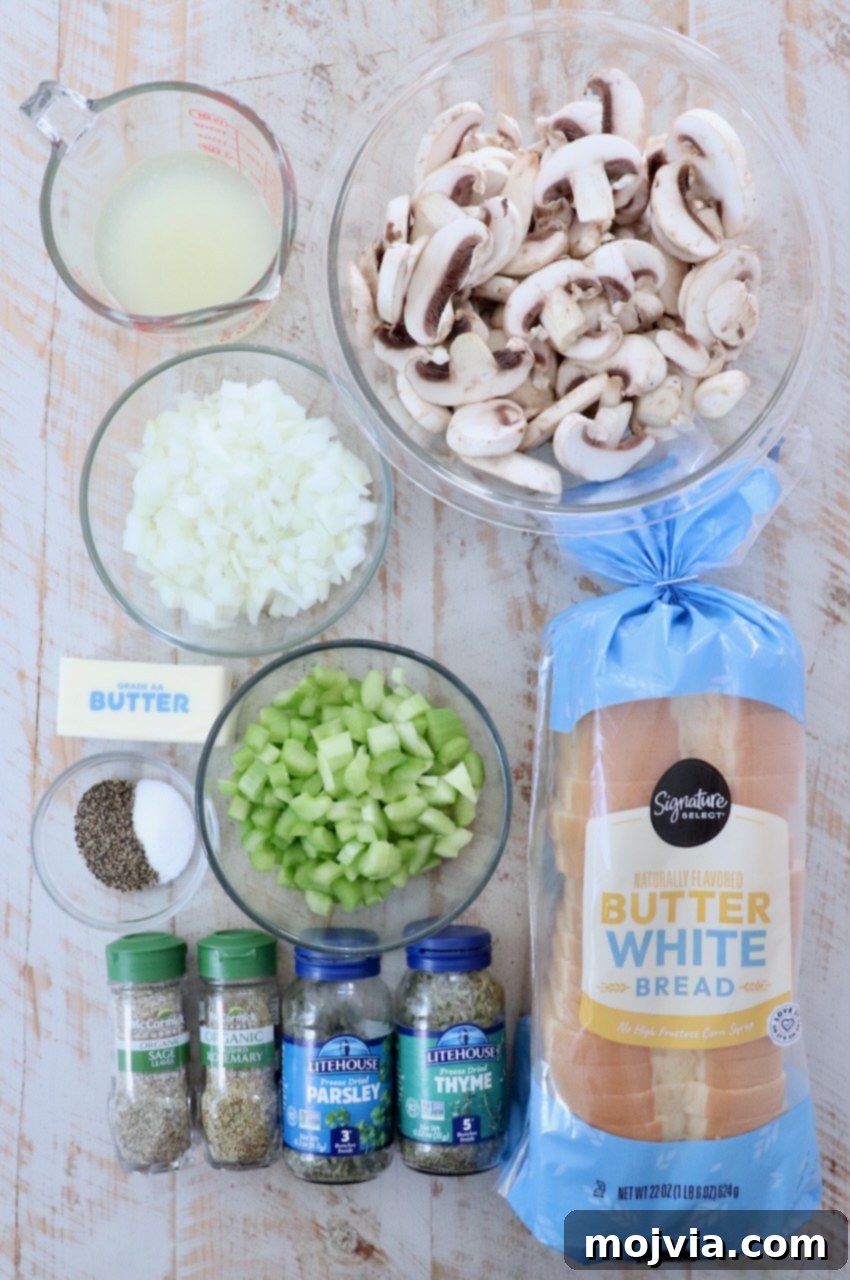
- White Bread: You’ll need one full loaf of classic plain white bread, approximately 20 slices. The key here is to toast it thoroughly before cubing. This process dries out the bread, allowing it to absorb the savory liquids without becoming soggy, thus ensuring a light yet substantial texture.
- Butter: For this recipe, unsalted butter is recommended. Using unsalted butter gives you precise control over the overall saltiness of your stuffing, allowing you to season it perfectly to your taste preferences.
- Yellow Onion: One cup of finely diced yellow onions, which typically equates to one small or half of a large onion. Onions caramelize beautifully when sautéed, adding a foundational layer of sweetness and aromatic depth to the stuffing.
- Celery: Four stalks of celery, diced to yield about one cup. Celery provides a refreshing, slightly peppery crunch and a subtle earthy note that complements the other vegetables and herbs perfectly. It’s a classic stuffing ingredient for good reason.
- Mushrooms: Sixteen ounces of sliced white button mushrooms are traditionally used in this family recipe. These mild, versatile mushrooms soak up flavors wonderfully. For a richer, more complex flavor, feel free to experiment with cremini (baby bella) mushrooms or a gourmet mix of your favorite fungi, such as shiitake or oyster mushrooms.
- Salt and Black Pepper: Essential seasonings that enhance all the other flavors. Adjust to your palate; remember, it’s easier to add more than to remove excess salt.
- Dried Parsley Leaves: Parsley contributes a bright, fresh, and slightly peppery flavor that lifts the richness of the dish. While dried works perfectly in the stuffing mixture, a sprinkle of fresh chopped parsley can be used as a vibrant garnish.
- Dried Sage Leaves: Sage is a quintessential herb for holiday dishes, offering an earthy, slightly peppery, and piney aroma. If using rubbed sage or ground sage, which are more concentrated, reduce the quantity by half (to 1 teaspoon) to avoid overpowering the dish.
- Crushed Rosemary: Rosemary provides a robust, woody, and intensely aromatic flavor with hints of lemon and pine. If you have dried whole rosemary needles, simply crush them between your fingers before adding them to help release their oils and ensure they soften adequately within the stuffing.
- Dried Thyme Leaves: Thyme adds a delicate, slightly minty, and earthy flavor that harmonizes beautifully with turkey and other festive ingredients. Ensure you use dried thyme leaves, not ground thyme, for the best texture and flavor.
- Chicken Broth: The liquid base that moistens the bread and infuses the entire stuffing with savory richness. Turkey broth can be used for an even deeper holiday flavor if available. For a vegetarian version, simply substitute with a high-quality vegetable broth.
Step-by-Step Instructions for Your Mushroom Stuffing
Follow these detailed steps, accompanied by visual guidance, to create this incredible mushroom stuffing at home. For exact measurements, refer to the recipe card below.
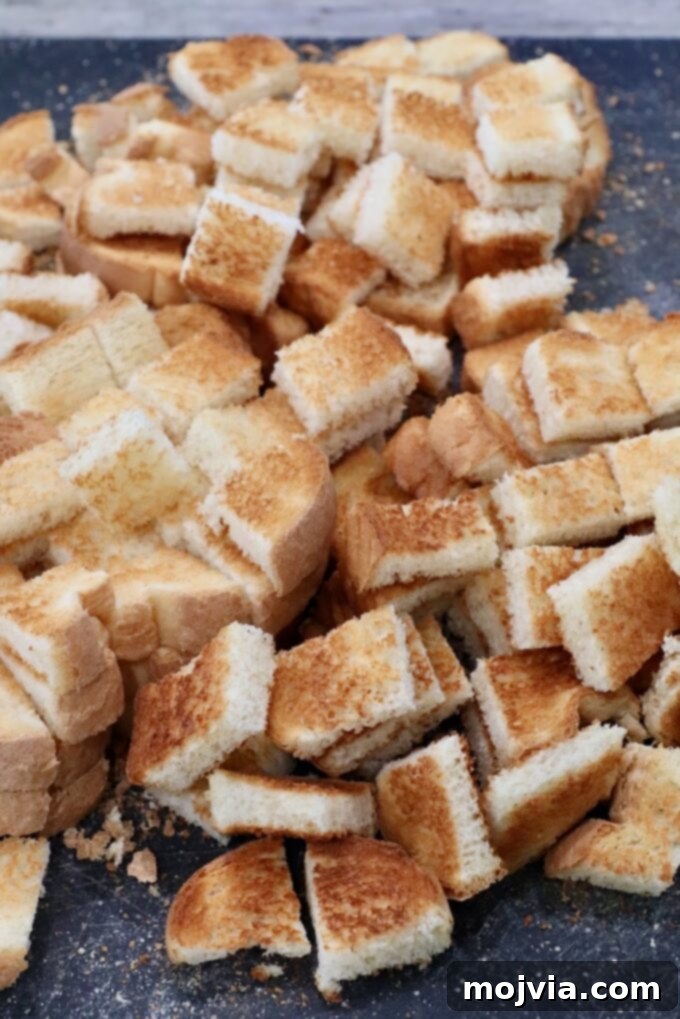
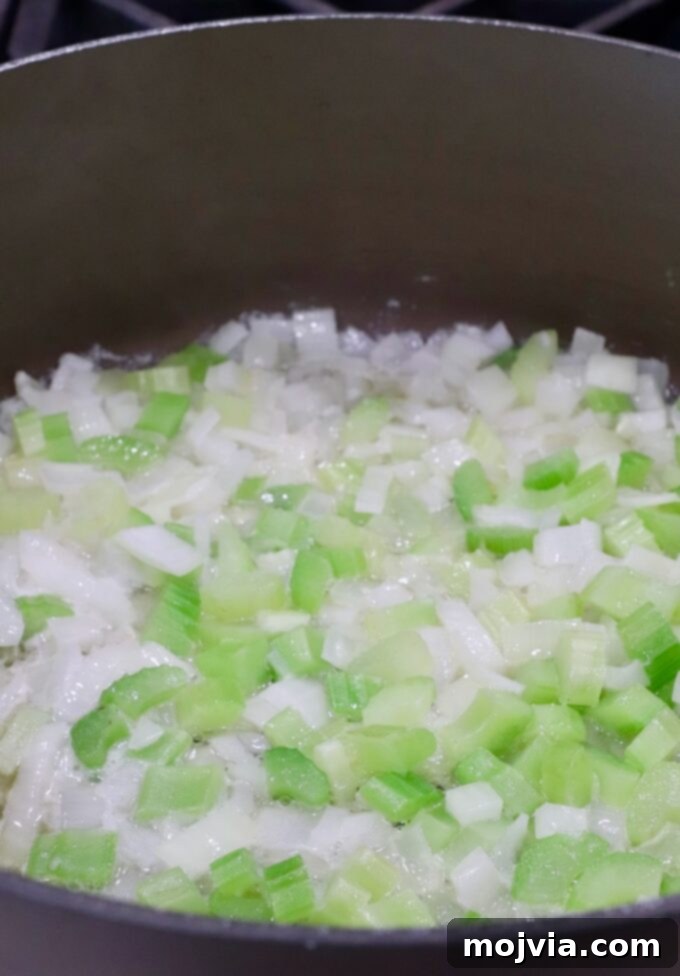
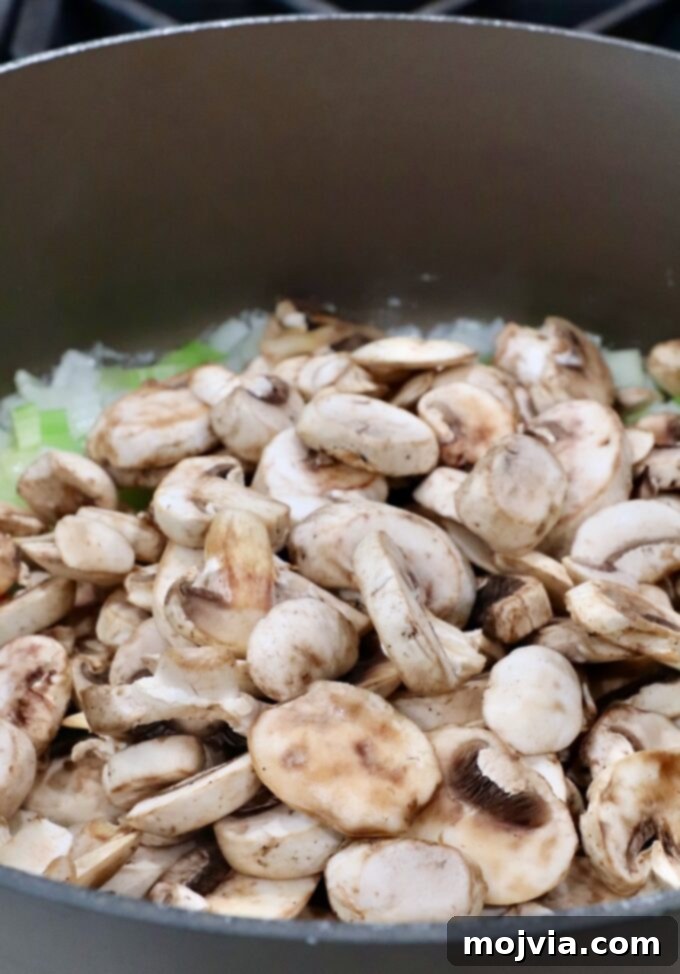
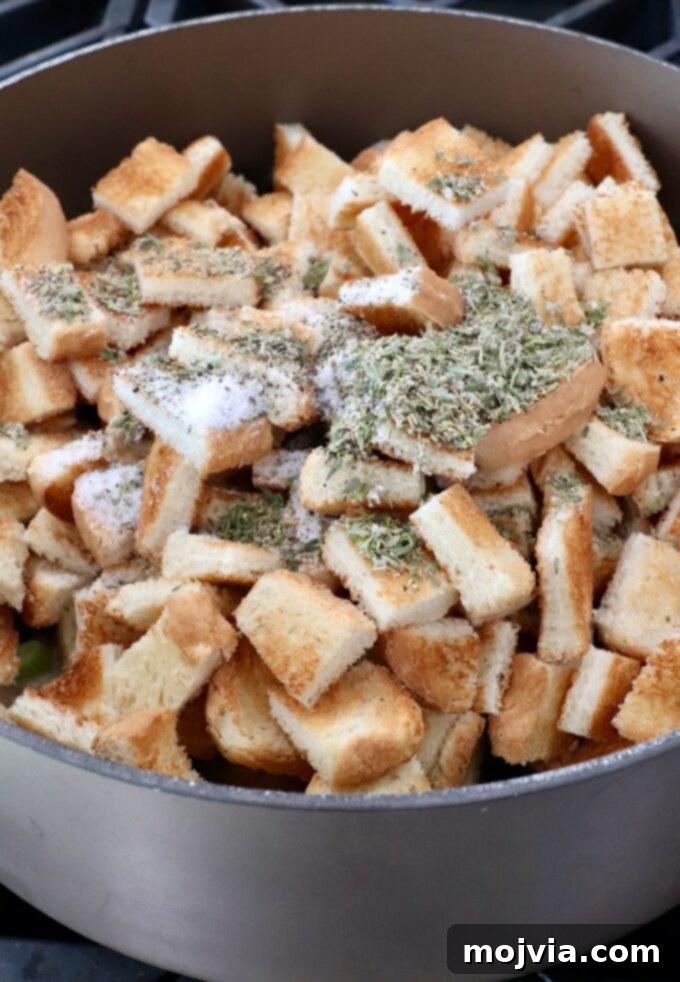
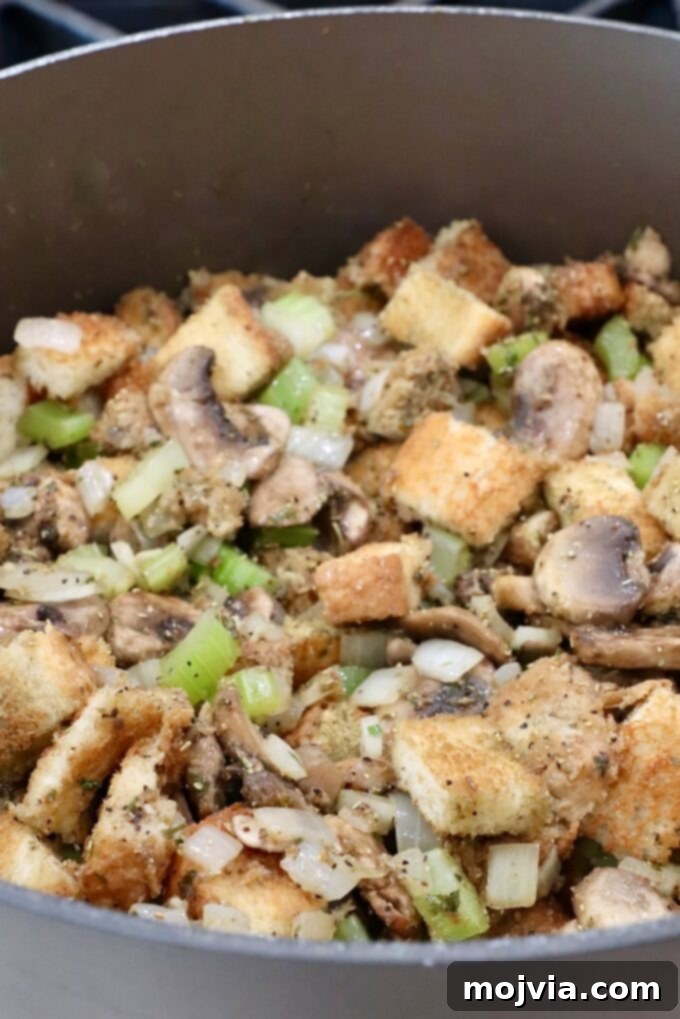
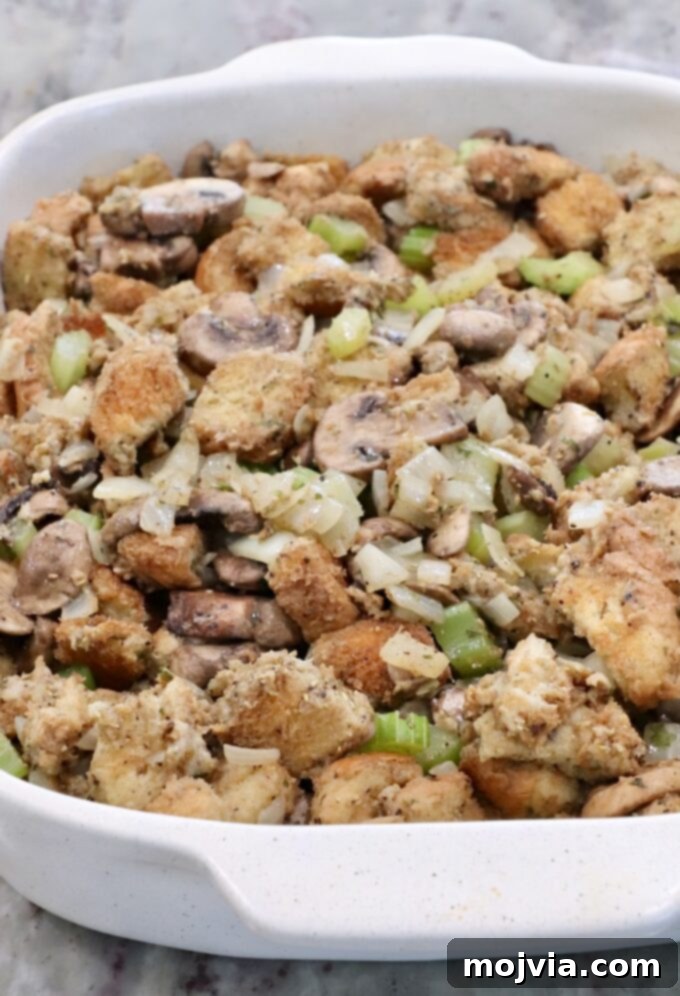
- Prepare Your Bread: Begin by preheating your oven to 325°F (160°C). Then, patiently toast an entire loaf of white bread, aiming for a lightly golden, crisp texture. Once cooled, cut each toasted slice into 16 uniform cubes. This meticulous toasting step is crucial for achieving the perfect stuffing texture – it prevents sogginess and allows the bread to soak up all the delicious liquids. Set the cubes aside.
- Sauté the Aromatics: In a large, heavy-bottomed pot or Dutch oven, melt the butter over medium-high heat. Add the diced onions and celery. Cook, stirring occasionally, for 5-6 minutes, or until the vegetables have softened and become translucent. This develops a sweet, aromatic base for your stuffing.
- Cook the Mushrooms: Add the sliced mushrooms to the pot with the softened onions and celery. Toss everything together to coat the mushrooms in butter and aromatics. Cover the pot and reduce the heat to medium-low. Allow the mushrooms to cook for 8-10 minutes, or until they are tender and have released their moisture.
- Combine and Season: Gently transfer the toasted bread cubes into the pot with the cooked vegetables. Season generously with salt, black pepper, dried parsley, dried sage, crushed rosemary, and dried thyme. Toss everything thoroughly to ensure the bread cubes are evenly coated with the herbs and spices.
- Moisten with Broth: Pour in the chicken broth (or turkey/vegetable broth). Carefully toss the mixture until all the bread cubes are moist but not mushy. The goal is for the stuffing to be tender and flavorful, not soaking wet. If it seems too dry, add a little more broth, a tablespoon at a time.
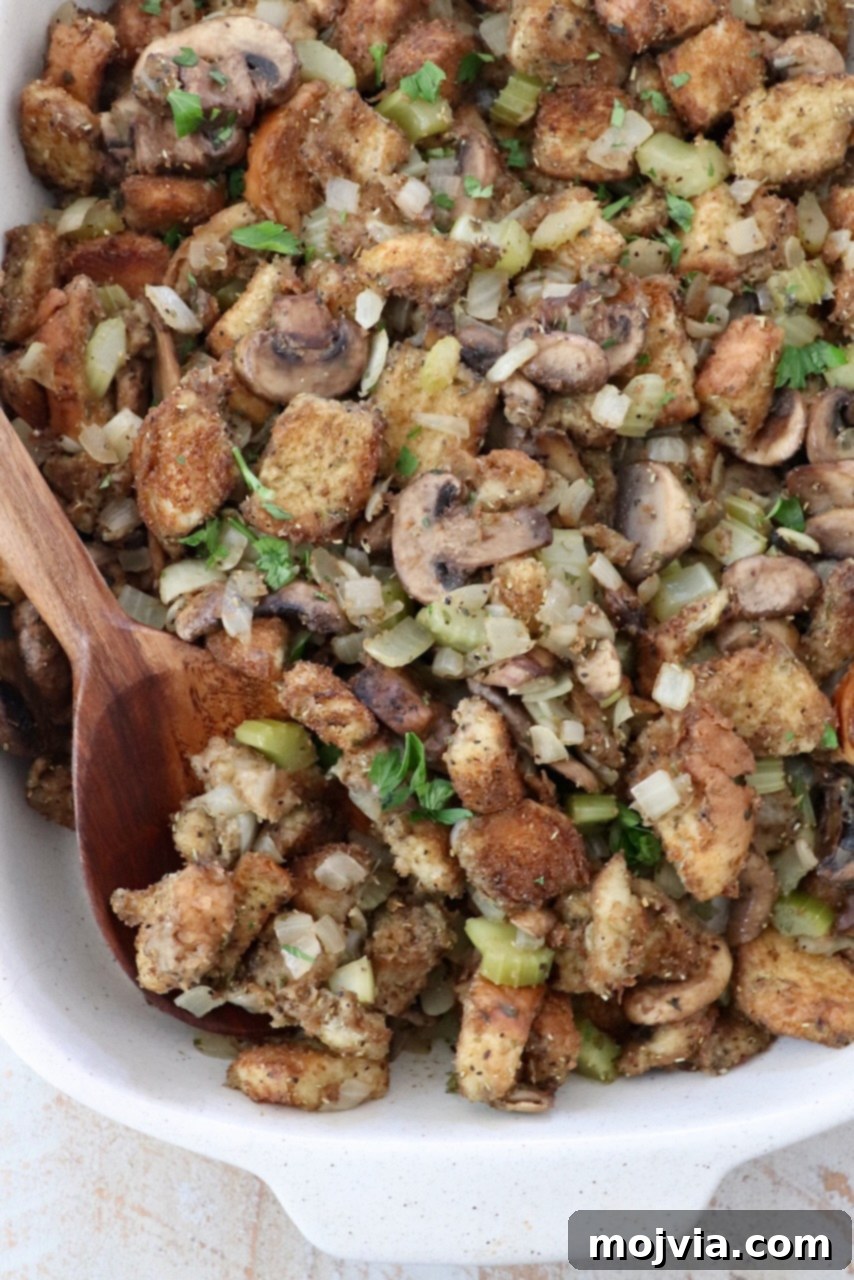
- Bake to Perfection: Transfer the entire stuffing mixture from the pot into a 9×13 inch casserole dish. Place it in your preheated 325°F (160°C) oven and bake for 15 minutes. Since all the components are already cooked, this short baking time is primarily for allowing the flavors to meld beautifully and for the stuffing to heat through evenly. If you prefer a slightly crisper top, you can bake it uncovered for an additional 5-10 minutes.
Expert Tips and Recipe Notes
To ensure your mushroom stuffing turns out perfectly every time, consider these expert tips and additional notes:
- Mushroom Texture Preference: If you enjoy the savory mushroom flavor but prefer a more uniform texture without large pieces, feel free to finely chop the mushrooms using a food processor or a sharp knife before cooking them with the onions and celery. This creates a more integrated mushroom essence throughout the stuffing.
- Scaling the Recipe: This recipe is designed to serve 8 people generously as a side dish. Should you need to cater to a larger gathering, such as a holiday feast, doubling the recipe is simple. If your pot isn’t large enough to accommodate twice the volume of cooked vegetables and bread, transfer the sautéed vegetables to an extra-large mixing bowl. Add the toasted bread cubes, all the seasonings, and chicken broth, then toss thoroughly. Divide the mixture evenly into two 9×13 inch baking dishes for baking.
- Keeping Warm for Serving: To keep your mushroom stuffing warm without overcooking, especially if you’re coordinating with other holiday dishes, cover the casserole dish with aluminum foil. You can then hold it in a warm oven (around 170-200°F or 75-90°C) for up to an hour before serving. This is incredibly convenient for meal timing.
- Achieving a Tightly-Packed Texture: For those who prefer a more dense, casserole-like stuffing with a tighter crumb (similar to a sausage stuffing), incorporate four whisked eggs into the stuffing mixture along with the chicken broth. The eggs act as a binder, helping the stuffing hold its shape. If adding raw eggs, it’s advisable to increase the baking time by an additional 15 minutes, for a total of 30 minutes, to ensure the eggs are fully cooked.
- Choosing Your Bread: While white bread is traditional for this recipe, you can experiment with other day-old breads like sourdough or challah for different flavor profiles. Just ensure the bread is dry and toasted to prevent a soggy outcome.
What to Serve Your Mushroom Stuffing With
This homemade mushroom stuffing is incredibly versatile and makes an excellent companion to a wide array of main dishes, extending its appeal far beyond holiday meals.
- Smoked Turkey: The rich, smoky notes of turkey are perfectly complemented by the earthy, herb-infused stuffing.
- Cranberry Glazed Turkey Breast: The sweet and tart cranberry glaze provides a wonderful contrast to the savory stuffing.
- Prime Rib: A luxurious choice, the robust flavor of prime rib finds a comforting balance with this savory side.
- Beef Wellington: Elevate a sophisticated Beef Wellington dinner with this elegant and flavorful stuffing.
- Salisbury Steak: For a comforting classic, Salisbury steak and gravy pairs beautifully with the herbaceous notes of the stuffing.
- Marinated Grilled Steak: The grilled char and marinade flavors of steak are wonderfully balanced by this hearty side.
- Pot Roast: A slow-cooked, tender pot roast and its rich gravy are a match made in heaven for mushroom stuffing.
- Smoked Pork Chops: Similar to smoked turkey, the smoky flavor of pork chops creates a delightful pairing.
- French Onion Pork Chops: The deep, umami flavors of French onion gravy and pork chops are wonderfully enhanced by the stuffing.
And if you are truly a mushroom aficionado, enhance your meal by serving this delightful mushroom stuffing with a rich, homemade Mushroom Gravy for an unforgettable umami experience.
Make-Ahead, Storage, and Reheating
This mushroom stuffing recipe is excellent for make-ahead planning, making it a fantastic choice for busy holiday preparations or weekly meal planning. Its flavors tend to deepen beautifully overnight.
- Make-Ahead Tips: You can prepare the stuffing mixture (steps 1-5) up to one day in advance. Store it covered in an airtight container in the refrigerator. When ready to bake, transfer it to a casserole dish and bake as directed, possibly adding 5-10 minutes to the baking time if it’s going into the oven cold.
- Storage: Leftover mushroom stuffing stores exceptionally well. Transfer any cooled leftovers to an airtight container and refrigerate for up to 7 days. Ensure it’s sealed tightly to maintain freshness and prevent it from drying out.
- Reheating in the Oven: For reheating larger portions or if you prefer a crispier exterior, place the stuffing in a casserole dish, cover it with foil, and reheat in a 350°F (175°C) oven for about 15-20 minutes, or until heated through. Uncover for the last 5 minutes if you desire a slightly crispy top.
- Reheating in the Microwave: For quick, single servings, place a portion on a microwave-safe plate. Cover it loosely and microwave for approximately 2 minutes, or until thoroughly hot. Stir halfway through for even heating.
- Freezing Instructions: If you have a significant amount of leftovers, this stuffing freezes beautifully. Allow the stuffing to cool completely, then transfer it to a freezer-safe, airtight container or heavy-duty freezer bags. It can be frozen for up to 3 months. Thaw overnight in the refrigerator before reheating as described above.
- Creative Leftover Recipes: Don’t let a single spoonful go to waste! Transform your leftover mushroom stuffing into exciting new dishes. Try a savory Turkey Quiche with Stuffing Crust for brunch, or spicy Cream Cheese Stuffing Jalapeno Poppers for a unique appetizer.
Variations and Customizations for Your Mushroom Stuffing
While the classic recipe is perfect, feel free to get creative and tailor this mushroom stuffing to your taste or dietary needs:
- Different Bread Types: Experiment with sourdough for a tangy note, challah for a richer, slightly sweet flavor, or even a hearty whole wheat bread for added fiber and nuttiness. Ensure any bread you choose is stale or properly toasted.
- Add Nuts or Dried Fruit: For extra texture and flavor, stir in half a cup of toasted pecans or walnuts. Dried cranberries or chopped apricots can add a touch of sweetness and tartness, especially delightful during the holidays.
- Boost the Umami: A tablespoon of soy sauce or Worcestershire sauce (ensure it’s vegetarian if needed) can deepen the savory notes of the mushrooms. A pinch of nutritional yeast can also enhance the cheesy, umami flavor.
- Make it Gluten-Free: Easily adapt this recipe by using your favorite gluten-free sandwich bread. Just be sure to toast it well to achieve the desired texture, as gluten-free breads can sometimes be more prone to sogginess.
- Vegetable Additions: Sauté finely diced carrots, bell peppers, or even a handful of chopped spinach along with the onions and celery for added nutrients and color.
- Alcoholic Enhancement: A splash of dry sherry or white wine (about 1/4 cup) can be added during the vegetable sautéing phase. Allow it to reduce completely before adding the broth to impart a sophisticated layer of flavor.
Frequently Asked Questions About Stuffing
Here are some common questions about making and enjoying homemade stuffing:
- What’s the difference between stuffing and dressing?
Historically, “stuffing” refers to a mixture cooked inside a bird, while “dressing” is baked in a separate casserole dish. However, the terms are often used interchangeably today. This recipe is for a dressing, baked outside the turkey, ensuring a consistent texture and easy serving.
- Can I use fresh herbs instead of dried?
Absolutely! If using fresh herbs, you’ll typically need about three times the amount of dried herbs. For this recipe, that would be about 6 teaspoons (or 2 tablespoons) each of fresh chopped parsley, sage, rosemary, and thyme. Add fresh herbs towards the end of the cooking process to preserve their vibrant flavor.
- How do I prevent my stuffing from being too soggy or too dry?
The key is properly toasting your bread to create a stable base for moisture absorption. When adding broth, toss gently until the bread is moist but not soaking wet or dripping. The stuffing should hold its shape when squeezed lightly. If it’s too dry, add more broth a tablespoon at a time; if too wet, you can add a handful of extra toasted bread cubes or bake it uncovered for longer to allow some moisture to evaporate.
- Is it safe to cook stuffing inside the turkey?
If you choose to cook stuffing inside the turkey, it’s crucial to ensure it reaches an internal temperature of 165°F (74°C) to prevent foodborne illness. Using a food thermometer is essential. Many prefer to bake stuffing separately as dressing to guarantee even cooking and often a crispier texture.
- Can I add sausage to this mushroom stuffing?
Yes, for a heartier, meatier stuffing, you can brown about 1 pound of crumbled sausage (Italian or breakfast sausage works well) in the pot before sautéing the vegetables. Drain any excess fat, then proceed with the recipe as directed. The savory sausage adds another layer of depth that complements the mushrooms and herbs beautifully.
More Delightful Side Dish Recipes
If you’re crafting this superb mushroom stuffing for a special meal and still searching for additional side dishes to complete your spread, explore these equally delicious and popular recipes! They are perfect for holiday gatherings and beyond, offering variety and flavor to any table.
Print Recipe
Pin Recipe
Rate this Recipe
Mushroom Stuffing
8 servings
20 mins
30 mins
50 mins
Whitney Bond
Side Dish
American
Ingredients
- 1 loaf white bread, 20 slices total
- ¾ cup butter
- 1 cup onion, diced
- 4 stalks celery, diced
- 16 ounces white button mushrooms, sliced
- 2 teaspoons salt
- 2 teaspoons black pepper
- 2 teaspoons dried parsley leaves
- 2 teaspoons dried sage leaves
- 2 teaspoons crushed rosemary
- 2 teaspoons dried thyme leaves
- 1 cup chicken broth
Instructions
-
Preheat the oven to 325°F (160°C).
-
Toast the entire loaf of bread in a toaster until lightly golden and crisp. After all of the bread is toasted, cut each piece into 16 cubes. Set the toasted bread cubes aside.
-
Melt the butter in a large pot or Dutch oven on the stove over medium-high heat.
-
Add the diced onion and celery and cook for 5-6 minutes, until softened and translucent.
-
Add the sliced mushrooms to the pot. Cover and cook on medium-low heat for 8-10 minutes, or until the mushrooms are tender.
-
Add the toasted bread cubes, salt, pepper, dried parsley, dried sage, crushed rosemary, and dried thyme to the pot. Stir thoroughly to combine. Pour in the chicken broth and toss until the bread is moist but not mushy.
-
Transfer the mixture to a 9×13 inch baking dish and bake in the preheated oven for 15 minutes.
Notes
- Dried Sage: This recipe uses dried sage leaves. If using more concentrated rubbed or ground sage, reduce the amount to 1 teaspoon.
- For a vegetarian option, substitute chicken broth with vegetable broth.
- This recipe serves 8. To double, simply adjust ingredient quantities. If your pot isn’t large enough, combine ingredients in a large bowl and divide into two 9×13 baking dishes.
- To keep warm, cover with foil and hold in a warm oven (170-200°F) for up to an hour.
- Stuffing can be stored in an airtight container in the fridge for up to 7 days. Reheat in the microwave or oven (covered at 350°F for 15-20 minutes).
Nutrition Facts
Did you make this recipe?
Tag @WhitneyBond on Instagram and hashtag it #WBRecipes!