
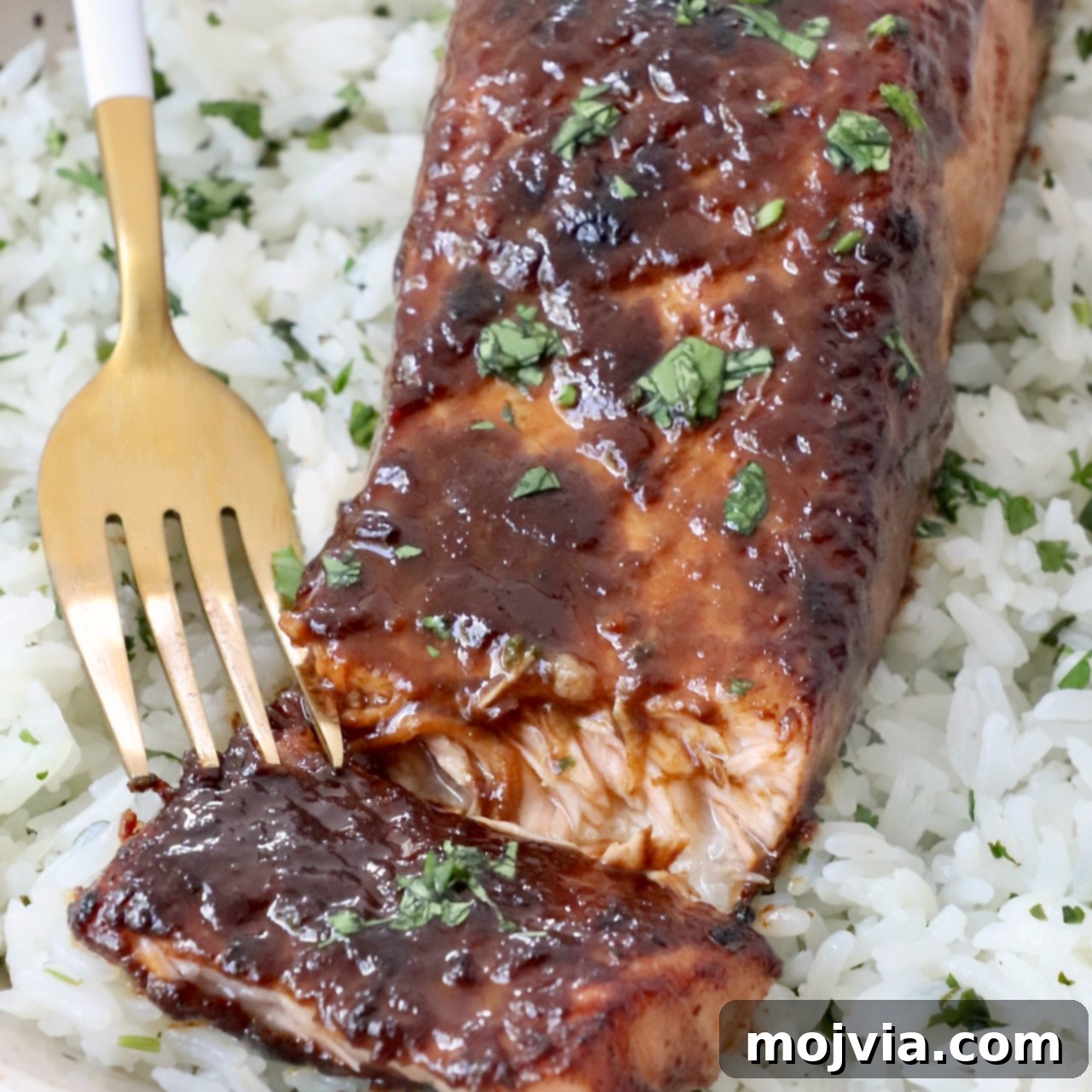
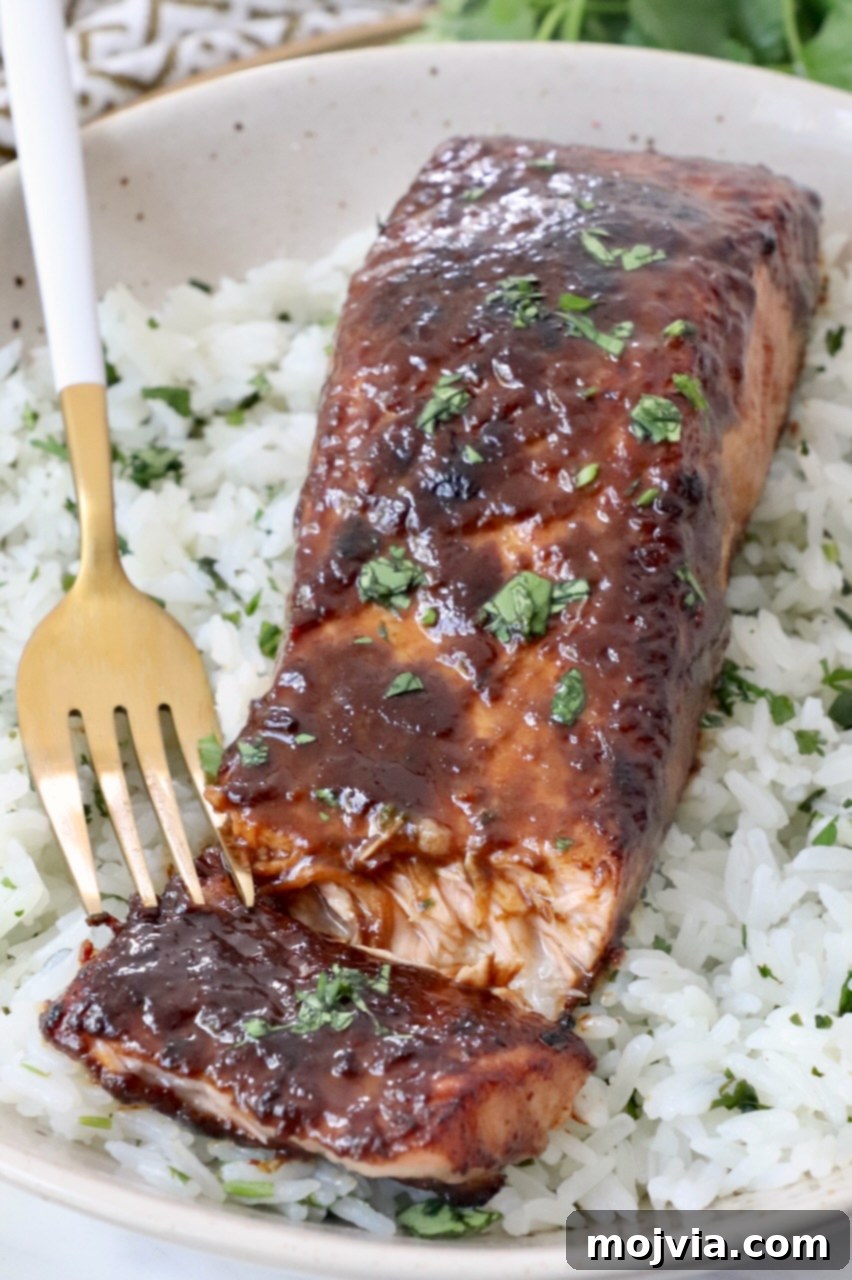
Transform your weeknight dinner into an extraordinary culinary experience with this meticulously tested and perfected Salmon Marinade recipe! Say farewell to bland, uninspired salmon and usher in a symphony of sweet, salty, and tangy flavors that will tantalize your taste buds. Crafted with just six simple ingredients, this marinade not only infuses your salmon with incredible depth but also forms a luscious glaze during cooking. The versatility of this recipe allows you to effortlessly prepare it on the grill for a smoky char or bake it in the oven for tender, flaky perfection, making it a truly easy and irresistible meal for any occasion.
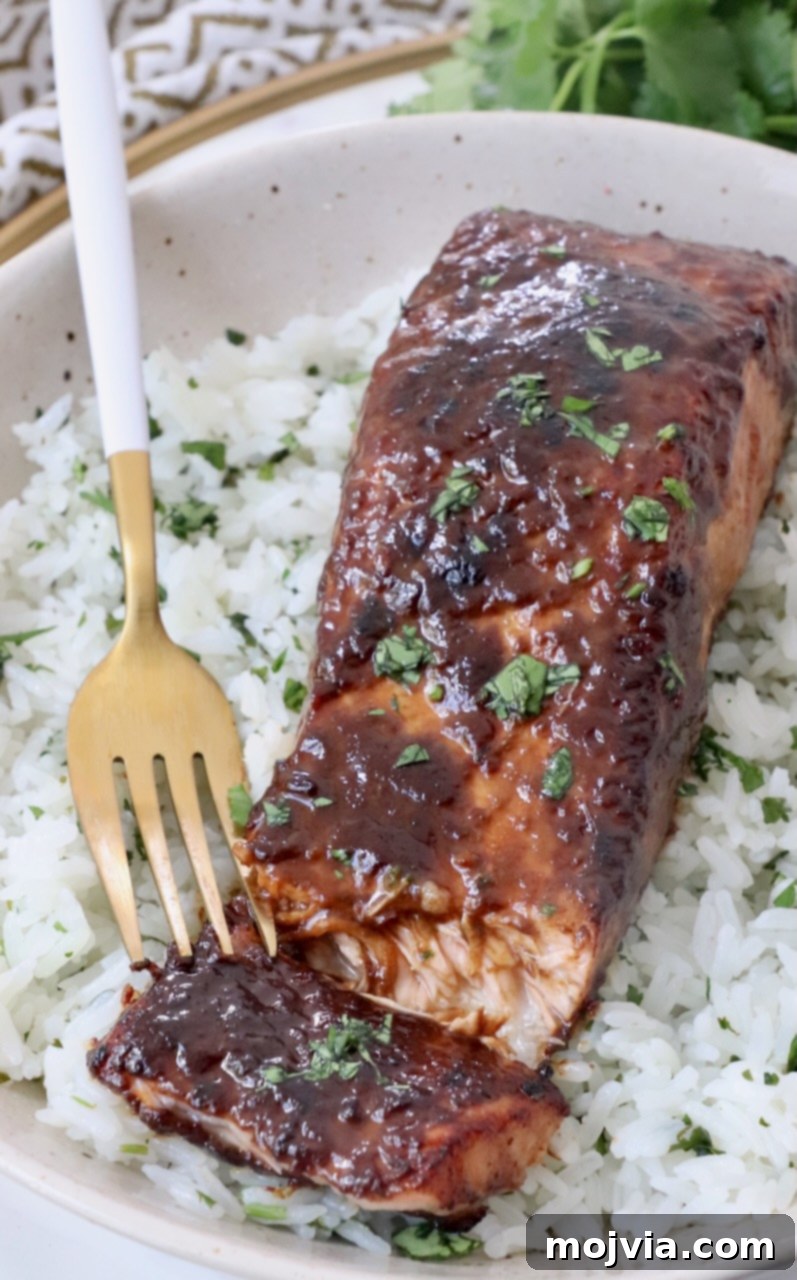
Table of contents
- The Secret to Extraordinary Salmon
- Key Ingredients for the Perfect Salmon Marinade
- Step-by-Step Instructions for Glazed Salmon
- Grilling Your Glazed Salmon to Perfection
- Expert Tips & Recipe Notes for Success
- Delicious Pairings: What to Serve with Glazed Salmon
- Explore More Delectable Seafood Recipes
The Secret to Extraordinary Salmon
Salmon is a staple in many households, including ours, and for good reason. It’s incredibly versatile, packed with healthy omega-3 fatty acids, and cooks relatively quickly. However, achieving truly flavorful salmon can sometimes be a challenge. We’ve all experienced those moments where salmon, despite its inherent goodness, turns out a little bland or dry. This recipe was born out of a desire to consistently deliver tender, juicy, and intensely flavorful salmon.
My culinary journey led me to experiment with various seasoning methods. I initially drew inspiration from a beloved balsamic salmon recipe, aiming to adapt its delightful glaze into a more profound marinade. After several attempts, I realized that while the marinade imparted some flavor, it wasn’t quite hitting that “wow” factor I was searching for. That’s when I had a breakthrough: what if I took the marinade and transformed it into a rich glaze *after* the salmon had soaked up all its goodness?
This was when the magic truly happened! The technique involves first marinating the salmon to allow the flavors to deeply penetrate the flesh. Then, instead of discarding the marinade, it’s simmered on the stove to create a thick, glossy glaze. Brushing this reduced glaze over the salmon before and during cooking is like doubling up on the flavor, creating an irresistible sweet, savory, and tangy crust that locks in moisture and amplifies every bite. This innovative approach ensures a vibrant flavor profile and a perfectly caramelized exterior, whether you choose to bake your salmon in the oven or cook it on the grill.
This “marinade-to-glaze” method has become my go-to for preparing salmon. The results are consistently incredible, yielding fish that is moist, flaky, and bursting with a complex blend of sweet, salty, and tangy notes. It’s a simple trick that elevates a good salmon dish to a truly spectacular one, making it a firm family favorite and a perfect choice for both casual weeknight dinners and special occasions.
Key Ingredients for the Perfect Salmon Marinade
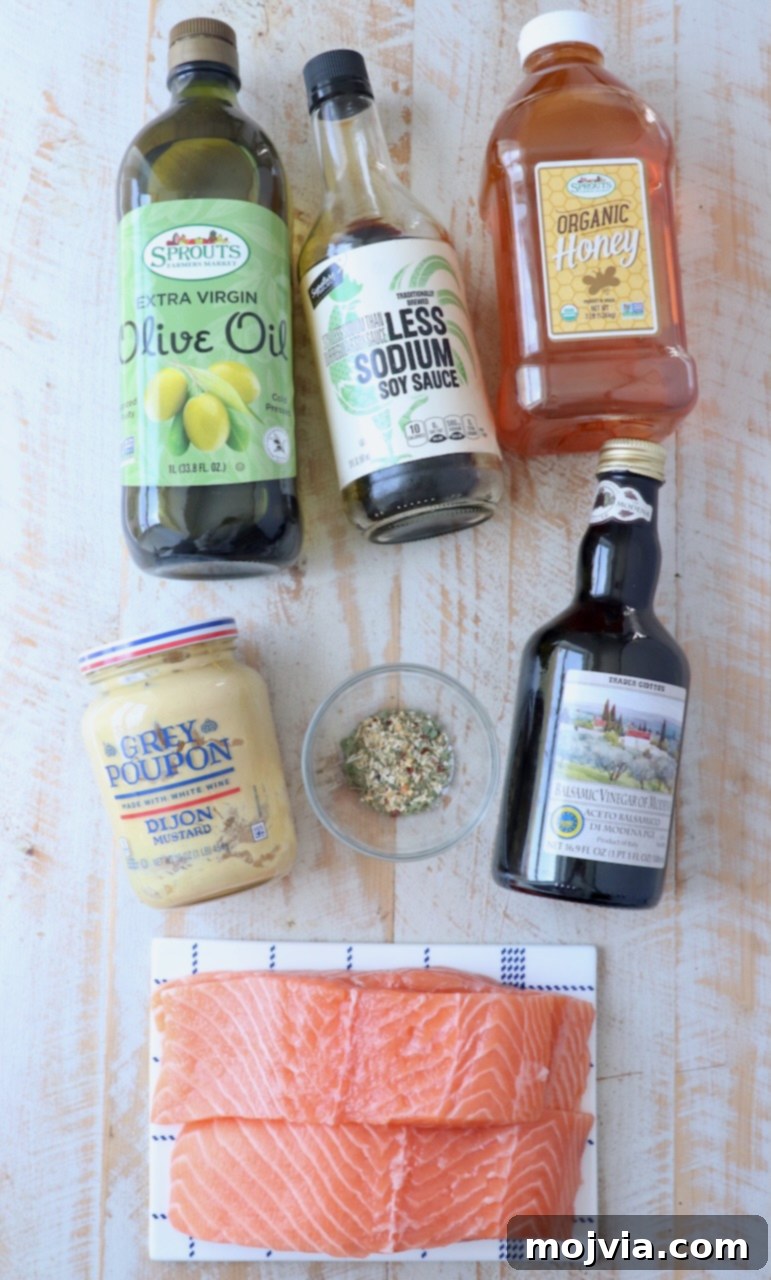
The success of this extraordinary salmon recipe lies in its carefully selected, yet simple, ingredients. Each component plays a vital role in creating a balanced and deeply flavorful marinade that transforms into a magnificent glaze. Here’s a closer look at what you’ll need and why these ingredients are so important:
- Salmon: For optimal results, I highly recommend using four salmon fillets, each weighing between 6-8 ounces. When selecting your salmon, aim for pieces that are similar in thickness. This ensures that all fillets cook evenly, preventing some from drying out while others are still undercooked. Both Atlantic and Sockeye salmon varieties work beautifully with this marinade. Consider skin-on fillets, as the skin helps keep the salmon moist during cooking and crisps up nicely, adding another layer of texture.
- Olive Oil: This serves as the foundational liquid for our marinade. Olive oil helps to tenderize the salmon, infusing it with moisture and preventing it from drying out during cooking. It also adds a rich, fruity flavor and healthy monounsaturated fats. While extra virgin olive oil can be used, a regular or light olive oil is also suitable. Other excellent alternatives include avocado oil, sunflower oil, or canola oil, all of which contribute a neutral base for the other flavors to shine.
- Balsamic Vinegar: The balsamic vinegar is a superstar in this marinade, offering a delightful acidity and a sweet, tangy complexity. It beautifully complements the richness of the salmon, cutting through its fattiness and adding a sophisticated depth of flavor. Look for a good quality balsamic vinegar, as its inherent sweetness and tang will greatly impact the final glaze. It’s crucial for achieving that signature sweet-and-sour balance.
- Honey: This natural sweetener is essential for balancing the tangy notes of the balsamic vinegar and the saltiness of the soy sauce. Honey also plays a critical role in caramelization, giving the salmon a beautiful golden-brown crust and a wonderfully sticky texture as it cooks. If you prefer, maple syrup can be used as a delicious alternative, offering a slightly different but equally appealing sweetness.
- Soy Sauce: The soy sauce contributes a crucial umami depth and a pleasant salty kick to the marinade. For this recipe, I specifically recommend using low-sodium soy sauce. This allows you to control the overall saltiness of the dish and prevents it from becoming overpowering, ensuring a perfectly balanced flavor profile. If you’re managing dietary restrictions, consider tamari for a gluten-free option or coconut aminos for a soy-free alternative (more on this in the notes!).
- Dijon Mustard: This is truly the secret ingredient that elevates our marinade from good to extraordinary. Dijon mustard acts as an emulsifier, helping all the other ingredients blend together seamlessly. Beyond its emulsifying properties, it adds a subtle, piquant flavor that brightens the entire marinade. Its tanginess helps the other marinade components adhere effectively to the salmon, ensuring maximum flavor absorption and an incredibly tasty crust.
- Italian Seasoning: A fragrant blend of dried herbs that adds aromatic depth and a classic Mediterranean touch. My preference is always to use homemade seasoning mixes when possible, and you can easily whip up your own Italian seasoning with dried herbs and minced garlic in less than 5 minutes by following the linked recipe. Alternatively, a good quality store-bought premixed Italian seasoning will work perfectly, typically containing a blend of oregano, basil, thyme, rosemary, marjoram, and sometimes garlic powder.
Together, these ingredients create a symphony of flavors that will turn simple salmon into an unforgettable meal.
Step-by-Step Instructions for Glazed Salmon
To ensure your success in the kitchen, I’ve included detailed step-by-step instructions below, complete with helpful tips and visual cues. For the full detailed recipe instructions and precise ingredient quantities, please refer to the recipe card at the bottom of this post.
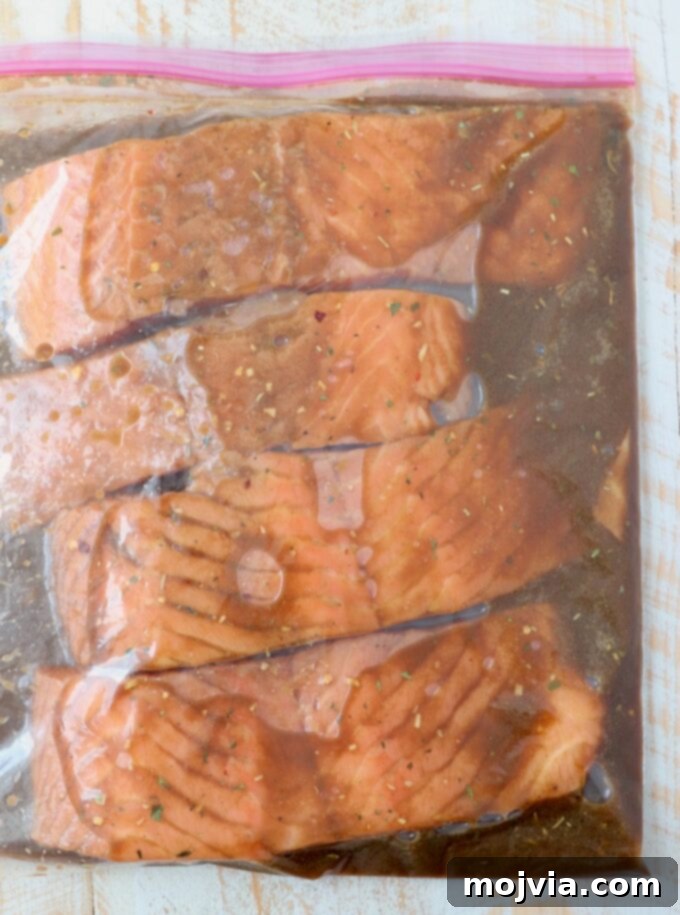
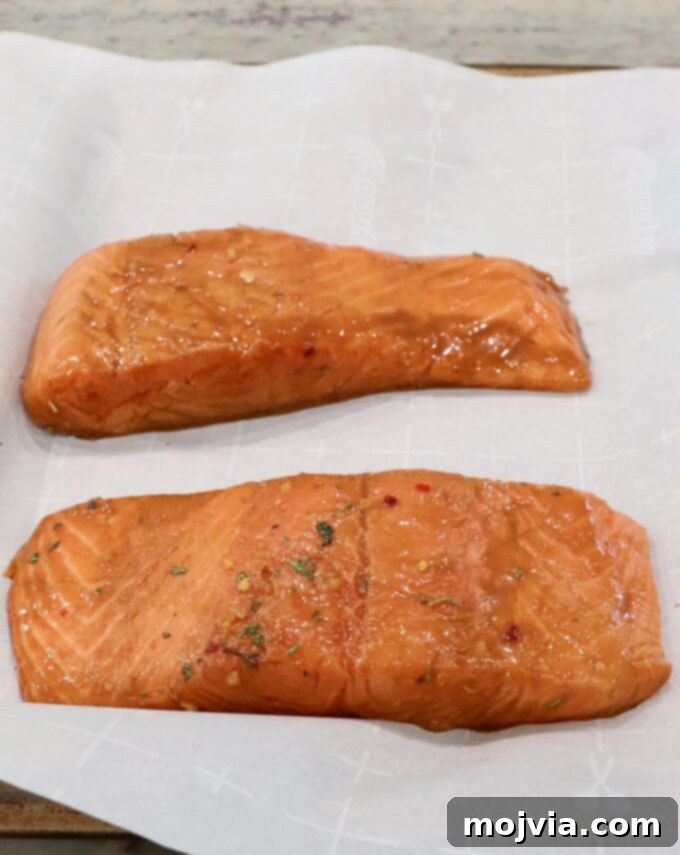
- Prepare the Marinade and Marinate the Salmon: Begin by combining the olive oil, low-sodium soy sauce, balsamic vinegar, Dijon mustard, honey, and Italian seasoning in a large bowl or a sturdy resealable plastic bag. Whisk or shake vigorously until all ingredients are well combined and emulsified. Add your salmon fillets to this flavorful marinade, ensuring each piece is thoroughly coated. For optimal flavor penetration, seal the bag or cover the bowl and place the salmon in the refrigerator. Allow it to marinate for a minimum of 30 minutes, or up to 6 hours. While a longer marinating time yields deeper flavor, avoid marinating for more than 6 hours as the acidity can begin to “cook” the fish, altering its texture.
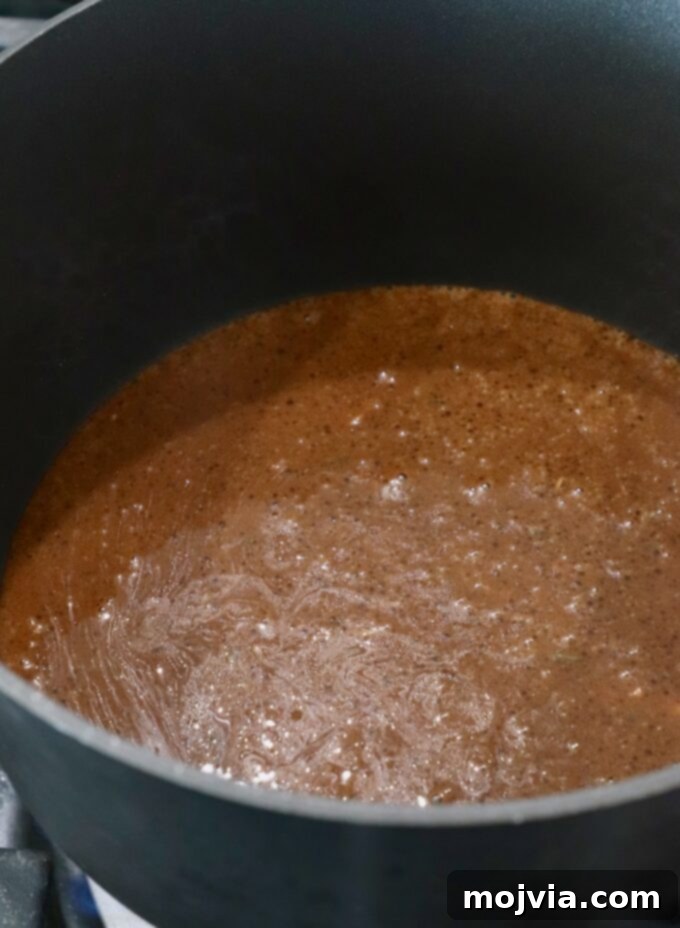
- Transform Marinade into Glaze: Once the salmon has finished marinating, carefully remove the fillets from the marinade and arrange them on a sheet pan lined with parchment paper or non-stick aluminum foil. Now, pour the leftover marinade from the bag or bowl into a medium saucepan on the stove. Place the saucepan over high heat and bring the marinade to a rolling boil. It’s crucial to boil the marinade to eliminate any potential bacteria from contact with raw fish. Once boiling, reduce the heat to medium-high and allow the marinade to simmer gently for 5-7 minutes. Stir occasionally. You’ll notice it gradually thickens into a glossy, sticky glaze. Remove the saucepan from the heat and let the glaze cool for about 5 minutes; it will continue to thicken slightly as it cools.
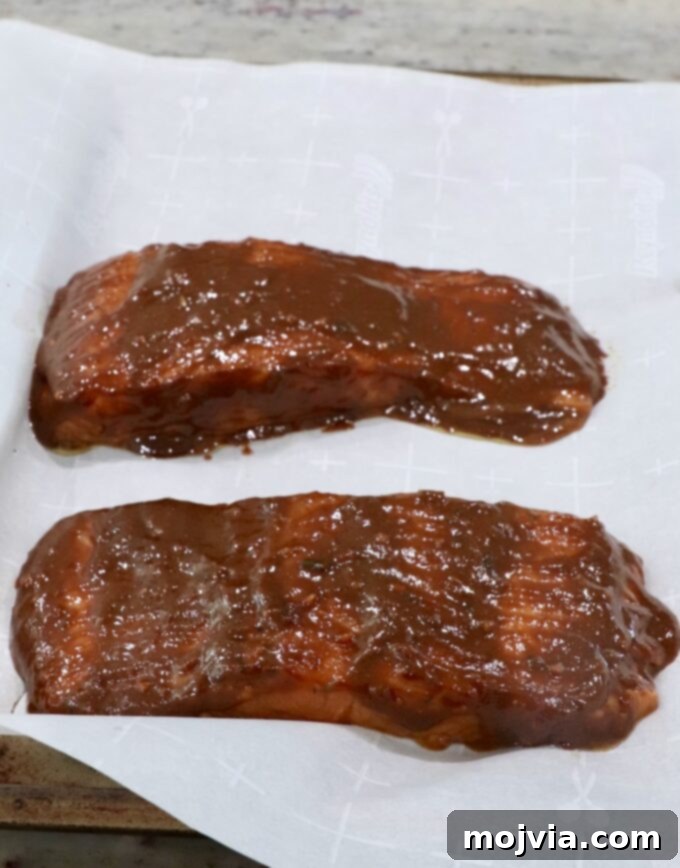
- Glaze the Salmon: Using a pastry brush, generously spread the freshly prepared, warm glaze evenly over the tops and sides of the salmon pieces arranged on your baking sheet. Ensure a good coating, as this glaze will caramelize beautifully during cooking, creating that desirable sticky texture and concentrated flavor.
- Cook the Salmon to Perfection (Oven Method): Preheat your oven to 425°F (220°C). Carefully place the glazed salmon into the preheated oven and bake for 10 minutes. This initial baking period cooks the salmon through. After 10 minutes, turn your oven setting from “bake” to “broil” on high. Continue to cook the salmon under the broiler for an additional 1-2 minutes. This crucial broiling step is what creates the irresistible caramelized crust; watch closely as the glaze begins to bubble, deepen in color, and brown on top of the salmon. Broilers can vary greatly in intensity, so remain vigilant to prevent burning. The salmon is done when it easily flakes with a fork and reaches your desired internal temperature.
Grilling Your Glazed Salmon to Perfection
For those who prefer the smoky char and distinct flavor of grilled salmon, this recipe is just as fantastic on the BBQ. Follow these modified instructions to achieve a beautifully grilled, glazed salmon:
- Initial Preparation: Begin by following steps 1 and 2 from the oven instructions: Marinate the salmon as directed, then remove the fillets and boil the reserved marinade to create your glaze. However, at this stage, DO NOT glaze the salmon yet. This is key for successful grilling.
- Preheat Your Grill: Preheat your outdoor grill to medium heat. For best results, ensure your grill grates are clean to prevent sticking.
- Grill the Salmon (Flesh Side Down): Lightly brush the flesh side of each salmon fillet with a little extra oil (such as olive oil or avocado oil). This additional oil acts as a non-stick barrier, preventing the delicate salmon flesh from adhering to the hot grill grates. Carefully place the salmon fillets, flesh side down, directly onto the preheated grill. Cook for 3-4 minutes. This initial sear will create beautiful grill marks and begin to cook the fish.
- Flip and Glaze: Using a wide, thin spatula, carefully flip the salmon fillets so they are now skin-side down on the grill grates. At this point, generously brush the prepared glaze over the cooked flesh side of the salmon. Continue to cook for an additional 3-4 minutes, or until the salmon is cooked through and the glaze has caramelized slightly. The skin will crisp up beautifully on the grill, contributing to both flavor and texture. Cook until the internal temperature reaches your desired doneness (see recipe notes for temperature guidelines).
Grilling adds a wonderful smoky depth that perfectly complements the sweet and tangy glaze, making this an excellent choice for outdoor cooking and summer meals.
Expert Tips & Recipe Notes for Success
To ensure your salmon turns out perfectly every time, keep these expert tips and notes in mind:
- Soy and Gluten Allergy Alternatives: If you or your guests have a soy allergy, gluten allergy, or simply prefer an alternative to soy sauce, coconut aminos is an excellent substitute. This soy-free and gluten-free option offers a similar umami profile with significantly less sodium. Because coconut aminos are less salty than soy sauce, I highly recommend adding about 1/2 teaspoon of salt to the marinade if you make this substitution, to maintain the flavor balance.
- The Importance of Broiling (Oven Method): Do not skip the final broiling step in the oven! This brief burst of high heat is absolutely crucial for achieving that irresistible, sticky, and deeply caramelized crust on your salmon. It transforms the glaze into a glistening, slightly browned layer that is packed with flavor and texture. Without it, your salmon will still be tasty, but you’ll miss out on that signature, restaurant-quality finish.
- No Broiler? No Problem!: If your oven doesn’t have a broiler function, or if you prefer not to use it, you can still achieve delicious results. Simply continue to bake the salmon for an additional 2-5 minutes after the initial 10-minute bake. This will bring the total cook time to 12-15 minutes, allowing the glaze to set and lightly caramelize.
- Uniform Fillet Thickness is Key: Always strive to purchase salmon fillets that are similar in size and thickness. This ensures consistent cooking, preventing smaller pieces from overcooking and drying out while larger pieces are still raw. If you do have one piece significantly smaller than the others, consider adding it to the baking sheet about 2 minutes into the cooking time for the larger fillets to prevent it from overcooking.
- Adjusting for Salmon Thickness: This recipe is calibrated for salmon fillets that are approximately 1 inch thick at their thickest part, which is common for center-cut fillets. If your salmon is noticeably thinner (e.g., 1/2 inch thick), you’ll need to adjust the cooking time accordingly. For oven-baked salmon, reduce the initial 10-minute bake time by 2-3 minutes. For grilled salmon, cook for only about 3 minutes per side. The best way to tell if salmon is cooked is by checking its internal temperature or seeing if it flakes easily with a fork.
- Recipe Yield and Batch Size: This marinade recipe is perfectly scaled for up to 2 pounds of salmon, typically four 6-8 ounce fillets. If you’re cooking for a larger crowd, you can easily double the marinade ingredients to accommodate more fish.
- Leave the Skin On: There’s no need to remove the skin from your salmon before cooking, and in fact, I highly recommend leaving it on. The skin acts as a natural protective layer, helping to keep the salmon moist and juicy as it cooks, whether in the oven or on the grill. Additionally, when properly cooked, the skin can become wonderfully crispy. After cooking, the salmon’s flesh will easily peel away from the skin, which can then be discarded if you don’t wish to eat it.
- Visual Cues for Doneness: As salmon cooks, its vibrant orange/red color will gradually transform into an opaque pink. A general rule of thumb for oven-baked salmon is to cook it for approximately 10 minutes per inch of thickness. For grilled salmon, aim for 6-8 minutes per inch of thickness, flipping halfway through.
- Using a Meat Thermometer: For the most accurate measure of doneness, an instant-read meat thermometer is your best friend. Salmon is considered safe to eat when it reaches an internal temperature of 145°F (63°C) for well done. However, many prefer their salmon slightly less cooked, aiming for 125-135°F (52-57°C) for medium-rare to medium, which results in a moister, more tender fish. Remember that salmon will continue to cook for a few degrees after it’s removed from the heat (this is called carryover cooking), so consider pulling it 5-10 degrees below your desired final temperature.
- Storage and Reheating: Leftover cooked salmon should be stored in an airtight container in the refrigerator for up to 2-3 days. To reheat, gently warm it in a preheated oven at 275°F (135°C) for 10-15 minutes, or in a microwave on a low setting, to prevent it from drying out.
Delicious Pairings: What to Serve with Glazed Salmon
This marinated and glazed salmon is incredibly flavorful on its own, but pairing it with the right side dishes can elevate your meal to a complete and satisfying dining experience. Here are some fantastic suggestions that beautifully complement the sweet, savory, and tangy notes of the salmon:
- Rice Dishes: A simple rice dish is the perfect absorbent canvas for soaking up any extra glaze and complementing the salmon’s rich flavor.
- Classic White Rice: A neutral base that lets the salmon shine.
- Sushi Rice: Slightly sticky and subtly sweet, it adds an interesting texture.
- Nutty Brown Rice: A healthier, whole-grain option with a satisfying chew.
- Light and Healthy Cauliflower Rice: A low-carb alternative that still provides a good base.
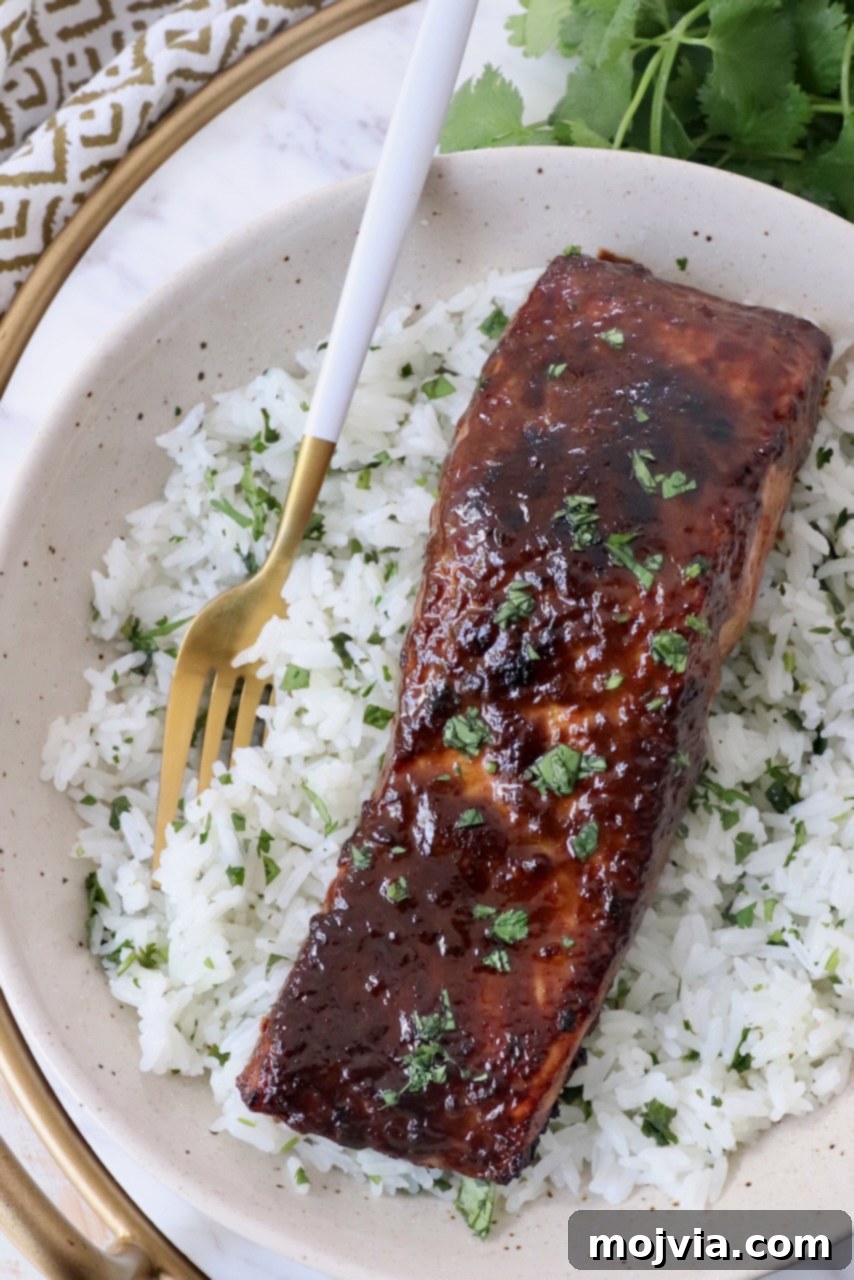
- Vibrant Cilantro Lime Rice: Adds a zesty, fresh element that brightens the whole plate.
- Fresh & Cooked Vegetables: Vegetables offer crunch, color, and vital nutrients, making them an ideal accompaniment.
- Crispy Smashed Broccoli: Provides a delightful texture contrast and earthy flavor.
- Sweet Honey Glazed Carrots: Echoes the sweetness in the salmon glaze and offers vibrant color.
- Zesty Garlic Lemon Green Beans: A bright, garlicky side that adds a fresh counterpoint.
- Simple Steamed Broccoli: A quick and healthy choice, perfect for a balanced meal.
- Roasted or Grilled Asparagus: Its slight bitterness and tender-crisp texture beautifully cut through the richness of the salmon.
- Refreshing Salads: A crisp, light salad can provide a refreshing contrast and a burst of freshness.
- Smoky Grilled Caesar Salad: Adds a unique char and classic creamy dressing.
- Hearty Italian Salad: Features fresh greens, tomatoes, and a zesty vinaigrette.
- Sweet & Tangy Beet Salad with Feta: An earthy, slightly sweet salad that complements the marinade’s tanginess.
By choosing any of these delightful side dishes, you can create a well-rounded meal that highlights the incredible flavor of your glazed salmon.
Explore More Delectable Seafood Recipes
If you’ve loved this salmon marinade and are looking to expand your seafood repertoire, you’re in the right place! Never run out of delicious and creative ideas for how to cook fish with these scrumptious seafood recipes. Add these to your weekly menu for a healthy and flavorful culinary journey.

Print Recipe
Pin Recipe
Rate this Recipe
Ultimate Salmon Marinade & Glaze
Ingredients
- ¼ cup olive oil
- ¼ cup low-sodium soy sauce
- ¼ cup balsamic vinegar
- 1 tablespoon dijon mustard
- 1 tablespoon honey
- 1 teaspoon Italian seasoning, click link for homemade recipe
- 4 salmon filets, 6-8 ounces each, ideally similar thickness
Instructions
-
In a large bowl or a resealable plastic bag, combine the olive oil, low-sodium soy sauce, balsamic vinegar, Dijon mustard, honey, and Italian seasoning. Whisk or shake until thoroughly mixed.
-
Add the salmon fillets to the marinade, ensuring each piece is fully coated.
-
Refrigerate and marinate for at least 30 minutes, or up to a maximum of 6 hours, for optimal flavor infusion.
-
After marinating, preheat your oven to 425°F (220°C).
-
Remove the salmon fillets from the marinade and place them onto a baking sheet lined with parchment paper or non-stick aluminum foil.
-
Pour the remaining marinade from the bag or bowl into a medium saucepan. Place the saucepan on the stove over high heat and bring the marinade to a full boil.
-
Once boiling, reduce the heat to medium-high and let the marinade simmer for 5-7 minutes, stirring occasionally, until it thickens into a rich glaze. Remove from heat and allow to cool for 5 minutes; it will continue to thicken.
-
Generously spread the warm glaze evenly over the salmon fillets on the baking sheet using a pastry brush.
-
Bake the salmon in the preheated oven for 10 minutes.
-
Change the oven setting from bake to broil on high. Continue to cook the salmon under the broiler for an additional 1-2 minutes, or until the glaze begins to bubble, brown, and caramelize on top. Keep a close watch on the salmon during broiling to prevent it from burning.
Notes
- To grill the salmon instead of baking it, follow these alternative instructions:
- Marinate the salmon as instructed, then boil the marinade to create the glaze. DO NOT glaze the salmon at this stage.
- Preheat your grill to medium heat. Ensure grates are clean.
- Brush the flesh side of the salmon with a small amount of oil to prevent sticking, then place the fillets flesh-side down directly on the hot grill grates. Cook for 3-4 minutes.
- Carefully flip the salmon fillets so the skin side is down on the grill grates. Now, brush the prepared glaze generously over the cooked flesh of the salmon. Cook for an additional 3-4 minutes, or until the salmon is cooked through and the glaze is nicely caramelized.
- For Soy or Gluten Allergies: If you need a soy-free or gluten-free option, substitute the low-sodium soy sauce with coconut aminos. Coconut aminos are naturally less salty, so I recommend adding about 1/2 teaspoon of salt to the marinade to achieve a balanced flavor.
- Ensure Even Cooking: Always try to select salmon fillets that are similar in thickness. If one piece is significantly smaller, it may cook faster. You can compensate by adding the smaller piece to the baking sheet about 2 minutes after the larger fillets have started cooking.
- Adjust Cook Time for Thickness: This recipe assumes salmon fillets are about 1 inch thick. If your salmon is thinner, reduce the initial oven bake time by 2-3 minutes. If grilling thinner salmon, cook for approximately 3 minutes per side. The salmon is perfectly cooked when it easily flakes with a fork or reaches your desired internal temperature.
- Recipe Capacity: This marinade is designed to perfectly flavor up to 2 pounds of salmon.
- Keep the Skin On: There’s no need to remove the salmon skin before cooking. Leaving the skin on helps to keep the salmon moist and tender as it cooks in both the oven and on the grill. The cooked flesh will easily separate from the skin after cooking, which you can then discard.