
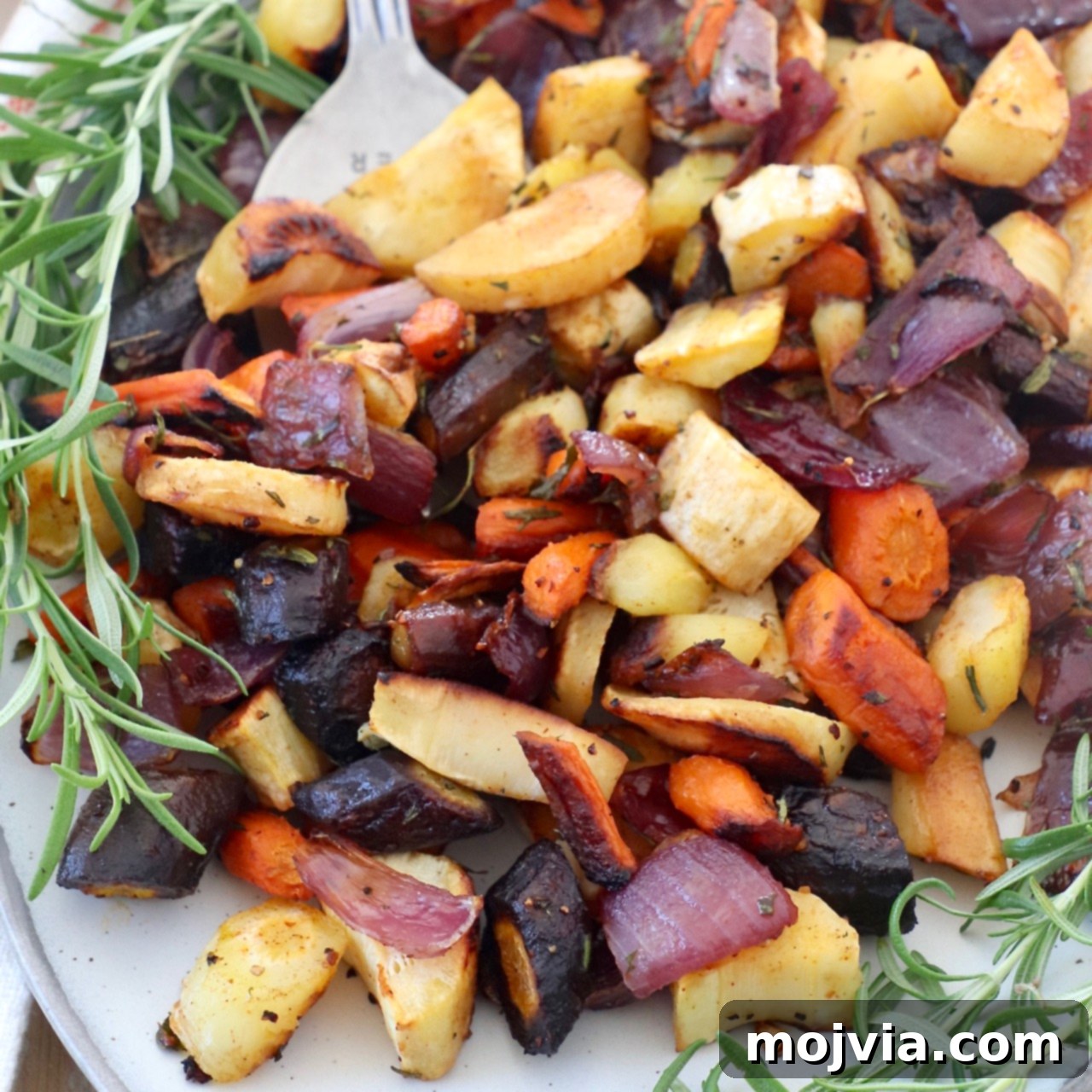
Roasted root vegetables are a quintessential side dish, celebrated for their exceptional flavor, ease of preparation, and impressive presentation. Whether you’re seeking a simple, wholesome accompaniment for a weeknight dinner or an elegant addition to a festive holiday spread, this recipe delivers on all fronts. With just about 10 minutes of active prep time to chop the vibrant medley of vegetables and toss them with aromatic seasonings, they are ready for the oven. After a mere 40 minutes of roasting, you’ll be greeted with a beautifully caramelized, tender-crisp assortment of root vegetables, bursting with sweet and savory notes that will delight your palate.
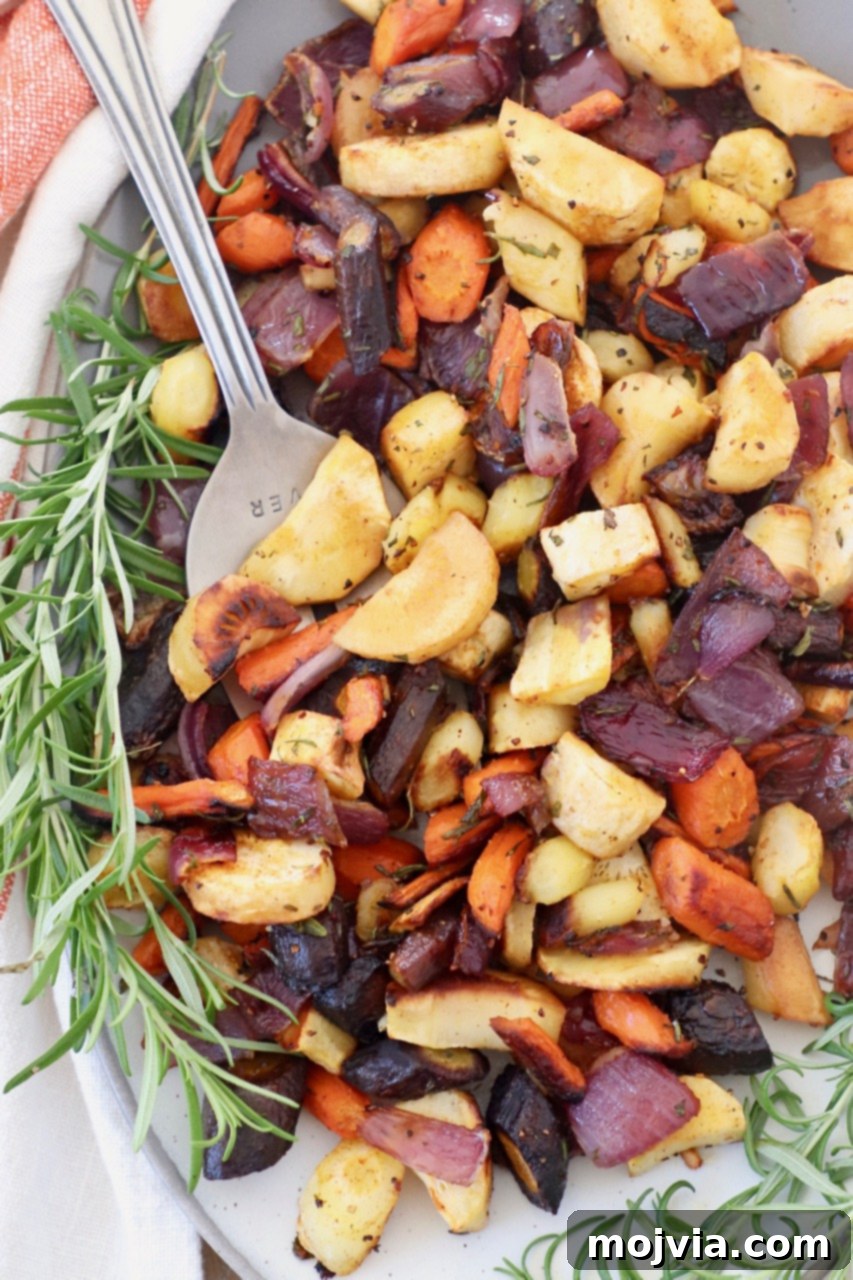
Introduction to Roasted Root Vegetables
There’s an undeniable magic that happens when humble root vegetables meet the dry heat of an oven. Their natural sugars caramelize, intensifying their sweetness and creating beautifully browned, slightly crispy exteriors with incredibly tender interiors. This transformation, coupled with the aromatic infusion of fresh rosemary and garlic, results in the best recipe for roasted root vegetables you’ll ever make. This simple side dish, featuring the harmonious blend of parsnips, carrots, and onions, brought to life with herbaceous rosemary and pungent garlic, is a testament to how straightforward ingredients can yield extraordinary flavor.
Beyond their delightful taste and texture, roasted root vegetables are a visual feast. The vibrant hues of rainbow carrots, the creamy tones of parsnips, and the deep purples of red onions create a stunning medley of colors that brightens any plate. This dish is not only easy to prepare but also incredibly versatile, making it suitable for a wide range of meals, from an everyday family dinner to an elaborate holiday celebration like Thanksgiving or Christmas. Their ability to pair seamlessly with various main courses, from succulent steaks and braised short ribs to roasted chicken and holiday turkeys, makes them an indispensable part of your culinary repertoire.
Why You’ll Love This Recipe
This roasted root vegetable recipe is a true crowd-pleaser for many reasons. Firstly, it’s remarkably simple. With minimal hands-on time, even novice cooks can achieve impressive results. Secondly, the flavor profile is exceptional; the natural sweetness of the root vegetables perfectly complements the savory notes of steak seasoning, the earthiness of rosemary, and the pungency of garlic. Thirdly, it’s incredibly healthy, packed with essential vitamins, minerals, and fiber, making it a guilt-free indulgence. Lastly, its vibrant appearance makes it a stunning centerpiece, proving that healthy food can be both delicious and beautiful.
Understanding Root Vegetables
Root vegetables are edible plant roots that grow underground, absorbing nutrients from the soil to become dense powerhouses of flavor and nutrition. They are typically starchy and hearty, making them ideal for roasting as their sugars caramelize beautifully in the oven. For this recipe, the focus is on creating a balanced blend of flavors and textures.
- Carrots: Known for their vibrant orange hue and natural sweetness, carrots become even sweeter and more tender when roasted. Rainbow carrots add an extra layer of visual appeal with their purple, yellow, and white varieties, each offering a slightly different subtle flavor.
- Parsnips: Often mistaken for white carrots, parsnips have a distinct, slightly sweet and earthy flavor with hints of nuttiness. When roasted, they develop a creamy interior and a delicious outer crispness, adding depth to the medley.
- Turnips: These versatile root vegetables have a slightly peppery, earthy flavor when raw, which mellows and sweetens significantly upon roasting. They offer a delightful textural contrast.
- Potatoes: While not used in the primary recipe, potatoes (especially varieties like Yukon Gold or red potatoes) are a classic roasting choice, providing a starchy, comforting element that crisps up beautifully.
- Beets: Adding a striking deep red or golden color, beets offer an intense earthy sweetness. They can sometimes bleed their color onto other vegetables, so if you prefer a cleaner look, you might roast them separately or choose golden beets.
The beauty of this recipe lies in its adaptability. You can easily mix and match any combination of these root vegetables, aiming for approximately 3 pounds total. The key is to dice them to a similar size to ensure uniform cooking, resulting in a perfectly tender and scrumptiously roasted side dish every time.
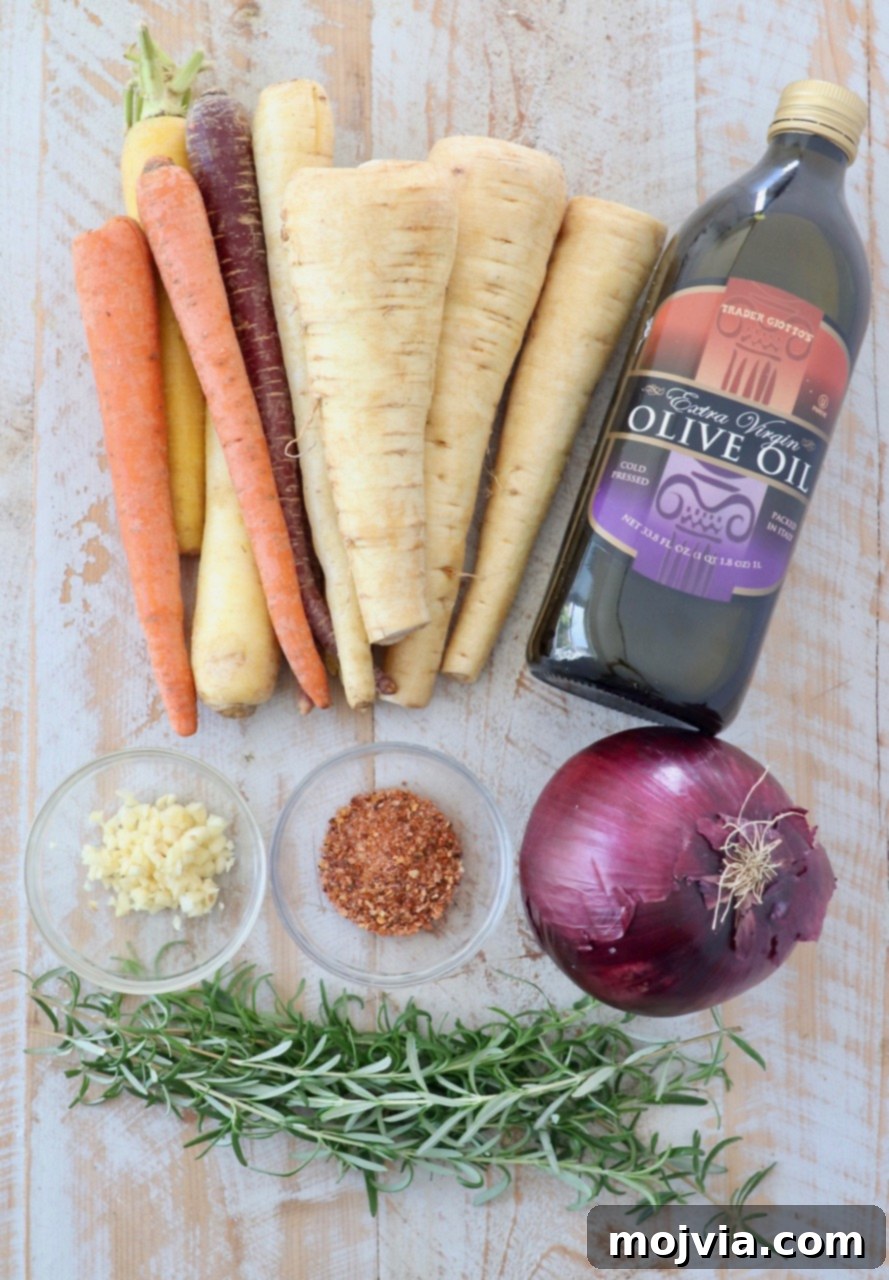
Ingredients for the Best Roasted Root Vegetables
Crafting the perfect batch of roasted root vegetables requires a thoughtful selection of fresh, quality ingredients. Each component plays a vital role in building the incredible flavor and texture of this dish.
- Root Vegetables: You’ll need a total of 3 pounds of your favorite root vegetables. For a visually stunning and perfectly balanced flavor profile, I highly recommend a combination of half parsnips and half rainbow carrots. However, feel free to experiment with any root vegetables that grow underground, such as turnips, various types of potatoes (sweet, Yukon Gold, red), or even beets for a bolder, earthier note. The key is to choose firm, fresh vegetables without blemishes.
- Onion: While technically a bulb vegetable, onions are often grouped with root vegetables due to their underground growth and robust flavor. They are an essential addition to this recipe, contributing a wonderful sweetness and savory depth as they caramelize. I used a red onion for its appealing color and slightly milder flavor when roasted, but a classic yellow onion works just as well. If you’re not a fan of onions, you can substitute with an extra pound of another root vegetable, but you’ll miss out on a fantastic layer of flavor.
- Olive Oil: A good quality extra virgin olive oil is crucial for coating the vegetables. It helps them crisp up beautifully, prevents sticking to the baking sheet, and acts as a carrier for the seasonings, ensuring even distribution and rich flavor.
- Steak Seasoning: This is my secret weapon for elevating roasted vegetables! My homemade steak seasoning blend is a go-to for its complex mix of salt, pepper, garlic, onion, and various herbs. It imparts a savory, robust flavor that complements the sweetness of the root vegetables perfectly. If you don’t have time to make your own, a pre-mixed Montreal Steak Seasoning from the spice aisle will do the trick. The convenience and flavor it adds are simply unparalleled.
- Fresh Garlic: Minced fresh garlic cloves are highly recommended for the most potent and aromatic flavor. While garlic powder can be used as a substitute, fresh garlic delivers a brighter, more pungent taste that truly shines in this dish.
- Fresh Rosemary: The distinctive piney, slightly peppery aroma of fresh chopped rosemary is a hallmark of this recipe. It infuses the vegetables with an earthy, herbaceous essence that is both comforting and sophisticated. While dried rosemary can be used in a pinch, fresh herbs always offer superior flavor.
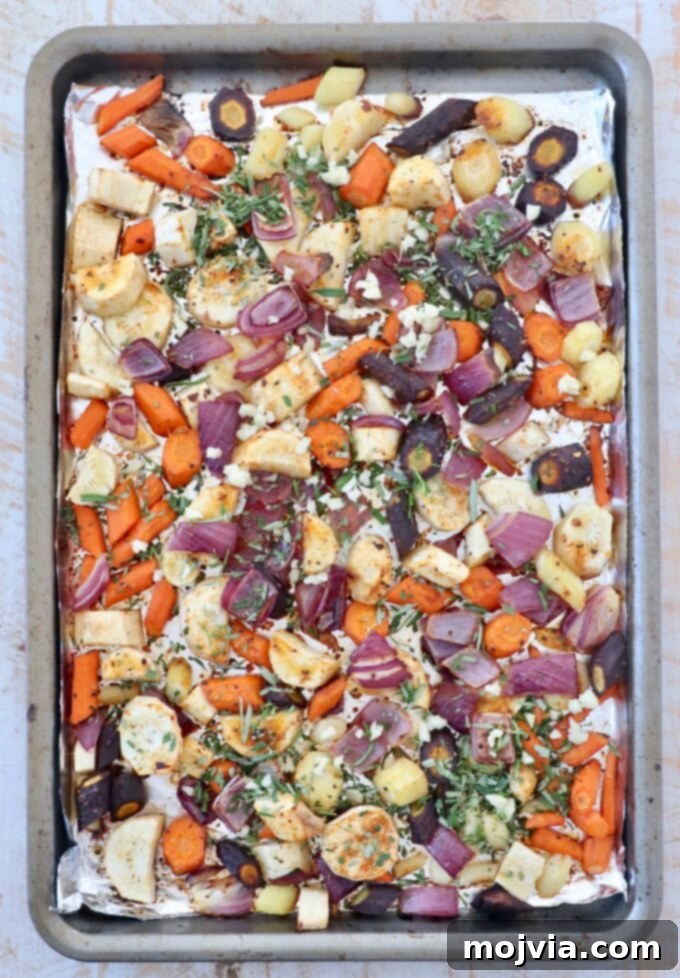
Step-by-Step Instructions for Perfect Roasting
Achieving perfectly roasted root vegetables—tender on the inside, crispy and caramelized on the outside—is simpler than you might think. Follow these steps for consistently delicious results:
- Preheat Your Oven: Start by preheating your oven to a robust 425°F (220°C). A high temperature is essential for achieving that desirable crisp exterior and caramelization. Line a large, rimmed baking sheet with foil or parchment paper for easy cleanup and to prevent sticking.
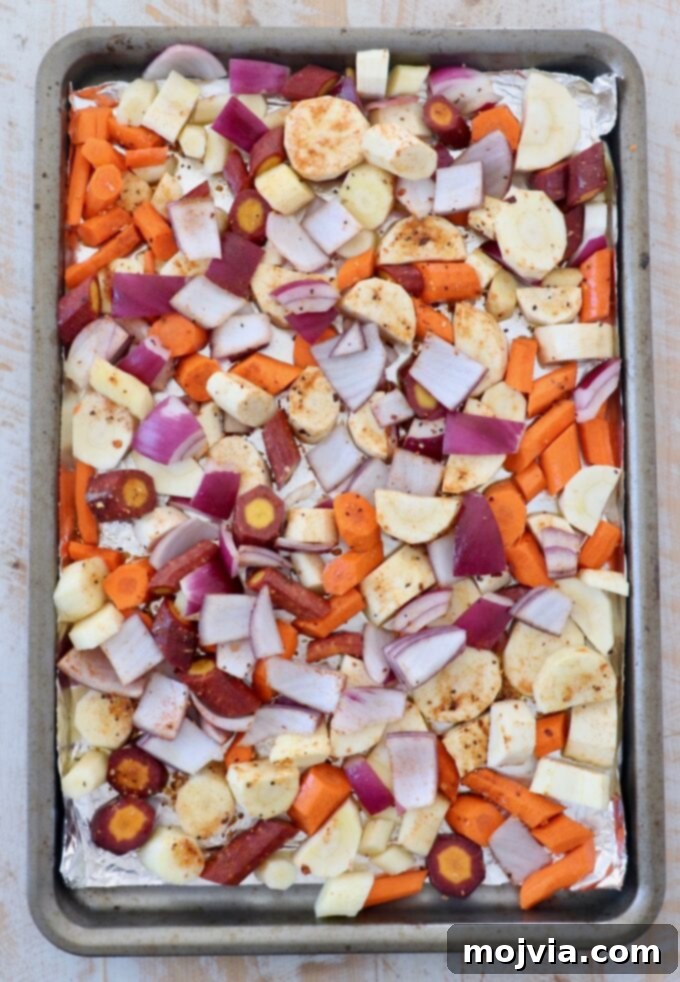
- Prepare the Root Vegetables: Begin by peeling all your chosen root vegetables. For carrots and parsnips, a vegetable peeler works best. Then, dice them into approximately the same size, aiming for 1 to 1.5-inch pieces. This uniformity is crucial for even cooking. Similarly, dice your onion to match the size of the other vegetables. Consistent sizing ensures that everything cooks through at the same rate, preventing some pieces from being undercooked while others burn.
- Season Liberally: Transfer all the diced root vegetables and onions to a large mixing bowl. Drizzle generously with olive oil and sprinkle with the steak seasoning. Toss everything together thoroughly with your hands or a large spoon, ensuring every piece of vegetable is evenly coated. This step is vital for flavor distribution and for helping the vegetables achieve that beautiful golden-brown crust.
- Arrange on Baking Sheet: Spread the seasoned vegetables in a single layer on your prepared baking sheet. Avoid overcrowding the pan. If necessary, use two baking sheets to ensure there’s enough space between the vegetables. Overcrowding will steam the vegetables instead of roasting them, leading to a soft, soggy texture rather than a crisp, caramelized one.
- Initial Roasting: Place the baking sheet into the preheated oven and roast for 30 minutes. During this time, the vegetables will begin to soften and develop their initial caramelization. Resist the urge to open the oven frequently, as this can lower the temperature and prolong cooking.
- Add Aromatics and Finish Roasting: After 30 minutes, carefully remove the baking sheet from the oven. Add the minced garlic and fresh chopped rosemary to the vegetables. Toss them gently on the baking sheet to distribute the aromatics. Return the vegetables to the oven for an additional 10 minutes of roasting. This two-stage approach prevents the garlic and delicate rosemary from burning, ensuring their flavors are perfectly infused into the tender, caramelized vegetables without becoming bitter.
- Serve Immediately: Once roasted to perfection, remove the vegetables from the oven. Serve them hot as a delectable side dish. The aroma alone will have everyone ready to dig in!
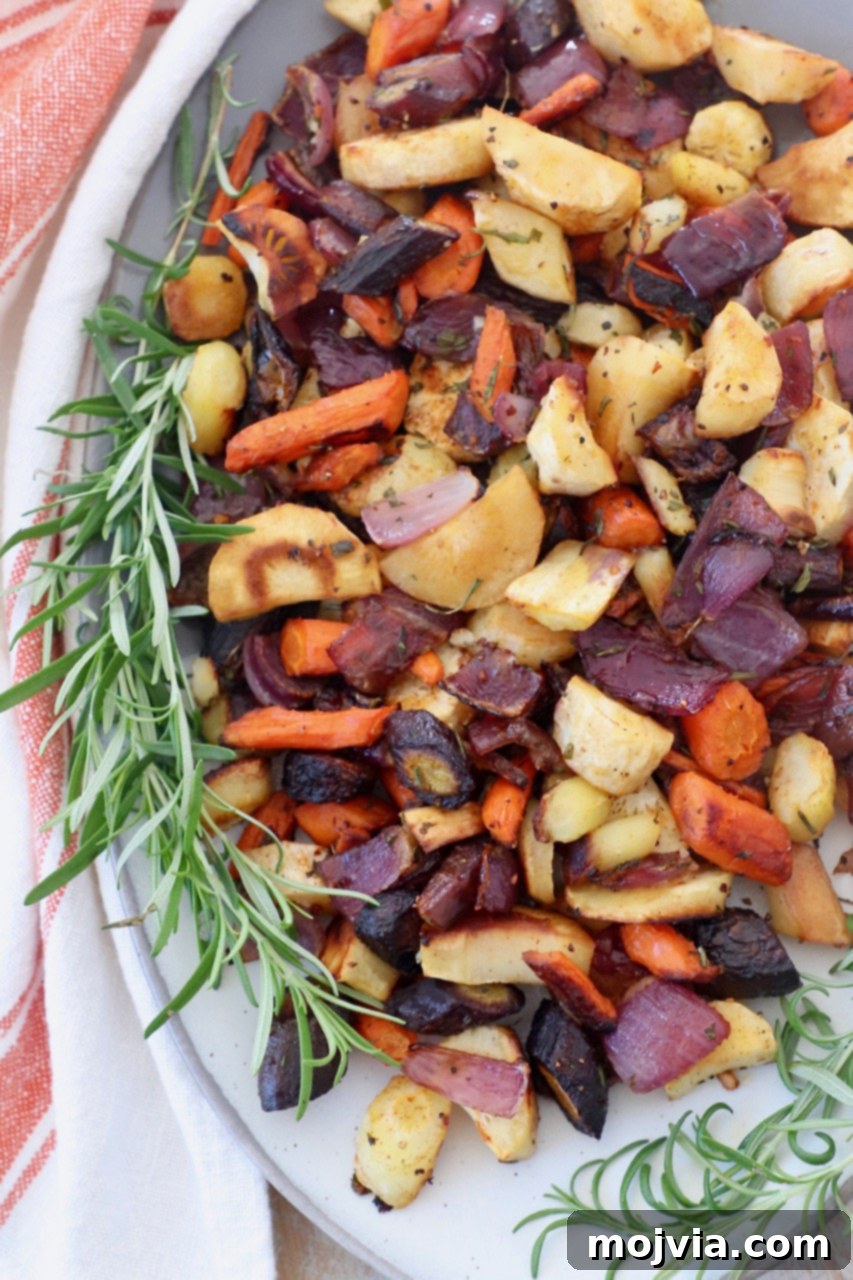
Pro Tips for Optimal Results
Elevate your roasted root vegetables from good to extraordinary with these expert tips:
- No Pre-Boiling Necessary: Contrary to some beliefs, you absolutely do not need to boil root vegetables before roasting. This recipe utilizes the oven’s high heat to achieve perfectly tender interiors and wonderfully crispy exteriors in a single, efficient step. Pre-boiling can often lead to mushy textures and diminish the vibrant flavors that high-heat roasting brings out.
- Don’t Overcrowd the Pan: This is arguably the most important tip for crispy roasted vegetables. When vegetables are packed too closely on a baking sheet, they release moisture, which then steams instead of roasts them. This results in soft, soggy vegetables rather than crisp, caramelized ones. Use two baking sheets if necessary, ensuring each piece has enough space around it to breathe and brown properly.
- Uniform Dicing is Key: To guarantee that all your root vegetables cook evenly, it’s essential to dice them into pieces of roughly the same size. If some pieces are significantly larger or smaller, you’ll end up with a mix of undercooked and overcooked vegetables. Aim for 1 to 1.5-inch chunks for most root vegetables.
- Parchment Paper or Foil for Easy Cleanup: Lining your baking sheet with parchment paper or foil not only makes cleanup a breeze but also helps prevent sticking, especially with the caramelized sugars.
- Experiment with Fresh Herbs: While rosemary is a fantastic choice, feel free to add other fresh herbs to the mix. Fresh thyme, sage, oregano, or even a sprinkle of chopped parsley can all be added along with, or instead of, the rosemary. Each herb offers a unique aromatic quality that can complement the root vegetables beautifully. For example, thyme brings a slightly lemony, peppery note, while sage offers a warm, earthy flavor.
- Naturally Vegan and Gluten-Free: This recipe is naturally accommodating for a variety of dietary needs. It is completely plant-based and contains no gluten-containing ingredients, making it a healthy and inclusive option for almost any guest.
Flavor Variations and Customization
While the classic rosemary and garlic combination is unbeatable, roasted root vegetables are wonderfully adaptable. Feel free to unleash your creativity with different flavor profiles:
- Sweet & Savory: Drizzle a tablespoon of maple syrup or honey over the vegetables before roasting. The natural sugars will caramelize further, creating an even richer, sweeter crust. A splash of balsamic glaze added in the last 5-10 minutes of roasting also works wonders.
- Spicy Kick: Add a pinch of red pepper flakes, smoked paprika, or a dash of cayenne pepper to the seasoning blend for a subtle warmth or a fiery kick.
- Mediterranean Inspired: Replace steak seasoning with a blend of dried oregano, marjoram, and a squeeze of fresh lemon juice after roasting. A sprinkle of crumbled feta cheese or fresh dill can be added just before serving.
- Asian Fusion: Toss with a mix of sesame oil, soy sauce (or tamari for gluten-free), ginger powder, and a touch of honey. Garnish with sesame seeds and chopped green onions after roasting.
- Herb Garden Medley: Beyond rosemary, consider adding fresh thyme, sage, or even marjoram. The combination of different herbs can add layers of complexity to the dish.
- Citrus Brightness: A squeeze of fresh lemon or orange juice over the hot roasted vegetables just before serving can brighten all the flavors. Zest from the citrus fruit can also be added with the herbs.
What to Serve Them With
The beauty of these roasted root vegetables lies in their incredible versatility. They are a universal side dish that complements an extensive array of main courses, enhancing any meal with their hearty texture and rich flavor. From casual weeknight dinners to elegant holiday feasts, you’ll find countless ways to pair them.
I wholeheartedly recommend trying them alongside some of the most popular grilled, smoked, and braised meat recipes on the blog. Their robust flavor stands up wonderfully to rich meats and savory sauces, while also providing a grounding, wholesome contrast to lighter proteins.
- Marinated Sirloin Steak: The savory notes of the steak perfectly complement the sweet, earthy vegetables.
- Smoked Turkey Breast: A fantastic pairing for a holiday meal, offering a delicious balance of flavors.
- Guinness Braised Short Ribs: The rich, deep flavors of braised short ribs are a dream with caramelized root vegetables.
- Smoked Pulled Pork: A comforting combination that’s perfect for a hearty meal.
- Cranberry Glazed Turkey Breast: Another excellent choice for festive gatherings, creating a colorful and flavorful plate.
- Grilled Tri Tip with Red Wine Marinade: The robust flavors of grilled beef are beautifully enhanced by the roasted vegetables.
- Sous Vide Steak: For a perfectly cooked steak, these vegetables provide an ideal accompaniment.
- Grilled New York Strip Steak: A classic steak dinner is made even better with a side of these savory roots.
- Smoked Prime Rib: Elevate your special occasion meal with this impressive pairing.
Beyond these suggestions, consider serving them with roasted chicken, pork chops, lamb roasts, or even as a hearty vegetarian main course alongside a grain salad or quinoa. Their versatility truly knows no bounds!
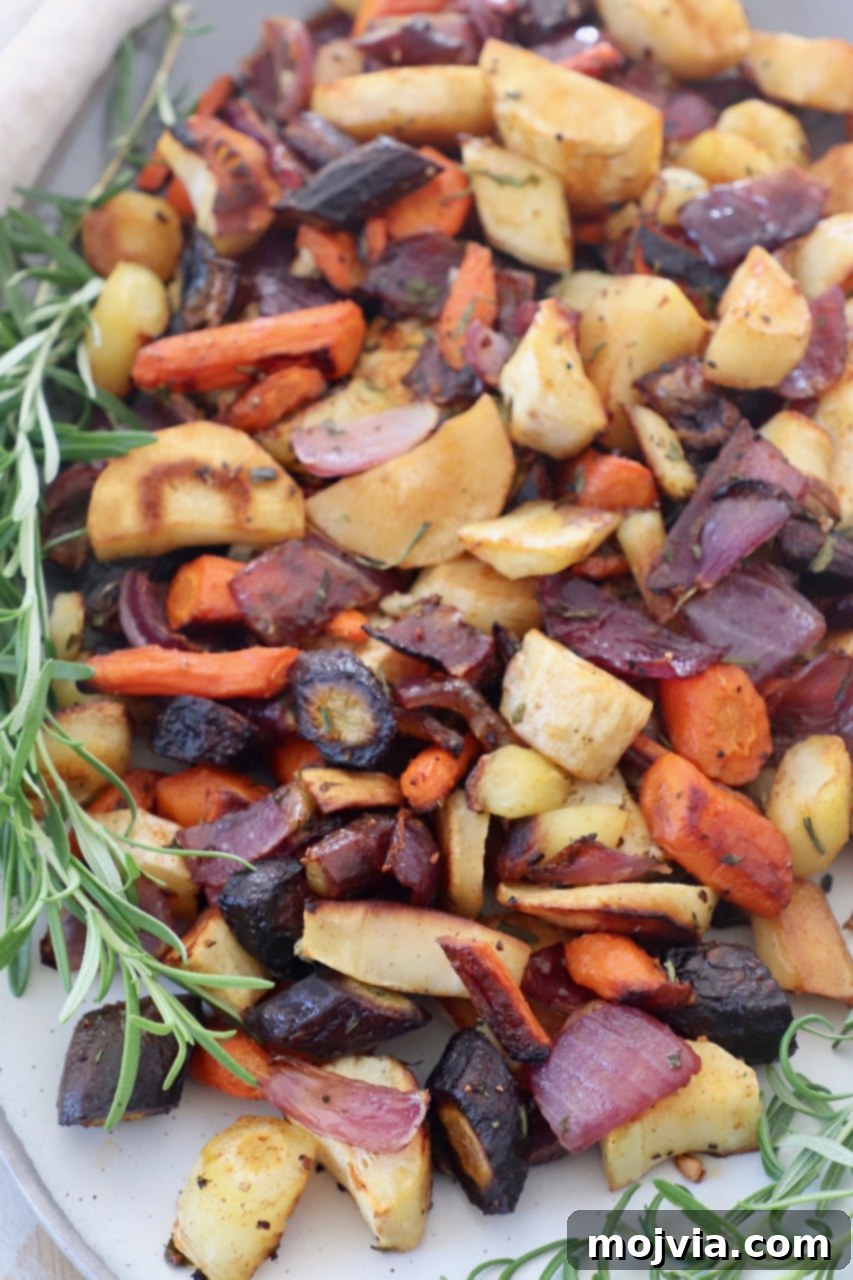
Storage and Reheating Tips
Roasted root vegetables are delicious fresh out of the oven, but they also make for fantastic leftovers. Proper storage and reheating can ensure they retain as much of their delightful texture and flavor as possible.
- Storage: Allow any leftover roasted vegetables to cool completely to room temperature before storing. Transfer them to an airtight container and place in the refrigerator. They will stay fresh and flavorful for up to 5 days.
- Reheating in the Oven (Recommended for Crispness): For the best results, especially if you want to revive some of that delicious crispiness, reheating in the oven is ideal. Preheat your oven to 400°F (200°C). Spread the leftover vegetables in a single layer on a baking sheet, optionally lined with foil. Roast for 15-20 minutes, or until thoroughly heated through and slightly re-crisped.
- Reheating in the Microwave: If you’re short on time, you can reheat roasted vegetables in the microwave. Place them in a microwave-safe dish and heat on high for 1-2 minutes, stirring halfway through, until warmed through. Be aware that microwave reheating will soften the vegetables and they won’t retain their crisp texture.
- Repurposing Leftovers: Don’t limit yourself to just reheating! Leftover roasted root vegetables are excellent additions to grain bowls, hearty salads, omelets, frittatas, or even blended into a creamy vegetable soup.
Frequently Asked Questions
Here are answers to some common questions about making roasted root vegetables:
- Can I use frozen root vegetables? While fresh root vegetables are highly recommended for the best texture and flavor, you can use frozen mixed root vegetables. However, they tend to release more water, which can make them less crispy. For best results with frozen vegetables, thaw them completely and pat them very dry before tossing with oil and seasonings. You may also need to increase the roasting time slightly.
- How do I get my roasted vegetables crispy? Several factors contribute to crispiness:
- High oven temperature (400-425°F or 200-220°C).
- Do not overcrowd the baking sheet. Use multiple sheets if necessary to ensure a single layer.
- Cut vegetables into uniform pieces so they cook evenly.
- Ensure vegetables are dry before adding oil and seasoning. Excess moisture prevents browning.
- What temperature is best for roasting root vegetables? A temperature between 400°F (200°C) and 425°F (220°C) is generally ideal for roasting root vegetables. This high heat encourages caramelization and helps them cook through while developing a crispy exterior.
- Can I add other spices besides steak seasoning? Absolutely! Feel free to customize the seasoning to your taste. Other great options include paprika, cumin, coriander, chili powder, onion powder, or a blend of Italian herbs. A simple salt and black pepper seasoning with garlic powder also works if you prefer a more minimalist approach.
- How do I know when the roasted root vegetables are done? The vegetables are done when they are fork-tender on the inside and beautifully caramelized and slightly crisp on the outside. Their colors will deepen, and you’ll notice browned edges.
More Delicious Vegetable Side Dishes
If you’re looking for more ways to incorporate wholesome and flavorful vegetables into your meals, explore these other popular vegetable side dish recipes. They are perfect for expanding your repertoire and adding variety to your table!
- Roasted Garlic Parmesan Broccolini: A quick and elegant green side.
- Crispy Smashed Potatoes: Ultimate potato crispiness with tender interiors.
- Brussel Sprout Casserole with Mushrooms: A rich and savory casserole option.
- Broccoli Cheese Casserole: A classic comfort food side.
- Honey Roasted Sweet Potatoes: Sweet and caramelized, a perfect alternative.
- Maple Bacon Brussels Sprouts: A flavorful twist with salty bacon and sweet maple.
- Parsnip Soup: A creamy and comforting way to enjoy parsnips.
Roasted Root Vegetables Recipe Card
Roasted Root Vegetables
Roasted root vegetables are a flavorful and easy side dish, perfect for a simple dinner, but impressive enough for a holiday meal! It only takes 10 minutes to dice up the veggies and toss them in the oven to roast. After 40 minutes in the oven, you’ll have a beautiful, healthy vegetable medley that’s bursting with flavor!
Servings: 8 people
Prep Time: 10 mins
Cook Time: 40 mins
Total Time: 50 mins
Author: Whitney Bond
Course: Side Dish
Cuisine: American
Ingredients
- 1 ½ pounds carrots, large dice
- 1 ½ pounds parsnips, large dice
- 1 onion, large dice
- ¼ cup olive oil
- 2 teaspoons steak seasoning (click link for recipe)
- 1 tablespoon minced garlic
- 2 tablespoons fresh rosemary, chopped
Instructions
- Preheat the oven to 425°F (220°C).
- Peel and dice the carrots and parsnips into large, uniform pieces (approximately 1 to 1.5 inches). Also, dice the onion into roughly the same size to ensure even cooking.
- In a large bowl, toss the diced carrots, parsnips, and onions with olive oil and steak seasoning, ensuring all vegetables are thoroughly coated.
- Arrange the seasoned vegetables in a single layer on a parchment-lined rimmed baking sheet. Avoid overcrowding the pan; use a second baking sheet if needed to allow for proper caramelization.
- Place the baking sheet in the preheated oven and roast for 30 minutes.
- Remove the vegetables from the oven. Add the minced garlic and fresh chopped rosemary to the vegetables and gently toss to distribute.
- Return the baking sheet to the oven and continue roasting for an additional 10 minutes, or until the vegetables are fork-tender and beautifully caramelized.
Notes
- Steak seasoning alternative: If you don’t have steak seasoning, you can replace it with 1 teaspoon salt + ½ teaspoon black pepper + ½ teaspoon garlic powder for a basic yet flavorful blend.
- Root vegetable flexibility: Any combination of 3 pounds of root vegetables can be used for this recipe. Feel free to substitute carrots and parsnips with other varieties like turnips, potatoes (Yukon Gold, red), or beets to explore different flavors and textures.
- Additional fresh herbs: Enhance the aromatic profile by adding more fresh herbs. Fresh thyme, sage, oregano, or parsley can be included alongside, or as an alternative to, rosemary. Each herb offers a unique essence that complements the roasted vegetables.
- Dietary considerations: This recipe is naturally vegan and gluten-free, making it a suitable and delicious option for a variety of dietary preferences.
- Storing leftovers: Leftover roasted vegetables should be stored in an airtight container in the refrigerator for up to 5 days. To reheat, wrap them in foil and warm in an oven at 400°F (200°C) for 15-20 minutes to restore some crispness, or microwave for 2 minutes for a quick reheat (though they will be softer).
Nutrition Facts
Calories 168 kcal (8%)
Carbohydrates 25g (8%)
Protein 2g (4%)
Fat 7g (11%)
Saturated Fat 1g (5%)
Polyunsaturated Fat 1g
Monounsaturated Fat 5g
Sodium 68mg (3%)
Potassium 622mg (18%)
Fiber 7g (28%)
Sugar 9g (10%)
Vitamin A 14236mg (285%)
Vitamin C 21mg (25%)
Calcium 70mg (7%)
Iron 1mg (6%)
There you have it—a comprehensive guide to creating the most delicious and visually appealing roasted root vegetables. This dish proves that simplicity can indeed lead to culinary excellence. With their vibrant colors, tender-crisp textures, and deep, savory-sweet flavors, these roasted root vegetables are sure to become a cherished addition to your meal rotations, perfect for both everyday enjoyment and special occasions. Don’t hesitate to experiment with different root vegetable combinations and herb variations to make this recipe truly your own. Happy roasting!