
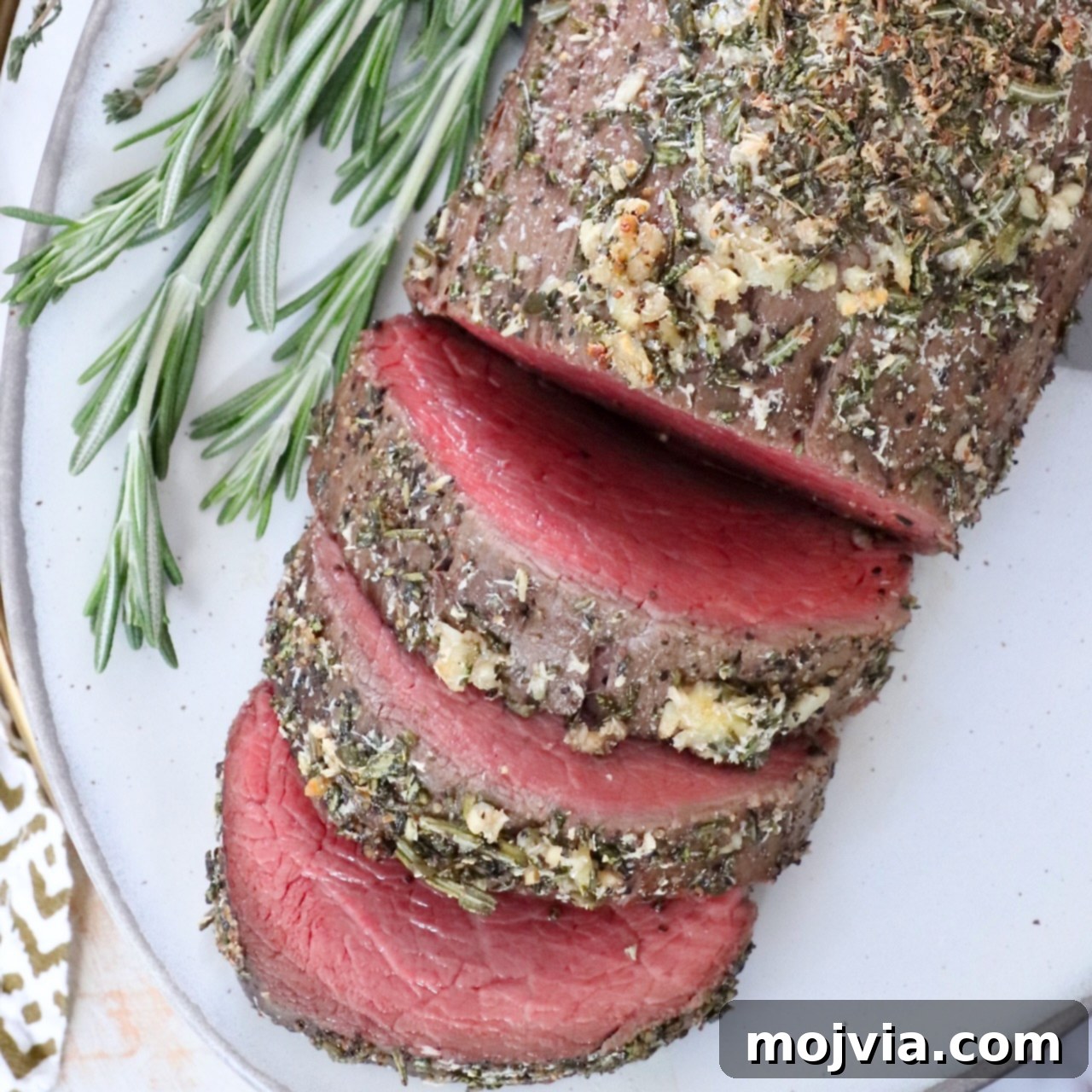
Experience the epitome of fine dining in the comfort of your home with this magnificent Herb Crusted Beef Tenderloin. This oven-roasted masterpiece isn’t just a meal; it’s a show-stopping event, promising incredibly rich flavors, a stunning presentation, and surprising ease of preparation. Follow our expert tips and simple recipe to unlock the secrets to a perfectly tender, juicy beef tenderloin every time. For an even more unforgettable culinary journey, serve it alongside a decadent, creamy gorgonzola sauce that will leave your guests utterly captivated.
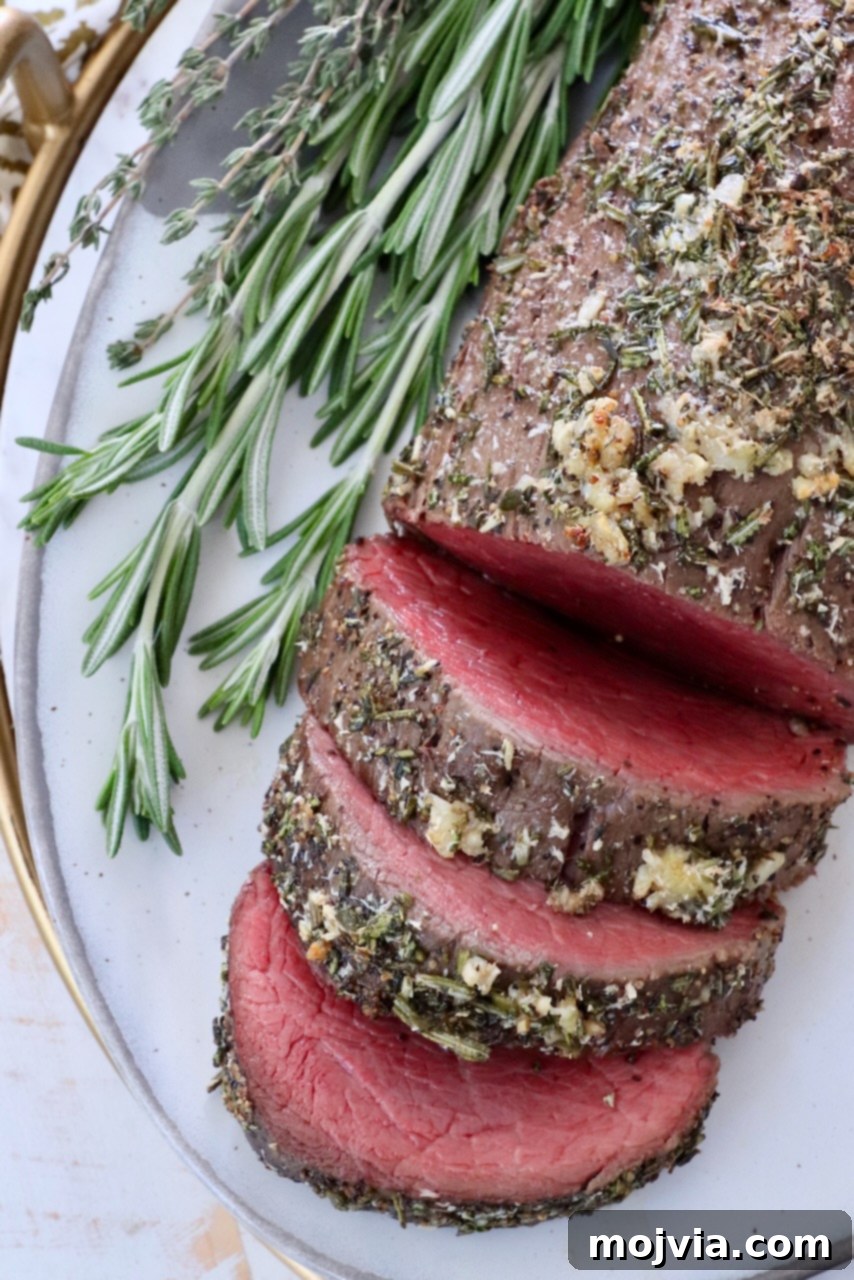
Table of contents
- The Ultimate Beef Tenderloin: Why This Recipe Shines
- Essential Ingredients for Herb Crusted Beef Tenderloin
- Mastering the Cut: How to Prepare a Whole Beef Tenderloin
- The Art of Roasting: Perfecting Your Herb Crusted Beef Tenderloin
- Crafting the Irresistible Gorgonzola Cream Sauce
- Achieving Perfection: Cooking Temperatures for Beef Tenderloin
- Elevate Your Meal: What to Serve with Herb Crusted Beef Tenderloin
- Storing and Reheating Your Delicious Beef Tenderloin
- Explore More Delectable Beef Recipes
The Ultimate Beef Tenderloin: Why This Recipe Shines
Over years of passionate cooking and countless shared meals with friends and family, this Herb Crusted Beef Tenderloin recipe has consistently earned its place in the top echelon of my culinary creations. It’s more than just a dish; it’s a celebration of flavor and a testament to the fact that elegant dining can be surprisingly approachable. Beef tenderloin, known as the most succulent and tender cut of beef, is often reserved for special occasions. When sliced into individual portions, it transforms into the coveted filet mignon. With such a premium cut, ensuring perfection is paramount, and that’s precisely what this meticulously tested and refined recipe delivers.
My unique approach involves an initial rub with a vibrant balsamic herb blend, followed by a finishing touch of rich horseradish herb butter. The secret to its incredible tenderness and deep flavor lies in a “low and slow” oven roasting method. This gentle heat allows the aromatic balsamic herb rub to penetrate deeply into the meat, infusing every fiber with its savory essence. Furthermore, slow roasting makes it significantly easier to monitor the internal temperature, greatly reducing the risk of overcooking this valuable cut.
After about an hour in the oven, followed by a crucial resting period, your Herb Crusted Beef Tenderloin emerges perfectly cooked, ready to be sliced and admired. While delicious on its own, the accompanying horseradish gorgonzola cream sauce elevates this dish to an entirely new level of gourmet delight. This sauce is so exceptionally good that it has become a staple, often doubled in our household to ensure there’s enough to savor. Its tangy, creamy profile with a subtle kick of horseradish perfectly complements the tender beef, creating a harmony of flavors that will truly impress everyone at your table.
This recipe transforms a simple cut of meat into a melt-in-your-mouth experience. Each slice is bursting with flavor, incredibly juicy, and unbelievably tender. When topped with that divine cream sauce, the combination is nothing short of spectacular, making every bite a memorable one.
Essential Ingredients for Herb Crusted Beef Tenderloin
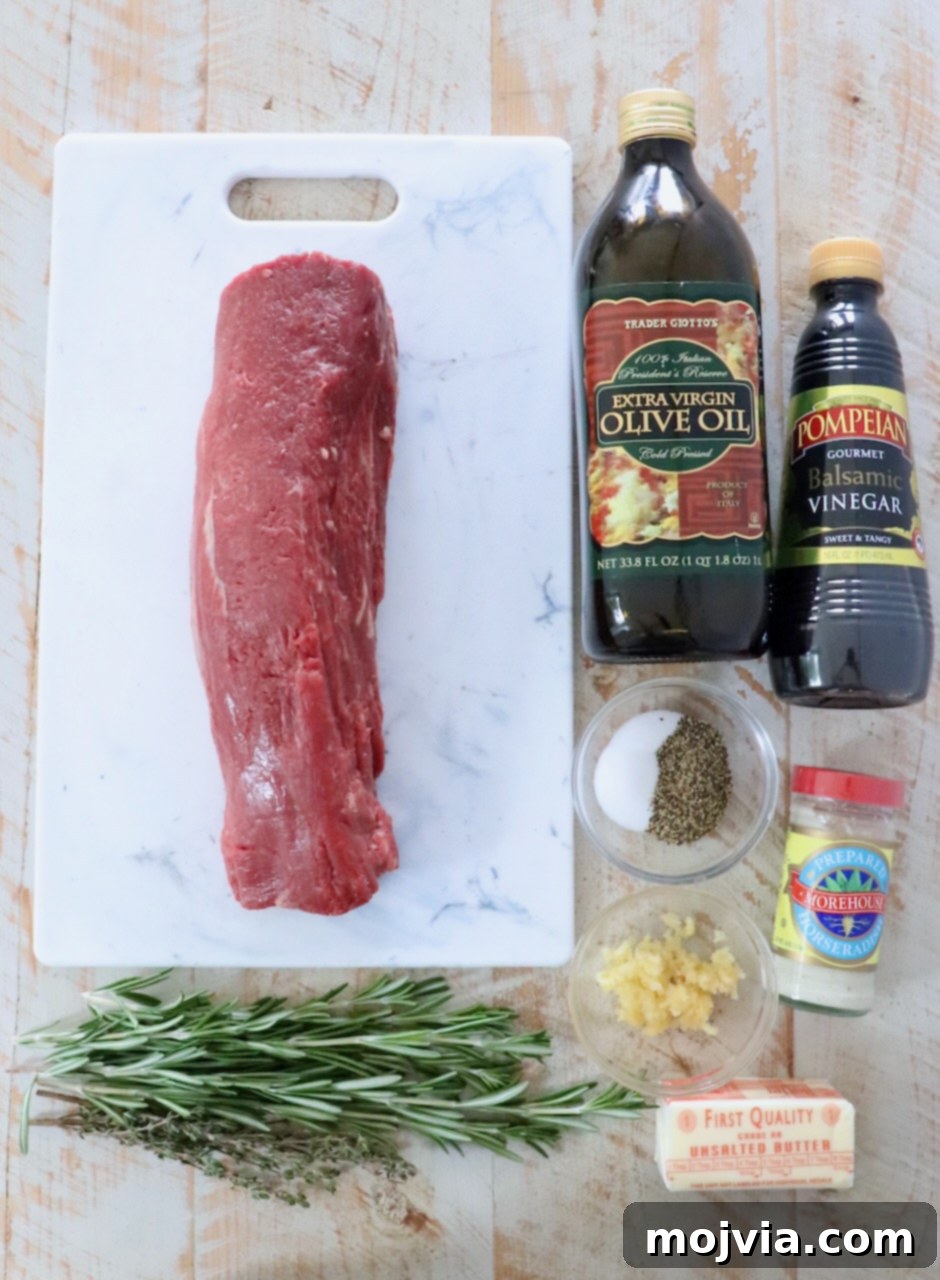
Crafting the perfect Herb Crusted Beef Tenderloin begins with selecting high-quality ingredients. Each component plays a vital role in achieving the rich, complex flavors and tender texture that make this dish truly extraordinary.
- Center Cut Beef Tenderloin: For this recipe, aim for a 2 to 3-pound center-cut beef tenderloin. This specific cut is sometimes referred to as chateaubriand, beef tenderloin roast, or filet mignon roast. The center cut is preferred because it boasts a uniform thickness, ensuring even cooking. End-cuts, being thinner on one side, tend to cook faster and can easily become overdone. If you can’t find a center-cut at your grocery store, don’t hesitate to ask your butcher to prepare one for you. Alternatively, you can purchase a whole beef tenderloin and trim it yourself, a process we’ll detail in the next section, offering both economic and practical advantages. Look for a tenderloin that has a deep red color and minimal marbling, as tenderloin is naturally a lean cut.
- Kosher Salt and Freshly Ground Black Pepper: These are the fundamental seasonings that enhance the natural taste of the beef. Kosher salt’s larger flakes adhere well to the meat and provide excellent seasoning, while freshly ground black pepper adds a pungent, spicy note.
- Olive Oil: Used as the base for our flavorful rub, olive oil helps bind the herbs and spices to the beef, and contributes to a beautiful, golden-brown crust during the cooking process. Choose a good quality extra virgin olive oil for the best flavor.
- Balsamic Vinegar: A splash of balsamic vinegar introduces a subtle tang and sweetness to the rub, deepening the overall flavor profile of the beef. It also helps tenderize the meat slightly.
- Fresh Rosemary: The earthy, pine-like aroma of fresh rosemary is a classic pairing with beef. While fresh herbs are always recommended for their vibrant flavor, dried rosemary can be substituted in the rub if fresh is unavailable (use 1 tablespoon dried for 4 sprigs fresh).
- Fresh Thyme: Delicate yet distinctly aromatic, fresh thyme adds another layer of herbaceousness. Like rosemary, fresh is best, but dried thyme can be used as a substitute (use 1 teaspoon dried for 4 sprigs fresh). Remember to divide your fresh herbs as specified in the recipe.
- Fresh Garlic: Crushed fresh garlic cloves are indispensable for their pungent, savory notes, which infuse deeply into the beef and the finishing butter. Avoid garlic powder for the best, most authentic flavor.
- Unsalted Butter: Used in the horseradish herb butter, unsalted butter allows you complete control over the salt content of your dish, ensuring perfect seasoning without unwanted sodium.
- Prepared Horseradish: This recipe calls for prepared horseradish from a jar, which provides a sharp, spicy kick that beautifully complements the richness of the beef and the creaminess of the sauce. It’s crucial to use *prepared horseradish*, not creamed horseradish, as their flavor profiles and textures are quite different.
Mastering the Cut: How to Prepare a Whole Beef Tenderloin
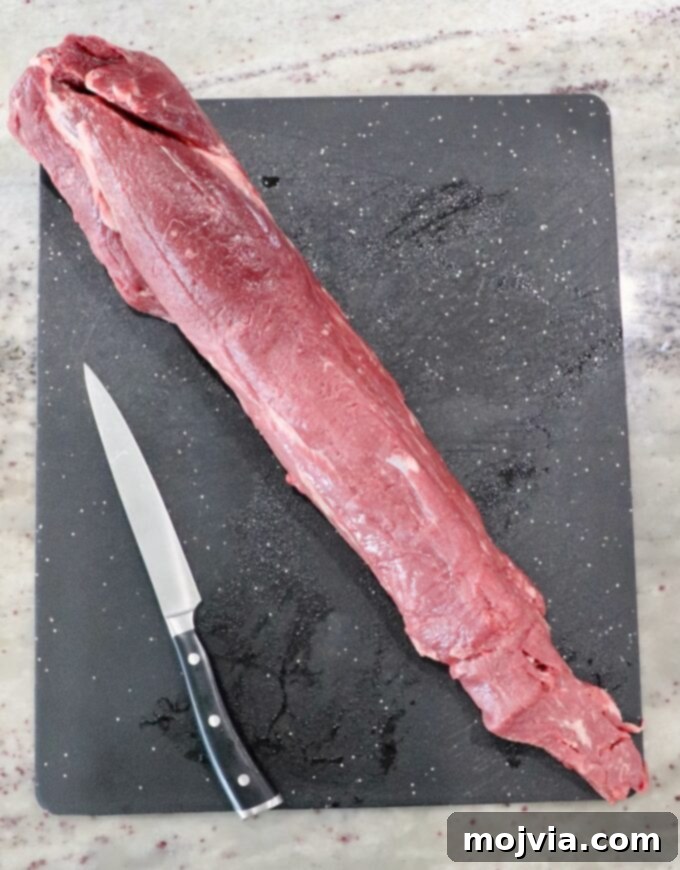
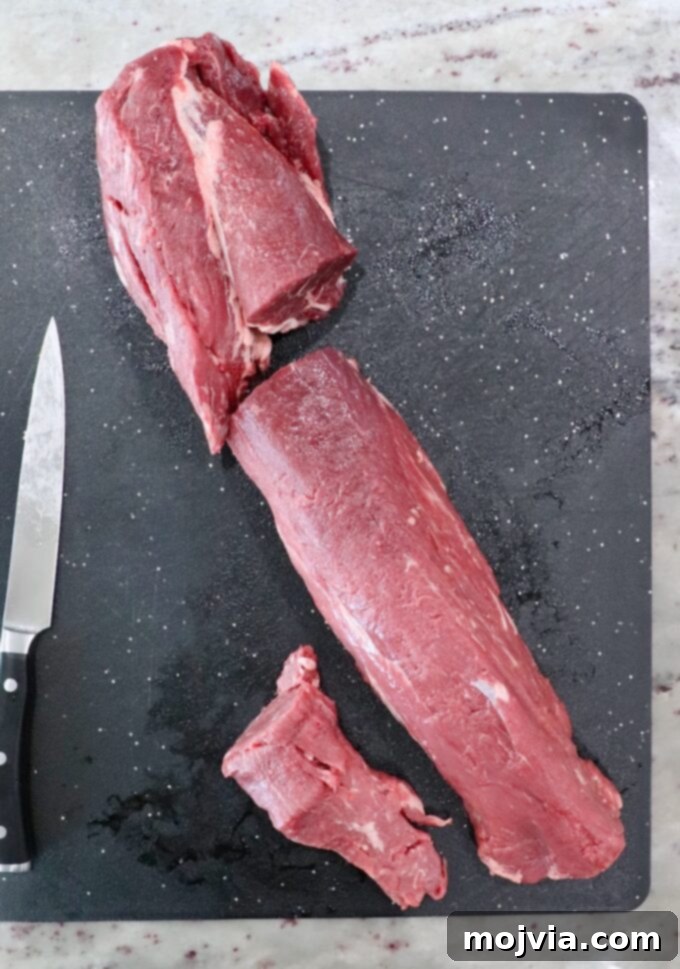
While a center-cut beef tenderloin is ideal for this recipe, purchasing a whole beef tenderloin often proves to be significantly more economical, potentially saving you $5-$10 per pound. Plus, it gives you full control over the cuts. If you opt for a whole tenderloin, here’s how to expertly prepare it into the desired center cut and make the most of the remaining pieces:
A whole beef tenderloin typically consists of three main parts: the “tail” (the thin, tapered end), the “center cut” (the thick, uniform middle section), and the “butt” (the thicker, irregularly shaped end). For our Herb Crusted Beef Tenderloin, we specifically want the even-cooking center portion.
- Identify the Sections: Lay the whole tenderloin on a clean cutting board. You’ll easily distinguish the thinner tail, the robust middle, and the broader, thicker butt end.
- Remove the Tail: Locate where the tenderloin begins to significantly thin out – this is the “tail.” Using a sharp knife, carefully slice off this thinner end. If cooked with the main roast, the tail would inevitably overcook due to its reduced thickness. Don’t discard it! This tender meat is fantastic when sliced into medallions and used for quick-cooking dishes like beef stroganoff or flavorful beef stir-fries.
- Remove the Butt: Next, identify the “tenderloin butt,” which is the thickest, more unevenly shaped portion at the opposite end. Carefully trim this section off. Like the tail, this cut is still incredibly delicious and tender. To prepare it, you can use butcher’s twine to tie it into a more uniform, cylindrical shape, allowing it to roast more evenly. While it might not yield slices as perfectly aesthetic as the center cut, it will still be wonderfully flavorful and can be cooked just like the main tenderloin roast.
- The Center Cut: What remains in the middle is your prized center-cut beef tenderloin, perfectly suited for this recipe. It’s now ready for seasoning and roasting, ensuring consistent doneness throughout.
By learning to butcher a whole tenderloin, you gain culinary versatility and significant cost savings, making this gourmet meal even more accessible.
The Art of Roasting: Perfecting Your Herb Crusted Beef Tenderloin
Achieving a perfectly roasted beef tenderloin is simpler than you might think, especially with these straightforward steps and crucial tips for a succulent, flavorful result every time. The key is a gentle, low-temperature roast followed by a quick, high-heat sear.
- Bring to Room Temperature: This is a critical first step. Approximately one hour before you plan to start cooking, remove the beef tenderloin from the refrigerator. Allowing the meat to come closer to room temperature ensures it cooks more evenly from edge to center when introduced to the oven’s low heat. This prevents the outside from overcooking while the inside remains raw.
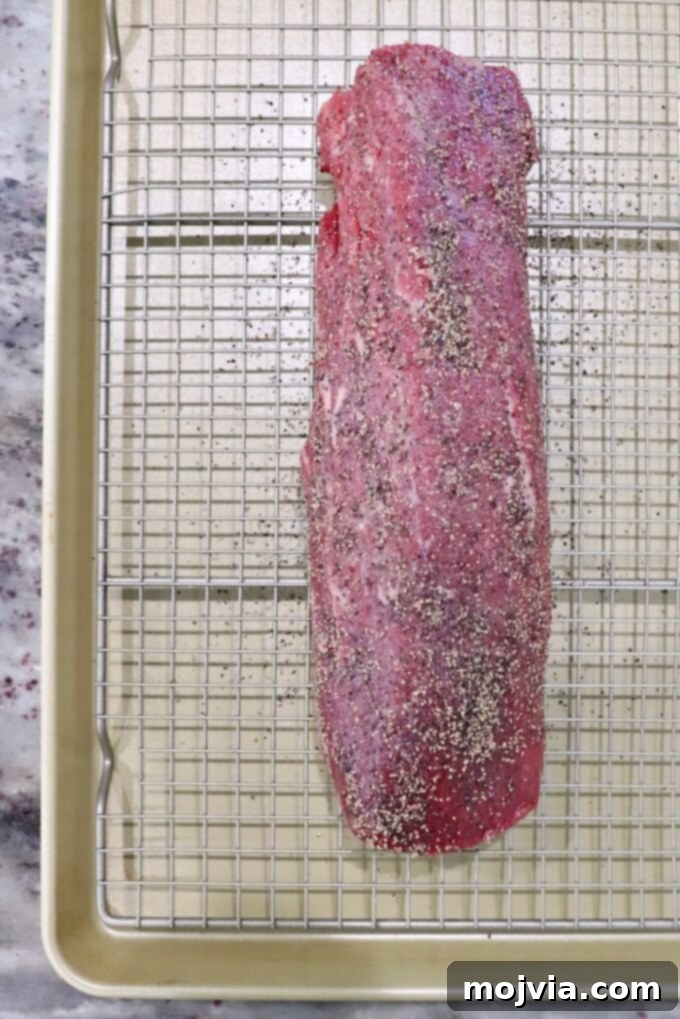
- Season the Beef Tenderloin Generously: Place the tenderloin on a wire rack set over a rimmed baking sheet. This setup allows for even air circulation around the meat and catches any drippings. Sprinkle kosher salt and freshly ground black pepper evenly over the entire surface of the beef tenderloin. Don’t be shy with the seasoning – it forms the foundational flavor. Let it rest for 10 minutes while you prepare the aromatic balsamic herb rub.
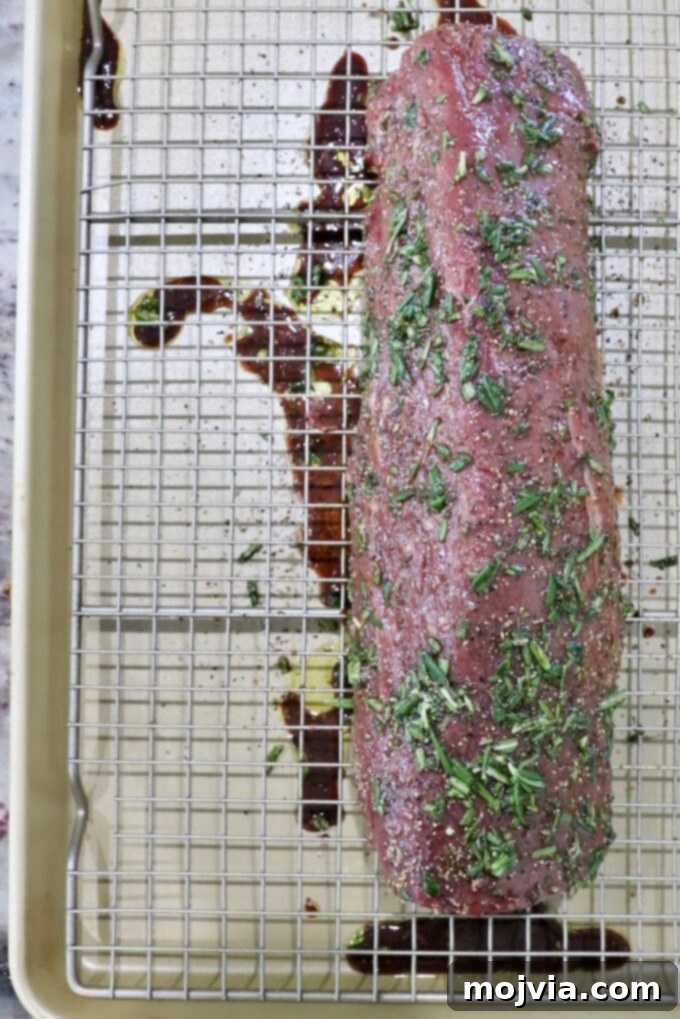
- Prepare and Apply the Balsamic Herb Rub: In a small bowl, whisk together the balsamic vinegar and olive oil. To this liquid base, add the finely chopped fresh rosemary and thyme, along with the crushed fresh garlic. This combination creates a fragrant, deeply flavorful paste. Liberally rub this mixture onto all sides of the beef tenderloin, ensuring an even coating. The herbs will form a beautiful crust and infuse the meat as it roasts.
- The Low and Slow Bake: Preheat your oven to a precise 225°F (107°C). Place the prepared beef tenderloin, still on its wire rack and baking sheet, into the preheated oven, uncovered. Cook for 60-90 minutes, or until a meat thermometer inserted into the thickest part of the center reaches between 120-125°F (49-52°C) for medium-rare. A 3-inch diameter tenderloin typically takes around 70 minutes to reach 120°F. Thicker cuts will require more time. This low-temperature roasting promotes incredibly tender, evenly cooked meat.
- Rest and Prepare for the Sear: Once the desired internal temperature is reached, carefully remove the beef from the oven. Allow it to rest for at least 10 minutes on the wire rack. During this time, the juices redistribute, ensuring a moist and tender result. While the beef rests, switch your oven from bake to broil on a low setting. Adjust an oven rack to be approximately 6 inches from the top heating element.
- The Finishing Butter and Broil: Place a medium skillet on the stovetop and heat it over high heat. Add the unsalted butter to the hot skillet. Once the butter is bubbling and fragrant, add the remaining chopped thyme, rosemary, and the prepared horseradish. Simmer this aromatic herb butter for 30-60 seconds, allowing the flavors to meld. Remove the skillet from the heat and generously spoon this flavorful butter mixture evenly over the rested beef tenderloin. Immediately return the beef to the oven, placing it under the broiler for just 2 minutes. This quick burst of high heat creates a beautiful, caramelized crust on the outside, locking in juices and adding a final layer of texture and flavor. Keep a close eye on it to prevent burning, especially the herbs.
- Final Rest and Slice: Remove the beef tenderloin from the oven once more and allow it to rest for another 10 minutes. This second rest is just as crucial, as it allows any remaining juices to settle. Transfer the tenderloin to a clean cutting board. Using a sharp knife, slice it into 1-inch thick medallions for serving. Each slice will reveal a perfect gradient of doneness, from the seared exterior to the tender, rosy interior.
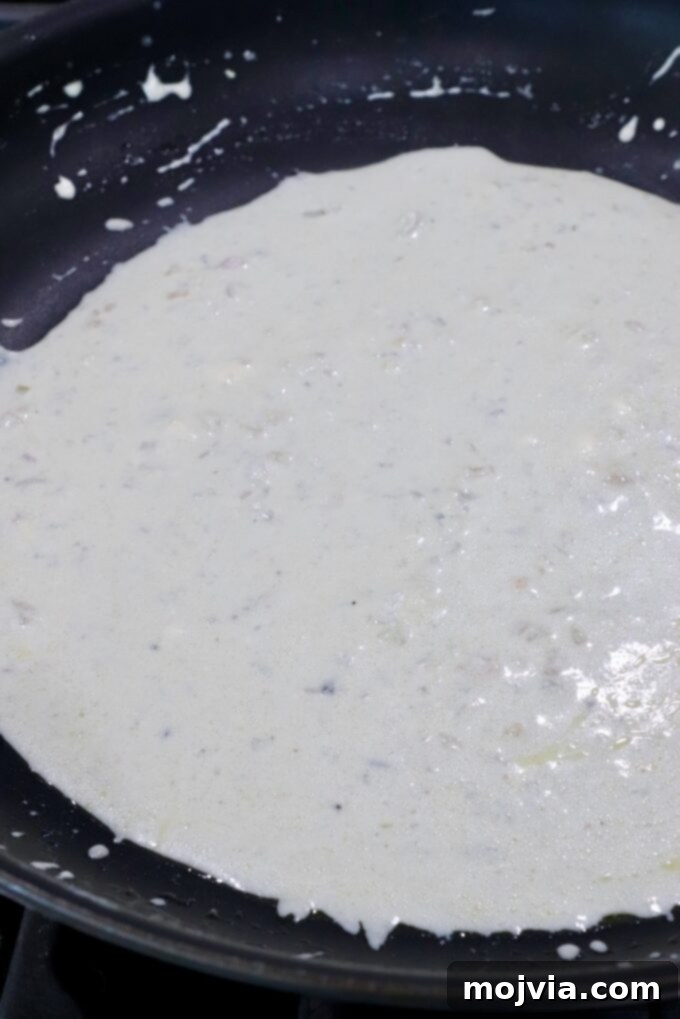
Crafting the Irresistible Gorgonzola Cream Sauce
This luscious, savory gorgonzola horseradish cream sauce is the perfect complement to the rich Herb Crusted Beef Tenderloin. Its preparation is quick and easy, making it an ideal task to complete during the beef’s final resting period.
- Sauté Aromatics: Begin by pouring olive oil into a large skillet and heating it over medium-high heat on your stovetop. Once the oil is shimmering, add the minced shallots. Sauté for about 30 seconds until they soften and become fragrant. Immediately follow with the minced garlic, cooking for an additional 30 seconds until aromatic, being careful not to let it brown or burn, as this can make it bitter.
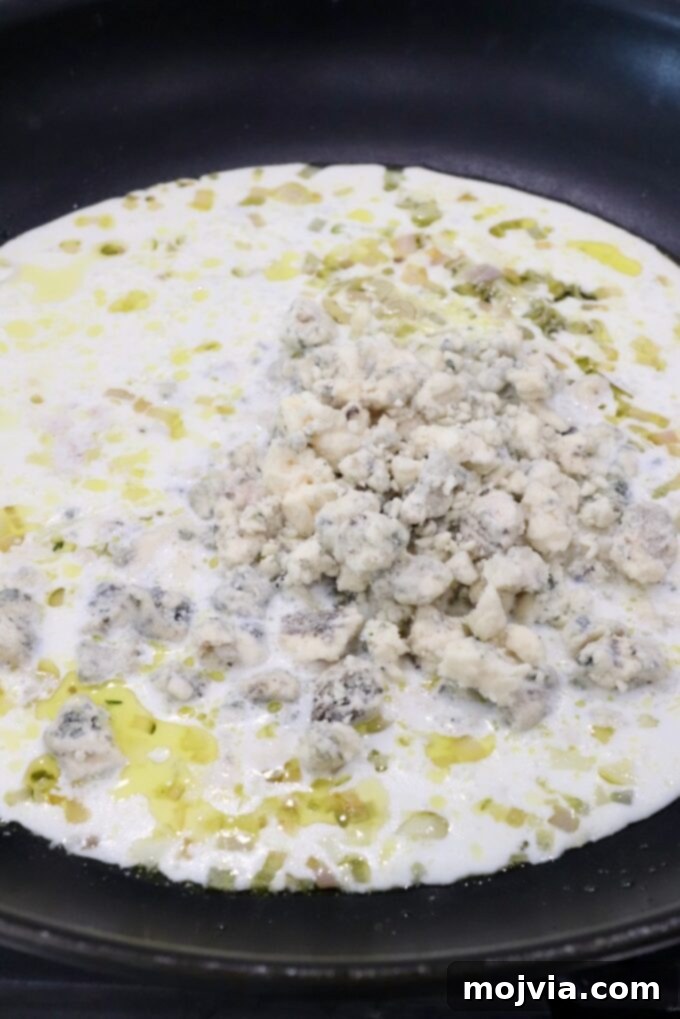
- Create the Creamy Base: Carefully stir in the half and half. Bring the mixture to a gentle simmer, allowing it to cook for about 1 minute, which helps it thicken slightly.
- Melt in the Gorgonzola: Reduce the heat to medium-low. Add the prepared horseradish and the gorgonzola crumbles to the simmering cream mixture. Stir constantly until the gorgonzola cheese completely melts into the sauce, creating a smooth, velvety texture. The sauce should be thick enough to coat the back of a spoon.
Once the sauce is smooth and creamy, remove it from the heat. You can either drizzle it generously over the sliced beef tenderloin or serve it on the side, allowing your guests to add as much as they desire. The pungent, salty notes of the gorgonzola combined with the subtle heat of the horseradish create a complex flavor profile that beautifully cuts through the richness of the beef, making every bite an unforgettable experience.
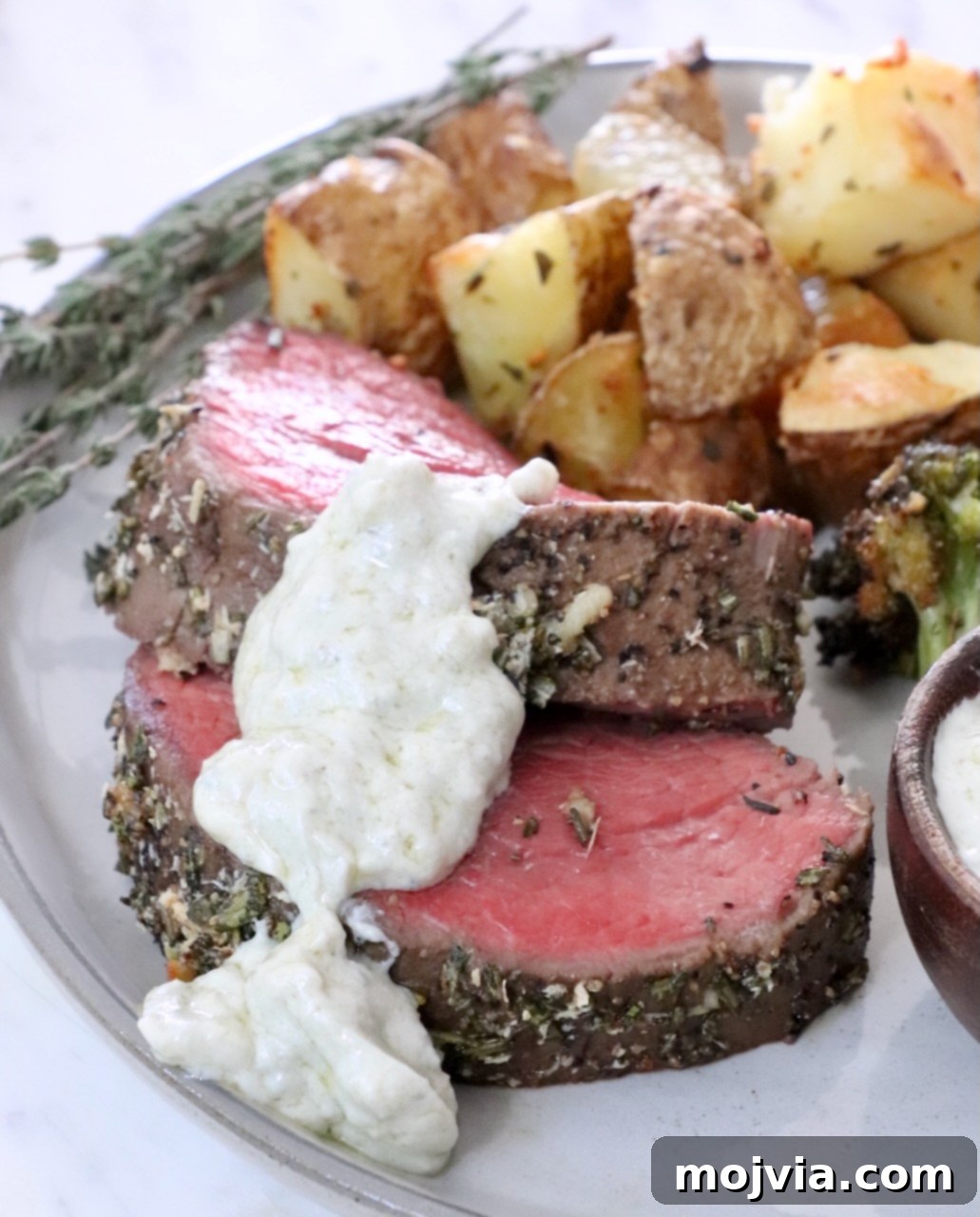
Achieving Perfection: Cooking Temperatures for Beef Tenderloin
Cooking beef tenderloin to the ideal internal temperature is key to maximizing its tenderness and flavor. Given that tenderloin is such a lean and delicate cut, overcooking can quickly lead to dryness. We highly recommend cooking it to medium-rare to truly appreciate its succulence. However, if you prefer a different level of doneness, use a reliable meat thermometer and follow this guide, keeping in mind the importance of “carryover cooking” – the internal temperature will continue to rise by approximately 5-7 degrees Fahrenheit after it’s removed from the heat and during the resting period.
- For Rare: Remove the beef tenderloin from the oven when its internal temperature reaches 120°F (49°C). After the quick sear under the broiler and the essential 10-minute resting time, the final internal temperature will be approximately 127°F (53°C), resulting in a cool red center.
- For Medium-Rare (Recommended): For optimal tenderness and juiciness, remove the beef tenderloin from the oven when it reaches an internal temperature of 125°F (52°C). With the broiler sear and resting period, the finished temperature will be around 132°F (56°C), yielding a warm red center.
- For Medium: If you prefer a slightly more cooked tenderloin, remove it from the oven at 133°F (56°C). After searing and resting, the internal temperature will stabilize at approximately 140°F (60°C), showcasing a warm pink center.
- For Medium-Well: For those who prefer very little pink, remove the beef tenderloin from the oven at 142°F (61°C). Following the searing and resting stages, expect a final temperature of about 149°F (65°C), resulting in a slightly pink center.
Always use an accurate instant-read thermometer inserted into the thickest part of the roast, avoiding bone, to ensure precision and achieve your desired doneness. Remember, the resting period is crucial for juices to redistribute, leading to a moist and tender roast regardless of your preferred temperature.
Elevate Your Meal: What to Serve with Herb Crusted Beef Tenderloin
Herb Crusted Beef Tenderloin is a versatile and impressive main course, perfect for an elegant Christmas dinner, a celebratory birthday, or simply a sophisticated weeknight meal. Its rich flavor and tender texture pair beautifully with a variety of side dishes. The key is to choose accompaniments that either complement its richness or provide a delightful contrast in texture and flavor. Here are some scrumptious side dishes to complete your culinary experience:
- Brussel Sprout Casserole with Mushrooms: A savory, earthy casserole that adds a hearty vegetable component and a touch of umami.
- Broccoli Cheese Casserole: A comforting classic that offers creamy texture and a familiar, delightful cheesy flavor.
- Green Beans with Bacon, Pecans & Blue Cheese: A vibrant and flavorful side with contrasting textures – crisp beans, smoky bacon, crunchy pecans, and tangy blue cheese.
- Roasted Carrots: Simple yet elegant, roasted carrots bring natural sweetness and a beautiful color to the plate.
- Instant Pot Mashed Potatoes: Creamy, fluffy mashed potatoes are a timeless and satisfying pairing that absorb the tenderloin’s juices and sauce perfectly.
- Roasted Potatoes (Air Fryer or Oven): Crispy on the outside, soft on the inside, roasted potatoes offer a delightful textural contrast and robust flavor.
- Rosemary Blue Cheese Mashed Potatoes: Elevate classic mashed potatoes with fragrant rosemary and the sharp, creamy notes of blue cheese for a gourmet twist.
- Cheesy Mashed Cauliflower: A lighter, low-carb alternative to potatoes, offering similar creaminess with a cheesy richness.
- Butternut Squash Risotto: A creamy, rich risotto with sweet and earthy butternut squash provides a sophisticated and satisfying accompaniment.
Consider also pairing your meal with a full-bodied red wine, such as a Cabernet Sauvignon or a Merlot, which will beautifully complement the robust flavors of the beef. For dessert, something light and fresh, like a berry tart or a lemon sorbet, would be a perfect palate cleanser.
Storing and Reheating Your Delicious Beef Tenderloin
Proper storage and reheating are crucial for enjoying leftover Herb Crusted Beef Tenderloin without compromising its exquisite taste and texture. With these methods, you can savor your gourmet meal for days to come.
Storage: Store any leftover beef tenderloin in an airtight container in the refrigerator for up to 5 days. For best results and to prevent dryness, wrap individual slices tightly in plastic wrap or aluminum foil before placing them in the container.
Reheating Methods:
1. Sous Vide (Recommended for best results):
The sous vide method is ideal for reheating beef tenderloin as it gently brings the meat back to temperature without overcooking, preserving its tender, juicy quality.
- Preparation: Only slice as much beef tenderloin as you plan to serve in one sitting. For the remaining portion, place it in a zipper-lock bag (ensure all air is removed using the water displacement method) or a vacuum-sealed bag.
- Sous Vide Bath: Heat a sous vide water bath to 133°F (56°C).
- Reheat: Submerge the bagged beef tenderloin in the water bath for 30 minutes.
- Optional Sear: For a renewed crust, remove the beef from the water bath and the bag. Pat it dry thoroughly. Place it on a wire rack over a baking sheet. Place under a broiler on low for 1-2 minutes, watching carefully to achieve a light crust without cooking the interior further. Alternatively, you can quickly pan-sear it in a hot skillet with a little oil for 30-60 seconds per side.
- Serve: Slice the beef into desired portions if not already sliced, and serve immediately.
2. Oven Reheating:
Reheating in the oven is a great option for larger portions or if you don’t have a sous vide.
- Preheat: Preheat your oven to a low temperature of 300°F (150°C).
- Prepare: Arrange slices of beef tenderloin on a wire rack set on top of a baking sheet.
- Cover: Loosely cover the beef with aluminum foil to help retain moisture.
- Reheat: Place in the preheated oven for 10-15 minutes, or until warmed through. Check the internal temperature with a meat thermometer; aim for about 125-130°F (52-54°C) for medium-rare.
3. Stovetop Reheating:
For individual slices or a quick reheat, the stovetop can be effective.
- Heat Skillet: Heat a large skillet over medium-high heat with a small amount of olive oil or butter.
- Sear: Once the skillet is hot, add the beef tenderloin slices. Pan-sear for 2-3 minutes per side, just until warmed through and a light crust forms. Be careful not to overcook.
No matter which method you choose, avoid microwaving beef tenderloin, as it can quickly dry out the meat and negatively impact its texture. With these techniques, your leftover tenderloin can be just as enjoyable as the first time around!
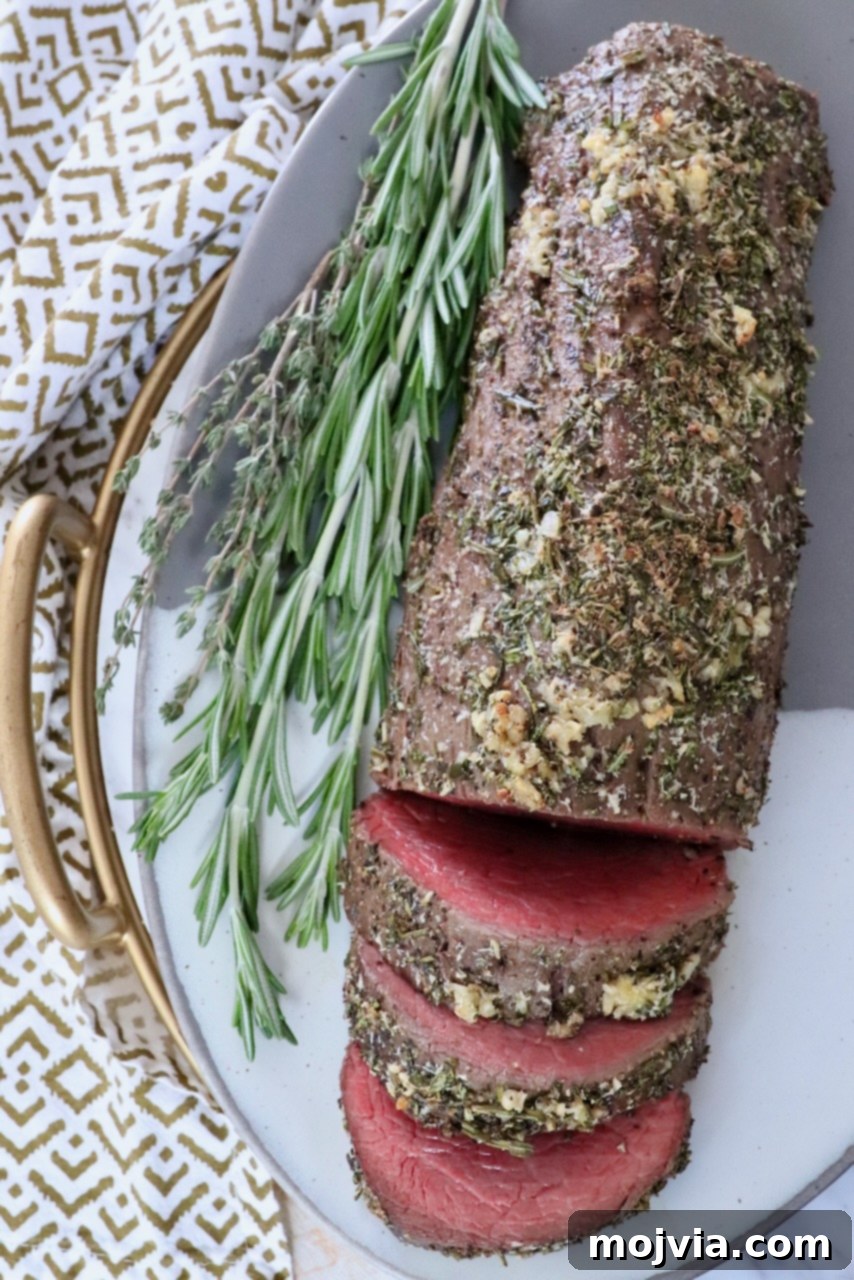
Explore More Delectable Beef Recipes
If you’ve enjoyed perfecting this Herb Crusted Beef Tenderloin, you’ll be thrilled to discover the incredible versatility of beef in a myriad of other delicious and easy-to-prepare recipes. From comforting classics to gourmet delights, there’s a beef dish for every occasion and every palate. Dive into these popular recipes and expand your culinary repertoire!
And if you’re eager to tackle another impressive beef tenderloin recipe, be sure to explore my guide for a show-stopping Beef Wellington!

Print Recipe
Pin Recipe
Rate this Recipe
Herb Crusted Beef Tenderloin
Ingredients
Herb Crusted Beef Tenderloin
- 2-2.5 pound center cut beef tenderloin, see notes for details on cut
- 2 teaspoons kosher salt
- 2 teaspoons black pepper
- 2 tablespoons balsamic vinegar
- 2 tablespoons olive oil
- 6 sprigs fresh rosemary, divided and chopped
- 6 sprigs fresh thyme, divided and chopped
- 6 cloves garlic, crushed
- 4 tablespoons unsalted butter
- 1 teaspoon prepared horseradish
Horseradish Gorgonzola Sauce
- 1 tablespoon olive oil
- 1 large shallot, minced
- 2 cloves garlic, minced
- ½ cup half and half
- ½ tablespoon prepared horseradish
- ½ cup gorgonzola cheese crumbles
Instructions
Herb Crusted Beef Tenderloin
-
Preheat your oven to 225°F (107°C).
-
Place the beef tenderloin on a wire rack over a rimmed baking sheet. Season generously on all sides with kosher salt and black pepper. Let it rest for 10 minutes.
-
In a small bowl, whisk together the balsamic vinegar and olive oil.
-
Add 4 sprigs of chopped fresh rosemary, 4 sprigs of chopped fresh thyme, and the crushed garlic to the balsamic-olive oil mixture. Rub this aromatic mixture evenly over all sides of the beef tenderloin.
-
Place the seasoned beef tenderloin in the preheated oven, uncovered. Roast for 60-90 minutes, or until an internal meat thermometer inserted into the thickest part reads between 120-125°F (49-52°C). Note: A 3-inch diameter tenderloin typically reaches 120°F in about 70 minutes. Thicker tenderloins will require more cooking time.
-
Remove the beef tenderloin from the oven and allow it to rest on the wire rack while you prepare the herb butter.
-
Switch your oven setting from bake to broil on low.
-
In a medium skillet on the stovetop, melt the unsalted butter over high heat until bubbling. Add the remaining 2 sprigs of chopped fresh thyme, 2 sprigs of chopped fresh rosemary, and 1 teaspoon of prepared horseradish. Simmer for 30-60 seconds to meld flavors.
-
Remove the herb butter from the heat and spoon it evenly over the rested beef tenderloin.
-
Place the beef tenderloin back into the oven, 6 inches under the broiler, for 2 minutes. Continuously monitor the beef during this step to prevent the garlic and herbs from burning, which can happen quickly.
-
Remove the beef tenderloin from the oven and allow it to rest for a final 10 minutes. Transfer it to a cutting board and slice into 1-inch thick medallions for serving.
Horseradish Gorgonzola Sauce
-
While the beef tenderloin is resting, prepare the horseradish gorgonzola sauce. Add olive oil to a large skillet on the stovetop over medium-high heat.
-
Once the oil is hot, add the minced shallots and cook for 30 seconds until softened. Then add the minced garlic and cook for an additional 30 seconds until fragrant, taking care not to burn it.
-
Stir in the half and half and bring to a gentle simmer for 1 minute. Add the prepared horseradish and gorgonzola crumbles. Continue to simmer, stirring constantly, until the gorgonzola cheese has fully melted into a smooth, creamy sauce.
-
Remove the sauce from the heat. Serve the sauce drizzled over the sliced beef tenderloin or offer it on the side for dipping.
Notes
- Center Cut Beef Tenderloin: This recipe is designed for a 2-3 pound center-cut beef tenderloin, also known as chateaubriand or filet mignon roast. This cut offers consistent thickness for even cooking. For instructions on how to trim a whole beef tenderloin into a center cut, please refer to the “How to Cut a Whole Beef Tenderloin” section in the blog post above.
- Dried Herb Substitution: If fresh rosemary and thyme are unavailable, you can substitute with dried herbs. For the balsamic herb rub, use 1 tablespoon dried rosemary and 1 teaspoon dried thyme leaves. For the finishing herb butter, use 1 teaspoon dried rosemary and ½ teaspoon dried thyme leaves.
- Serving Size: We recommend planning for approximately ⅓ to ½ pound of beef per person. This estimate can be adjusted based on the number and richness of side dishes you plan to serve and your guests’ appetites.
- Desired Doneness: The instructions provided will result in a perfectly cooked medium-rare beef tenderloin. If you prefer a different internal temperature, please consult the “Cooking Temperatures for the Beef” section in the main blog post for specific guidelines and target temperatures. Remember to use an accurate meat thermometer.