
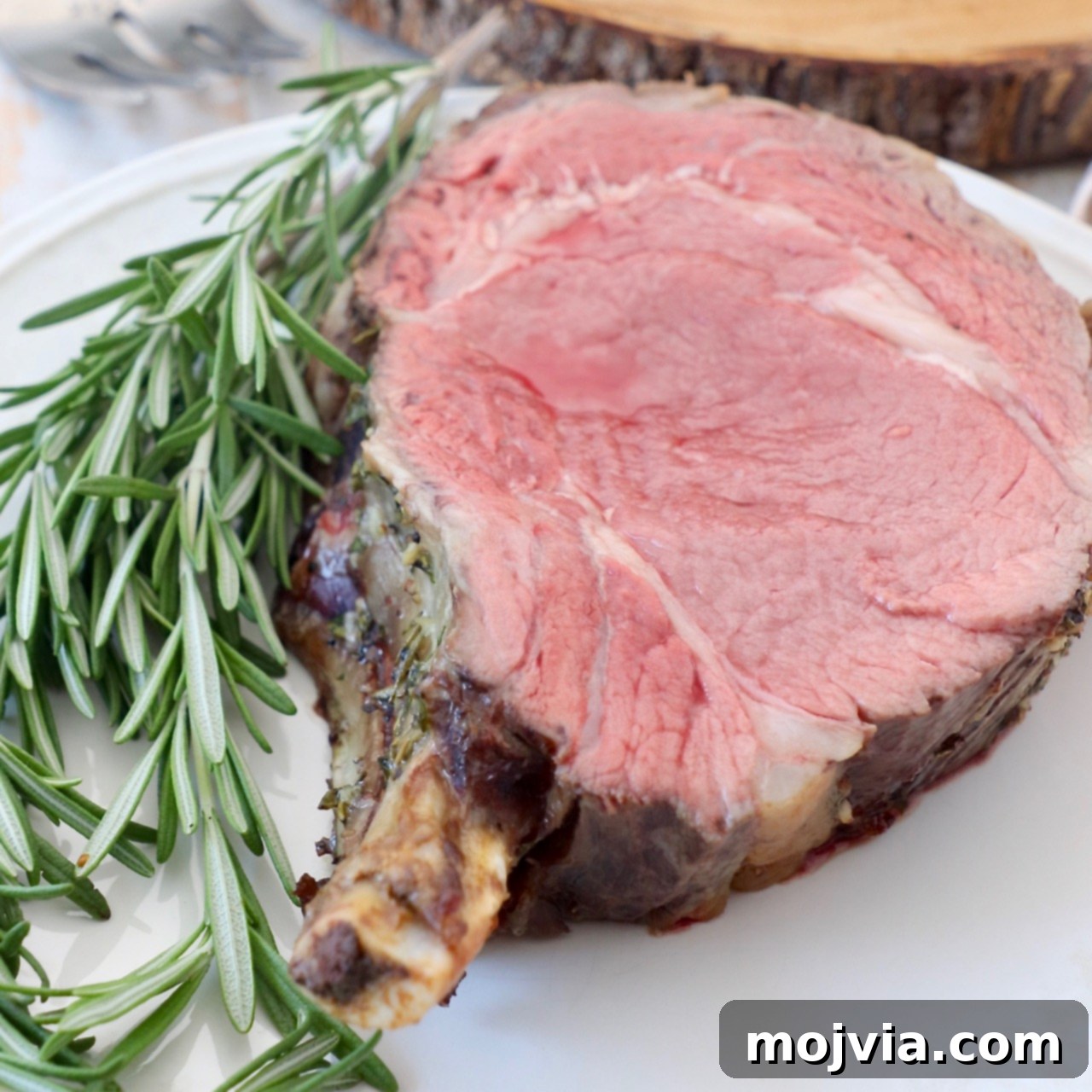
Master the art of creating a show-stopping **Roasted Bone-In Prime Rib** with this meticulously tested and perfected recipe! This magnificent cut of beef, also known as a standing rib roast, is not only incredibly flavorful and tender but surprisingly straightforward to prepare. Elevate your culinary experience by applying a rich, aromatic herb butter rub, then slow-roasting it to perfection in the oven, guaranteeing a juicy, perfectly cooked prime rib every single time. Ideal for festive holidays, special occasions, or simply an unforgettable family dinner, this recipe promises to impress with minimal fuss.
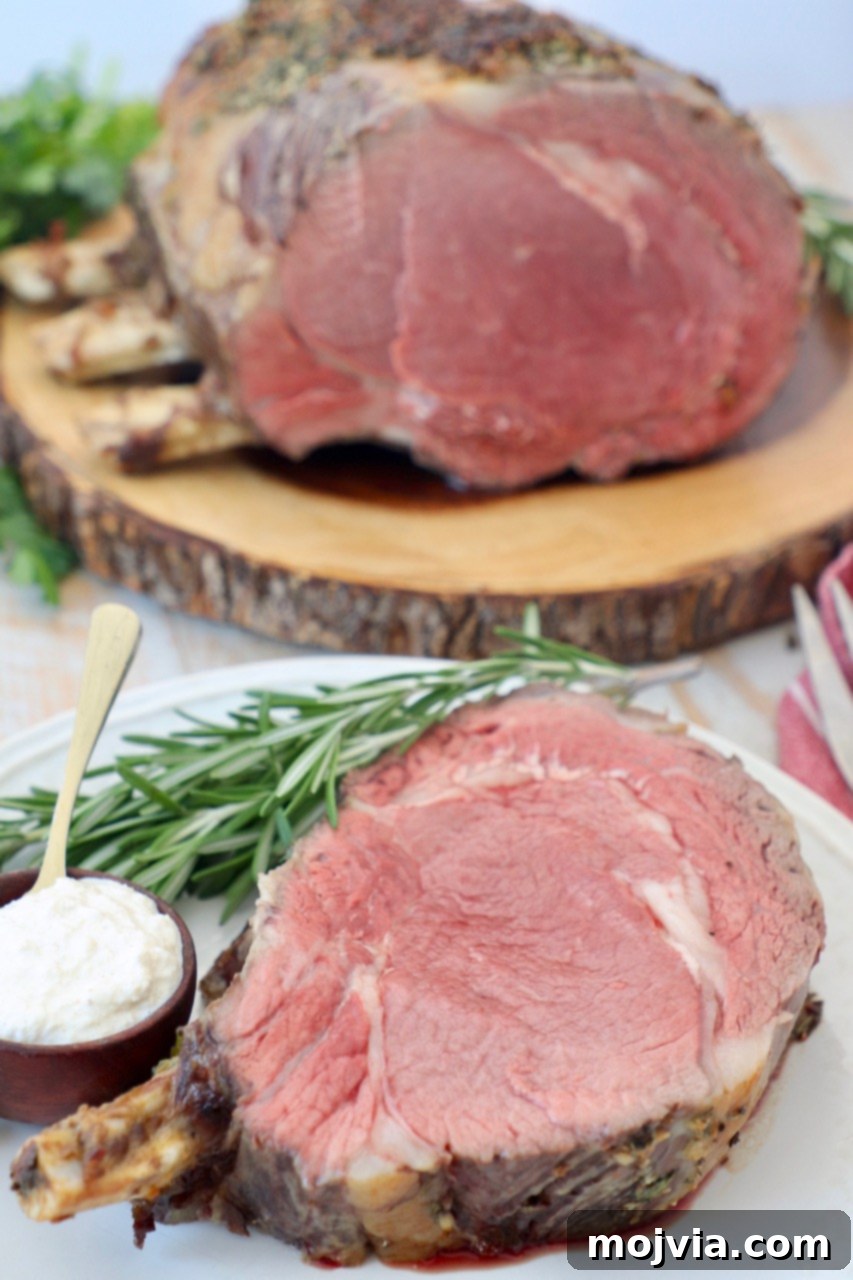
“I made this prime rib Christmas Eve. I had never cooked one before but with this recipe it came out perfectly. The butter garlic and herb rub was so good.”
-Candy
Table of contents
- Introduction to Prime Rib
- The Secret to a Perfect Prime Rib
- Ingredients for the Best Prime Rib
- Step-by-Step Roasting Instructions
- Shopping for the Perfect Prime Rib
- Expert Recipe Tips for Success
- What to Serve with Prime Rib
- How to Store and Reheat Prime Rib
- More Mouth-Watering Beef Recipes
Introduction to Prime Rib
When you envision a truly spectacular holiday feast or a lavish special occasion dinner, a bone-in prime rib almost always takes center stage. Also affectionately known as a standing rib roast or ribeye roast, this cut of beef is celebrated for its incredible juiciness, rich flavor, and impressive presentation. Its robust marbling ensures a succulent texture, while the bone-in preparation adds an extra layer of depth and moisture during the slow roasting process, making it a true culinary masterpiece that is far easier to achieve than many might believe.
Understanding the terminology is key to selecting the perfect roast. A prime rib, when sliced into individual portions, transforms into what we know as a ribeye steak. If you’re planning to prepare this magnificent roast outside of the peak holiday season, a helpful tip is to visit your local butcher counter early in the morning. This timing ensures you catch them before they’ve started cutting the larger primal into individual steaks for daily sales, allowing you to secure a whole bone-in prime rib, exactly as you need it.
To ensure your roasted bone-in prime rib looks as stunning as it tastes, always request that your butcher “french” the bones. This professional technique involves meticulously trimming the excess fat and sinew from around the rib bones, exposing them for a clean, elegant presentation that will truly elevate your dining table. This attention to detail contributes to both the visual appeal and the overall cooking experience, ensuring a beautifully cooked and presented roast.
The Secret to a Perfect Prime Rib
Achieving the perfect prime rib every single time might seem daunting, but it boils down to following three simple yet critical steps. These techniques, when combined, create a roast that is perfectly crusted on the outside and wonderfully pink and tender on the inside.
- High Heat Initial Roast for an Exquisite Crust: Begin by roasting your prime rib at a high temperature. This initial burst of intense heat is crucial for developing a beautiful, savory crust on the exterior of the meat through the Maillard reaction. This caramelization adds significant flavor and texture, locking in juices and preparing the roast for the slower cooking phase.
- Slow Roasting for an Impeccable Pink Center: After the initial high-heat sear, significantly reduce the oven temperature for a long, slow roast. This “low and slow” method is the key to achieving an evenly cooked, perfectly pink center from edge to edge, without overcooking the exterior. It allows the heat to penetrate gently and uniformly, resulting in a tender, juicy, and succulent interior that melts in your mouth.
- Flavorful Herb Butter Rub for Enhanced Taste: Before roasting, generously rub the prime rib with a rich, aromatic herb butter mixture. While prime rib is inherently flavorful, this simple rub infuses it with layers of garlic and fresh herbs like rosemary and thyme. The butter helps create a moist environment, while the herbs and garlic seep into the meat, creating a mouth-watering aroma and an unforgettable savory taste that complements the beef’s natural richness without overpowering it.
Don’t let the reputation of this classic beef dish intimidate you. By following these straightforward steps, you’ll discover just how easy it is to prepare a truly sensational prime rib. For those who prefer visual guidance, a comprehensive video tutorial is available at the bottom of this post, walking you through every stage of this easy prime rib recipe, ensuring your success in the kitchen!
Ingredients for the Best Prime Rib
Crafting the perfect roasted bone-in prime rib begins with high-quality ingredients and a thoughtful approach to seasoning. Here’s a detailed look at what you’ll need to create this magnificent centerpiece:
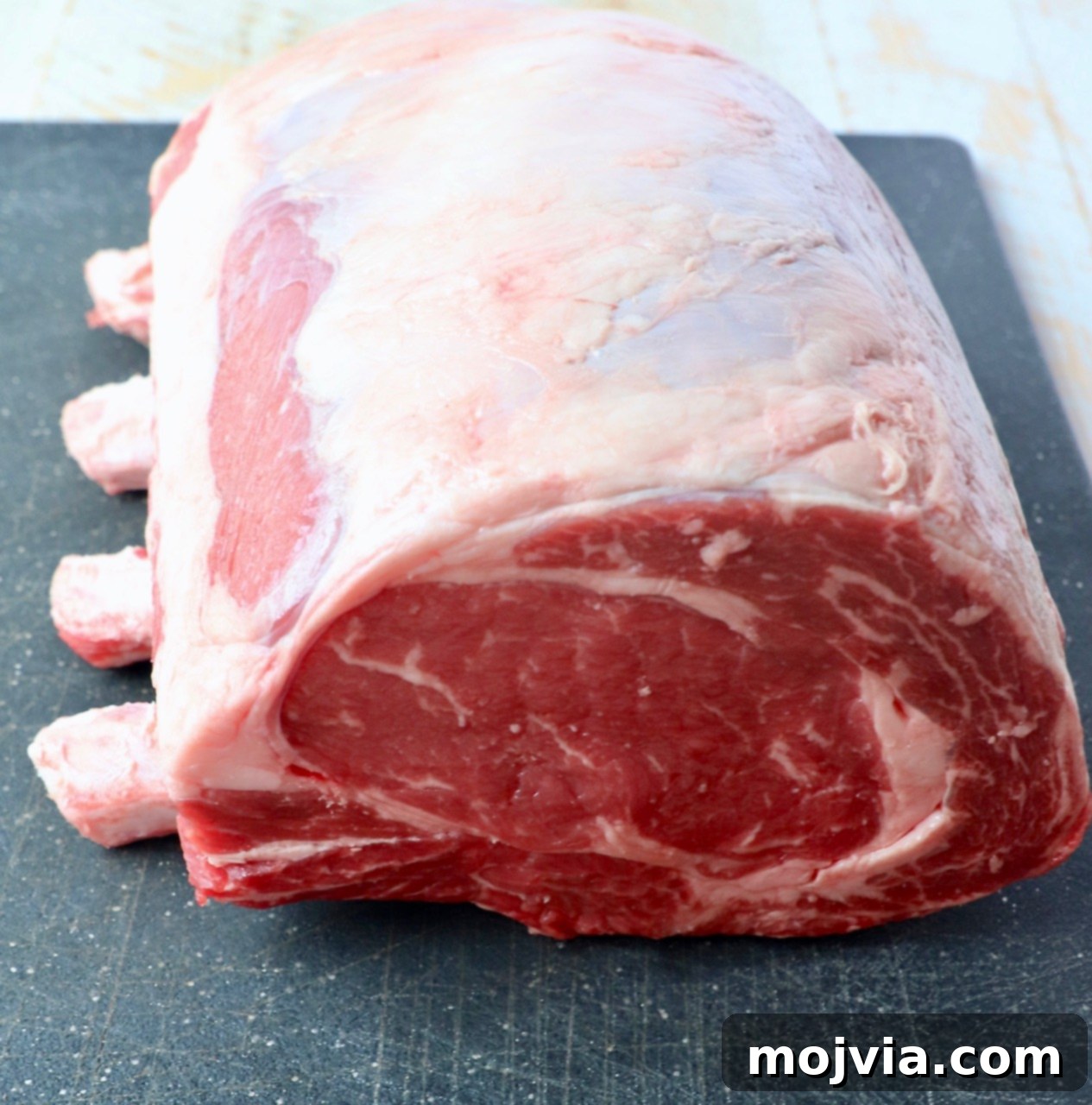
- Bone-In Prime Rib: This recipe is specifically designed for an 8-12 pound bone-in prime rib roast, often also labeled as a ribeye roast or standing rib roast. The bones contribute significantly to flavor and moisture retention, making them ideal. If you’re preparing a smaller 4-6 pound roast, simply halve the quantities of the other ingredients. This recipe is also adaptable for a boneless prime rib, though cooking times may vary slightly.
- Unsalted Butter: Softened unsalted butter is crucial for our herb rub. It acts as a perfect vehicle for the herbs and seasonings, creating a rich, flavorful crust. Using unsalted butter gives you precise control over the overall saltiness of the dish. If salted butter is your only option, reduce the amount of added salt in the recipe by half to avoid over-seasoning.
- Fresh Herbs: A vibrant blend of fresh herbs is essential for an aromatic and flavorful rub. My preferred combination includes fresh thyme, rosemary, and Italian parsley, which offer earthy, fragrant, and bright notes respectively. Feel free to experiment with other fresh herbs like sage, oregano, or even a hint of basil to tailor the flavor profile to your liking. Regardless of your chosen blend, aim for a total of 6 tablespoons of finely chopped fresh herbs for optimal flavor penetration.
- Garlic: Freshly crushed garlic cloves are non-negotiable for the most robust and pungent garlic flavor in the herb butter rub. While pre-minced garlic can be a convenient substitute, the intense aroma and taste of fresh garlic truly elevate the prime rib.
- Salt + Black Pepper: Simple yet essential. Coarse sea salt and freshly ground black pepper are used to season the herb butter, ensuring every bite of the prime rib is perfectly balanced and deeply flavored. These basic seasonings enhance the natural richness of the beef and the fresh herbs.
Step-by-Step Roasting Instructions
Follow these detailed steps, complete with illustrative photos, to ensure a perfectly roasted bone-in prime rib every time. For comprehensive ingredient quantities and a full video tutorial, please refer to the recipe card located at the end of this post.
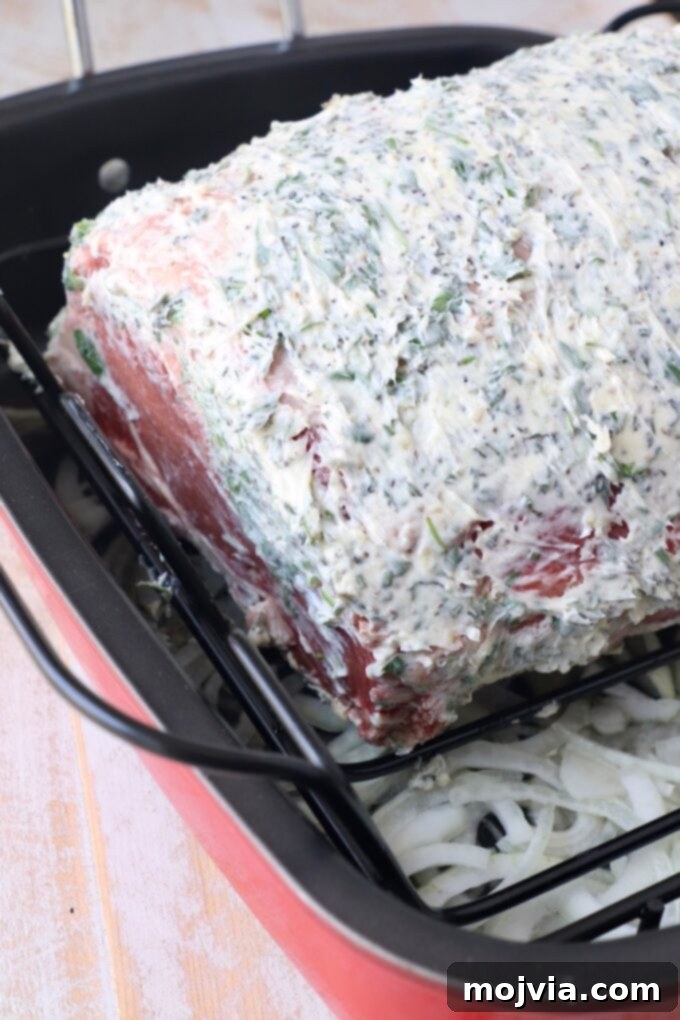
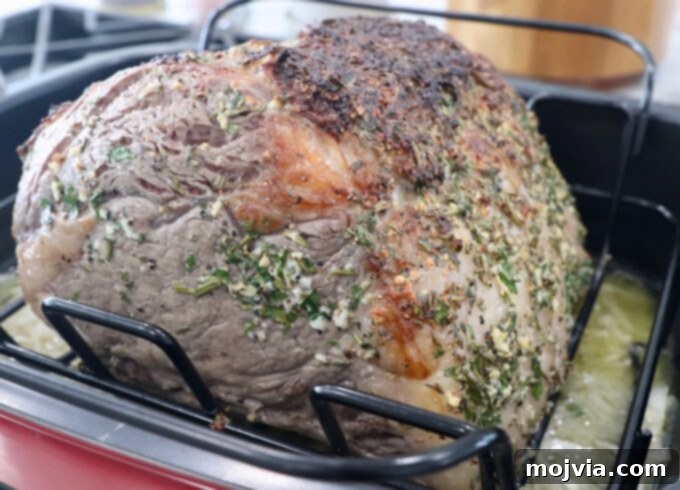
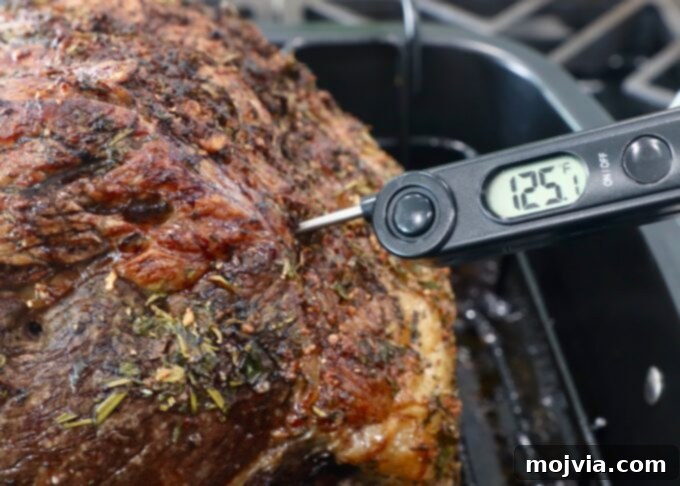
To begin, remove your bone-in prime rib roast from the refrigerator and place it on a clean cutting board. Allow it to rest at room temperature for at least one hour, or up to two hours for larger roasts. This crucial step ensures more even cooking throughout the meat, preventing the exterior from overcooking before the center reaches your desired doneness.
Simultaneously, place the unsalted butter for the herb rub on your countertop for at least 30 minutes to soften. Softened butter is essential for creating a smooth, spreadable paste. While the butter softens, preheat your oven to a high temperature of 450°F (232°C).
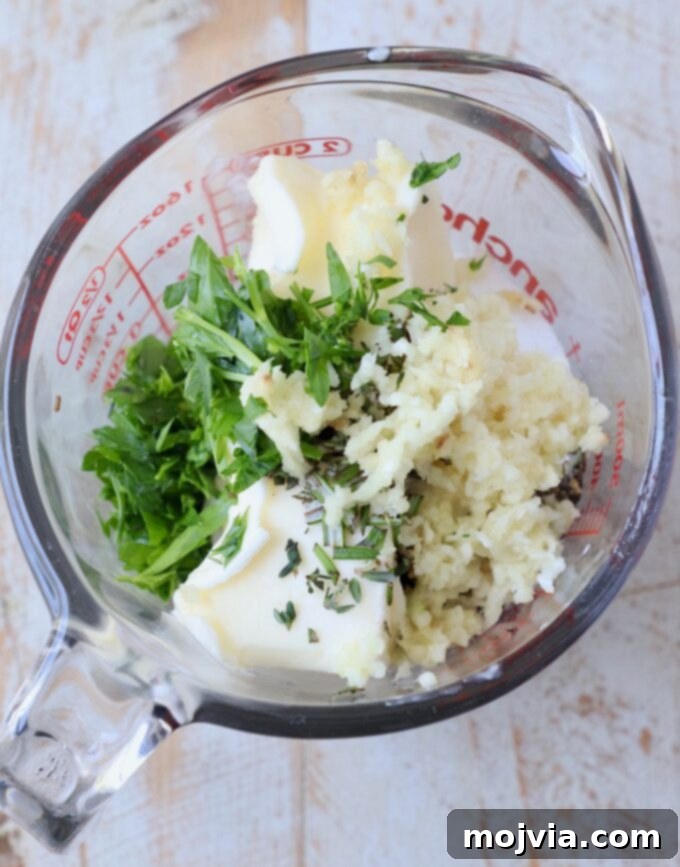
- In a small mixing bowl, combine the softened unsalted butter with the finely chopped fresh rosemary, thyme, and Italian parsley. Add the freshly crushed garlic cloves, sea salt, and ground black pepper. Mix thoroughly until all ingredients are well incorporated and form a cohesive, aromatic paste.
- Carefully rub a light, even layer of this herb butter paste onto the bottom of the ribeye roast, ensuring coverage under and around the bones. Then, place the prime rib, bone side down, into a sturdy roasting pan. Generously slather the remaining thick layer of herb butter over the entire top and sides of the roast, ensuring every surface is coated for maximum flavor and crust development.
- Place the roasting pan in the preheated 450°F (232°C) oven and roast for an initial 20 minutes. This high heat phase is vital for creating that desirable browned crust.
- After 20 minutes, reduce the oven temperature significantly to 250°F (120°C). Continue to cook the prime rib for approximately 12-15 minutes per pound of meat for a medium-rare finish. The most accurate way to determine doneness is by using a reliable meat thermometer inserted into the thickest part of the roast, avoiding the bone. For a perfect medium-rare, remove the roast from the oven when its internal temperature reaches 122°F (50°C). Remember that the internal temperature will continue to rise by 5-10 degrees Fahrenheit as the meat rests outside the oven.
- Once the prime rib is removed from the oven, loosely tent it with aluminum foil. Let it rest undisturbed for at least 30 minutes before slicing and serving. This resting period is critical, allowing the juices to redistribute evenly throughout the meat, resulting in an incredibly tender and juicy roast.
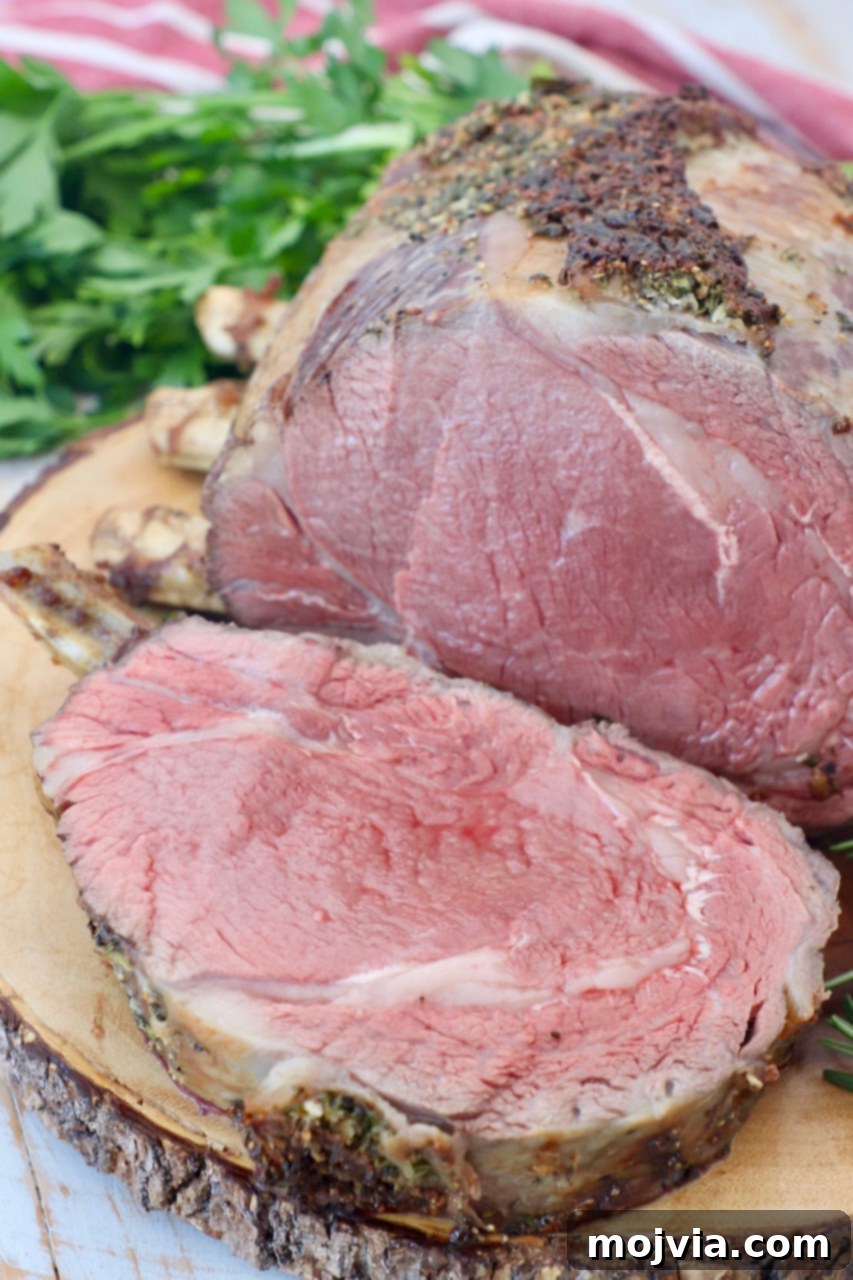
To serve, slice the prime rib against the grain into approximately 1/2 to 1-inch thick slices. You have the option to slice directly between the bones to serve individual bone-in portions, or you can carefully remove the entire bone section from the roast first, and then proceed to slice the boneless meat using a sharp carving knife or an electric knife for precise cuts.
Shopping for the Perfect Prime Rib
Selecting the ideal prime rib is the first step toward culinary success. Here’s everything you need to know to confidently choose the best cut for your roast:
- Timing Your Purchase: As mentioned, if you’re shopping for a prime rib outside of the holiday season, plan to visit your butcher counter early in the morning. This timing is strategic because a prime rib, also known as a ribeye roast, is the larger cut from which individual ribeye steaks are carved. Butchers typically prepare these steaks for daily sale in the morning. Arriving early increases your chances of purchasing a whole ribeye roast before it’s broken down.
- Understanding Prime Rib Terminology: The terms “prime rib,” “ribeye roast,” and “standing rib roast” are often used interchangeably to refer to the same magnificent cut of beef. A “standing” rib roast refers to the method of roasting it upright on its bones, allowing the bones to act as a natural rack and contribute flavor.
- Bone-In vs. Boneless: While boneless prime rib is available, a bone-in prime rib is highly recommended. The bones not only infuse the meat with additional flavor during cooking but also provide insulation, which helps the roast cook more evenly and retain moisture, resulting in a juicier, more tender final product.
- Purchasing by Weight and Bones: Bone-in prime rib is commonly sold by the pound or by the number of bones. Generally, each bone corresponds to approximately 2-2.5 pounds of meat. Thus, a 4-bone prime rib will typically weigh between 8-10 pounds, serving a substantial gathering.
- Calculating Serving Sizes: A good rule of thumb is to plan for approximately 1 pound of bone-in prime rib per person. Keep in mind that a portion of this weight accounts for the bones and moisture loss during cooking. After trimming and cooking, the actual serving size of meat per person will be closer to 1/2 to 3/4 pound.
- Requesting “Frenching”: To achieve a clean, professional presentation where the rib bones are exposed, ask your butcher to “french” the ribs. This involves carefully trimming away the excess fat, meat, and gristle from the ends of the bones, leaving them clean and aesthetically pleasing. This small detail significantly enhances the visual appeal of your roasted prime rib.
- Beef Grades: Look for USDA Prime or Choice grades for the best results. Prime beef offers the highest degree of marbling, leading to exceptional tenderness and flavor, while Choice grade beef is also high quality with good marbling.
Expert Recipe Tips for Success
Ensuring a perfectly cooked prime rib involves more than just following steps; it’s about understanding the nuances of the cooking process. These expert tips will help you achieve outstanding results:
- Utilize Pan Drippings with Broth: Always add 1-2 cups of beef broth or water to the bottom of your roasting pan. As the prime rib cooks, fat and juices will drip into the pan. The liquid prevents these drippings from burning, creating a rich base for a savory sauce or gravy. You can also add thinly sliced onions, carrots, or celery to the pan with the broth to infuse more flavor into your drippings, perfect for making a rich au jus or even a French onion soup base.
- Alternative Roasting Setup: If you don’t own a specialized roasting pan with a rack, don’t fret! You can easily improvise by placing the ribeye roast on a wire rack set inside a rimmed baking sheet or a large baking dish. This setup allows for proper air circulation around the roast, promoting even cooking and crust development.
- Accurate Doneness with a Meat Thermometer: The cooking time of 12-15 minutes per pound is an estimate. The most reliable way to achieve your desired doneness is by using an instant-read meat thermometer. For a perfect medium-rare, remove the roast from the oven when its internal temperature reaches 122°F (50°C). For rare, aim for 115-120°F (46-49°C); for medium, 130-135°F (54-57°C); and for medium-well, 140-145°F (60-63°C). Remember, the internal temperature will continue to rise by 5-10 degrees Fahrenheit as the roast rests.
- The Essential Resting Period: Never skip resting your ribeye roast. After removing it from the oven, loosely tent it with aluminum foil and let it rest for at least 30 minutes. This critical step allows the superheated juices, which have been pushed to the center of the roast during cooking, to redistribute throughout the meat. The result is an incredibly tender, juicy, and flavorful prime rib that will not lose its moisture when carved.
- Holding the Roast Warm: If your prime rib finishes cooking earlier than your serving time, don’t panic. To keep it warm without overcooking, wrap the entire roast tightly in butcher paper, then in a layer of foil, and place it in an insulated cooler (without ice). This method can keep the meat warm and perfectly moist for up to 4 hours, allowing you flexibility in your meal planning.
- Thawing Frozen Roasts: If you’re starting with a frozen ribeye roast, remember to transfer it from the freezer to the refrigerator 2-3 days before you plan to cook it. This slow thawing process is essential for food safety and ensures the roast thaws completely and evenly, preventing uneven cooking.
- Softened Butter, Not Melted: For the herb butter rub, ensure your butter is softened at room temperature, not melted. Softened butter combines with the herbs to form a thick paste that adheres beautifully to the prime rib, creating a rich crust. Melted butter, on the other hand, will simply drip off the roast, taking all that delicious flavor with it.
What to Serve with Prime Rib
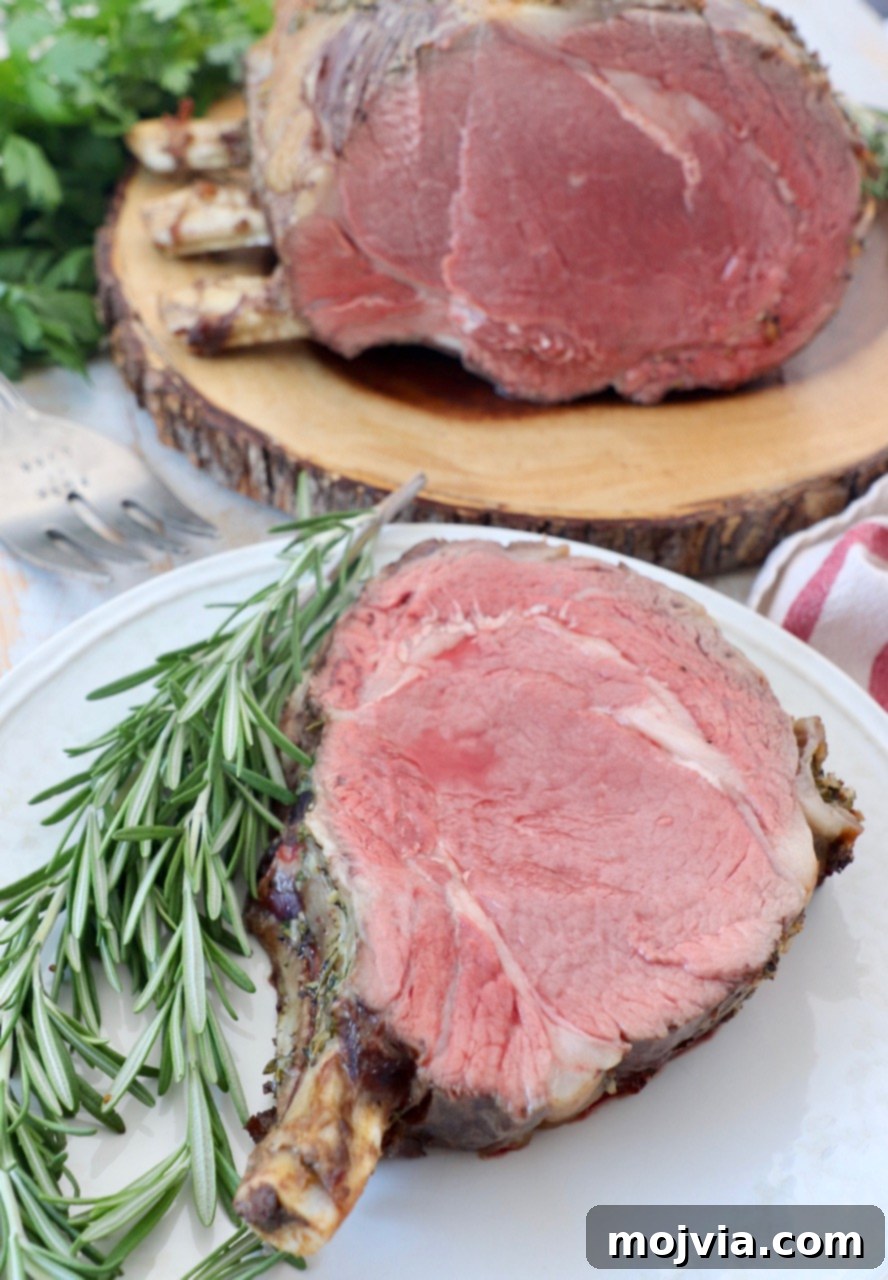
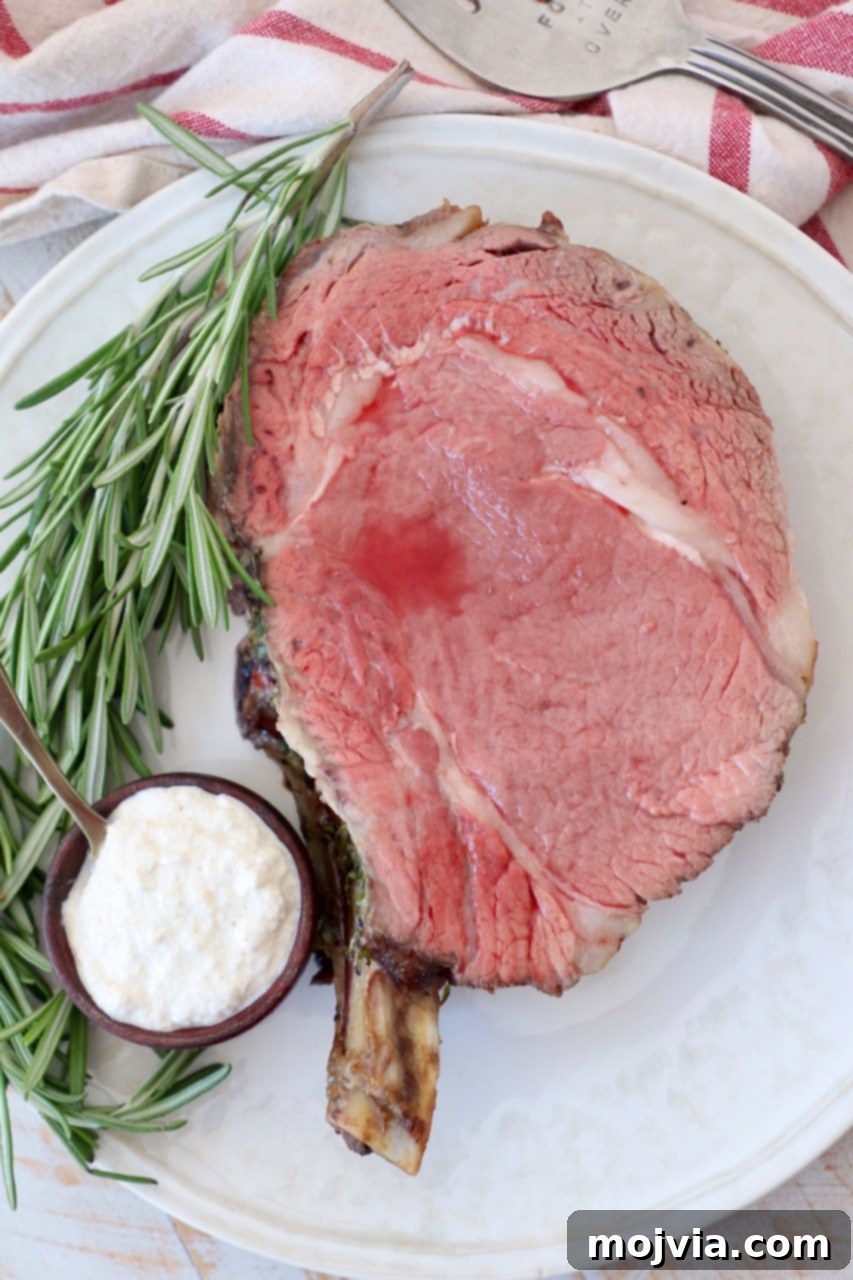
While prime rib shines as a holiday centerpiece, its relative ease of preparation makes it a fantastic choice for impressive dinners year-round, be it for friends, family gatherings, celebrations, or birthdays. To complement its rich flavor, I highly recommend serving it alongside a creamy horseradish sauce, and a selection of classic potatoes and vibrant vegetables. Here are some scrumptiously pairing side dishes:
- Instant Pot Mashed Potatoes – Creamy, smooth, and ready in a flash, these mashed potatoes are a perfect indulgent accompaniment.
- Rosemary Blue Cheese Mashed Potatoes – A sophisticated twist on a classic, offering tangy, earthy notes that beautifully cut through the richness of the beef.
- Crispy Smashed Potatoes – Golden and crunchy on the outside, fluffy on the inside, providing a delightful textural contrast.
- Mashed Sweet Potatoes – A subtly sweet and creamy option that adds a comforting touch to the meal.
- Roasted Root Vegetables – A colorful medley of naturally sweet and savory vegetables, caramelized to perfection.
- Broccoli Cheese Casserole – A rich and comforting dish, balancing the meat with a cheesy, tender vegetable side.
- Bacon Maple Brussels Sprouts – Sweet, salty, and slightly bitter, these sprouts add a fantastic depth of flavor.
- Green Beans with Blue Cheese and Bacon – A gourmet twist on green beans, combining crisp-tender texture with smoky and tangy flavors.
- Roasted Carrots – Sweet and tender, simple roasted carrots provide a bright and earthy complement.
How to Store and Reheat Prime Rib
Leftover prime rib is a treasure, and with proper storage and reheating techniques, you can enjoy its deliciousness for days to come. The key is to reheat gently to maintain its tender texture and prevent it from drying out.
- To Store: Any leftover prime rib should be promptly stored in an airtight container and refrigerated. It will remain fresh and delicious for up to 5 days. For longer storage, slices can be individually wrapped and frozen for several months, though texture may change slightly upon thawing. Don’t forget to save those incredible rib bones from your bone-in roast – they are excellent for making a deeply flavorful homemade beef stock or bone broth!
- To Reheat in the Oven (Recommended Method): For the best results, reheating in the oven is highly recommended to preserve moisture and tenderness. Preheat your oven to a low temperature of 300°F (150°C). Place individual slices of prime rib on a wire rack set over a baking sheet. Loosely cover the meat with aluminum foil to trap moisture. Place in the preheated oven for approximately 15 minutes. After this time, remove the foil and continue cooking for another 5 minutes, or until just warmed through. This gentle, indirect heat method ensures the beef reheats evenly without overcooking or drying out.
- To Reheat on the Stove: If you’re short on time or only reheating a small portion, the stovetop can be an effective method. Heat a large skillet over medium-high heat with a little beef broth or a touch of oil to prevent sticking. Once hot, pan-sear the prime rib slices for 2-3 minutes per side, just until they are warmed through. Be careful not to overcrowd the pan, and avoid overcooking, as this method can dry out the meat if not monitored closely.
More Mouth-Watering Beef Recipes
Beyond the classic prime rib, there are countless ways to enjoy impressive beef dishes all year long. Explore these other simply delicious and perfectly tested beef recipes to expand your culinary repertoire:
Once you’ve experienced the joy of making this incredible roasted bone-in prime rib, you might find yourself eager for more. Be sure to also explore my tantalizing recipe for Smoked Prime Rib, offering a different yet equally delicious approach to this premium cut!
Print Recipe
Pin Recipe
Rate this Recipe
Roasted Bone-In Prime Rib
Video
Ingredients
- 10 pound bone-in prime rib roast, also called ribeye roast or rib roast
- 1 cup water, or beef broth
- 1 cup unsalted butter, softened
- 2 tablespoons fresh rosemary, chopped
- 2 tablespoons fresh thyme, chopped
- 2 tablespoons fresh Italian parsley, chopped
- 8 cloves garlic, crushed
- 2 teaspoons sea salt
- 2 teaspoons ground black pepper
Instructions
-
Place the beef roast on a cutting board on the countertop for at least one hour (or up to 2 hours) so it can come up to room temperature. This will allow the meat to cook more evenly.
-
Preheat the oven to 450°F (232°C).
-
Pour 1-2 cups of water or beef broth in the bottom of a roasting pan. This liquid will prevent drippings from burning and create a flavorful base for pan sauce.
-
In a small bowl, combine the softened butter, chopped rosemary, thyme, parsley, crushed garlic, salt and pepper, until it forms a thick paste.
-
Rub a light layer of the herb butter paste on the bottom of the prime rib, underneath the bones.
-
Place the prime rib, bone side down, in the roasting pan. Generously slather the remaining herb butter over the entire top and sides of the prime rib.
-
Roast in the 450°F (232°C) oven for 20 minutes to achieve a beautiful crust.
-
After 20 minutes, reduce the oven temperature to 250°F (120°C). Continue to cook the prime rib for approximately 12-15 minutes per pound of meat, or until the internal temperature reaches 122°F (50°C) for medium-rare. The internal temperature will continue to rise 5-10 degrees as the meat rests.
-
Remove the roast from the oven. Loosely cover it with aluminum foil and let it rest for at least 30 minutes before slicing and serving. This step is crucial for juicy meat.
-
Slice against the grain into approximately ½ to 1-inch thick slices. You can either serve the slices with the bone attached or remove the bones before slicing the meat.
Notes
- This recipe is optimized for an 8-12 pound bone-in prime rib. If you are using a smaller roast (4-6 pounds), remember to halve all other ingredient quantities accordingly. This recipe can also be adapted for a boneless prime rib, though cooking times may need slight adjustment.
- If you are starting with a frozen ribeye roast, it is essential to move it from the freezer to the refrigerator 2-3 days before you plan to cook, allowing ample time for it to thaw completely and safely.
- For the herb butter rub, it is crucial that the butter is softened at room temperature, not melted. Softened butter will create a thick paste that adheres beautifully to the prime rib, forming a delicious crust. Melted butter will simply run off the roast, taking its flavor with it.
- Should you not have a dedicated roasting pan, a reliable alternative is to place your ribeye roast on a wire rack that fits inside a rimmed baking sheet or a large baking dish. This setup ensures proper air circulation for even cooking.
- If your prime rib finishes cooking earlier than your desired serving time, you can keep it warm without overcooking. Wrap the roast securely in butcher paper, then in aluminum foil, and place it in an insulated cooler (without ice). This method can effectively keep the meat warm for up to 4 hours.