
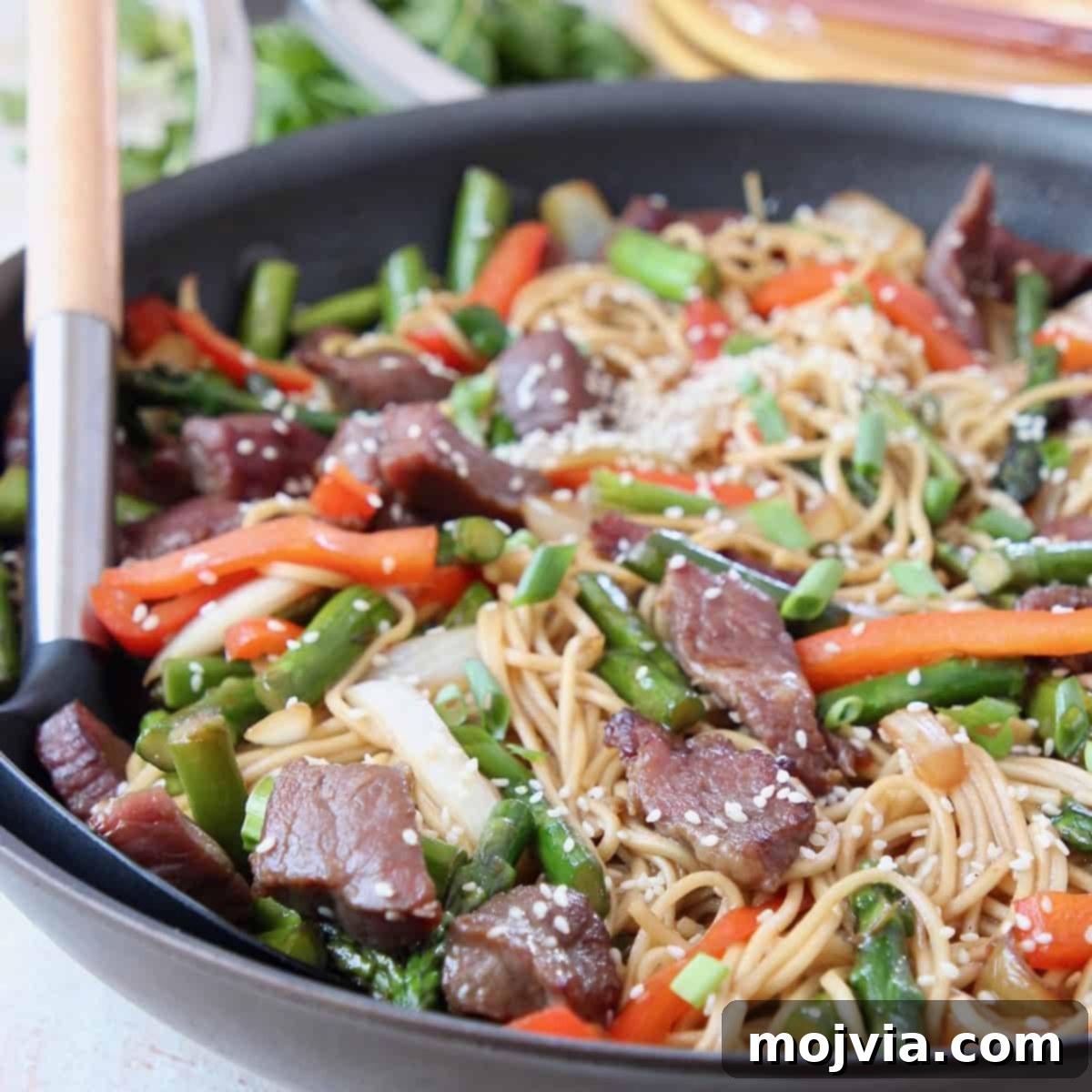
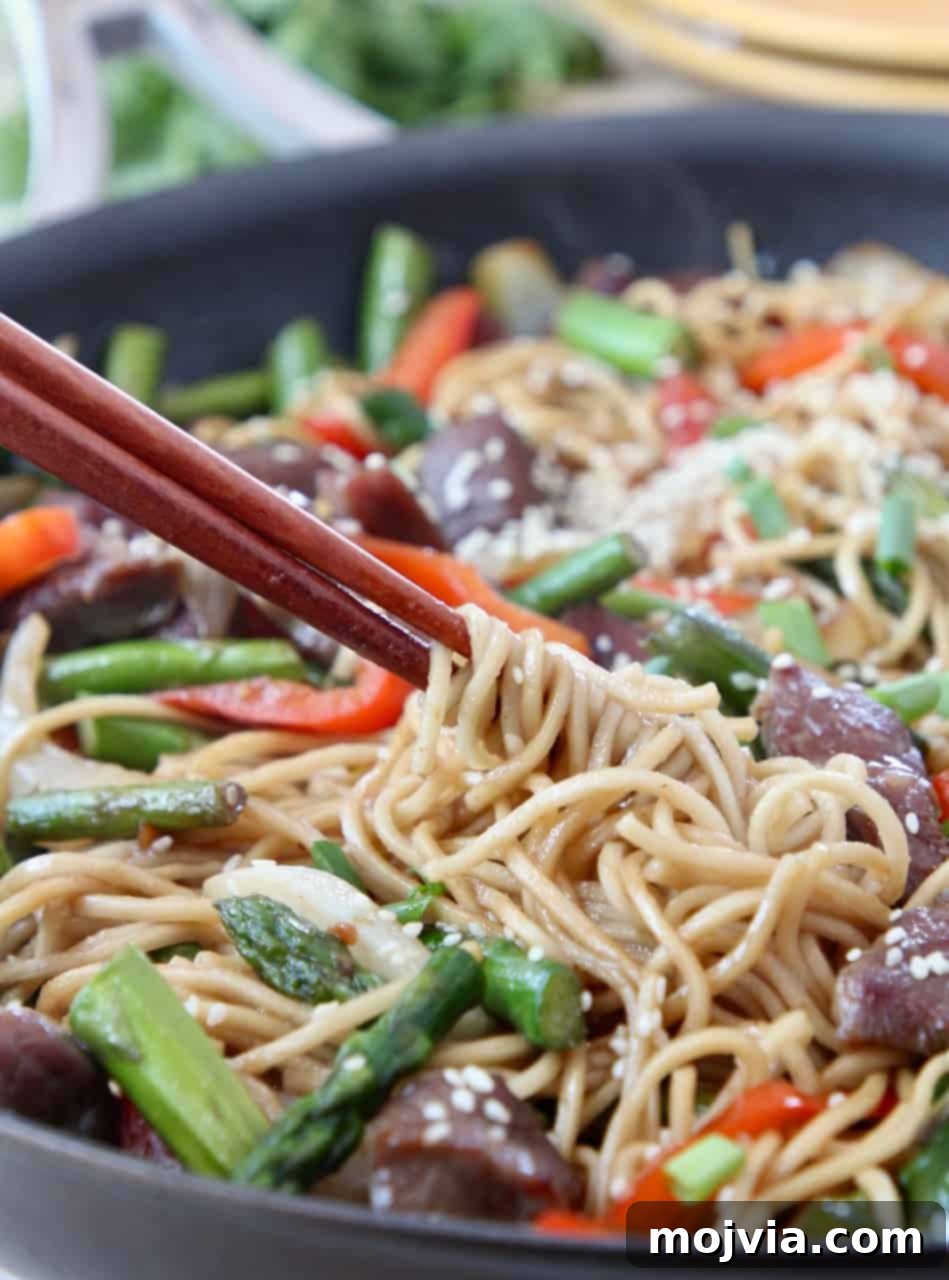
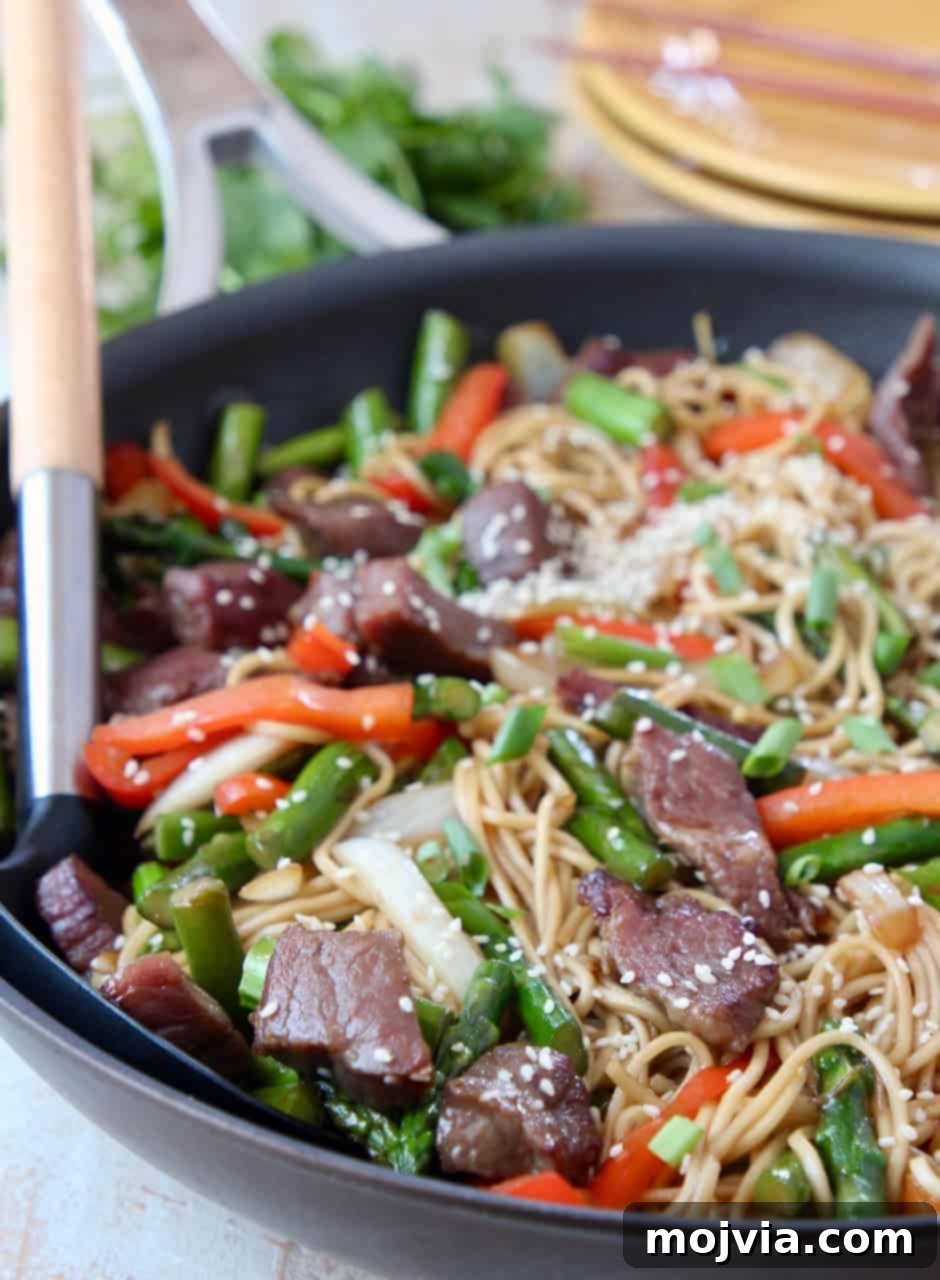
Welcome to the ultimate guide for creating the most delectable Beef Stir Fry right in your own kitchen! This isn’t just another recipe; it’s a culinary journey designed to transform your weeknight dinners into an extraordinary experience. Prepare to discover my secret technique for achieving incredibly tender beef – every single time – a method so effective, you’ll swear it came straight from a professional Asian kitchen. Combine this perfectly tender beef with a vibrant medley of fresh vegetables, hearty noodles, and a rich, flavorful 5-ingredient stir fry sauce, all coming together in under an hour for a meal that truly satisfies.
For busy individuals and families, stir-frying stands out as a champion of quick, healthy, and incredibly versatile meals. It’s the perfect solution for utilizing whatever fresh meat and vegetables you have on hand, transforming simple ingredients into a dynamic dish bursting with flavor. Our household, much like many others, often defaults to a stir fry when dinner time rolls around, especially during those hectic weekdays. The beauty of this dish lies in its adaptability: swap out proteins, experiment with different vegetables, or even adjust the spice level to suit your family’s preferences. Yet, among all the variations, a truly exceptional beef stir fry remains a consistent favorite, often topping the request list.
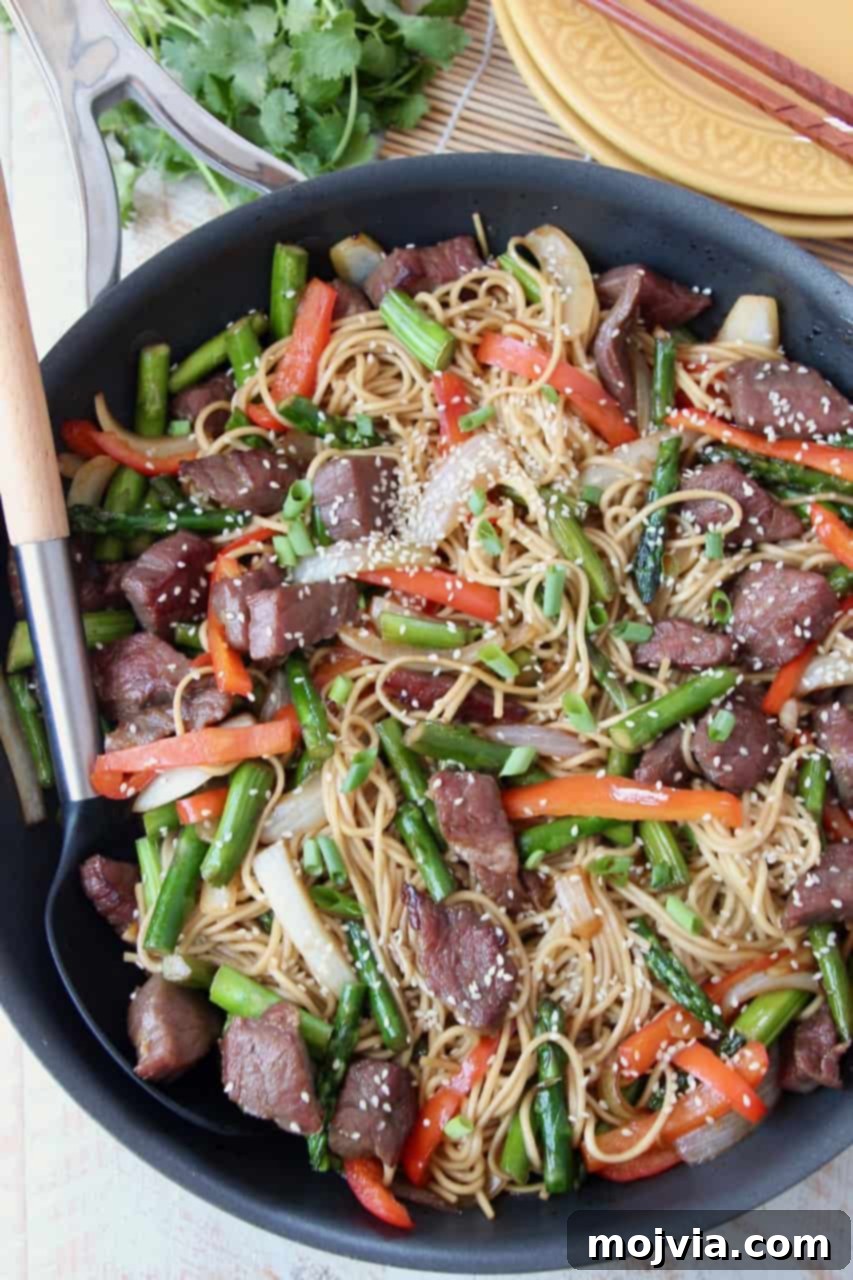
Table of Contents
- The Secret to Tender Beef: Velveting
- Key Ingredients for the Perfect Stir Fry
- Step-by-Step Instructions
- Expert Recipe Tips for Success
- Explore More Asian-Inspired Recipes
- Printable Beef Stir Fry Recipe
The Secret to Tender Beef: Velveting
For years, I was captivated by the incredibly tender and silky texture of beef in restaurant-style Chinese dishes. It was a mystery I was determined to solve, aiming to elevate my homemade Chinese cuisine to match, or even surpass, the quality of local takeout. My journey led me to discover an invaluable technique known as “velveting meat,” a simple yet profoundly effective method that has since become a cornerstone of my Asian cooking.
Velveting is a traditional Chinese culinary technique that involves coating raw meat, typically thin slices of beef or chicken, in a marinade containing cornstarch and often a small amount of baking soda. This process works wonders in two primary ways: the cornstarch creates a protective barrier around each strip of meat, sealing in moisture and preventing it from drying out during high-heat cooking. Meanwhile, the baking soda subtly alters the pH of the meat, tenderizing the proteins and giving it that signature melt-in-your-mouth texture that is so highly sought after in restaurant dishes.
My initial success with this method came when perfecting my Kung Pao Beef recipe. The difference was astonishing, transforming ordinary beef into something truly extraordinary. Once you experience the unparalleled tenderness achieved through velveting, you’ll be hooked! This simple pre-treatment, requiring only 30 minutes of marinating time, makes all the difference.
The velveting process involves marinating thinly sliced beef in a mixture of cornstarch, baking soda, soy sauce, and mirin. After a brief soak, the beef is ready to be stir-fried directly from the marinade, without needing to be rinsed. This truly is a game-changer for anyone aspiring to master Chinese cooking at home. Whether you’re preparing this Beef Stir Fry, Kung Pao Beef, Mongolian Beef, or even a classic Beef and Broccoli, this technique will consistently deliver results that rival your favorite Chinese restaurant. Say goodbye to tough, chewy meat and hello to consistently tender, flavorful beef!
Embrace this easy yet impactful technique and liberate yourself from the dependency on takeout menus. Get ready to create a deeply flavorful and effortlessly tender beef stir fry, complete with a homemade sauce that’s both simple and incredibly delicious.
Key Ingredients for the Perfect Stir Fry
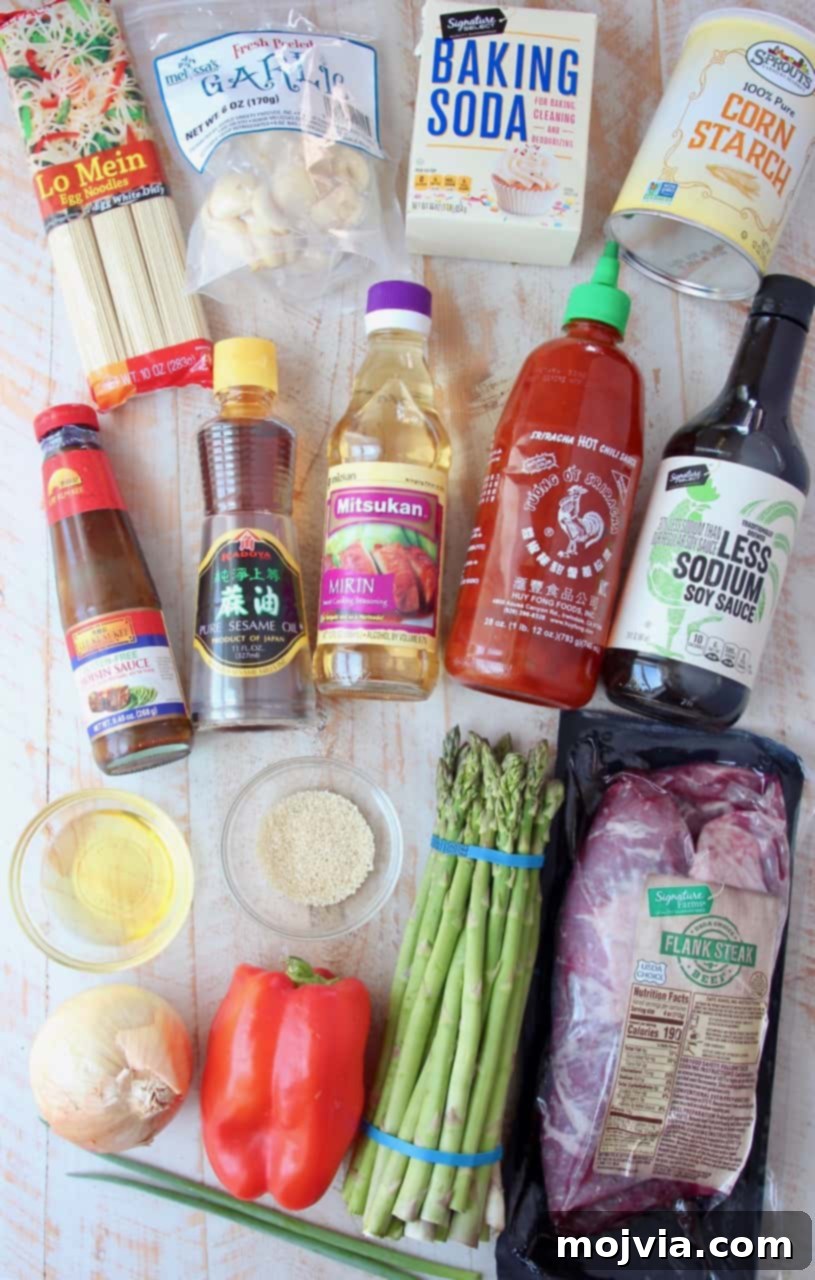
Crafting a truly exceptional beef stir fry begins with selecting the right ingredients. Each component plays a vital role in building the complex layers of flavor and achieving the desired texture. Here’s a detailed look at what you’ll need:
- Mirin: This essential Japanese sweet cooking rice wine adds a delicate sweetness, a touch of tang, and a crucial umami depth to both the beef tenderizing marinade and the stir fry sauce. It’s typically found in the Asian section of most large grocery stores. If mirin is unavailable, dry sherry, rice vinegar, or even a dry white wine can serve as suitable substitutes, though they may slightly alter the final flavor profile.
- Soy Sauce: A foundational ingredient for Asian cuisine, soy sauce provides essential saltiness and a rich, savory flavor. Opt for a good quality soy sauce for the best results. For those managing sodium intake, low-sodium varieties are readily available. It’s integral to both the beef marinade for tenderizing and the flavorful stir fry sauce.
- Cornstarch: A key player in the velveting technique, cornstarch creates a thin, protective coating on the beef, which locks in moisture and helps achieve that signature silky texture. It also serves as a thickening agent for our stir fry sauce, ensuring it clings beautifully to the beef, noodles, and vegetables.
- Baking Soda: A small amount of baking soda is crucial for the beef velveting process. It tenderizes the meat by breaking down muscle fibers, contributing significantly to the melt-in-your-mouth quality of the beef. Don’t skip this ingredient if you want truly tender beef!
- Flank Steak: My top recommendation for this stir fry recipe due to its rich flavor and ability to tenderize beautifully when sliced correctly and velveted. Other excellent choices include skirt steak or top sirloin steak. When selecting your cut, look for even marbling. Always remember to slice it against the grain to maximize tenderness.
- Hoisin Sauce: A thick, sweet, and savory Chinese barbecue sauce that is a powerhouse of flavor. Hoisin sauce adds a wonderful depth, a touch of sweetness, and a complex umami profile to our stir fry sauce, making it truly irresistible.
- Sesame Oil: Aromatic and potent, a dash of toasted sesame oil adds an incredible nutty depth of flavor to the stir fry sauce. It’s often used as a finishing oil due to its strong flavor, so a little goes a long way.
- Sriracha: For those who appreciate a touch of heat, sriracha is your go-to. This popular chili sauce provides a vibrant spicy kick to the stir fry sauce. Feel free to adjust the quantity to your preferred spice level – double it for an extra fiery experience!
- Lo Mein Noodles: These thick, chewy wheat flour noodles are a classic choice for stir-fries, offering a satisfying texture and absorbency for the sauce. For a gluten-free alternative, rice noodles work perfectly. If lo mein noodles are hard to find, regular spaghetti or linguine can be used as an easy substitute in a pinch.
- Canola Oil: Ideal for stir-frying due to its high smoke point and neutral flavor. This allows you to cook at the high temperatures necessary for stir-frying without burning the oil or imparting unwanted flavors. Peanut oil or vegetable oil are also excellent high smoke point alternatives commonly used in Asian cooking.
- Fresh Vegetables: This recipe typically features a colorful combination of onions, red bell peppers, and asparagus, offering a delightful crunch and freshness. The goal is to have about 4 cups of assorted vegetables, so feel free to customize based on what’s fresh and available. Great alternatives and additions include:
- Sugar snap peas or snow peas
- Broccoli florets or cauliflower florets
- Julienned carrots
- Sliced mushrooms (shiitake or cremini)
- Japanese eggplant, thinly sliced
- Zucchini or yellow squash
- Water chestnuts or bamboo shoots for added crunch
- Garlic Cloves: Minced fresh garlic provides a pungent, aromatic base that is fundamental to nearly all stir-fries.
- Sesame Seeds: Used as a garnish, sesame seeds add a lovely nutty flavor and an appealing visual texture to the finished dish.
- Green Onions: Diced green onions are a fresh, vibrant garnish that offers a mild oniony bite and bright color, perfect for finishing the stir fry.
Step-by-Step Instructions for the Best Beef Stir Fry
Achieving a restaurant-quality beef stir fry at home is simpler than you might think, especially with our secret tenderizing technique. Follow these detailed steps for a truly memorable meal:
- Marinate the Beef (The Velveting Secret):
This is the cornerstone of our incredibly tender beef. Do not be tempted to skip this step, even if you’re short on time – even 15 minutes of marinating is better than none at all!
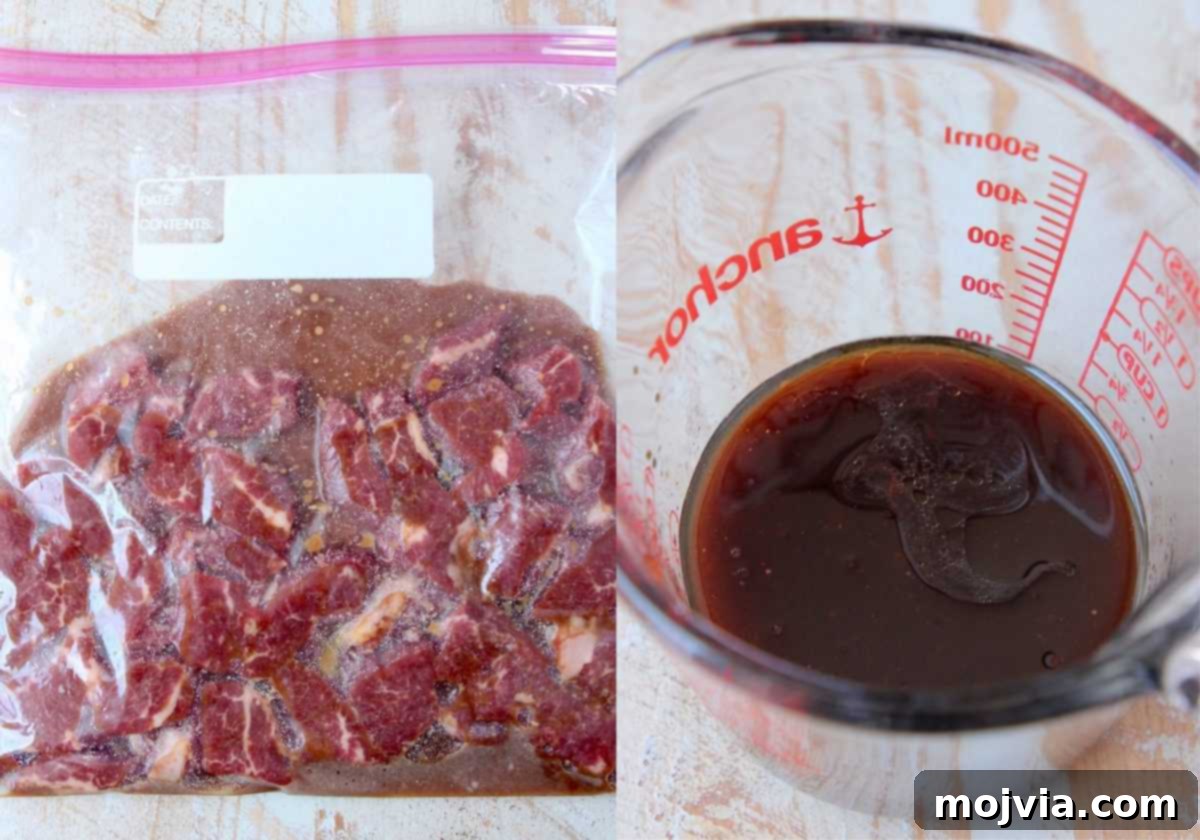
- In a large, sturdy zipper-lock bag or a shallow bowl, combine the baking soda, cornstarch, soy sauce, and mirin for the marinade.
- Add the thinly sliced flank steak strips to the bag. Seal the bag (or cover the bowl) and toss thoroughly until every piece of beef is well coated in the marinade.
- Place the marinating beef in the refrigerator for at least 30 minutes, or up to 60 minutes for optimal tenderness. This brief period works wonders.
- Prepare the Stir Fry Sauce:
A delicious stir fry relies heavily on a perfectly balanced sauce. I often prepare a double batch and store half for future quick meals.
- In a small mixing bowl, whisk together the hoisin sauce, soy sauce, mirin, sesame oil, and sriracha until thoroughly combined and smooth.
- Set the prepared sauce aside. It will be added towards the end of the cooking process. This sauce is incredibly versatile and pairs wonderfully with chicken, shrimp, or even just vegetables in any stir fry!
- Boil the Noodles:
While the beef is marinating, you can get a head start on preparing your noodles.
- Bring a large pot of lightly salted water to a rolling boil on your stove.
- Add the lo mein noodles to the boiling water and cook according to package directions, typically around 4 minutes, or until al dente.
- Drain the cooked noodles thoroughly and set them aside. You can toss them with a tiny bit of oil to prevent sticking if desired.
- Execute the Stir Fry:
Stir-frying is a fast cooking method, so ensure all your ingredients are prepped and ready before you begin.
- While the noodles are cooking or immediately after draining them, heat 1 tablespoon of canola oil in a large skillet or wok over high heat until it’s shimmering and just starting to smoke. High heat is crucial for a proper stir fry.
- Carefully remove the steak from the marinade. Gently shake off any excess marinade, but do not rinse the beef. The coating is essential for tenderness.
- Add the marinated steak in a single layer to the hot oil in the skillet. Avoid overcrowding the pan; cook in batches if necessary to ensure the beef sears rather than steams. Stir fry for 2-3 minutes, until beautifully browned and cooked through.
- Remove the cooked steak from the skillet and set it aside on a clean plate.
- If needed, add a touch more oil to the hot skillet. Add the sliced onions, red bell peppers, asparagus (or your chosen vegetables), and minced garlic. Stir fry for 3-4 minutes, or until the vegetables are crisp-tender and aromatic.
- Return the cooked beef to the skillet, along with the drained lo mein noodles and the prepared stir fry sauce.
- Toss everything together vigorously for about 1-2 minutes, ensuring all ingredients are well coated in the delicious sauce and heated through.
- Remove the pan from the heat. Serve immediately, garnished generously with toasted sesame seeds and fresh diced green onions.
Expert Recipe Tips for Success
Mastering the art of stir-frying is about understanding a few key principles. These tips will help ensure your Beef Stir Fry is nothing short of perfect every time:
- Don’t Skip the Marinade: This cannot be emphasized enough! The velveting technique, as mentioned multiple times, is the true secret behind achieving that incredibly tender, restaurant-quality beef. Even a minimum of 15-30 minutes can make a significant difference. It’s a small investment of time for a massive payoff in texture and flavor.
- Always Slice Steak Against the Grain: This is the other critical factor for tender beef. Before slicing, identify the muscle fibers (the white lines or “grain”) running through your steak. Then, slice across these fibers rather than parallel to them. This shortens the muscle fibers, making the beef much easier to chew and more tender. Aim for thin, approximately 1/4-inch slices for the best results.
- Double (or Triple!) the Stir Fry Sauce: This flavorful sauce is so versatile and delicious, you’ll want to have extra on hand! Preparing a larger batch allows you to store the excess in an airtight container in the refrigerator for up to two weeks, ready for your next quick stir fry, noodle dish, or even as a marinade for other proteins like chicken or tofu. It’s a fantastic meal prep hack.
- High Heat is Your Friend: Stir-frying relies on very high heat to quickly cook ingredients, creating a slight char and retaining their crispness. Ensure your wok or skillet is screaming hot before adding oil, and especially before adding the beef or vegetables. This searing action is what gives stir-fries their unique flavor and texture.
- Don’t Overcrowd the Pan: This is a common mistake. Adding too many ingredients at once will drop the temperature of your pan significantly, causing the food to steam rather than sear. This leads to soggy vegetables and tough, grey meat. If you have a large quantity of beef or vegetables, cook them in smaller batches. It takes a little more time but guarantees superior results.
- Mise en Place (Prep Everything First!): Stir-frying is a very fast cooking method. Once you start, there’s no time to chop vegetables or measure sauces. Have all your ingredients prepped, sliced, measured, and ready to go before you even turn on the stove. This organized approach ensures a smooth and stress-free cooking experience.
- Customize Your Vegetables: While onions, bell peppers, and asparagus are excellent choices, feel free to experiment with your favorite seasonal vegetables. Broccoli, snap peas, carrots, mushrooms, and zucchini are all fantastic additions. Aim for a variety of colors and textures.
- Serving Alternatives: While lo mein noodles are a classic, you have many options for serving your stir fry.
- With Rice: Prepare the beef, vegetables, and sauce as instructed. Instead of adding noodles, serve the stir fry over freshly cooked white rice or brown rice for a hearty meal.
- Low Carb Options: For a lighter, low-carb meal, serve the stir fry over cauliflower rice, zucchini noodles (zoodles), or even a bed of fresh mixed greens.
- Lettuce Wraps: For a fresh and crunchy alternative, serve the stir fry in large lettuce cups (such as butter lettuce or iceberg).
Explore More Asian-Inspired Recipes
If you’ve enjoyed mastering this incredible Beef Stir Fry, then you’re ready to dive deeper into the world of homemade Asian cuisine! I’ve dedicated myself to perfecting a range of Chinese restaurant copycat recipes, bringing those beloved flavors directly to your kitchen. These dishes consistently receive rave reviews for their authentic taste and easy-to-follow instructions. Why settle for takeout when you can create these fantastic meals at home?
Discover some of our other highly-rated recipes that are making waves on Pinterest and delighting home cooks everywhere:
- Gluten-Free General Tso’s Chicken – A fan favorite and one of the most popular recipes on the blog, offering that iconic sweet and savory flavor without the gluten.
- Dan Dan Noodles – Prepare to fall in love with this incredibly flavorful and satisfying vegetarian dish, boasting complex layers of spice and umami.
- Teriyaki Chicken Stir Fry – Featuring another fantastic chicken tenderizing technique for juicy, tender chicken in a classic, sweet, and savory teriyaki sauce.
- Gluten-Free Orange Chicken – Experience the tangy, sweet, and irresistible flavor of our best-ever homemade orange sauce, all in a gluten-free package.
- Black Pepper Beef & Broccoli – An incredibly easy and flavorful slow cooker recipe that delivers tender beef and crisp broccoli in a rich, peppery sauce.
- Chicken Potsticker Stir Fry – Turn a beloved appetizer into a complete and exciting meal with this fun and inventive stir fry.
Each of these recipes brings the vibrant flavors and delightful textures of Asian cuisine to your table, proving that delicious, restaurant-quality meals are well within your reach at home. Happy cooking!
Beef Stir Fry
It’s easy to make THE BEST Beef Stir fry with just a few simple steps, including my secret technique for making incredibly tender beef every time!
Ingredients
Beef Tenderizer Marinade
- 2 tablespoons mirin
- 4 tablespoons soy sauce
- 2 teaspoons cornstarch
- 1 teaspoon baking soda
- 1 pound flank steak, sliced against the grain into 1-inch strips
Stir Fry Sauce
- ¼ cup hoisin sauce
- 2 tablespoons soy sauce
- 1 tablespoon mirin
- 1 tablespoon sesame oil
- 1 teaspoon sriracha
Stir Fry
- 10 ounces lo mein noodles
- 1 tablespoon canola oil
- 1 cup onion, sliced
- 1 red bell pepper, sliced
- 1 pound asparagus, cut into 1-inch pieces
- 3 garlic cloves, minced
- 1 tablespoon sesame seeds
- 2 tablespoons green onions, diced
Instructions
Beef Tenderizer Marinade
- Add baking soda, cornstarch, soy sauce, and mirin to a large ziplock bag or bowl.
- Add strips of flank steak to the bag.
- Toss well to coat the beef, then place in the refrigerator for 30-60 minutes.
Stir Fry Sauce
- Prepare the sauce by whisking all of the hoisin sauce, soy sauce, mirin, sesame oil, and sriracha together in a small bowl. Set aside.
Stir Fry
- Once the steak has marinated and tenderized for 30-60 minutes in the refrigerator, remove it from the fridge.
- Bring a large pot of water to boil on the stove.
- Add the lo mein noodles to the boiling water and cook for 4 minutes or according to package directions.
- Drain the cooked noodles and set aside.
- While the noodles are cooking, add the canola oil to a large skillet or wok on the stove over high heat until shimmering.
- Remove the steak from the marinade, shaking off any excess (do not rinse), then add the steak to the hot skillet in a single layer.
- Cook for 2-3 minutes, stirring occasionally, until browned and cooked through. Remove the steak from the skillet and set aside.
- Add the sliced onion, bell pepper, asparagus, and minced garlic to the hot skillet. Stir fry for 3-4 minutes, or until the vegetables are crisp-tender.
- Add the cooked beef back to the skillet, along with the drained lo mein noodles and the prepared stir fry sauce.
- Toss to combine everything, ensuring the noodles, beef, and vegetables are well coated in the sauce. Remove from the heat.
- Top the stir fry with toasted sesame seeds and fresh diced green onions before serving.
Notes
- Gluten-Free Option: To make this recipe gluten-free, ensure you use gluten-free soy sauce and gluten-free hoisin sauce in both the marinade and the stir fry sauce. Substitute the lo mein noodles with rice noodles or your favorite gluten-free spaghetti noodles.
- Slicing The Steak: For maximum tenderness, always slice the steak against the grain. This means cutting in the opposite direction of the natural muscle fibers (the white lines) running through the steak. Aim for thin slices, approximately 1/4 inch thick.
Nutrition Facts
Serving Size: 1 serving (approx. 1/4 of recipe)
- Calories: 629 kcal
- Carbohydrates: 77g
- Protein: 38g
- Fat: 19g
- Saturated Fat: 4g
- Cholesterol: 69mg
- Sodium: 2465mg
- Potassium: 833mg
- Fiber: 6g
- Sugar: 13g
- Vitamin A: 1819mg
- Vitamin C: 49mg
- Calcium: 93mg
- Iron: 5mg
Did you make this recipe? Tag @WhitneyBond on Instagram and hashtag it #WBRecipes!