
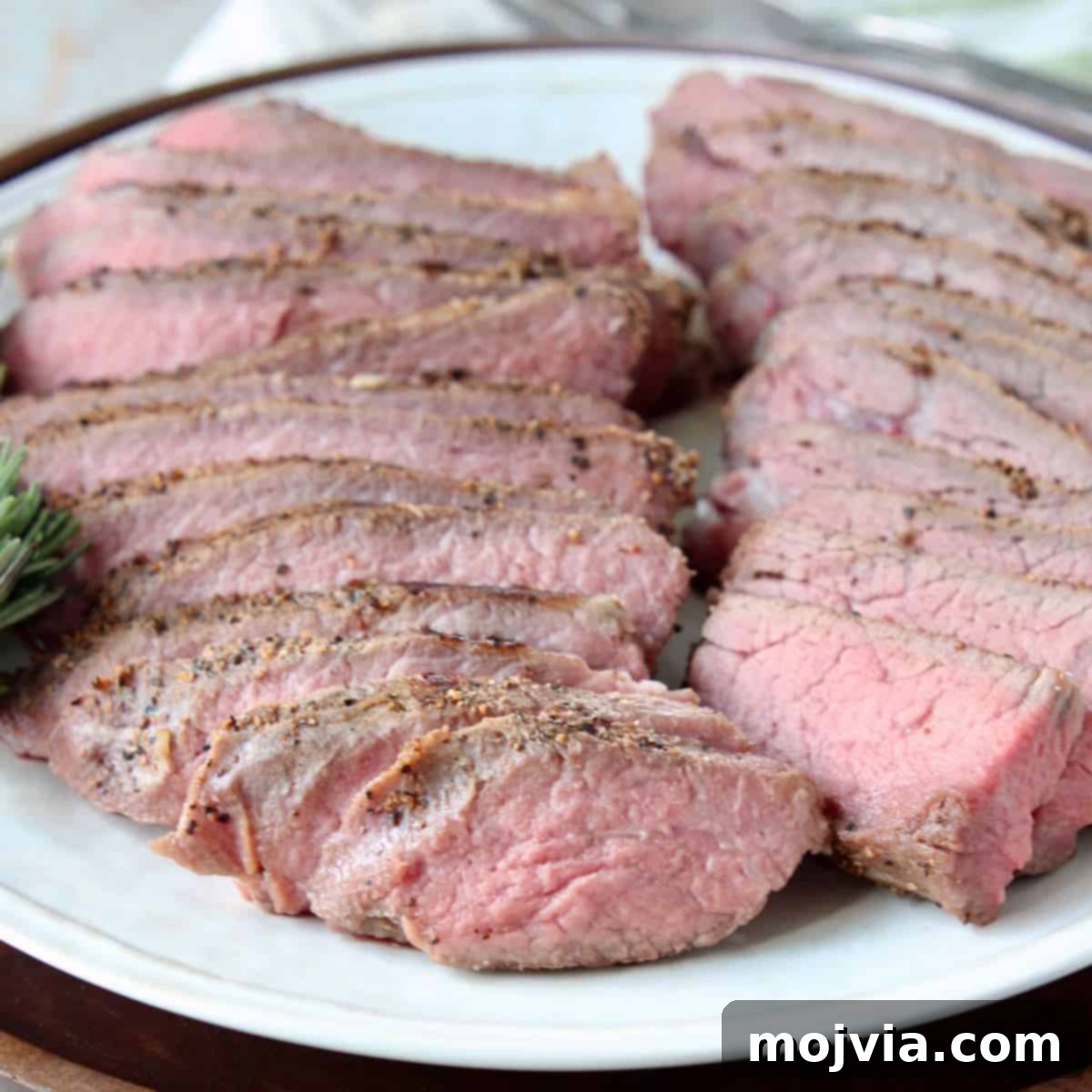
Master the Art of Perfect Steak: The Ultimate Sous Vide Tri Tip Guide
Unlock the secret to flawlessly tender and juicy steak every single time! This detailed guide reveals how to achieve restaurant-quality results in your home kitchen using the revolutionary sous vide cooking method for Tri Tip. Prepare for a mouth-watering, incredibly easy-to-make culinary experience!
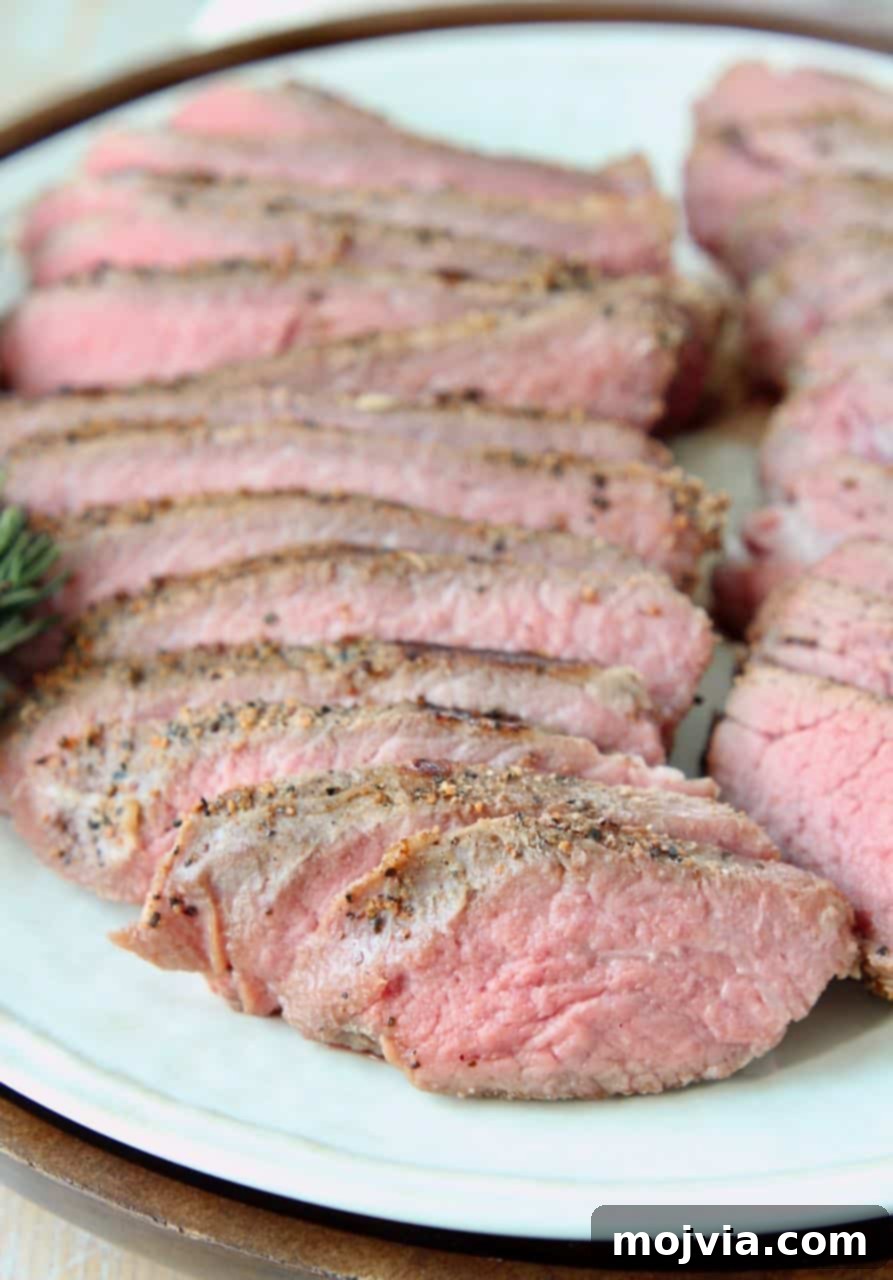
Elevate your Sous Vide Tri Tip with a vibrant drizzle of homemade chimichurri sauce and a generous side of the best mashed potatoes you’ve ever tasted for an unforgettable meal!
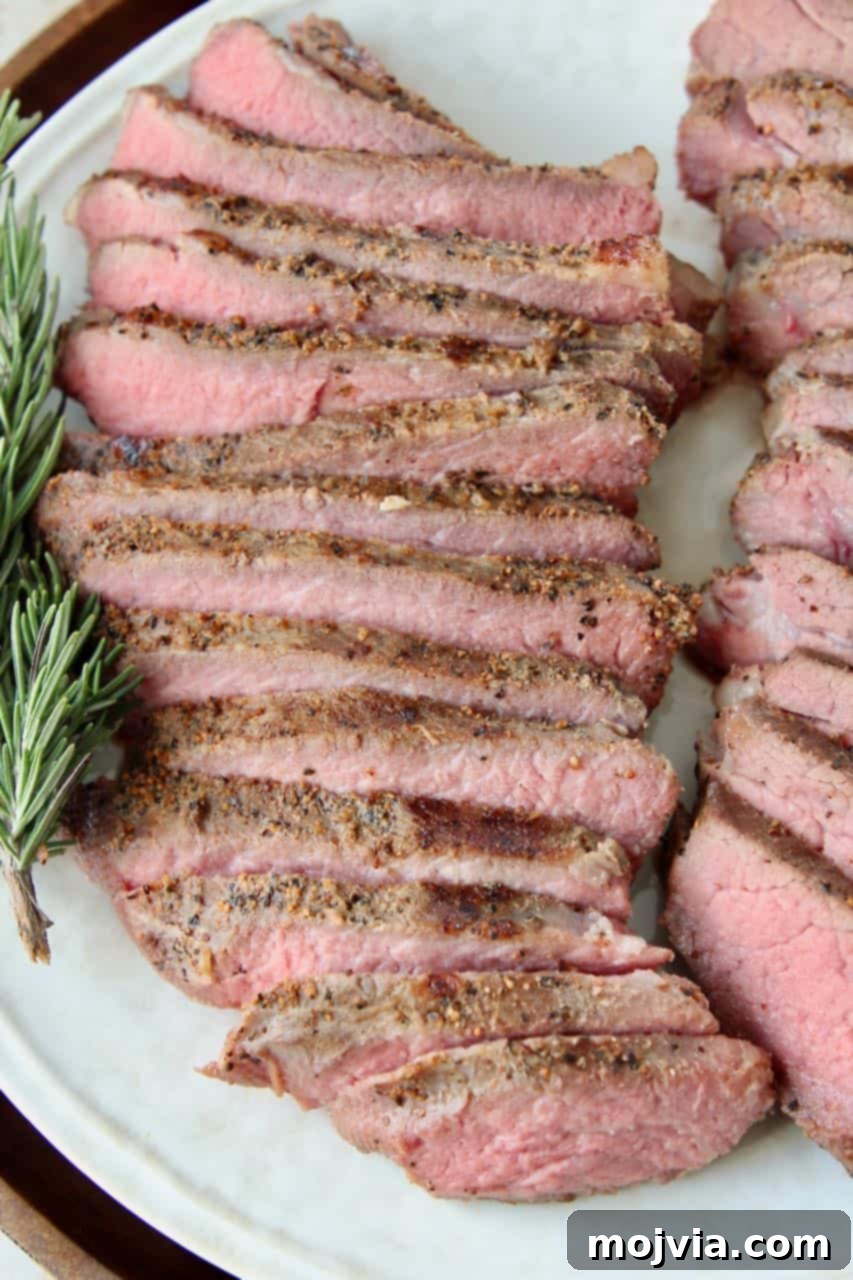
Before moving to the golden state, the unique “tri tip” cut of steak was a mystery to me. Often celebrated as “California’s Cut,” the tri tip gained its legendary status in the Santa Maria Valley of Central California. It’s a truly remarkable cut, boasting rich flavor and a delightful texture, sourced from the bottom sirloin.
If you’re fortunate enough to find this gem at your local butcher or grocery store, I wholeheartedly encourage you to give it a try. Its distinctive shape and marbling make it a favorite among steak connoisseurs, offering a robust beefy taste that stands out from other cuts.
My journey with tri tip began years ago, and one of my very first recipes—a Coffee Crusted Tri Tip with Balsamic Stout Reduction from 2013—remains a cherished favorite. That recipe, known for its incredible rub and smoky grill finish, set the stage for many tri tip adventures. Since then, I’ve explored various cooking methods for this versatile cut, from creating tender Slow Cooked Rosemary Tri Tip French Dip Sandwiches in the slow cooker to grilling a succulent Red Wine Marinated Tri Tip. Each method brings out different nuances of its flavor, proving just how adaptable the tri tip is.
Embrace the Revolution: Sous Vide Tri Tip
Today, I’m thrilled to introduce what I believe is the simplest and most foolproof method for cooking tri tip: sous vide. This technique consistently delivers a perfectly cooked steak, making it ideal for both seasoned chefs and newcomers to the kitchen. If you’re unfamiliar with sous vide, prepare to have your culinary world transformed.
At its core, sous vide involves sealing food—in this case, your beautiful tri tip steak, along with herbs and spices—in a vacuum-sealed bag. This bag is then submerged in a precisely temperature-controlled water bath. The magic lies in the precision: because the meat never comes into direct contact with an extreme heat source, it cooks evenly from edge to edge. Say goodbye to overcooked exteriors and raw centers! With sous vide, your steak will always reach your desired level of doneness, from rare to well-done, with unparalleled consistency. The result is a steak that is incredibly tender, bursting with flavor, and perfectly cooked through every fiber.
Why Sous Vide is a Game-Changer for Tri Tip
The tri tip, while flavorful, can sometimes be a bit tricky to cook perfectly using traditional methods like grilling or pan-searing. Its triangular shape and varying thickness can lead to uneven cooking, where thinner edges might dry out while thicker sections remain undercooked. This is precisely where sous vide excels.
- Unmatched Tenderness: The long, gentle cook time in the water bath slowly breaks down connective tissues in the tri tip, transforming it into an exceptionally tender piece of meat. You’ll notice a significant difference in texture compared to traditionally cooked methods.
- Perfect Doneness, Every Time: With a precise temperature setting, you eliminate guesswork. Whether you prefer a juicy medium-rare or a slightly more done steak, sous vide ensures your tri tip is cooked exactly to your preference, from one end to the other.
- Enhanced Flavor Infusion: Sealing the tri tip with butter, fresh herbs like rosemary, and crushed garlic cloves allows these flavors to deeply penetrate the meat during the slow cooking process. The vacuum seal prevents any flavor from escaping, locking in all that deliciousness.
- Incredible Juiciness: Since the steak cooks in its own juices within the sealed bag, moisture retention is maximized. This prevents the meat from drying out, guaranteeing a succulent, juicy tri tip that practically melts in your mouth.
- Stress-Free Cooking: Once your tri tip is in the water bath, your active cooking time is minimal. This “set it and forget it” approach frees you up to prepare side dishes, entertain guests, or simply relax.
The cooking time and temperature for sous vide vary depending on the specific cut of meat and your desired texture. For tri tip, which can benefit from a longer cook to achieve maximum tenderness, I highly recommend cooking the steak for 6 hours at your preferred temperature. This extended duration allows the connective tissues to sufficiently break down, resulting in an exquisitely tender and juicy steak that will impress even the most discerning palate.
Perhaps the best aspect of sous vide cooking is the minimal hands-on time it requires. After a quick 5-minute prep to season and bag your steak, and a few minutes of searing at the end, your work is largely done. This makes sous vide tri tip an ideal choice for busy weeknights or for effortlessly hosting dinner parties.
Table of Contents
- Sous Vide Tri Tip: Step-by-Step Instructions
- Mastering the Slice: How to Cut Tri Tip Steak Against the Grain
- Sous Vide from Frozen: A Convenient Option
- Sous Vide Steak Temperature Chart for Perfect Doneness
- Explore More Delicious Sous Vide Recipes
Sous Vide Tri Tip: Step-by-Step Instructions
Achieving a perfectly cooked sous vide tri tip is simpler than you might imagine. Follow these detailed steps to create a steak that rivals any high-end restaurant.
- Set Up Your Sous Vide: Begin by filling a large pot with water. Secure your sous vide precision cooker (or immersion circulator) to the side of the pot. Set the desired temperature; for a delectable medium-rare, aim for 129°F. Consult our detailed temperature chart below for other doneness preferences.
- Prepare the Steak: Place your tri tip steak into a high-quality Ziploc freezer bag or a vacuum seal bag. Ensuring all air is removed is crucial for efficient heat transfer.
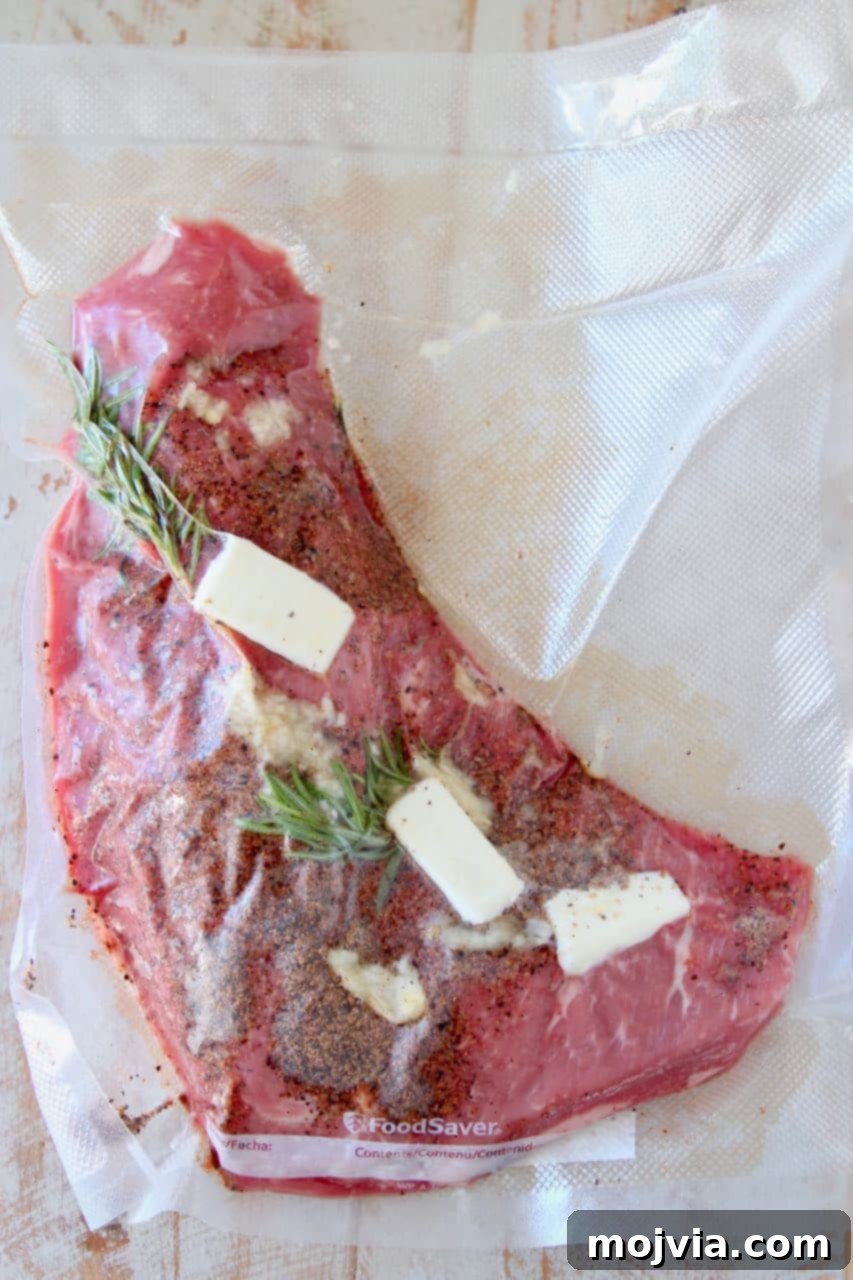
- Season Generously: Season the tri tip steak thoroughly with your favorite steak seasoning. For an extra layer of richness and aroma, add several pats of butter, fresh rosemary sprigs, and a few crushed garlic cloves directly into the bag with the steak. These ingredients will infuse incredible flavor during the long cook.
- Seal the Bag: For optimal results, use a vacuum sealer to remove all air and seal the bag shut. If you don’t have a vacuum sealer, the “water displacement method” works wonderfully. To do this, slowly submerge the bag containing the steak into the water bath, leaving about an inch of the top of the bag open. The water pressure will naturally force the air out around the food. Once most of the air is expelled, carefully seal the bag closed just above the waterline.
- Begin the Sous Vide Cook: Once the tri tip is securely sealed in the bag with its seasonings, gently place it into the preheated sous vide water bath. Allow it to cook for 6 hours. This extended period ensures exceptional tenderness.
- Remove and Prepare for Searing: After 6 hours, carefully remove the tri tip roast from the bag. Discard the fresh rosemary sprigs, as their flavor has already been imparted to the meat. Pat the steak thoroughly dry with paper towels; a dry surface is key to achieving a perfect sear.
- Preheat for Searing: Heat a cast iron skillet, grill pan, or an outdoor grill to very high heat. The goal is to get it smoking hot to create a beautiful crust quickly.
- Sear for Flavor and Texture: Carefully place the dried tri tip onto the hot surface. Sear each side for a quick 30-60 seconds. This step is vital for developing the rich, caramelized crust (Maillard reaction) that adds a tremendous amount of flavor and texture to the steak, contrasting beautifully with its tender interior.
- Season During Searing: While the steak is searing, lightly season it with a pinch of salt and freshly ground black pepper.
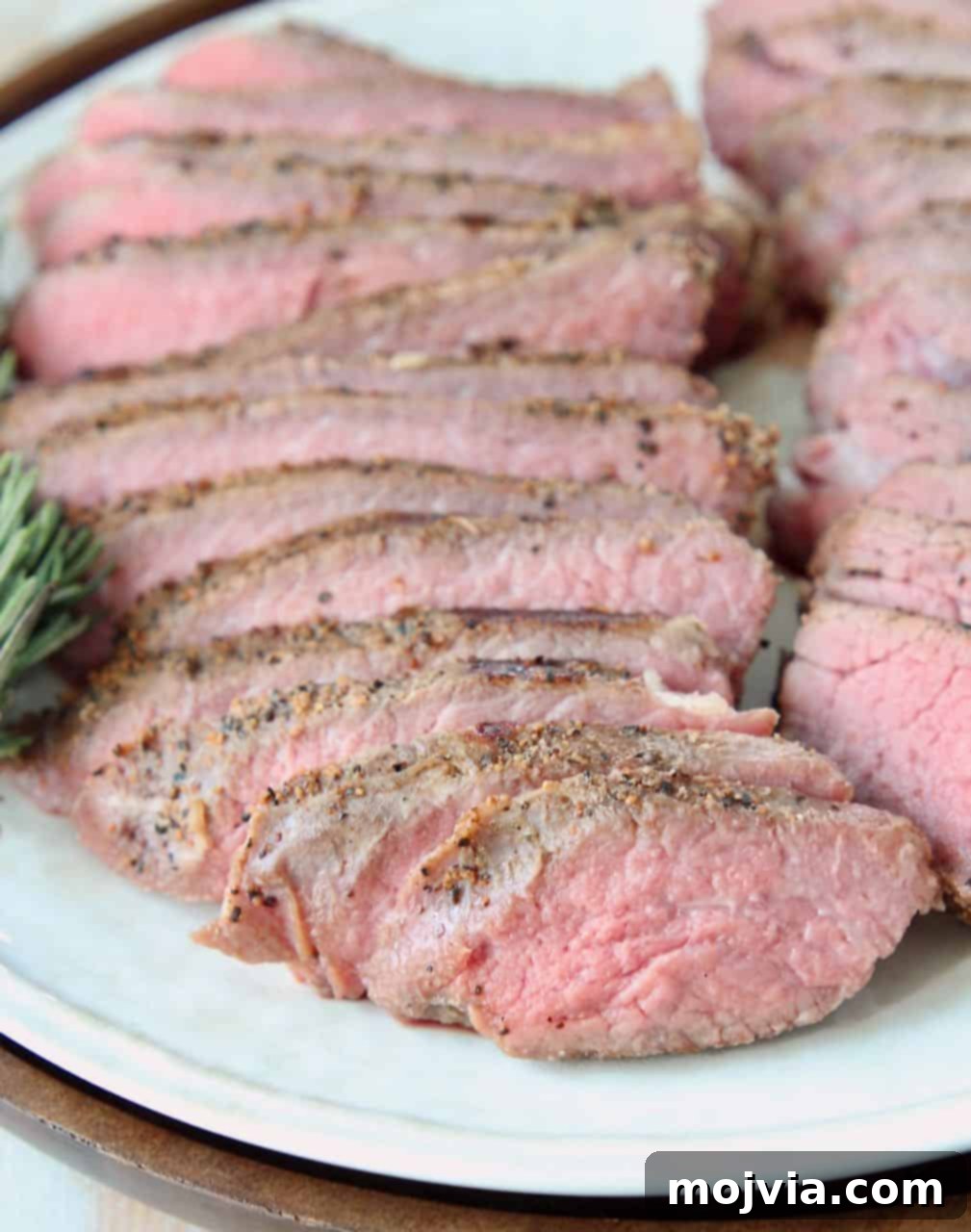
- Rest the Steak: Once seared to perfection, remove the tri tip from the heat. Loosely cover it with aluminum foil and allow it to rest for at least 10 minutes. Resting is a crucial step that allows the juices to redistribute throughout the meat, ensuring every slice is incredibly moist and flavorful.
- Slice Against the Grain: After resting, it’s time to slice your masterpiece. Pay close attention to the grain of the meat. Tri tip has a unique grain pattern that changes direction. Locate where the grains intersect, then slice the long triangular tip from the main body. For both sections, slice thinly against the grain to maximize tenderness.
Mastering the Slice: How to Cut Tri Tip Steak Against the Grain
Slicing tri tip correctly is just as important as cooking it perfectly. Because tri tip has a unique muscle structure where the grain changes direction, carving it properly is crucial for achieving maximum tenderness. If you slice with the grain, even a perfectly cooked steak can feel tough and chewy. The goal is always to slice against the grain, which shortens the muscle fibers, making each bite incredibly tender.
When you look closely at a cooked tri tip, you’ll observe that the muscle fibers run in two distinct directions, typically intersecting somewhere in the middle of the cut. To properly carve it:
- First, identify the point where these grains meet.
- Carefully slice the tri tip into two separate pieces along this natural seam, separating the section where the grains run in one direction from the section where they run in the other.
- Once you have these two distinct pieces, slice each piece individually. For each section, orient your knife perpendicular to the direction of the muscle fibers. Make thin, even slices.
For a detailed visual guide on this technique, my friends at Traeger Grills offer an excellent video and image tutorial on their website explaining how to carve a tri tip. Watching a demonstration can truly make a difference in mastering this crucial step.
Sous Vide from Frozen: A Convenient Option
One of the most remarkable advantages of sous vide cooking is its ability to handle frozen meats with ease. Yes, you absolutely can sous vide a tri tip steak directly from the freezer! This feature adds a tremendous layer of convenience and flexibility to your meal planning.
Imagine this: you’ve had a busy day, and dinner needs to be on the table without much fuss. With a pre-seasoned, vacuum-sealed tri tip waiting in your freezer, a gourmet meal is just hours away, without the need for defrosting. Simply transfer your frozen, bagged tri tip directly into the preheated sous vide water bath.
There’s no need to adjust the cooking time when cooking from frozen, especially for a cut like tri tip that benefits from a longer cook. The 6-hour sous vide cooking time is ample for the tri tip to come up to temperature and cook perfectly, whether it started fresh or frozen. This consistent cooking temperature ensures safety and optimal doneness every time.
This method is particularly useful when stocking up. For example, if you purchase tri tip steaks in multi-packs, like those often found at stores such as Costco, you can prepare one for immediate enjoyment and freeze the others. Simply season them, bag them, and freeze them for up to six months. When you’re ready for another exquisite meal, pull one out and place it directly into your sous vide bath. It’s a fantastic way to ensure you always have a restaurant-quality meal on hand with minimal effort.
Sous Vide Steak Temperature Chart for Perfect Doneness
The beauty of sous vide lies in its precision, allowing you to achieve your exact preferred level of doneness every time. Use this chart as your guide to select the perfect water bath temperature for your sous vide tri tip steak.
- Rare: For a cool red center, set your Sous Vide at 120-128°F (49-53°C).
- Medium Rare: For a warm red center, set your Sous Vide at 129-134°F (54-57°C). This is often the preferred temperature for tri tip, offering the best balance of tenderness and juiciness.
- Medium: For a warm pink center, set your Sous Vide at 135-144°F (57-62°C).
- Medium Well: For a slightly pink center, set your Sous Vide at 145-155°F (63-68°C).
- Well Done: For a fully cooked, no-pink center, set your Sous Vide at 156-162°F (69-72°C).
Remember that a quick sear after the sous vide bath will add a delicious crust but won’t significantly change the internal temperature of the steak if done correctly. These temperatures ensure your tri tip is cooked to perfection before that final searing step.
Explore More Delicious Sous Vide Recipes
Once you experience the magic of sous vide with tri tip, you’ll want to try it with everything! This versatile cooking method works wonders for a variety of proteins and even desserts. Expand your culinary repertoire with these other fantastic sous vide recipes:
- Sous Vide Chipotle Apple Pork Loin: A flavorful and tender pork loin with a spicy-sweet kick.
- Rosemary Garlic Sous Vide Steak: Perfect for exploring other steak cuts with classic aromatics.
- Sous Vide Egg Bites: Achieve fluffy, custardy egg bites reminiscent of your favorite coffee shop.
- Korean BBQ Short Ribs: Tender, fall-off-the-bone short ribs with an irresistible glaze.
- Sous Vide Sliders: Juicy, perfectly cooked mini burgers that are sure to be a crowd-pleaser.
Print Recipe
Pin Recipe
5 stars (3 ratings)
Rate this Recipe
Sous Vide Tri Tip
Master restaurant chefs’ secret to getting the perfect steak every time by using sous vide cooking technology! This Sous Vide Tri Tip is mouth-watering, incredibly tender, and remarkably easy to make, a truly winning combination!
Ingredients
- 3 lb tri tip steak
- 2 tbsp steak seasoning
- 2 tbsp butter
- 4 sprigs fresh rosemary
- 4 cloves garlic, crushed
Instructions
- Fill a large pot with water. Attach a sous vide stick to the pot and set the heat to 129°F, for medium rare (for other temperatures, see the temperature chart in the notes below).
- Place a tri tip steak in a ziplock bag or vacuum seal bag.
- Season the steak with steak seasoning, then add pats of butter, fresh rosemary sprigs and crushed garlic cloves to the bag.
- Use a vacuum sealer to seal the bag shut or use the water displacement method to seal the bag.
- To use the water displacement method, simply place the bag with the steak in it almost all of the way under the water, leaving just about an inch of the top of the bag open. The water will press out all of the air around the food in the bag, you can then seal the bag closed.
- Once the steak is sealed in the bag with the herbs and seasonings, place it in the sous vide water bath for 6 hours.
- After 6 hours, remove the tri tip steak from the bag and discard the fresh rosemary sprigs.
- Heat a grill or grill pan on the stove over high heat.
- Sear the tri tip on each side for 30-60 seconds.
- Season lightly with salt and pepper while the steak is searing.
- Remove the tri tip from the heat, cover with foil and let rest for 10 minutes before slicing.
- When slicing the tri tip, you’ll notice that the grains run in different directions on the tri tip. Slice the long triangular tip from the other end of the tri tip where the grains intersect, then slice each piece of the tri tip against the grain.
Notes
- Temperature chart:
- For Rare: Set Sous Vide at 120-128°F
- For Medium Rare: Set Sous Vide at 129-134°F
- For Medium: Set Sous Vide at 135-144°F
- For Medium Well: Set Sous Vide at 145-155°F
- For Well Done: Set Sous Vide at 156-162°F
Nutrition Facts (per serving)
- Calories: 415 kcal (21%)
- Carbohydrates: 2g (1%)
- Protein: 47g (94%)
- Fat: 23g (35%)
- Saturated Fat: 10g (50%)
- Cholesterol: 160mg (53%)
- Sodium: 152mg (6%)
- Potassium: 736mg (21%)
- Fiber: 1g (4%)
- Sugar: 1g (1%)
- Vitamin A: 152mg (3%)
- Vitamin C: 1mg (1%)
- Calcium: 74mg (7%)
- Iron: 4mg (22%)
Tag @WhitneyBond on Instagram and hashtag it #WBRecipes!