
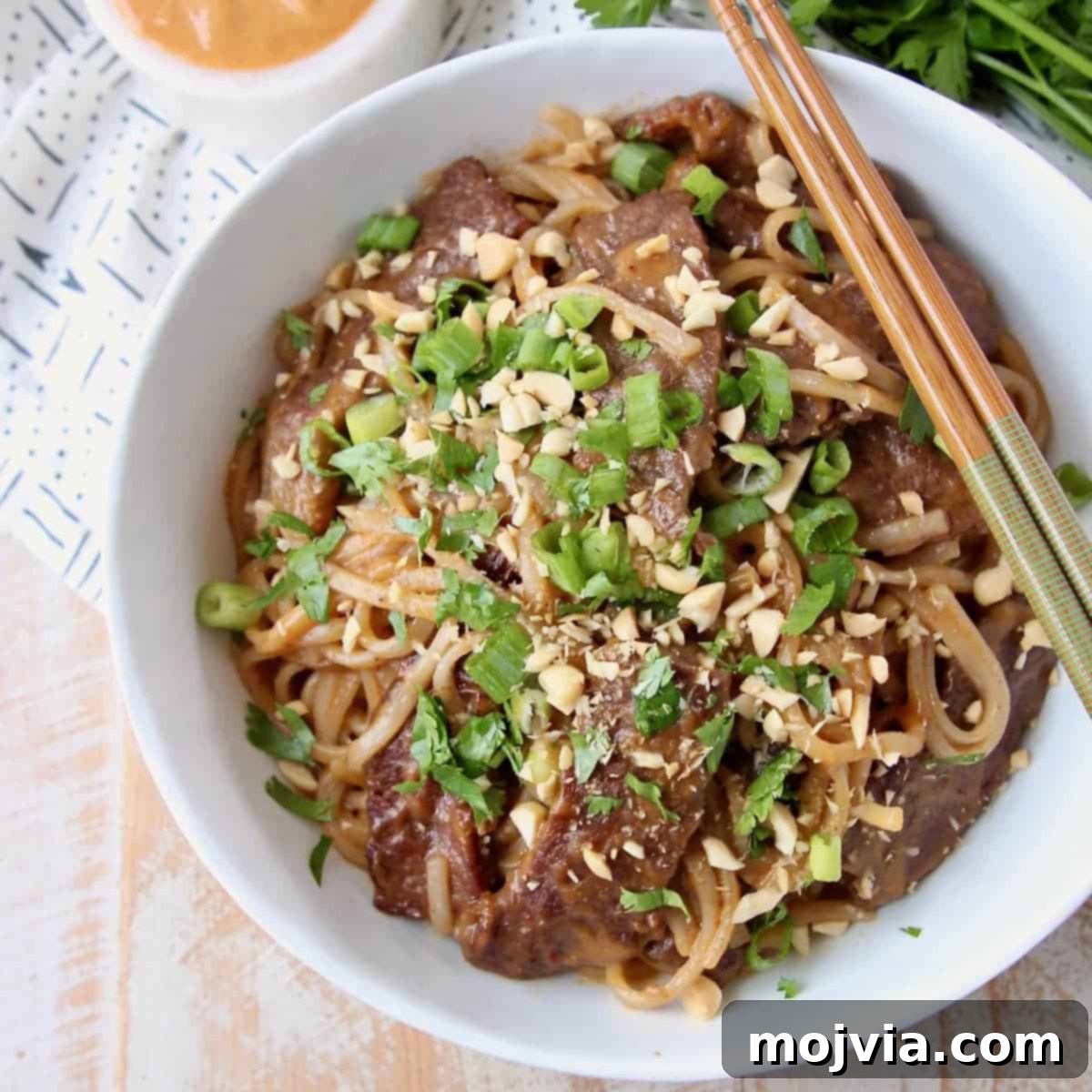
Indulge in the vibrant flavors of Thailand with this incredibly easy and utterly delicious Thai Beef Noodle Bowl. Featuring perfectly tender beef, bathed in the rich, savory, and subtly sweet embrace of the BEST homemade Thai Peanut Sauce, and tossed with silky rice noodles, this recipe is designed to become your new go-to weeknight obsession. What's even better? It's naturally gluten-free and comes together with just 15 minutes of active cooking once the beef has had its brief, magical marinade. Prepare for a flavor explosion that will transport your taste buds straight to Southeast Asia!
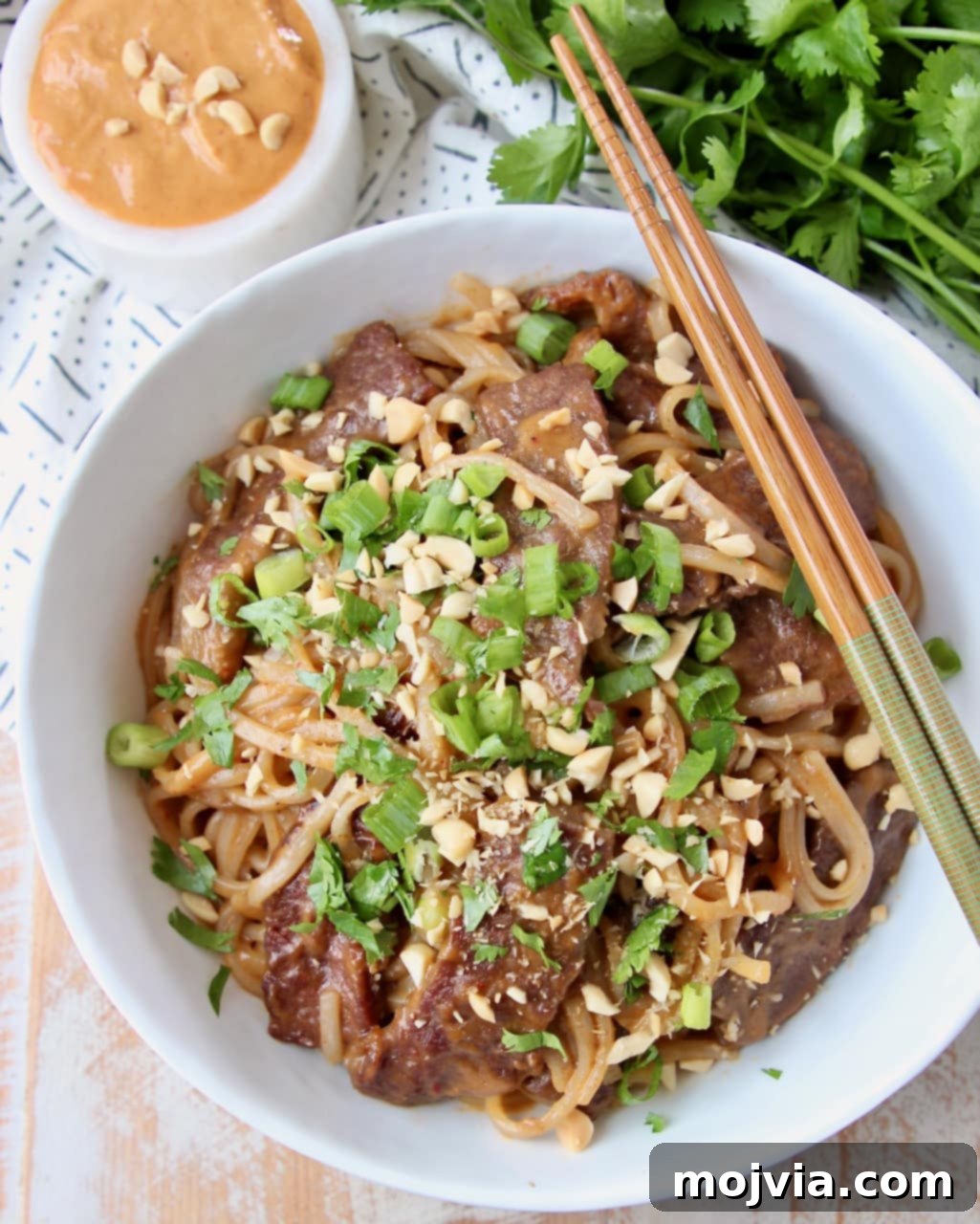
Unlock Unbelievably Tender Beef with This Thai Noodle Bowl Recipe
Have you ever wondered how your favorite Asian restaurants achieve that melt-in-your-mouth tenderness in their stir-fries? The secret isn't complicated; it's a simple yet incredibly effective tenderizing technique I've perfected over years of cooking. This same method, which I also shared in my popular Kung Pao Beef Noodle Bowl, is the cornerstone of making these Thai Beef Noodle Bowls truly exceptional. Forget about tough, chewy beef; with just a quick 30-minute soak in our special marinade, you're guaranteed succulent, flavorful beef in every single bite.
Once the beef is infused with tenderness, it's swiftly stir-fried to a perfect sear, locking in all its natural juices. The final touch? Tossing it generously with our celebrated Thai Peanut Sauce. This isn't just any sauce; it's a versatile, fan-favorite recipe known for its incredible balance of savory, sweet, tangy, and subtly spicy notes. It's so good, it's been featured in other beloved recipes like our Sweet Potato Buddha Bowls and zesty Chicken Naan Pizzas. The best part? This luscious sauce takes merely 5 minutes to prepare, making gourmet-quality flavors incredibly accessible for your busy weeknights.
The Magic Behind Perfectly Tender Beef Every Time: Understanding Velveting
The secret to achieving irresistibly tender beef in this Thai Noodle Bowl, and indeed in any stir-fry, is a culinary technique known as "velveting." This involves marinating thin slices of beef in a specific mixture that gently breaks down the muscle fibers, resulting in an incredibly silky, tender texture when cooked at high heat. Our marinade combines a few simple ingredients to achieve this remarkable transformation:
- Mirin (Japanese Sweet Rice Wine): This essential ingredient contributes a delicate sweetness and a subtle tang to the beef. More importantly, its alcohol content helps to tenderize the meat by penetrating and softening the muscle tissue. You can readily find mirin in the Asian or international section of most major grocery stores.
- Soy Sauce (or Tamari for a Gluten-Free Option): Beyond adding a foundational savory umami flavor, soy sauce seasons the beef from the inside out. For those with gluten sensitivities or dietary preferences, using Tamari ensures the dish remains completely gluten-free without sacrificing any of that classic savory depth.
- Cornstarch: A true workhorse in the velveting process, cornstarch creates a thin, protective coating around each piece of beef. This barrier serves two crucial functions: it helps to lock in moisture, preventing the beef from drying out during the high-heat stir-frying, and it contributes to the desired silky, smooth texture that defines velveted meat.
- Baking Soda: While it might seem like an unconventional ingredient for meat, baking soda is a remarkably effective tenderizer. It works by raising the pH level on the surface of the meat, which helps to loosen and unravel the protein strands. This chemical reaction results in significantly more tender beef. Rest assured, when used in the correct proportion and rinsed (if necessary, though not typically required in this recipe), there will be no discernible baking soda taste in your finished dish.
This simple marinating process, requiring just 30-60 minutes in the refrigerator, makes a monumental difference. It transforms what could be an ordinary cut of flank steak into succulent, juicy bites that truly rival the quality of your favorite Thai restaurant.
Crafting the Ultimate Thai Peanut Sauce: A Versatile Flavor Bomb You Can't Live Without
Our homemade Thai Peanut Sauce is undoubtedly the star of this noodle bowl, offering a complex and harmonious blend of sweet, savory, tangy, and subtly spicy notes. Its rich, creamy texture perfectly coats every strand of noodle and every piece of beef, expertly tying all the elements of the dish together. What makes this sauce truly indispensable is not just its exquisite taste, but its incredible ease of preparation and astonishing versatility. Ready in just 5 minutes, it’s a staple you’ll want to always have on hand.
While the full, detailed recipe for this fantastic sauce is just a click away, a truly superb Thai peanut sauce typically incorporates key ingredients that balance its dynamic profile:
- Creamy Peanut Butter: Forms the luscious, nutty base of the sauce, providing both flavor and body.
- Soy Sauce (or Tamari): Adds essential saltiness and a deep umami character.
- Fresh Lime Juice: Provides a critical bright, tangy counterpoint that cuts through the richness of the peanut butter.
- A Touch of Sweetener: Honey, maple syrup, or brown sugar often provides the necessary sweetness to balance the savory and tangy notes.
- Aromatic Boosters: Fresh ginger and garlic are crucial for adding a fragrant, pungent depth of flavor that is characteristic of Thai cuisine.
- A Hint of Heat: A dash of chili paste, Sriracha, or a pinch of red pepper flakes offers a gentle warmth that can be adjusted to your preference.
Beyond this Thai Beef Noodle Bowl, this phenomenal sauce proves its versatility time and again. It's fantastic drizzled over green salads, served as a dipping sauce for fresh spring rolls or grilled skewers, or even as a marinade for chicken, tofu, or vegetables. Its dynamic flavor profile can adapt to countless culinary creations, making it an essential component of your recipe repertoire.
Customize Your Thai Beef Noodle Bowl: Veggies & Low-Carb Options for Every Diet
One of the most appealing aspects of this Thai Beef Noodle Bowl is its remarkable adaptability. It’s incredibly easy to tailor with your favorite fresh vegetables or adjust for a lower-carbohydrate diet, making it a perfect meal solution for diverse dietary preferences and palates.
Add a Vibrant Burst of Fresh Vegetables
Incorporating a variety of fresh vegetables not only significantly boosts the nutritional value of your meal but also adds wonderful contrasting textures and vivid colors to your noodle bowl. For a hearty dish that can easily serve four people, I recommend aiming for 1-2 cups of your chosen veggies. These can be stir-fried directly with the beef, ensuring they retain a delightful tender-crisp texture.
To integrate vegetables seamlessly, start by heating 1 tablespoon of sesame oil in your large skillet or wok over medium-high heat. Add your chosen hardier vegetables first (like broccoli or carrots) and stir-fry for 2-3 minutes. Then, add softer vegetables (like bell peppers or snap peas) and continue to stir-fry for an additional 2-3 minutes, until they reach your desired tender-crisp stage. Next, add the marinated beef and continue to stir-fry for 3-4 minutes until the beef is cooked through. Finally, toss in the cooked rice noodles and the flavorful Thai Peanut Sauce, ensuring everything is thoroughly coated.
Some of my favorite vegetable additions that truly shine in this dish include:
- Broccoli Florets: Offers a delightful crunch and a robust, earthy flavor.
- Sliced Bell Peppers (Red, Yellow, or Orange): Provides natural sweetness and a beautiful spectrum of color.
- Sugar Snap Peas: Delivers a crisp texture and a fresh, sweet taste.
- Sliced Mushrooms (White, Cremini, or Shiitake): Adds a rich umami depth and a tender, meaty texture.
- Thinly Sliced Carrots: Contributes a subtle sweetness and an appealing crunch.
- Large Diced Onions: Forms an aromatic base and softens beautifully when cooked.
- Baby Bok Choy: A fantastic leafy green option that wilts quickly and adds a delicate flavor.
- Fresh Spinach or Kale: Stir these in at the very end until just wilted for an extra boost of greens.
Delicious Low-Carb Alternatives for Your Noodle Bowl
If you're aiming to reduce your carbohydrate intake, this Thai Beef Noodle Bowl is exceptionally adaptable. Instead of traditional rice noodles, consider these fantastic and flavorful alternatives:
- Zucchini Noodles (Zoodles): A light, refreshing, and incredibly easy-to-prepare option. Simply spiralize fresh zucchini and either briefly sauté them for a minute or two, or add them raw at the very end of cooking to maintain their crisp texture.
- Cauliflower Rice: For a heartier, grain-free base, serve the tender beef and rich peanut sauce over fluffy cauliflower rice. Its neutral flavor and texture make it an excellent canvas for absorbing the vibrant sauce.
- Lettuce Wraps: Transform your noodle bowl into a fun, interactive, and super low-carb meal by serving the saucy beef mixture in crisp lettuce cups, such as butter lettuce, romaine, or iceberg.
- Shirataki Noodles: These Japanese konjac-based noodles are virtually carb-free and offer a similar slippery texture to rice noodles, making them an excellent and convincing substitute for traditional pasta.
Amplify the Heat: Customizing Your Spice Level
For those who crave a fiery kick, adjusting the spice level of this dish is incredibly simple. You can finely slice and incorporate fresh Thai bird's eye chilies, sprinkle in extra red pepper flakes, or drizzle a generous amount of Sriracha sauce directly into the skillet with the beef and noodles. Alternatively, serve these spicy additions on the side, allowing each diner to customize their own bowl to their preferred level of heat. A dash of chili oil can also introduce a delightful, aromatic warmth.
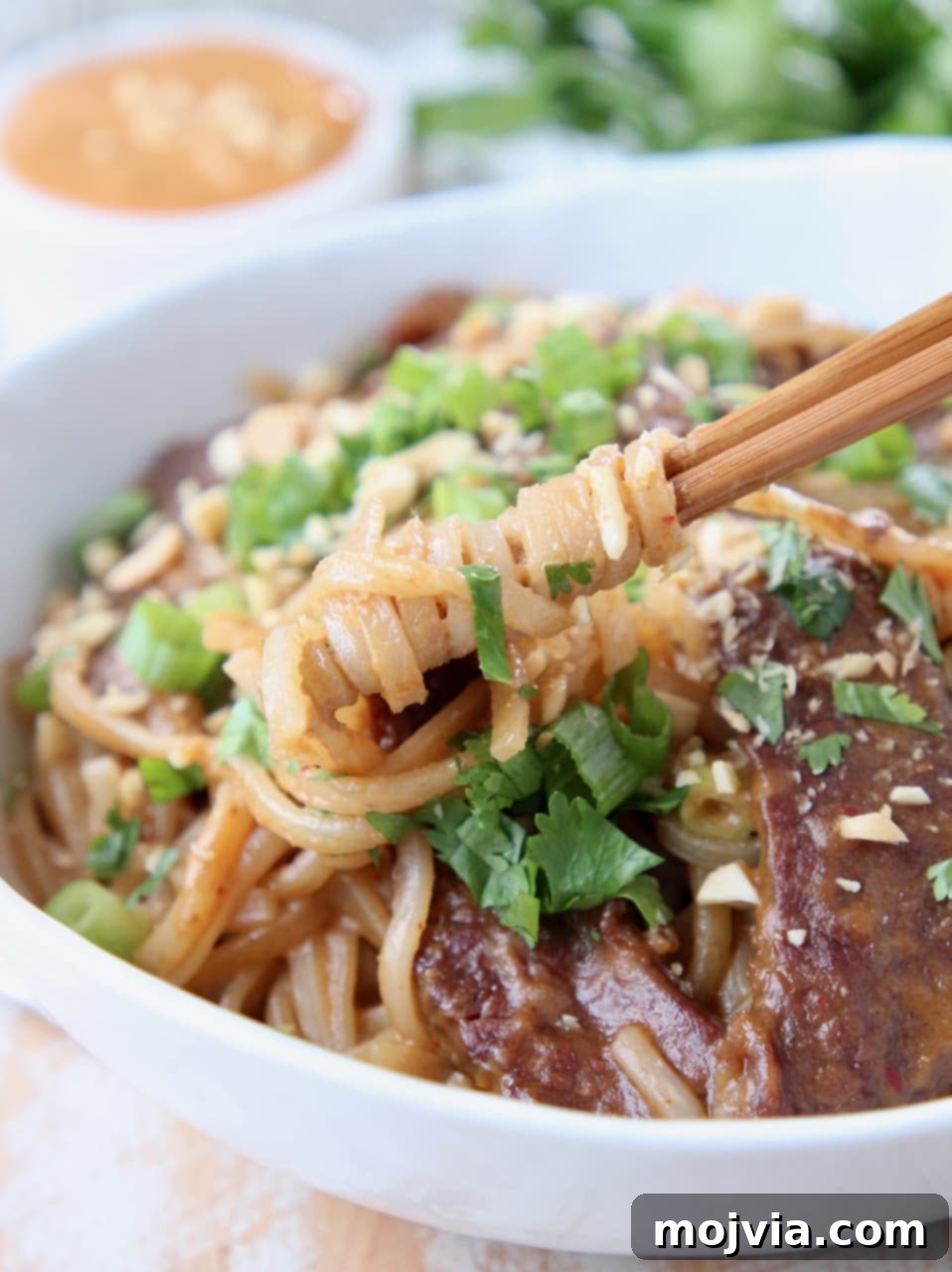
Choosing the Ideal Cut of Beef for Stir-Frying Success
The foundation of any successful stir-fry, including this Thai Beef Noodle Bowl, lies in selecting the appropriate cut of meat and preparing it correctly. For this recipe, we aim for thin slices that cook rapidly and efficiently absorb the tenderizing marinade, ensuring maximum tenderness and flavor in every bite. While flank steak is our primary recommendation, several other excellent choices can yield equally delicious results:
- Flank Steak: This is our top choice for good reason. Flank steak is lean, boasts a robust beefy flavor, and is relatively economical. Its muscle fibers run in a distinct direction, making it absolutely crucial to slice it thinly *against the grain*. This technique shortens the muscle fibers, guaranteeing a tender result. Flank steak's open grain also allows it to readily absorb marinades, infusing it with flavor.
- Skirt Steak: Similar in characteristics to flank steak, skirt steak is also lean, flavorful, and cooks quickly. It tends to have a slightly coarser grain, but like flank steak, it becomes incredibly tender when thinly sliced against the grain and allowed to marinate. It's an excellent alternative for stir-fries.
- Sirloin Steak: A more widely available and often economical option, top sirloin can also be used effectively in this recipe. While slightly less intensely flavored than flank or skirt, it still benefits immensely from our tenderizing marinade. Just like the other cuts, ensure it is thinly sliced against the grain to prevent any chewiness.
Regardless of the beef cut you ultimately choose, always prioritize slicing it against the grain. This simple but critical step physically shortens the muscle fibers, making each bite significantly easier to chew and much more tender. Investing in a sharp knife will make achieving uniform, thin slices a breeze, further contributing to the overall success of your Thai Beef Noodle Bowl.
Step-by-Step Guide: Crafting Your Delicious Thai Beef Noodle Bowl
Creating this flavorful Thai Beef Noodle Bowl is a straightforward and rewarding process. By following these clear, step-by-step instructions, you'll achieve a perfect meal every time, even on your busiest weeknights.
Phase 1: Preparing the Beef Tenderizer Marinade
- Gather Ingredients: Collect your mirin, gluten-free soy sauce (or Tamari), cornstarch, and baking soda. Have your thinly sliced flank steak ready.
- Combine Marinade: In a large, sealable Ziploc bag or a spacious shallow bowl, combine the mirin, soy sauce, cornstarch, and baking soda. Whisk thoroughly or shake the bag until all marinade ingredients are smoothly integrated, ensuring there are no lumps from the cornstarch.
- Coat the Beef: Add the thinly sliced flank steak strips to the marinade. Ensure that every piece of beef is completely coated by tossing it gently within the bag or bowl. This even coating is key to consistent tenderness.
- Marinate: Seal the Ziploc bag (expelling excess air) or cover the bowl tightly. Place the beef in the refrigerator to marinate for a minimum of 30 minutes. For optimal tenderness, you can extend the marinating time up to 60 minutes. Avoid marinating for much longer than an hour, as the baking soda can begin to break down the meat excessively.
Phase 2: Cooking the Noodles and Stir-Frying the Beef
- Boil Water for Noodles: While your beef is marinating, bring a large pot of salted water to a rolling boil on your stove.
- Heat Skillet/Wok: Place a large skillet or wok on the stove over medium-high heat. Add 1 tablespoon of sesame oil and let it heat until shimmering, just before it begins to smoke.
- Cook Rice Noodles: Once the water is boiling, add the rice noodles. Cook according to the package directions, which typically takes only 3-4 minutes for most rice noodle varieties. The noodles should be tender but still have a slight al dente chew. Immediately drain the cooked noodles thoroughly and set them aside. You can toss them with a tiny amount of sesame oil to prevent them from sticking together.
- Stir-Fry Beef: Once the beef has completed its marinating time, carefully remove it from the marinade (no need to pat dry) and add it to the hot skillet or wok. Spread the beef in a single layer if possible. To ensure proper stir-frying and avoid overcrowding, you may need to cook the beef in two batches. Stir-fry for 3-4 minutes, or until the beef is beautifully browned on the edges and cooked through.
- Combine Ingredients: Add the drained rice noodles and the prepared Thai Peanut Sauce directly into the skillet with the cooked beef.
- Toss and Serve: Using tongs or a large spatula, quickly toss all the ingredients together until the beef and noodles are thoroughly coated in the rich, aromatic peanut sauce. This step should only take about 1 minute.
- Garnish and Enjoy: Serve your delicious Thai Beef Noodle Bowl immediately. Garnish generously with fresh chopped green onions, a sprinkle of chopped cilantro, and crunchy chopped peanuts for essential texture and an authentic burst of flavor.
Expert Tips for a Perfectly Flavorful Thai Beef Noodle Bowl
- Strategic Prep Ahead: Maximize your efficiency by preparing components in advance. Slice the beef and make the Thai Peanut Sauce a day or even two days ahead. Store them separately in airtight containers in the refrigerator. This way, when dinner time rolls around, all you have to do is marinate the beef for a short while, cook the noodles, and stir-fry.
- Avoid Overcrowding Your Pan: This is a golden rule for stir-frying. Ensure your skillet or wok is screaming hot before adding the beef. If you add too much meat at once, the temperature of the pan will drop, causing the beef to steam rather than sear. This results in gray, tough meat. Cook the beef in batches if necessary to ensure it browns beautifully and retains its tenderness.
- Customize Your Spice Level: The base Thai Peanut Sauce offers a balanced, mild flavor. If you enjoy a kick, it’s incredibly easy to adjust. Add Sriracha, a pinch of red pepper flakes, or even some finely sliced fresh bird’s eye chilies directly to the sauce as you make it, or offer them on the side for individual customization. Chili garlic sauce is another excellent addition.
- Don't Skip the Garnishes: Fresh herbs like cilantro and green onions, along with crunchy chopped peanuts, are not just for show. They add critical layers of freshness, aroma, texture, and authentic Thai flavor that truly elevate the entire dish. They brighten the rich sauce and provide a welcome contrast.
- Storing and Reheating Leftovers: Any leftover Thai Beef Noodle Bowl can be stored in an airtight container in the refrigerator for up to 3 days. When reheating, do so gently on the stove over low heat or in the microwave. If the noodles appear a bit dry, add a splash of water, chicken broth, or a touch more peanut sauce to loosen them up and restore moisture.
Explore More Delightful Noodle Dishes!
If you've enjoyed the incredible ease and robust flavors of this Thai Beef Noodle Bowl, we're confident you'll love exploring these other fantastic noodle-based recipes. They're perfect for expanding your weeknight meal repertoire and continuing your culinary journey through Asian-inspired cuisine:
- Spicy Vegetable Pad Thai: Dive into this iconic Thai street food dish, a harmonious blend of sweet, sour, salty, and spicy notes, packed with fresh vegetables and perfectly cooked noodles.
- The BEST Drunken Noodles with Chicken: Also known as Pad Kee Mao, these broad rice noodles are famous for their bold, spicy, and savory profile, often featuring tender chicken and fresh basil.
- Thai Peanut Noodles with Vegetables: A delightful vegetarian-friendly option that truly highlights the irresistible creaminess and dynamic flavor of our signature peanut sauce, tossed with a medley of fresh veggies.
- Slow Cooker Thai Peanut Chicken Noodles: For ultimate convenience, let your slow cooker do all the heavy lifting, yielding incredibly tender chicken and flavorful peanut noodles with minimal effort.
- Beef & Broccoli Stir Fry Noodle Bowl: A beloved takeout classic made simple and delicious at home, featuring tender beef, crisp broccoli, and savory noodles in a rich sauce.
Pin Recipe
Thai Beef Noodle Bowl
Juicy, tender beef is tossed with THE BEST Thai Peanut Sauce and rice noodles in this deliciously easy, gluten free Thai Beef Noodle Bowl recipe!
Servings: 2 people
Prep Time: 15 mins
Marinating Time: 30 mins
Total Time: 45 mins
Author: Whitney Bond
Course: Main Course
Cuisine: Thai
Ingredients
Beef Tenderizer Marinade
- 2 tablespoons mirin
- 4 tablespoons gluten free soy sauce (or Tamari)
- 2 teaspoons cornstarch
- 1 teaspoon baking soda
- 1 pound flank steak, sliced against the grain into 1-2 inch strips
Noodle Bowl
- 1 tablespoon sesame oil
- 7 ounces rice noodles
- ½ cup Thai peanut sauce (click link for recipe)
- 2 tablespoons green onions, diced
- 2 tablespoons fresh cilantro, chopped
- 1 tablespoon peanuts, chopped
Instructions
Beef Tenderizer Marinade
- Add the mirin, soy sauce, cornstarch and baking soda to a large ziplock bag.
- Add the sliced flank steak and toss to make sure it’s well coated.
- Place in the refrigerator for 30-60 minutes.
Thai Beef Noodle Bowl
- Once the steak has tenderized for 30-60 minutes in the refrigerator, remove it from the fridge.
- Bring a large pot of water to boil on the stove.
- Add the sesame oil to a large skillet or wok on the stove over medium high heat.
- Remove the steak from the marinade and add to the skillet. Cook for 3-4 minutes.
- While the steak is cooking, place the rice noodles in the boiling water and boil for 3 minutes. (Refer to package directions and cook longer if instructed.)
- Drain the noodles after 3 minutes and add to the skillet with the beef. Add the peanut sauce.
- Toss everything together, then serve immediately.
- Top with diced green onions, chopped cilantro and peanuts.
Notes
- Cut of steak: If flank steak cannot be found, skirt steak or sirloin can be used instead. Ensure to slice against the grain for tenderness.
- Low carb options: Instead of rice noodles, this dish can be served with zucchini noodles, cauliflower rice, or in lettuce wraps for a delicious low carb meal.
- Veggie options: Vegetables such as broccoli, sugar snap peas, mushrooms, or bell peppers can be stir-fried into this dish. To add the veggies, heat the sesame oil in a large skillet, add the vegetables and stir-fry for 4-5 minutes, then add the steak and stir-fry for an additional 3-4 minutes. Finally, add the noodles and peanut sauce, then toss to coat.
Nutrition Facts
Serving Size: 4 servings (approximate)
- Calories: 975 kcal (49% DV)
- Carbohydrates: 109g (36% DV)
- Protein: 61g (122% DV)
- Fat: 30g (46% DV)
- Saturated Fat: 6g (30% DV)
- Cholesterol: 136mg (45% DV)
- Sodium: 3909mg (163% DV)
- Potassium: 917mg (26% DV)
- Fiber: 3g (12% DV)
- Sugar: 15g (17% DV)
- Vitamin A: 87mg (2% DV)
- Vitamin C: 1mg (1% DV)
- Calcium: 78mg (8% DV)
- Iron: 5mg (28% DV)
*Daily Values (DV) are based on a 2,000 calorie diet. Individual nutritional needs may vary.
Did you create this delicious recipe?
We'd love to see your culinary masterpiece! Tag @WhitneyBond on Instagram and share it using the hashtag #WBRecipes!