
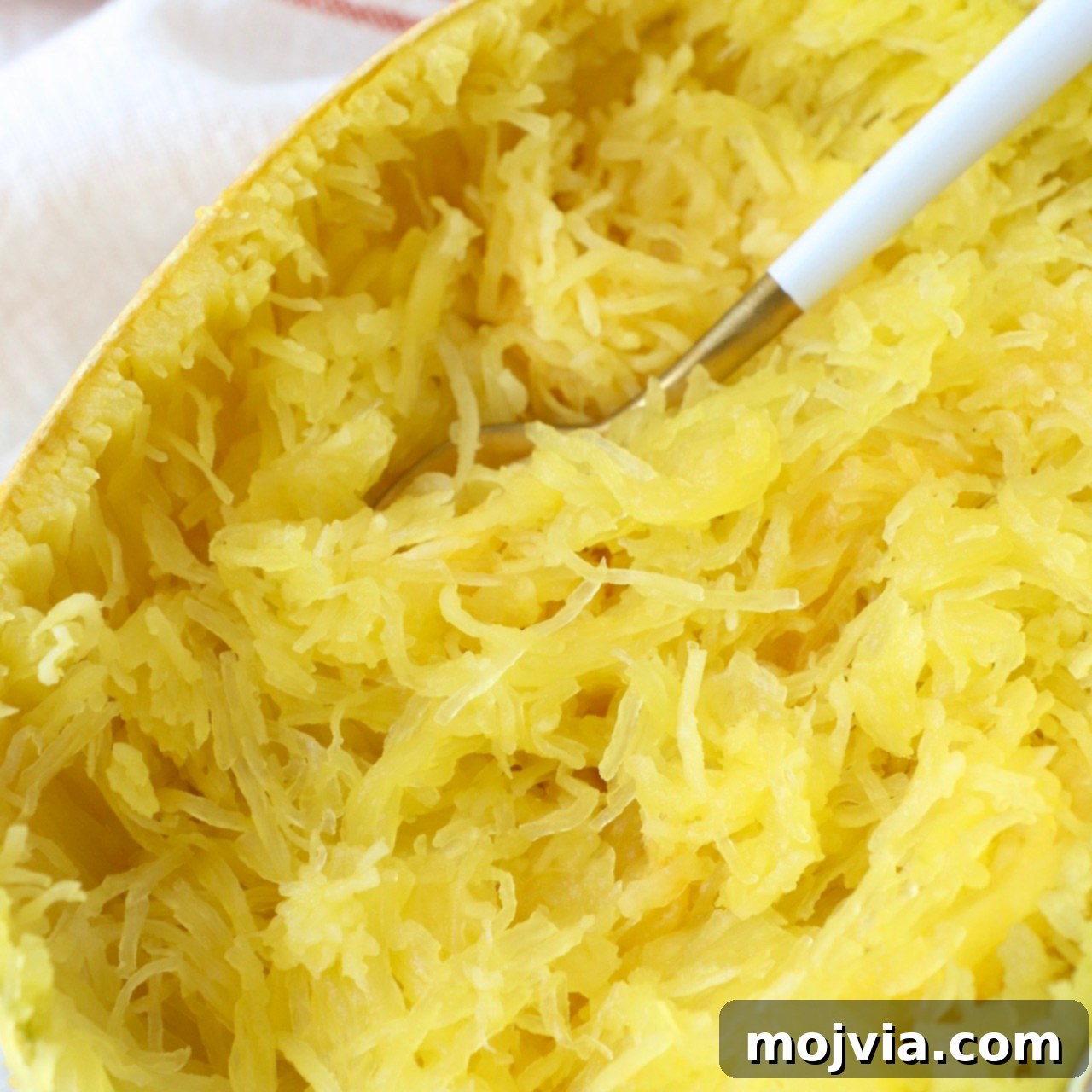
Welcome to the definitive guide on how to cook spaghetti squash – your go-to resource for preparing this versatile vegetable perfectly every time. Whether you prefer the robust flavors developed in the oven, the lightning speed of the microwave, or the subtle crispness from an air fryer, this comprehensive guide covers all the essential techniques. We’ve tested and perfected these methods to ensure you achieve tender, noodle-like strands, making spaghetti squash an exceptional and healthy alternative to traditional pasta.
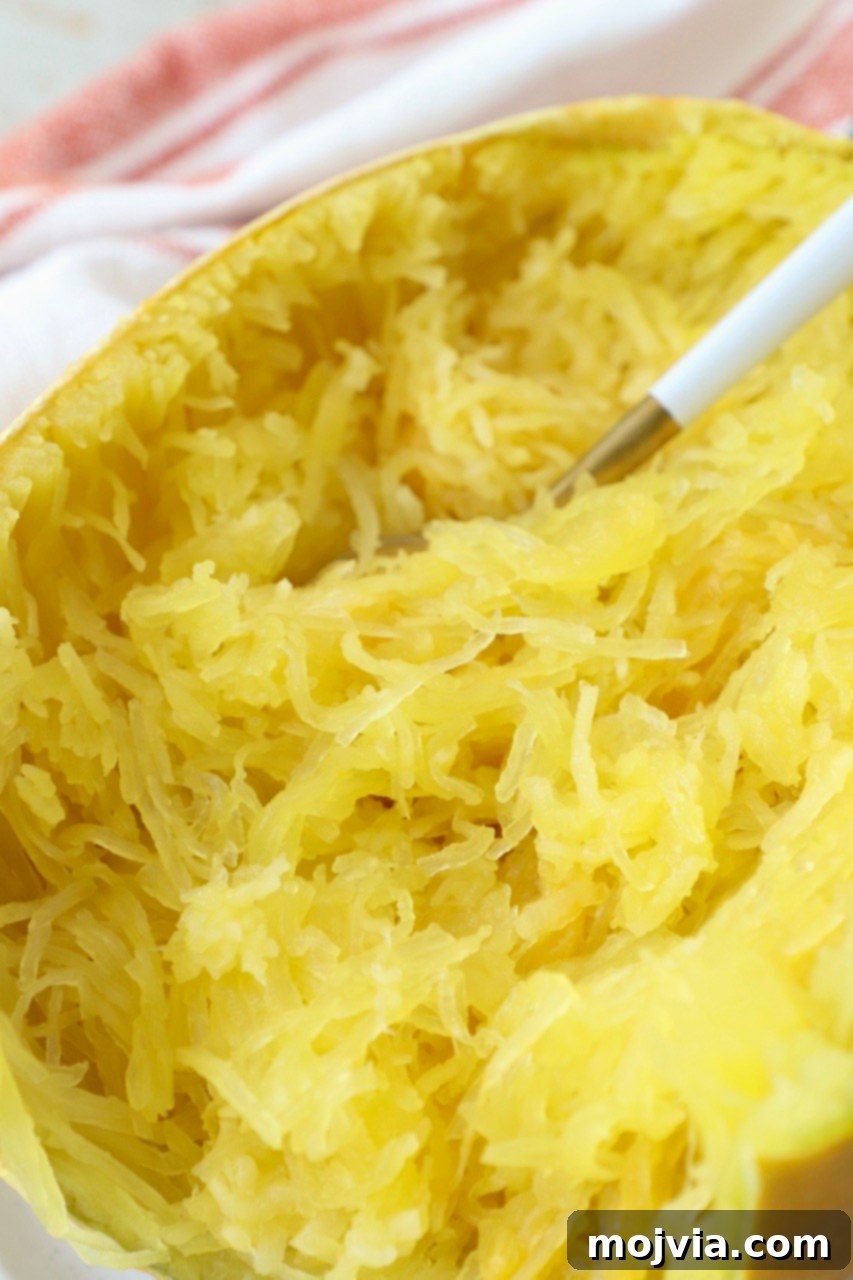
Table of Contents
- The Versatility of Spaghetti Squash
- Selecting and Preparing Your Squash
- Mastering the Cut: Tips for Slicing Spaghetti Squash
- How to Cook Spaghetti Squash in the Oven: For Maximum Flavor
- How to Microwave Spaghetti Squash: For Ultimate Speed
- How to Cook Spaghetti Squash in an Air Fryer: For a Unique Texture
- Choosing Your Method: Oven, Microwave, or Air Fryer?
- Serving Suggestions and Recipe Inspirations
- Expert Tips for Perfect Spaghetti Squash
- Storage and Freezing Guidelines
- Essential Tools for Spaghetti Squash Preparation
- More Kitchen Cooking Tutorials
The Versatility of Spaghetti Squash
Spaghetti squash is a truly remarkable vegetable. Its golden flesh naturally shreds into delicate, pasta-like strands when cooked, offering a fantastic low-carb, gluten-free, and nutrient-rich alternative to traditional wheat pasta. This makes it an ideal choice for anyone looking to lighten up their meals, manage dietary restrictions, or simply incorporate more wholesome vegetables into their diet. Beyond being a pasta substitute, spaghetti squash is incredibly versatile, serving as a delicious side dish, a base for vibrant salads, or a hearty component in casseroles and baked dishes.
In this detailed guide, you’ll learn everything from selecting the perfect squash and safely cutting it, to preparing it using three distinct cooking methods. We’ll explore how to achieve a beautifully roasted squash with caramelized edges in the oven, whip up a quick and convenient version in minutes with the microwave, or get a slightly crispy texture using an air fryer. Once cooked to tender perfection, simply scrape the flesh to create those signature “noodles,” then dress them with a knob of butter and fresh herbs, a rich tomato sauce, your favorite pesto, or any pasta sauce you love, and enjoy!
Selecting and Preparing Your Squash
Proper preparation is key to a delicious spaghetti squash. While you can cook a spaghetti squash whole, splitting it in half first allows for deeper flavor development, especially when roasting, as the cut edges can caramelize beautifully. This section covers how to select the best squash and get it ready for cooking.
- Selection: Choose a spaghetti squash that is firm to the touch, feels heavy for its size, and has smooth, unblemished skin with an intact stem. Avoid any squash with soft spots or mold.
- Washing: Always wash the exterior of the squash thoroughly under cool running water to remove any dirt or debris.
- Whole Squash Preparation (for microwave): If you plan to cook the squash whole (a common approach for microwave cooking), it’s crucial to vent it. Use a sharp knife or a fork to poke about 10-12 holes all over the squash’s exterior. This allows steam to escape safely during cooking, preventing pressure buildup and potential bursting in the microwave.
- Halved Squash Preparation: For oven or air fryer methods, you’ll typically cut the squash in half lengthwise (refer to our detailed cutting tips below). Once halved, use a spoon to scoop out and discard the seeds and stringy pulp from the center.
- Seasoning: After removing the seeds, drizzle the cut flesh generously with olive oil. Rub the oil evenly over the surface, then season with your desired spices.
- Classic Enhancements: Simple salt and freshly ground black pepper are always a winning combination, complementing a wide array of flavors.
- Savory Variations: For a more aromatic profile, consider adding onion powder, garlic powder, or dried herbs like oregano, thyme, parsley, or rosemary. These work wonderfully with savory sauces and main dishes.
- Autumnal Sweetness: To evoke the flavors of fall, sprinkle a pinch of cinnamon, cloves, nutmeg, or allspice. This sweet seasoning pairs beautifully with butter and a touch of brown sugar.
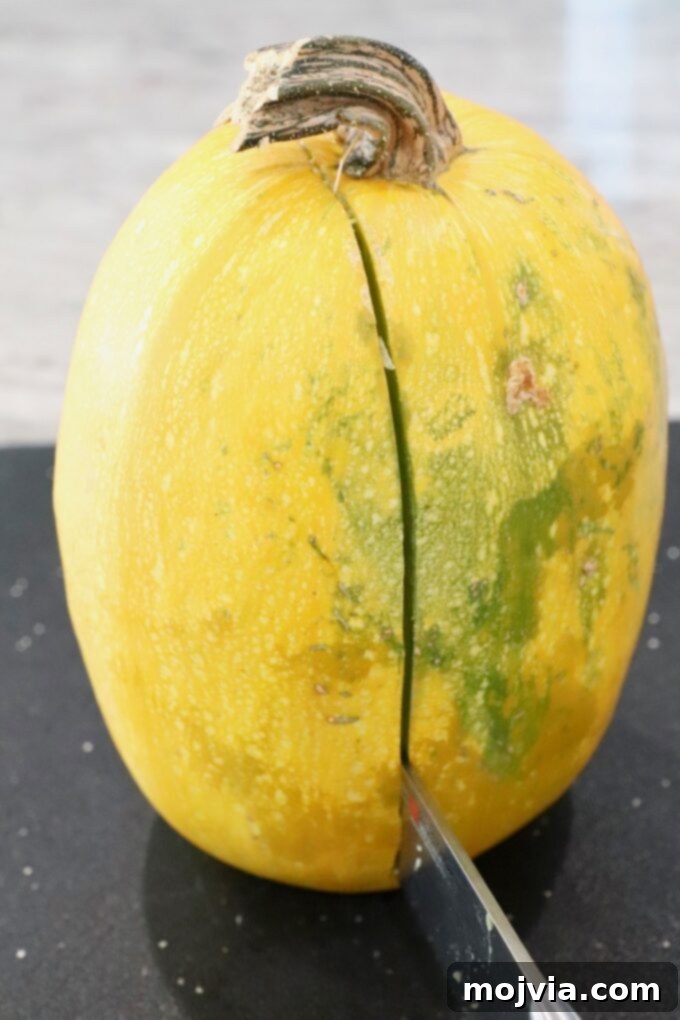
Mastering the Cut: Tips for Slicing Spaghetti Squash
Perhaps the most challenging aspect of preparing spaghetti squash is safely and effectively cutting it in half. Its hard exterior can be daunting, but with a few smart techniques, you can conquer it with ease and confidence.
- Stabilize Your Squash: Begin by placing the spaghetti squash on its side on a sturdy, non-slip cutting surface. A damp towel underneath your cutting board can prevent it from sliding.
- Create a Flat Base: Carefully use a sharp, heavy-duty chef’s knife to slice off a small portion from the very bottom of the squash. This creates a flat, stable end, allowing you to stand the squash upright on the cutting board without it rocking. This step significantly reduces the risk of injury.
- Pro Tip: For an effortless cut, especially if you struggle with dense vegetables, an electric knife can make slicing through spaghetti squash remarkably easy.
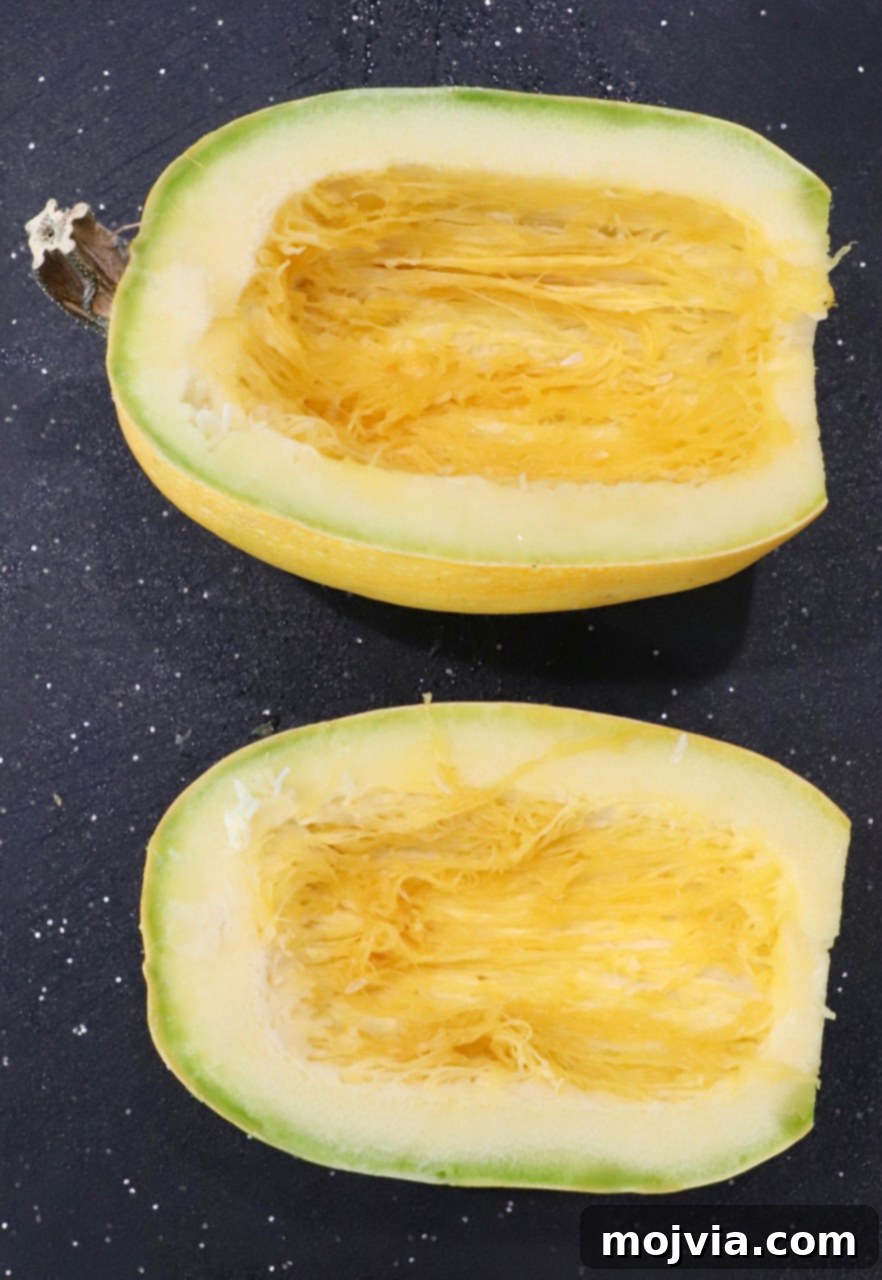
- Slice Lengthwise: Once the squash is stable, stand it upright on its newly flattened base. Using your sharp chef’s knife, carefully but firmly cut down through the length of the middle of the squash. Apply even pressure, guiding the knife slowly and steadily until it’s completely separated into two halves.
- Soften the Skin (if needed): If you find the squash’s skin excessively hard and difficult to penetrate even with a sharp knife, a quick pre-softening step can help. Microwave the whole squash for 3 to 5 minutes. This will soften the exterior slightly, making it much easier and safer to cut in half using the steps described above.
- Consider Your Noodle Length: For longer, more pasta-like strands, slice the squash horizontally (across its width) rather than lengthwise. This allows the internal “noodles” to be scraped out in longer sections. For shorter, more uniform pieces, cutting lengthwise is ideal.
How to Cook Spaghetti Squash in the Oven: For Maximum Flavor
Roasting spaghetti squash in the oven is widely considered the superior method for achieving the best flavor. The dry heat of the oven not only tenderizes the squash but also promotes a delightful caramelization on the cut surfaces, enhancing its natural sweetness and creating a richer, more complex taste. This method is perfect when you have a bit more time and desire deeply flavored results.
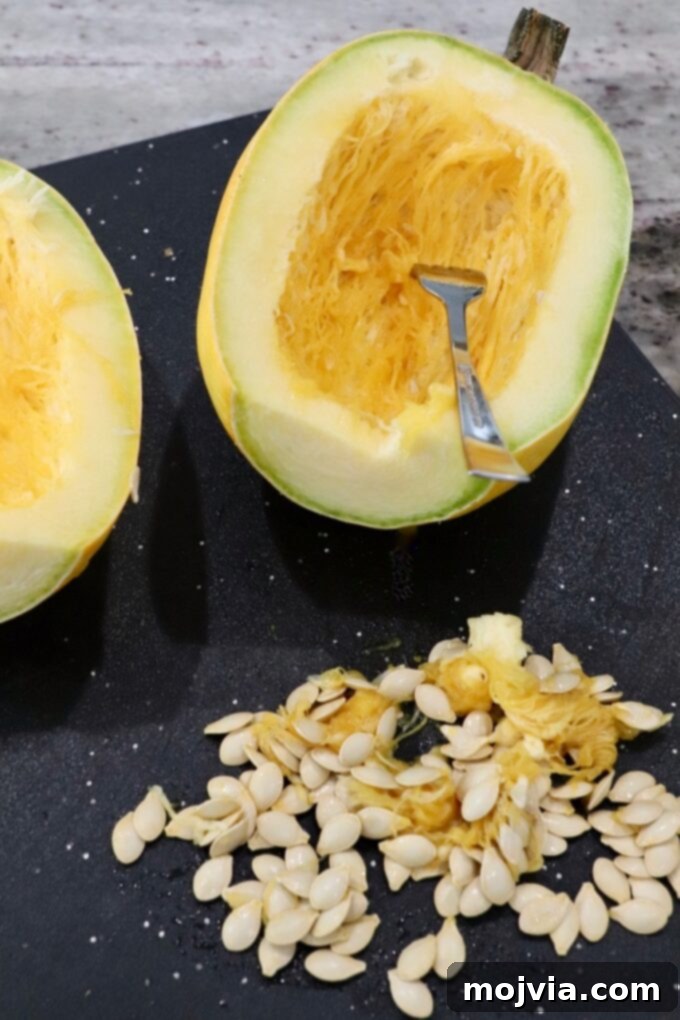
Step 1: Prepare the Squash. After safely cutting the spaghetti squash in half lengthwise, use a sturdy spoon or an ice cream scoop to thoroughly scrape out and remove all the seeds and stringy pulp from both halves. Discard the seeds and pulp.
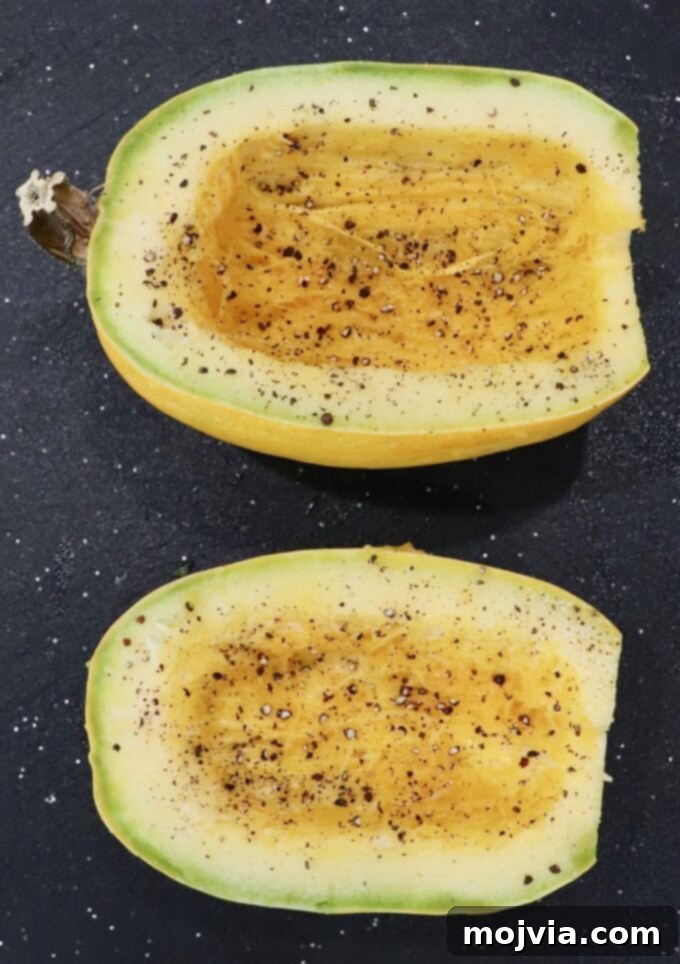
Step 2: Season the Flesh. Drizzle the cut surface of each spaghetti squash half with about 1 tablespoon of olive oil. Using your hands or a pastry brush, rub the oil evenly over the entire interior flesh. Season generously with ½ teaspoon of salt and ½ teaspoon of freshly ground black pepper, or any preferred seasonings from the “Preparing Squash” section.
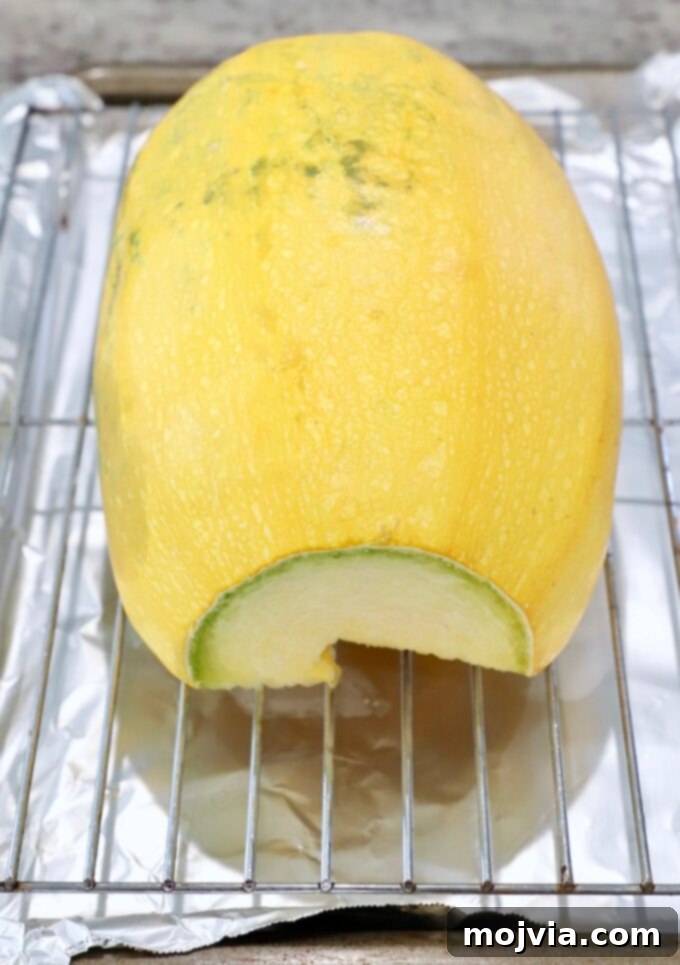
Step 3: Roast to Perfection. Preheat your oven to 400°F (200°C). Place the seasoned squash halves, cut side down, onto a wire rack. Position this wire rack over a foil-lined rimmed baking sheet. The wire rack is crucial here; it allows excess moisture to drip away from the squash onto the baking sheet below, preventing the squash from steaming in its own liquid and ensuring a firmer, more desirable texture. Roast for approximately 30-40 minutes, depending on the size of your squash.
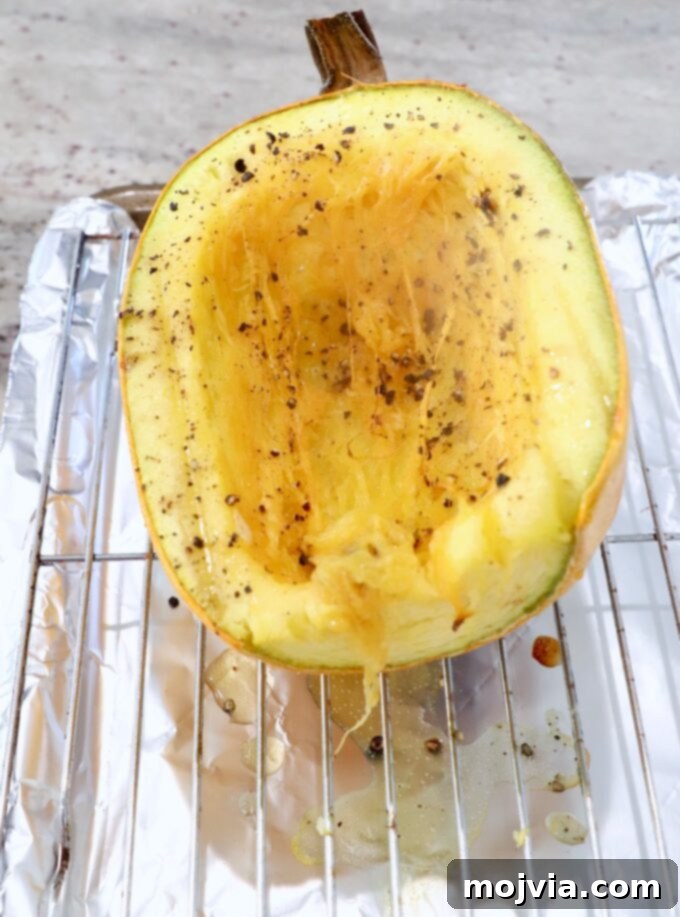
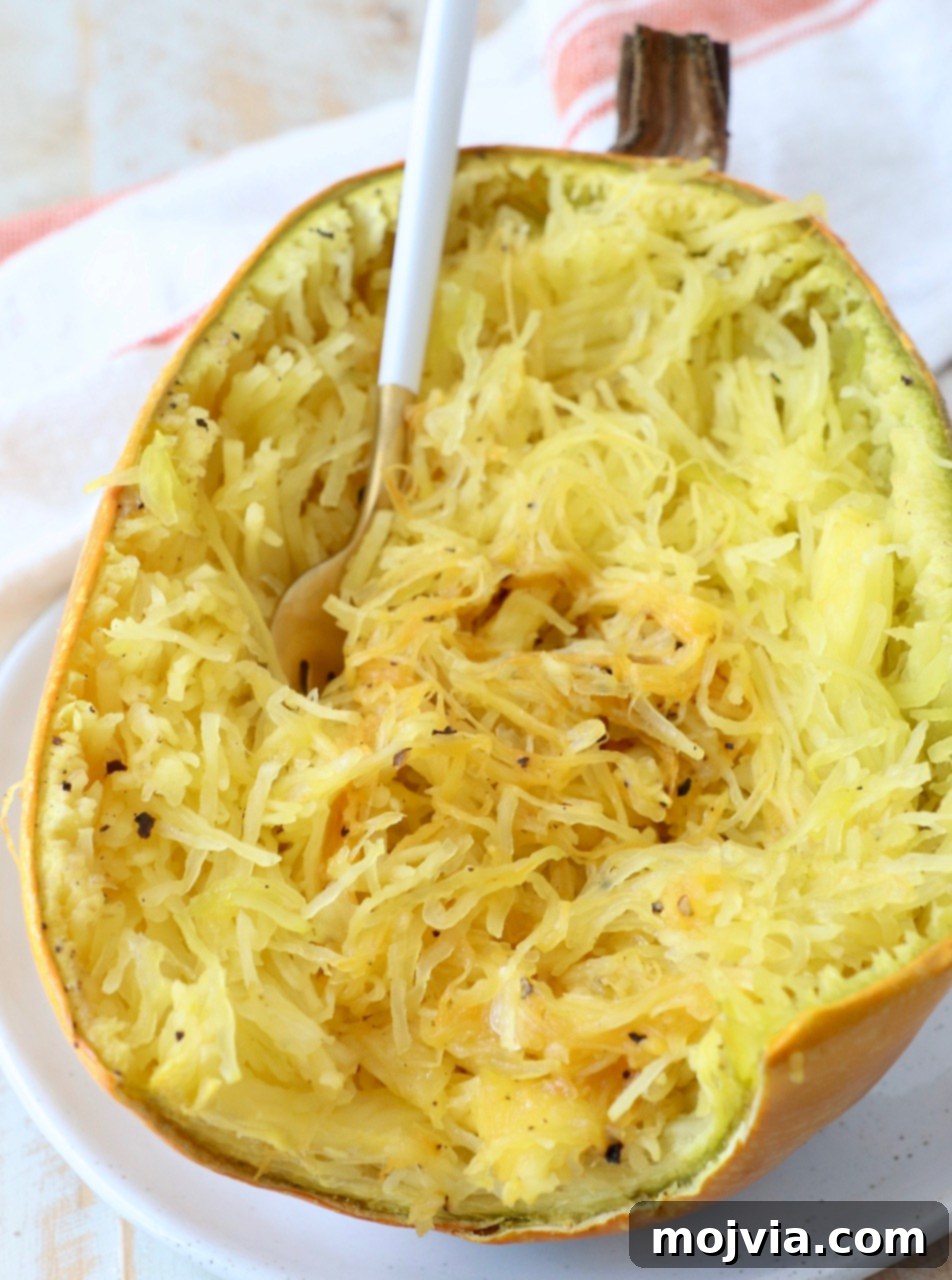
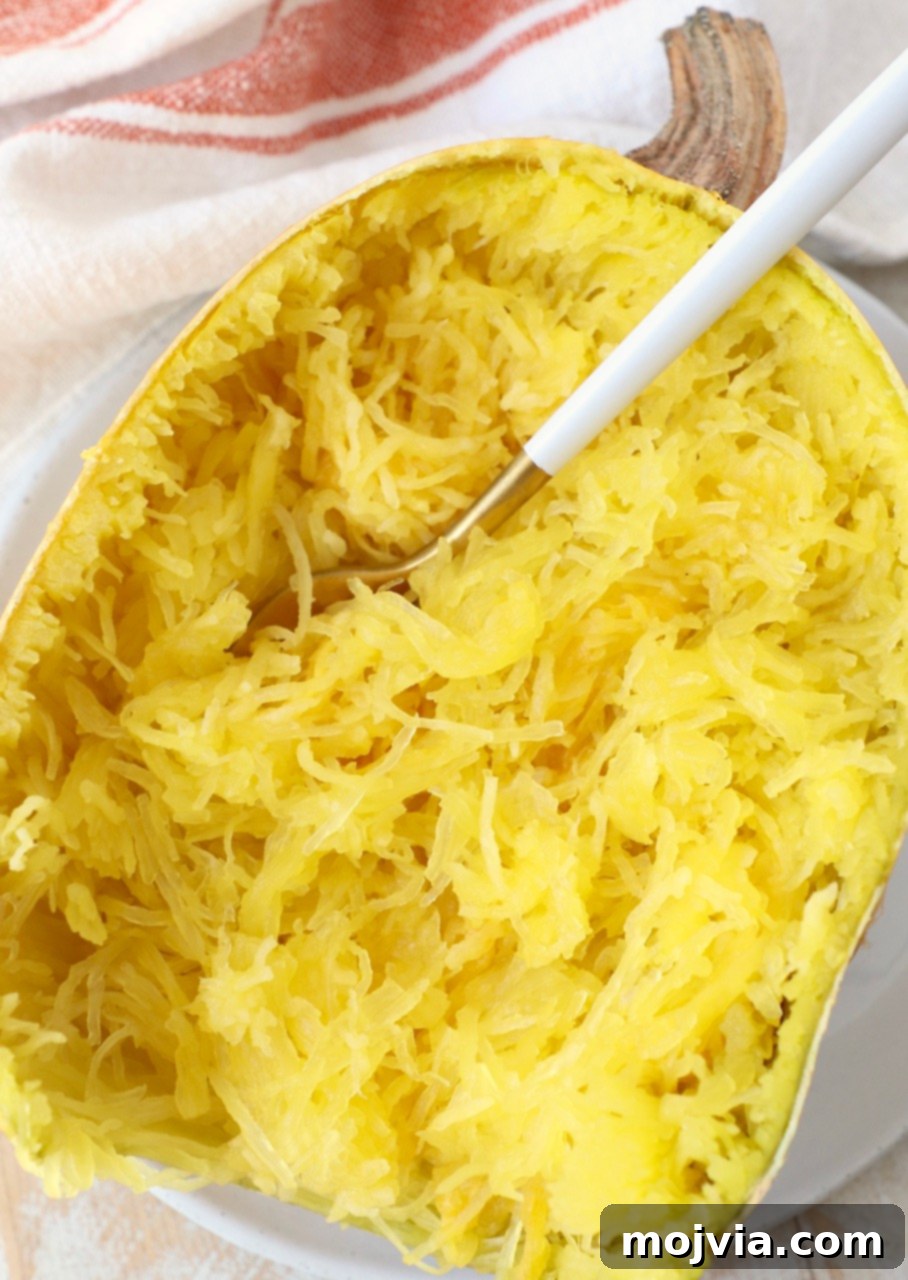
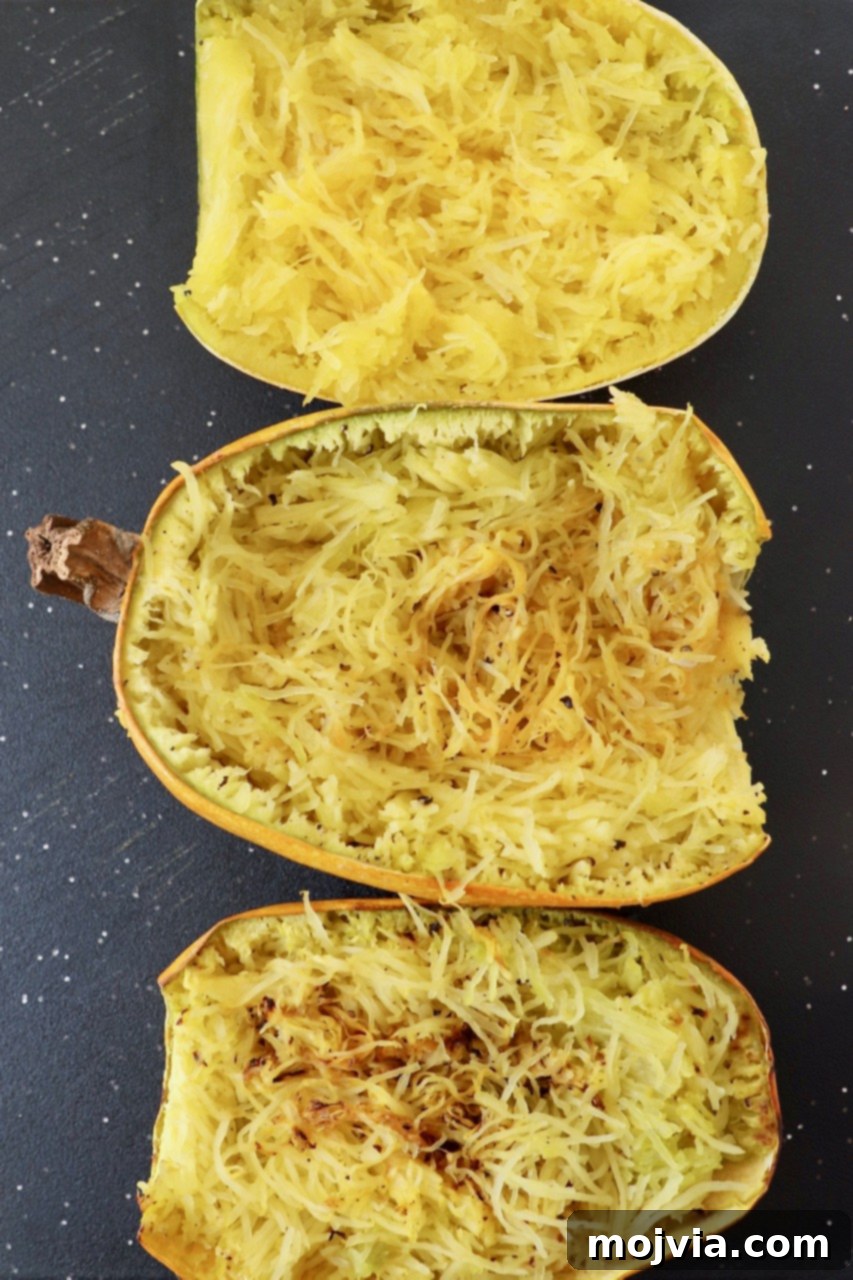
Step 4: Check for Doneness. Carefully remove the squash from the oven. Using a fork, gently try to pull the flesh apart near the edges. If the squash is perfectly cooked, the strands will be tender and easily separate into “spaghetti” noodles. If you encounter resistance or the flesh still feels tough, return the squash to the oven for additional 5-minute increments until it reaches the desired tender, shreddable consistency. Avoid overcooking, which can lead to a mushy and watery texture.
How to Microwave Spaghetti Squash: For Ultimate Speed
When time is of the essence, microwaving spaghetti squash is your fastest route to a delicious meal. This method excels in convenience, delivering tender squash in a fraction of the time compared to oven roasting, making it ideal for busy weeknights or quick meal prep.
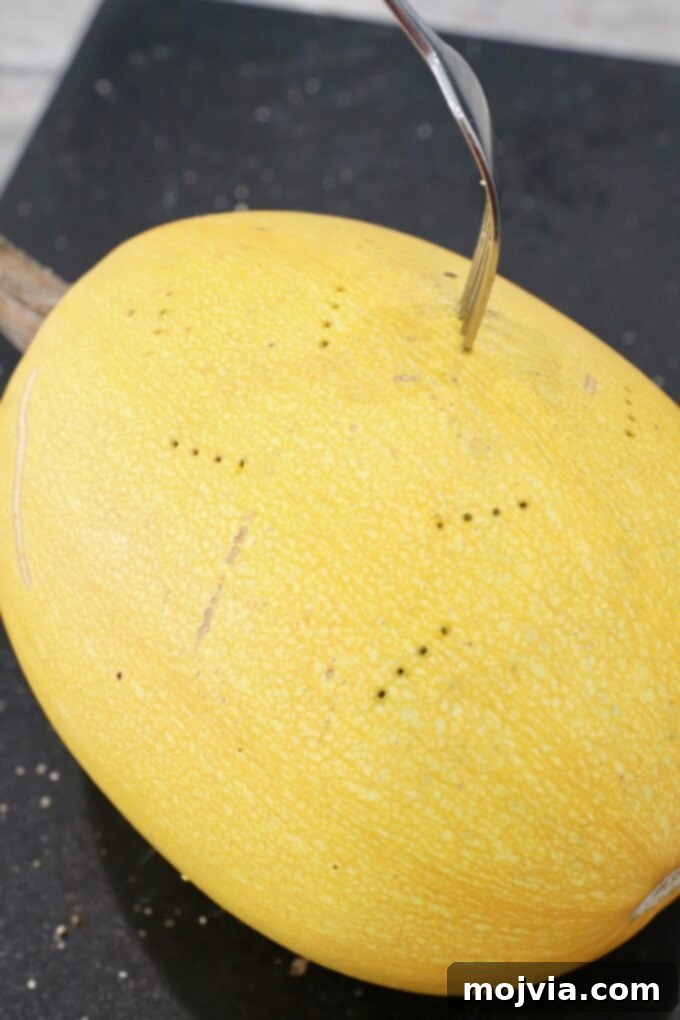
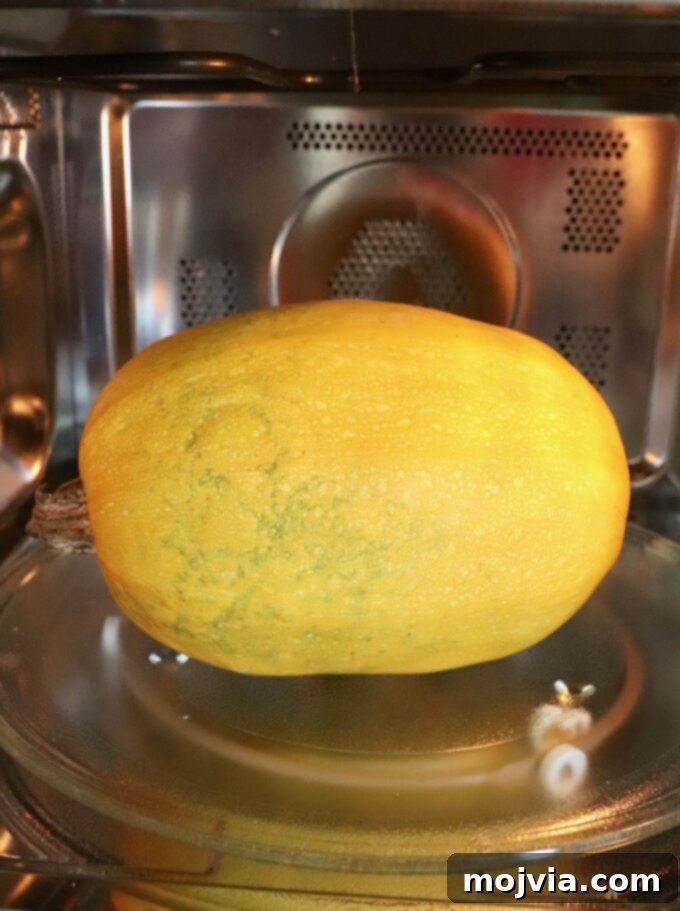
Step 1: Vent the Squash. For microwave cooking, it’s generally best to leave the spaghetti squash whole. Before placing it in the microwave, use a fork or a sharp knife to carefully poke approximately 10-12 holes all over the squash’s exterior. These vents are crucial for allowing steam to escape, preventing the squash from building up pressure and potentially bursting during cooking.
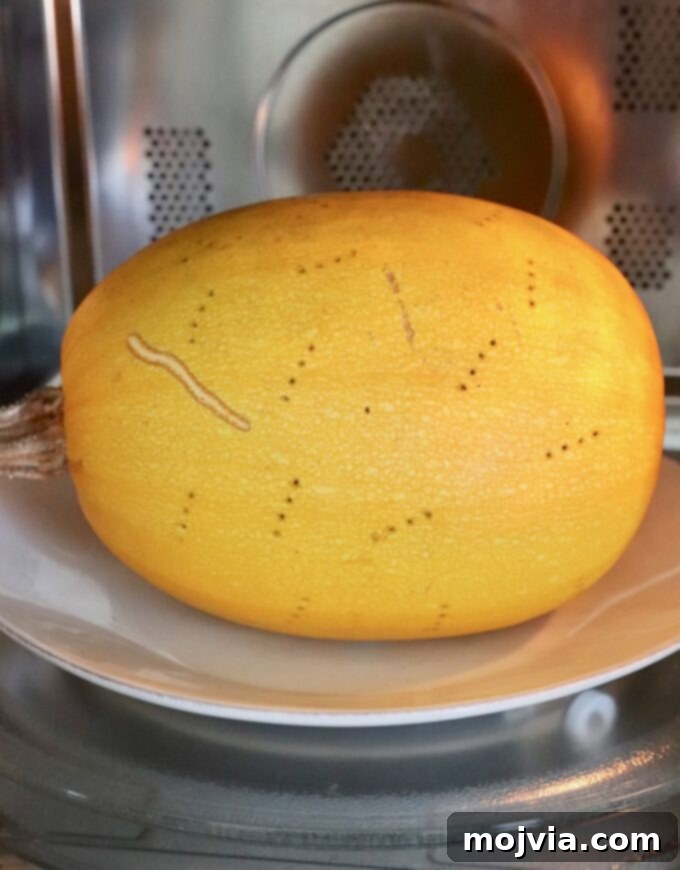
Step 2: Microwave in Intervals. Place the whole, vented squash on a microwave-safe plate. Microwave on high for 5 minutes. After the first interval, use oven mitts or tongs to carefully flip the squash over on the plate to ensure even cooking. Microwave for an additional 5 minutes. After a total of 10 minutes, gently squeeze the squash with tongs or an oven mitt. If it still feels very hard with no give, flip it again and microwave for another 2 minutes. Continue this process, flipping and microwaving in 2-minute increments, until the squash feels tender when squeezed. For a typical 3-4 pound squash, this usually takes no more than 12-14 minutes in total. Cooking times may vary depending on your microwave’s wattage and the squash’s size.
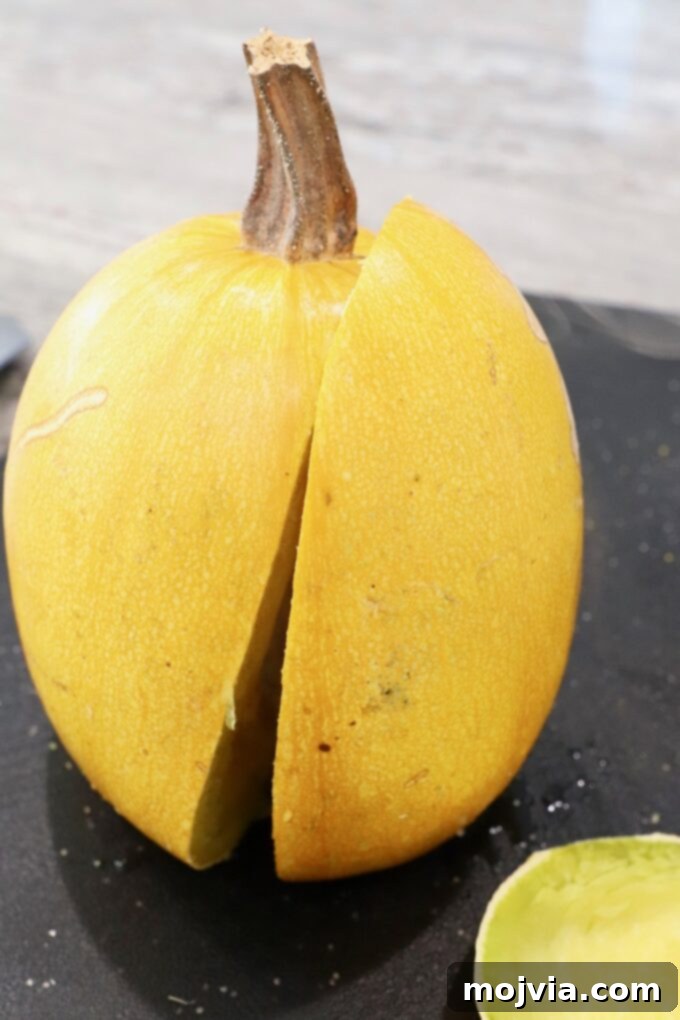
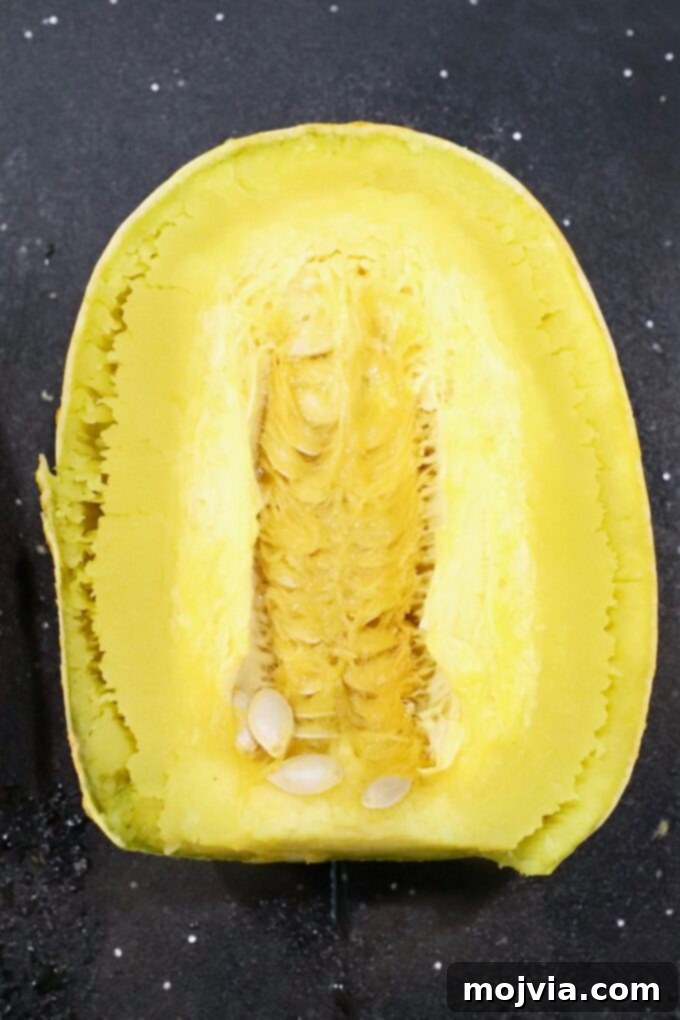
Step 3: Cool, Cut, and Serve. Once cooked, carefully remove the squash from the microwave and let it cool on the plate for about 10 minutes. This resting period allows it to cool enough to handle and continues the cooking process slightly. After cooling, you can slice a small portion off the bottom to create a stable base, then carefully cut the squash in half lengthwise. Use a fork to remove any remaining seeds and stringy bits. Then, gently scrape the cooked flesh with a fork to create the signature “spaghetti strands.” Season with salt and pepper, a drizzle of olive oil, or your favorite sauce for an instant, healthy meal or side dish.
How to Cook Spaghetti Squash in an Air Fryer: For a Unique Texture
The air fryer offers a fantastic middle-ground cooking method for spaghetti squash, providing a quicker cooking time than the oven while still delivering excellent texture. This method often results in tender squash strands throughout, with a delightful slightly crispier layer on the very top of the flesh, adding an extra dimension of flavor and mouthfeel that you won’t get from microwaving.
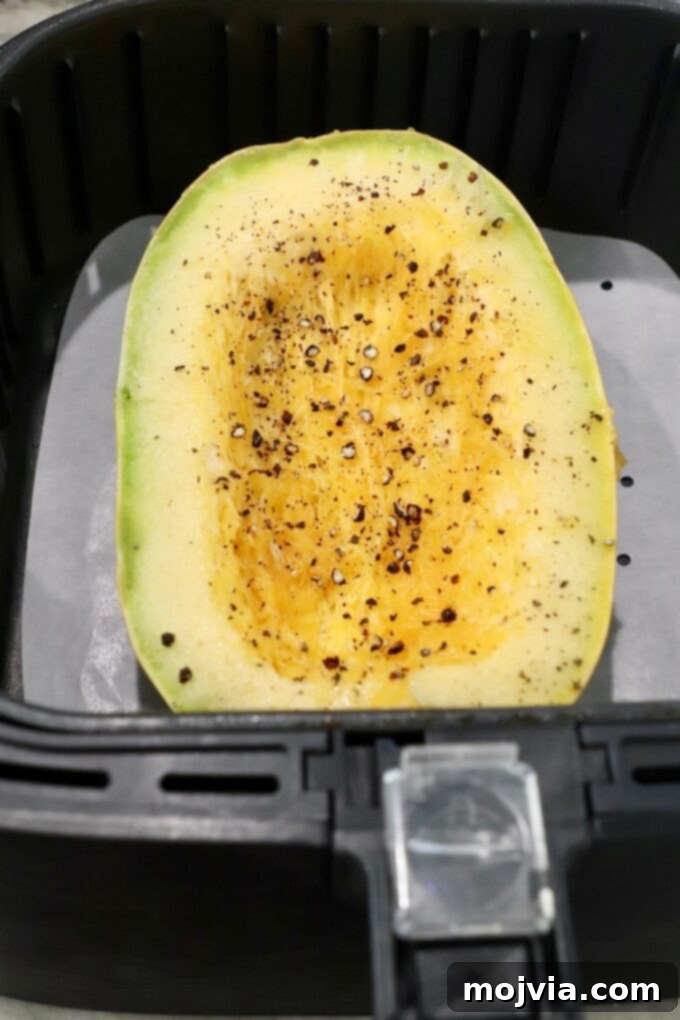
Step 1: Prepare and Place. After cutting the spaghetti squash in half lengthwise, meticulously remove all the seeds and stringy pulp. Drizzle the cut flesh with olive oil and season generously with salt and pepper, or your preferred spices. Carefully place the seasoned squash half (or halves, if they fit) cut side up in your air fryer basket. You might need to use parchment paper liners for easier cleanup and to prevent sticking.
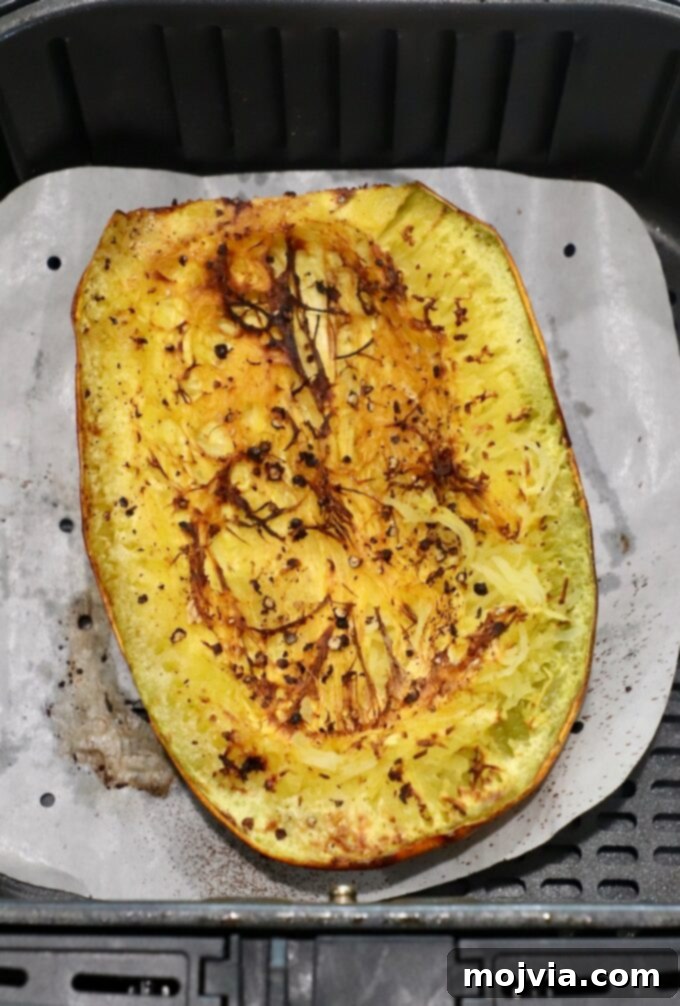
Step 2: Air Fry and Flip. Cook the spaghetti squash in the air fryer at 380°F (190°C) for a total of 24 minutes. For even cooking and to encourage browning, flip the squash halfway through the cooking time, ensuring both cut sides get exposure to the circulating hot air. If you prefer less browning on the flesh, you can cook the squash cut side down for the entire 24 minutes. Once done, test for tenderness by gently pulling the flesh with a fork; it should easily separate into strands.
Choosing Your Method: Oven, Microwave, or Air Fryer?
With three effective cooking methods at your disposal, you might wonder which one is truly the best. The answer depends largely on your priorities: speed, flavor, or batch size. Let’s break down the pros and cons of each to help you make an informed decision for your next spaghetti squash meal.
- Microwave: Speed Demon
- Pros: Unbeatable speed. If you need cooked spaghetti squash in under 15 minutes, the microwave is your champion. It’s perfect for last-minute meal additions or when you’re pressed for time.
- Cons: While delicious, this method generally yields the softest texture, with less of the “bite” or caramelization you get from dry heat cooking. The flavor is good but won’t be as deep as roasted squash.
- Oven: Flavor Champion
- Pros: This remains the preferred method for developing the richest, sweetest flavor. Roasting allows the squash’s natural sugars to caramelize, resulting in a more complex and satisfying taste profile. It’s also ideal for cooking multiple squash halves at once, making it efficient for meal prepping or feeding a larger group. You can easily roast 2 whole squash (4 halves) simultaneously.
- Cons: It requires more time than the microwave, typically 30-40 minutes of active cooking.
- Tip for Extra Texture: If you desire a slightly crispier top layer on your oven-roasted squash, simply flip the halves cut-side up for the final 5-10 minutes of cooking.
- Air Fryer: Balanced Texture and Speed
- Pros: The air fryer offers a fantastic balance, cooking spaghetti squash faster than a conventional oven while still providing a lovely texture with slightly crispy edges. It’s a great option for a single serving or when you want something quicker than oven roasting but more textural than microwaving.
- Cons: Its primary limitation is capacity. Most standard air fryers (like a 5.8-quart model) can only accommodate one half of a large (4-pound) spaghetti squash at a time. This means cooking a whole squash would require multiple batches, potentially taking longer than oven roasting. This method is most sensible when cooking a smaller squash (3 pounds or less, where both halves might fit) or when you only need a single portion.
Ultimately, the “best” way to cook spaghetti squash depends on your immediate needs and preferences. For maximum flavor, choose the oven. For ultimate speed, go with the microwave. For a balance of speed and unique texture, especially for smaller batches, the air fryer is an excellent choice.
Serving Suggestions and Recipe Inspirations
The beauty of spaghetti squash lies in its incredible versatility. Once you’ve cooked and shredded it into those delightful noodle-like strands, the possibilities are endless! You can use it as a direct substitute for traditional pasta in virtually any dish, or incorporate it into unique and wholesome recipes. Here are some ideas to get your culinary creativity flowing:
Sauces To Serve With It (Pasta Alternatives)
- Easy Bolognese Meat Sauce with Roasted Tomatoes
- Classic Marinara Sauce
- Creamy Mushroom & Bacon Sauce
- Nutty Butternut Squash Pasta Sauce
- Fresh Basil Pesto
- Earthy Sage Pesto
- Tangy Sun-Dried Tomato Pesto
- Vibrant Chimichurri Sauce
- Rich Roasted Garlic Cashew Cream Sauce
Spaghetti Squash Main Dishes and Side Recipes
- Spaghetti Squash Mac and Cheese
- Zesty Jalapeño Popper Spaghetti Squash
- Cilantro Lime Shrimp with Green Chili Avocado Sauce & Spaghetti Squash
- Creamy Spinach Artichoke Spaghetti Squash
- Hearty Green Chili Chicken Spaghetti Squash
- Fresh Mediterranean Spaghetti Squash
- Classic Caprese Spaghetti Squash
- Deconstructed Spaghetti Squash Burrito Bowls
Expert Tips for Perfect Spaghetti Squash
Achieving perfectly cooked spaghetti squash every time involves a few key insights. These pro tips will help you avoid common pitfalls and enhance your overall cooking experience, ensuring tender, flavorful strands without any mushiness or excess water.
- Testing for Doneness: The ultimate test for perfectly cooked spaghetti squash is tenderness. You’ll know it’s ready when you can easily insert a fork into the thickest part of the flesh without much resistance. More importantly, if the squash is already cut in half, try to scrape the flesh with a fork – if it readily pulls apart into distinct, noodle-like strands, it’s done! The goal is tender, not mushy.
- Avoiding Watery Squash: Watery spaghetti squash is a common complaint, but it’s easily preventable.
- Don’t Overcook: Overcooking is the primary culprit. As mentioned, cook until tender, not beyond.
- Use a Wire Rack for Roasting: When roasting in the oven, always use a wire rack placed over a baking sheet. This setup allows steam and moisture to escape from the squash and drip onto the pan below, rather than collecting around the squash and steaming it from the inside. This significantly improves the final texture.
- Pre-Salting: Salting the cut surface of the squash before roasting can also help draw out some excess moisture, further contributing to a firmer, less watery result.
- Noodle Length Matters: The way you cut your spaghetti squash impacts the length of its “noodles.”
- Lengthwise Cut: Slicing the squash in half lengthwise (from stem to blossom end) makes it easier to scoop out seeds and typically yields shorter, more uniform strands.
- Horizontal Cut: If you desire longer, more traditional pasta-like noodles, slice the squash in half horizontally (across its width). This aligns with the natural orientation of the strands, allowing you to scrape them out in extended lengths.
- No Need to Peel: A common misconception is that spaghetti squash needs to be peeled before cooking. This is entirely unnecessary! The skin is incredibly tough raw, but once cooked, the tender flesh easily separates from the rind, making peeling obsolete. Simply scrape out the cooked strands, and the skin will be left behind.
Storage and Freezing Guidelines
Spaghetti squash is an excellent candidate for meal prep, as both cooked and raw squash can be stored efficiently. Properly storing your cooked spaghetti squash ensures you have a healthy, versatile ingredient ready at a moment’s notice, whether for leftovers or future meals.
- Refrigeration: Once your spaghetti squash is cooked and the flesh has been shredded into its characteristic noodles, allow it to cool completely to room temperature. Transfer the strands to an airtight container. Cooked spaghetti squash can be safely stored in the refrigerator for up to 5-7 days.
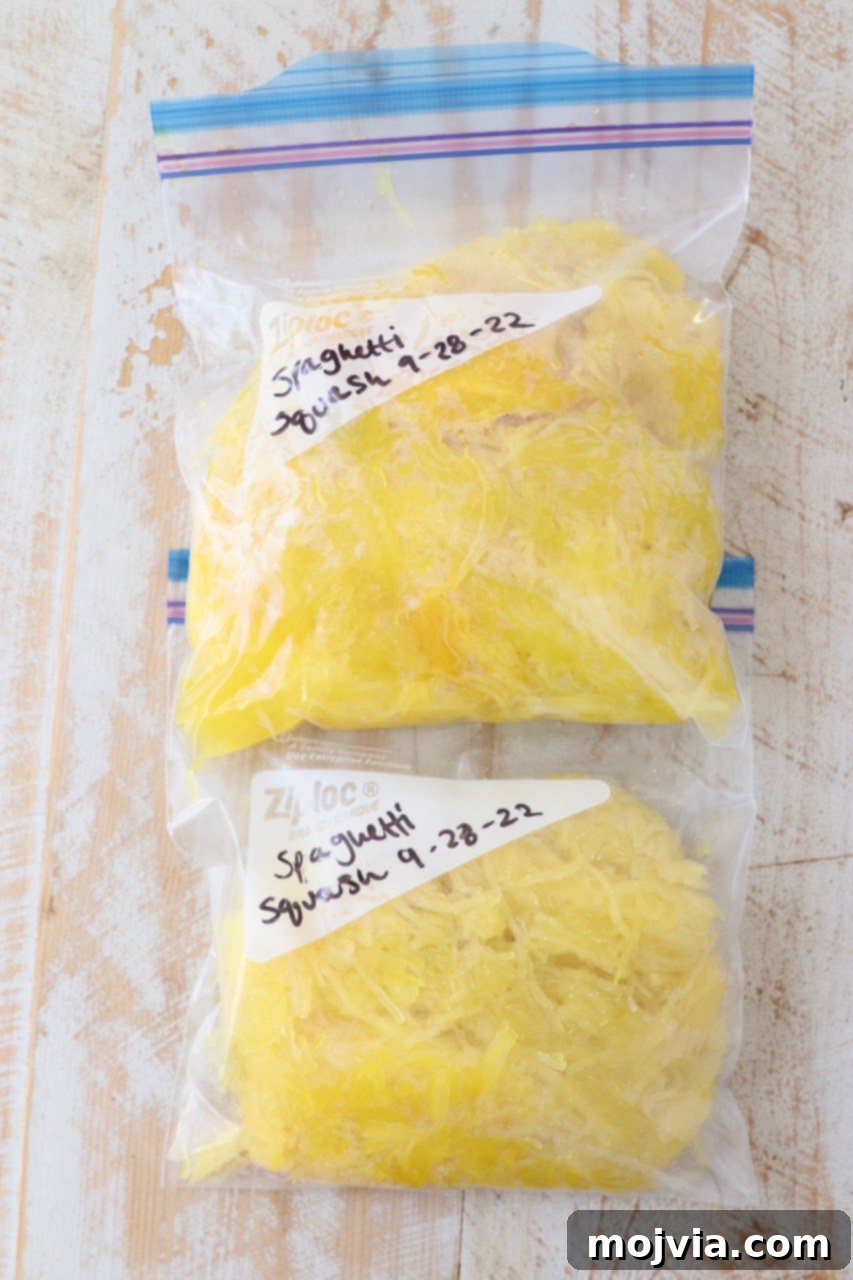
- Freezing: For longer storage, cooked spaghetti squash freezes beautifully for up to 8 months. To prevent freezer burn and maintain the best quality, it is highly recommended to vacuum seal the shredded squash. If you don’t have a vacuum sealer, place the cooked strands into freezer-safe zip-top bags. Before sealing, press out as much air as possible from the bag, then flatten it to save space in your freezer. Label with the date.
- Reheating: To reheat, simply microwave the thawed or frozen squash until hot, or gently warm it in a skillet with a little olive oil or butter. Avoid over-reheating, which can lead to a mushier texture.
Essential Tools for Spaghetti Squash Preparation
Having the right tools can make cooking spaghetti squash much easier and more enjoyable, particularly when dealing with its tough exterior. Here’s a list of essential items that will assist you in preparing this delicious vegetable:
- Baking Sheet with a compatible Wire Rack (crucial for oven roasting)
- Durable Tongs or a reliable Oven Mitt (for safely handling hot squash)
- An Air Fryer, potentially with Parchment Paper Liners for easy cleanup
- A sharp Chef’s Knife for cutting, or an Electric Knife for added ease
- A sturdy spoon or ice cream scoop for seed removal
More Kitchen Cooking Tutorials
Beyond spaghetti squash, mastering basic kitchen techniques can elevate your cooking game. Explore these other helpful and easy-to-follow cooking tutorials to expand your culinary skills and prepare more delicious dishes:
- How To Cook Delicata Squash
- How To Caramelize Onions
- How To Cook Bacon In The Oven
- 3 Ways – How To Cook Sweet Potatoes
- How To Cook Acorn Squash
- How To Hard Boil Eggs

Print Recipe
Pin Recipe
Rate this Recipe
How To Cook Spaghetti Squash
4
pounds squash
10
mins
30
mins
40
mins
Whitney Bond
Side Dish
American
Ingredients
-
4
pound
spaghetti squash -
1
tablespoon
olive oil
-
½
teaspoon
salt
-
½
teaspoon
black pepper
Instructions
Oven Method
-
Preheat the oven to 400°F (200°C).
-
Carefully cut the spaghetti squash in half lengthwise.
-
Use a spoon to scrape out all of the seeds and stringy pulp from both halves of the squash. Discard these.
-
Brush or rub olive oil on the inside flesh of the spaghetti squash and season liberally with salt and pepper.
-
Place the squash, cut side down, onto a wire rack positioned over a foil-lined rimmed baking sheet.
-
Place the squash in the preheated oven and roast for 30-40 minutes.
-
Remove the squash from the oven. Using a fork, gently test the flesh to see if it pulls apart easily into “spaghetti strands.” If it’s tender and separates effortlessly, it’s done. If it still feels tough, return it to the oven for 5-minute increments until it reaches the desired tenderness.
Microwave Method
-
Leave the spaghetti squash whole. Use a fork to poke numerous holes (about 10-12) all over the squash’s skin to release steam during cooking.
-
Place the whole squash on a microwave-safe plate and microwave on high for 5 minutes.
-
Using tongs or an oven mitt, carefully flip the squash over on the plate.
-
Microwave for an additional 5 minutes.
-
After 10 minutes (total), gently squeeze the squash with tongs or an oven mitt. If it’s still hard, flip it and microwave for an additional 2 minutes. Continue flipping and microwaving in 2-minute increments until the squash feels tender when squeezed. A 3-4 pound squash should be ready in no more than 14 minutes.
-
Once cooked, remove from the microwave and let it cool for 10 minutes to make handling easier.
-
Slice a small portion off the bottom to create a flat base, then carefully cut the squash in half lengthwise.
-
Use a fork to remove the seeds and then scrape the “spaghetti strands” from the squash. Serve immediately or incorporate into your favorite recipes.
Air Fryer Method
-
Cut the spaghetti squash in half lengthwise.
-
Use a spoon to scrape out all of the seeds and stringy pulp from both halves of the squash. Discard these.
-
Brush or rub olive oil on the inside flesh of the spaghetti squash and season with salt and pepper.
-
Place the seasoned squash half, cut side up, into your air fryer basket.
-
Cook in the air fryer at 380°F (190°C) for 12 minutes.
-
Using tongs or an oven mitt, carefully flip the squash over in the air fryer basket and cook for an additional 12 minutes.
-
Test for doneness with a fork – the flesh should easily pull apart into “spaghetti strands” when tender.
Notes
- Yield: A 4-pound spaghetti squash will typically produce approximately 6 cups of cooked spaghetti squash noodles. The nutritional information provided below is for 1 pound of cooked spaghetti squash, which is roughly 1 ½ cups.
- Air Fryer Browning Control: If you prefer to avoid any browning on the flesh of your spaghetti squash when using the air fryer, simply cook it cut side down for the entire 24 minutes.
- Oven Browning Control: For those who enjoy more caramelized and browned edges when oven roasting, flip the squash cut side up for the last 5-10 minutes of cooking time.
- Cutting Difficulty Tip: To make cutting easier, start by slicing off a small portion from the bottom of the squash so it can stand upright securely on your cutting board. If the squash is still too challenging to cut, microwave it whole for 3-5 minutes to soften the skin before attempting to cut.
- Wire Rack for Oven Roasting: Utilizing a wire rack during oven roasting is highly recommended. It allows moisture to drip away from the squash onto the baking sheet, preventing the squash from steaming in its own liquid and ensuring a superior, less watery texture.
- Noodle Length: For shorter noodles and easier seed removal, cut the spaghetti squash in half lengthwise. If you desire longer, more traditional pasta-like strands, slice the squash in half horizontally (across its width).
- No Peeling Required: There’s no need to peel spaghetti squash before cooking. The cooked flesh separates effortlessly from the tough outer skin once tender.
Nutrition Facts
Calories
131
kcal
(7%)
Carbohydrates
22
g
(7%)
Protein
2
g
(4%)
Fat
5
g
(8%)
Saturated Fat
1
g
(5%)
Polyunsaturated Fat
1
g
Monounsaturated Fat
3
g
Sodium
346
mg
(14%)
Potassium
351
mg
(10%)
Fiber
5
g
(20%)
Sugar
9
g
(10%)
Vitamin A
388
mg
(8%)
Vitamin C
7
mg
(8%)
Calcium
75
mg
(8%)
Iron
1
mg
(6%)
Did you make this recipe?
Tag @WhitneyBond on Instagram and hashtag it #WBRecipes!